
Scrolling through photos of charming tiny houses with organized interiors and breathtaking mountain backdrops, it’s easy to fall in love with the tiny house movement. The promise is seductive: financial freedom, environmental sustainability, and a simplified life free from the burden of stuff.
As tiny houses have surged in popularity, growing to a $21.9 billion market in 2024, a significant gap has emerged between the idealized portrayal of tiny living and its challenging realities. For every social media influencer, their picture- tiny home, thousands of actual owners grapple with unexpected problems rarely mentioned in glossy.
Before you sell your belongings and commit to downsizing, you deserve to understand what tiny living actually entails. Reveals 11 brutal problems that tiny house enthusiasts rarely discuss, from legal obstacles and surprising costs to design flaws and lifestyle limitations.
The challenges of tiny house living, but also practical solutions for each problem, allowing you to make an informed decision about whether this lifestyle truly aligns with your needs, goals, and expectations.
10 Brutal Problems with Tiny Houses That No One Talks About

1. Restrictive Zoning Laws and Legal Hurdles

Dreaming of parking your tiny home anywhere you want? Think again. The harsh reality is that zoning laws present one of the biggest roadblocks to tiny house living in 2025.
Most municipalities across America enforce minimum square footage requirements, typically 400-1,000 square feet, that tiny houses simply can’t meet. Your 225-square-foot dream home? Technically illegal in countless jurisdictions. This isn’t just an inconvenience; it’s a fundamental barrier to living in your own property.

What about putting your tiny house on wheels? Unfortunately, many areas explicitly classify these as RVs and prohibit full-time living in them within residential zones. In 2025, states like Alaska, Iowa, Louisiana, North Dakota, New Jersey, New York, Wisconsin, and West Virginia have laws making tiny homes explicitly illegal in most contexts.
Even when you find seemingly fewer restrictions in rural areas, you’ll face different challenges: limited access to utilities, longer commutes, and potentially no high-speed internet.
Want to navigate this maze? Start by:
Researching county-specific zoning codes before purchasing land
Looking into established tiny house communities in friendly jurisdictions like California, Colorado, or Oregon
Considering ADU (Accessory Dwelling Unit) laws as an alternative
Consulting with a real estate attorney specializing in alternative housing
Remember: legal doesn’t always mean practical. Have you considered the daily impact of living where your home is merely tolerated rather than welcomed?
2. Surprisingly High Cost Per Square Foot

Tiny houses are cheap. That’s what drew you in, right? The reality is more complicated
The average tiny home costs between $30,000 and $60,000 (compared to nearly $400,000 for a traditional house in 2025), but the price per square foot tells a different story. At approximately $297 per square foot, tiny houses are actually 38% more expensive than traditional homes, which average around $215 per square foot.
Why this premium? Every inch must work harder in a tiny home. Custom furniture, space-saving mechanisms, and multi-purpose fixtures don’t come cheap. Those clever stairs that double as storage? That fold-down desk? The convertible sofa bed? Each specialized element drives up costs dramatically.
Then come the hidden expenses that rarely make it to Instagram:
Land purchase or rental fees (often $300-500 monthly)
Utility hookup costs (potentially thousands for rural properties)

Delivery fees for tiny homes on wheels ($2-5 per mile)
Foundation requirements for a stationary
Permits and inspections
Ask yourself: Are you prepared for the surprising reality that downsizing your space doesn’t necessarily downsize your budget? Many tiny homeowners report spending far more than anticipated on their “affordable” housing solution.
3. Limited Financing and Insurance Options

I’ll just get a mortgage for my tiny house if only it were that simple. Traditional banks often won’t touch tiny house financing, leaving you with limited and typically more expensive options.
Unlike conventional homes, most tiny houses don’t qualify for standard mortgages because they:
Fall below the minimum loan amounts
Don’t meet traditional appraisal standards
Often lack permanent foundations
Exist in a legal gray area
Instead, you’ll likely face personal loans with higher interest rates (7-12% in 2025), shorter terms, and larger down payments. For a tiny home on wheels? You might be limited to RV loans, which require RVIA certification, but many custom tiny homes don’t require it.

Insurance creates equally frustrating challenges. According to Michael Carmona of Mac Insurance, insuring a tiny home requires understanding the distinct differences from traditional homes, which many insurers overlook. Most standard homeowners’ policies won’t cover tiny homes, especially those on wheels.
Your options typically include:
Specialized tiny home policies (limited providers, higher premiums)
Mobile/manufactured home insurance (for permanent tiny homes)
RV insurance (for certified tiny homes on wheels, but with restrictions)
Have you considered how these financing and insurance obstacles might affect your long-term financial security? Many tiny homeowners end up with higher monthly payments than expected and insurance coverage gaps that create significant risk.
4. Challenging Utility Connections and Infrastructure

Those gorgeous off-grid tiny house photos rarely show the daily utility struggles that come with them. The reality? Getting and maintaining basic services can be surprisingly complex and expensive.
For water, you face limited options: connect to municipal supplies (if allowed), drill a well ($5,000-15,000), haul water regularly, or install rainwater collection systems. Each solution comes with trade-offs between convenience, cost, and reliability. What happens when your 50-gallon water tank runs dry during a shower?
Waste management presents even greater challenges. Traditional sewer connections may be unavailable in rural areas where many tiny homes are parked. Composting toilets work for some, but they require regular maintenance that many owners aren’t prepared for. As one tiny homeowner put it: No one tells you that you’ll be handling your own waste every few days.

Winter brings a new set of problems. Plumbing in tiny houses freezes more easily due to limited insulation and exposed areas.

Many owners report spending $200-500 on specialized heated water hoses and insulation materials, yet still face frozen pipes during extreme cold snaps.

Rural locations often mean satellite internet with higher costs ($100+ monthly) and lower reliability, a major issue for remote workers. Have you considered how these infrastructure challenges would affect your daily routine and comfort?
5. Heating and Cooling Inefficiencies

Temperature control in a tiny house can feel like an impossible balance; either you’re sweating or shivering, with little middle ground. This isn’t just about comfort; it’s about livability and health.
The fundamental problem? Limited wall space for proper insulation. Even with high-quality materials, tiny homes have more external surface area relative to their volume, making them inherently less energy efficient. Temperature swings happen faster and more dramatically than in conventional homes.

In summer, tiny houses can heat up like ovens. The proximity of all appliances in one small space creates concentrated heat with nowhere to go. Many owners report interior temperatures reaching 90°F+ even when outside temperatures are moderate. Mini-split systems offer a solution, but at $1,500-4,000, they’re a significant expense for a budget-friendly tiny house.

Winter presents the opposite problem. Small space heaters often can’t maintain comfortable temperatures during cold snaps, and wood stoves (popular in off-grid builds) create hot spots near the stove and cold zones elsewhere. One tiny homeowner in Colorado noted: I’m either sweating within 3 feet of my wood stove or freezing everywhere else.
Humidity and condensation compound these issues, with moisture collecting on windows and walls due to poor air circulation. This creates perfect conditions for mold growth, a serious health concern in such a confined space.
6. Severe Storage Limitations

I’ll just get rid of stuff I don’t need. This common refrain from prospective tiny house dwellers drastically underestimates both the physical and emotional challenges of extreme downsizing.
The average American home contains about 300,000 items. Even after aggressive decluttering, the reality of 200-400 square feet means parting with approximately 80% of your possessions. This isn’t just about eliminating excess; it means making painful choices about family heirlooms, hobby equipment, seasonal items, and everyday necessities.
Where do these tough decisions lead? According to a 2024 Life Storage survey, 40% of people who moved into tiny homes ended up renting external storage within a year, spending an average of $80/month. That’s $960 annually, money rarely factored into the tiny house savings equation.

Those clever storage solutions you see online? They come with limitations:
Under-sofa storage is difficult to access daily
Loft storage often requires climbing ladders

Wall-mounted storage reduces the already limited living space
Multi-purpose furniture typically excels at neither purpose
Beyond practical considerations lies the psychological impact. Research shows that forced downsizing can trigger genuine grief responses. One tiny house owner described it as mourning the parts of my identity tied to possessions I could no longer keep.
Ask yourself honestly: Which treasured items are you truly prepared to part with permanently? Which seasonal items (holiday decorations, winter clothing, sports equipment) would you give up or pay to store elsewhere?
7. Limited Privacy and Noise Issues

Remember that argument you had with your partner at home last week? Having it in a space where you’re never more than 10 feet apart, with no doors to close or rooms to retreat to. This lack of privacy represents one of the most significant yet least discussed challenges of tiny living.
In a tiny house, every sound travels. Conversations, bathroom activities, food preparation, and sleeping habits all become shared experiences, whether you want them to be or not. One tiny house owner described it bluntly: You hear everything. And I mean everything.

Couples report particular strain from this constant proximity. A 2023 survey of tiny house dwellers found that 68% cited lack of personal space as their biggest relationship challenge, with 42% reporting increased arguments about noise and privacy compared to their previous living situation.
For families, the challenges multiply. Children need space for development and homework; parents need private time. These basic needs become extraordinarily difficult to meet in 200-400 square feet. As one family of four who left tiny living after 14 months explained: We loved the concept, but the reality was that we were all suffering from the lack of personal space.

Attempted solutions like curtain dividers, white noise machines, and scheduled alone time outside the home provide limited relief but don’t address the fundamental issue: humans need physical and psychological personal space.
Before committing to tiny living, have you honestly evaluated how much privacy you require for your mental well-being? Can your relationships thrive without the ability to close a door and have genuine alone time?
8. Resale Value and Depreciation Concerns

Traditional houses typically appreciate over time. Tiny houses? They’re more likely to lose value, a hard financial truth that enthusiasts rarely discuss.
Unlike conventional real estate, most tiny homes depreciate similarly to vehicles or RVs. A 2024 market analysis showed tiny homes losing 15-20% of their value in the first year alone. Why such rapid depreciation? Tiny houses face a perfect storm of devaluing factors:
Limited buyer pool (niche market with specific lifestyle requirements)
Unclear legal status in many jurisdictions
Financing difficulties for potential buyers
Rapid wear and tear due to concentrated living in a small space
Style and feature obsolescence as trends change
The resale market is especially brutal for DIY builds without certifications, which struggle to find buyers willing to take the risk on non-professional construction. As one tiny home seller lamented: After two years of trying to sell, I accepted less than half of what I invested in building it.

Tiny houses on wheels face even steeper depreciation, often losing 60-70% of value within 5-7 years. Consider this sobering question: Is a home that potentially loses value rather than builds equity aligned with your long-term financial goals?
To maximize potential resale value:
Build on a foundation rather than wheels when possible
Obtain official certifications (RVIA or NOAH)
Use standard sizes and materials that appeal to broader audiences
Keep meticulous maintenance records
Choose designs with flexible floor plans that could adapt to different needs
9. Mold and Condensation Problems

That cozy, tiny house can quickly turn into a petri dish when moisture problems develop, and they frequently do. The confined space of a tiny home creates conditions for mold and condensation issues that can damage your property and your health.
Why are tiny homes particularly vulnerable? Every daily activity, cooking, showering, even breathing, releases moisture into the air. In a conventional home, this moisture disperses across a larger volume. In tiny houses, it concentrates quickly, with limited pathways to escape. One tiny homeowner described the aftermath of a shower: Every surface in my home was wet with condensation, including my bedding 15 feet away.

The health implications are serious. Mold exposure can trigger respiratory problems, allergies, asthma, and other chronic health issues. In the confined environment of a tiny home, where you’re continuously exposed, these risks amplify significantly.
Design elements that worsen moisture problems include:
Inadequate ventilation systemsLimited insulation space in wallsTemperature differentials between loft and main floor areas, and propane heating (releases moisture as a byproduct)

Effective prevention requires a multi-faceted approach:
Installing proper mechanical ventilation (not just windows)
Using dehumidifiers regularly (but where to put them?)
Applying mold-resistant materials during construction
Creating proper air barriers and vapor control
10. Limited Accessibility and Aging-in-Place Issues

Seeping loft with its charming ladder? It becomes a serious problem if you injure your knee, develop arthritis, or simply grow older. Accessibility represents one of the most significant yet least discussed long-term challenges with tiny houses.
Most tiny house designs prioritize young, fully mobile occupants with features that become increasingly problematic with age or disability:
Sleeping lofts accessible only by ladder or steep stairs
Narrow doorways that can’t accommodate mobility aids
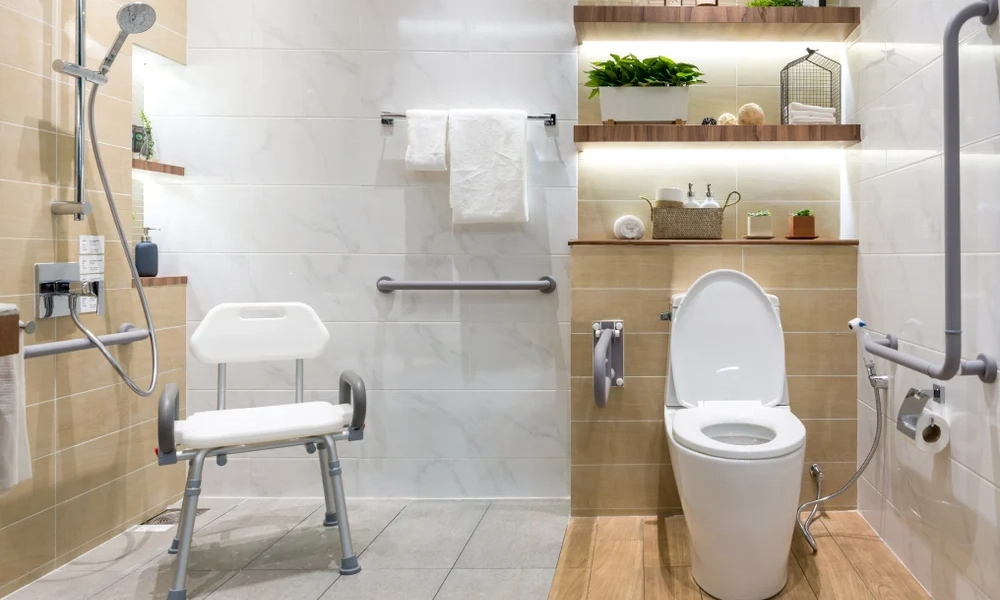
Bathrooms are too small for grab bars or a wheelchair turning radius
Storage areas that require bending, reaching, or climbing
The numbers are revealing: A 2025 study of tiny house owners found that 64% of those over 50 reported concerns about their ability to remain in their home as they age, with 28% already planning to move to more accessible housing within five years.
One former tiny house enthusiast shared: After my husband’s knee surgery, we realized our tiny home had become an impossible obstacle course. We had to move; there was no way to adapt it.
ADA compliance is virtually impossible in most tiny house designs due to space constraints, making accommodation for disabilities particularly challenging. The minimum ADA bathroom size alone (5×5 feet) would consume a significant portion of the total square footage.
