
Your homegrown tomatoes die, maybe because you don’t have a garden. Perhaps you’re stuck with a tiny balcony, a concrete patio, or soil that refuses to cooperate. Traditional methods demand space you don’t have, but here’s the twist: a simple 5-gallon bucket can out-produce backyard beds if you do it right.
Forget struggling with weeds, poor soil, or inconsistent watering. Bucket gardening gives you control; better drainage, richer soil, and happier roots. And the best part is that you probably already have everything you need to start today.
This isn’t a compromise; it’s a shortcut. Big flavor, heavy yields, and less work. Whether you’re a beginner or a seasoned grower, these methods will change how you think about container gardening. Let’s get those buckets growing.
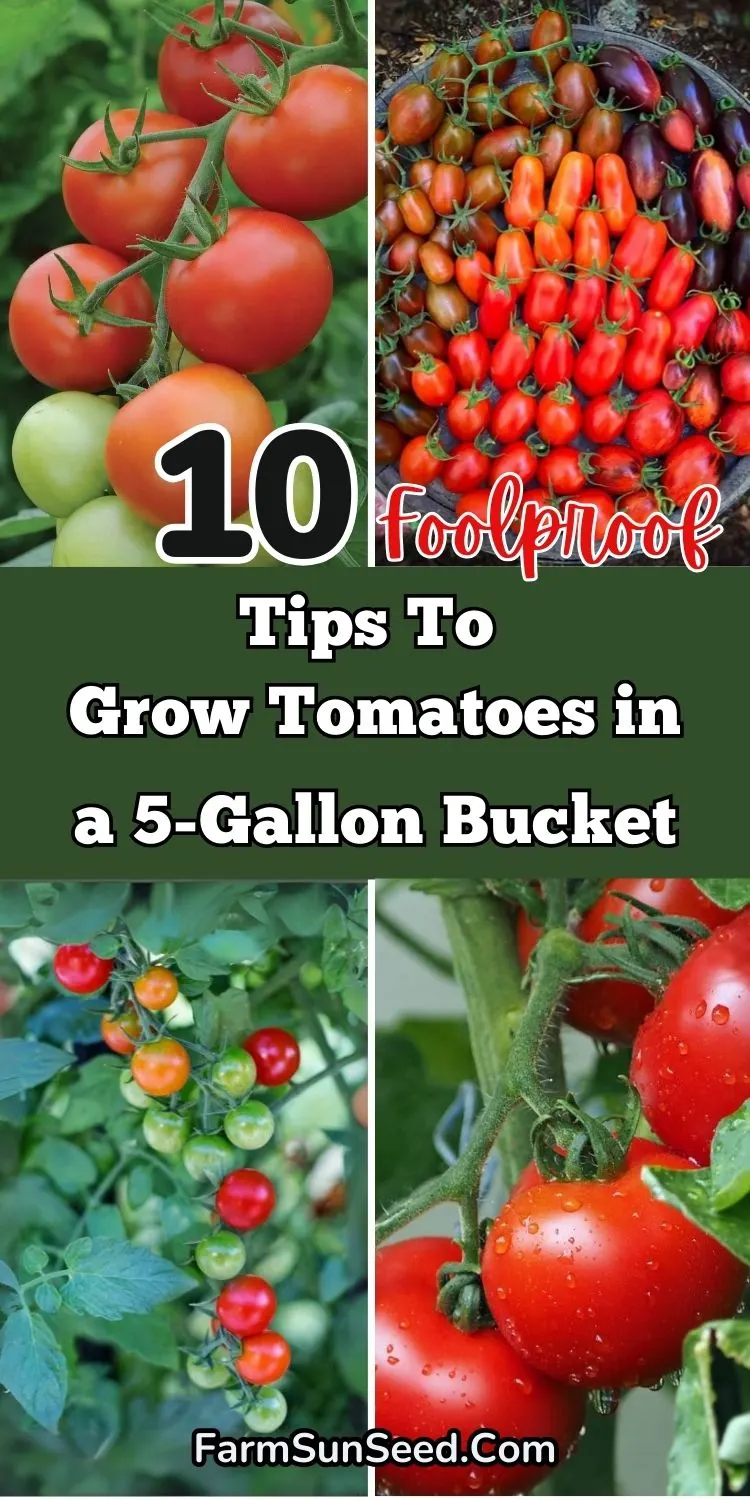
10 Foolproof Tips for Growing Tomatoes in a 5-Gallon Bucket (Even Beginners Can’t Mess Up!
1. Why a 5-Gallon Bucket is the Perfect Tomato Prison Break

Tomatoes love tight spaces more than you’d think. While most gardeners assume bigger pots mean happier plants, a 5-gallon bucket hits the sweet spot for root growth. The confined space copies the natural conditions tomatoes evolved; slightly restricted but deep enough for strong root systems.
Science backs this up, too. A little stress from limited space signals the plant to focus on fruiting rather than excessive foliage. The result is more tomatoes per plant compared to a sprawling garden bed, where energy gets wasted on unnecessary growth. Buckets also warm up faster in the sun, giving roots an early-season boost.
Drainage is another win. Unlike heavy clay soil or uneven garden beds, buckets let you control moisture levels perfectly. No waterlogged roots or drought stress. Just steady conditions that keep plants productive all season.
2. The Secret Bucket Prep Hack Most Gardeners Skip

Drainage holes are obvious, but there’s a smarter way to prep buckets. Lining the bottom with coffee filters or fine mesh keeps soil from washing out while letting air flow freely. Roots need oxygen as much as water, and this trick prevents compacted, soggy soil.
Another pro move is to flip the bucket’s rim upside down before filling. Most buckets have a thick lip that steals precious inches of growing space. Removing it or inverting the rim adds extra room for roots. More soil means more nutrients and stability for taller plants.
Skip the gravel layer myth as it doesn’t improve drainage. Instead, use those saved inches for high-quality soil. Your tomatoes will thank you with deeper roots and bigger harvests.
3. The Tomato Variety Showdown: Which Types Thrive in Buckets?

Not all tomatoes handle bucket life well. Indeterminate varieties, which grow endlessly, often struggle unless pruned aggressively. Dwarf or determinate types, like ‘Bush Early Girl,’ stay compact but still produce heavy yields.
The real stars are the Patio hybrids. Bred for small spaces, varieties like ‘Tiny Tim’ or ‘Patio Choice Yellow’ deliver full-sized flavor on sturdy, short vines. Seed catalogs and local nurseries often stock these space-savers.
Cherry tomatoes also excel in buckets. Their energetic growth adapts easily to confined roots, and they’ll keep fruiting until frost. Just give them a cage; even small plants can get top-heavy when loaded with fruit.
4. The DIY Soil Mix That Beats Bagged Potting Soil Every Time

Trapped soil often lacks the structure tomatoes crave. Mix your own with equal parts compost, coconut coir, and perlite. This blend stays loose, drains well, and holds moisture without suffocating roots.
Crushed eggshells do more than prevent blossom end rot. They slowly release calcium and balance pH, which tomatoes love. Toss in a handful per bucket at planting time. For an extra kick, add worm castings; they’re packed with nutrients that boost growth without burning roots.
Avoid garden soil. It’s too dense for containers and can harbor pests. Homemade mix gives roots the airy, fertile environment they need to thrive.
5. Watering Like a Pro: The “Finger Test” is a Lie

Sticking a finger in the soil is unreliable. Instead, lift the bucket. If it is lightweight, it means it is time to water. If it’s heavy means hold off the water. This method removes guesswork and prevents overwatering which is the number one killer of potted tomatoes.
For consistent moisture, try the wine bottle trick. Fill a bottle with water, and then invert it into the soil near the stem. It’ll slowly release water as needed, keeping plants hydrated for days. It is perfect for hot spells or when you’re away.
Water deeply but less often. Shallow watering encourages weak roots. Aim for soil that’s damp 6 inches down, not just wet on top. Your plants will grow stronger and produce more fruit.
6. The Hidden Flaw in Every Bucket Setup

Tomato cages might seem like the go-to, but they waste space in a bucket. Instead, try side-staking; a method where you anchor stems to stakes driven into the soil at an angle. This keeps plants upright without hogging precious real estate. If you do not have stakes, slice an old pool noodle into strips and wrap them around stems as soft ties. They’re gentle, adjustable, and won’t cut into growing vines.
Shearing is another game-changer. Most gardeners either overdo it or ignore it completely. The twist-and-tuck method keeps things simple: gently twist unruly suckers around the main stem instead of snipping them off. This reduces leaf crowding while leaving enough greenery to protect fruit from sunscald. More airflow means fewer fungal issues, and you won’t sacrifice potential fruit-bearing branches.
7. The Overlooked Enemy: Why Your Bucket Tomatoes Need a “Sun Shield”

Black buckets absorb heat like a sponge, cooking roots on hot days. You can do a quick fix by painting the outside white or wrap them in reflective tape. This keeps soil temperatures stable, preventing root stress that can stunt growth.
Sun exposure isn’t just about quantity; it’s about balance. Rotate buckets 30 degrees every few days to ensure all sides of the plant get equal light. Without rotation, tomatoes lean toward the sun, becoming leggy and uneven. In scorching climates, afternoon shade from a patio chair or taller plant can prevent leaf scorch without reducing yields.
8. From Flower to Fruit: The Bucket-Specific Pollination Trick

Bees often ignore balcony or patio gardens, leaving bucket tomatoes unpollinated. Help them along by gently flicking flower clusters with a dry toothbrush. The vibration imitates bee wings, releasing pollen. Do this midday when flowers are fully open for the best results.
If you want more blooms, bury a few chunks of banana peel near the roots. As they decompose, they release potassium and phosphorus, nutrients that trigger flowering. Unlike synthetic bloom boosters, this won’t risk nutrient burn. For extra power, soak the peels in water for a day and use the liquid as a fertilizer.
9. The Lazy Gardener’s Endgame: How to Overwinter Bucket Tomatoes

Why start from seed next year when you can clone this season’s plants? Snip off a healthy sucker, place it in water until roots develop, then pot it up. By spring, you’ll have a mature plant ready to fruit weeks earlier than seedlings.
If you’d rather keep the whole plant, move it to a garage or basement before frost. Cut back foliage by half, water sparingly, and let it go dormant. No fancy grow lights needed; just occasional light from a window. Come spring, new growth will emerge, and you’ll have a head start on the season.
10. When to Abandon Ship: Signs Your Bucket Tomato is Begging for an Upgrade

Roots circling the bottom of the bucket or poking out of drainage holes scream for more space. Carefully loosen the root ball and transplant to a larger container, adding fresh soil to fill gaps. Water thoroughly to ease the transition.
Curling leaves often signal overwatering or overfeeding, not disease. Let the soil dry out slightly between waterings, and skip fertilizer for a week. If leaves perk up, you’ve found the culprit. If there is stubborn curl, check for pests hiding underneath leaves. Sometimes the fix is simpler than you think.
