
Moving into a tiny home means embracing a simpler lifestyle, but the reality of what simpler actually entails can be shocking. When you realize how many common household items simply won’t fit in your new space. What seems essential in a conventional home often becomes an impossible space burden in 400 square feet or less.
When I first downsized to my tiny home, I was completely unprepared for how many everyday items wouldn’t work in the space, admits Taylor Jenkins, who’s lived tiny since 2023. It wasn’t just about having less, it was about rethinking everything I owned.”
Most people underestimate the ruthless space constraints tiny living imposes. A standard sofa, regular refrigerator, or modest book collection can consume 10-15% of your entire home, a spatial luxury that tiny living simply doesn’t permit. The math is unforgiving: when every square foot matters, traditional possessions rarely add up.
You will find common items that rarely work in tiny homes, why they’re problematic, and most importantly, practical alternatives that preserve function without sacrificing precious space. This isn’t about depriving yourself, but rather about making intentional choices that align with your tiny home lifestyle.
Thoughtful downsizing often leads to unexpected benefits beyond just fitting into a smaller space. Your life becomes simpler, more intentional, and frequently more joyful when you’re surrounded only by what truly matters.
Common Items You Can’t Keep in a Tiny Home (And Why It Matters)

1. Bulky Furniture Pieces That Won’t Make the Cut

Your standard three-seater sofa (typically 84 long) can eat up nearly an entire wall in a tiny home. The math simply doesn’t work. A traditional sectional sofa that fits perfectly in a conventional living room would overwhelm a 200-square-foot tiny house, leaving little room for anything else.

Queen-size bed frames with box springs aren’t just space hogs; they’re tiny home impossibilities. Instead, consider platform beds with built-in storage drawers or Murphy beds that fold away during the day. My wall bed saved me 28 square feet of floor space, shares Mia Chen, who’s lived in her 240-square-foot tiny home for three years. That’s over 10% of my entire home reclaimed for daily living.

Replace them with drop-leaf or wall-mounted tables that expand only when needed. And bulky entertainment centers become unnecessary when you mount your TV directly on the wall and use floating shelves for components.
The secret isn’t just going smaller; it’s choosing pieces that serve multiple purposes. A storage ottoman can be a seating, a coffee table, and extra storage space, all while taking up just two square feet.
2. Kitchen Appliances and Gadgets to Reconsider

A standard 36-inch refrigerator can consume up to 10% of your tiny home’s precious floor space. Apartment-sized 24-inch or under-counter models use half the space, providing ample storage for weekly shopping. These compact fridges also consume 20-30% less energy, a significant benefit for off-grid tiny homes.
Is that bread maker collecting dust in your current kitchen? A 2024 survey by Tiny Home Resource found that 84% of tiny dwellers regretted bringing single-purpose appliances to their small spaces. I brought my pasta maker, juicer, and rice cooker when I downsized, admits Derek Wilson, a tiny home owner in Colorado. All three were donated within two months.

Standard 30-inch ranges become unnecessary space-wasters when 20-inch models or quality countertop alternatives like induction cooktops and convection toaster ovens can handle most cooking needs while using 40% less space.

Forget those specialized gadgets and eight place settings of dishes. A capsule kitchen thinks high-quality chef’s knife instead of a knife block, multi-purpose cookware, and versatile dishware, meal prep from a storage nightmare into an efficient, enjoyable experience, even in the tiniest kitchen.
3. Paper Products and Document Storage Challenges

The average book collector owns around 200 books, requiring approximately 25 square feet of shelf space. In a tiny home, that’s an entire wall or 10% of your living area dedicated just to books. Hard choices lie ahead for bookworms.
Letting go of my 300+ book collection was the hardest part of downsizing, shares Sophia Martinez, a tiny home resident since 2023. I kept 15 absolute favorites and digitized the rest. Now my entire library lives on my e-reader, taking up less space than a single paperback.

Those stacks of magazines and file cabinets pose similar challenges. A standard two-drawer file cabinet consumes 4-6 square feet of valuable real estate in a tiny home. Instead, scan important documents and store them securely in the cloud. Services like Evernote or Google Drive make papers instantly searchable and accessible from anywhere.
For sentimental items like photo albums and memorabilia, try these approaches:
Digitize photos and create online albums or printed photo books (10× smaller than traditional albums)

Keep only the most meaningful physical photos and display them in rotating frames
Photograph three-dimensional mementos before parting with them
Create a digital memory box with photos and stories about sentimental items
Remember: paper accumulation is the silent space-stealer. A paperless approach not only saves space but also creates a more organized, clutter-free tiny home environment.
4. Seasonal Items That Consume Precious Space

The average American household dedicates 25-30 cubic feet to holiday decoration storage alone. In a tiny home, that’s simply not possible. Seasonal items present a unique challenge; they’re used briefly but stored permanently.
Holiday decorations often carry emotional weight, making them difficult to part with. Instead of eliminating them, curate a small collection of meaningful items. I keep one small box of Christmas ornaments and use natural elements like pine branches and berries for the rest, explains Jamie Lewis, who lives in a 275-square-foot tiny home in Vermont. It’s actually more festive and doesn’t require year-round storage.

For seasonal clothing, adopt a capsule wardrobe approach with versatile, layerable pieces that work across multiple seasons. A high-quality rain jacket with a removable liner can replace separate fall and winter coats, saving 3-4 cubic feet of storage space.
Sports equipment presents a tougher challenge. Consider these options:
Choose collapsible gear when possible (foldable kayaks, inflatable paddleboards)
Rent equipment for occasional activities instead of owning

Use wall-mounted or ceiling storage for frequently-used items
Join equipment-sharing groups or co-ops for seasonal access
For seasonal tools, embrace multi-purpose options. A quality multi-tool can replace numerous single-purpose garden implements, and community tool libraries offer access to rarely-used equipment without the storage burden.
5. Collection Items and Hobby Equipment

Collections and creative pursuits often define who we are, making them among the most emotionally challenging items to downsize. A vinyl record collection of just 200 albums requires approximately 15 cubic feet of storage space, which is an entire closet in a tiny home.
I digitized my 500-record collection before moving into my tiny house, says Marcus Jenkins, a music enthusiast and tiny home owner. I kept 25 absolute favorites for display and actual playing. The digital versions sound nearly identical, but take up zero physical space.
For hobbyists, the challenge is maintaining your passion without the sprawl. Consider these space-conscious approaches:

Sewing enthusiasts: Replace full-sized machines with compact models like the Singer Start 1304, which is 30% smaller than standard machines
Artists: Select multi-purpose supplies (watercolor pencils instead of separate pencils and paints) and limit color palettes
Musicians: Opt for smaller instruments (ukulele instead of guitar) or digital versions with headphones

Photographers: Shift to mirrorless cameras and cloud storage instead of multiple DSLRs and physical photo storage
Crafters face particular challenges with supply accumulation. The solution isn’t abandoning your creativity but practicing just-in-time supply purchasing, buying materials for specific projects rather than maintaining extensive stockpiles.
Remember, tiny home living doesn’t mean giving up your passions. It means curating them thoughtfully to focus on the quality of experience rather than the quantity of supplies.
6. Oversized Bathroom Items and Toiletries

Standard bath towel sets consume 1.5-2 cubic feet of storage space per person—a luxury tiny home bathrooms simply can’t afford. Quick-dry microfiber towels offer an ingenious alternative, using 75% less storage space while drying three times faster than cotton.
Those family-sized shampoo bottles and bulk toiletry purchases? They’re space vampires in tiny homes. I switched to solid shampoo bars, small refillable containers, and multi-purpose products,” explains Elena Wright, who lives in a 220-square-foot tiny home. My entire toiletry collection now fits in a shoebox-sized container instead of filling a cabinet.

Traditional bathroom storage furniture becomes impractical in compact bathrooms. Instead, utilize vertical wall space with magnetic strips for metal items, narrow shelves in unused corners, and over-toilet storage that maximizes typically wasted space.
Large bathroom appliances like standard hair dryers and styling tools can be replaced with travel-sized versions that perform nearly identically, using 60% less storage space. For essentials like hair dryers, consider wall-mounted options that eliminate the need for drawer or cabinet storage.
The minimalist bathroom isn’t about deprivation; it’s about intentional choices that create a functional, uncluttered space where everything has its place.
7. Exercise Equipment and Fitness Gear

A standard treadmill consumes 30 square feet of floor space, which is 15% of an entire tiny home. Stationary bikes and ellipticals aren’t much better. Traditional fitness equipment simply doesn’t scale down to tiny living.
I replaced my home gym with resistance bands, adjustable dumbbells, and a foldable exercise mat, shares Trevor Kim, a fitness enthusiast living in a 275-square-foot tiny house. My entire gym now fits in a single drawer but provides 90% of the workout effectiveness.”
For cardio, tiny home dwellers often shift to outdoor activities like running, hiking, or cycling, eliminating equipment storage entirely gaining the mental health benefits of outdoor exercise. For strength training, consider these space-efficient alternatives:
Adjustable dumbbells that replace entire weight sets (saving 8-10 cubic feet)
TRX-style suspension trainers that mount to walls or doors
Collapsible kettlebells that flatten for storage
Exercise apps with bodyweight workout programs requiring zero equipment
Even yoga enthusiasts must adapt, trading thick mats for thin travel versions that roll tightly or fold flat. Many tiny home residents install a ceiling hook to hang their mat when not in use, keeping floor space clear.
The tiny home fitness mindset prioritizes functional, minimal equipment and leverages the natural environment as your gym.
8. Traditional Closet Contents

The average American owns 103 items of clothing but wears just 20% of their wardrobe regularly. In a tiny home with only 3-5 linear feet of hanging space (compared to 24+ feet in standard homes), this math simply doesn’t compute.
Enter the capsule wardrobe, a curated collection of 30-40 versatile, mix-and-match pieces that eliminate decision fatigue while maximizing your limited storage. I downsized from 200+ clothing items to just 37 pieces, reveals Olivia Chen, who’s lived in her tiny home for four years. Everything coordinates, simplifying my mornings while using 85% less storage space.
Seasonal clothing rotation presents another challenge. Instead of storing off-season clothes in vacuum bags under a bed (space you likely don’t have), consider these alternatives:
Choose all-season fabrics like merino wool and lightweight cotton
Layer items for temperature flexibility rather than having separate seasonal wardrobes
Use wall-mounted hooks and vertical hanging organizers instead of traditional hangers
For special occasion wear, adopt the one in, one out rule: when you acquire something new, something else must go. Consider clothing rental services for rarely-worn formal attire.
Outerwear can be particularly problematic due to its bulk. Focus on quality multi-purpose pieces: a single waterproof shell with removable insulation can replace three separate jackets while using two-thirds less storage space.
9. Entertainment Systems and Electronics

A standard entertainment center with TV and components consumes 12-20 square feet of floor space, up to 10% of an entire tiny home. Add multiple gaming consoles and physical media collections, and suddenly, entertainment dominates your limited space.
I replaced my 300+ DVD collection with digital streaming services, explains Ryan Torres, a tiny house dweller in Oregon. My gaming consoles were consolidated into a single laptop and controller, saving about 15 cubic feet of storage still meeting my entertainment needs.
For tiny home dwellers, entertainment requires reimagining:
Wall-mount TVs instead of using entertainment centers
Select a single versatile gaming platform rather than multiple systems
Choose wireless speakers instead of surround sound systems with bulky components
Opt for cloud gaming services that eliminate the need for physical consoles
Physical media collections like DVDs, CDs, and game cartridges can be digitized or replaced with streaming services, saving 1-2 cubic feet per 50 items. Most tiny home dwellers find that a laptop, tablet, or 2-in-1 device can replace extensive desktop computer setups while offering better flexibility.
10. Home Office Equipment

Standard office desks consume 12-20 square feet of precious floor space, a luxury tiny homes simply can’t accommodate. Traditional office chairs and filing cabinets add another 8-10 square feet each. The solution? Multifunctional, foldable workspaces.
I replaced my executive desk with a wall-mounted folding table that doubles as my dining area, shares Aiden Park, a remote worker living in a 280-square-foot tiny home. My workspace appears when needed and disappears when it’s not, saving me 15 square feet of permanent floor space.
Desktop computers and multiple monitors become impractical in tiny settings. Consider these space-conscious alternatives:
Laptop with portable monitor instead of a desktop setup (saving 3-5 cubic feet)
Wall-mounted keyboard tray that tucks away when not in use
Tablet with keyboard case for light office work
Cloud printing services instead of owning a printer
Physical file storage becomes virtually impossible in tiny spaces. Digitize important documents and implement a paperless workflow system. For office supplies, maintain only what fits in a single small container, typically 80% less than conventional office stockpiles.
Tiny home office balances functionality with flexibility, allowing you to work effectively without dedicating permanent space to work equipment.
11. Cleaning Equipment and Supplies

Standard upright vacuum cleaners consume 3-4 cubic feet of storage space, a significant chunk of a tiny home’s limited storage. The cleaning supply cabinet in a typical home holds 10-15 products and tools, requiring another 4-6 cubic feet that tiny dwellers simply can’t spare.
I replaced my full-sized vacuum with a compact cordless stick model that hangs on the wall, explains Hannah Rivera, who lives in a 265-square-foot tiny home. My cleaning supplies now fit in a single small caddy instead of filling an entire cabinet.

For tiny home cleaning efficiency, consider these space-saving alternatives:
Lightweight stick vacuums that use 75% less storage space than uprights
Extendable microfiber dusters that replace multiple specialized tools
Collapsible buckets and spray mops that flatten for storage
Multi-surface cleaners instead of specialized products for every surface
Bulk cleaning supplies become impractical without adequate storage. Instead, choose concentrated products that last longer while using minimal space. For laundry needs, consider:
Portable washing machines that store under counters
Combination washer-dryer units that save 50% of the space
Clotheslines or compact drying racks
Wool dryer balls instead of bulky fabric softener bottles
The tiny home cleaning philosophy embraces simplicity: fewer tools, fewer products, and more efficient cleaning routines.
12. Multiple Sets of Linens and Bedding

The average household maintains 3-4 sets of sheets per bed and 6-12 towels per person. In a standard home, this collection consumes 4-6 cubic feet of linen closet space storage which simply doesn’t exist in most tiny homes.
I downsized to just two sheet sets total and four towels per person, shares Eliza Morgan, who’s lived tiny for five years. It forced me to establish a simple laundry routine, but I’ve never actually missed having more options.
For tiny home linen efficiency, consider these minimalist approaches:
Choose quick-drying fabrics that can be washed and returned to use the same day
Select neutral, versatile colors that work year-round instead of seasonal bedding
Opt for flat sheets only, which can be folded smaller than fitted sheets
Use compression bags for the few extra linens you keep

Guest accommodations present a particular challenge. Instead of storing rarely-used guest bedding, consider multi-purpose options:
Sofa throws that double as guest blankets
Pillowcases that reverse to guest-ready colors
Day-to-day bedding that’s presentable enough for guests
Those decorative pillows and throws that cycle with seasons? Limit yourself to 1-2 accent pieces that can be swapped rather than stored. Remember, in tiny living, simplicity isn’t just practical, it’s liberating.
13. Food and Pantry Stockpiles

Costco-sized food purchases might save money, but they consume 5-8 cubic feet of storage space, often more than a tiny home’s entire kitchen can accommodate. That 50-pound bag of rice simply has nowhere to live.
I shifted from monthly bulk shopping to weekly small-batch purchases, explains Jordan Chen, who lives in a 220-square-foot tiny home. Initially, I worried about spending more, but I actually saved money by reducing food waste and impulse purchases.

In tiny kitchens, every inch counts. Consider these space-conscious approaches:
Transfer pantry staples into stackable, airtight containers that maximize vertical space
Choose magnetic spice tins that attach to walls instead of consuming drawer space
Limit dishware to 1-2 place settings per resident, plus 2 for guests
Select multi-purpose ingredients that work across various cuisines
Those specialty cooking ingredients pose a particular challenge. Rather than stocking 20+ single-purpose ingredients, focus on a core set of versatile flavors. Many tiny home cooks maintain a small collection of spice blends instead of dozens of individual spices.
For dishware, embrace the one is enough philosophy, a single high-quality chef’s knife often replaces an entire knife block while using 80% less space.
14. Large Tools and DIY Equipment

A basic home workshop easily consumes 40-60 square feet of space, nearly 25% of many tiny homes. That table saw, drill press, and workbench simply won’t fit in your new downsized life.
I replaced my entire workshop with a single battery-powered multi-tool system and joined a community maker space, shares Alex Nguyen, a woodworking enthusiast living in a 320-square-foot tiny home. I can still tackle 90% of my projects without dedicating permanent space to tools I use monthly at most.
For DIY enthusiasts transitioning to tiny living, consider these alternatives:
Choose compact, battery-powered tools that share battery systems
Invest in quality multi-tools instead of single-purpose tools

Explore tool libraries and community workshops for occasional access
Select collapsible or wall-mounted workbenches that disappear when not in use
Gardening equipment presents similar challenges. A folding hand trowel, collapsible watering can, and pruning shears can handle most container gardening needs while storing in a single small box.
For project materials, adopt the just-in-time approach by buying what you need for current projects instead of maintaining stockpiles of “someday” supplies. This strategy reduces both physical and mental clutter while freeing up valuable storage space.
15. Memorabilia and Sentimental Items

Sentimental items present the most heart-wrenching challenge in tiny living. Physical objects that carry emotional weight often consume disproportionate amounts of precious space that box of childhood mementos alone might require 3-4 cubic feet.
I photographed every sentimental item before letting most go, shares Isabella Martin, who downsized to a 260-square-foot tiny home. I created a digital memory book that preserves the stories and emotions without requiring physical storage. For the few physical items I kept, I found creative ways to display and use them daily.
For meaningful items, consider these preservation approaches:
Digitize photos and create searchable digital albums or printed photo books
Display a rotating selection of 3-5 photos in frames instead of storing complete albums
Keep one representative item from collections rather than the entire set
Select inherited pieces that serve practical functions in your new space

That antique dining table from your grandmother? It likely won’t fit, but perhaps a single chair or the tabletop repurposed as a desk might work. For purely decorative heirlooms, consider:
Creating a single dedicated memory shelf with your most treasured items
Photographing items and gifting them to family members who have space
Converting items into functional pieces (a teacup as a planter, a quilt as a wall hanging)
Remember, preserving memories doesn’t require preserving every physical object. The stories and emotions remain even when the items don’t.
16. Kids’ Items and Play Equipment

Studies show the average American child owns over 200 toys but actively plays with just 12 of them. In a tiny home, that toy overflow becomes an immediate spatial crisis. Standard play kitchens alone consume 6-8 square feet of precious floor space.
We implemented a toy rotation system with just 10-15 toys available at once, shares Maria Coleman, who raises two children in a 380-square-foot tiny home. Our kids actually play more creatively with fewer options, and our home stays manageable.
For families transitioning to tiny living, consider these child-friendly approaches:
Choose open-ended toys that grow with your child and serve multiple play purposes
Opt for compact versions of favorites (travel-sized board games, mini blocks)
Focus on experience-based activities rather than physical possessions
Establish clear boundaries: one shelf per child, one container for art supplies
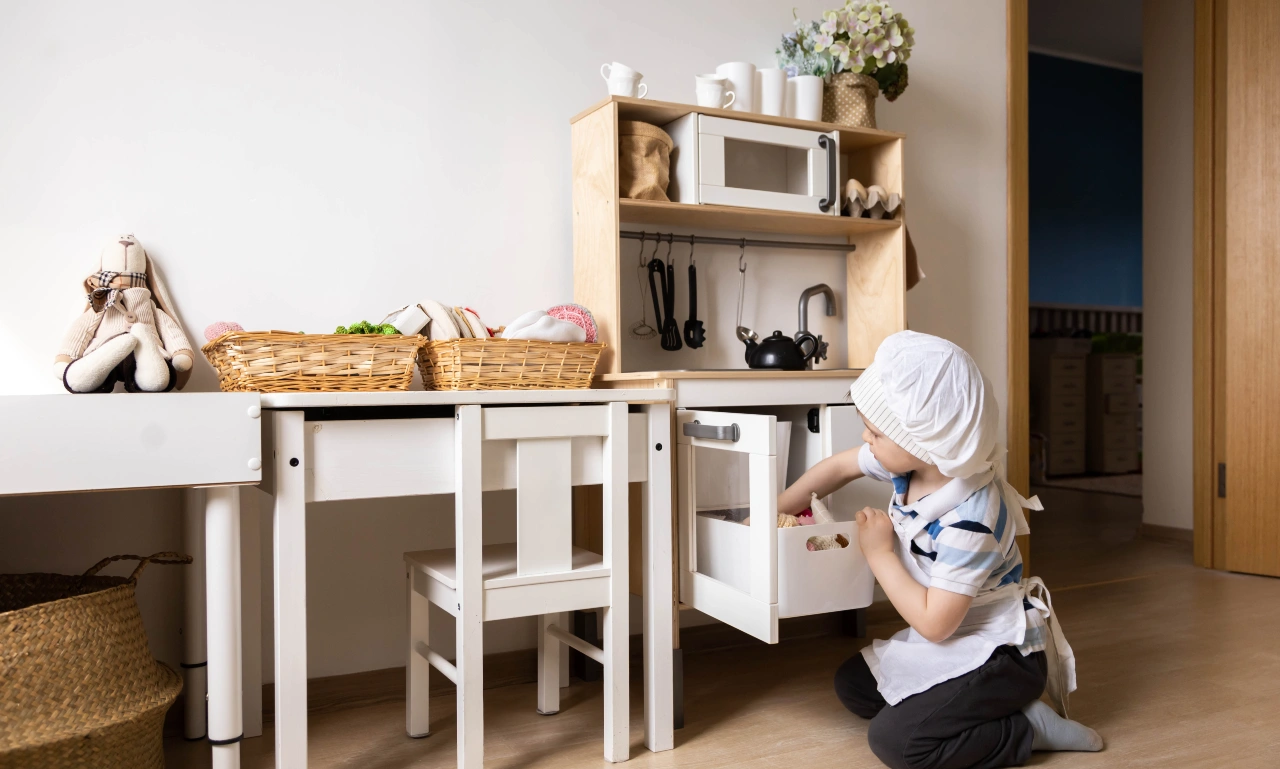
Kids’ furniture demands creative solutions, too. Consider:
Convertible furniture that grows with your child
Foldaway tables and chairs that disappear when not in use
Floor cushions instead of dedicated reading nooks
Loft beds with storage or play space underneath
Outdoor activities become essential for tiny home families. Local libraries, community centers, and parks extend your living space without requiring storage. The key is shifting focus from having things to having experiences, a mindset that benefits children, preserving your sanity and space.
