Imagine slashing your monthly housing costs from $2,000 to just $500 while gaining complete control over your energy, water, and lifestyle. This is the reality thousands are discovering through off-grid tiny homes in 2025.
Traditional housing has become financially crushing. The median home price now stands at $396,900, representing a 4.8% increase from 2024. Most people stretch their budgets to breaking point just to afford a mortgage. Then utility bills pile on.
The average American household spends $2,060 annually on utilities alone. Power outages leave you helpless. Rate increases chip away at your budget every year. You’re stuck depending on unstable infrastructure you can’t control.
Off-grid tiny homes offer a way out. Sixteen specific models are available in 2025, priced from $30,000 to $120,000. We’ve included actual builders with current contact information and pricing.
What Makes a Tiny Home Truly “Off-Grid” in 2025
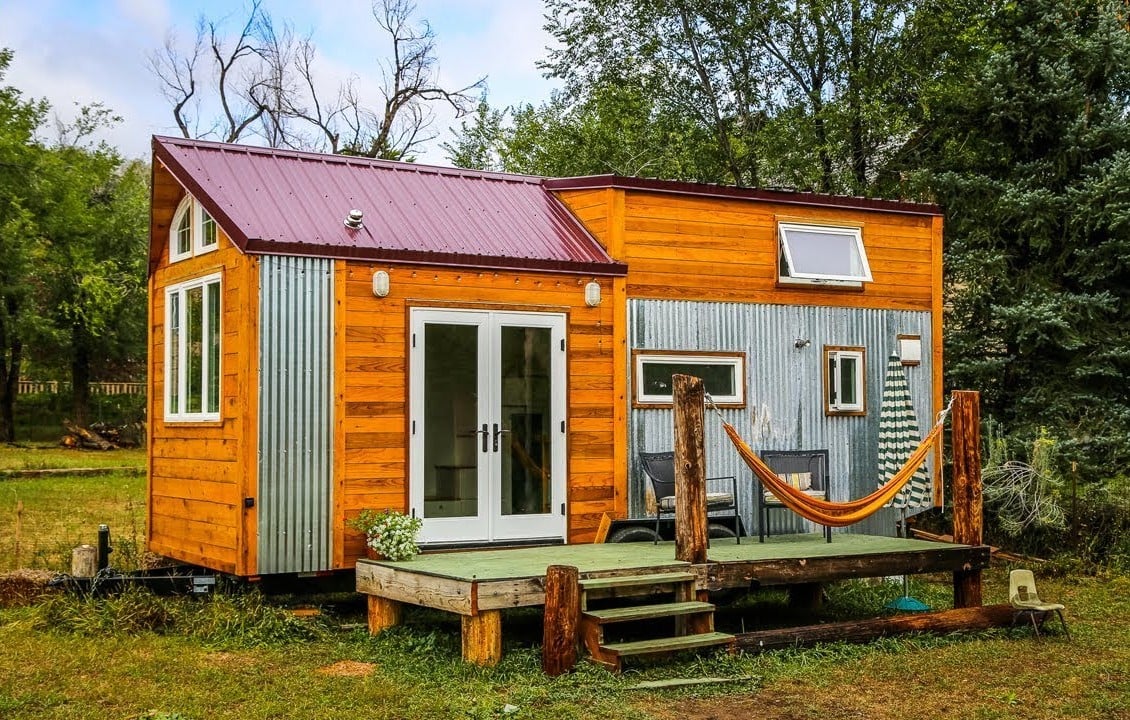
True off-grid living means complete independence from city utilities. No electric bill. No water bill. No sewer connection. You make your own power, collect your own water, and handle your own waste. It’s total self-sufficiency.
Power comes from the sun. You’ll need solar panels on your roof connected to batteries that store energy. Modern systems hold enough power for 3-4 days without sunshine. When clouds roll in, you’re still watching Netflix. Off-grid homes use 70% less energy than regular houses, which means smaller solar setups work just fine.
Water falls from the sky. Rainwater collection barrels catch what you need. Most systems hold 50-250 gallons. Add a filtration system, and that rain becomes drinking water. Some homes connect to wells or natural springs instead.
Waste gets composted or incinerated. Forget traditional toilets. Composting toilets turn waste into garden soil. Incinerating toilets burn it to ash. No water needed. No septic tank required.
Size matters for a reason. The International Residence Code defines tiny homes as 100-400 square feet. Smaller spaces need less power and water. That makes off-grid living easier and cheaper.
Technology got smarter this year. AI-powered systems now monitor your energy use. They learn your habits and adjust power automatically. Battery storage improved, too. Lithium batteries last longer and charge faster than old models did.
Going off-grid isn’t about roughing it anymore. It’s about building self-sufficient systems that work smarter, not harder.
#1. The Thoreau by Indigo River Tiny Homes

Indigo River Tiny Homes named this model after Henry David Thoreau, the guy who wrote about simple living at Walden Pond. It’s a fitting tribute. This home sits on wheels, which means you can tow it anywhere and park it on your land without permits in many areas.
The solar power system is bulletproof. Nine solar panels cover the roof, connected to four lithium batteries that keep your lights on for 3-4 days even when the sun doesn’t shine. Inverters convert that stored energy to run your fridge, laptop, and everything else you plug in.
Water independence comes standard. The Thoreau holds 50 gallons in its main tank for daily use. A 250-gallon rainwater collection barrel catches free water from the sky, while a propane tankless heater gives you hot showers on demand. Two 20-pound propane tanks fuel your cooking and heating needs.
This house was built to last. The exterior uses Sho-Shugi-Ban siding, a Japanese technique where wood gets charred until it’s fire-resistant and weatherproof. Inside, you’ll find granite countertops that handle daily wear without scratching or staining. Every finish was chosen for durability, not just looks.
#2. Haus.Me MOne The Smart Off-Grid Pod

This 400-square-foot studio drops onto any flat ground without needing a foundation. No concrete pouring. No permits for permanent structures in many counties. Just level dirt and you’re home.
Moving it later is simple. When you want to relocate, a flatbed trailer picks up the entire pod and transports it. You’re not tied to one spot forever, but you’re not dragging a tiny house down the highway either. It’s the best of both worlds.
The water system thinks ahead. Three separate tanks handle clear drinking water, greywater from sinks and showers, and blackwater from the toilet. This separation makes recycling and disposal easier. You can even connect the mOne to a well if you find property with one. No well? An air-to-water generator pulls moisture from the air and turns it into drinking water.
Haus.me backs the mOne with what they call a “zombie-proof” lifetime warranty. It’s marketing language, but it signals their confidence. This prefab off-grid home was engineered for extreme conditions and long-term use.
#3. Ecocapsule Box Slovakia’s Modular Marvel

The original Ecocapsule looked like a space egg and cost €99,000. Most people couldn’t afford it. So the Slovakian company went back to the drawing board and created something better.
The Ecocapsule Box measures 26 feet long by 9 feet wide with a rectangular steel frame design. It’s easier to manufacture, easier to transport, and easier on your wallet.
Three price points fit different budgets. The basic setup starts at €55,000 (about $59,500 USD), making this modular tiny home far more accessible than the original model. The standard trim adds comfort features. The full off-grid version includes every system you need for complete independence.
The layout adapts to your life. Panoramic windows wrap around the space, bringing in natural light from every angle. The flexible two-room layout separates sleeping from living areas. Your sofa converts into a bed when guests visit. It’s small but smart.
The Box ships flat-packed, which cuts delivery costs significantly. Assembly takes a few days with basic tools. It’s an off-grid prefab that prioritizes function over fancy design.
#4. KONGA Tiny Home Scandinavian Simplicity

Danish architect Mette Fredskild created this 300-square-foot home with off-grid living in mind from the first sketch. Every choice serves a purpose. Nothing is just for show.
The exterior tells a story. Burnt wood covers the outside walls. This ancient Japanese technique chars the wood until it resists fire, insects, and rot. It never needs painting or staining. Rain and sun won’t damage it. That’s maintenance-free living done right.
Inside, oak veneer panels warm up the space. Natural materials throughout mean no off-gassing chemicals. You’re breathing clean air from day one.
The systems run completely off-grid with solar power providing electricity, rainwater collection supplying water, a wood-fired system heating your water, and a freezing toilet handling waste.
The freezing toilet might sound weird, but it works brilliantly in cold climates. Waste freezes solid, eliminating odors and reducing volume. When full, you compost it safely.
#5. Ecocapsule Original The Iconic Egg Pod

The curved design isn’t just for looks. It maximizes solar panel efficiency and sheds rain perfectly into collection tanks. Wind slides around it instead of pushing against flat walls. Smart engineering wrapped in a weird shell.
Solar panels and a wind turbine generate power. Rainwater collection and filtration provide drinking water. The compact bathroom includes a shower and a composting toilet. Everything fits into a space smaller than most bedrooms.
At €99,000 (about $107,000 USD), it’s expensive for the square footage. But you’re paying for the original design and proven track record. These pods work in deserts, mountains, and arctic conditions.
#6. Living Vehicle by Hoffman Luxury Goes Off-Grid

This luxury 4×4 trailer measures 27-30 feet, depending on the model. It includes a washing machine, a full kitchen with residential appliances, and a bathroom that rivals nice apartments. The bedroom actually fits a queen bed without creative folding.
Four-wheel-drive capability takes you places normal tiny homes on wheels can’t reach. Solar panels cover the roof with battery storage for multi-day autonomy. A water filtration system purifies water from any source. Hydronic heating keeps you warm in winter.
Prices start around $300,000, making this one of the priciest options. But you’re getting a home that moves like an RV and lives like a house.
#7. Wikklehouse Built from Cardboard, Seriously

This Dutch design uses 24 layers of cardboard wrapped around a wooden frame. The result is stronger than it sounds and incredibly well-insulated. Each module measures 16 feet, and you can connect multiple units.
The cardboard construction weighs less than traditional materials, which means easier transport and lower foundation requirements. Solar panels provide power. Rainwater collection handles water needs. The modular design lets you start small and expand later.
Starting at €30,000 (about $32,500 USD), Wikklehouse offers one of the most affordable paths to off-grid living. Shipping to North America adds cost, but it’s still budget-friendly.
#8. Sakura by Minimaliste Arctic-Proof Beauty

Minimaliste designed this home to handle temperatures down to -40°C (-40°F) with a rooftop terrace you can actually use in summer. Triple-pane windows, spray foam insulation, and a high-efficiency heating system keep you warm when nature tries to freeze you.
At 26 feet long, the Sakura sleeps four comfortably. The rooftop deck adds 100+ square feet of outdoor living space. Solar panels mount on adjustable frames to catch winter sun at low angles. A propane heater provides backup warmth when solar can’t keep up.
Minimaliste is one of the top tiny house builders in North America. Their off-grid models include composting toilets, greywater systems, and batteries sized for harsh conditions. Expect to pay $85,000-$110,000, depending on customization.
#9. The Breezeway by Tiny Heirloom Indoor-Outdoor Living
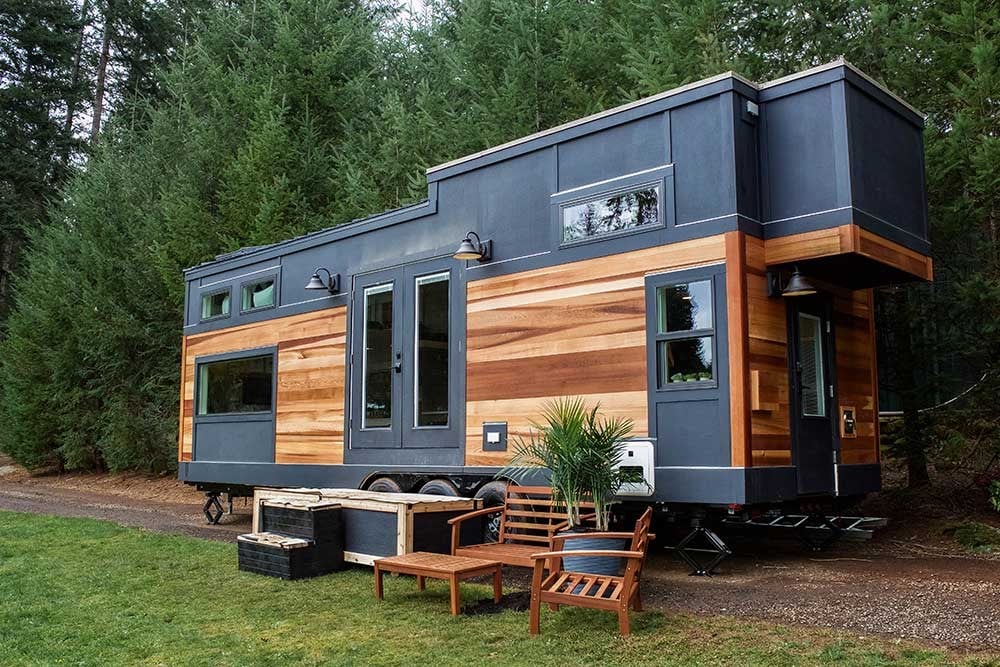
This 32-foot design features rolling shutters that open an entire wall to the outdoors. Your living room becomes a covered patio in seconds. When storms hit, close the shutters and you’re sealed tight.
Solar panels and lithium batteries provide power. A mini-split AC unit keeps you cool using minimal energy. Rainwater collection works great in humid climates where rain is frequent. The elevated design on wheels protects against flooding.
Tiny Heirloom builds high-end custom homes, so expect premium materials and finishes. Pricing typically runs $100,000-$150,000 for their off-grid models.
The open design means less privacy if you have close neighbors. But for rural land with good weather, it’s great.
#10. Phoenix House by Artistree Built on Lava

At 450 square feet, it pushes the upper limit of “tiny” but delivers serious livability. Floor-to-ceiling windows frame ocean views. The open layout includes a full kitchen, bathroom, and sleeping loft.
Solar panels handle power in Hawaii’s abundant sunshine. Rainwater collection is essential since municipal water doesn’t reach the lava fields. The home sits on elevated posts, allowing lava rock underneath to remain undisturbed.
Artistree specializes in sustainable living options for challenging terrain. They’ll work with you to design for your specific land conditions.
#11. Basecamp + Green by Backcountry Tiny Homes

This 24-foot model includes a rooftop deck accessed by exterior stairs. The deck adds crucial outdoor space without increasing the footprint. Solar panels are mounted on an angled rack above the deck, maximizing sun exposure.
Inside, rustic finishes mix with modern efficiency. A wood stove provides heat and ambiance. The bathroom includes a shower and Nature’s Head composting toilet. Storage hides under the stairs, in the kitchen, and beneath the sleeping loft.
Backcountry Tiny Homes focuses on off-grid capability in their standard builds. Every model comes wired for solar, plumbed for rainwater collection, and insulated for four-season use.
#12. Winter Wonderland V House Vermont Tough

At 380 square feet, this is one of the larger off-grid models available. Two separate sleeping areas work for families or couples wanting privacy from guests. The kitchen includes full-size appliances. The bathroom has a tub, not just a shower.
Extreme insulation and a powerful heating system handle Vermont winters. Solar panels with battery backup keep power flowing during short winter days. Propane provides backup heating and cooking fuel.
The V-shaped roofline sheds snow efficiently. Large south-facing windows capture passive solar heat. It’s designed by people who actually live in the snow.
#13. Nugget by Modern Tiny Living Micro But Mighty

This micro house includes a sleeping loft, a small kitchen, and a composting toilet. That’s it. No shower, though you can add an outdoor shower attachment. No washing machine. No dishwasher. Just the absolute basics.
Solar panels are mounted on the roof with a small battery bank. Water comes from a 20-gallon tank you fill manually. The tiny size means minimal power and water needs.
Pricing starts around $30,000, making this one of the cheapest turnkey options from professional tiny house builders.
The Nugget works as a starter home while you save for something bigger. Or as a dedicated office space separate from your main house. Living in 102 square feet long-term requires serious minimalism.
#14. Inglewood by Tiny House Building Company Room to Work

This 36-foot gooseneck design includes a dedicated office space separate from the living area. No more working from your bed. The extended length allows for a full bathroom, a real kitchen, and a comfortable sleeping loft.
Solar panels cover the gooseneck section and the main roof. Battery storage powers laptops, monitors, and home office equipment all day. High-speed internet via Starlink makes remote work possible anywhere.
The gooseneck design requires a heavy-duty truck to tow, but it creates extra space inside that straight trailers can’t match.
#15. Kingfisher by Build Tiny Beach Life Done Right

Build Tiny operates in New Zealand, where off-grid beach living is popular. The Kingfisher was built for sand and surf.
This 20-foot design emphasizes ventilation and views. Large windows capture ocean breezes. The layout opens fully to connect inside and outside spaces. Elevated construction protects against flooding and allows sand to blow underneath.
Solar panels generate power in New Zealand’s moderate climate. Rainwater collection is standard since many beach properties lack water connections. The bathroom includes a shower designed to rinse off salt and sand.
Build Tiny ships to Australia and the Pacific. Pricing starts around $65,000 NZD (about $40,000 USD), though shipping to North America is expensive.
#16. Payette Urban by TruForm Tiny City Off-Grid

TruForm Tiny builds in Oregon, and they understand that urban off-grid living differs from rural setups.
The Payette Urban measures 24 feet with a modern, minimalist design that fits city aesthetics. Large windows and light colors make the small space feel open. Smart storage solutions hide clutter.
Solar panels provide power, but the system is sized knowing you might park in partial shade. The water system works with city hookups or independent tanks. You can go fully off-grid or connect to utilities as needed.
This flexibility matters in cities where full off-grid isn’t always legal or practical. The Payette Urban adapts to your situation.
Off-Grid Systems Explained: Power, Water & Waste
Off-grid systems sound complicated. They’re actually three simple setups working together.
Power: Your Solar Panel System

Solar panels catch sunlight and turn it into electricity. Solar generators and battery systems are essential for reliable off-grid power management. You need enough panels to generate daily power, plus extra to charge batteries for cloudy days.
Most tiny homes need 1,200-2,400 watts of solar panels. That’s 4-8 panels, depending on efficiency. Battery storage should hold 3-4 days of power. Lithium batteries cost more upfront but last 10+ years. Lead-acid batteries are cheaper but need replacement every 3-5 years.
Inverters convert stored battery power (12V DC) into usable household power (120V AC). This lets you plug in normal appliances. Charge controllers prevent your batteries from overcharging and getting damaged.
Water: Collection, Storage, and Filtration

Rainwater collection starts with your roof. Gutters channel rain into storage tanks holding 50-250 gallons. Larger tanks mean longer periods between refills.
Filtration removes dirt, bacteria, and chemicals. A basic three-stage filter costs $200-$500 and provides safe drinking water. UV sterilizers add another layer of protection for $150-$300.
Greywater recycling captures water from sinks and showers. After filtration, you can reuse it for toilets or gardens. This stretches your water supply significantly.
Well drilling costs $15-$30 per foot. A 100-foot well runs $1,500-$3,000 plus pump installation. Wells provide unlimited water but require electricity to pump.
Water independence systems cost $1,000-$5,000, depending on tank size and filtration complexity.
Waste: Toilets That Don’t Need Sewers

Composting toilets don’t require water and convert waste into usable compost for gardening. Nature’s Head and Separett are popular brands costing $900-$1,200. They separate liquids from solids, eliminating odors. Empty the solids container every 3-6 weeks.
Incinerating toilets burn waste to ash using electricity or propane. They’re odorless and produce a cup of ash weekly. Cost runs $1,500-$3,000. They use more energy than composting models.
Freezing toilets work great in cold climates. Waste freezes solid, stopping decomposition and smells. When full, thaw and compost the contents. Units cost $1,000-$1,500.
Blackwater tanks work like RV systems. They hold sewage until you can dump it at a facility. This is the least sustainable option, but it is required in some areas.
Heating and Cooling

Propane heaters are efficient and reliable. A 20-pound tank lasts 2-4 weeks, depending on use. Cost is $15-$25 per refill. Heaters themselves run $300-$800.
Wood stoves provide heat and cooking ability. They cost $500-$2,000 installed. You’ll need to chop or buy firewood regularly.
Mini-split heat pumps heat and cool using electricity. They’re extremely efficient but require solid solar systems. Expect to pay $1,500-$3,000 installed.
Backup Systems

Generators provide backup power when solar can’t keep up. A 2,000-watt generator costs $500-$1,000. You’ll burn through propane or gas, so use it sparingly.
Micro-hydro systems work if you have flowing water on your property. They generate power 24/7 but need specific terrain. Installation runs $5,000-$15,000.
Total systems cost: $10,000-$25,000 for complete off-grid independence with renewable energy sources.
Challenges You Need to Know Before Buying
Zoning Laws Will Frustrate You

Cities like Portland allow Tiny Homes on Wheels on private land, but Miami demands permits that make placement tricky. Some counties ban tiny homes entirely. Others require grid connections even if you don’t want them. Regulatory hurdles are complex with varying regulations on land use, building codes, and living standards across regions.
Maintenance Requires Actual Skills

Your solar panels need cleaning. Batteries need monitoring. Composting toilets need emptying. Water filters need replacing. When something breaks at 10 PM, you can’t call the utility company. You either fix it yourself or hire someone who probably charges extra for off-grid service calls.
Weather-dependent power means cloudy weeks require lifestyle adjustments. You’ll learn to run dishwashers and laundry on sunny days. Winter means shorter battery life and more backup generator use.
Financing Is Harder Than Regular Homes

Banks don’t offer traditional mortgages for most tiny homes. You’ll need a personal loan with higher interest rates and shorter terms. Expect a 10-20% down payment and 6-10% interest. Monthly payments can be higher than expected even though the home costs less.
Some lenders offer RV loans for tiny homes on wheels. Rates are better, but still not as good as mortgages.
Remote locations mean isolation. Grocery stores might be 30 minutes away. Emergency services take longer to arrive. High-speed internet via Starlink costs $120 monthly. You’ll drive more and spend more on gas.
How to Choose the Right Off-Grid Tiny Home

Start by assessing your actual needs. How many people will live here full-time? One person manages fine in 150 square feet. A couple needs 200-300. Families require 350-400 square feet minimum. Be realistic about space requirements before falling in love with a cute 100-square-foot pod.
Decide on mobility. Tiny homes on wheels let you relocate but limit size to what’s towable (usually under 400 square feet). Foundation models can be larger and sturdier, but you’re committed to that location. Moving them later costs thousands.
Climate determines your system needs. Cold regions require serious insulation, backup heating, and steep roof pitches to prevent snow buildup. Hot climates need ventilation, AC capability, and shade considerations. Temperate areas have easier requirements.
Location comes before anything else. Check zoning laws first. Call the county planning department and ask specifically about tiny homes, ADUs (accessory dwelling units), and minimum square footage requirements. Some counties ban structures under 400 square feet entirely.
Water usage runs 50-80 gallons daily for one person. Double it for couples. Your storage should hold at least 3 days of use. Waste systems depend on local regulations and climate. Composting toilets work everywhere. Greywater systems need approval in some counties.
Budget for the complete picture. The home price is just the start. Add land costs, delivery ($1-$3 per mile), site preparation ($2,000-$10,000), permits ($500-$5,000), and off-grid systems if not included ($10,000-$25,000). Your $50,000 home easily becomes $85,000 total.