DIY vertical garden ideas for small spaces transform cramped balconies, tiny patios, and narrow yards into lavish growing areas that maximize every square inch. Small-space gardening used to mean choosing between a few houseplants on windowsills or giving up on fresh herbs and vegetables completely.
Vertical gardens help you grow multiple layers of plants using walls, fences, and creative structures that take minimal floor space. These space-saving systems can produce surprising amounts of fresh food and beautiful flowers while adding privacy and natural beauty to even the smallest outdoor areas.
With these brilliant DIY vertical garden ideas, you can change any small space into a productive herb garden, vibrant flower display, or thriving vegetable patch. These projects use affordable materials and require only basic DIY skills to create spectacular results.
25 Brilliant DIY Vertical Garden Ideas for Small Spaces

What is a Vertical Garden?
A vertical garden is a gardening method that uses upward space instead of ground area to grow plants on walls, fences, or standing structures. These gardens stack plants at different heights by creating layers of greenery that make the most of limited space. The concept dates back to ancient civilizations; the Hanging Gardens of Babylon were one of the earliest examples of vertical growing.
Benefits of Vertical Gardens:
Space Saving: Grows more plants in less floor area by utilizing vertical surfaces and creating multiple growing levels
Aesthetic Appeal: Converts bland walls into living art while adding natural beauty and visual attention to any space
Health Benefits: Improves air quality, reduces stress, and provides fresh herbs and vegetables for better nutrition
Practicality: Makes gardening accessible for people with mobility issues and keeps plants at convenient harvesting heights
Flexibility: Easy to modify, expand, or relocate as needs change, with modular systems that adapt to different spaces
Types of Vertical Gardens:
Living Wall: Plants grown directly in or on a vertical surface, creating a continuous wall of greenery
Trellis System: Climbing plants supported by wire, wood, or metal frameworks that guide upward growth
Tower Garden: Circular or cylindrical structures with planting pockets arranged around a central support
Pocket Garden: Individual containers or fabric pouches mounted on walls or frames for separate plant compartments
1. Concrete Block Garden
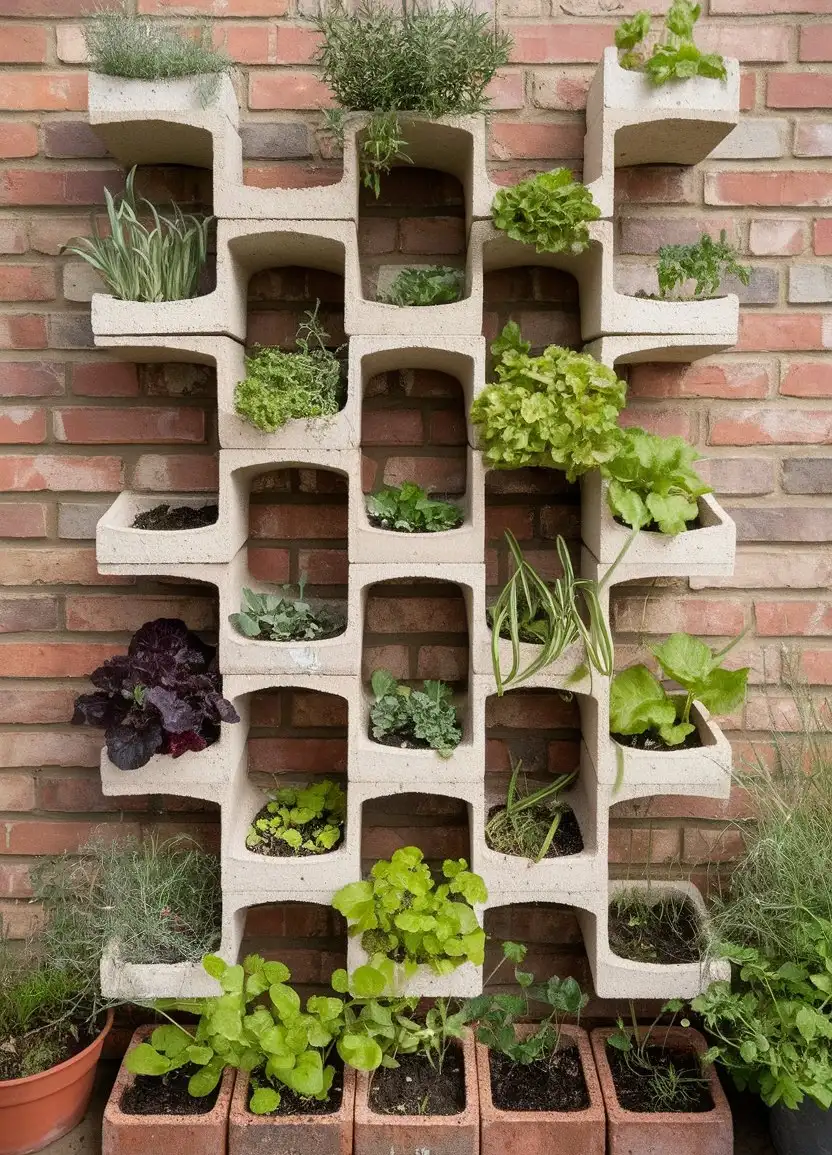
These concrete blocks create individual growing spaces that work for herbs and small vegetables. The holes are perfect for most herbs like rosemary and parsley. Lettuce grows well, too, since the roots don’t need tons of space. Each opening holds about 2-3 cups of soil, so you’ll need quality potting mix rather than garden dirt.
Drainage happens naturally through the concrete, but check that water isn’t pooling at the bottom during heavy rains. The blocks get hot in the summer sun. Some Mediterranean herbs love it, but can stress leafy greens. Place this setup where it gets morning sun but afternoon shade if you live somewhere really hot. One major positive point is that you can rearrange the whole thing anytime.
2. Tiered Shelf System

This wooden shelf setup gives serious growing space without taking up much floor area. The key is using different-sized planters; long rectangular ones work better than round pots since they hold more soil and plants.
That trailing plant flowing down the sides looks like a string of hearts or a trailing succulent. It is a smart choice because it fills the vertical space between shelves naturally. The terracotta pots are classic for good reason; they breathe, which prevents root rot better than plastic.
But they dry out faster, so they need watering more often. Strong construction matters here because wet soil gets heavy fast. Those shelves need to handle 15-20 pounds per level when everything’s watered.
3. Mason Jar Wall Garden

Mason jars mounted on wooden boards make an incredibly affordable vertical garden. The wooden mounting boards can be scrap wood or cheap pine from the lumber yard. This setup works for starting seedlings or growing small herbs like the ones shown. The clear glass lets you see exactly when plants need water and how the roots are developing.
Drainage is tricky with jars since there’s no hole in the bottom. Add pebbles or broken pottery pieces at the bottom. Use a light potting mix that won’t compact. Don’t fill them; leave space at the top so water doesn’t overflow.
The wooden slats make it easy to adjust jar spacing as plants grow. This whole system probably costs less than $30 to build and can produce fresh herbs all season long.
4. Gutter Garden System

Cut rain gutters make excellent planters for shallow-rooted crops. These look like vinyl gutters with end caps, which you can grab at any home improvement store. Those pansies add beautiful color. The leafy greens look like lettuce varieties. Gutters work great for salad crops, herbs, and strawberries. The shallow depth means you need to water more frequently. Plants set quickly since their roots can spread horizontally.
The mounting system uses simple brackets screwed into that fence. Make sure they’re level; even a slight tilt will cause water to pool at one end. Drill drainage holes every 6-8 inches along the bottom; otherwise, plants will drown after the first heavy rain.
Arrange these where they get morning sun but some afternoon protection. The metal or vinyl heats up quickly in intense sun, which can cook the roots during summer months.
5. PVC Pipe Planters

Large PVC pipes cut lengthwise create generous growing space for bigger plants. These look like 6-inch diameter pipes, which gives enough soil depth for most vegetables and herbs. The green color helps them blend in better than white PVC. The horizontal orientation means plants get even water distribution and plenty of root space to spread out. It is much better than narrow vertical towers that can get top-heavy.
Mounting these requires strong brackets since they get quite heavy when filled with wet soil. Use galvanized bolts and make sure they’re screwed into solid fence posts or wall studs. The spacing between levels gives plants room to grow without crowding each other. PVC doesn’t breathe like terracotta, so be careful not to overwater.
6. Wooden Box Flower Wall
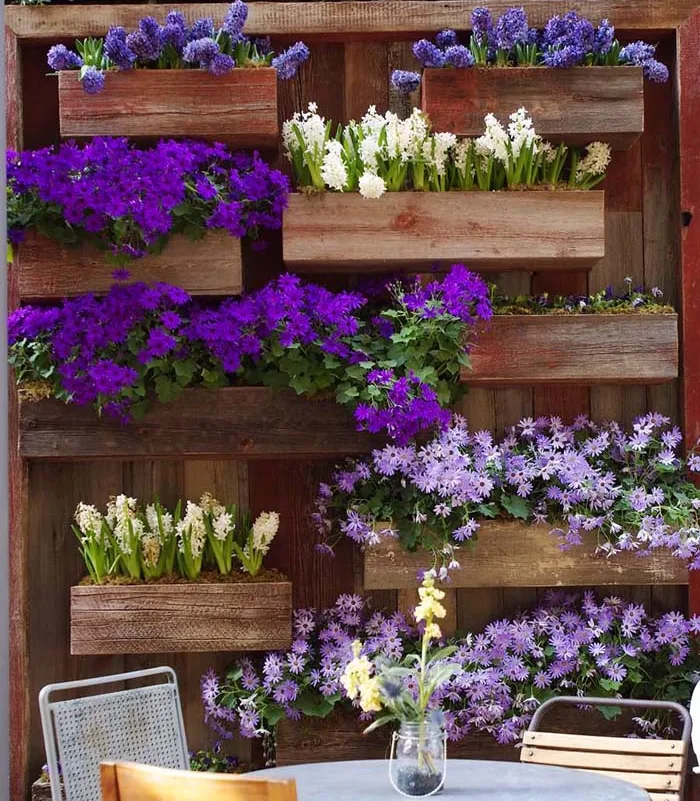
This wooden pallet planter shows off gorgeous spring bulbs. The rural wood boxes give it a farmhouse feel that works great for patios or balconies. You can build something similar with old fence pickets or buy ready-made wooden crates from craft stores. The different-sized compartments let you plant various flowers at different depths.
Spring bulbs like these need good drainage, which wooden boxes naturally provide. Plant bulbs in fall for spring blooms like this display. One smart thing here is mixing flower heights and bloom times. When the hyacinths finish, you could replace them with summer annuals.
The wooden construction will last several seasons if you treat it with outdoor wood stain. Set this where it gets morning sun but stays protected from harsh afternoon heat. Water regularly, but don’t let the boxes stay soggy.
7. Modern Architectural Living Wall

Those curved white planters are custom-made and likely have automatic watering systems running through them. The plants look like various types of ferns and trailing greenery that flourish in partial shade. This type of system works agreeably indoors or in covered outdoor spaces since it needs consistent moisture and protection from weather extremes. The curved design creates visual flow and makes the whole wall feel like living art.
This needs professional installation and maintenance. The structural support alone requires serious engineering since wet soil and plants add hundreds of pounds. Beautiful to look at, but way beyond most DIY budgets and skills.
8. Bright Pink Vertical Tower

The hot pink planters create a bold statement piece that grabs attention. The tropical plants look like bromeliads and other heat-loving species with those orange and red flower spikes. This setup works for warm climates or as summer patio decoration.
The stacked design uses some kind of interlocking system that keeps everything stable. Each planter probably holds 2-3 gallons of soil, which gives good root space for larger plants.
Bromeliads are perfect for this since they don’t need deep soil. They’re also pretty low-maintenance once seated. The tower design makes watering easy since you start at the top and let excess water drain down to lower levels. The basic is making sure the bottom planter has good drainage holes so the whole thing doesn’t turn into a swamp during rainy weather.
9. Driftwood Succulent Planter
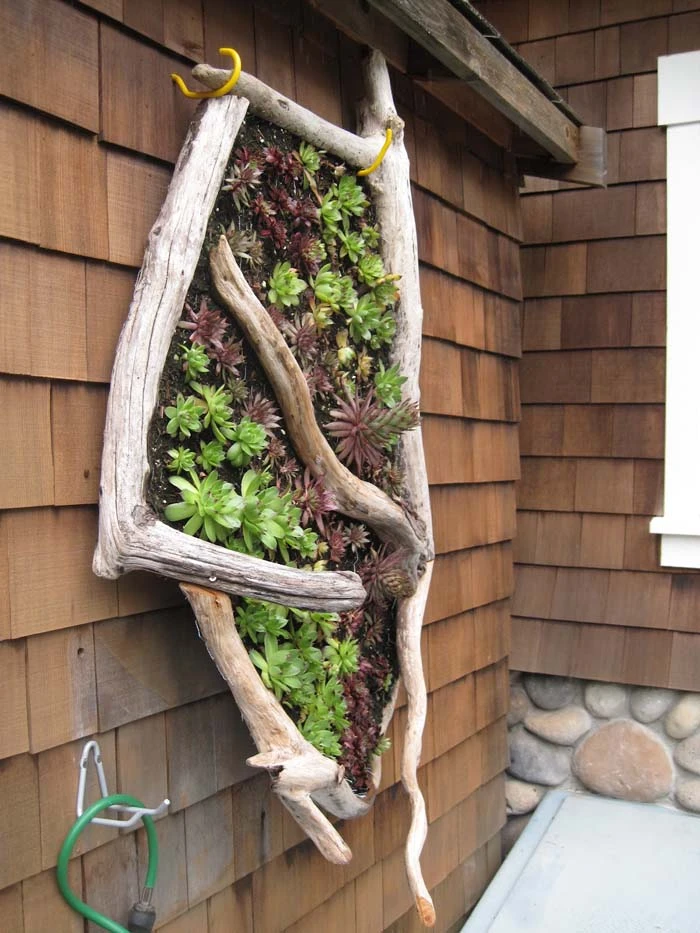
This aged driftwood piece makes an incredible natural planter for succulents. The organic curves create natural growing spaces at different levels. Those appear to be various sedums and other hardy succulents in shades of green and burgundy. Succulents are perfect for this type of planter since they don’t need much soil and prefer the excellent drainage that wood provides.
The yellow hooks or hangers let you mount this securely to a wall while keeping the natural aesthetic. This probably weighs quite a bit even when dry, so make sure your wall can handle the load. The wood will gradually weather and change color over time, adding to the natural look.
You could create something similar with any large piece of driftwood, old fence posts, or even carved-out logs. Drill drainage holes if needed and line with landscape fabric to keep soil from washing out while letting water drain freely.
10. Wire Cone Herb Planters

These cone-shaped wire baskets lined with coir fiber create excellent hanging herb gardens. The top basket has basil, the middle one looks like thyme, and the bottom shows purple basil or coleus.
The coir lining holds soil while allowing excellent drainage, important for herbs that hate wet feet. Wire baskets breathe better than solid pots, keeping roots healthier. The tapered shape gives plants room to spread while fitting nicely against walls.
Mounting requires strong brackets since they get heavy when watered. Space them 18-24 inches apart so lower plants get light. These work for Mediterranean herbs like oregano, thyme, and rosemary that prefer drier conditions. The excellent drainage means more frequent watering during hot weather, but prevents root rot that kills herbs in regular pots.
11. Letter-Shaped Planter Display

This wooden letter “K” creates a fun personalized garden feature filled with colorful annuals. The mix of pink, purple, white, and red flowers creates a great graphical effect. Geraniums are excellent since they bloom all season and handle heat well. Trailing plants soften the edges and make it look less boxy.
You could create any letter or number this way, like house numbers, family initials, or words like “WELCOME.” Place it where it gets morning sun but afternoon shade. Regular deadheading keeps blooms coming all summer long.
12. Stair-Step Wooden Planter
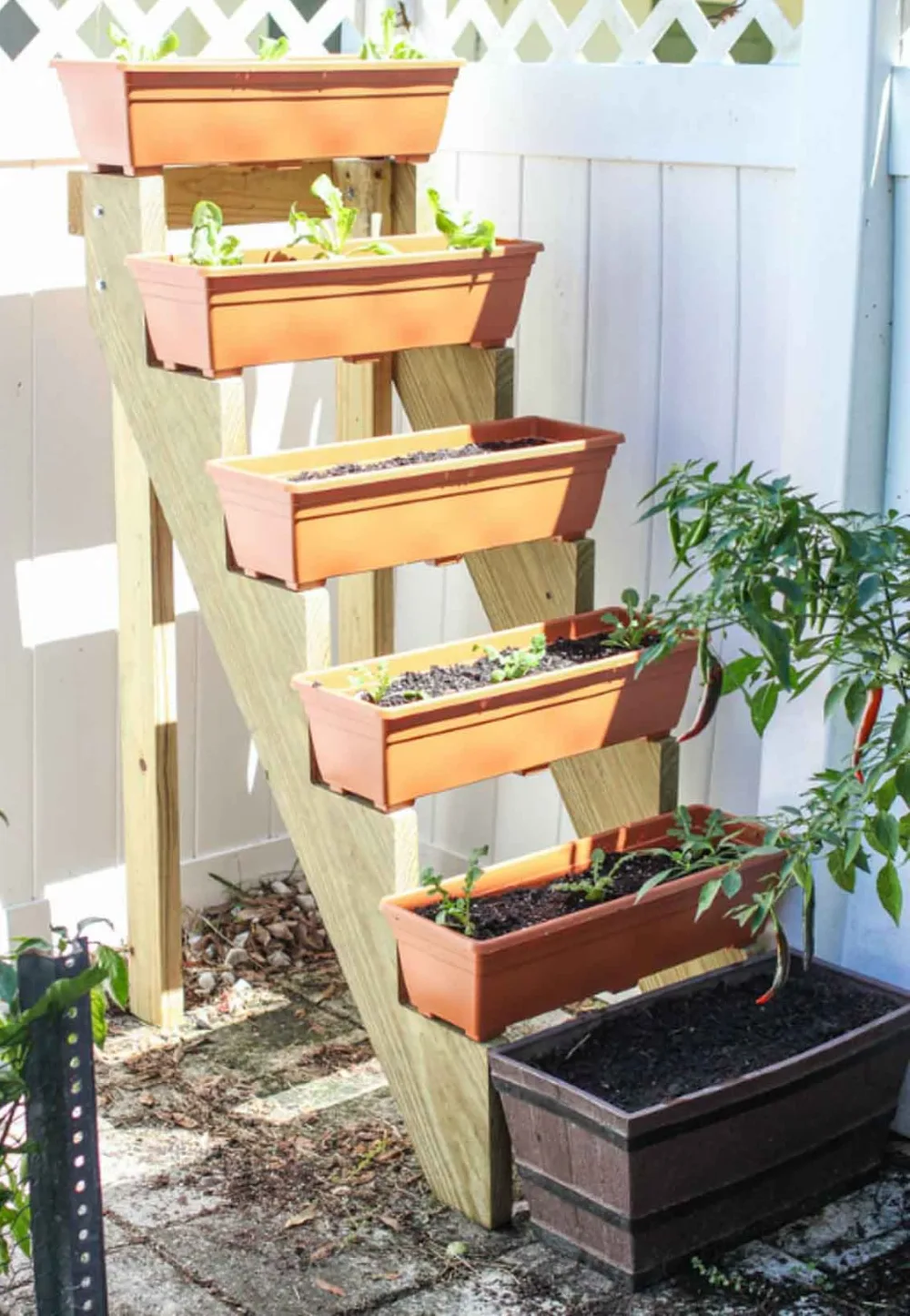
The zigzag wooden frame holds terracotta planters at different levels, creating an interesting geometric display. The angled design lets each planter get full sun exposure while creating a visual depth. Those terracotta window boxes are quintessential for herbs, lettuce, or small vegetables. Staggered heights make watering easy since you can reach each level without stretching.
The main part is getting angles right so everything stays stable when loaded with wet soil. This could be modified to be wider or taller, depending on space. This works for starting seedlings in spring, then moving to full-grown plants. The open design allows good air circulation, preventing plant diseases. Add casters to make it portable for following sun patterns.
13. Hanging Herb Garden Frame
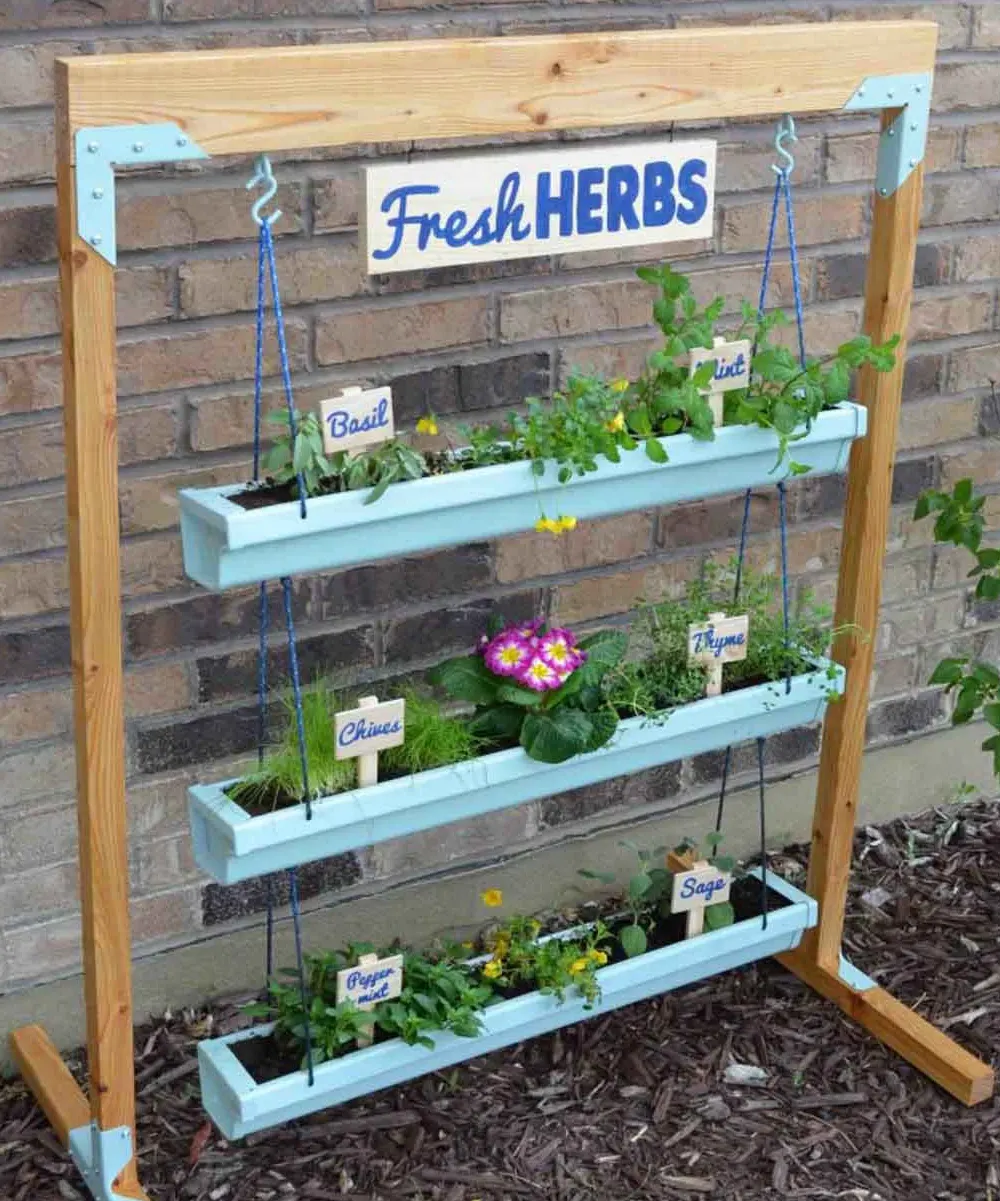
This freestanding wooden frame with suspended planters creates a wonderful herb garden station. The “Fresh Herbs” sign adds charm, and plant labels help identify what’s growing. The suspended white planters look like vinyl rain gutters with end caps. Hanging with chains makes them adjustable for different plant heights. The basil, chives, thyme, and sage shown are classic choices most cooks use.
The frame design makes this completely portable, so you can move it around to follow the sun or bring it closer to the kitchen door. An open structure doesn’t block views or create wind resistance like solid walls. Make sure the base is wide enough to prevent tipping when plants get bushy. You could easily add more levels or make it wider.
14. Pallet Garden with Metal Containers

The painted wooden pallet creates planting spaces using galvanized metal containers of different sizes. Yellow paint brightens up plain brown wood. The mix of containers adds visual appeal.. Those white cosmos flowers look beautiful against darker leafage plants.
The metal containers are probably old paint cans with drainage holes in the bottoms. Different sizes let you match the container depth to what you’re growing. Shallow pans work for lettuce, while deeper cans handle herbs with longer roots. Mounting containers at different heights creates a layered look while providing good light exposure. Pallet slats provide plenty of attachment points for hooks or brackets.
15. Colorful Ladder Planter

This bright yellow wooden ladder creates a cheerful vertical garden using painted tin cans or small buckets. The blue and yellow containers add playful color while holding various herbs and leafy greens. The containers are small paint cans with drainage holes drilled in the bottom. Each holds just enough soil for herbs like basil, lettuce, and trailing plants shown. Different colored containers let you organize by plant type or create a graphic appeal.
The angled ladder design gives each plant good light exposure while staying stable against the fence. Space the rungs about 12-15 inches apart so plants don’t shade each other. This works for herbs, small vegetables, or annual flowers. Make sure containers have good drainage and use quality potting mix since small volumes dry out quickly.
16. Wooden Ladder Plant Display

These wooden ladders with gray containers create a smart vertical garden great for patios or decks. The natural wood tone looks more cultured than painted versions. Charcoal-colored planters give it a modern feel. You can see flowering plants mixed with ornamental grasses for a nice texture discrepancy.
The containers look like concrete or heavy plastic planters that slide over ladder rungs. Each is deep enough for substantial root growth, meaning less frequent watering than smaller pots. Spiky grass plants add height and movement while flowering plants provide color.
This design is for displaying collections of similar plants or creating themed gardens like herbs, succulents, or seasonal displays. The ladder design makes it easy to rearrange containers or swap plants as seasons change.
17. Modern Trellis Planter Box

This sleek planter combines a raised growing box with an integrated trellis for climbing plants. The black metal frame gives it a modern look that works on modern patios or rooftop gardens. That wooden planter box provides plenty of root space for the climbing plants shown.
The wire grid trellis is perfect for peas, beans, cucumbers, or small melons; anything that likes to climb. Plants in the photo look like peas or beans just starting to grab the support structure. The raised design puts plants at a comfortable working height for planting and harvesting.
The bottom shelf adds storage space for tools, extra pots, or watering supplies. This dual-purpose design makes great use of vertical space while keeping everything organized. The wooden box appears deep enough for vegetables with larger root systems.
18. Chicken Wire Pot Display

The wooden frame with chicken wire holds terracotta pots at different angles, creating an interesting wall garden. Pots sit in the wire at various angles, giving plants different orientations and creating visual activity.
The terracotta pots look like standard 6-8 inch sizes that fit well through the wire spacing. You can see herbs and small leafy plants thriving in this setup. The angled positioning helps with drainage since excess water runs out easily.
Use galvanized chicken wire to prevent rust. Make the wire tight enough to support pot weight but loose enough to adjust positions. This works great for herbs, small vegetables, or annual flowers. The pots are easy to remove for repotting or seasonal changes.
19. PVC Frame Garden

This PVC pipe frame holds a black fabric planting pocket system, which is great for herbs and vegetables. The white pipe frame looks professional and fabric pockets provide individual growing spaces. You can see tomatoes, herbs, and leafy greens flourishing in different compartments.
The fabric system has built-in drainage and allows roots to breathe better than solid containers. Each pocket holds enough soil for plants while keeping everything organized. Clear plant labels help identify what’s growing where.
The lightweight design makes it easy to move around or store. The vertical design saves space while keeping everything at eye level for easy harvesting. Water from the top and let it drain down through the system.
20. Rustic Pallet Garden

The wooden pallet creates planting pockets between slats, filled with colorful flowers and decorative elements. The natural wood gives it a farmhouse feel. Bright, petunias add cheerful color. That little blue barrel and yellow truck add whimsical touches.
The spaces between pallet slats work for inserting small plants or hanging containers. Different flowers cascade at various levels, creating a living wall effect. The rustic wood provides nice backdrop for bright flower colors.
Line the back with landscape fabric to hold soil while allowing drainage. Fill spaces with quality potting mix and pack gently around plant roots. It works great for annuals, herbs, or small vegetables.
21. Natural Wood Ladder
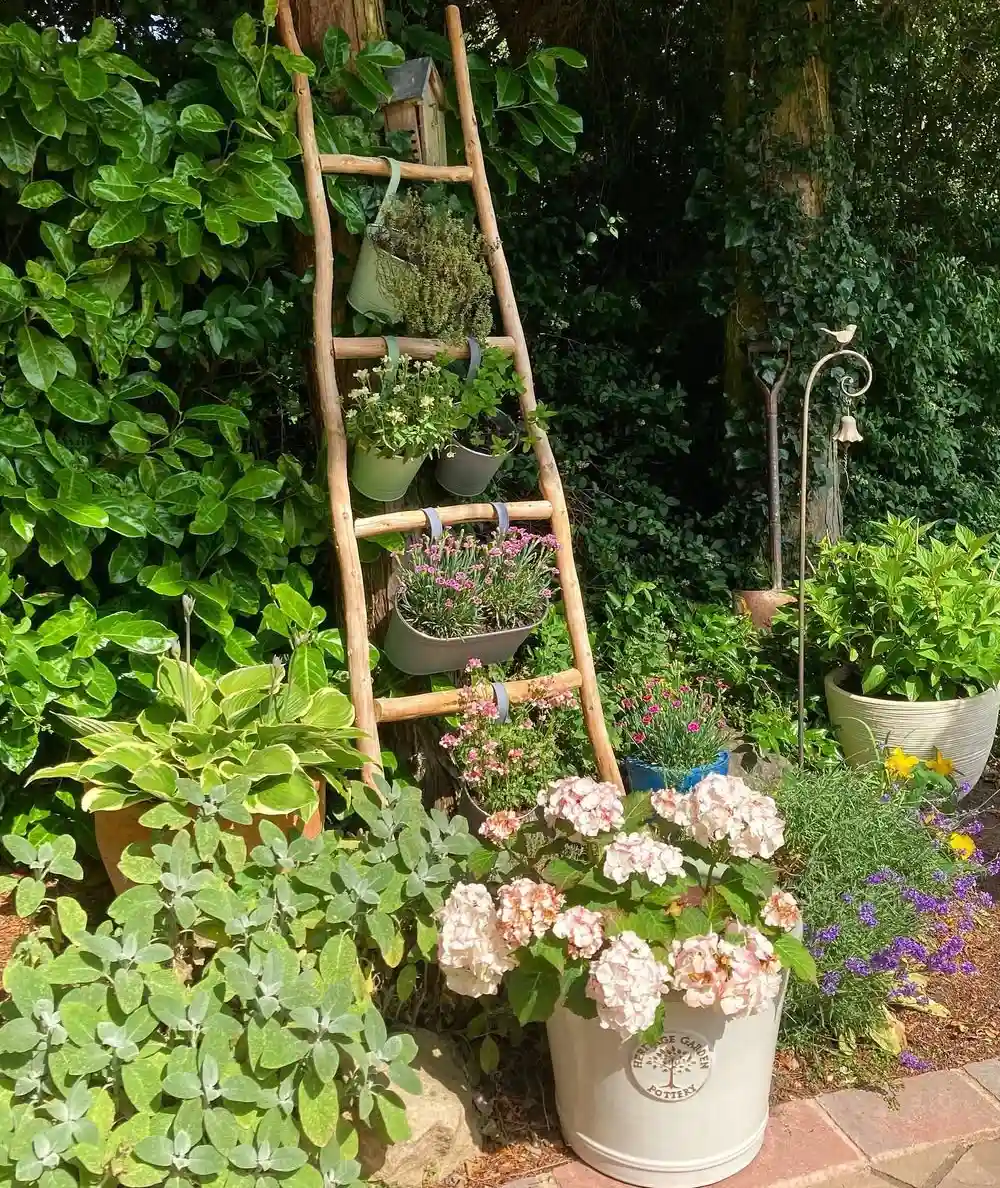
This rustic wooden ladder with green containers creates an elegant herb garden display. The weathered wood gives it natural cottage garden feel, while sage green pots add subtle color. You can see various herbs including what looks like rosemary and other Mediterranean plants.
The containers appear to be galvanized metal or painted pots that complement natural wood tones. Each pot is large enough for substantial herb growth while keeping the look cohesive. The ladder design makes it easy to access all levels for harvesting and maintenance.
This type of ladder can often be found at antique stores, farm sales, or flea markets for reasonable prices. If you can’t find one, build a simple version using cedar lumber.
The neutral color scheme works well in any garden setting without competing with surrounding plants. Position where herbs get 6-8 hours of sunlight daily. Perfect for a kitchen herb garden near the back door.
22. Red Gutter Planters

These bright red rain gutters mounted on a fence create eye-catching planters for succulents. The bold color makes a strong design statement while trailing succulents soften the geometric lines. Different varieties provide interesting consistencies and colors.
Rain gutters work perfectly for succulents since they provide good drainage and shallow depth suits these plants’ root systems. The red color makes green plants pop. You can mount gutters at any height or spacing.
Succulents are immaculate since they’re drought-tolerant and don’t mind limited root space. Mix different varieties for attraction; some upright, some trailing, different colors and textures. They thrive well in hot, sunny locations where other plants might struggle.
23. Rainbow Bucket Display

The colorful array of small buckets creates a cheerful vertical garden on a horizontal wood fence. The rainbow of colors from pink through blue adds playful energy to the herb plantings. Each bucket is small enough for individual herbs while creating a solid display.
The buckets look like small galvanized pails painted in different colors. Setting them at different heights creates a visible cadence while confirming that each plant gets sufficient light.
This is for herb gardens since you can group plants by type. The bright colors make it easy to identify different herbs from a distance. It is amazing for kids’ gardens since colors are fun.
24. Rustic Ladder Herb Display

This aged wooden ladder with terra cotta pots creates a classic cottage garden herb display. The natural patina on both wood and aged pots gives it authentic farmhouse character. You can see various herbs and small plants thriving at different levels.
The mix of pot sizes and styles adds graphical attraction while providing appropriate growing space for different plants. Larger pots on lower rungs work well for bigger herbs, and the smaller pots suit compact varieties. The ladder design allows good air circulation around all plants.
The terra cotta pots are amazing for herbs since they provide excellent drainage and help regulate soil moisture. The porous clay allows roots to breathe while the earthy color complements the rustic wood. This works for Mediterranean herbs that prefer drier conditions.
25. Wire Basket Wall Garden

These wire baskets lined with moss create individual planting pockets scaled vertically on a fence. The moss lining provides a natural look while holding soil and allowing good drainage. You can see herbs and small plants growing well in each basket level.
Wire baskets with moss lining are traditional for good reason, as they provide excellent growing conditions while looking attractive. The moss holds moisture while allowing air circulation to the roots. Each basket is independent, making it easy to change plants seasonally.
This system works for herbs, small vegetables, or flowering plants. The vertical arrangement saves space while keeping plants at convenient heights for harvesting. Water gently to avoid washing out soil. Expect to water more frequently than ground-planted herbs.

Jake is a chainsaws expert with a wealth of knowledge and experience in the field. He is a licensed professional by the National Chainsaw Program, which attests to his skills and expertise in the safe and efficient use of chainsaws.