Growing a permaculture garden transforms your outdoor space into a self-sustaining ecosystem. This design philosophy mimics nature to create abundance with minimal effort. By working with nature instead of against it, you save water and build healthy soil.
Traditional gardening often relies on harsh chemicals and constant labor. Permaculture offers a smarter way forward by using natural relationships between plants.
Every element in this setup serves multiple purposes, from attracting pollinators to retaining moisture. Implementing these eco-friendly concepts will bring wildlife and fresh food right to your doorstep.
29 Permaculture Garden Ideas
1. Cattle Panel Arch Trellis

Vertical gardening maximizes your available growing space. This curved metal arch supports climbing plants like squash or beans. Heavy vines climb the sturdy wire frame easily.
Concrete blocks create simple raised beds along the dirt path. Leaves catch plenty of sunlight while fruits hang down for an easy harvest. Air flows freely through the structure to prevent plant diseases.
2. Log Edged Garden Beds

Thick wooden logs outline neat planting rows filled with cabbage and greens. Organic materials retain moisture inside the soil. Bamboo poles lean against the wire fence to provide extra support for future climbing plants.
A simple wooden gate allows entry into the fenced plot. Gardeners arrange diverse crops close together to maximize yield. Tall reed bundles stand near the pathway for easy structural repairs.
3. Wooden Frame Supports

Sturdy timber frames hold climbing plants off the ground. Fine netting stretched between the wooden posts gives vines a firm grip. Large sunflower leaves soak up bright sunshine on the left side.
Curved mesh covers shield lower plant beds in the center. Green leafy crops cover the dark fertile soil across the plot. Houses and dense trees sit along the distant background line.
4. Living Green Dome

A dense leafy dome created from climbing vines forms a shaded feature on the left. Bright Swiss chard grows along woodchip pathways in the foreground. Diverse flowers and vegetables fill the central growing area.
Behind the garden beds, a white greenhouse stands near tall trees. Mulch retains soil moisture while suppressing unwanted weeds across the landscape. Wooden fencing encloses this productive backyard ecosystem.
5. Green Shade House

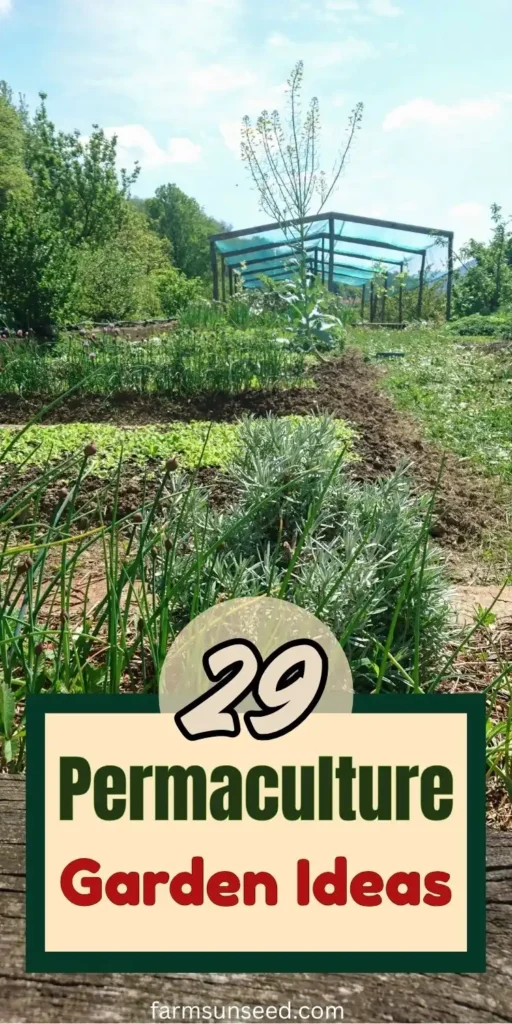
A green mesh structure protects sensitive plants from intense sunlight. This large shelter sits behind neat rows of leafy vegetables. Growers utilize these enclosures to lower temperatures during hot months.
Wire fencing with wooden posts keeps wild animals away from the harvest. Sunflowers bloom brightly on the right side of the yard. Distant mountains rise beneath a cloudy grey sky.
6. Insect House Pollinator Border

Purple flowers and tall green grasses border a paved stone patio. Small garden lights illuminate the pathway edge. A wooden bug house sits near the back fence to shelter helpful insects.
Herbs thrive alongside ornamental plants in this compact layout. Wooden stakes outline the planted area neatly. This balanced landscape invites natural pollinators while enhancing outdoor living spaces.
7. Companion Flower Bed

Tall purple flowers grow alongside young leafy greens in rich dark soil. Combining flowering plants with crops attracts pollinators directly to your vegetables. Terracotta pots sit among broad rhubarb leaves in the background.
Rustic wooden stakes support the surrounding foliage on the left edge. Diverse plant species share space cleanly to improve soil health.
8. Terraced Garden Beds

Flat soil steps cut into the sloping hillside capture rainwater effectively. Grass pathways divide each level cleanly to prevent erosion. Healthy leafy crops grow in dark soil rows along every tier.
A white wooden fence runs behind the terraced rows near the tree line. Thick green woods frame the background of this hillside homestead. Red wooden siding on a small building adds charm near the upper edge.
9. Stone Garden Walkway

A paved stone walkway leads down toward a calm pond. Water flows slowly through a narrow channel beside the pavers. Purple spiky flowers grow along the stone edge.
Leafy rose stems rise in the foreground to create natural depth. Shaded wooden benches offer comfortable resting spots beneath tall green trees. Bright yellow blooms light up the opposite side of the walkway.
10. Bamboo Cane Trellis

Slim bamboo stakes tied together create a strong framework for vining crops. Young bean plants train upward along the natural wooden poles. Green onions grow densely within the same fertile soil bed.
A curved metal shed sits nestled among lush bushes in the background. Slender cane supports utilize renewable materials to train climbing vegetables.
11. Extended Metal Canopy

An extended iron framework stretches across this wooded landscape. Tall evergreen trees provide a thick background behind the open structure. Spacious paved walkways invite visitors deeper into the shaded property.
Sturdy concrete walls organize elevated planting zones next to the path. Large striped leaves dominate the lower left corner of the view. Small orange flowers bloom delicately against the dark construction materials.
12. Metal Obelisk Trellis

A tall metal obelisk supports dense climbing vines on the right side. Pale silver foliage sits beside bushes blooming with small purple flowers. Bright green shrubs fill the immediate foreground of the planting bed.
Thick forest trees cover the rolling hills in the background. Gazebo roofs peek through the distant green canopy beyond a trimmed hedge line. Gardeners use vertical towers to grow heavy foliage upward easily.
13. Woodland Edge Planting

Lush green rose bushes anchor this multi-tiered garden border. Bright purple flowers bloom softly near the bottom edge. Sunlight filters through the overhead canopy onto a hidden stone walkway.
Water lilies carpet the surface of a quiet pond nearby. Natural layering creates habitat for beneficial wildlife throughout the seasons.
14. Integrated Polyculture Bed

Bright yellow marigolds bloom beside dark purple kale in this productive plot. A metal wheelbarrow loaded with garden tools rests on the green lawn nearby. Fine netting covers distant vegetable crops to keep hungry pests away.
Mixing flowers with leafy greens attracts beneficial insects to your soil. Flowering vines stretch across an elevated trellis running along the back border.
15. Repurposed Tire Planters

Repurposed car tires create durable containers for bright floral displays. Old rubber rings hold fertile soil securely above the grassy ground. Pink and white flowers spill beautifully over the textured edges.
A large fruit tree casts dappled shade across these creative garden beds. Fallen birch wood rests peacefully on the lush lawn nearby. Upcycling discarded items prevents unnecessary waste in your backyard sanctuary
16. Vertical Plant Tower

A dark structural tower supports thick climbing vines in the center. Bright red flowers bloom among large dark leaves on the left side. Tall trees cast cooling shade over the landscaped property.
Neatly trimmed spherical shrubs anchor the right side of this layout. Stone blocks build low retaining walls behind the dense green foliage. Wooden beams stretch horizontally across the distant background.
17. Vibrant Floral Park Border

A dense variety of bright yellow, orange, and red flowers fills the vibrant foreground. Distinct dark purple leafy plants contrast sharply against the surrounding light green foliage.
A neatly trimmed, low green hedge borders the colorful garden beds. Beyond the vibrant plantings, large mature trees cast cooling shadows across a grassy park, where a paved walkway winds through the peaceful landscape under a clear blue sky.
18. Potted Stump Focal Point

A terracotta pot sits atop a weathered tree stump, creating an elevated centerpiece amidst lush, untamed growth. A classic red wooden cottage with white window frames rests in the background behind dense foliage.
Tall native plants, saplings, and wild seed pods encircle the pedestal to foster a rich ecosystem. Utilizing natural wood stumps as plant stands adds vertical interest and rustic charm to homestead gardens.
19. Homestead Edible & Floral Garden

Tall, spiky purple gladioli stand in rows beside patches of dark leafy crops, herbs, and vegetables. A healthy fruit tree anchors the central lawn, surrounded by colorful flower beds, a wooden garden bed frame, and a small soil mound.
Warm golden light illuminates the plot positioned between a house and a rustic wooden barn. Planting high-yield crops and pollinator-attracting blooms close to home structures creates a convenient, highly productive kitchen garden.
20. Hillside Shelter Garden

Natural wooden gazebos provide shade at the top of sloping landscapes. Flowering shrubs grow alongside native greenery to cover sloping ground. Large rocks anchor soil surfaces while adding structural depth.
Log fences secure upper pathways without disrupting wild outdoor aesthetics. Dense rose bushes attract pollinators to boost overall ecosystem health. Deep roots hold loose earth on inclines during heavy rain showers.
21. Polyculture Kitchen Patch

Bright marigolds grow right alongside broad vegetable leaves. Combining colorful flowers with edible crops deters unwanted pests naturally. Small wooden signs track specific plant varieties in tight spaces.
Thick vines climb stick fences to maximize vertical growing space. Manual care preserves soil health without synthetic fertilizers. Plant diversity secures consistent fresh food throughout growing seasons.
22. Terraced Hillside Food Forest

Fruit trees line grassy slopes beside structured growing beds. Tiered terraces capture runoff water on steep ground easily. Gravel paths separate distinct rows while preventing erosion.
Wooden frames and tall stakes support climbing bean vines. Surrounding forest trees shield vulnerable crops against strong wind gusts. Lush foliage thrives in this integrated mountain environment.
23. Shaded Stone Pathway Bed

Stone walls construct elevated beds beside smooth paved pathways. Lavender flowers and wild pink roses fill lush corners under lofty tree canopies. Shaded concrete structures anchor soil layers throughout woodland zones.
Tall deciduous branches filter bright sunlight to cool low foliage naturally. Low hedges align along pedestrian walkways to guide visitor movement efficiently. Diverse floral undergrowth attracts helpful wild pollinators into dense wooded spaces.
24. Formal Water Channel Bed

A shallow metal channel directs moisture straight through cultivation rows. Low green hedges neatly frame wide gravel walking paths. Yellow blooms sit beside vibrant leafy greens inside neat soil plots.
Bamboo teepees support tall climbing vines across open growing zones. Potted palms add vertical height near distant background tree lines. Smart water channels distribute moisture efficiently without wasting precious resources.
25. Grass-Edged Garden Beds

Thick turf borders form defined planting strips along gravel walkways. Small white tags mark individual species growing within the grassy frames. Tall vine walls screen off background forest areas naturally.
Curving pathways make room for easy access to every plant bed. Dense grass edges retain soil structure and reduce erosion risks. Mature canopy trees filter sunlight to protect delicate understory greenery.
26. Tiered Stone Step Beds

Stone steps wind upward through layered floral terraces. Trimmed boxwood hedges frame colourful flowering ground covers along lower ledges. Broad green plants absorb sunlight near a shaded wooden bench.
Dense leafy canopies create cool microclimates for diverse understory vegetation. Vibrant yellow blossoms fill sloping stone retaining walls to suppress unwanted weeds. Outdoor seating offers quiet relaxation within lush woodland surroundings.
27. Low Tunnel Garden Covers

White protective covers guard delicate crops against harsh weather. Tall deciduous trees line the background to form a natural windbreak. Red tulips add bright color near open soil beds.
Fabric tunnels trap solar heat and warm the soil quickly. Green shrubs flourish beside open planting areas. Gardeners shield young crops from frost and pests using these simple covers.
28. Historic Pavilion Garden

A striking red wooden pavilion with decorative roof turrets forms the central focal point of this expansive botanical layout. A towering mature tree with light green foliage looms gracefully over the left side of the property. Winding gravel pathways guide visitors cleanly between manicured hedges and diverse plant collections.
Clusters of purple flowers and varied perennial beds thrive in the sunlit growing spaces. Integrating classic architectural landmarks into large garden designs establishes strong visual anchors while providing functional shelter and structure within the ecosystem.
29. White Stone Garden Borders

Low white stone walls outline large planting beds neatly. Textured green and purple kale leaves fill the main growing area. Vibrant orange flowers bloom on the right side.
Mature fruit trees stand behind the organized vegetable rows. A white building with a pitched roof rests under a sunny blue sky. Wooden tripod trellises support climbing crops in the distance.