Sloped yards often feel like a headache. Heavy rain washes away your soil, leaving ugly patches and ruined landscapes. Gardening on a hillside demands smart strategies to fight gravity.
Fortunately, you can transform a steep incline into a stunning, stable feature. The right design choices anchor the earth while cutting down your weekend chores.
Low-maintenance plants and clever hardscaping work together to stop erosion naturally. You do not need to spend hours weeding a dangerous hill.
Smart Landscaping Strategies for Sloped Yards
Managing a steep hillside requires a strategic approach to counteract gravity and prevent severe soil erosion during heavy rains.
Integrating low-maintenance vegetation with structural hardscaping elements, you can stabilize the terrain while significantly reducing your ongoing yard work.
Slope Stabilization
Erosion Control Blueprint
Terraced Retaining Walls
Installing tiered structural barriers levels the ground, effectively slowing down water runoff and holding topsoil firmly in place.
Deep-Rooted Groundcovers
Planting robust, perennial vegetation establishes a natural underground network that anchors the soil and crowds out weeds.
Strategic Drainage Channels
Incorporating French drains or dry creek beds safely redirects excess rainwater away from vulnerable inclines.
Heavy-Duty Mulching
Utilizing coarse organic mulch or gravel blankets the surface, minimizing soil splash and conserving essential moisture.
1. Corten Steel Retaining Edging
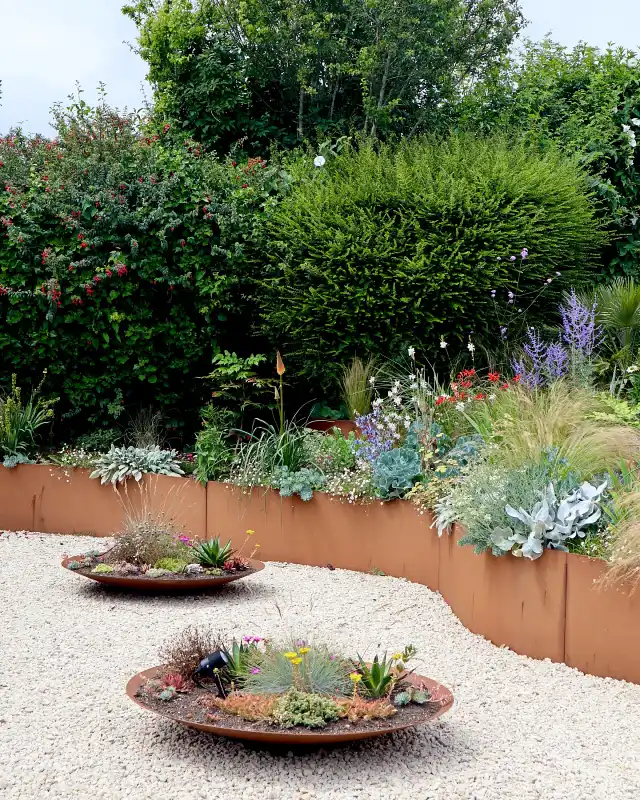
Corten steel borders create sturdy tiers to hold back shifting soil. The weathered metal sheets form a clean barrier that prevents dirt from washing down the incline during storms. Large metal planter bowls sit on the lower gravel level to hold drought tolerant succulents safely.
Dense green shrubs and ornamental grasses fill the raised beds behind the orange metal walls. Deep roots from these mixed perennials bind the earth together on the upper slope. This setup keeps the ground stable while adding a modern look to your yard.
2. Gravel Steps with Rock Anchors
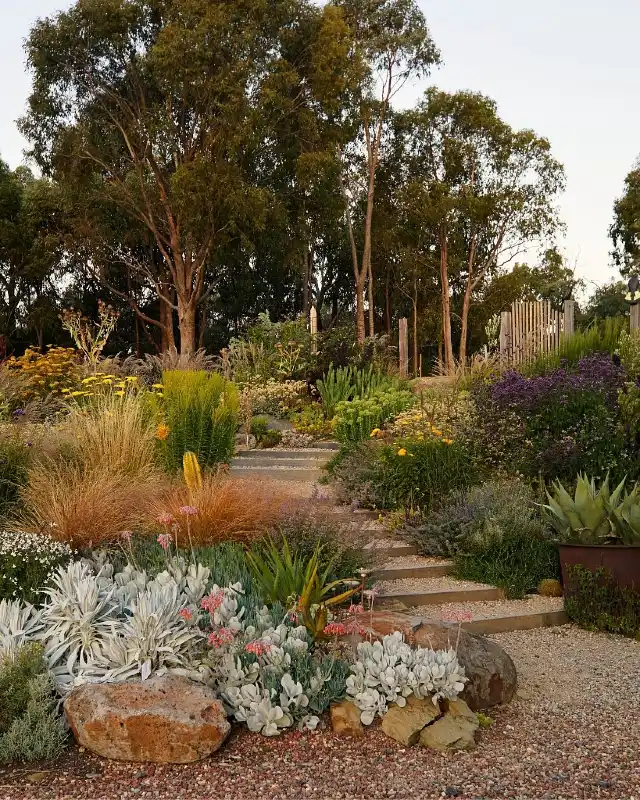
Low wooden risers filled with fine gravel create a secure pathway up the hillside. This structure slows down rushing rainwater by breaking up the steep slope into manageable levels. Large natural boulders sit at the base to lock the surrounding ground into place.
Chunky succulents and pale green groundcovers spread across the rocky soil next to the stairs. Golden ornamental grasses and purple wildflowers fill the higher sections of the bank. Their varied root systems grip the dirt tightly to prevent washing away.
3. Flagstone Steppers with Lush Groundcovers
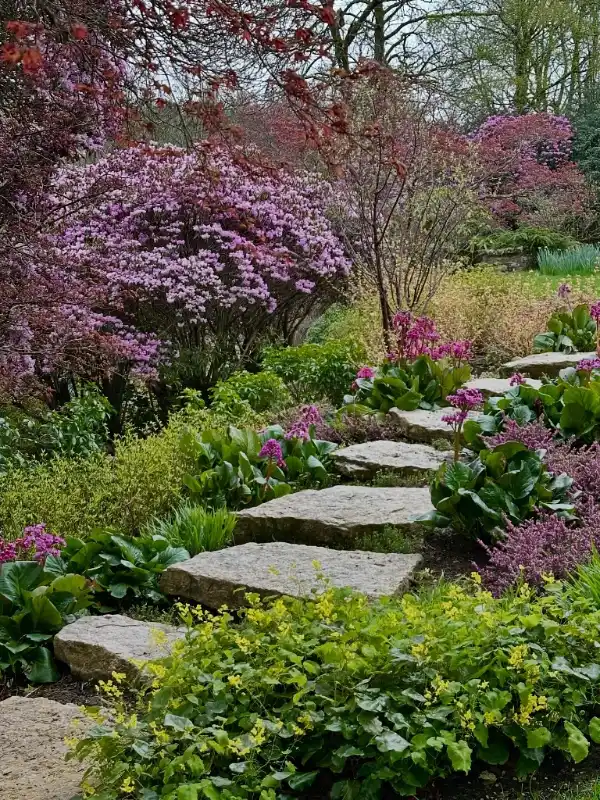
Flat stone slabs wind upward to form a rugged staircase on the grassy slope. These heavy rocks press into the earth to block mud from sliding downward during heavy rain. Broad green leaves of bergenia grow tightly against the stone edges to cover bare spots.
Bright pink blooms and low yellow wildflowers blanket the spaces between the steps. Towering purple azalea bushes anchor the higher ground with their woody roots. This thick blanket of vegetation keeps the hillside stable and green.
4. Multi Level Timber Terracing
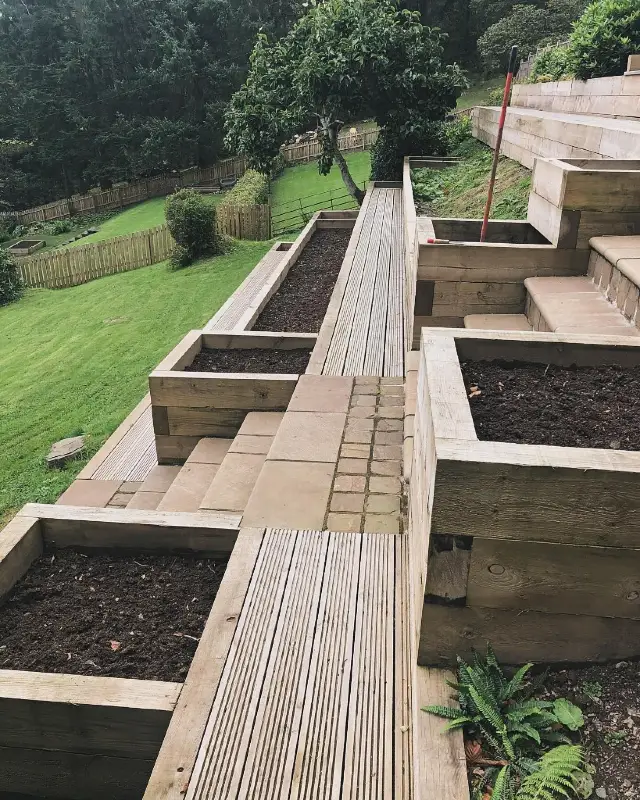
Thick wooden beams form a series of rectangular raised beds along the steep incline. These heavy timber walls carve the hill into flat sections to stop water runoff completely. Long wooden walkways and stone steps run between the boxes for easy access.
Dark organic soil fills the deep planters, ready for easy planting. A few green ferns peek out near the bottom level to cover the corner dirt. This structural design locks the hillside down while providing clean zones for your plants.
5. Segmental Block Retaining Walls
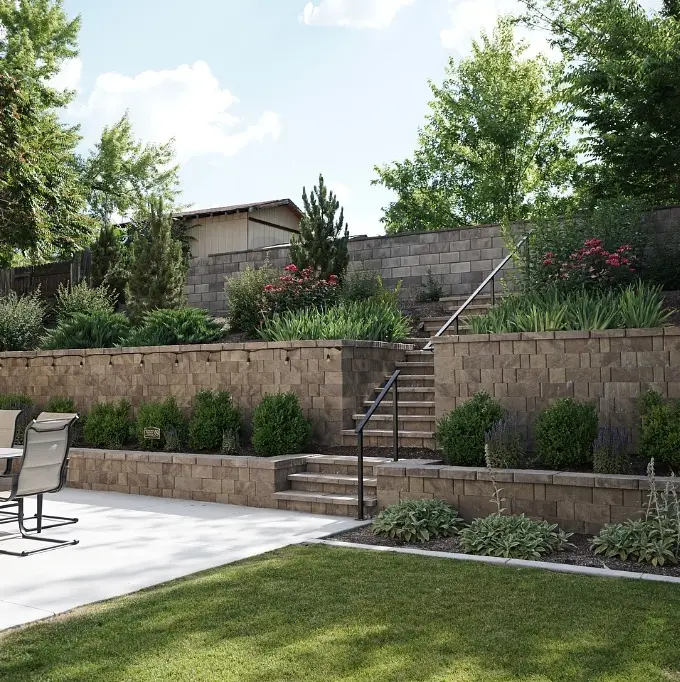
Stacked masonry blocks create a towering double tier system to secure the steep backyard slope. These heavy tan stones form straight, solid barriers that completely halt dirt movement above the patio.
A built in central staircase with a black metal handrail provides a safe route through the levels.
Neat rows of rounded green shrubs line the lower planting beds to cover the soil. Taller evergreen trees, spiky irises, and red flowering bushes anchor the highest section of the bank. This structured engineering turns a problematic hillside into a clean, multi tiered backdrop.
6. Cottage Style Stone Terraced Path
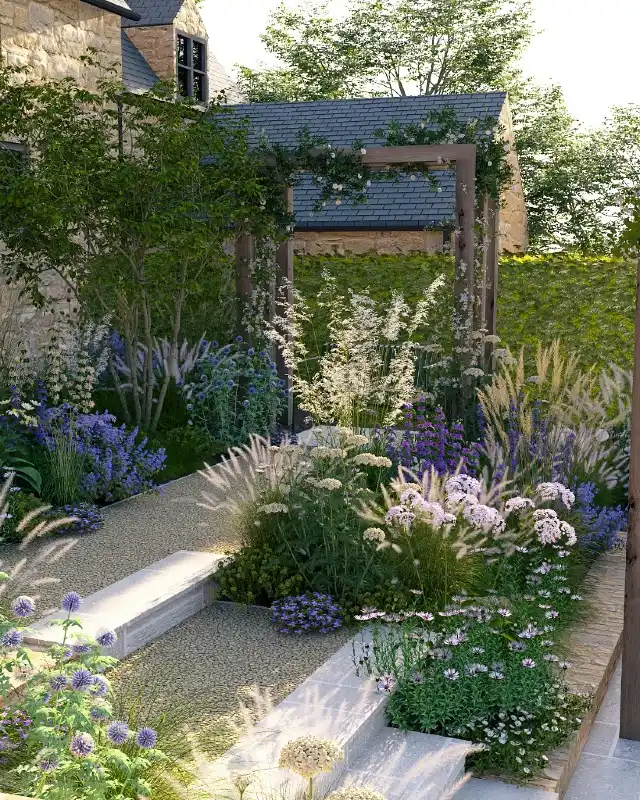
Low stone retaining walls create a charming split level walkway next to the house. These sturdy masonry borders flatten sections of the incline to catch rainwater before it sweeps soil away. Smooth gravel fills the flat footpaths to allow water to soak into the ground gently.
Feathery white ornamental grasses and purple globe thistles pack the planting zones closely. Clumping perennials like yarrow and catmint blanket the earth along the stone edges. Their dense roots create an underground web that holds the hillside together.
7. Natural Stone Edging with Mixed Perennials
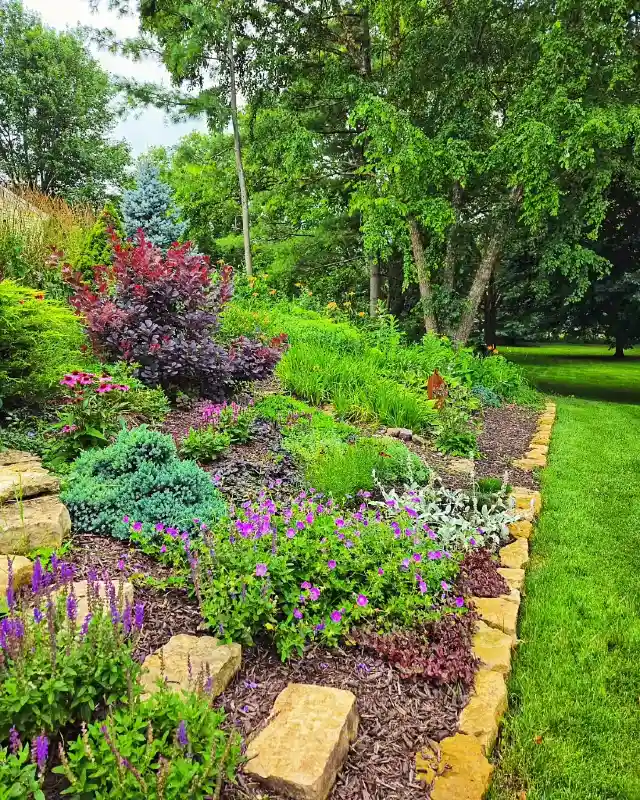
Rough cut yellow flagstones line the bottom curve of this sloping garden bed. This solid rock border separates the planting zone from the lawn to stop mulch and dirt from spilling onto the grass. Thick wood chips blanket the open ground between plants to shield the soil surface from driving rain.
Vibrant purple cranesbill geraniums and spiky salvia clump tightly over the stone perimeter. A dark purple smoke bush and spreading evergreen conifers anchor the center of the mound. These layered root systems lock the hillside down securely.
8. Tiered Timber Vegetable Beds
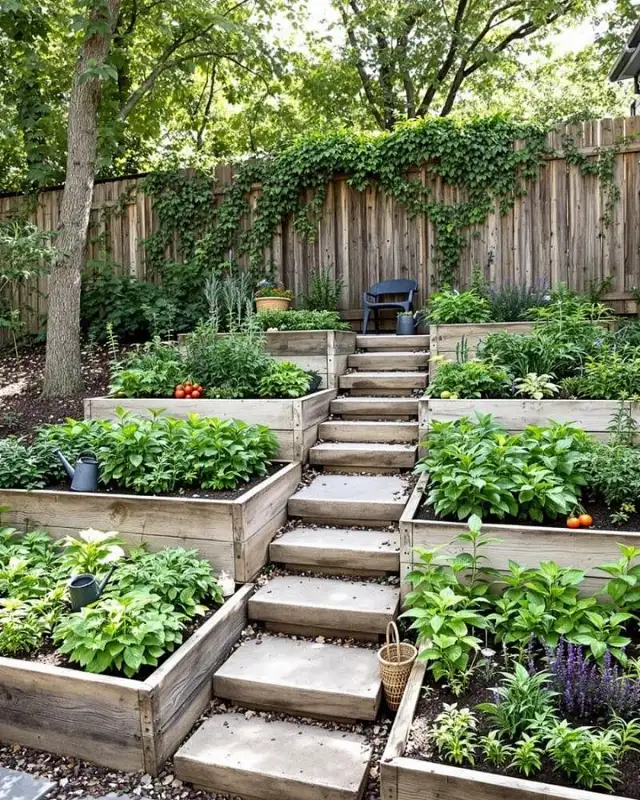
Weathered wooden planks build a series of symmetrical steps up the backyard hillside. These sturdy wooden boxes turn the sharp incline into safe flat zones that stop heavy rain from carrying dirt away. Stone pavers create a clean central staircase to let you walk through the garden easily.
Lush green crops, tomato plants, and purple salvia pack the deep soil boxes tightly. Thick ivy climbs the wooden back fence to stabilize the top edge of the yard. This vertical layout manages water flow perfectly while creating space for fresh food crops.
9. Mediterranean Stone Retaining Walls
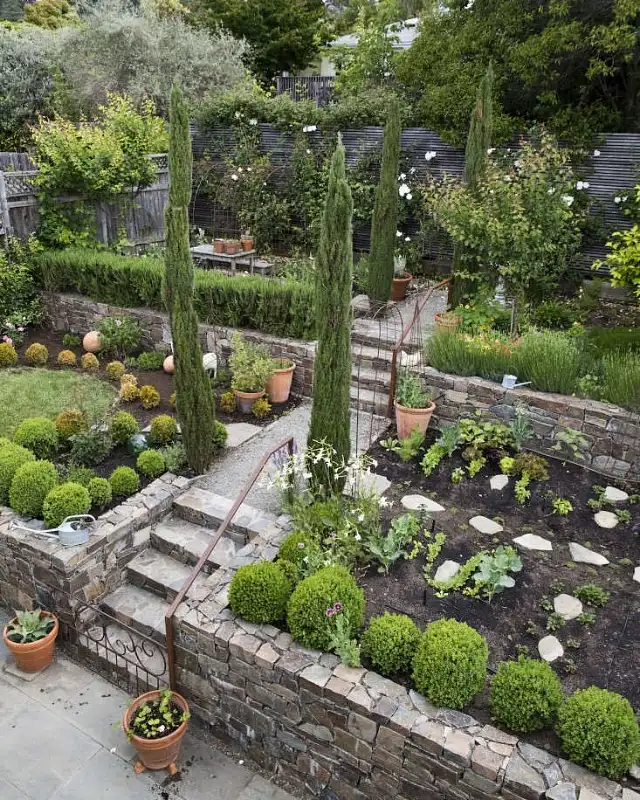
Stacked fieldstones form rugged, multi leveled barriers along this hillside garden. These thick rock structures terrace the slope to keep rich garden soil from washing down into the lower seating area. Narrow stone steps with a simple metal handrail wind safely through the different planting levels.
Slender cypress trees stand tall to add vertical structure and deep root support. Neat rows of rounded boxwood shrubs line the stone edges to cover bare ground. Open dirt beds hold small leafy crops and young perennials protected by the surrounding masonry.
10. Curved Modular Tiered Retaining Rings
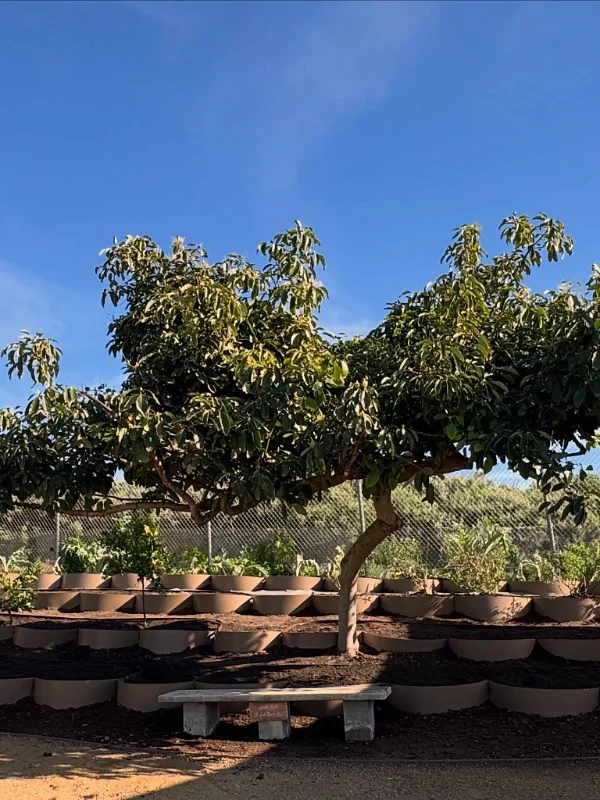
Interlocking curved planters stack in neat rows to stabilize a steep fruit orchard hillside. These rounded modules step upward to catch falling rain and prevent large sheets of mud from sliding down. A simple stone bench sits at the flat base for a clear view of the structured design.
A large green fruit tree stretches its wide canopy over the center of the stepped slope. Small bushes and leafy greens grow out of the individual dirt filled pockets behind the rings. This repeating block system anchors the landscape while maximizing planting space on an incline.
11. Multi Level Wooden Decking
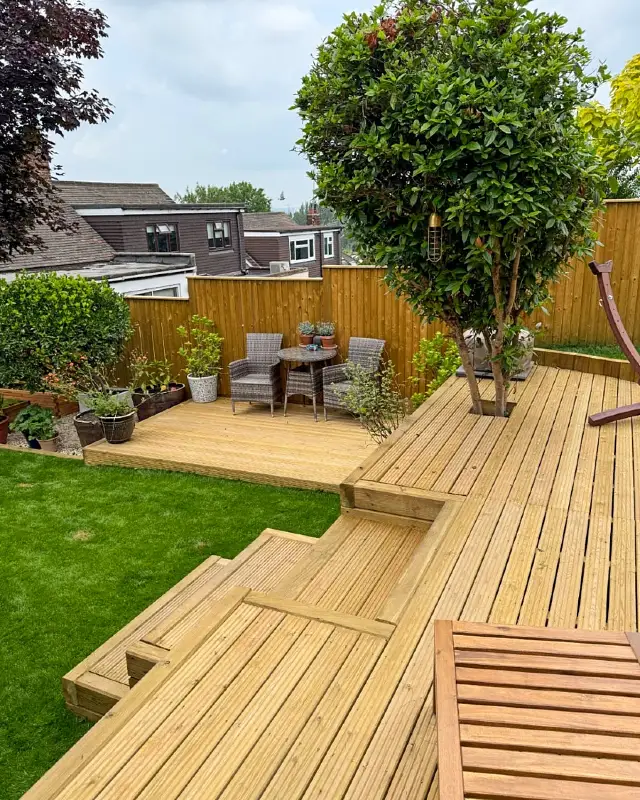
Elevated wooden platforms build a clean structured system down a steep backyard incline. This extensive decking caps the hillside completely to eliminate open dirt surfaces where rain could cause landslides. Wide built in steps flow smoothly between the upper lounge zone and the green lawn below.
A mature tree grows right through a custom cutout in the main deck boards. Potted plants and small green bushes line the wooden privacy fencing along the perimeter. This architectural hardscaping locks down the hill while maximizing flat outdoor living space.
12. Metal Planter Box with Boxwood Borders
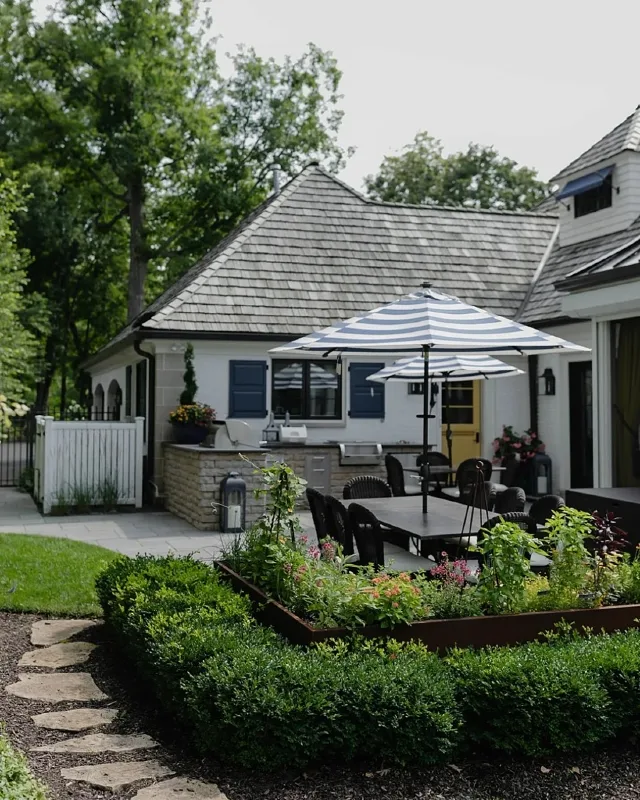
A raised rectangular metal planter sits firmly on the edge of a patio slope. This dark brown structure elevates the soil to keep dirt from spilling onto the lower stone walkway. Natural flagstone steppers run alongside the garden bed to provide a stable walking path over loose mulch.
Low trimmed boxwood shrubs wrap around the base of the metal frame to anchor the surrounding earth. Colorful annuals and climbing green vines pack the inside of the raised box tightly. This combination keeps the garden edge neat and stops mud sliding near outdoor dining areas.
13. Steep Hillside Wooden Terraces
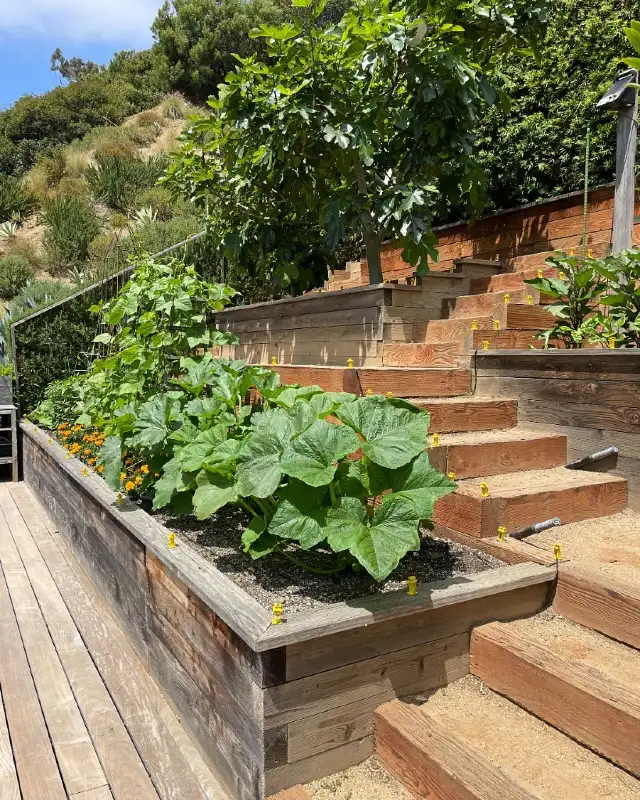
Thick wooden retaining walls stack high up a sunny canyon slope to form deep growing tiers. These heavy timber barriers completely level out the steep incline to catch water runoff and lock dirt into place. Wide wooden steps wind up the side of the planters to create a solid walking path.
Broad leafed squash plants and climbing green vines fill the long garden beds packed with dark soil. A mature leafy fig tree stands on the upper level to anchor the deep earth with its strong roots. This hillside engineering stops mud slides while making a wild cliff usable for farming.
14. Meadow Rue Groundcover Border
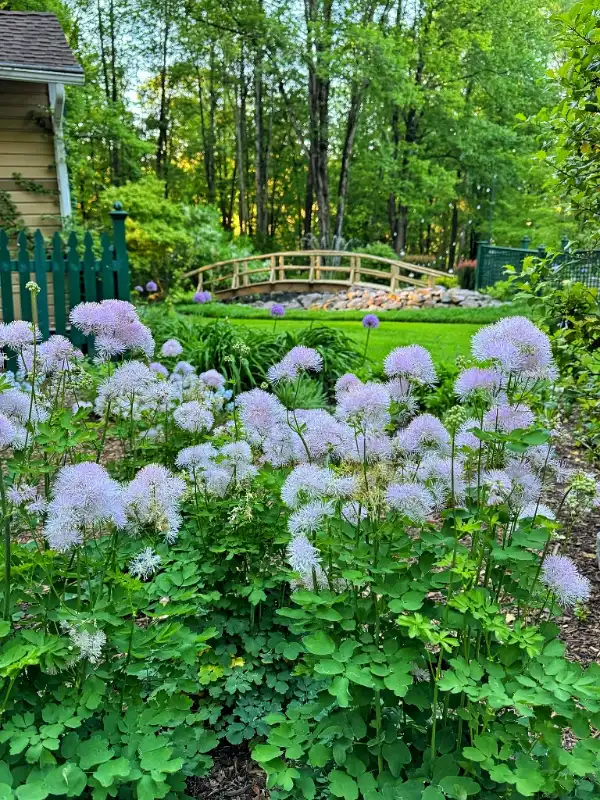
Fluffy lavender meadow rue plants carpet a gentle backyard incline near a wooden shed. This dense perennial vegetation acts as a natural shield to protect loose dirt from direct raindrops. Wood mulch chips cover the open gaps below the green leaves to soak up excess ground moisture.
Tall purple allium bulbs dot the green grass lawn that slopes toward a distant arched bridge. Sturdy river stones line the creek bed below the bridge to channel heavy water runoff safely. Mass planting these leafy flowers blankets the incline to keep soil firmly in place.
15. Enclosed Timber Terrace System
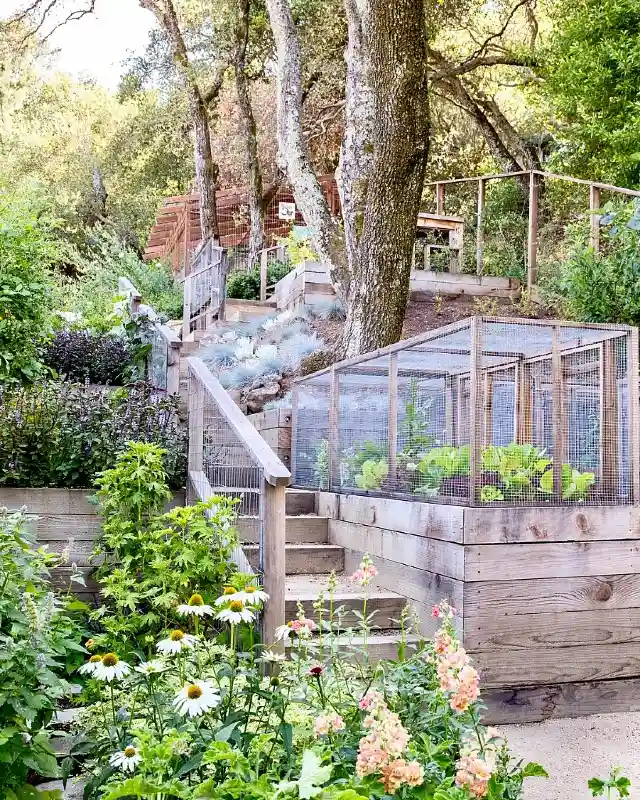
Thick wooden retaining walls create a stepped structure up a heavily wooded incline. These sturdy gray timber boxes slice the steep grade into flat planting sections to lock down shifting earth. Solid wooden staircases with mesh railings provide a secure path beside towering mature tree trunks.
Wire mesh cages top the flat planters to protect fresh green lettuce crops from local wildlife. White coneflowers and peach snapdragons burst from the lower soil beds to ground the framework. Clumping blue fescue grasses line the upper hillside slopes to hold the dirt beneath the trees.
16. Gravel Courtyard with Raised Planters
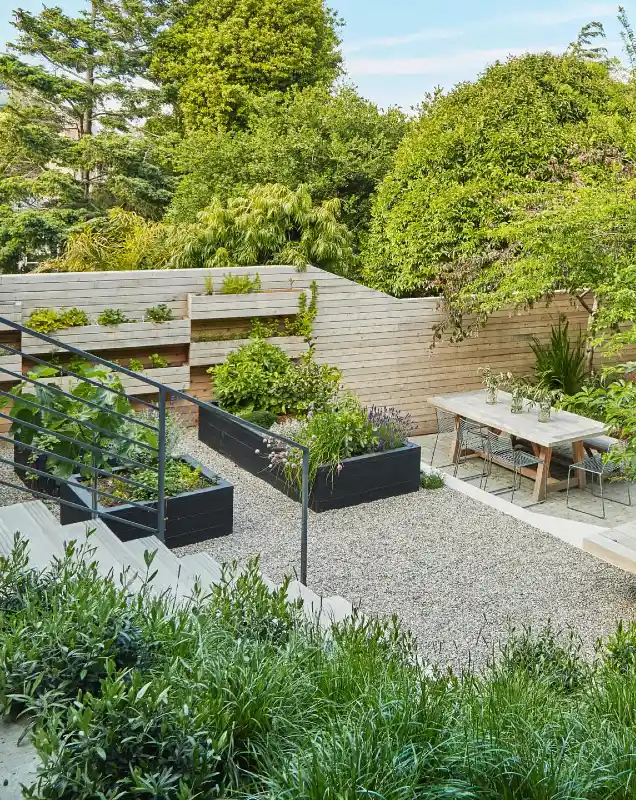
Loose pea gravel blankets the flat base of this terraced hillside courtyard to absorb rainwater quickly. This permeable ground cover prevents pool formation and stops soil runoff from sweeping across the seating area. Dark rectangular planter boxes sit firmly on the stone bed to hold garden soil in place.
Thick green grasses and low shrubs line the foreground to stabilize the upper grade of the slope. Built-in wooden wall planters climb the light timber fence to add vertical green spaces without disturbing the ground. This clean design manages water drainage efficiently while creating a functional dining space.
17. Brick Retaining Wall with Wide Inset Steps
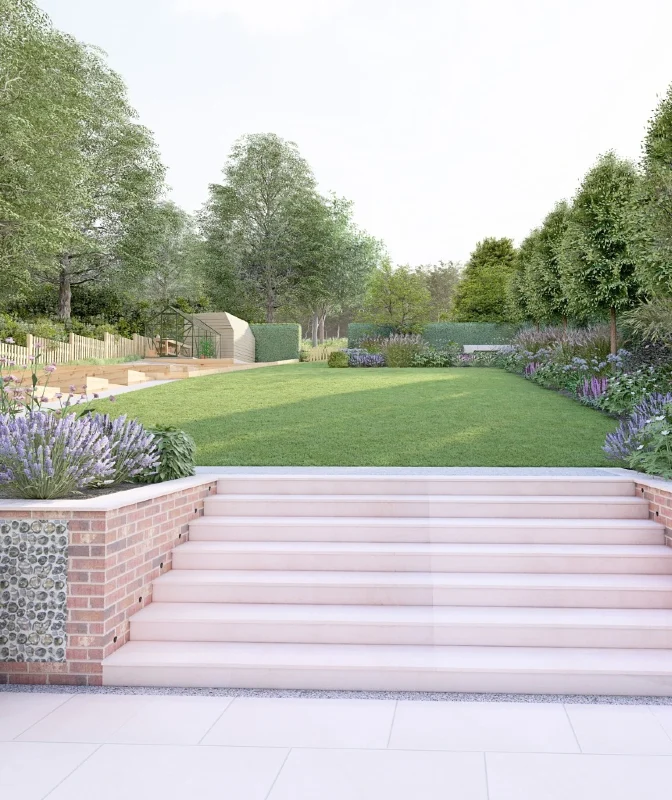
Red brick masonry walls flank a wide concrete staircase to transition smoothly between lawn levels. These solid structures act as a firm barrier to hold back the upper lawn plot and stop topsoil from sliding onto the lower patio tile. Tiny stones fill vertical mosaic strips on the brick face for extra architectural detail.
Clumping purple lavender plants and spiky white grasses flank the stone steps to anchor the corners. A long row of matching green trees and purple perennials lines the right border of the main lawn. Their extensive root systems work alongside the masonry to keep the wide gentle slope uniform and stable.
18. Elevated Pergola Deck with Masonry Tiers
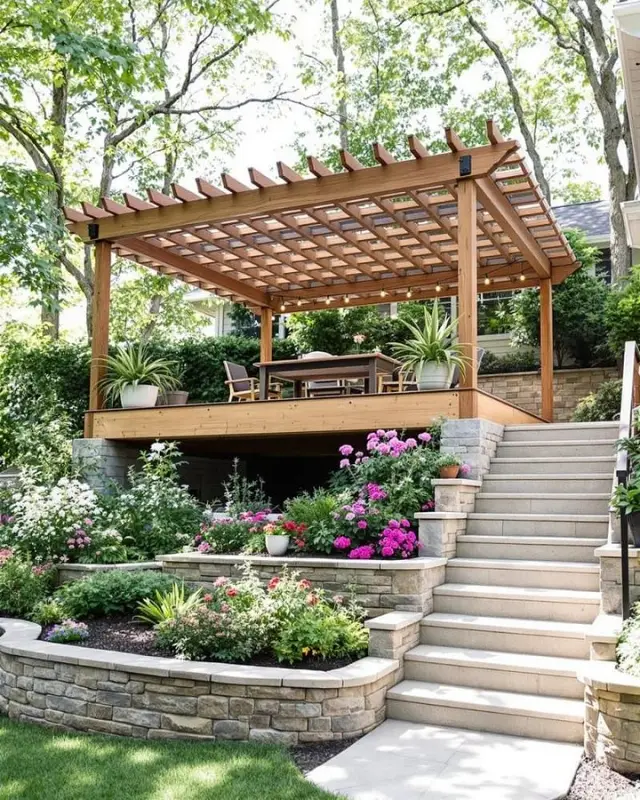
Stacked stone retaining walls terrace a steep backyard to support an upper wooden dining deck. These curved masonry barriers divide the high slope into flat garden beds that stop rainwater from washing mud onto the lower grass. Smooth stone stairs run along the side to offer a clear route up the structure.
Bright pink flowers and spiky green plants pack the terraced soil zones tightly to prevent erosion beneath the platform. A sturdy wooden pergola sits on top of the stone foundation to provide shade for the seating area. Thick green trees form a dense canopy overhead to anchor the highest points of the yard.
19. Rock Bordered Slope with Dark Mulch
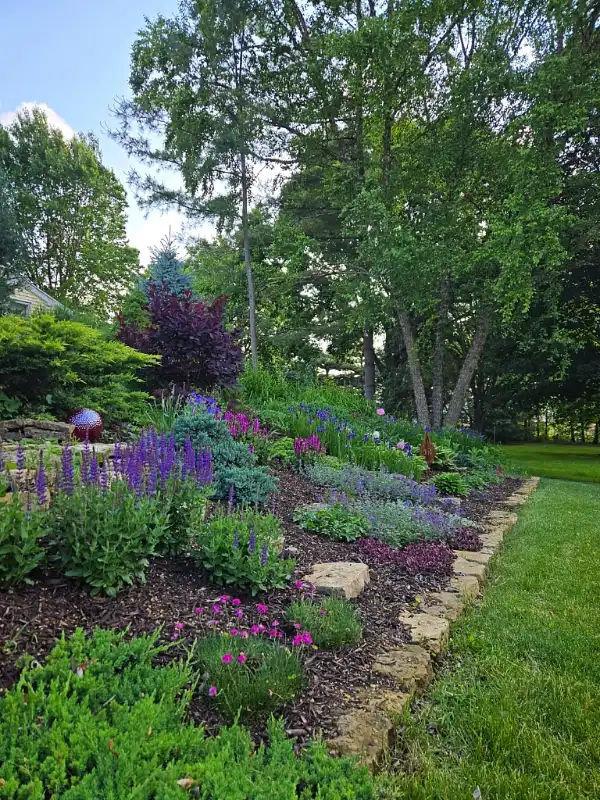
Rough stone bricks line the lower boundary of this wide garden incline to separate it from the grassy lawn. This natural hardscape border keeps thick wood shavings from sliding downward during high winds or rain. Dark mulch entirely blankets the open spaces between plants to protect the underlying dirt from washing away.
Spiky purple salvia and low blooming groundcovers spread across the lower section of the bank. Taller shrubs like a deep purple smoke bush and spreading evergreens anchor the mid level ground. Large shade trees rise at the top of the hill to provide deep root stability for the entire slope.
20. Stone Block Retaining Wall with Hillside Succulents
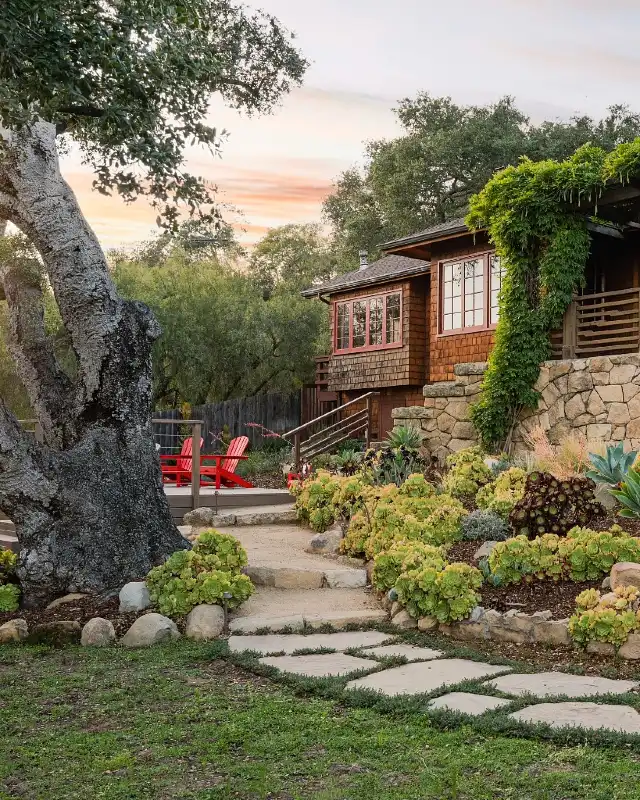
A high wall made of fitted fieldstones supports the foundations of a wooden house on a steep slope. This masonry structure keeps massive amounts of dirt from sliding down into the lower yard areas. Flat flagstone pavers form a sturdy walkway at the base to let water seep down into the earth naturally.
Thick clusters of rounded green aeonium succulents blanket the bank completely. Their dense fleshy leaves shield the soil surface from heavy wind and rain damage. A massive old oak tree stands firmly in the foreground to provide deep root support for the surrounding ground.
21. Natural Stream Rockwork with Dense Groundcovers
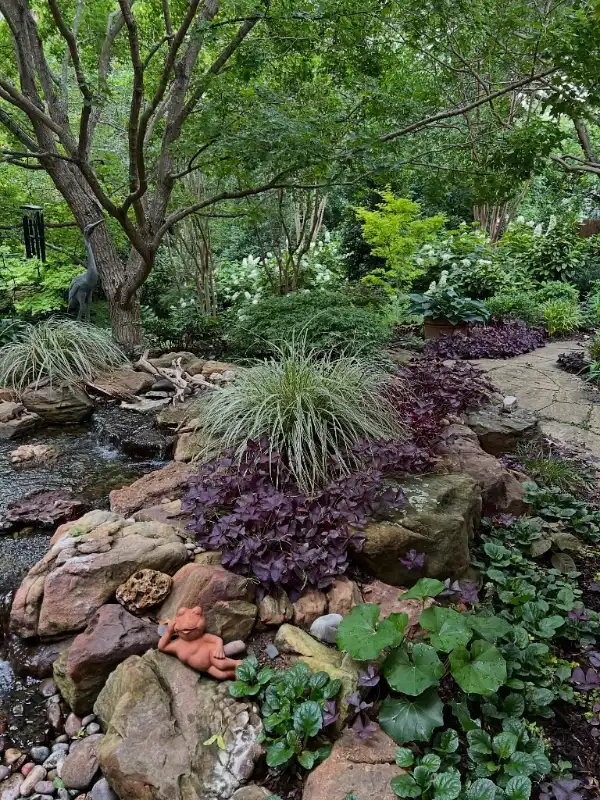
Large rugged boulders line the edges of a backyard stream cascading down a slope. These heavy stones redirect water flow smoothly to stop fast currents from carving out loose shoreline soil. A winding flagstone path runs along the high right side to provide a solid walking area.
Dark purple oxalis plants and spiky variegated grasses nestle between the stone cracks tightly. Broad green leaves and low hostas completely blanket the ground beneath a thick canopy of shade trees. This combination of heavy stone boundaries and tight foliage stops mud from entering the water channel.
22. Stone Block Steps on Mulched Hillside
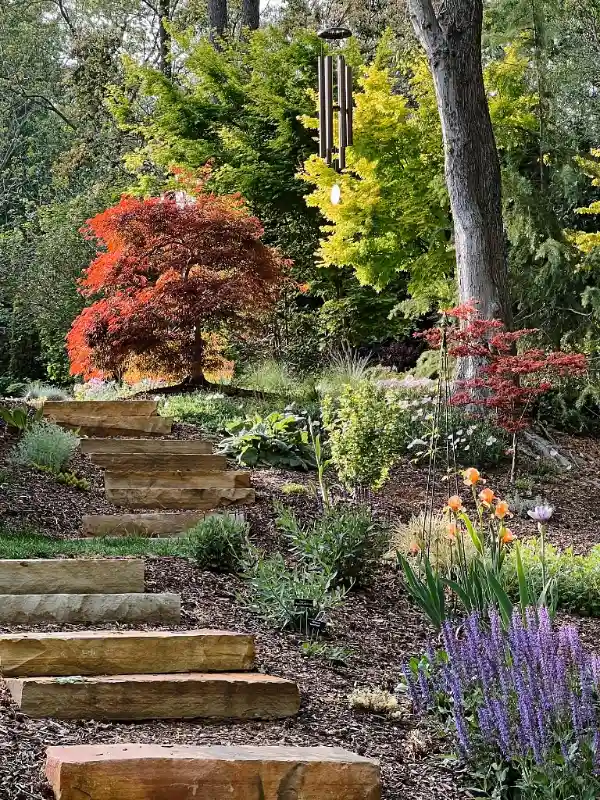
Thick rectangular stone blocks stack upward to form a rugged staircase on a steep garden incline. These heavy sandstone treads press deep into the bank to break up the slope and stop water downpours from washing away topsoil. Dark organic mulch coats the surrounding open spaces to absorb rain moisture instantly.
Bright purple salvia and orange irises line the bottom right edge of the walking path. A low red Japanese maple tree stands on the upper level to anchor the deep earth with its root system. Towering green trees form a dense background shield to keep the entire hillside uniform and secure.
23. Structured Paved Terraces with Perennial Borders
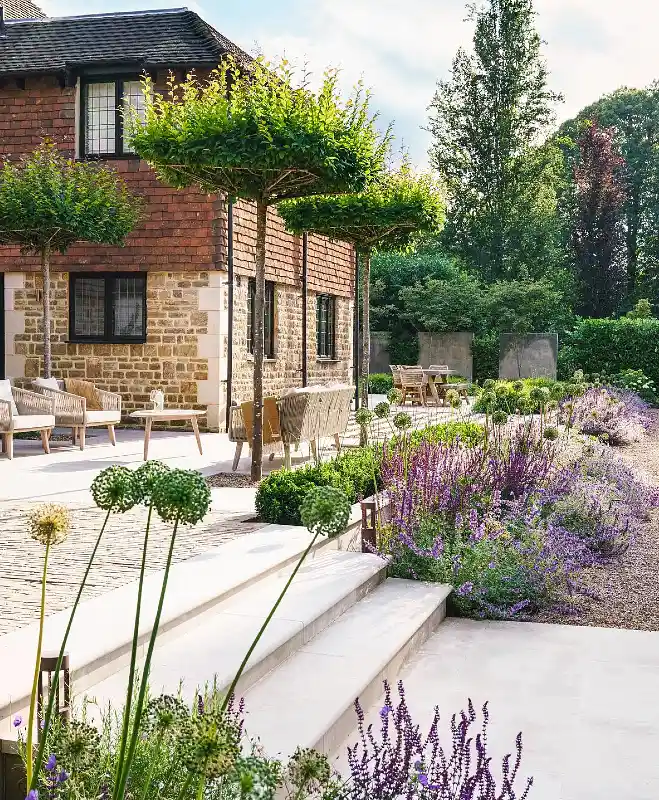
Smooth stone paving blankets wide, flat platforms to tame a sloping backyard layout. This clean hardscaping replaces open hillside dirt completely to eliminate any chance of rainwater washes near the building foundations. Flat concrete steps inset with modern lights connect the seating spaces smoothly.
Dense rows of purple catmint and tall green allium globes crowd the border beds. A line of small trees with square trimmed heads anchors the middle terrace layer. Their compact shapes and deep roots help keep the terraced stone levels locked tight.
24. Low Stone Retaining Wall with Wood Deck
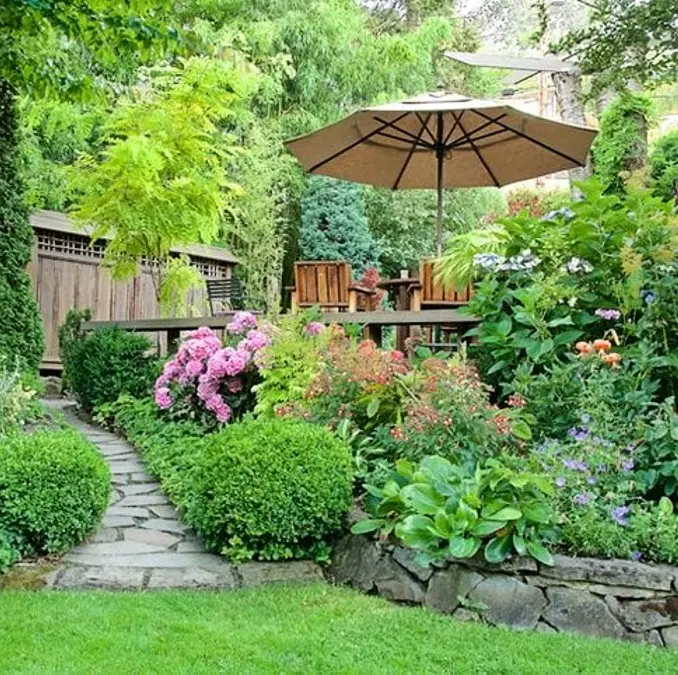
A low wall of stacked fieldstones supports a raised garden tier on this backyard slope. This masonry structure forms a solid barrier to stop dirt from washing down onto the flat grass lawn below. A stone flagstone walkway curves upward next to the bed to provide safe passage.
Lush green boxwood shrubs and pink hydrangeas crowd the elevated soil bed tightly. Taller trees and thick foliage surround an upper wooden dining deck with a large umbrella. This combination of stone framing and dense roots locks the hillside down securely.
25. Timber Sleeper Terracing with Inset Steps
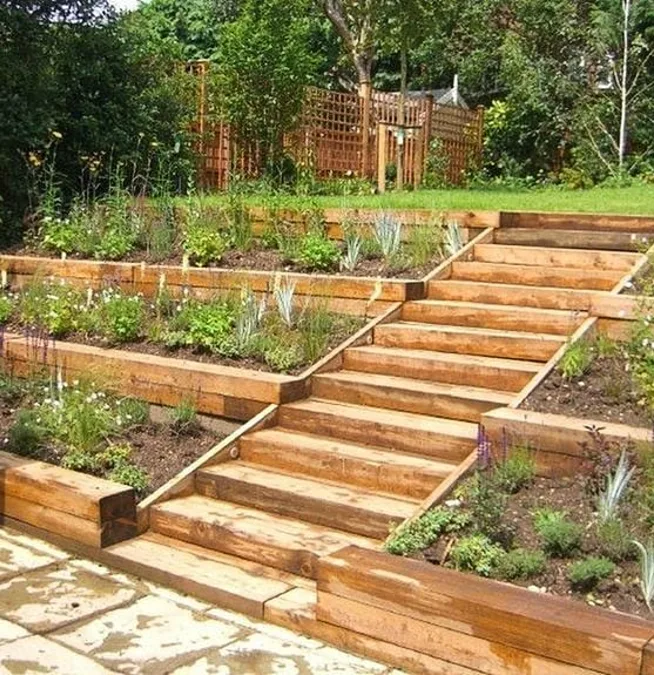
Heavy wooden beams form a multi tiered retaining system up a steep backyard incline. These thick timber sleepers create level terraces that slow down water runoff and prevent mud from washing onto the lower stone patio. A wide wooden staircase is built right into the center of the structure for stable access to the upper lawn.
Low growing perennials and spiky ornamental grasses fill the stepped dirt beds on both sides of the stairs. Their growing root networks help bind the soil within each wooden framework. This geometric layout turns a sharp drop into a highly organized and secure planting zone.
26. Timber Sleeper Wall with Integrated Lawn Steps
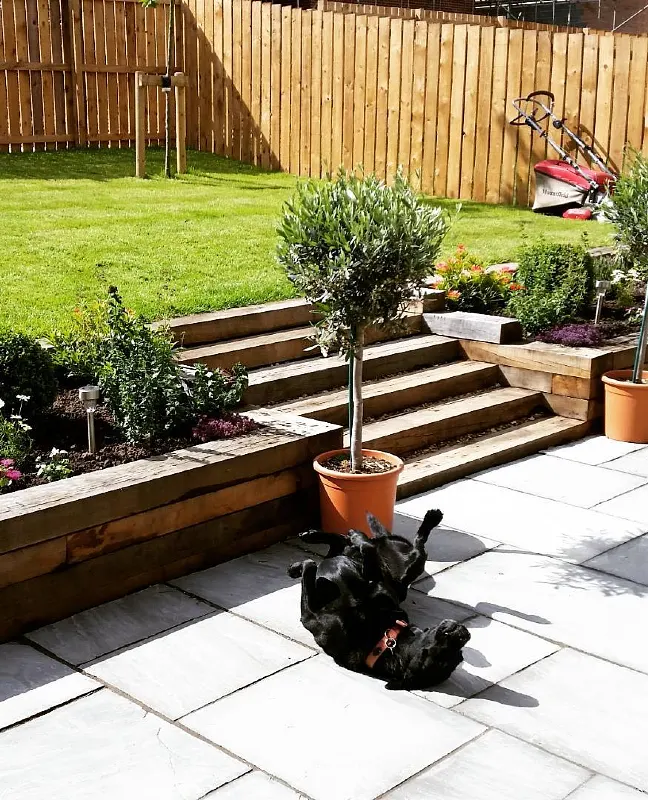
Thick wooden blocks create a low retaining barrier to separate an upper green lawn from a light flagstone patio. This heavy timber framework squares off the gentle slope to hold back topsoil from sliding onto the paved tiles below. Wide matching wooden steps are built right into the structure for a seamless transition between levels.
Small garden beds are carved into the timber frame, packed with dark soil and low flowering perennials. Terracotta pots holding slender green topiary trees stand on the patio tile to frame the wooden stairs. This tidy hardscaping design manages the garden incline neatly while keeping the open entertainment space completely clear of mud.
27. Mixed Material Rockery with Corten Steppers
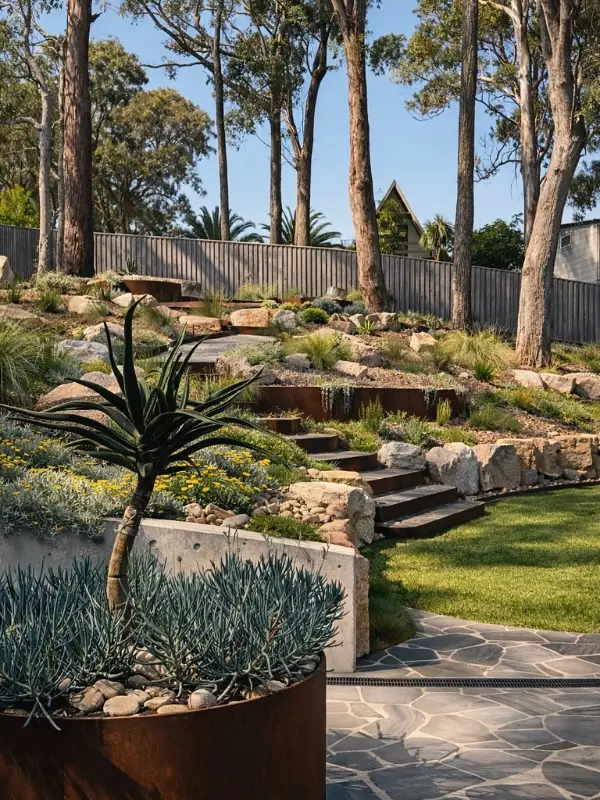
Weathered metal sheets and rough boulders combine to form a rugged terraced hillside. These varied barriers break up the steep grade to catch falling rain and secure shifting dirt completely. Dark corten steel steps wind upward through the rocky slope to provide a solid walking path.
Spiky blue chalksticks and yellow flowering groundcovers spill over a smooth concrete retaining wall in the foreground. Towering eucalyptus trees anchor the highest points of the bank with their deep woody roots. This industrial rockery design stops hillside erosion while creating a striking modern landscape.
28. Winding Stone Steps with Wildflower Blanket
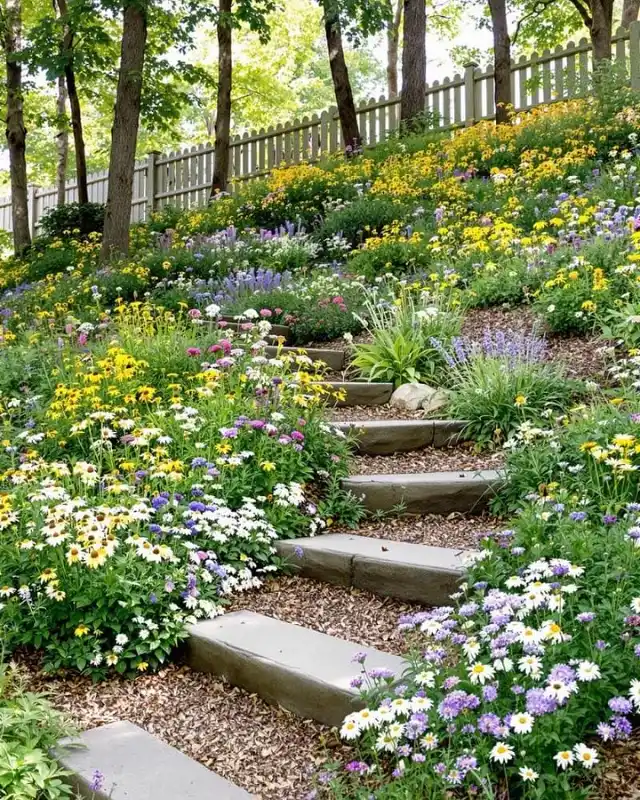
Flat stone slabs curve upward to create a secure walkway through a steep hillside meadow. These heavy steps break up the sharp drop to slow down rainwater rushing from the upper white picket fence. Thick wood mulch lines the paths to capture excess ground moisture instantly.
Masses of yellow black-eyed Susans, white daisies, and purple coneflowers cover the bank completely. Their dense tangled root networks act as a natural net to lock down loose topsoil. This continuous blanket of perennials shields the open earth from severe rain impact.
29. Stacked Stone Retaining Walls with Wide Treads
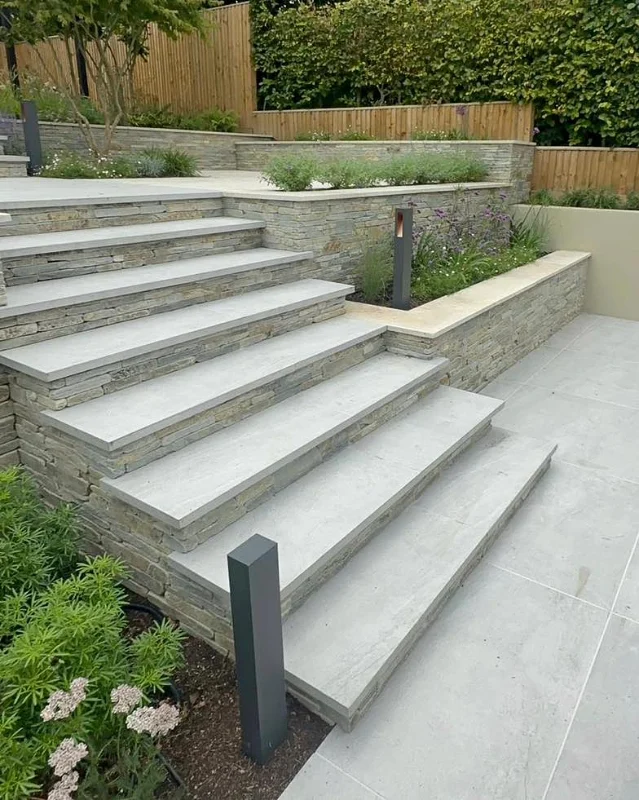
Fitted ledger stones form clean multi-layered retaining walls to level out a steep residential slope. These pale masonry barriers hold back the upper courtyard plots to stop mud from sliding onto the main patio tiles. Wide light-gray flagstone steps integrate directly into the framework for a secure walking route.
Built-in planting pockets slice through the stone structures to hold low purple perennials and green shrubs. Minimalist dark pillar lights stand along the staircase to illuminate the geometric design safely. This extensive stone engineering keeps the shifting hillside locked down while creating a clean modern terrace.
30. Curved Metal Cellular Terracing

Flexible dark metal sheets loop across a steep raw bank to form overlapping cellular terraces. These scalloped barriers divide the dramatic hillside drop into manageable semi-circular pockets to catch rainfall and halt dirt movement.
Light-colored river pebbles and dark mulch alternate inside the open cells to shelter the ground surface from severe washouts.
Low-growing green succulents, spiky ornamental grasses, and small red flowers pack the individual metal planters. Thick native shrubs anchor the very top crest of the mountain ridge to provide deep structural root support.
This repeating wave design locks down a highly unstable cliff face while creating an attractive terraced garden feature.
31. Corten Steel Risers with Gravel Steps
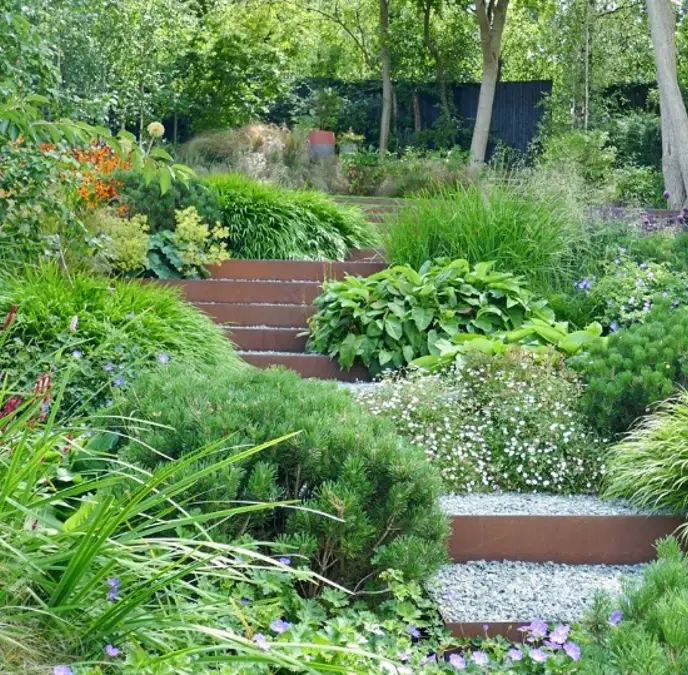
Weathered orange-brown steel sheets form sharp, clean risers up a lushly planted backyard slope. These durable metal barriers cut into the incline to hold back upper soil levels while creating wide, flat steps.
Light gray crushed gravel fills the walking treads completely to allow rainwater to drain down into the earth naturally.
Dense mounds of green conifers, spiky forest grasses, and bright orange perennial flowers crowd the borders of the path. Tall native trees form a leafy canopy in the background to anchor the deep hillside soil with their extensive roots.
This modern architectural hardscaping provides a secure walking route while seamlessly blending into a wild, textured woodland garden.