Transforming a tiny backyard into a lush, productive ecosystem is entirely possible. Mini food forests offer a smart way to grow organic fruits, vegetables, and herbs in compact spaces.
These layered gardens mimic natural forests by stacking plants of different heights together. You can harvest fresh produce while creating a beautiful, biodiverse sanctuary right outside your door.
Vertical growth and clever layouts maximize every square inch of your land. This approach saves water and builds healthy soil over time. Get ready to explore creative ways to pack abundance into small outdoor areas.
Strategic Urban Cultivation: Maximizing Small-Scale Edible Landscapes
Transforming a compact backyard into a high-yield food forest requires a sophisticated layering approach that prioritizes vertical growth and multi-functional plant selections.
By integrating perennial guilds and intensive planting techniques, you can establish a self-sustaining ecosystem that optimizes every square inch of available space.
High-Density Ecology
Urban Permaculture Strategies
Vertical Guild Integration
Utilize trellises and wall-mounted planters to cultivate climbing fruits and legumes, effectively doubling your harvestable area in tight spaces.
Tiered Canopy Management
Implement a seven-layer design strategy—from root crops to dwarf fruit trees—to ensure efficient light penetration and nutrient cycling.
High-Density Container Systems
Deploy modular raised beds and smart irrigation pots to maintain precise control over soil quality and moisture levels in restricted zones.
Perennial Edible Groundcovers
Replace traditional turf with nutrient-dense herbs and nitrogen-fixing clover to suppress weeds while providing a functional, edible carpet.
1. Layered Edible Polyculture
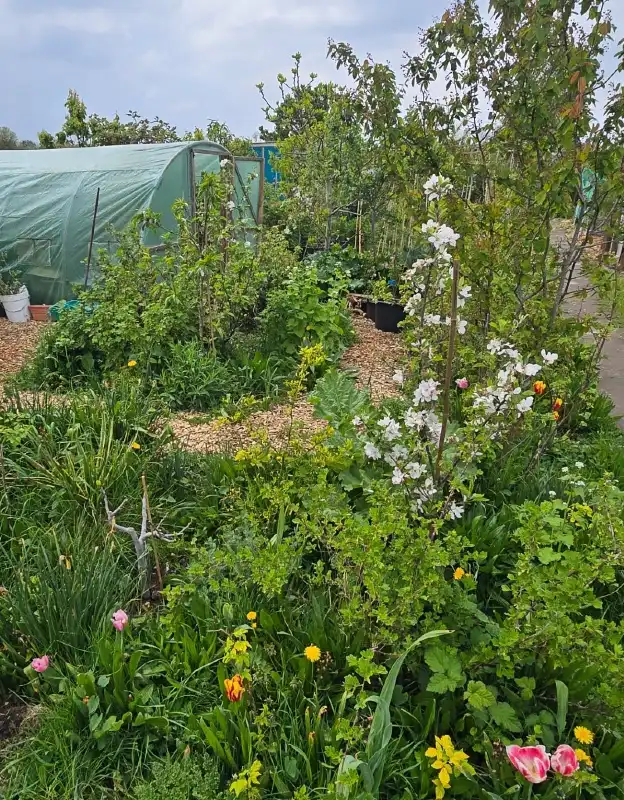
This garden uses many levels of plants to grow food. Fruit trees stand tall while colorful flowers and berry bushes thrive below.
A wood chip path winds through the lush greenery. This setup keeps the soil moist and healthy for your crops.
2. Low-Growing Edible Groundcovers
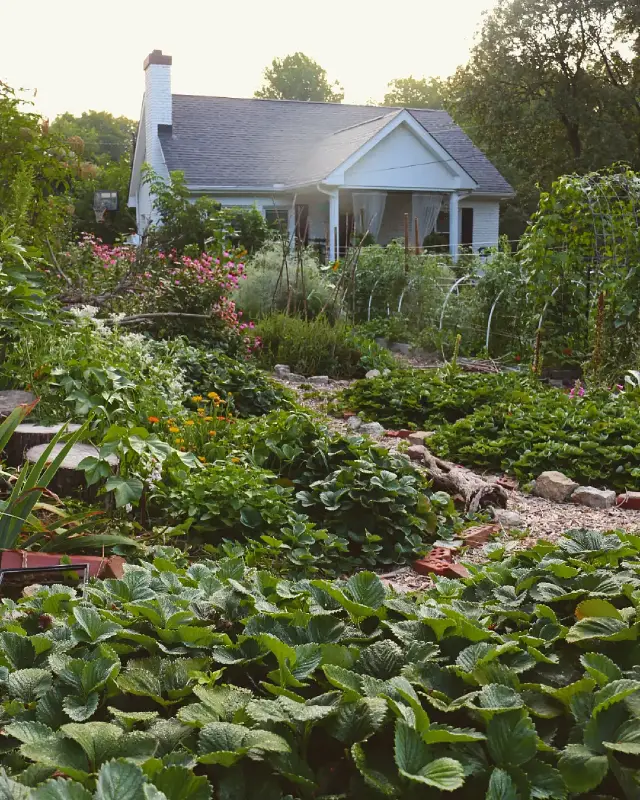
Dense patches of strawberries and leafy greens fill the foreground. These hardy plants act as a living mulch to suppress weeds.
Rocks and old bricks line the narrow walking paths. Arched trellises in the back support climbing vines to save floor space.
3. Narrow Side Yard Orchard
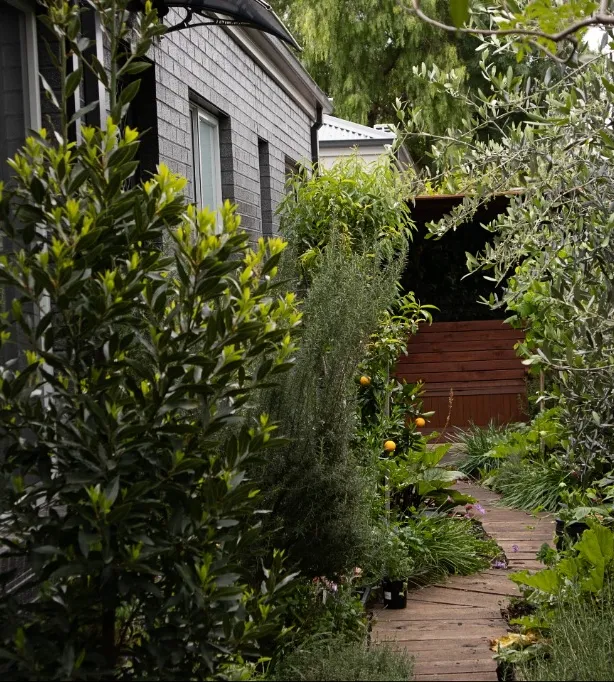
Small fruit trees and rosemary bushes line this slim walkway. Citrus fruits add a splash of orange against the dark house walls.
Wooden planks create a sturdy path through the tight area. Tall trees on the right provide shade while maximizing vertical space.
4. Communal Learning Garden
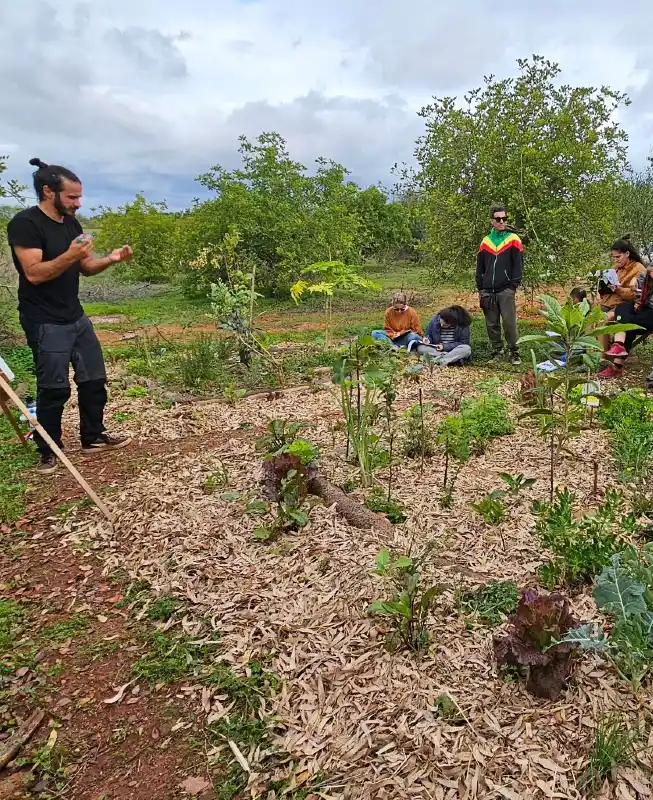
A group of people sits among young saplings and leafy greens to learn about gardening. Wood shavings cover the ground to protect the soil and retain moisture.
Students take notes while a teacher speaks near an easel. Small fruit trees and diverse vegetables grow in clusters to create a rich ecosystem.
5. Woodland Berry Patch
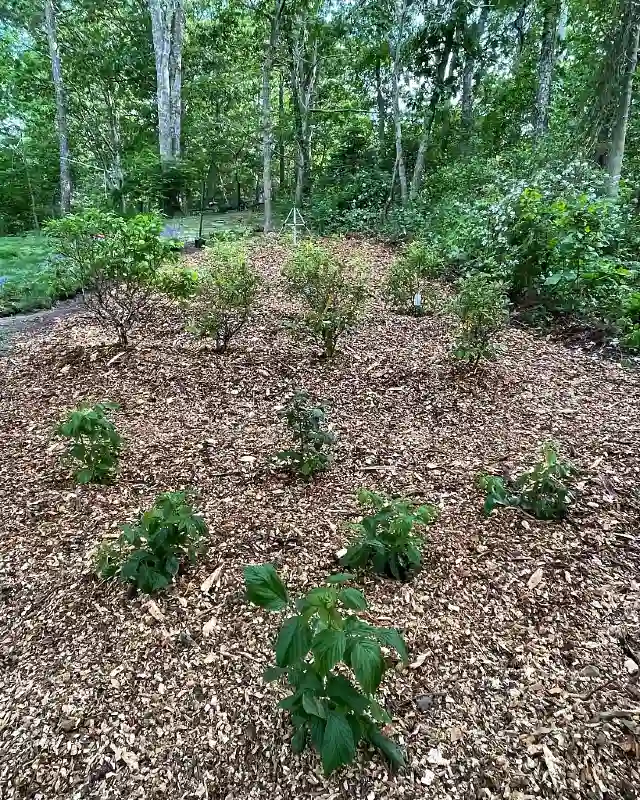
Small shrubs grow in tidy rows within a shaded forest clearing. Bright green leaves stand out against a thick layer of fresh wood mulch.
Large trees provide a natural canopy for these shade tolerant species. This setup uses existing landscape features to grow food with minimal effort.
6. Terraced Slope Planting
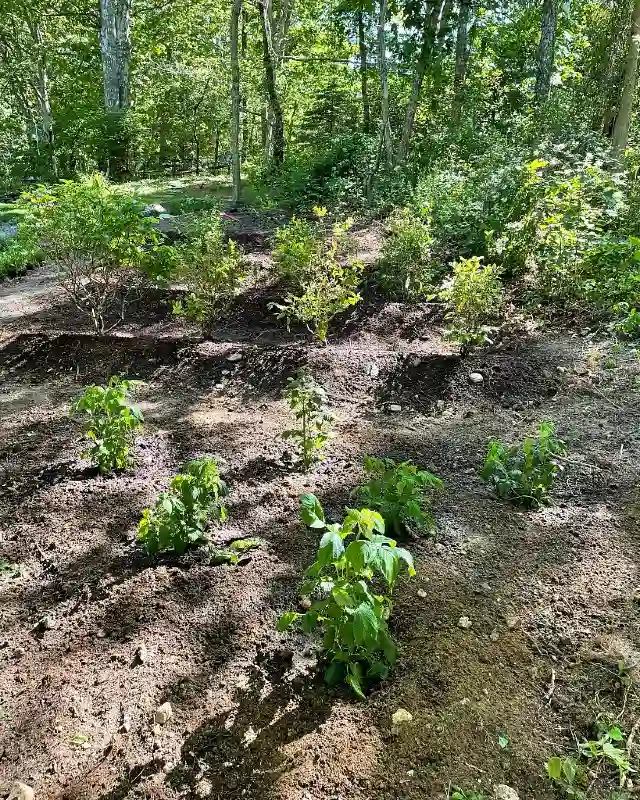
Small green plants grow on a gentle hillside. Dark soil mounds create flat levels for each row of shrubs.
Dappled sunlight filters through the tall trees in the background. This method prevents water runoff on uneven ground.
7. Edible Front Yard Landscape
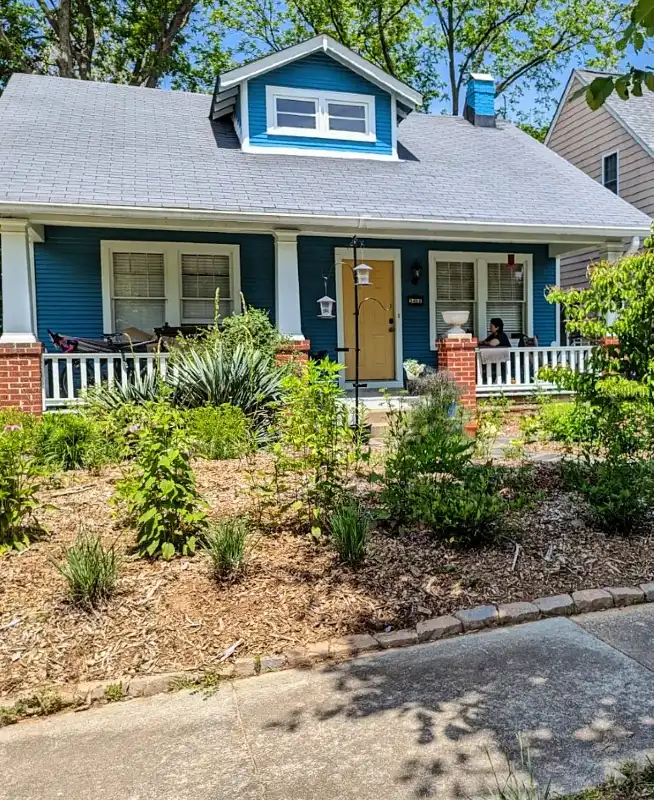
A variety of bushes and leafy plants replace a traditional grass lawn. Low stone edging separates the garden from the public sidewalk.
Thick mulch covers the ground between the different plant species. This smart design brings fresh food to the very front of your home.
8. Community Seed Exchange Station
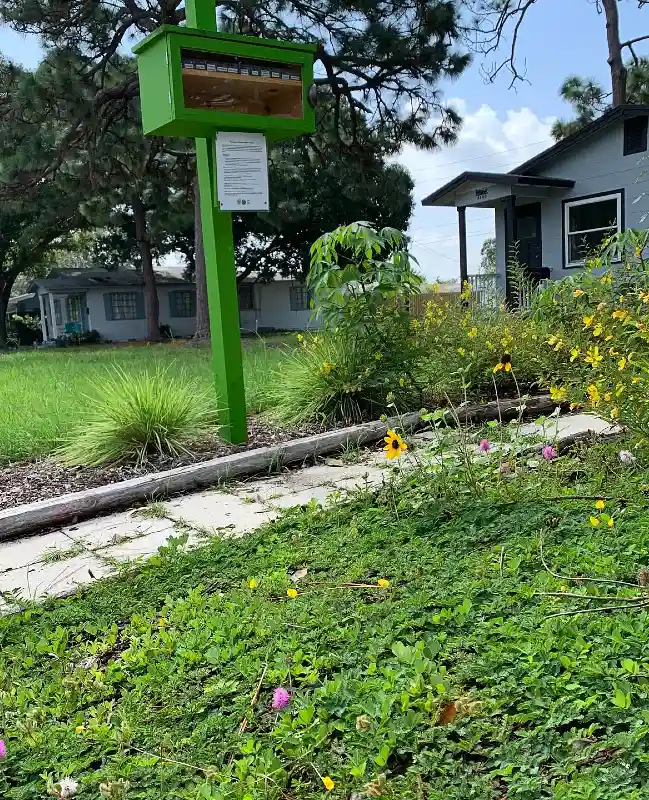
A bright green wooden box stands on a tall post near the sidewalk. This small library contains seeds for neighbors to share and plant.
Yellow wildflowers and low groundcovers grow along the paved path nearby. Such stations encourage local food growing and strengthen community bonds.
9. Meandering Mulch Pathways
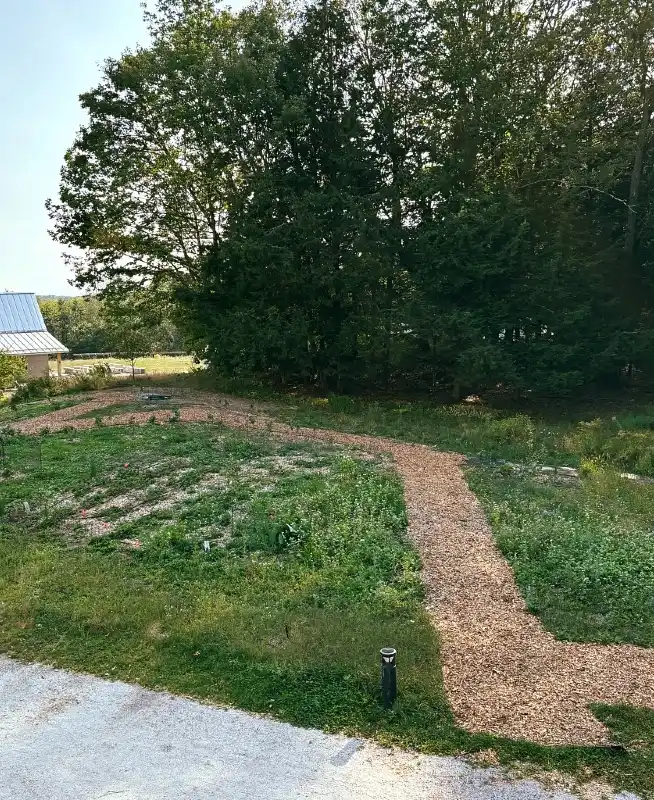
Broad paths made of brown wood chips curve through open planting zones. These defined walkways prevent soil compaction around sensitive root systems.
Young green shoots and groundcovers emerge from the surrounding earth. Tall trees form a solid backdrop for this developing food system.
10. Multi-Functional Relaxation Zone
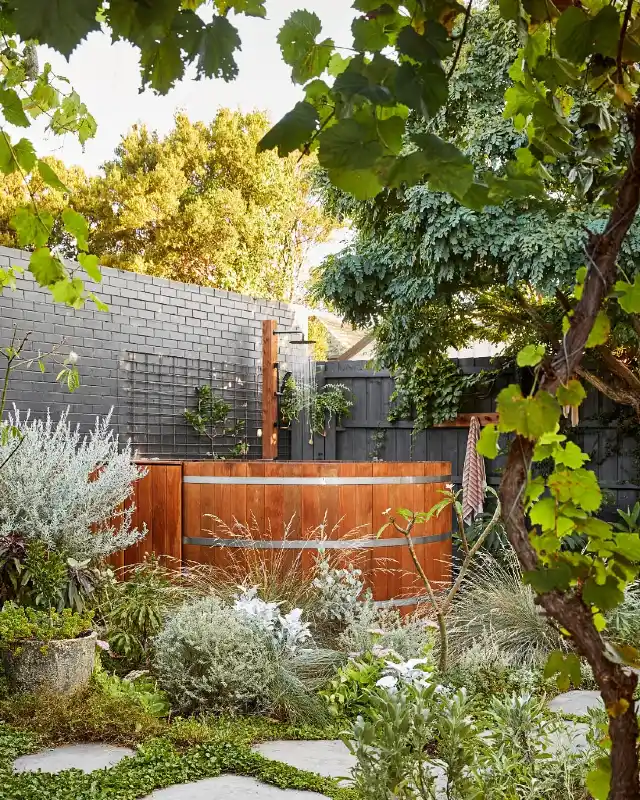
A round wooden tub sits nestled among silvery herbs and ornamental grasses. Grapevines climb a nearby trellis to provide shade and fresh fruit.
An outdoor shower stands against a dark privacy wall. Stepping stones lead through low groundcovers to connect the patio with the surrounding greenery.
11. Integrated Poultry Foraging
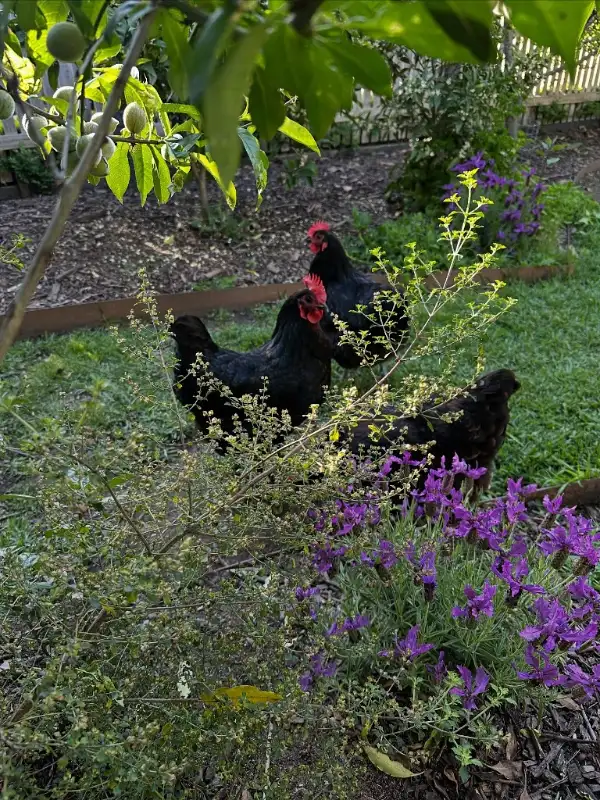
Black chickens roam freely through a lush garden filled with purple flowers and green herbs. These birds help control pests and provide natural fertilizer for the soil.
Fruit trees with young green produce hang over the grassy area. Using livestock in a small space creates a self sustaining loop for your mini forest.
12. Metal Raised Bed Trellis
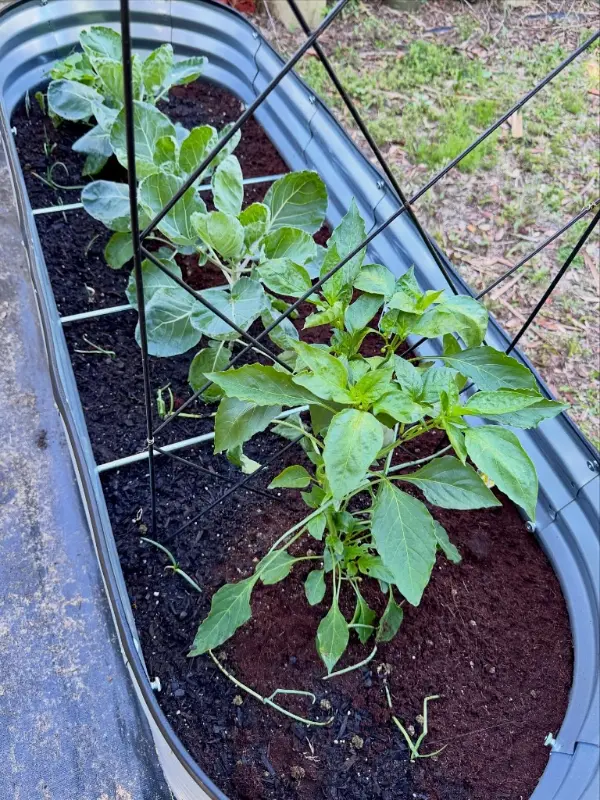
Corrugated metal containers provide a clean and durable home for various vegetable crops. Deep soil within the bed supports healthy root development for peppers and leafy greens.
A black metal trellis stands over the plants to guide upward growth. This clever vertical addition saves valuable ground space in a compact backyard garden.
13. Woven Pallet Privacy Screen
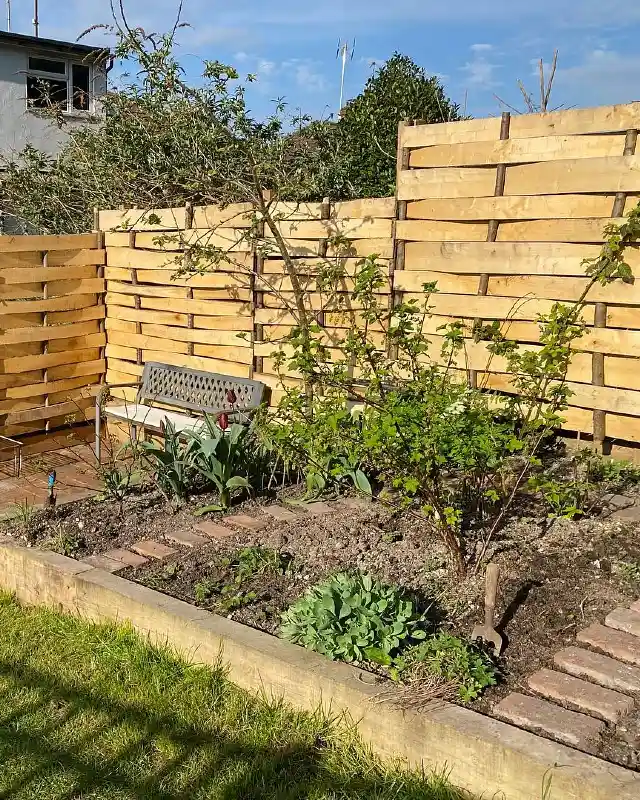
Horizontal wooden slats create a rustic fence around this cozy seating area. This structure provides privacy from neighboring houses while acting as a backdrop for climbing plants.
A raised garden bed sits next to a brick patio. Small green shoots and a young fruit tree begin to fill the space with life.
14. Signposted Victory Garden
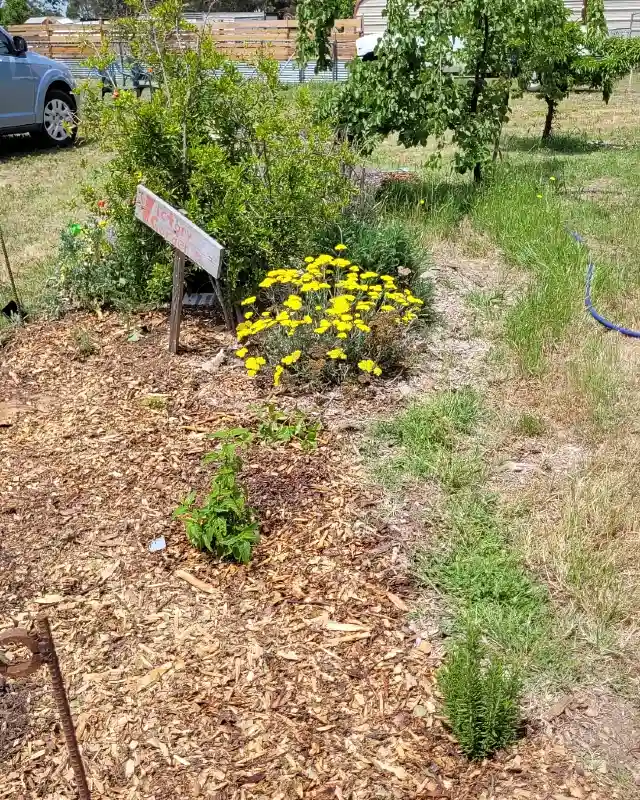
A small wooden sign marks this productive corner of a green backyard. Bright yellow flowers grow alongside leafy shrubs and young fruit trees.
Coarse wood mulch covers the ground to suppress weeds and feed the soil. This dedicated space turns a simple lawn into a functional food source.
15. Metal Bed Strawberry Patch
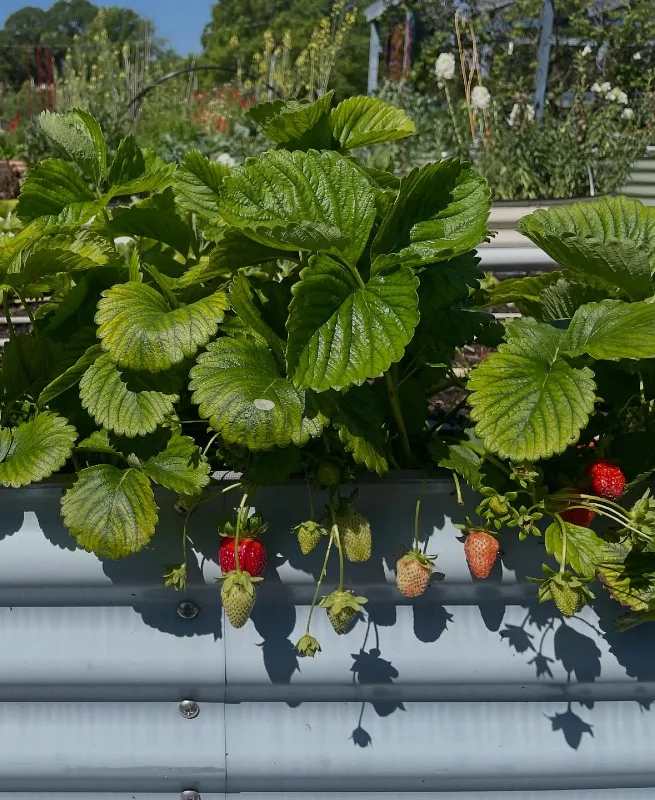
Large green leaves fill a corrugated metal garden bed. Red and green strawberries hang over the side of the container.
This elevated design makes harvesting easy while keeping fruit off the ground. Sunlight helps the berries ripen for a delicious homegrown treat.
16. Container Courtyard Garden
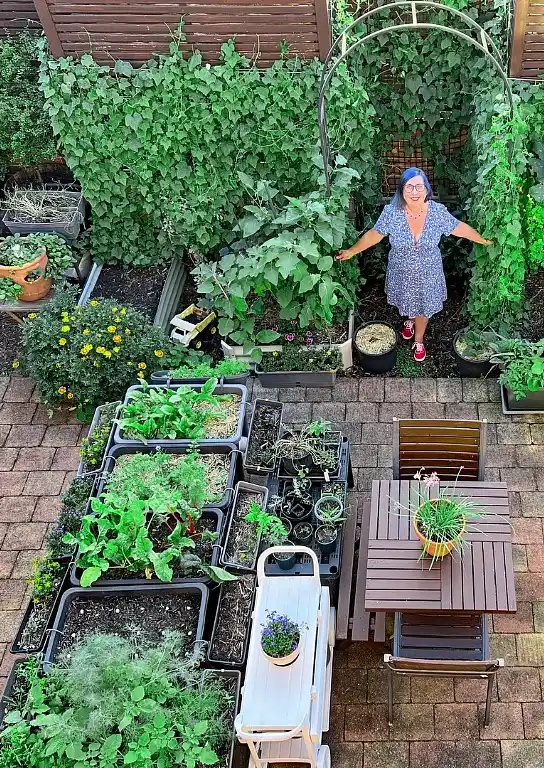
Various black and grey tubs hold a mix of edible plants on this brick patio. This method allows you to grow food without digging into the hard ground.
Metal arches support climbing vines against a tall wooden fence. A small table in the center makes the garden a functional space for dining and resting.
17. Vertical String Trellis System
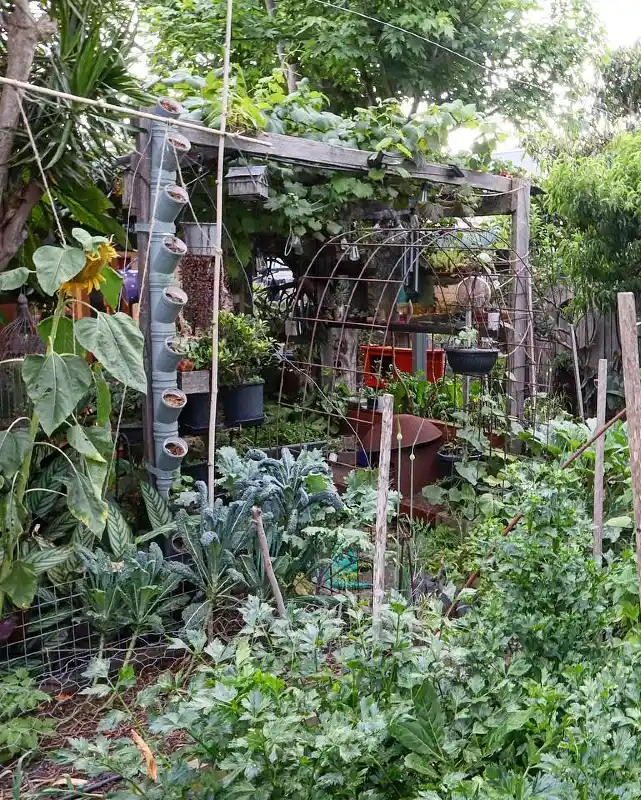
Tall wooden poles and thin strings guide climbing vines high above the ground. This method pulls leafy greens upward to free up space for herbs and kale below.
Small pots hang vertically from a sturdy wooden frame in the corner. Using every inch of height allows you to grow a massive amount of food in one small patch.
18. Shady Understory Guild
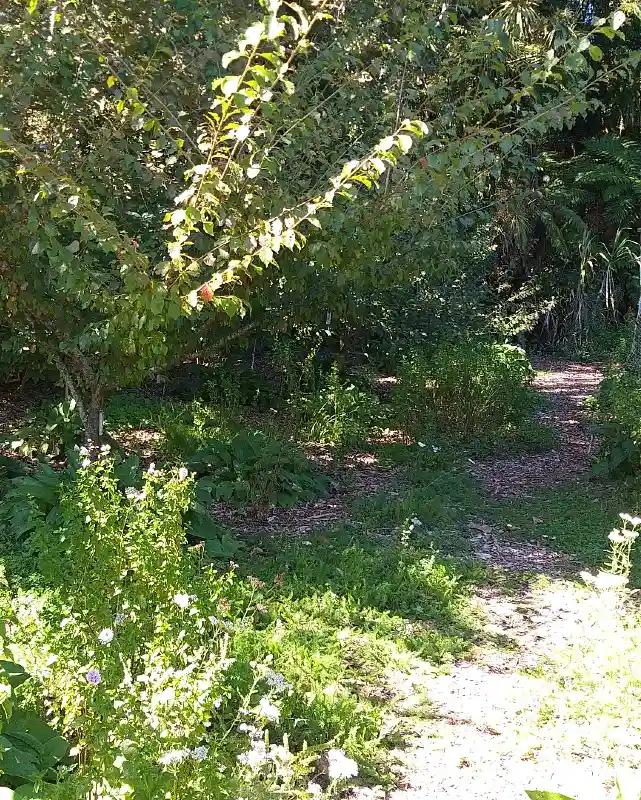
Fruit trees cast soft shadows over a variety of low growing herbs and shrubs. This layered planting strategy makes use of dappled sunlight to protect sensitive groundcover.
Wood chip paths weave through the dense greenery to provide easy access. Such diverse groupings create a resilient ecosystem that thrives with very little maintenance.
19. Mixed Berry and Fruit Canopy
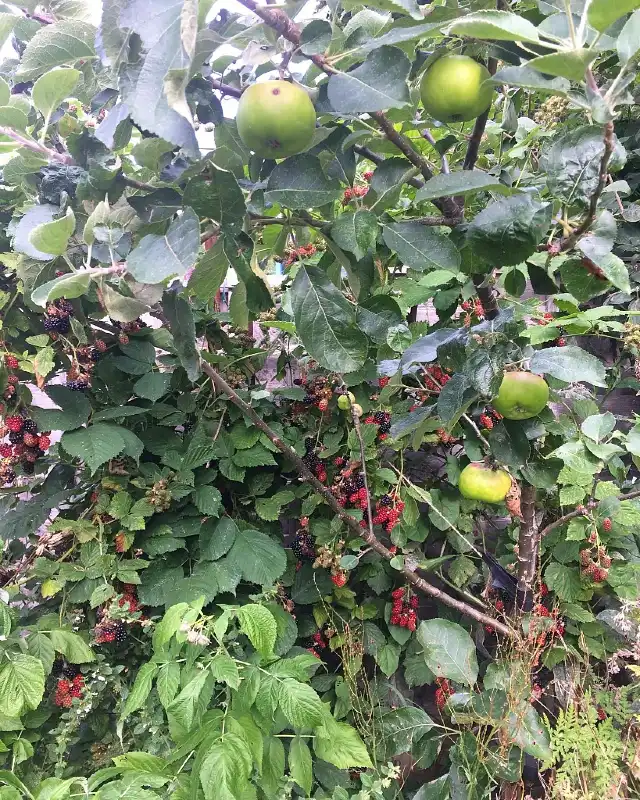
Green apples hang from sturdy branches above a thick wall of ripening berries. Blackberries and raspberries weave through the lower limbs of the tree to create a vertical harvest.
This dense arrangement allows two different types of fruit to occupy the same footprint. Native pollinators love the variety of flowers and foliage in this compact edible thicket.
20. High-Density Tomato and Flower Bed
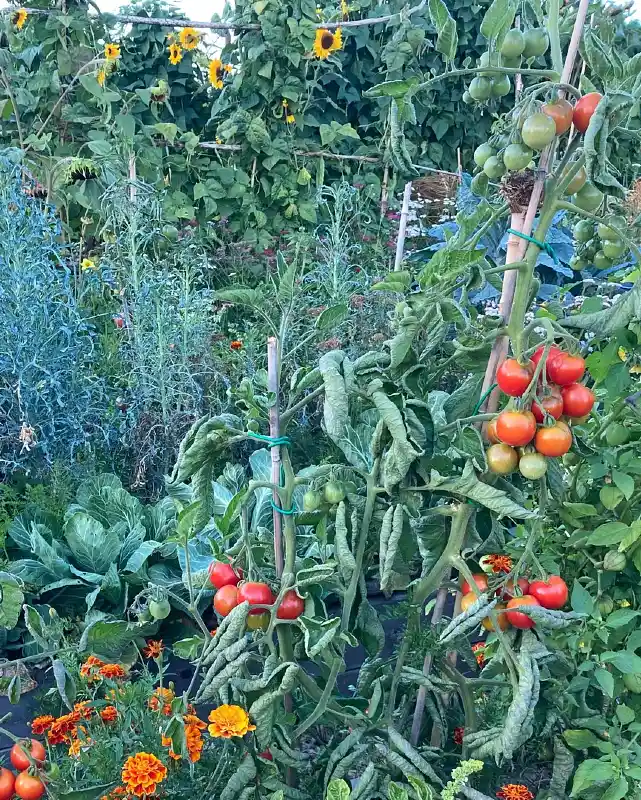
Vibrant red tomatoes hang in heavy clusters from tall vines supported by bamboo stakes. Bright orange marigolds and yellow sunflowers bloom among the edible crops to attract beneficial insects.
Green cabbage leaves spread out near the base of the taller plants. This mix of food and flowers creates a healthy and productive environment in a single garden patch.
21. Natural Log Edged Bed
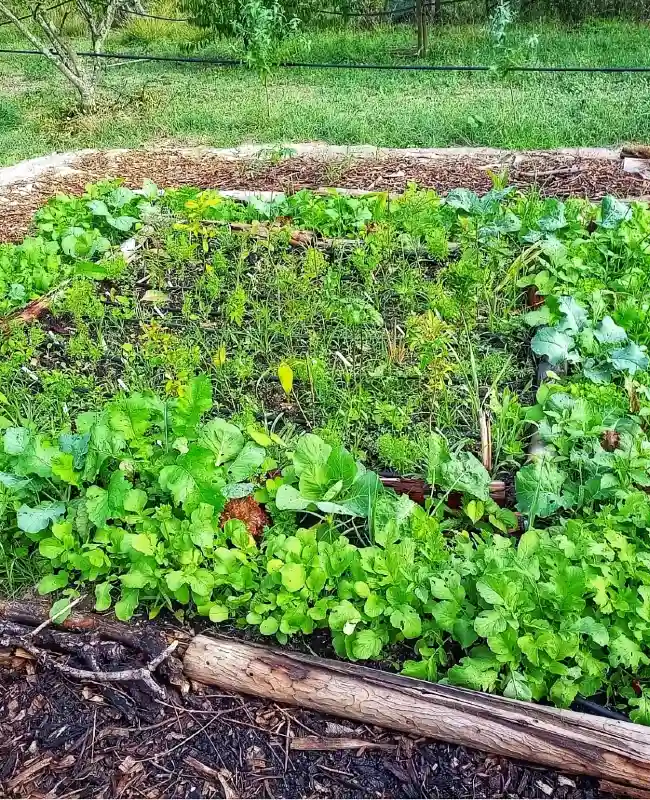
Rough wooden logs form the border for this square vegetable patch. This simple framing technique uses natural materials to hold rich soil and mulch in place.
Various leafy greens and small herbs grow densely within the protected area. Drip irrigation lines snake through the plants to deliver water directly to the roots.
22. Sage and Wildflower Understory
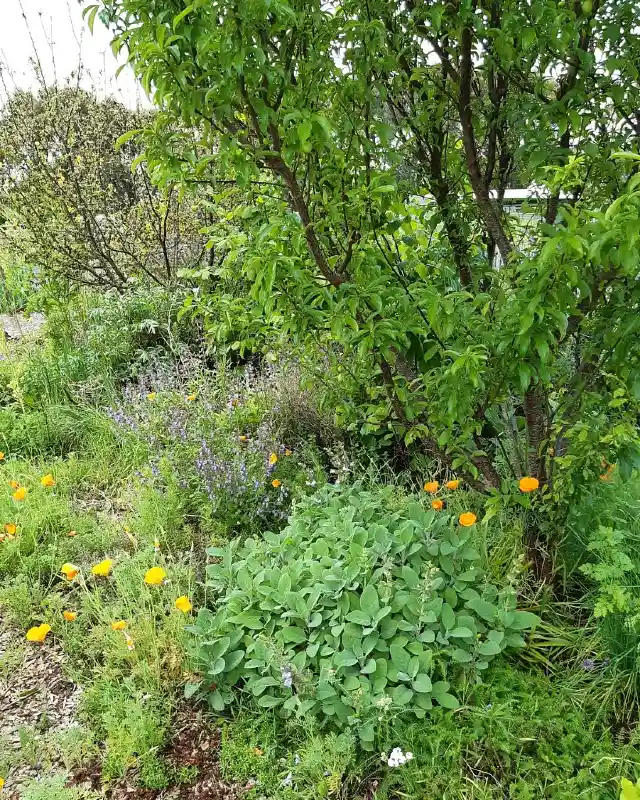
A large, soft-leaved sage bush grows at the base of a fruit tree. Bright orange poppies and purple wildflowers scatter through the surrounding grasses to create a natural meadow look.
This plant grouping supports bees and other helpful pollinators in your mini forest. High branches of the tree reach upward while the herbs fill the lower ground level.
23. Desert Edible Cactus Rows
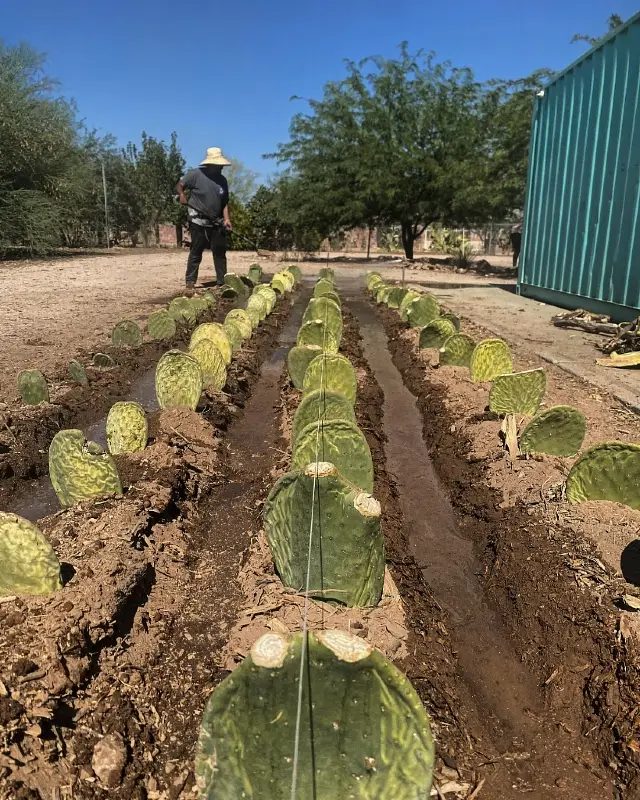
Long trenches in the dry earth hold rows of prickly pear cactus pads. Water flows through these deep furrows to provide moisture in a desert climate.
A person in a sun hat works to maintain the straight lines of this drought tolerant crop. This system allows you to grow food even in very sandy or arid conditions.
24. Wildflower and Herb Meadow
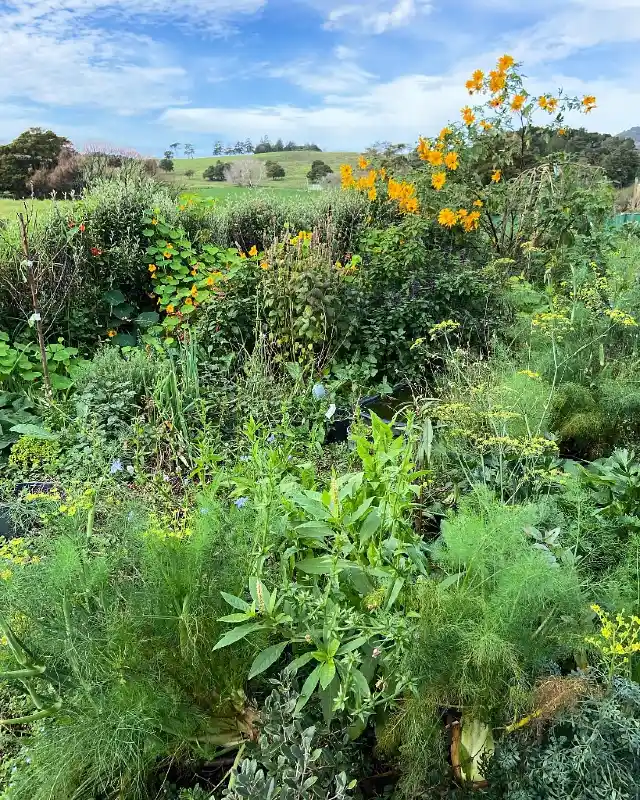
Tall orange flowers and wispy green herbs grow in a dense cluster. This wild arrangement mimics a natural forest edge with many different plant heights.
Lush foliage fills every available gap in the soil. Diverse species work together to create a thriving habitat for local birds and beneficial bugs.
25. Boundary Hedgerow Garden
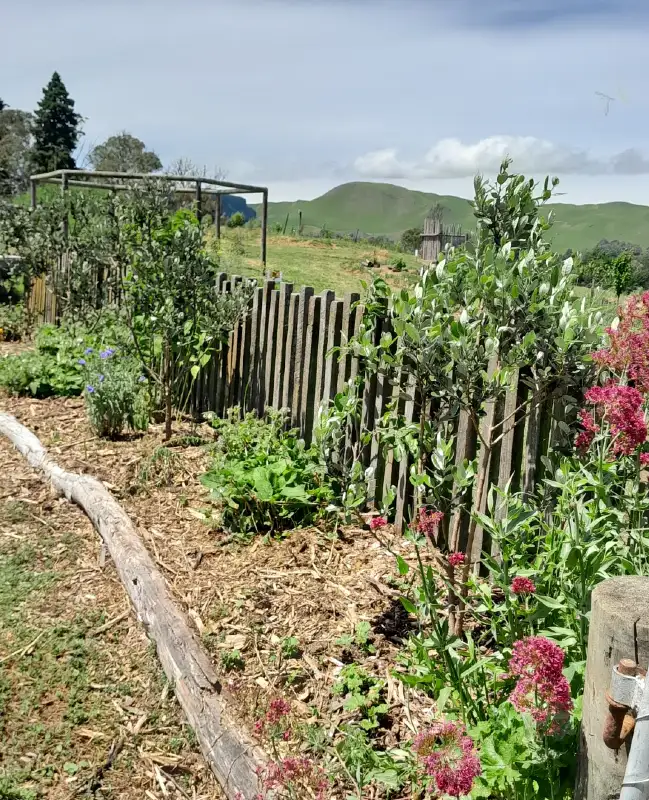
A rustic wooden picket fence provides a sturdy backdrop for this long garden border. Young trees and vibrant pink flowers grow in a narrow strip along the property line.
Large logs define the edge of the planting area near the grass. Wood mulch covers the soil to help these small plants establish themselves in the open landscape.
26. Backyard Swale System
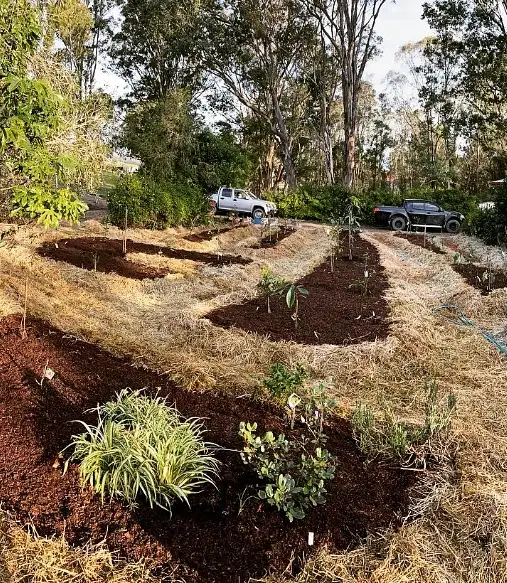
Long mounds of dark soil create raised growing areas across this sloping backyard. Thick layers of straw mulch fill the lower channels to catch and hold rainwater.
Small saplings and leafy shrubs sit in the center of each elevated row. This layout prevents erosion while giving young trees plenty of moisture to grow strong.
27. Modern Minimalist Patio Garden
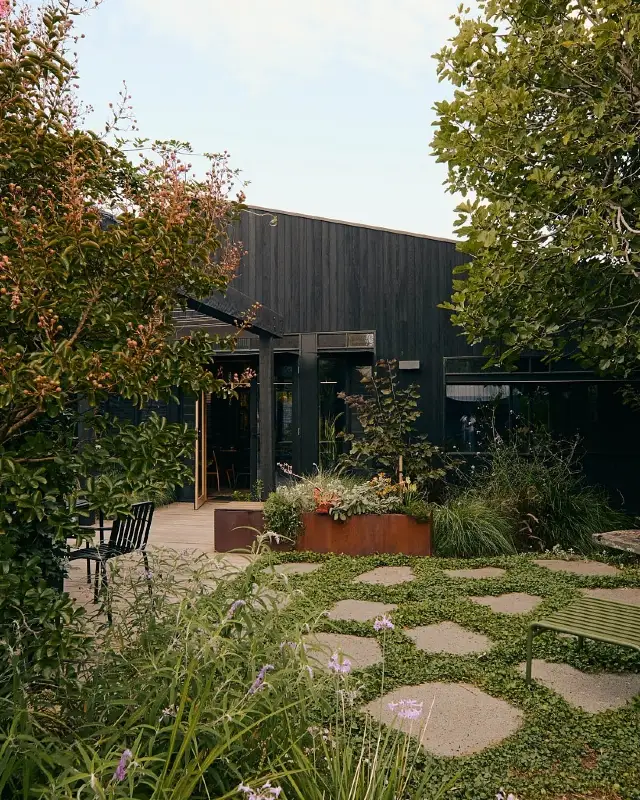
Circular stone pavers create a unique geometric path through a carpet of low green groundcover. This clean design connects the wooden deck to the rest of the lush outdoor space.
A rusted metal planter box holds a mix of ornamental and edible plants against a dark modern building. Large trees frame the courtyard to provide natural privacy and cooling shade.
28. Timber Arbor Entrance
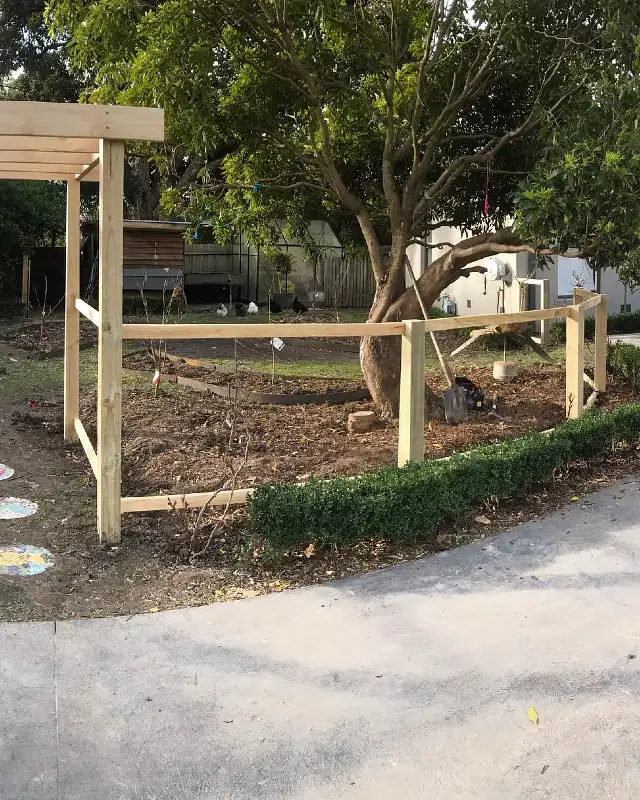
A light wooden arbor stands at the entry point of this backyard garden. This structure serves as a gateway and provides a frame for future climbing plants.
Horizontal wooden rails create a simple boundary around the freshly mulched ground. Decorative stepping stones lead visitors through the dirt path toward a large established tree.
29. Jute Netting Trellis
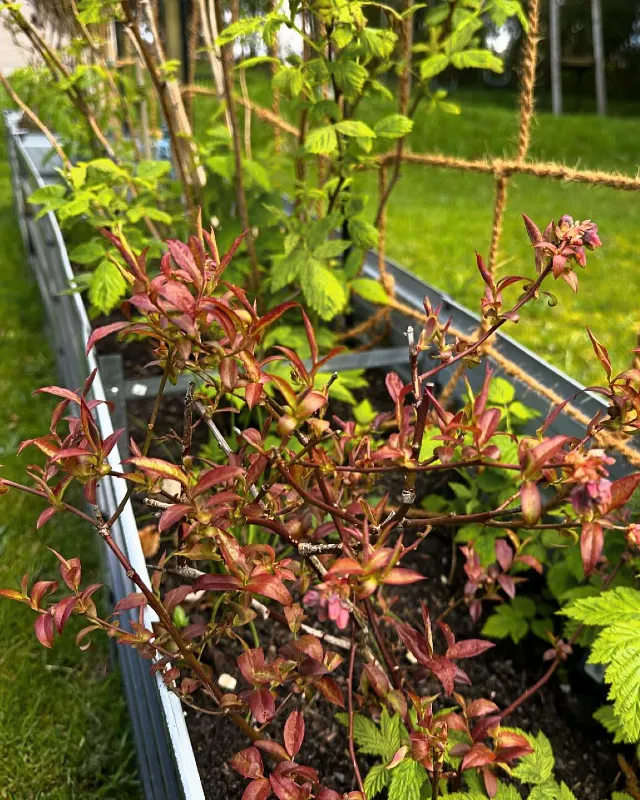
Thick rope netting stretches across the back of a long metal garden bed. This natural fiber trellis provides a soft and sturdy surface for climbing plants to grip.
Young red and green foliage thrives within the narrow container. This vertical solution allows for high density planting in small outdoor areas.
30. Diverse Vegetable Raised Bed
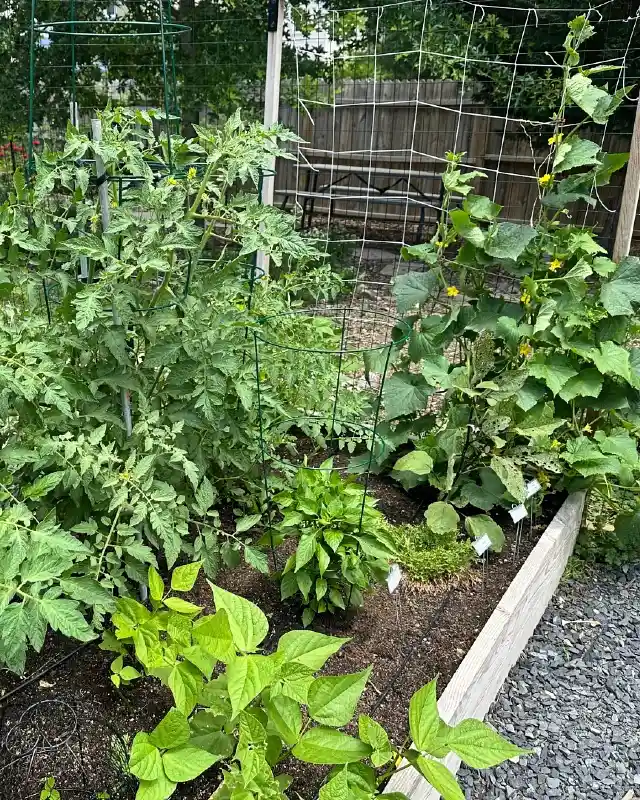
A wooden raised garden bed holds a variety of healthy vegetable plants, including tomatoes supported by green wire cages. White netting is used as a vertical trellis to guide climbing vines in the background.
Small white plant markers help keep track of different species within the dark soil. A gravel path runs alongside the garden bed, providing a clean and organized walkway for maintenance.
31. Sculptural Tree Trunk Centerpiece
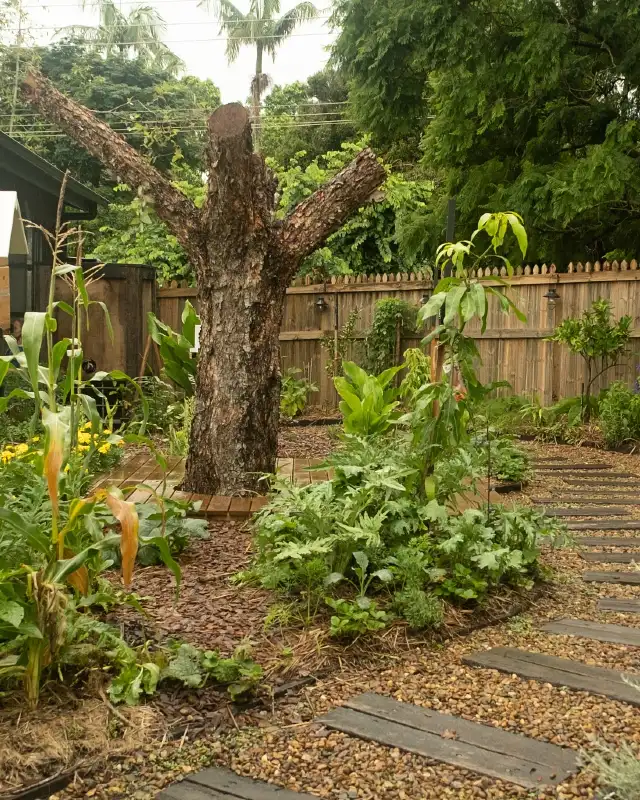
A large, weathered tree trunk stands as a focal point in the middle of a lush backyard garden. A wooden platform surrounds the base of the trunk, providing a clean edge against the surrounding mulch and diverse plant life.
Tall corn stalks and leafy greens grow alongside a gravel path with wooden stepping stones. In the background, a small wooden beehive or birdhouse sits on a tall post, adding another functional and decorative element to this productive outdoor space.
32. Harvest in a Sunny Backyard
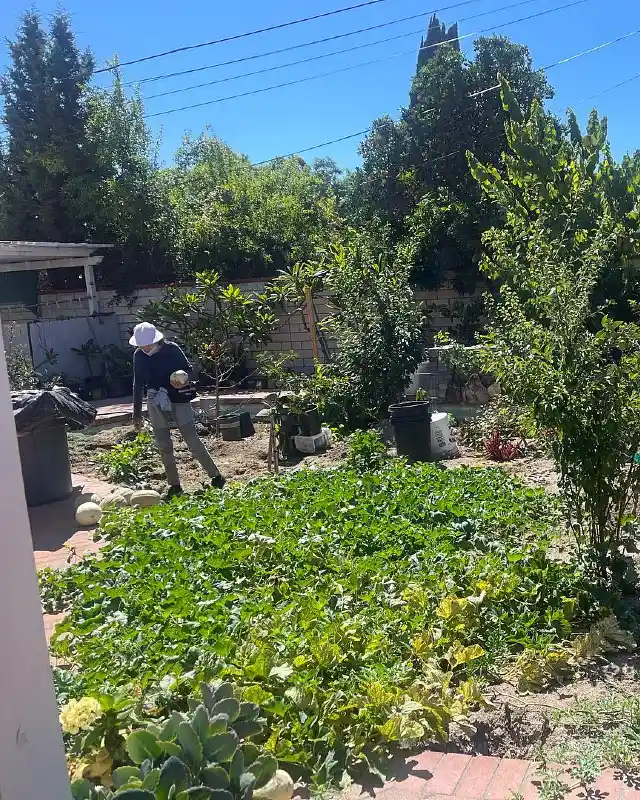
A lush groundcover of leafy vines spreads across a large portion of this sunny backyard garden. A person wearing a sun hat and a face mask walks through the space, holding a harvested melon.
Several fruit trees and shrubs grow in the sandy soil, including one displaying bright red pomegranates. Black plastic buckets and gardening supplies are scattered throughout, highlighting this as a busy and productive edible landscape.
33. Layered Edible Forest Corner
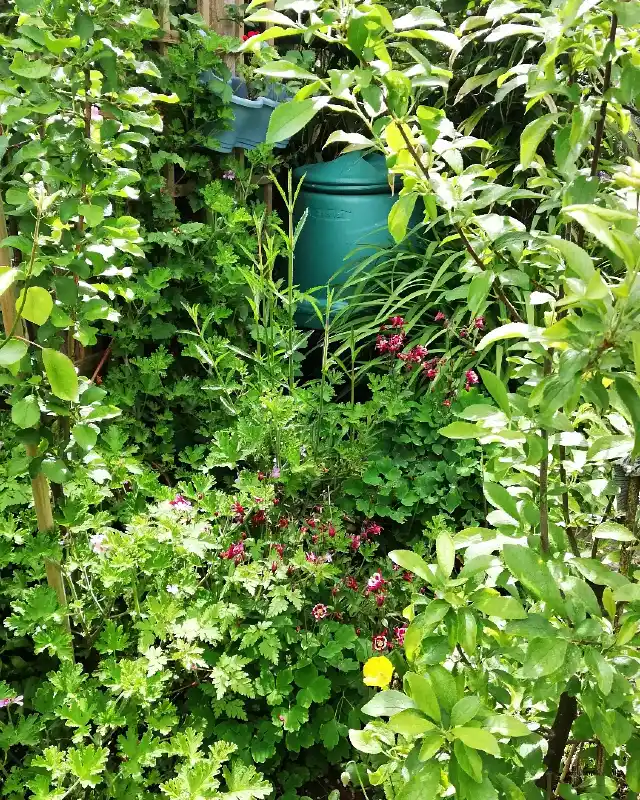
Dense green foliage fills a compact garden corner, showcasing a variety of plant heights and types. Small pink and red flowers are tucked between leafy herbs and shrubs, adding pops of color to the greenery.
A green compost bin or water butt is partially hidden behind the tall plants in the background. This layered approach maximizes growing space by utilizing every vertical inch for food and beneficial blooms.