
Do you wonder how to transform it into a thriving vegetable garden without breaking the bank or requiring expert skills while staring at your empty backyard? Many owners feel overwhelmed when considering growing their food, believing it demands too much time, knowledge, and money.
But the good news is that creating a beautiful, productive vegetable garden doesn’t need to be complicated or expensive. These 40 easy DIY gardening ideas with vegetables will help you start harvesting fresh produce from your yard with minimal investment.
From simple container gardens on your patio to clever vertical growing solutions that maximize small spaces, these practical techniques make vegetable gardening accessible for everyone, regardless of experience level or budget. Get ready to enjoy the satisfaction of growing your food while enhancing your outdoor space.
40 Easy DIY Gardening Ideas With Vegetables
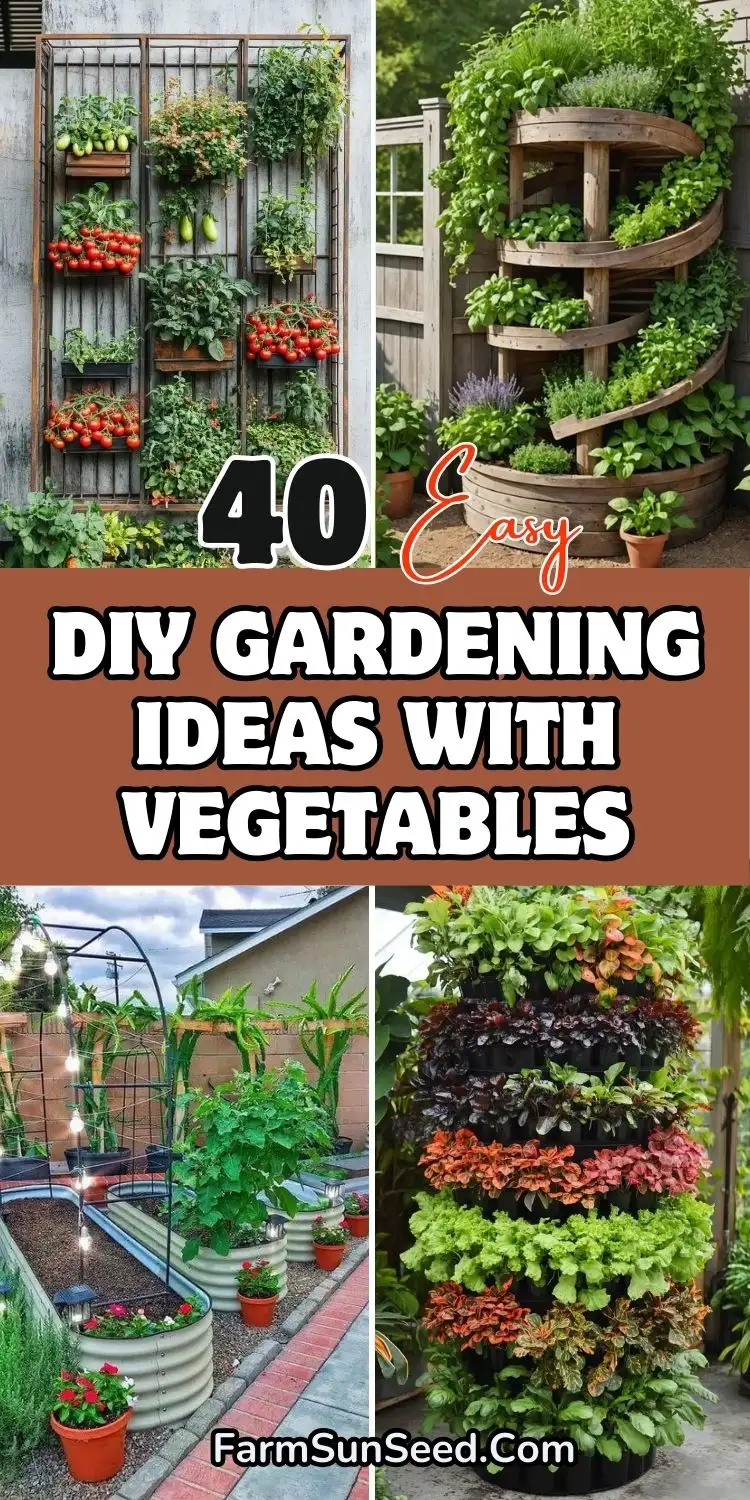
1. Flower Power Compost Garden

Fresh vegetables thrive in this clever circular planter system. The teal compartments form a vibrant wheel around a central compost bin, creating an efficient growing space against a wooden fence backdrop. Various lettuce varieties display their ruffled leaves in rich greens, while bright tomatoes and orange carrots add splashes of color.
Leafy greens in different stages showcase how this design maximizes growing area in minimal space. The central compost basket allows for continuous nutrient renewal right where needed most. Home gardeners with limited space will love how this setup combines functionality with visual appeal.
The segregated sections prevent aggressive plants from overtaking others while making crop rotation simple throughout the season. This garden proves you don’t need acres of land to grow a remarkable variety of vegetables; just some creativity and smart design.
2. Straw Bale Raised Garden Beds

Golden straw bales transform into productive growing spaces in this rustic garden setup. The natural straw creates raised beds without complex construction, while providing excellent drainage and insulation for root systems. Vibrant red tomatoes and a green bell pepper nestle amid straw, showing how plants thrive in this environment.
Bright strawberries peek out alongside green foliage, demonstrating the variety possible in this simple system. The wooden fence backdrop creates a cozy garden atmosphere while protecting plants from the wind. Straw gradually breaks down, continuously feeding plants with nutrients throughout the growing season.
Growers with back problems love how these elevated beds eliminate bending. The natural materials blend beautifully with the landscape while making vegetable growing accessible to beginners. This method works well for temporary gardens or testing growing locations before committing to permanent structures.
3. Hanging Herb & Berry Basket Garden

Aromatic herbs and sweet berries coexist beautifully in this suspended wicker basket garden. Lush basil leaves unfurl their glossy green foliage alongside fragrant mint plants, creating a tapestry of culinary possibilities. Little cherry tomatoes ripen to ruby brilliance while strawberries dangle from delicate stems along the basket’s edge.
The woven container provides excellent drainage while adding rural charm to any outdoor space. Morning dew clings to the variegated herbs, highlighting their delicate textures against the natural wicker. This hanging garden makes excellent use of vertical space, bringing the harvest up to eye level for easy picking.
Fresh herbs and fruits remain within arm’s reach of cooking areas when hung near kitchens. Apartment dwellers and small-space gardeners can grow substantial harvests without sacrificing floor space. The combination of herbs and fruits creates a functional garden that appeals to both cooks and gardeners.
4. Handcrafted Mini Greenhouse

This charming wooden greenhouse nurtures young vegetables through cooler weather. Sunlight filters through translucent panels, creating the warm microclimate seedlings love. The sturdy frame features pine boards arranged in a classic gabled design, blending functionality with rustic appeal.
Abundant greens surround the structure, showing how this greenhouse works as part of a larger garden system. A small ladder leans against one side, providing easy access to the roof vent for temperature control. Swiss chard and kale thrive in the protective environment, getting a head start on the growing season.
The compact footprint makes this greenhouse suitable for small yards while still providing room for several vegetable varieties. Beginning gardeners can extend their growing season by months with this simple structure. Surrounding plants show how the greenhouse serves as the heart of a productive garden, allowing for succession planting and year-round harvests.
5. Bountiful Companion Planting Box

Vegetables live harmoniously in this wooden raised bed, demonstrating smart companion planting techniques. Bright red tomatoes hang heavy on sturdy vines while onions showcase their round bulbs partially emerged from rich soil. Tall green onion tops provide vertical interest alongside sweet pepper plants bearing fruits in various stages of ripeness.
A crisp head of lettuce forms a living border around one edge, showing how ground space can be maximized. The wooden container holds everything in place while allowing for deep root development. Companion planting principles create natural pest control; onions deter many insects that would normally attack tomatoes.
This agreement makes harvesting simple with clear access to all plants. The raised height keeps vegetables away from soil-borne diseases while making garden maintenance easier on the back and knees. Home cooks appreciate having multiple vegetable types growing together, ready for harvesting complete meals from one compact garden space.
6. A-Frame Trellis Garden Beds

Simple wooden frames transform into productive growing spaces with these A-frame trellises. Three strong square beds hold blooming vegetable plants climbing up handmade lattice supports. The natural wood trellises provide crucial vertical growing space against a rustic fence backdrop.
Young vines eagerly reach upward, following the ladder-like structure toward sunlight. Green leaves burst with vitality against the golden wood tones. Backyard gardeners with limited space will appreciate how this setup makes use of both horizontal and vertical dimensions. The raised beds keep soil contained while making maintenance tasks easier on the knees and back.
This plan works brilliantly for climbing vegetables like beans, peas, cucumbers, and small squash varieties. You can build these trellises from basic lumber in just an afternoon. The angled design allows plants to receive maximum sunlight throughout the day while keeping fruit off the ground for cleaner harvests.
7. Illuminated Galvanized Garden Oasis

Upcycled metal containers create an inviting vegetable garden along this brick pathway. Corrugated galvanized tubs hold thriving plants while string lights add evening charm to the growing space. Tall corn stalks reach skyward in the background planters, while bushy vegetables flourish in the foreground.
The black arched trellis creates dimension and supports climbing varieties. Terracotta pots with bright flowers add cheerful color accents throughout the garden. Gravel pathways between raised beds allow for easy access without soil compaction. This setup shows how even narrow side yards can become productive growing spaces.
The metal containers warm quickly in spring, giving plants an early start while their height deters pests. Lights strung overhead make evening harvesting a joy rather than a chore. This planning proves that vegetable gardens can be both functional and visually stunning additions to any home landscape.
8. Living Wall Vegetable Garden

Vertical gardening reaches new heights with this stunning wall of edible plants. Rows of leafy greens, herbs, and vegetables create a tapestry of textures against wooden frames. The clever grid system maximizes growing space, turning an unused wall into a productive garden. Vibrant lettuces in various shades showcase how even small pockets can yield impressive harvests.
Bright greens contrast beautifully with the dark wooden framework. Small stones along the base provide drainage while adding visual interest. This setup works marvelously for homes with minimal yard space but plenty of sun-facing walls. The modular design allows for easy plant rotation throughout the growing season.
Wall gardens bring growing spaces to comfortable working heights, eliminating bending and kneeling. You can create your version using gutters, pallets, or specialized planters mounted securely to a sturdy wall. This approach turns ordinary walls into extraordinary food-producing works of living art.
9. Elegant Cottage Garden Layout

Thoughtfully designed growing spaces create this charming garden. Stone-edged beds filled with thriving vegetables form the heart of this garden sanctuary. A whimsical scarecrow stands guard over tomato plants while white trellises support climbing varieties. The metal stock tank has been repurposed as a water garden, adding vertical interest with aquatic plants.
Gravel pathways between raised beds provide all-weather access to every plant. A greenhouse in the background extends the growing season through colder months. The garden combines beauty and functionality with ornamental borders alongside productive vegetables. Mulched beds conserve moisture while suppressing weeds throughout the growing spaces.
This strategy demonstrates how vegetable gardens can be as attractive as they are productive. You can recreate this look by grouping plants with similar water needs together and using sturdy, attractive edging materials. The combination of structures, plants, and hardscaping creates a garden that nourishes both body and soul.
10. Industrial Metal Grid Garden Wall

Rustic meets modern in this metal grid vegetable display. The seasoned frame holds wooden boxes bursting with tomatoes, herbs, and greens against a concrete wall. Ruby-red tomato clusters hang like jewels from several containers, creating vibrant focal points. Long zucchini dangle elegantly from their vines while herbs fill other sections with textural interest.
The grid organization allows for the tactical placement of each plant type according to light needs. This vertical approach transforms bland walls into productive growing spaces. The modular design makes rotation and seasonal replanting straightforward tasks. Urban gardeners will appreciate how this setup brings fresh produce to spaces without traditional garden plots.
The metal framework provides sturdy support for even heavily laden plants. You could create a similar structure using repurposed metal fencing sections or bed frames mounted securely to a wall. This garden proves that with creative thinking, almost any vertical space can become a thriving vegetable garden.
11. Pepper Pergola Pathway

Vibrant bell peppers create a living archway in this stunning garden entrance. Glossy fruits in fiery red and sunshine yellow hang like ornaments among lush green foliage. The wooden pergola provides essential structure for climbing plants while framing a flagstone pathway that beckons visitors deeper into the garden.
Morning sunlight filters through leaves, casting shadows on the stone below. This clever project transforms vegetables into ornamental features while maximizing growing space. The mix of yellow and red peppers creates visual drama against the weathered wood. Nifty planters know growing vegetables vertically saves valuable garden space while improving air circulation around plants.
The pathway design allows easy access for harvesting without disturbing plant roots. Colorful peppers at varying heights make picking simple without ladders or stretching. This garden proves edible plants can be both beautiful and productive when thoughtfully incorporated into landscape design.
12. Spiral Herb Tower Garden

Reclaimed wooden barrels transform into a magnificent spiral planter bursting with culinary herbs. The clever circular design wraps around a central post, creating multiple growing tiers that maximize space while minimizing footprint. Fresh herbs at varying heights provide easy access for harvesting without bending. Lavender adds purple accents at ground level while trailing varieties cascade over edges.
The spiral layout creates micro-climates suited to different herbs; moisture-loving types below, sun-worshippers above. Each herb receives appropriate light exposure thanks to the graduated height system. This tower grows enough herbs for an entire neighborhood while occupying minimal space. Wooden construction blends naturally with garden surroundings and will weather beautifully over time.
Apartment dwellers with only small patios could adapt this design to a smaller scale with tremendous results. Evening watering becomes simple; start at the top and let gravity distribute moisture downward through all levels.
13. Strawberry Pyramid Planter

Tiered wooden boxes create this stunning strawberry showcase centerpiece. Three graduated squares stack purposefully to maximize growing space while keeping berries at a comfortable harvesting height. Bright red fruits dangle temptingly from all sides, suspended away from the soil to prevent rot and pest damage.
Sumptuous green foliage spills over each tier, creating a waterfall effect of verdant leaves. The elevated design allows air circulation between plants, reducing fungal issues common with ground-grown strawberries. Garden visitors can circle this structure to pick berries from all angles without trampling plants. Young gardeners especially appreciate how this design makes harvesting accessible at various heights.
Colorful flowers in the background complement the wooden structure while attracting crucial pollinators. The smart construction elevates plants away from ground-dwelling pests while making weeding and maintenance simple tasks. This strategy brings strawberry patches out of hidden corners into garden focal points where their beauty can be fully appreciated.
14. Vibrant Herb Station

Bright lime green shelving transforms an ordinary wall into a productive herb-growing station. Multiple tiers hold an impressive variety of culinary herbs in coordinating containers. A miniature greenhouse protects delicate seedlings while established plants blossom in open containers. The cheerful color scheme makes this functional space visually exciting against the neutral wall.
Vintage watering cans and market crates add rustic charm to the modern design. Different levels accommodate plants of varying heights and growth habits. Culinary herbs remain within easy reach for quick harvesting while cooking. The compact footprint makes this setup suitable for balconies, small patios, or even indoor spaces with adequate light.
Trays catch water overflow while providing humidity for moisture-loving herbs. Young seedlings in the bottom tray show how this system supports the entire growing cycle from start to harvest. This garden station proves that even without ground space, abundant herb harvests remain possible with creative vertical thinking.
15. Multi-Level Container Garden Corner

This vibrant corner garden combines vertical and horizontal growing spaces with remarkable efficiency. A clever wooden planter box with metal pipes supports trailing cherry tomatoes that cascade downward with ruby fruits. The bamboo trellis wall hosts terracotta pots filled with strawberries, herbs, and edible flowers in an eye-catching display against brick.
Fresh lettuces thrive in the ground-level wooden bed, creating layers of green texture. The red wall adds a dramatic backdrop color that makes plant foliage pop visually. This design maximizes growing space in tight corners while keeping harvest access simple. No reaching or bending is needed with intentionally placed containers at various heights.
Urban gardeners will love how this approach transforms unused corners into productive growing zones. The mulched pathways prevent mud while defining the garden space clearly. This garden proves that even the smallest outdoor areas can yield impressive vegetable harvests with thoughtful vertical planning.
16. Cinder Block Border Garden

Concrete blocks create an attractive, functional border for this productive vegetable garden. The hollow openings in blocks serve as bonus planting spots for shallow-rooted herbs and greens. Young squash plants spread their broad leaves while bamboo stakes stand ready for climbing varieties.
Tiny vegetable seedlings show the garden’s early-stage potential, with room for substantial growth. The white blocks provide clean contrast against rich soil and verdant plants. This budget-friendly method costs far less than traditional raised bed materials while offering similar benefits. Blocks warm quickly in spring sunshine, extending the growing season for heat-loving vegetables. The defined border prevents lawn encroachment while making mowing around the garden straightforward.
Gardeners like how this setup separates growing space from pathways. You can easily expand or reconfigure this design seasonally by simply moving blocks. Microgreens prosper in the small block openings while larger vegetables spread out in the main bed.
17. Eggshell Microgreen Starters

Humble eggshells transform into brilliant biodegradable seed-starting containers in this ingenious gardening hack. Tiny sprouts of nutritious microgreens emerge from their calcium-rich homes, ready for harvesting or transplanting. The natural egg carton provides stable housing for these delicate seedlings while making watering simple. Bright green shoots contrast beautifully against the warm brown eggshell tones.
This tactic embodies sustainable gardening principles through creative reuse of kitchen waste. The shells add valuable calcium to the soil when planted directly without removal. Growing microgreens this way provides fresh nutrition year-round regardless of outdoor growing conditions.
Children love watching the rapid growth these tiny plants demonstrate, making this a wonderful family project. The entire setup requires minimal space and works on any sunny windowsill. These nutrient-dense sprouts offer concentrated flavor and nutrition despite their small size.
18. Tiered Seedling Station

Sleek black shelving creates the ultimate seedling nursery for serious vegetable gardeners. Multiple trays at different development stages show the progression from newly sown seeds to transplant-ready seedlings. The sturdy metal structure provides proper support while maximizing vertical space usage.
Soft green sprouts push upward in orderly rows, representing future garden abundance. This practical setup allows for the rotation of seedlings from lower shelves to higher positions as they grow. Natural twine ties secure the shelving without damaging the structure or plants. The organized approach prevents overcrowding while keeping similar plant varieties grouped.
Even apartment inhabitants can produce substantial seedling quantities with this compact system. Durable black trays contain moisture while providing good drainage for healthy root development. Gardeners with limited indoor space appreciate how this vertical approach multiplies growing area. The entire unit could be moved outdoors during favorable weather for hardening off plants before transplanting.
19. Wire Cage Raised Bed Garden

Sturdy raised beds paired with galvanized wire cages create the ultimate vegetable growing system. Fresh tomato and pepper plants stretch upward toward their wire supports, establishing early growth patterns. The substantial wooden frames elevate the growing medium to a comfortable working height while preventing grass encroachment.
Metal cages provide crucial vertical structure that keeps plants upright as they mature and bear fruit. Golden evening light filters through the garden, highlighting the careful organization of rows and supports. This systematic style makes maintenance and harvesting straightforward throughout the growing season. The deep beds accommodate extensive root systems while the tall cages support indeterminate varieties. Wood and metal materials complement each other while providing years of reliable service.
Gardeners with back issues particularly appreciate the reduced bending these raised beds allow. The substantial height deters many ground-dwelling pests from accessing tender plants. This setup showcases how combining simple materials creates highly functional growing spaces with minimal complexity.
20. Early Spring Raised Bed Garden
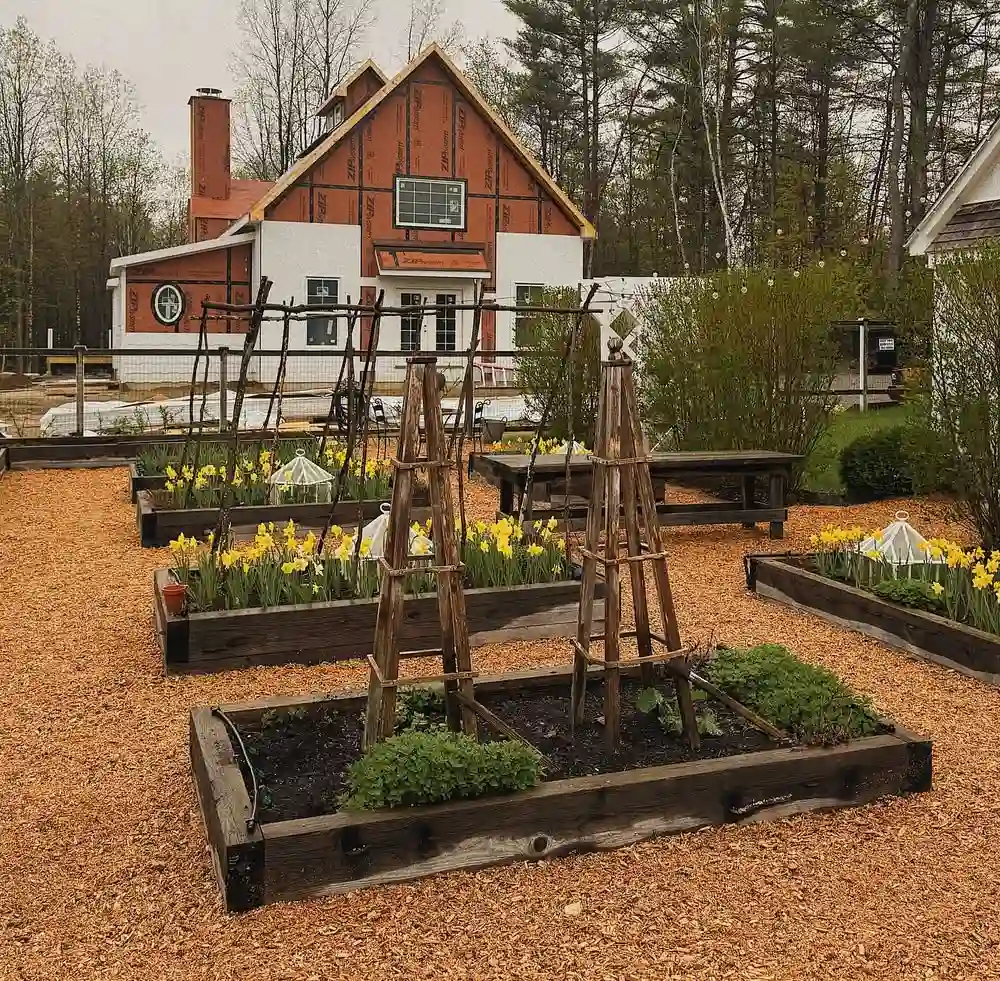
Rural wooden beds create an organized growing space in this thoughtfully planned garden. Wooden obelisk trellises stand ready to support climbing vegetables as they mature in coming weeks. Cheerful yellow daffodils brighten the beds while winter-dormant soil awaits warmer temperatures. The amber mulch pathways prevent mud while providing clear walking zones between growing areas.
Young plantlets just emerging show this garden’s early spring potential. The farmhouse backdrop adds country charm to this functional growing space. Glass cloches protect delicate seedlings from late frosts while extending the growing season. This garden layout demonstrates how proper planning creates both visual appeal and growing efficiency.
The raised beds drain quickly in spring, allowing soil to warm faster than ground-level gardens. The uniform size and spacing of beds create a sense of order while making maintenance tasks straightforward. This garden will transform dramatically as seasons progress, with vegetables replacing spring flowers as temperatures rise.
21. DIY Seedling Starting Station

Colorful containers transform this wooden table into a productive plant nursery. Vibrant seedling trays in blue, purple, and pink hold promising vegetable starts that will soon populate garden beds. Handwritten labels ensure each variety stays properly identified through the growing process. The sturdy table raises plants to a comfortable working height while white markers track planting information.
Beginning fruit trees at various stages grow nearby, showing this gardener’s commitment to edible landscaping. The mulched ground prevents weeds while defining the growing area clearly. Tomato seedlings stretch upward; their distinctive leaves promising summer harvests. The organized methodology allows for tracking varieties and succession planting throughout seasons.
This setup costs far less than commercial growing systems while producing hundreds of garden-ready plants. The colored containers make plant identification simpler while adding visual interest to the functional space. This station proves that vegetable gardening starts long before the soil warms in spring.
22. Blue Raised Bed Community Garden

Vibrant blue raised beds create a cheerful growing environment in this community garden space. Wood chip pathways allow all-weather access while defining growing zones clearly. The uniform raised beds provide individual growing spaces within the shared garden area. Early vegetable plants just beginning their growth cycle promise abundant harvests ahead. A blue polytunnel greenhouse extends the growing season while protecting tender plants.
Various protective covers shield seedlings from harsh weather and hungry pests. The open layout allows gardeners to work alongside each other comfortably. Morning sunlight warms the garden, highlighting the fresh spring growth. This garden demonstrates how coordinated colors create visual harmony while serving practical purposes.
The raised beds keep soil contained while providing proper drainage even during heavy rains. Community gardens like this bring neighbors together around shared growing experiences. The bright blue color adds cheerfulness that makes garden work feel more like play.
23. Evening Vegetable Garden Retreat

Warm lantern light transforms this vegetable garden into an evening sanctuary. Massive squash leaves create dramatic silhouettes against the dusky backdrop. Narrow gravel pathways allow access while conserving precious growing space. Purple globe amaranth flowers add unexpected color accents among vegetables.
Corn stalks reach skyward while compact raised beds contain sprawling varieties. The mix of ornamentals with edibles proves that vegetable gardens can be beautiful and productive. Garden lanterns guide evening harvest trips while creating a magical atmosphere. The wooden raised beds define growing zones clearly while keeping soil contained.
Terracotta pots add rustic charm while hosting pollinator-friendly flowers. The garden demonstrates how thoughtful lighting extends enjoyment hours beyond daylight. This growing space invites lingering rather than just quick harvesting visits. The careful balance of productive plants with beautiful ones creates a space that nourishes both body and spirit.
24. Balcony Lettuce Garden

Fresh lettuce bursts with vibrant green hues in this simple terracotta pot setup. Growing lettuce at home skips those grocery store trips and delivers crisp leaves straight to your table. The compact nature of this container makes it fantastic for small spaces like patios, balconies, or even sunny windowsills.
Your homegrown lettuce will taste sweeter and contain more nutrients than store-bought alternatives. Starting is straightforward; just grab a pot, quality soil, and some seeds or seedlings. The beauty of container lettuce lies in its continuous harvest potential; simply snip outer leaves while inner ones keep growing.
Water consistently, but avoid saturating the soil. Morning sunshine works best as afternoon heat can stress these cool-weather greens. This style allows anyone, regardless of garden space, to enjoy homegrown salads without fuss.
25. Elegant Raised Bed Potager Garden

Golden afternoon light bathes this sophisticated vegetable garden design that seamlessly blends beauty and function. Raised beds bordered by neatly trimmed boxwood create structure while housing a variety of lettuces, herbs, and vegetables. The garden incorporates protective mesh covers to shield tender plants from pests without compromising aesthetics.
Gravel pathways between beds allow easy access while preventing mud during rainy seasons. Nearby seating invites gardeners to rest and enjoy their green sanctuary. Strategic companion planting helps naturally deter unwanted insects notice how red lettuces mingle with green varieties and herbs.
This strategy proves that vegetable gardens can rival ornamental landscapes in visual appeal. Sunlight filters through overhead tree canopies, creating shade during hot afternoons. Such a thoughtful organization simplifies maintenance and maximizes growing space in a relatively small area.
26. Timber Raised Bed Fortress

Sturdy cedar raised beds combined with protective fencing create this practical vegetable growing system. The tall wire mesh fence integrated into wooden framing keeps deer, rabbits, and other hungry visitors away from tender plants. Young
sprouts have room to flourish within these generous beds, which stand at an ideal working height to eliminate back strain. Cedar wood naturally resists rot and insects, ensuring years of productive growing. Wide paths between beds accommodate wheelbarrows and allow comfortable access for planting and harvesting. The design optimizes sunlight exposure while creating a clearly defined growing area separate from the surrounding landscape.
Small support stakes show where climbing vegetables will eventually grow upward, maximizing vertical space. This setup works wonderfully for novice gardeners as the contained environment allows better soil control and easier pest management. The clean lines add architectural interest to any yard while serving a practical purpose.
27. Potager Paradise

Rustic timber raised beds overflow with a luxurious tapestry of vegetables in this productive kitchen garden. Ancient wattle fencing forms the backdrop, adding countryside charm while protecting plants from the wind. Clever plant spacing maximizes yields; tall leeks stand sentinel beside bushy kale and colorful lettuces.
Brick pathways provide all-weather access and release stored heat to nearby plants during cool nights. Companion planting of bright orange marigolds alongside cabbages naturally deters pests. The garden balances productivity with beauty through the thoughtful arrangement of textures and colors.
Sunlight catches morning dew on crinkled kale leaves, creating a magical effect. Wooden raised beds eliminate stooping and create perfect growing conditions with improved drainage and soil warmth. The garden demonstrates how vegetables can form stunning patterns when arranged with an artist’s eye. Every inch serves multiple purposes: beauty, food production, and ecological balance in this sustainable growing approach.
28. Stacked Herb Tower Garden

Three cream-colored pots stack cleverly to create this space-saving herb garden. Lush basil leaves spill over the bottom container, their aromatic green foliage ready for plucking. Bright parsley fills the middle level with its curly texture, while mint spreads across the top tier. Charming chalkboard labels stuck into each section identify what’s growing where.
This smart vertical design works miracles for tiny patios, balconies, or kitchen windowsills. Fresh herbs sit within arm’s reach for cooking, eliminating waste and saving grocery money. The setup requires just basic potting soil and occasional watering to thrive. Sunlight hits plants at different angles throughout the day thanks to the tiered arrangement.
Herbs grown this way taste more intense than store-bought options. You can easily swap out plants seasonally based on your cooking needs. The neutral container color complements any outdoor decor style while letting the varied green shades shine.
29. Rustic Window Box Planter

An old wooden window frame finds new life as a charming garden accent piece. Green grape leaves flow down from above, framing the weathered window with natural beauty. Below hangs a repurposed wooden crate marked “Fresh Cut Flowers” that serves as a delightful planter box. Bright pink blooms add a pop of color against the rustic whitewashed wood backdrop.
An antique birdcage decoration and vintage lantern complete the country cottage aesthetic. This creative setup shows how everyday objects can transform into garden art with minimal effort. Morning sunlight filters through the glass panes, creating interesting shadow patterns. The contrast between the structured wood elements and organic plant shapes creates visual interest.
Rainwater naturally drips down from the vine to help nourish the flowers below. This procedure works brilliantly on shed walls, fence sections, or garden entryways. The battered materials tell a story while bringing charm to an outdoor space that might otherwise be overlooked.
30. Beginner-Friendly Flower Bed

Bright blooms fill this simple rectangular raised bed, creating a cheerful garden spot against a wooden fence. Orange lilies stand tall among purple flowers, creating a striking color combination that attracts butterflies and hummingbirds. The straightforward design makes gardening approachable for beginners while still yielding beautiful results.
A basic wooden trellis in the background offers support for climbing plants as they grow taller. Dark, rich soil provides essential nutrients for healthy root development. This uncomplicated setup requires minimal tools and construction skills; just some wood boards nailed together. The compact size fits neatly into small side yards or narrow spaces between houses. A mix of flower heights creates natural layers that catch the eye from multiple angles.
Planting flowers among vegetables helps attract insects while adding beauty to your food garden. Maintenance stays simple with everything contained in one accessible area. Sunflowers visible in the background will eventually tower over this flower bed, adding dramatic height variation.
31. Rainbow Crate Garden Hotel

Colorful wooden crates stack into a playful vertical garden that delights both humans and chickens alike. Bright yellow, turquoise, pink, and lavender containers create a cheerful rainbow effect against the neutral fence. Each crate holds leafy greens and herbs at different heights, making harvesting easy without bending.
Free-ranging chickens patrol below, hunting for bugs while adding natural fertilizer to the yard. This clever design turns ordinary wooden crates into an eye-catching garden feature that maximizes growing space. The vertical arrangement works wonders for small backyards where ground space comes at a premium. Curious hens investigate the setup, perhaps hoping for fallen leaves or seeds.
The simple construction requires just basic tools and materials, making it accessible for weekend warriors. Separate containers allow you to customize soil for different plant needs. Portable boxes mean you can rearrange the garden as sun patterns change throughout the season. The bright colors bring fun and whimsy to vegetable growing while keeping things organized.
32. Pallet Garden Bed

Fresh carrots peek out from rich soil in this clever wooden pallet garden. Leafy greens thrive in the spaces between slats, making full use of this recycled material. The humble shipping pallet transforms into a productive growing space with minimal effort or expense. Bright orange carrots show their progress, letting gardeners know when they’re ready for harvest.
Opulent parsley and other herbs fill additional sections, creating a complete kitchen garden in one compact space. This approach costs almost nothing while keeping pallets out of landfills. The raised design keeps vegetables cleaner than ground-level planting and reduces back strain during gardening tasks. Soil stays contained between the wooden slats, creating neat growing spaces.
Rain drains through the gaps, preventing root rot issues. The sturdy construction handles the weight of wet soil without collapsing. You can easily move the entire garden using a dolly if needed. This solution works great for renters and those with limited yard space or poor native soil.
33. Hanging Spinach Baskets

Sumptuous green spinach thrives in these woven hanging baskets, creating a beautiful vertical garden option. The textured brown baskets add natural warmth while sturdy jute ropes provide secure support. Fresh spinach leaves curl and overlap, showcasing their crinkled texture and vibrant color.
Growing vegetables in hanging containers saves valuable floor space and brings fresh greens within easy reach. Harvest becomes a simple task; just reach up and snip what you need for meals. The elevation helps protect leafy greens from ground pests like slugs and snails. Hanging baskets benefit from excellent air circulation, reducing fungal issues common in crowded garden beds. Morning sun filters through the leaves, highlighting their rich color and healthy glow.
Water drains freely through the woven containers, preventing soggy soil conditions that cause root rot. This setup works ideally for apartment dwellers, renters, or anyone with limited gardening space. The portable nature allows you to move plants as seasons change to optimize growing conditions.
34. Multi-Level Living Tower

Animated colors explode from this impressive vertical planting system loaded with edible greens. Stacked black containers create a living wall of contrasting textures and hues. Bright lettuce varieties fill the bottom tier while deep purple plants create a dramatic contrast in the middle sections.
Coral and salmon-colored foliage adds unexpected warmth among the various green shades. The clever design maximizes growing space by building upward rather than outward. Each level receives proper light exposure thanks to the careful arrangement of plant heights. Water naturally filters down through the tower, helping lower plants receive nutrients from above.
This methodology transforms a tiny corner into a productive growing area that could yield enough salad greens for daily harvests. The structured system makes garden maintenance efficient; just one spot to water and tend. Varied plant types ensure continued harvests as different varieties mature. The striking color combinations prove that vegetable gardens can be both functional and beautiful. This setup would work equally well indoors near bright windows or outdoors on patios.
35. Vertical Wall Garden

Bright cherry tomatoes pop against lavish green foliage in this spectacular wall-mounted garden. Terra cotta pots attached to wire grid panels transform a blank wall into a productive growing space. Sunlight streams across the plants, creating dramatic shadows while providing essential energy for fruit production. The vertical arrangement allows tomato vines to cascade naturally downward, making harvesting incredibly simple.
Herbs and leafy greens fill the lower containers, creating a complete kitchen garden in minimal space. This ingenious setup reclaims otherwise unused vertical real estate in small gardens, balconies, or courtyards. Metal grids provide sturdy support while allowing easy rearrangement of pots as needs change.
The organized system keeps plants accessible for regular care and harvesting. Excess water drains directly into pots below, creating an efficient irrigation system. Terra cotta containers naturally regulate soil temperature and moisture through their porous surfaces. Growing upward rather than outward preserves precious floor space for seating or other activities while still allowing abundant harvests.
36. Windowsill Herb Garden

Morning sunlight streams through the window, illuminating three wooden planters filled with fresh culinary herbs. Warm wood tones complement the rich browns of the window frame, creating a harmonious look. Bright green herbs reach toward the light, their leaves practically glowing against the clean glass panes.
This practical setup brings growing space indoors, allowing fresh herbs even in apartments without balconies or yards. The compact arrangement fits neatly along standard windowsills without taking valuable counter space. Cooking becomes more flavorful with freshly snipped herbs just steps from the stove.
Winter light provides enough energy for slow growth when outdoor gardens lie dormant. The simple wooden containers add natural warmth to kitchen decor while serving an essential purpose. Regular harvesting encourages bushier growth, creating increasingly productive plants over time. This setup teaches children about food sources even in urban environments. Different containers could hold different herb families; one for Italian cuisine, another for tea herbs, and a third for garnishes. The accessibility makes daily use effortless and encourages healthy eating habits.
37. Edible Container Garden Tower

Vibrant cherry tomatoes and colorful cosmos flowers create a stunning garden display in stacked black containers. Bright orange blooms complement the ripe tomatoes, while layered greenery provides lush background texture. This clever arrangement transforms a small corner into a productive mini-farm and cutting garden.
Various-sized containers create visual interest while accommodating different plant root needs. The combination of vegetables and flowers attracts beneficial insects for natural pest management. Harvested tomatoes rest in a small bowl nearby, showcasing the garden’s productivity. Growing different plants together mimics natural ecosystems, encouraging healthier growth. The vertical arrangement makes excellent use of limited space while creating a living sculpture. Yellow bell peppers add unexpected color variety among the predominantly red tomatoes.
Purple flowers provide a striking contrast against the bright orange blooms and green shrubbery. This approach works wonderfully for patios, porches, or small yard corners. The container method allows gardeners to control soil quality precisely for optimal growth. This beautiful food garden proves that productive spaces can also enhance home exteriors with stunning visual appeal.
38. Suspended Cucumber Cradle

Green cucumbers dangle elegantly from this ingenious hanging basket solution. Twisted rope supports the weight of a green plastic planter filled with thriving cucumber vines. Broad, heart-shaped leaves create natural shade while the fruits hang freely below, growing straight without ground contact. This nifty structure saves valuable garden space while keeping cucumbers clean and pest-free.
Slugs and soil-borne diseases become non-issues with this elevated approach. The cucumbers develop uniform color without the pale spots that typically form where fruits touch the ground. Harvesting becomes a breeze; simply lift the hanging fruits and snip with scissors. No more stooping or searching through tangled vines. Growing upward makes cucumbers easier to spot when they reach the optimal size.
The container can move throughout the season to follow the sun or provide afternoon shade during intense heat. This method works for small yards, patios, or balconies where ground space comes at a premium. The visual appeal of hanging cucumbers adds unexpected garden interest.
39. Rainbow Nightshade Bounty

Vibrant vegetables overflow from this weathered terracotta pot, showcasing a stunning array of colors from the nightshade family. Glossy purple eggplants snuggle alongside bright yellow and fiery orange bell peppers. Ruby-red tomatoes add classic garden color while leafy green plants provide lavish background texture. This abundant harvest demonstrates how much food a single container can produce with proper care.
The aged pot develops character with its patina of moss and mineral deposits from seasons of use. Multiple vegetable varieties growing together create natural pest resistance through biodiversity. The rich color contrast makes this arrangement as ornamental as it is practical. Compact vegetable varieties allow several plants to thrive in limited space.
Growing related plants together simplifies care requirements since they need similar water and fertilizer. The substantial harvest proves containers can yield serious amounts of food despite their small footprint. This style brings vegetable growing within reach of renters, balcony gardeners, and those with limited mobility or poor native soil.
40. Heritage Tomato Tapestry

A stunning rainbow of tomato varieties creates this edible garden tapestry in rich soil. Bright red paste tomatoes hang alongside sunny yellow snacking varieties. Unusual chocolate-colored cherry tomatoes dangle from neighboring vines while hot peppers add spicy contrast with their pointed orange shapes. The garden showcases tomato biodiversity with multiple shapes, colors, and sizes growing together.
These heirloom varieties offer superior flavor compared to standard grocery options. Companion herbs grow alongside tomatoes, deterring pests naturally while enhancing garden productivity. Morning dew clings to fuzzy tomato leaves, catching sunlight like tiny prisms. This garden approach honors agricultural heritage by preserving unique vegetable varieties passed down through generations. The diverse planting creates garden resilience; if one variety struggles with weather conditions, others may thrive.
Growing multiple tomato types extends the harvest season as different varieties mature at different rates. This colorful garden doubles as both food source and ornamental display. The natural companion planting mimics how plants grow in balanced ecosystems rather than sterile monocultures.
