
Your compost pile was thriving in spring. Now it smells like rotten eggs and hasn’t broken down in weeks. Summer just happened to it. Summer heat speeds up the microbes in your pile. That sounds great.
But when a pile overheats past 160°F, those same microbes start dying. And when the pile runs short on oxygen, it goes anaerobic. That’s when the sulfur and ammonia smells kick in and drive everyone away from the backyard.
These seven tips are backed by research from Michigan State University Extension, the EPA, and composting specialists at Compost Check. Every tip is something you can do today. No fancy equipment needed for most of them.
Why Summer Is Both the Best and Worst Time to Compost?
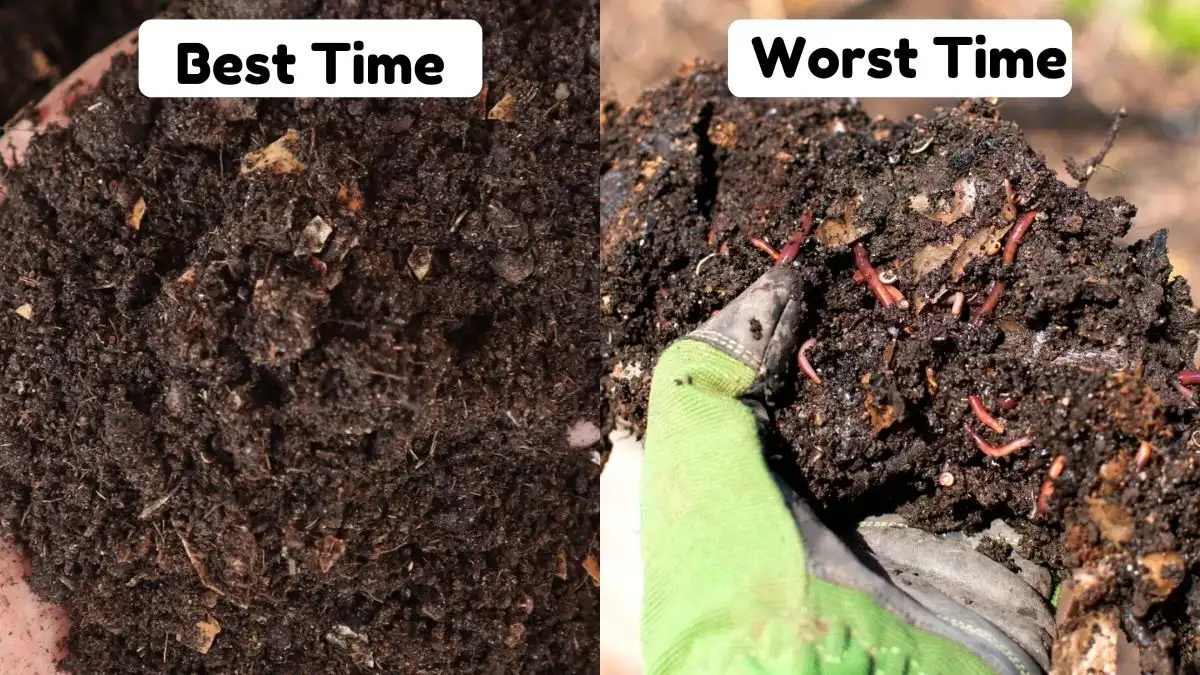
Summer should be perfect for composting. The warmth drives microbial activity, and faster microbial activity means faster decomposition. Compost piles ideally heat up to between 130°F and 160°F to kill pathogens and weeds.
Summer gets you there with almost no effort. Prolonged temperatures above 160°F can start to damage beneficial microbial communities and lead to excessive moisture loss. You’ve basically cooked your compost.
Then there’s the second failure mode. Aerobic microorganisms, the most efficient decomposers, require a constant oxygen supply. Without it, aeration can’t remove excess heat and moisture, and harmful anaerobic byproducts build up.
That’s your rotten egg smell. Summer also floods your pile with nitrogen-rich greens. Grass clippings, fruit scraps, vegetable trimmings. All of them pile up fast. Too much nitrogen and too little carbon throws the whole system off balance.
The context matters too. In the US, only 4.1% of food waste is composted annually. Summer frustrations are one big reason people quit. The tips below exist to stop that from happening to you.
Tip 1. Move Your Bin to a Shaded Spot (or Cover It)
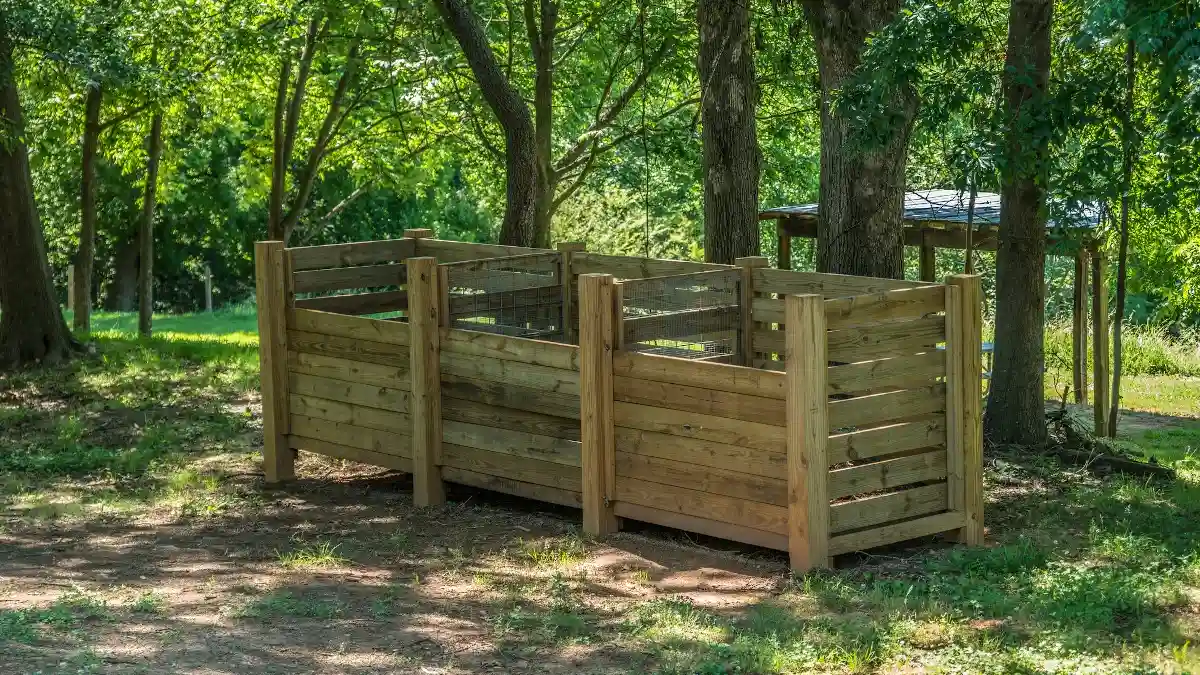
Your bin is baking in full afternoon sun. That’s the first thing to fix. Direct sunlight can unevenly heat the compost and dry it out too quickly. Placing your bin in a shaded area, or shading it with a lid, tarp, or similar material, helps prevent this.
Morning sun hitting the bin from the east is fine. Afternoon western sun baking it for five straight hours is the problem. If you can’t move the bin, drape it with a burlap sack, a wooden board, or a piece of shade cloth. Even an old shower curtain works.
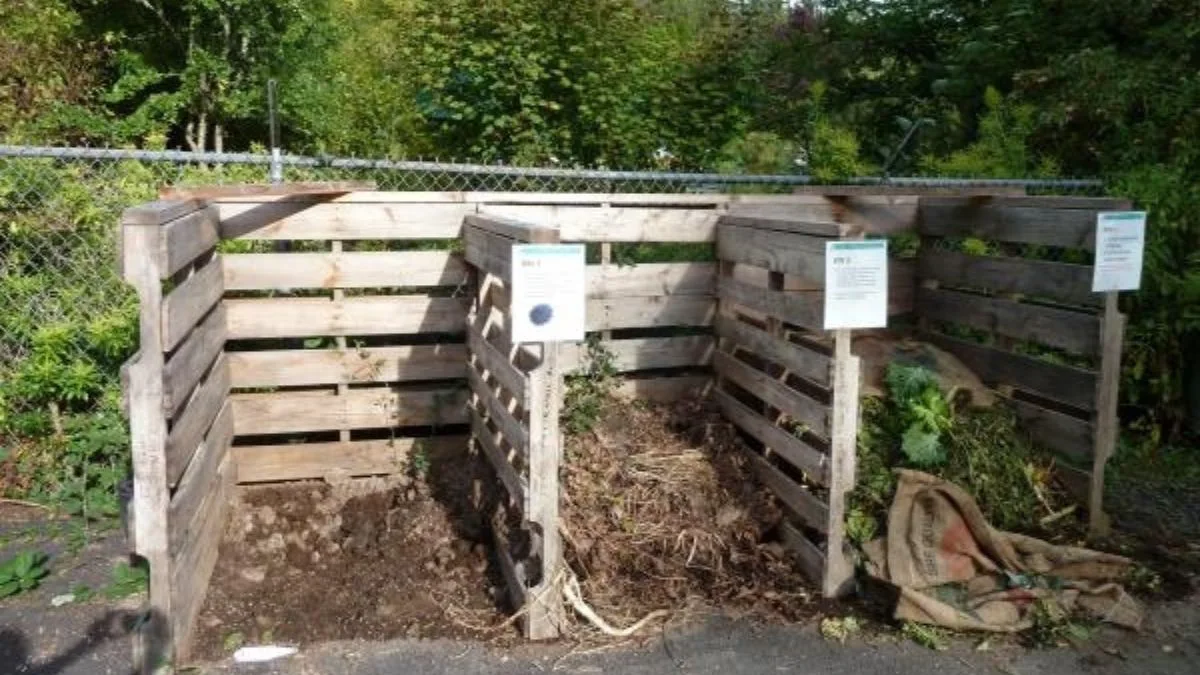
If your pile is open or in a tumbler, covering it with a layer of high-carbon dry material such as straw, shredded paper, or wood chips can help regulate moisture levels and prevent excessive heat buildup.
Partial shade is the goal. Full shade works but slows the thermophilic activity that makes composting fast. Aim for morning sun and afternoon shade if possible.
Do this today: Walk out and check where your bin sits at 2 PM. If it’s in direct sun, move it or throw a tarp over it. That one step can drop the pile temperature by 20°F or more.
Tip 2. Rebalance Your Browns-to-Greens Ratio
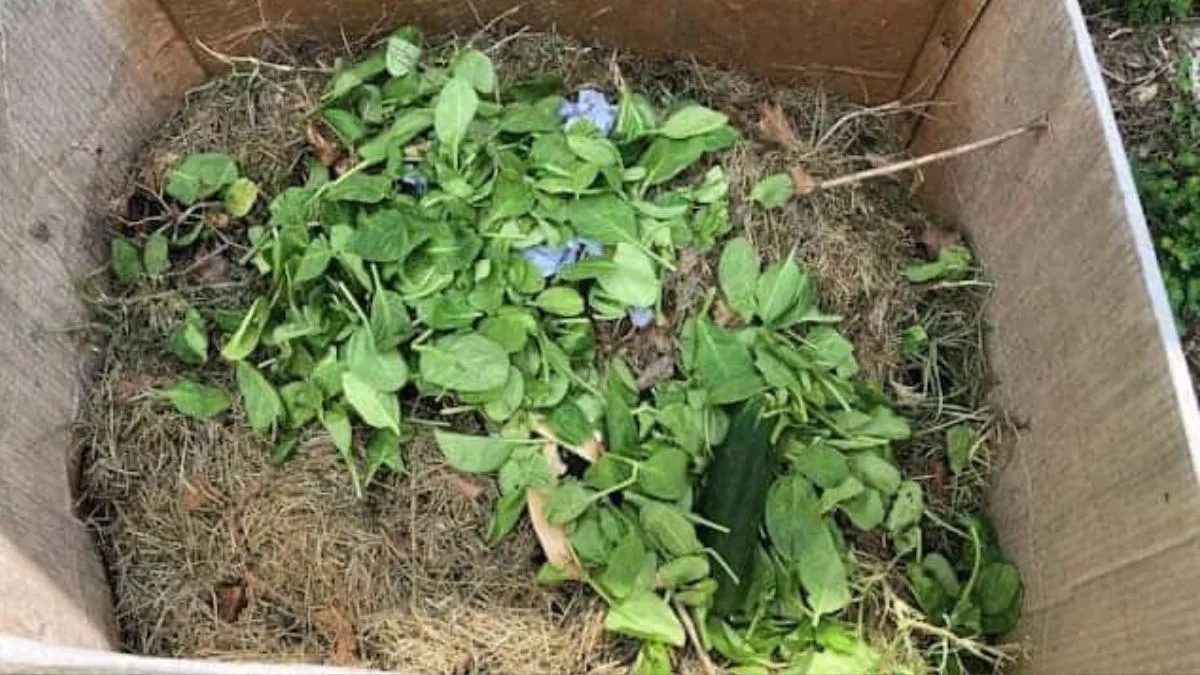
You’ve been adding grass clippings all week. The pile starts to smell like ammonia and gets hot and slimy. The proper carbon-to-nitrogen mix is 25 to 30 parts carbon to one part nitrogen.
Summer composting often tips toward too much nitrogen, which is a primary cause of overheating. For summer specifically, aim for 2 to 3 parts brown for every 1 part green. That’s more conservative than the standard 1:1 ratio you see in most guides.
It’s necessary because summer brings a flood of greens. Browns to keep stocked near your bin right now:
- Dry leaves saved from last fall
- Shredded cardboard (Amazon boxes work perfectly)
- Straw from a garden center
- Plain brown paper bags, torn up
- Shredded newspaper
An ammonia smell is a direct signal of too much nitrogen and insufficient aeration. The fix is to turn the pile and add a generous amount of dry carbon-rich materials immediately. The practical habit that makes this easy.
Keep a bag of shredded cardboard right next to the bin. Every time you add kitchen scraps, add an equal layer of cardboard on top. It takes five seconds.
Do this today: Check your pile. If it smells sharp or looks slimy, add a thick layer of dry browns and turn it once.
Tip 3. Turn Your Pile Every 5 to 7 Days
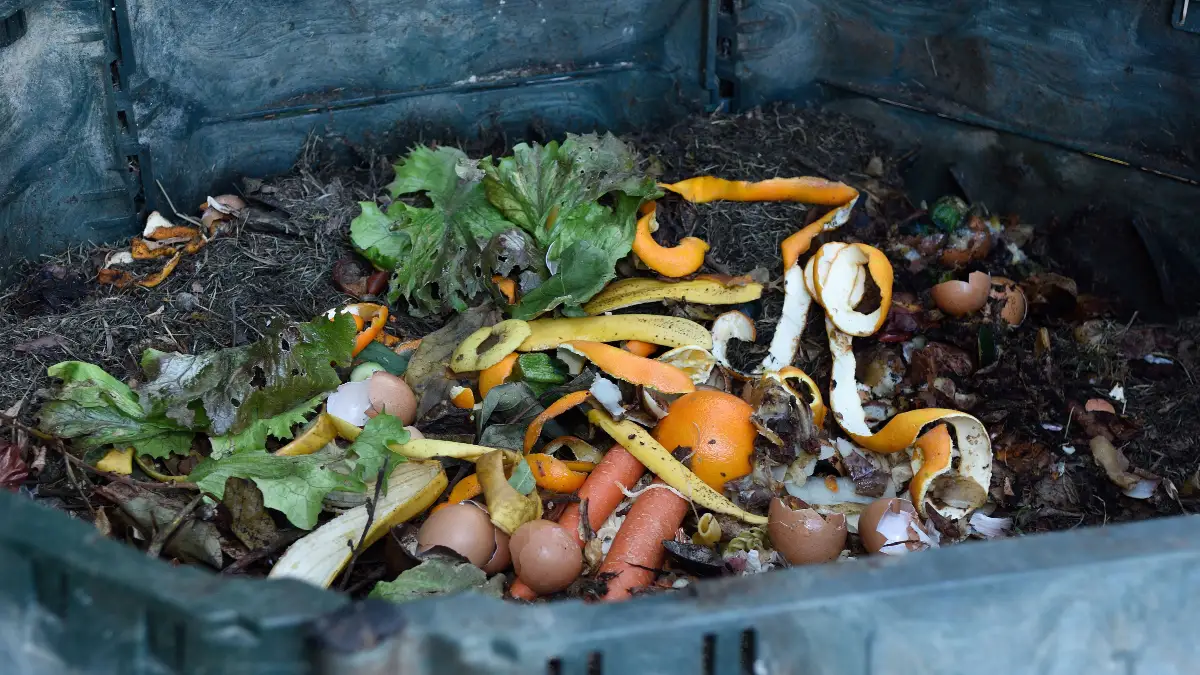
Your pile is steaming at the center and starting to smell. It hasn’t been turned in for two weeks. Especially in summer, when heat speeds up microbial activity, turning your compost every 5 to 7 days helps maintain oxygen flow and prevents overheating.
Turning does three things at once. It moves the dry outer material into the hot center. It moves the hot center material to the cooler outside. And it breaks up anaerobic pockets before they can produce sulfur smells.
If the pile is consistently exceeding 160°F, turn it every 2 to 3 days to dissipate excess heat, aerate the core, and equalize moisture. One more timing tip: turn compost in the early morning or evening and avoid turning during midday heat when microbes are already stressed.
One composting blogger shared exactly this experience. After going weeks without turning, their pile started to smell like rotten eggs. One turn with a pitchfork revived it immediately.
They now set a phone reminder to turn it on regularly. But one 10-minute turn per week beats an hour of fixing a stalled, stinky pile on a Saturday.
Do this today: Set a weekly phone reminder for turning. And if your pile hasn’t been turned in over a week, go do it right now.
Tip 4. Keep Moisture Like a Wrung-Out Sponge
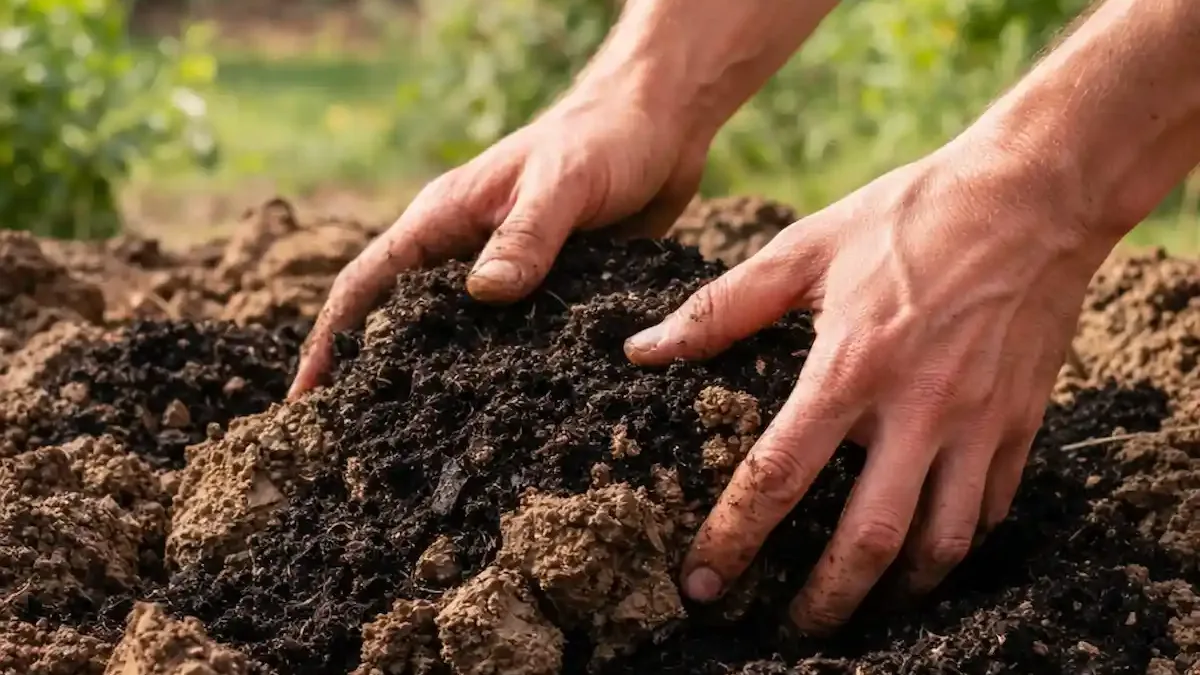
Hot weather dries piles out fast. A dry pile is a dead pile. The sponge test is your best tool. Grab a handful of compost and squeeze it. It should feel damp and hold its shape. It should release only a drop or two of water.
If it crumbles and feels dusty, it’s too dry. If water pours out when you squeeze, it’s too wet. If the pile feels dry, add water. If it’s soggy, turn it more often to air it out. Both extremes cause problems.
In summer, water lightly every other day rather than drenching the pile once a week. A light mist maintains consistency. A big soak can send the pile anaerobic. Simply adding water to an overheating pile without turning it can create anaerobic conditions.
Leading to putrefaction and odor without resolving the root problem. Turning the pile and adding carbon materials is equally important. During turning, consider adding moisture-retentive browns like shredded newspaper or coco coir.
Do this today: Do the sponge test on your pile. Adjust moisture or turning frequency based on what you find.
Tip 5. Chop Scraps Small or Store Them Frozen
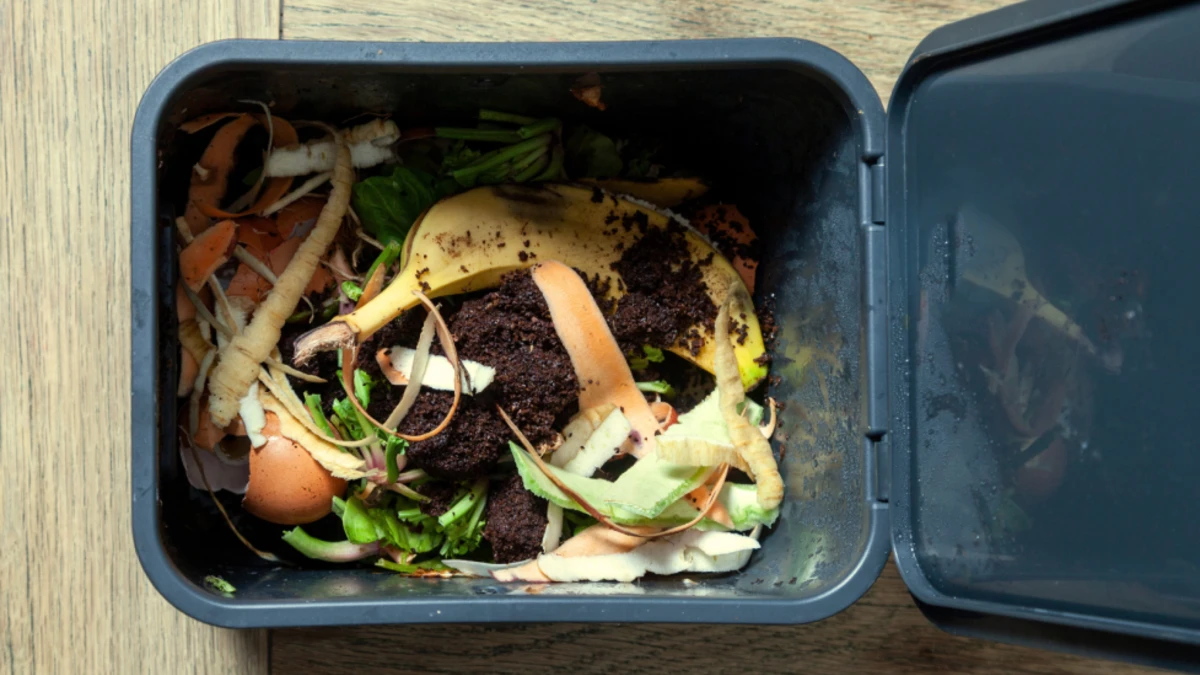
A whole mango skin dropped into a hot summer pile can start smelling within 24 hours. A chopped mango skin breaks down before that happens. Smaller pieces mean more surface area for bacteria to work on. More surface area means faster breakdown.
Faster breakdown means the material is gone before it can become anaerobic and start to smell. Aim for pieces no larger than 2 inches. Use kitchen shears or a knife on larger items, such as corn cobs, citrus rinds, and melon rinds. Don’t overthink it.
A quick chop is enough. The other option: freeze your scraps. Keep a gallon zip-lock bag in the freezer and add kitchen scraps to it throughout the week. Dump the frozen bag into the pile once a week. This keeps odors out of your kitchen bin entirely.
Frozen scraps also thaw in the pile and add a small moisture boost, which helps in dry summer conditions. This approach is especially worth it for high-sugar fruit scraps, which attract fruit flies fast in summer heat.
Do this today: Pull out a gallon bag and start freezing this week’s scraps instead of adding them daily.
Tip 6. Never Add Meat, Dairy, or Oily Foods in Summer
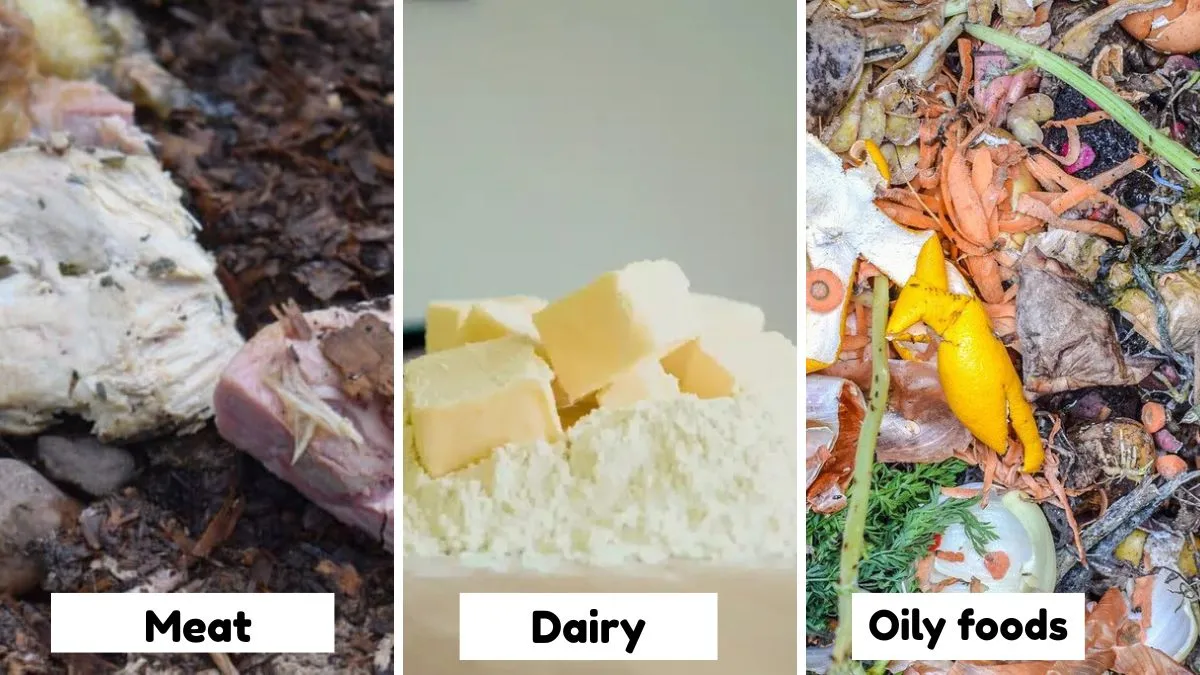
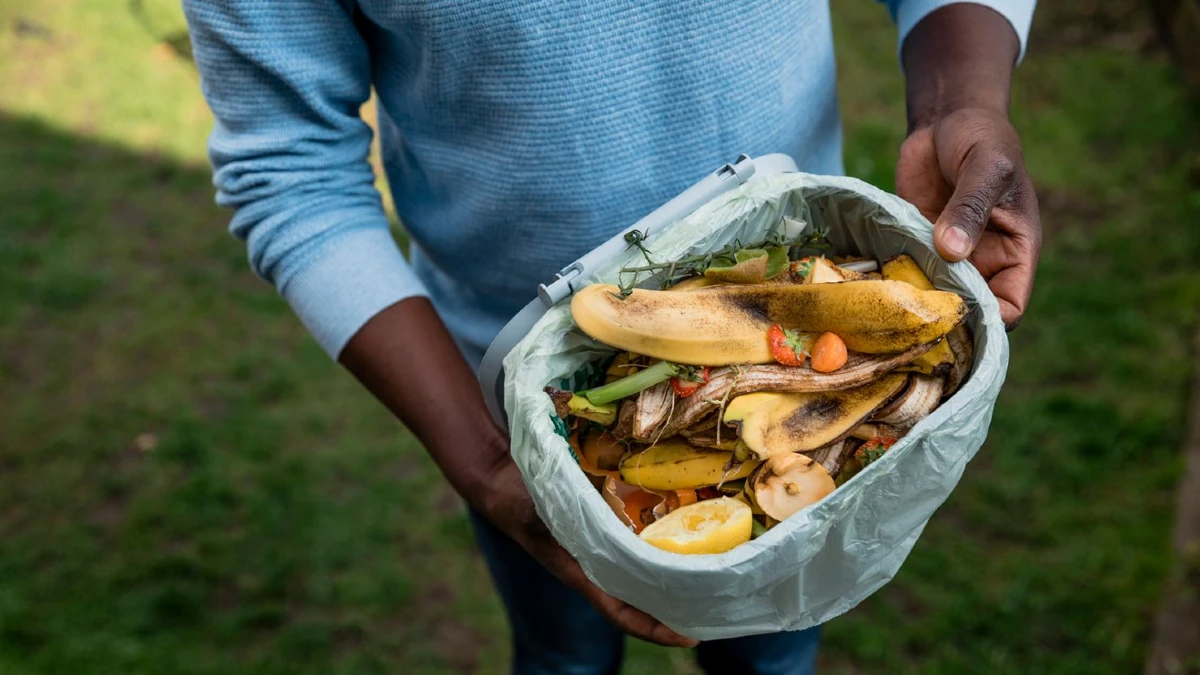
You may have heard that you can compost anything organic. That’s technically true in a managed facility. At home in summer, it’s a recipe for a pest-infested, foul-smelling bin. During hot weather, it is best to avoid adding meat, dairy, and oily foods to your compost.
These materials decompose slowly, can attract pests, and contribute to foul odors. Heat dramatically speeds up protein breakdown in meat and dairy.
That process releases sulfur compounds fast. Much faster than in spring or fall. Your pile can go from fine to smelling like a dumpster in 48 hours.
Keep these out of your summer pile entirely:
- Meat and fish scraps
- Dairy products (cheese, yogurt, milk)
- Cooked food with oil or sauce
- Diseased plants from the garden
- Pet waste
If you truly want to compost meat and dairy, the Bokashi method ferments them first, making it safe to then add them to a standard compost pile. It’s a separate system and worth looking into if this is a priority for you.
Do this today: Go through what you’ve added to the pile this week. If meat or dairy is in there, cover it immediately with a thick layer of dry browns and turn the pile.
Tip 7. Always Cover New Additions with Browns
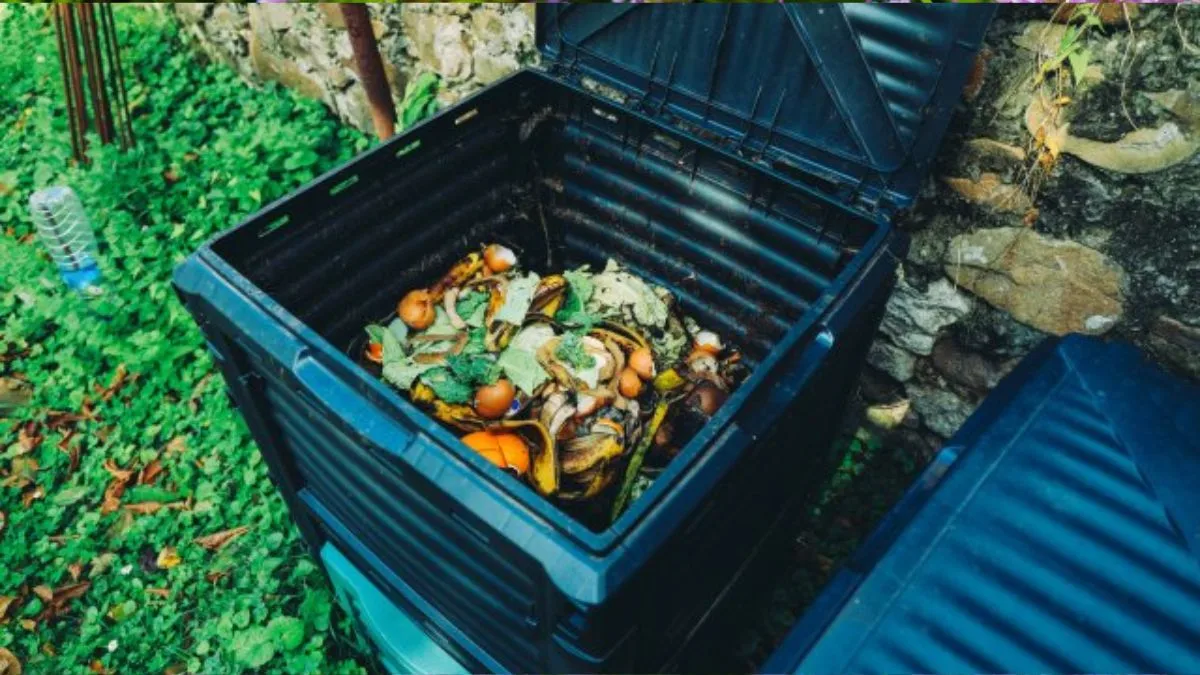
Every time you drop kitchen scraps into the bin, cover them immediately with a 2 to 3 inch layer of dry browns, shredded cardboard, dry leaves, or finished compost. This one habit solves two problems at once. First, it blocks fruit flies.
Flies lay eggs directly on exposed food surfaces. Buried food can’t be reached. Second, the brown layer acts as an odor trap. It physically absorbs gases before they escape into the air around your bin.
Coffee grounds layered on top of the pile can deter pests while the moisture in the grounds helps offset dryness in the bin. If you make coffee daily, save the grounds and layer them on top of new scraps. They do double duty.
The habit only works if it’s easy. The key is keeping a small container of dry browns right next to your compost bin. Not in the garage. Right next to it. When adding scraps takes five seconds and covering them takes five seconds, you’ll actually do it every time.
Do this today: Place a bucket or bag of dry cardboard scraps next to your bin. That’s the whole setup.
