
Social media has turned tiny homes into the best solution for housing affordability. The aesthetic is amazing. The minimalist lifestyle looks peaceful. The costs seem manageable compared to traditional homes’ legal nightmares, financing obstacles, and depreciation that kills any chance of building wealth.
The tiny home reality in 2025 is way different from the Instagram version. Real costs range from $30,000 to $180,000, depending on finishes and features. These homes depreciate like RVs instead of appreciating like real estate. Zoning laws make it illegal to park your home in most places. Traditional lenders won’t touch them with a ten-foot pole.
The housing market has taught us that shortcuts usually backfire. Millennial housing trends right now feel eerily familiar to mistakes we watched people make 15 years ago. This isn’t about crushing dreams. It’s about preventing expensive mistakes.
#1. The Instagram Fantasy vs. The Legal Reality
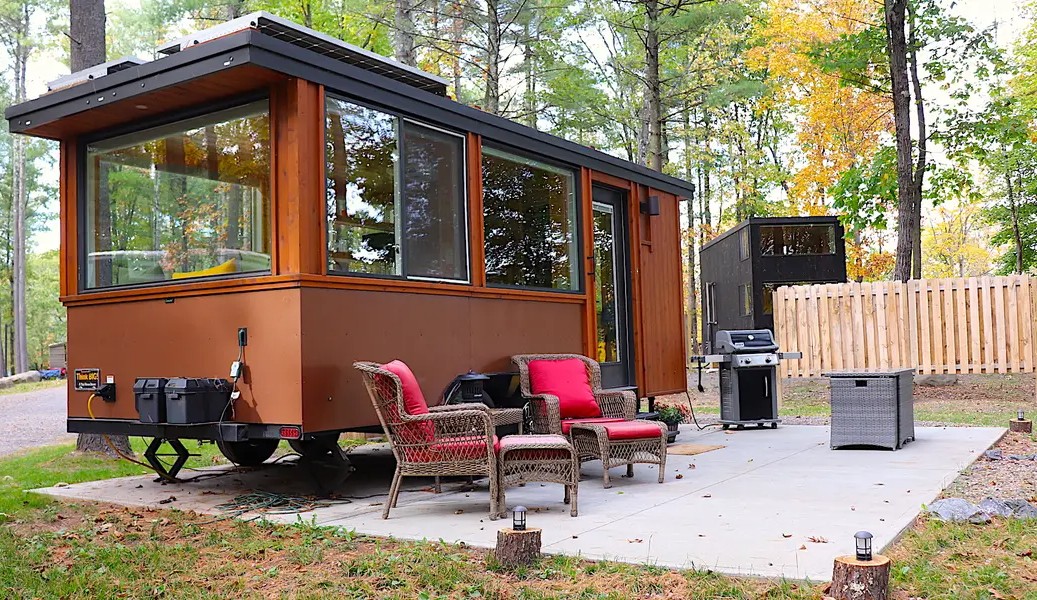
The numbers look impressive on paper. Research shows that 73% of Americans say they’d consider living in a tiny home. Among Gen Z and Millennials, that jumps to 75%. The global tiny homes market is expected to grow by $3.71 billion between 2025 and 2029. That’s a compound annual growth rate of 4.45%. Investors are paying attention. Influencers are buying in.
Financial Crisis

Yes, 63% of tiny home dwellers report lower financial stress. And 55% say they have more disposable income than before. Those stats sound great. They’re also only counting the people who stuck with it. Nobody’s tracking the ones who gave up and moved back to regular apartments.
Real estate broker Andrew Fortune from Great Colorado Homes watched this play out in real time. He saw many people sell their traditional homes to downsize into tiny homes during the boom. Most of them? Back in standard-sized homes within a year. “The idea of a tiny home is stronger than the reality of it,” Fortune explained. “It’s very hard on the people who live in them, especially in the winter months.”
That’s the part Instagram forgets to mention. During the summer, tiny house residents spend time outdoors. They cook outside. They hang out in parks. The tiny space works because they’re barely in it. Then winter hits. Suddenly, you’re stuck inside 200 square feet for months. The cozy cottage on wheels starts feeling like a very expensive jail cell.
The tiny home movement is real and growing. So are the failure stories that never make it to your feed. Social media shows you the aesthetic dream. It doesn’t show you the paperwork nightmare, the legal battles with your HOA, or the panic attack you have in February when you realize you can’t stand up in your own bedroom anymore.
#2. What They Don’t Tell You About Tiny Home Costs

Everyone sees the headline: “Tiny Homes for $30,000!” That’s technically true. You can build a basic tiny home for $30,000 to $70,000. But that’s like saying you can buy a car for $5,000. Sure, you can. It won’t have air conditioning, power windows, or work properly. Premium tiny homes with actual finishes you’d want to live with? Those run $150,000 to $180,000. At that price, you’re not saving much compared to a traditional home down payment.
Need Land For Building

You need somewhere to put this thing. The average cost per acre in the United States is $18,657. But location matters. A lot. In New Mexico or Wyoming, you might find land for $6,000 to $9,000 per acre. In Massachusetts? Try $103,000 per acre. New Jersey isn’t much better at $88,000 per acre. If you’re building on a permanent foundation, add property taxes to that bill.
Monthly lot rental for a tiny home on wheels runs $250 to $1,500, depending on location. In popular areas, you’re looking at the high end of that range. That’s apartment rent. For a parking space. Tiny homes cost $300 to $400 per square foot to build. Traditional homes? About $150 per square foot. You’re paying double per square foot for less space. Let that sink in.
The median U.S. home price hit $396,900 in January 2025. That’s up 4.8% from the previous year. Yes, that’s expensive. But you’re getting actual square footage. A 2,000 square foot traditional home at $150 per square foot costs $300,000. A 300-square-foot tiny home at $350 per square foot costs $105,000. Add land ($18,657), permits ($1,500+), and utility hookups ($5,000-$15,000), and you’re at a minimum of $130,000. For 300 square feet.
#3. The Zoning Nightmare Nobody Warns You About

You’ve bought your dream tiny home. It’s delivered on a truck. Now comes the question that should have been answered first: where exactly are you allowed to put this thing?
Zoning Laws Decide What You Can Build Where

And most of them were written decades ago when nobody thought about 200-square-foot houses on wheels. The result? A legal mess that changes every few miles.
Take Portland, Oregon. The city allows tiny homes in all residential zones. Sounds great, right? Now look at Los Angeles. They only allow tiny homes in specific designated areas. Same state. Completely different rules. You could drive two hours and go from legal to illegal.
But it gets worse. Many local governments have minimum square footage requirements. We’re talking 700 to 1,000 square feet as the legal minimum for a permanent residence. Your 300-square-foot tiny home? Not a legal resident. You can own it. You just can’t live in it full-time in most places.
If your tiny home is on wheels, most counties classify it as an RV. That means you can only park it in RV parks or campgrounds. Full-time residency? Restricted to designated zones. You thought you were buying a home. The law thinks you bought a camper.
Texas has some of the most relaxed tiny home laws in the country. Cities like Austin and Spur welcome them. New York? Strict restrictions that make placement nearly impossible in most areas. These aren’t small differences. They’re the difference between legal and illegal housing.
Etowah, Tennessee, actually changed its laws to stop tiny homes. They set an 800-square-foot minimum in R1 residential zones. If your home is smaller, you’re breaking the law. The town next door might welcome you with open arms. Or they might have the same restrictions. You won’t know until you check.
Each county has its own rules. Each city adds more rules on top of that. Some neighborhoods have HOA restrictions that ban anything under a certain size. You could find the perfect piece of land, buy it, and then discover you can’t legally live there in your tiny home.
RV Parking

RV parks seem like an easy solution. But most have restrictions on how long you can stay. Some don’t allow full-time residents at all. Others charge rates that rival apartment rent. And good luck finding one near your job in a major city.
The insurance problem makes everything harder. Many insurance companies won’t cover tiny homes as permanent residences. They see them as recreational vehicles. Same with lenders. If they don’t recognize your tiny home as a permanent residence, you can’t get a traditional mortgage. You’re stuck with personal loans at higher interest rates.
#4. The Financing Trap That Catches Everyone

Most tiny homes don’t qualify for regular mortgages. There are three main reasons why. First, they don’t meet minimum loan amounts. Second, they’re often not on permanent foundations. Third, they don’t meet square footage requirements. Banks look at tiny homes and say no.
Most home loan companies won’t go below $50,000 for a mortgage. They also require permanent foundations. If your tiny home is on wheels, forget it. If it costs $35,000, forget it. The mortgage system wasn’t built for this type of housing.
These work for almost anything, including tiny homes. Interest rates run from 6% to 36%. The average sits around 11.57%. Compare that to current mortgage rates, around 6.5% to 7%. You’re paying almost double in interest for the privilege of going tiny.
Loan Companies

RV loans are another option if your tiny home is on wheels. Good Sam Finance Center, a major RV lender, requires a 690 credit score. Want to put zero down on a home between $10,000 and $50,000? That credit score requirement jumps to 740. Miss those numbers and you’re looking at even higher rates or outright denial.
Builder financing sounds convenient. The company building your tiny home offers to finance it, too. One-stop shopping. But read the fine print. These deals often come with worse terms than you’d get elsewhere. Higher interest rates. Shorter repayment periods. Fees you didn’t expect. Some builders partner with legitimate lenders. Others use financing as a way to make extra profit off you.
Many banks won’t invest in tiny homes because they know these homes lose value over time. They’re not stupid. They understand that tiny homes depreciate like cars and RVs. Traditional homes build equity. Tiny homes lose it. Why would a bank bet on an asset that will be worth less next year?
When you’re paying RV loan interest rates instead of mortgage rates, that affordability advantage starts vanishing fast. Run the numbers before you commit. A $50,000 tiny home loan at 11.57% for 15 years means monthly payments of around $582. That same amount at 7% mortgage rates? About $450. The difference is $132 per month, or nearly $24,000 over the life of the loan.
#5. Depreciation: The Wealth-Building Killer

Tiny homes depreciate like RVs or trucks. They lose value every year you own them. This is especially true for mobile tiny homes on wheels. You’re not investing in real estate. You’re buying a vehicle that gets less valuable over time.
Even tiny homes on permanent foundations don’t gain much value. Why? Because value comes from what buyers will pay. And the market for tiny homes is small. Most people don’t want to live in 300 square feet. That limits your pool of potential buyers dramatically.
Traditional homes work differently. A regular house in a decent neighborhood usually goes up in value. Not always. Not guaranteed. But historically, real estate appreciates over time. That’s how millions of Americans built wealth. They bought a house, made payments for 15 to 30 years, and ended up with a paid-off asset worth more than they paid.
The Resale Challenge Makes This Worse

The resale challenge makes this worse. Let’s say you customized your tiny home with reclaimed barn wood walls, a composting toilet, and a ladder to your sleeping loft. You love it. But finding a buyer who wants exactly that? Nearly impossible. Highly customized tiny homes sit on the market for months or years.
Gen X learned this lesson through decades of homeownership. We bought starter homes. They gained value. We sold them and bought bigger homes. Those gained value, too. Over 20 or 30 years, that equity compounds. A $200,000 home becomes $350,000. That’s $150,000 in wealth you didn’t have before.
The wealth gap between generations? A big chunk comes from real estate equity. Baby Boomers and Gen X built wealth through home appreciation. Millennials choosing tiny homes are opting out of that system. You can’t build generational wealth on a depreciating asset.
Less resale value than traditional housing means your “investment” is actually an expense. Like a car. Like a boat. Like anything else that loses value the second you own it. Sometimes boring wins. A basic house that goes up 3% per year beats a cool tiny home that drops 5% per year. Every time.
#6. Gen X Perspective: We’ve Seen This Movie Before

Gen X buyers today have a median household income of $130,000. We’re in our peak earning years. And 21% of us are buying multigenerational homes. Know why? Because we’re the sandwich generation. We’re taking care of aging parents and adult children at the same time. We need space. Real space.
In 2022, only 12% of Gen X planned to buy homes. By 2025, that number jumped to 49%. Almost half of us are buying again. We learned something. Real estate matters. Building equity matters. Having actual square footage matters when life gets complicated.
We watched the 2008 housing crash happen. Some of us lost homes. Many of us saw friends and family lose everything. We learned that risky investments in housing can destroy your financial life. Tiny homes feel like another risky bet to those of us who lived through that.
Generation Faces Housing Challenges

Every generation faces housing challenges. You’re dealing with high prices and interest rates. We dealt with the dot-com crash and then the housing crash. Our parents dealt with sky-high interest rates in the 1980s. Each generation thinks its struggle is unique. It’s not. But the solutions that work tend to be the same.
Gen X is the generation most likely to own additional property. Investment property. Vacation homes. We learned that real estate, despite its problems, is one of the few ways regular people build wealth. You can’t do that with assets that lose value.
Experience teaches hard lessons. Shortcuts in real estate usually backfire. That fix-and-flip scheme. That vacation property you can’t afford. That tiny home seemed so practical. They all sound great until they don’t.
#7. When Tiny Homes Actually Make Sense

Tiny homes work great as a temporary fix. You’re saving for a down payment on a real house. You need somewhere cheap to live for two or three years. A tiny home on family land could save you $1,500 a month in rent. That’s $18,000 a year. In three years, you’ve got $54,000 for a down payment. Use it as a tool, not a destination.
An accessory dwelling unit makes sense. Build a tiny home in your backyard. Rent it out. Now you’ve got rental income helping pay your mortgage. Or let aging parents live there. Or give your college grad a place to land while they figure life out. The key? You already own the land and have sorted out the zoning.
Remote Workers and Digital Nomads

Remote workers and digital nomads are the perfect tiny home market. You work from your laptop. You want to live in Montana for six months, then move to Oregon. A tiny home on wheels gives you that freedom. You’re not trying to build wealth through real estate. You’re buying mobility. That’s a fair trade.
Tourist areas are goldmines for tiny home Airbnbs. Jenna Spesard proves this works. She paid $30,000 in materials to build her tiny home. Within two years, she was completely debt-free. Now she rents it on Airbnb, and it makes money for her. “It’s a life tool,” she said. “It works for you, you don’t work for the house.”
The statistics back up smart tiny home ownership. Research shows 89% of tiny house owners have less credit card debt than average Americans. And 68% have no mortgage at all. But look closer. These people aren’t using tiny homes as their only path to housing. They’re using them strategically.
#8. Better Alternatives to Tiny Homes

Townhomes are crushing it right now. They make up 17% of the single-family market. They’re more affordable because you share walls with neighbors. You get actual square footage. You qualify for a normal mortgage. And they appreciate them like real homes because they are real homes.
Median home size dropped to 2,150 square feet in 2024. That’s the smallest in 15 years. Builders are responding to affordability concerns by building smaller. You don’t need to go tiny to go small.
Millennials are catching on. Research shows 52% would rather buy a smaller home with higher-quality products than a bigger home with fewer amenities. The market is shifting. You can get less space without sacrificing the ability to build equity.
Mobile Homes On Owned Land

You can get a 902-square-foot mobile home with three bedrooms and two bathrooms for about $27,000. Put it on land you own or finance. It’s bigger than a tiny home, costs less, and you have real bedrooms. Actual bedrooms where you can stand up.
Condos

Smaller footprint. Shared maintenance costs. Normal financing. They appreciate. You build equity. They’re not sexy, but they work.
Starter Homes in Less Trendy Areas

That neighborhood is 20 minutes farther from downtown. Homes cost 30% less. You get a real house. A real mortgage. Real equity building. Drive a little longer. Build a lot more wealth.
Traditional Small Homes

A 1,200-square-foot house still qualifies for a mortgage. It still builds equity. It’s four times bigger than a tiny home. You can have guests. You can have kids. You can stand up in every room.
Building equity matters more than Instagram aesthetics. A boring 1,400-square-foot ranch from 1975 that goes up in value beats a gorgeous tiny home that loses value. Every time.
The long game always wins. Buy what you can afford that qualifies for a mortgage. Make your payments. Build equity. Let time do the work. Boring? Maybe. But boring pays off when you’re 50 and have six figures in home equity.
