
You budgeted $50,000 for your tiny house, but you’re about to spend $100,000. The national average tiny home costs $30,000-$60,000. That’s what the blogs say. That’s what YouTube shows. That’s the number you tell your family. It doesn’t include land. Or permits. Or utilities. Or insurance. Or the trailer foundation. Or appliances. Or furniture. Or any of the dozen other costs nobody mentions.
These tiny houses have hidden costs after they’ve been committed. After they’ve sold their house. After they’ve quit their job. Their budget explodes from $50,000 to $100,000. Their dream dies. The 12 hidden costs that double your tiny house budget. Each section shows the real price in 2025 and why it matters. How to plan for it. No guesses. No optimistic estimates from people trying to sell you something.
1. Cost #1 – Land Purchase or Rental ($5,000-$200,000+)
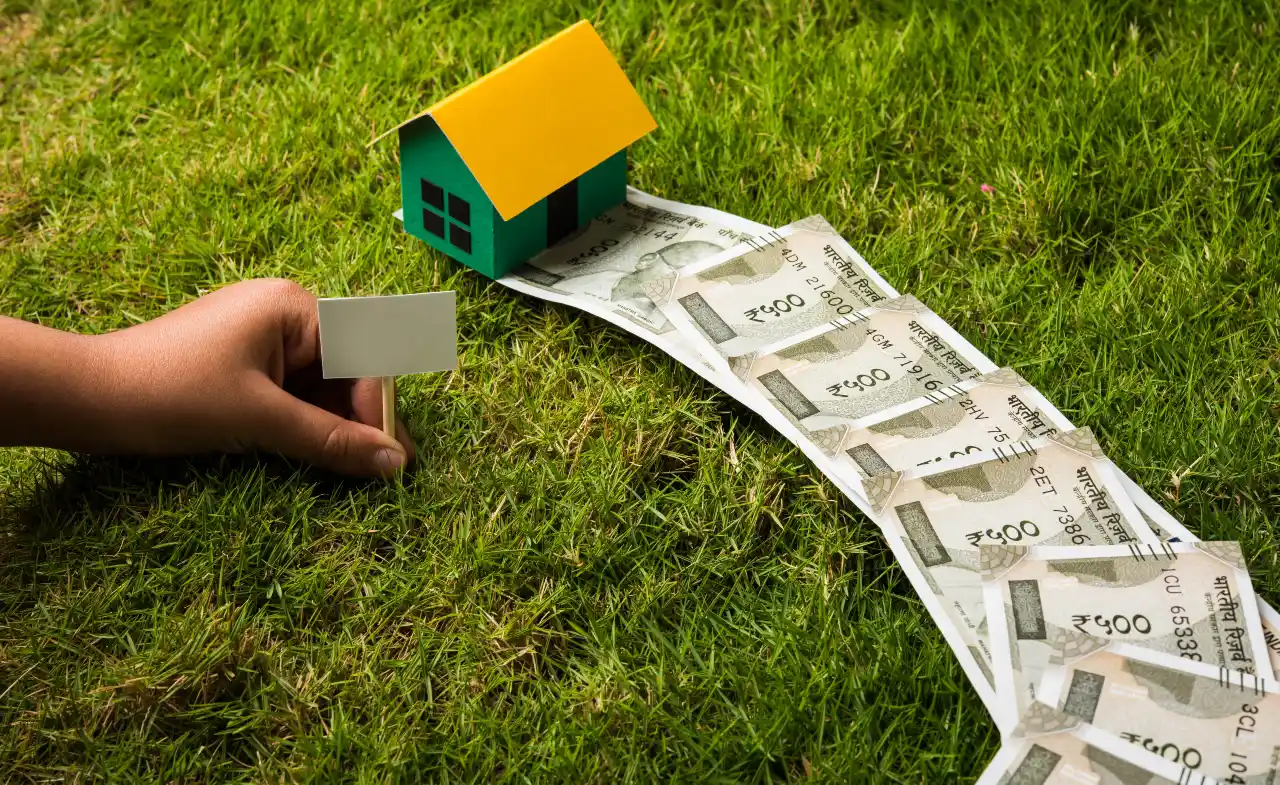
The tiny house price doesn’t include where to put it.
You need land. Or a lot. Or a parking spot. None of these is free.
The average land cost is $11,700. That sounds reasonable until you realize it’s just an average. Rural land in Texas? Maybe $15,000 for half an acre. Suburban land near a city? Try $100,000 minimum. Urban lots? You’re looking at $200,000 or more.
Can’t afford to buy? You’ll rent. RV parks and campgrounds charge $250-$1,500 per month. Let’s do the math on a $600 monthly spot.
Year one: $7,200. Year five: $36,000. You just spent enough to buy rural land.

Before you buy any land, you need a survey. That’s $100-$600. You also need to research zoning laws. Some areas ban tiny houses completely. Hire a zoning consultant for $300-$500 or spend weeks doing it yourself.
Here’s the problem: a $50,000 tiny house on $100,000 land means you spent $150,000 total. Your land just cost twice as much as your house.
Rural land saves money but adds utility costs. Urban land costs more but gives you access to city services.
Land can cost more than your house. Plan for it first.
2. Cost #2 – Permits and Zoning Fees ($500-$5,000+)

You need permission to put your house anywhere.
Tiny house permits average $1,425. That’s just the building permit. You’re not done yet.
Your city might not allow tiny houses at all. You need a zoning variance. That application costs $500-$2,000, depending on your location. Some cities approve it. Some don’t. You pay either way.
Foundation vs. wheels makes a huge difference. A tiny house on a foundation follows regular building codes. Expect multiple inspections: foundation, framing, electrical, plumbing, and final. Each inspection costs $100-$300. A tiny house on wheels? Some areas call it an RV. Some call it illegal. You need a professional to tell you which.

Zoning consultants charge $500-$1,500. They know local codes. They file paperwork. They save you months of confusion.
Think you can skip permits? Fines start at $500 per day in most areas. Your neighbor reports you. Code enforcement shows up. Now you’re paying $1,000 in fines plus the $1,425 permit you should have bought first.
Running total from land and permits: You’re at $13,000 before your house even arrives.
Skip permits, pay fines. Budget for both.
3. Cost #3 – The Trailer Foundation ($4,500-$11,000)

Your tiny house sits on a $10,000 foundation.
If you want a mobile tiny house, you need a trailer. Not just any trailer. A specialized tiny house trailer built to handle 10,000-15,000 pounds.
Basic bumper pull trailers cost $4,500-$6,000. These work for smaller houses under 20 feet. Gooseneck trailers run $10,100 or more. They handle bigger houses and tow more safely.
Here’s why cheap trailers fail: Your house weighs 10,000 pounds. A $2,000 utility trailer isn’t rated for that. The axles bend. The frame cracks. Your house falls apart while you’re driving 65 mph on the highway.

Weight capacity matters. Check the trailer’s GVWR (Gross Vehicle Weight Rating). Your house plus the trailer must stay under this number. Most tiny houses need trailers rated for 14,000 pounds minimum.
Going stationary instead? A permanent foundation costs $4,250-$8,500. Concrete piers, footings, and a crawl space add up fast.
Fifth wheel trailers sit in between at $7,000-$9,000. They need a truck with a bed-mounted hitch.
Running total: land ($11,700) + permits ($1,425) + trailer ($6,000) = $19,125 before you buy the actual house.
The trailer is your foundation. Don’t cheap out.
4. Cost #4 – Utility Hookups ($2,000-$10,000+)

Getting water and power costs more than most tiny houses.
Your land is 100 feet from the street. You need water, sewer, and electricity to run to your house. Here’s what that costs.
Water main installation: $32-$53 per linear foot. That’s $3,200 to $5,300 for 100 feet. The water meter itself? Cities charge $2,000 to $3,000 just for the meter. You’re at $5,200-$8,300 before water flows.
Sewer lines cost $40-$180 per linear foot installed. Another 100 feet means $4,000-$18,000. No city sewer? You need a septic tank. That’s $3,500-$8,500 installed.
Electrical hookup in town costs $250-$1,500 if you’re close to existing lines. Rural property? The power company charges $2,000-$5,000 or more to run new lines. Some charge per pole. Each pole costs $3,000-$5,000.

Let’s add one example: 100 feet from the street, city services are available.
Water: $7,500
Sewer: $10,000
Electric: $800
Total: $18,300
Running total: land ($11,700) + permits ($1,425) + trailer ($6,000) + utilities ($18,300) = $37,425.
One hundred feet from the street? Add $10,000.
5. Cost #5 – Custom Appliances ($1,000-$4,500)

Your old fridge won’t fit. Neither will your stove.
Tiny homes are 100-500 square feet. A standard 36-inch fridge? It takes up 10% of a 200-square-foot house. Standard appliances don’t work.
You need compact appliances made for small spaces. These cost just as much as regular ones. Sometimes more.
Compact refrigerator: $300-$800. You’re looking at 10-18 cubic feet, not the 25 cubic feet you had before. Apartment-size stove: $400-$900. Two burners instead of four. Small oven.

Combination washer/dryer units cost $800-$1,500. They wash and dry in one machine. They take 3-4 hours per load. But they fit.

Water heater: $200-$600 for a tankless or small tank model. Propane models cost more upfront but work off-grid.
Total appliance budget: $1,000-$4,500, depending on what you choose. Budget option? $1,200 total. Mid-range? $2,500. Want nice stuff? $4,000+.
You can’t bring your old appliances. They’re too big. You’re buying everything new.
Running total: $37,425 + $2,500 (appliances) = $39,925. You haven’t bought the house yet.
Smaller appliances cost just as much. Budget accordingly.
6. Cost #6 – Insurance ($420-$1,500 Per Year)

Your tiny house won’t qualify for regular home insurance.
Insurance companies see tiny houses as high-risk. Most won’t cover them under standard homeowners policies. You need specialized insurance.
Tiny house insurance costs $35-$125 per month. That’s $420-$1,500 per year. Every year. Forever.

Mobile tiny houses on wheels cost more to insure. You need RV insurance or specialty tiny home coverage. These policies cost $75-$125 per month because your house moves. It can get damaged in transport. It can cause accidents.
Stationary tiny houses on permanent foundations sometimes qualify for homeowners’ insurance. Sometimes. If your house meets building codes. If it’s over 400 square feet. If your insurance company feels like it.
Most tiny houses need specialty policies. These cost $50-$90 per month for basic coverage.
Want better rates? Get certified. NOAH (National Organization of Alternative Housing) or RVIA (Recreational Vehicle Industry Association) certification proves your house meets safety standards. Insurance drops to $35-$60 per month with certification.
Here’s your annual cost over five years at $75 per month: $4,500.
No insurance? Your lender won’t give you a loan. Your RV park won’t let you stay. One fire and you lose everything.
Running total: $39,925 + $900 (insurance year one) = $40,825.
Insurance costs more than you think. And you can’t skip it.
7. Cost #7 – Transportation and Moving Costs ($500-$5,000 Per Move)

Moving your tiny house costs as much as moving a regular house.
Your 10,000-pound house needs a truck that can tow it. Most personal trucks can’t handle this weight. You need a 3/4-ton or 1-ton truck minimum.
Don’t own one? Truck rental costs $150-$300 per day. A two-day move costs $600 in rental fees alone.
Fuel costs hurt. Your truck gets 8-10 mpg while towing. A 500-mile move burns 50-60 gallons. At $3.50 per gallon, that’s $175-$210 in fuel. A 1,000-mile move? Double it.
Professional tiny house movers charge $1,000-$5,000 depending on distance. They have the right trucks. They have insurance. They know how to secure your house so it doesn’t fall apart.

Wind and vibrations during transport damage houses. Cabinets come loose. Windows crack. Siding tears off. Budget $200-$500 for repairs after each move.
Trip collision insurance costs $25-$35 for 30 days of coverage. You need this. One accident without it, and you’re paying for everything.
Total cost for a DIY 500-mile move: truck rental ($300) + fuel ($200) + insurance ($30) + repairs ($300) = $830.
Every move costs thousands. Factor this in.
8. Cost #8 – Site Preparation and Landscaping ($1,000-$10,000+)

Your land isn’t ready. It needs work first.
Raw land isn’t flat. It has slopes, rocks, trees, and brush. You need to clear and level it before your tiny house arrives.
Site leveling costs $500-$3,000, depending on how much earth needs moving. A bulldozer charges $150-$200 per hour. Steep slopes need retaining walls. Add $2,000-$5,000 for those.
Your tiny house needs a pad to sit on. Gravel pads cost $300-$1,000 for materials and installation. Concrete pads cost $2,000-$4,000 but last longer and drain better.
Need to remove trees? That’s $400-$1,500 per tree, depending on size. Stump grinding adds $100-$400 per stump.

Drainage matters. Water pooling under your house causes rot and foundation problems. French drains cost $500-$2,000. Grading and swales cost $300-$1,000.
Want a deck? Budget $2,000-$8,000 for a 100-150 square foot deck. Skirting to hide your trailer costs $500-$2,000.
Access roads or driveways cost $1,500-$5,000 for gravel, more for asphalt.
Running total: $40,825 + $3,500 (site prep) = $44,325.
Flat, clear land doesn’t exist. Budget for prep.
9. Cost #9 – Furniture and Storage Solutions ($2,000-$8,000)

Your couch won’t fit. Your bed won’t fit. Nothing fits.
Even if your tiny house comes with appliances, it doesn’t come with furniture. You’re buying everything new because your old stuff is too big.
A standard queen mattress fits in most lofts. That’s $300-$800 for a decent one. But your old bed frame? Too big. Forget it.
Your sectional sofa is 90 inches long. Your tiny house living room is 80 inches wide. You need a loveseat or futon instead. Budget $400-$1,200.

Regular dining tables don’t fit. You need a fold-down wall-mounted table. These cost $200-$600. Murphy beds cost $1,000-$3,000 if you want your living room to convert to a bedroom.

Storage is the real problem. You need custom shelving, built-in drawers, and under-stair storage. These systems cost $500-$2,000, depending on complexity.

Multi-functional furniture costs more. A storage ottoman: $150-$300. A couch that becomes a bed: $600-$1,500. Nesting tables: $100-$250.
Total furniture budget: $2,000-$8,000. Go chea,p and it falls apart. Go quality and you’re at $5,000+.
Running total: $44,325 + $4,000 (furniture) = $48,325.
Custom furniture doubles your budget. Plan for it.
10. Cost #10 – Ongoing Maintenance ($500-$2,000 Per Year)

Tiny houses need just as much maintenance as regular houses.
Your tiny house is small. But it still has a roof, siding, windows, and systems that break. Maintenance costs $500-$2,000 per year, depending on your house and climate.
Annual maintenance includes caulking windows, checking roof seals, and inspecting plumbing. Budget $200-$400 for these basics. DIY saves money. Hire someone, and it’s $500-$800.
Your roof needs work every 3-5 years. Metal roofs need screws tightened and sealant replaced. That’s $200-$400. Shingle roofs need replacement every 10-15 years at $800-$2,000.
Exterior paint lasts 5-7 years. Repainting a tiny house costs $300-$1,000 in materials if you do it yourself. Hire painters, and it’s $1,500-$3,000.
Mobile tiny houses take more damage. Wind and vibrations during moves loosen screws, crack caulking, and damage trim. Budget $300-$600 after each move for repairs.
Trailer maintenance matters if you’re mobile. Tires cost $100-$200 each. You have 2-4 tires. Replace them every 5-7 years. Wheel bearings need repacking every 10,000 miles at $200-$400.
Five-year maintenance total at $800 per year: $4,000.
Small doesn’t mean maintenance-free. Budget yearly.
11. Cost #11 – Property Taxes or Registration Fees ($200-$3,000+ Per Year)

Tiny houses have taxes. Every year. Forever.
Your tax depends on how your tiny house is classified. On a permanent foundation? You pay property taxes. On wheels? You pay registration fees or personal property taxes.
Property taxes hit hard in some states. A tiny house valued at $60,000 in Texas pays $1,200-$1,800 per year. In New Jersey? $1,800-$2,400. In Illinois? $2,000-$3,000.
Low-tax states help. Tennessee property taxes on the same $60,000 house: $300-$500 per year. Alabama: $200-$400. Rural areas tax less than cities.
Tiny houses on wheels classified as RVs pay registration fees. These cost $50-$300 per year, depending on weight and state. California charges $200-$300. Florida charges $50-$100.

Some states charge personal property tax on mobile tiny houses. Missouri taxes them like boats and cars. A $60,000 tiny house pays $600-$900 per year. Mississippi charges similar rates.
Ten-year property tax total at $1,000 per year: $10,000. That’s real money on top of everything else.
Running total: $48,325 + $1,000 (first year taxes) = $49,325.
Taxes never stop. Factor them into your budget.
12. Cost #12 – Financing Costs and Interest ($3,000-$20,000+ Over Loan Term)

You can’t get a mortgage. You’ll pay higher interest.
Banks don’t give mortgages for tiny houses. They’re too small. They don’t qualify as real estate in most cases. You need alternative financing.
Personal loans are the most common option. Interest rates run 8-15% depending on your credit score. You need a score above 480. Most lenders want 680 or higher for good rates.
Down payments start at 10-20%. On a $50,000 tiny house, that’s $5,000-$10,000 cash upfront.
Here’s what interest costs. A $50,000 personal loan at 10% for 7 years costs $19,136 in interest. Your total payment: $69,136. That $19,136 is pure waste.
RV loans work if your tiny house qualifies as an RV. Rates are better at 4-8%. The same $50,000 loan at 6% for 7 years costs $9,414 in interest. Still expensive, but half the personal loan cost.

Some people use land loans or home equity loans. These offer better rates but require collateral.
Pay cash? You’re rare. Most people finance and pay thousands in interest over 5-10 years.
Running total: $49,325 + $19,000 (interest over loan term) = $68,325. And we still haven’t bought the house.
Financing costs thousands extra. Factor interest in.
