
What if you could turn your kitchen trash into garden gold without adding another chore to your packed daily routine? Most people want to compost. But traditional rules sound like a second job. You need pitchforks and thermometers.
You worry about balanced ratios. We are throwing out the rulebook. The easiest way to handle your scraps naturally. These lazy composting methods save you time and energy. Finally, learn exactly how to master easy compost for beginners.
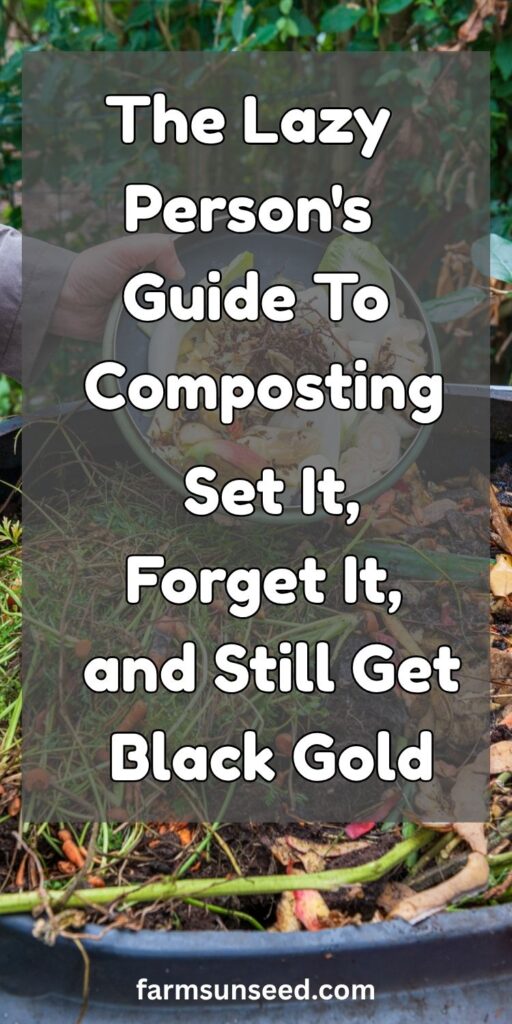
The Lazy Person’s Guide To Composting: Set It, Forget It, and Still Get Black Gold
The Bury Method
-
Dig a Hole Dig 8 to 12 inches deep directly into an empty garden bed.
-
Drop in Scraps Toss in your wet kitchen waste like banana peels and coffee grounds.
- 1. Why Are Lazy Composting Methods Better?

Photo Credit: Canva You are busy running a household and raising kids. You do not have time to babysit a pile of dirt. Hot composting requires intense effort to reach high temperatures. Cold composting is just letting nature do what it has done for millions of years.
You do not need a flawless system. Currently, about 5 percent of food waste in the US is composted. Yet organic waste makes up around 46 percent of total global waste. The EPA notes that food waste in landfills generates methane. This gas is 25 times more effective at trapping heat than carbon dioxide.
A massive 72 percent of Americans say they would compost if it were more convenient. You just need a set-it-and-forget-it compost system. Less work just means more time for you. It does not mean you get inferior soil.
2. How To Start a Classic Cold Compost Bin
Photo Credit: Canva A cold bin is simply a continuous pile. You just toss things in as you go. Experts at agricultural university extensions often recommend this low-effort approach. You can start a pile on the ground. You can also buy a compost tumbler to keep things contained off the grass. A countertop scrap bin in your kitchen. Just dump it outside when it gets full.
The simple rule is two parts brown material to one part green material. Just toss a handful of dried leaves over your wet kitchen scraps. Keep a stash of shredded cardboard or paper next to the bin. You literally never have to turn it. It takes about a year to finish. But it requires zero physical labor.
3. 3 Steps For Easy Trench Composting
Photo Credit: hobbyfarms This is the invisible method. You bury your scraps and walk away. This completely stops any smell or pest issues. It also feeds plant roots directly. This works beautifully for small-space composting.
The simple three-step process:
- Dig a hole. Dig 8 to 12 inches deep in an empty garden bed.
- Drop in food scraps. Toss in your banana peels and coffee grounds. This works great right where you plan to plant tomatoes next season.
- Cover it up. Put the dirt back on top.
Make soil simultaneously. You build new soil right on top of existing grass without digging. It works like a layered lasagna.
4. Build a Garden With Sheet Mulching
Photo Credit: Canva GARDEN LASAGNA
Kill weeds and make soil simultaneously. It works like a layered lasagna!Lay down thick cardboard boxes directly on the grass to block weeds.Add a layer of green yard waste. Toss grass clippings or kitchen scraps on top.Cover it all with a thick layer of brown leaves or straw.- Lay down cardboard. Use thick boxes to block weeds.
- Add green yard waste. Toss grass clippings or kitchen scraps on top.
- Cover with brown leaves. Add a thick layer of dry leaves or straw.
This suppresses weeds while breaking down in place. Fall is the absolute best time to start this. The layers will rot over winter. Come spring, you have a perfect new garden bed ready for seeds. These are fantastic lazy composting methods.
5. How To Fix Common Composting Problems
Photo Credit: Canva How to fix common issues with your set it and forget it compost.
- Problem: Your bin smells bad. Solution: Add more shredded paper or dry leaves to soak up extra moisture.
- Problem: Bugs or animals are visiting. Solution: Always bury your fresh kitchen scraps under a layer of dirt or dry yard waste.
- Problem: You do not know when it is done. Solution: Look for a dark color and crumbly texture. It should smell exactly like fresh earth. Good bacteria and nature’s recyclers will do all the heavy lifting.


