
Gardening is consistently ranked as one of the most rewarding hobbies for older adults. Building a large-scale compost pile out of shipping palettes at a new house takes serious physical energy. Wrestling with a heavy, wet pile of yard waste should not be part of the deal.
Traditional composting requires deep bending and aggressive pitchforking. These repetitive actions can easily trigger lumbar strain or joint pain. Tired of waking up with a stiff back after a weekend in the garden? The safest systems that prioritize your physical health.
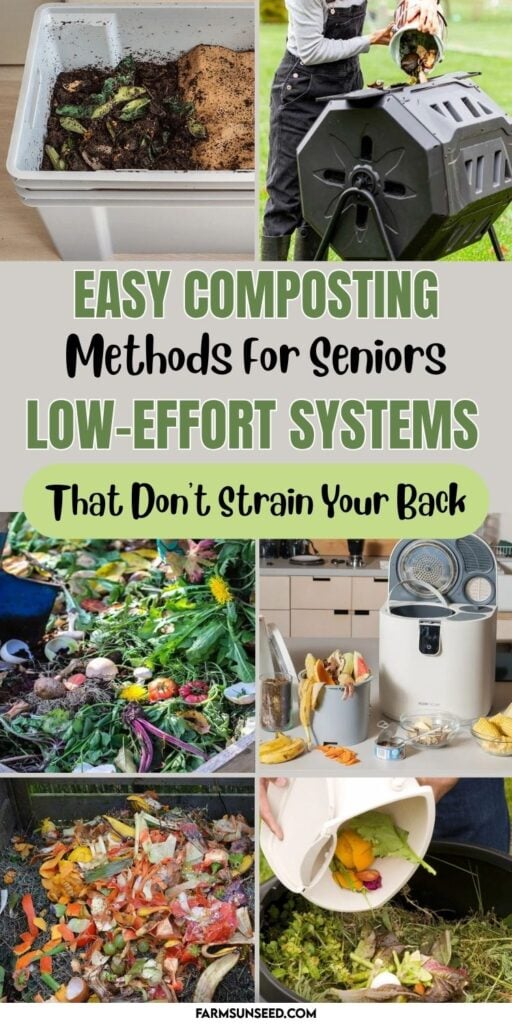
Easy Composting Methods For Seniors: Low-Effort Systems That Don’t Strain Your Back
1. Why Traditional Composting Isn’t Always Safe For Seniors

Traditional piles force you to lift dense, wet material directly from the ground. Bending and lifting are the primary causes of back pain among older gardeners, according to recent CDC data. This constant motion puts dangerous stress on your lower back.
Wet ground around uncontained piles also creates a dangerous slipping hazard. Over one in four older adults reports falling each year. You need flat and stable ground to stay safe in your yard.
Geriatric physical therapists and AARP recommend working in the strike zone. Low-effort compost bins keep your heavy tasks strictly between your waist and shoulders. Note that you must avoid standard plastic cone bins because digging material from a bottom hatch forces extreme bending.
An older adult happily gardening at waist height using a raised bed.
2. Elevated Compost Tumblers: The Best Back-Friendly Composting Solution

Elevated tumblers save your back because they eliminate the need for a pitchfork. Dual chamber tumblers do the heavy lifting for you. You just spin the barrel to mix your yard waste.
Gear Driven Tumbler
-
Back-Friendly Models sit right at waist height, requiring zero heavy lifting or pitching.
-
Easy Spinning The crank and gears ensure the barrel spins easily even when completely full.
-
Pro: Pest Proof The elevated, sealed metal drum keeps rodents and pests out completely.
-
Cons: Drying & Assembly Material can dry out quickly in hot weather, and the unit requires physical assembly.
You want to choose a gear-driven model for maximum ease. Gear crank models like the Jora Composter sit right at waist height. The gears ensure the barrel spins easily even when full. This is a perfect example of back-friendly composting.
- Pros:
- Keeps pests out completely.
- Needs zero heavy lifting or pitching.
- Cons:
- Material can dry out quickly in hot weather.
- Requires initial physical assembly.
Mobility Pro Tip: Ensure your ergonomic compost tumblers sit on concrete or pavers to maintain your balance while turning the crank.
While a tumbler handles your yard waste outdoors, what about your daily kitchen scraps? That is where indoor systems shine.
3. Vermicomposting (Worm Bins): Compact and Low Effort

Worm bins save physical effort by letting red wiggler worms do all the turning and aeration for you. You never have to mix a worm bin. The worms process the food scraps into rich soil amendments automatically.
These compact systems stay indoors in a garage or on a shaded patio. You simply drop food scraps into the top tier with zero heavy lifting required. Multi-tiered tray systems are incredibly convenient for daily use.
Elevate the bin on a sturdy table to keep all activity at waist height. These are truly easy composting methods for seniors.
- Pros:
- Can be managed while sitting down in a chair.
- Creates amazing and potent fertilizer.
- Cons:
- Requires managing live worms inside your space.
- Needs strict temperature control year-round.
Mobility Pro Tip: Keep your worm bin next to your kitchen door on a waist-high table to avoid carrying scraps across the yard.
A multi-tiered worm bin sitting on a sturdy table near a back door
If managing live worms sounds unappealing, modern technology offers a completely hands-off approach.
4. Smart Countertop Electric Composters: Zero Physical Effort

Electric composters require absolutely zero physical exertion beyond pushing a simple button. These smart appliances are perfect for those with severe mobility restrictions. They sit right on your kitchen counter just like a coffee maker.
Current smart appliances like Lomi or Mill dry and grind your kitchen scraps in a few hours. They turn daily food waste into a dry soil amendment overnight. You do not need to walk outside or lift anything heavy.
They are the ultimate low-effort compost bins for apartment dwellers or anyone with joint pain.
- Pros:
- Sits conveniently right on the kitchen counter.
- Works completely in just a few hours.
- Cons:
- Costs more money upfront than traditional bins.
- Uses household electricity to run daily.
Mobility Pro Tip: Slide the device toward the edge of the counter when filling it to avoid reaching and straining your shoulders.
Countertop units handle your kitchen waste, but what if you want to feed your garden beds directly without moving finished compost around?
5. The Bury and Forget Trench Method For Raised Beds

Traditional trench composting is hard work, but adapting it to tall raised garden beds makes it effortless. Trenching in tall beds brings the soil right to your hands. You do not have to bend down to the ground.
Use a small hand trowel to dig a six-inch hole in the dirt. Drop your scraps inside the hole and cover them back up. Using thirty-two-inch-tall modular metal beds lets you stand perfectly straight. Brands like Vego Garden or Birdies make excellent tall beds.
COMPOST PRO
Pair this with ergonomic hand tools that have ninety-degree handles to prevent wrist strain. This creates a simple closed-loop system right where your plants grow. This is brilliant back-friendly composting.
- Pros:
- Feeds your growing plants directly at the roots.
- Requires very little extra equipment.
- Cons:
- Takes much longer to break down completely.
- Only works during the active growing season.
Mobility Pro Tip: Dig your small holes before you bring your scraps out, so you are not holding a heavy bowl while trying to dig.
A waist-high metal raised garden bed with fresh vegetables growing.
