
Waiting a full year for your backyard scraps to finally soil is really irritating. Traditional cold composting is notoriously slow. You often have to sift out big chunks of stuff that refuses to rot. Worse, it fails to kill off frustrating weed seeds or plant pathogens.
The exact science and schedule of the Berkeley Method of rapid composting. kitchen and yard waste into black gold fast. You can get fast compost in 30 days from now. Welcome to hot composting 101.
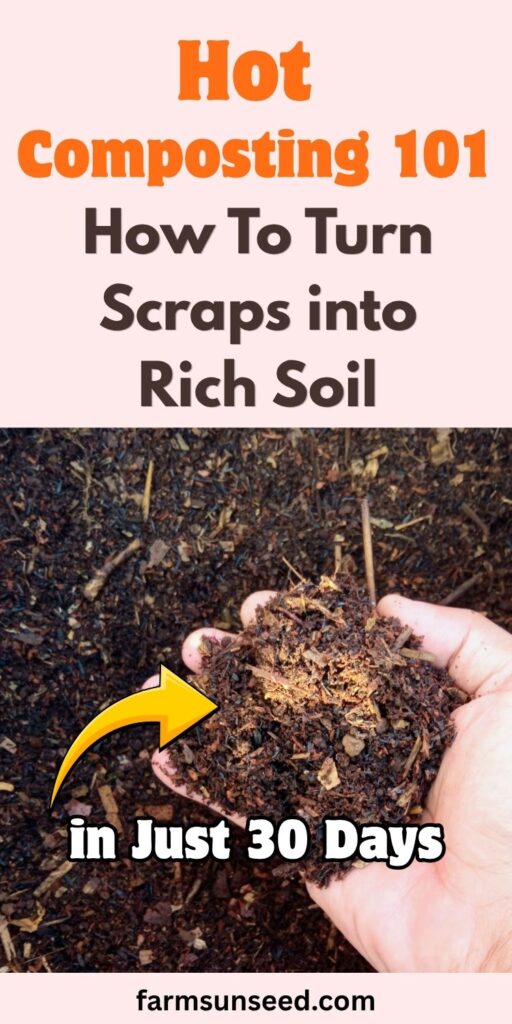
Hot Composting 101: How To Turn Scraps into Rich Soil in Just 30 Days
1. What Makes Hot Composting Different?

Heat is the secret ingredient. This heat comes from bacteria working hard, not the sun. Passive cold composting is a simple dump and ignore method. Active hot composting requires you to feed and stir the pile.
This extra work pays off big time. You save 11 months of waiting. You activate heat-loving bacteria called thermophilic microbes.
According to EPA guidelines, your pile must reach at least 131 degrees Fahrenheit for three consecutive days. This specific hot composting temperature is crucial. It successfully kills weed seeds and pathogens.
Pro Tip: Food waste makes up roughly 20 to 30 percent of what we throw away according to EPA data. Composting saves space in landfills and feeds your garden for free.
2. The Golden Rule: Greens and Browns Compost Ratio

Why do some piles rot beautifully while others just sit there and stink? The answer lies in your ingredients. You must balance your carbon and nitrogen materials. Think of nitrogen as the gas pedal and carbon as the steering wheel. We call these greens and browns.
Compost Balance
-
The Secret Mix Balance your ingredients carefully so piles rot beautifully instead of just sitting there and stinking.
-
Gas & Steering Think of nitrogen as the gas pedal to heat things up, and carbon as the steering wheel.
-
Greens (Nitrogen) Power the pile with grass clippings, fresh food scraps, and used coffee grounds.
-
Browns (Carbon) Provide essential structure with dry leaves, torn cardboard, and loose straw.
Greens (Nitrogen):
- Grass clippings
- Food scraps
- Coffee grounds
Browns (Carbon):
- Dry leaves
- Cardboard
- Straw
You need a specific greens and browns compost ratio. The optimal carbon to nitrogen ratio by weight is 25 to 1. But weighing scraps is annoying. Use a simple volume rule for beginners instead. Mix two parts browns with one part greens. This is a core lesson of hot composting 101.
For example, use two buckets of dry fall leaves for every one bucket of fresh grass clippings. Then add half a bucket of kitchen scraps.
3. Sizing Matters: Building Your Pile For Fast Compost

You must build a pile that is at least 3 feet wide, 3 feet deep, and 3 feet tall. This equals one cubic yard. Sizing dictates heat retention. Volume creates insulation to keep the bacteria warm.
Do not make the pile larger than 5 feet tall. A massive pile compresses the core and removes oxygen.
Chop your materials into small pieces before you start. Smaller pieces decompose much faster. You can layer your greens and browns like a lasagna or mix them all together. The mixed method often speeds up the breakdown process. You need the right size to get fast compost 30 days from now.
4. Managing Your Hot Composting Temperature

A long compost thermometer is your most vital tool. You need to track the heat. The sweet spot is 130 to 160 degrees Fahrenheit. Your pile will heat up during the first four days. Then you enter the turning phase.
HTMLHEAT TRACKER
- Wait for the temperature to reach 130 degrees.
- Grab a pitchfork to turn the pile.
- Move the outside edge of the old pile into the center of the new pile.
- Repeat this every two to three days.
You must turn the pile immediately if it hits 160 degrees. Too much heat will kill your beneficial microbes. This hot composting temperature needs careful watching.
After three weeks of turning, the pile will shrink. It enters a curing phase for the last week. A finished pile looks dark and crumbles easily. It smells like fresh earth.
5. Troubleshooting Your Fast Compost

Even master gardeners face hiccups. A compost pile is rarely ruined. You can always fix it.
Problem: Pile Will Not Heat Up
Cause: It needs more nitrogen or water. Solution: Add a bucket of fresh grass clippings and spray it with a hose.
Problem: Smells Like Ammonia
Cause: You have too much nitrogen. Solution: Add one bale of straw or a thick layer of dry leaves.
Problem: Smells Like Rotten Eggs
Cause: The pile is too wet and lacks oxygen. Solution: Turn the pile with a pitchfork and mix in dry cardboard.
Warning: Your pile should feel like a wet sponge that you just squeezed hard. This means it has roughly 40 to 60 percent moisture. Keep these hot composting 101 tips handy.
