rowing food in the trash does not just waste a meal. It creates a massive, invisible methane problem in our local landfills. Most people want to compost to help the environment. But they hold back out of fear. They worry it will smell, attract pests, or require a massive backyard.
The good news is that you do not need a huge outdoor space or special skills. The exact, simple steps to start converting kitchen scraps into nutrient-rich soil today are easy to learn. You can do this whether you have an acreage or a tiny kitchen counter.
Learning how to start composting at home solves the messy trash problem fast. This guide makes composting for beginners totally painless.
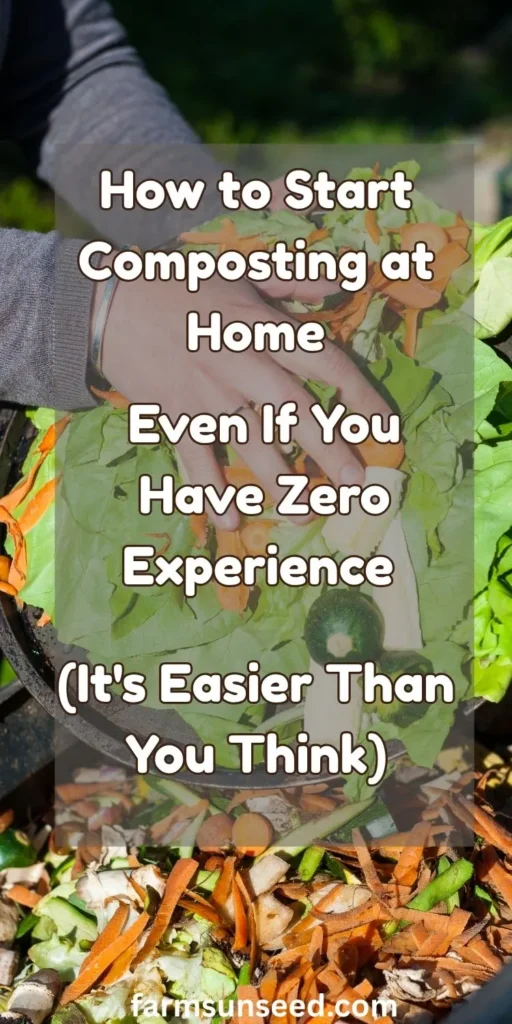
How To Start Composting At Home Even If You Have Zero Experience (It’s Easier Than You Think)
The Environmental Impact: Why Your Scraps Matter

Tossing an apple core into the garbage seems harmless. But trapped under piles of trash, it rots without oxygen. This process creates methane gas.
Landfill methane is roughly 80 times more powerful than carbon dioxide over 20 years, according to IPCC data. The scale of this problem is huge. The average U.S. household produces roughly 325 pounds of food waste per year, based on ReFED tracking.
But you can change that math right in your own kitchen. By creating a home composting setup, you allow food to break down with oxygen. This simple shift stops methane production completely.
Composting those scraps diverts about 0.39 metric tons of carbon dioxide equivalent annually. That equals avoiding 950 miles driven in a gas-powered car. You are managing a natural process that actively reduces greenhouse gases. Your daily actions make a real difference.
Choosing Your Home Composting Setup
One size does not fit all when it comes to managing food scraps. The best home composting setup depends entirely on your living space. You have great choices whether you rent a small apartment or own a big house.
Outdoor Options For Backyards

- Basic Bins: These hold a lot of material and break down waste slowly. A budget-friendly basic bin costs about $30. You can also build a DIY wooden pallet bay for free.
- Rotating Tumblers: These bins sit off the ground and spin easily. They are fast and easy to turn.
- Blackwall Converters: These sit directly on the soil to invite earthworms inside.
Indoor Tech For Apartments

Modern technology makes indoor processing totally odorless. You can use electric food recyclers like the Reencle Prime Home Composter or Lomi 3. These 2026 models use microbes and heat to process waste in 24 hours to two weeks.
Pick the tool that fits your life and space. A simple $30 bucket works just as well as a pricey machine. It just changes the timeline. Composting for beginners means starting with whatever feels easiest for you. You can easily keep a stainless steel pail with a carbon filter on your counter to collect daily scraps.
The Golden Rule: Balancing Greens And Browns
🌱 compost helper
greens · browns · never add
There is only one recipe you need to memorize. You must balance wet ingredients with dry ingredients. This combination is the secret to perfect soil.
If you love creating visual content, try designing a composting lifecycle infographic to keep near your bin for quick reference. Generating one in a cinematic digital painting style could make it both helpful and amazing to look at. The basic science comes down to two categories.
Nitrogen Rich Greens
- Fruit peels
- Vegetable scraps
- Coffee grounds
- Grass clippings
Carbon Rich Browns
- Dry leaves
- Untreated paper
- Shredded cardboard
- Wood chips
The Environmental Protection Agency recommends a specific ratio. Aim for roughly three parts browns to one part greens by volume. Keeping a bag of shredded cardboard next to your bin makes adding browns effortless.
Following these composting rules, greens and browns ensure your pile stays healthy. The greens provide moisture and nutrients. The browns add bulk and allow air to flow.
Strictly Avoid These Items
- Meat and bones
- Dairy products
- Glossy paper
- Pet waste
- Diseased plants
Adding the wrong items creates bad smells and attracts animals. Stick to the basic recipe.
Step by Step: Starting Your First Compost Pile

It is time to get your hands dirty. Learning how to start composting at home is just a matter of following a few simple steps. You will have your pile running perfectly on day one.
- Pick the perfect spot for your bin. Find a dry, shady area near a water source.
- Chop up your food scraps into small pieces. Smaller pieces have more surface area and break down significantly faster.
- Start with a thick base layer of browns. Place twigs or dry leaves at the bottom to help air circulate.
- Add your first layer of greens. Dump in your kitchen scraps.
- Cover the greens completely with a thick layer of browns. This traps moisture and prevents flies.
- Check the moisture levels regularly. The pile should feel exactly like a wrung-out sponge.
- Turn the pile with a pitchfork once a week.
Think of aeration like breathing for your compost pile. Composting is an aerobic process, meaning it needs oxygen. Turning adds necessary air to keep the microbes alive and active.
Consistency is your best friend here. Keep adding layers over time. Eventually, you will see the magic happen. Finished compost looks and smells like dark, crumbly, earthy soil. That is your finish line.
Troubleshooting Common Beginner Issues
🧺 Things go wrong sometimes.
➕ Add dry leaves + turn pile
➕ Bury scraps under 2″ of browns
➕ Add greens, water, or use compost thermometer
Things will go wrong sometimes. A smelly pile is not ruined at all. It is just asking for a quick adjustment. Composting for beginners is about learning to read the signs
If your pile smells like rotten eggs, it lacks oxygen. Smells mean anaerobic decomposition is happening. Fix this by adding dry leaves and turning the pile.
If you see fruit flies or pests, your greens are exposed. Pests want easy food. Bury all food scraps under a two-inch layer of browns.
If your pile is cold and slow, it needs more green material or water. You can use a compost thermometer to check if the pile is active. The Environmental Protection Agency states that beneficial microbes thrive between 131 degrees and 160 degrees Fahrenheit.
Over 90 percent of issues are solved simply by adding dry leaves and turning the pile. Compost is incredibly forgiving. Just adjust and let it rest.