Many retirees spend their first decade of freedom doing something they spent their entire careers learning to do: saving money. They finally have time for trips, grandchildren, hobbies, and experiences, yet every withdrawal from the portfolio can feel like a warning sign.
That caution can protect a retirement plan, but too much caution carries another risk. Money preserved for age 88 cannot automatically replace experiences that were easier at 64.
Research suggests retirement spending often falls as people age, although healthcare and care expenses can move in the opposite direction.
The better strategy may therefore be to spend deliberately earlier, rather than assuming every year of retirement requires exactly the same inflation adjusted lifestyle.
Retirement Spending Is Usually Not a Straight Line

Traditional retirement planning often starts with a simple assumption. Pick a first year spending amount, increase it for inflation every year, and make sure the portfolio can survive that pattern for perhaps 30 years.
Real households are messier. EBRI research using older American households found that average total spending was lower among older age groups, while spending on categories such as transportation, food, and entertainment generally declined with age. Healthcare took a larger share of household budgets as people grew older.
Morningstar researchers have described a related pattern as the retirement spending smile. Lifestyle spending often starts higher, declines during middle and later retirement, and can turn upward at advanced ages when healthcare or long term care costs become more important.
That does not mean your spending will follow an exact curve. It means assuming your restaurant, travel, transportation, clothing, hobby, entertainment, and activity budgets must rise with inflation forever may be just as unrealistic as assuming every expense will disappear at 80.
The broad pattern looks something like this:
| Retirement phase | Spending tendency | What may drive it | Main planning risk |
|---|---|---|---|
| Early retirement, often 60s | Higher discretionary spending | Travel, hobbies, family, home projects | Withdrawing too much after poor markets |
| 70s | Lifestyle spending may moderate | Less travel, fewer large purchases | Underestimating inflation and housing |
| 80s and beyond | Many discretionary costs may fall | Less driving and activity | Healthcare, care, home assistance |
| Any age | Spending can spike unexpectedly | Repairs, family needs, health events | Having too little liquid reserve |
The important word is may. The data describes groups of households, not a schedule every retiree should follow.
Your 60s Can Be a High Value Spending Window

There is a financial difference between $10,000 spent at 64 and $10,000 spent at 84, but there can also be a lifestyle difference. The earlier money might fund a cross country trip, regular visits to grandchildren, a hiking vacation, or a hobby that requires energy and mobility.
The later money may still create enormous value, but perhaps in a different form. It could pay for help at home, easier transportation, a comfortable apartment, medical expenses, or travel that requires more support.
This is why delaying every pleasure can be a mistake for households that clearly have enough resources. The purpose is not to predict when someone’s health will change, because nobody can do that reliably, but to recognize that some activities are easier during certain stages of life.
BLS data reinforces the broader age pattern.
The agency’s consumer expenditure program consistently shows meaningful differences in household spending by age, and its newest 2024 consumer expenditure report found average spending across all U.S. consumer units was $78,535, while real spending for the overall population declined 1.1% from 2023 to 2024 after inflation.
Older BLS age breakdowns also show noticeably lower average household spending among people 75 and older than among households headed by people ages 65 to 74. That does not prove aging itself causes every decline, since household size, income, work status, housing, and other factors also change.
“Spend Freely” Does Not Mean Spend Without Limits
A financially secure retiree can spend generously while still following rules. The useful distinction is between money required to keep life functioning and money that makes the active years more enjoyable.
One simple system is to separate the retirement budget into three buckets. The exact amounts matter less than keeping the purposes separate.
| Spending bucket | Examples | How to manage it |
|---|---|---|
| Core life | Housing, food, utilities, insurance, basic transportation | Fund conservatively and protect first |
| Active life | Travel, hobbies, dining, gifts, experiences | Spend more when resources and markets allow |
| Future reserve | Healthcare, home help, repairs, major surprises | Keep protected rather than casually spending |
This solves an emotional problem as well as a mathematical one. If a retiree knows the mortgage or rent, food, insurance, taxes, and healthcare are covered, spending $8,000 on a meaningful family trip does not have to feel the same as spending $8,000 without a plan.
It also allows the optional budget to change. Someone might intentionally allocate $20,000 a year to active life spending at 63 but only $8,000 at 78 because the household no longer values the same activities.
The Research Does Not Say Every Retiree Should Spend Less

One danger with averages is turning them into instructions. EBRI found that while median household spending tended to decline after retirement, many individual households actually increased spending.
In one longitudinal study, 45.9% of households spent more during their first two retirement years than immediately before retirement. Even six years into retirement, 33.4% were still spending more than before retirement.
More recent EBRI research also shows why overly simple rules are dangerous. Its 2024 Spending in Retirement Survey covered roughly 3,600 American retirees ages 62 to 75, and 36% reported experiencing unexpected spending needs after retirement.
Your plan therefore needs room for both directions. Discretionary spending may decline, while a roof replacement, family emergency, insurance increase, medical event, or housing change may push total spending temporarily higher.
Your 80s May Cost Less Without Feeling Like a Sacrifice

People sometimes hear “spending falls with age” and picture an older retiree being forced to cut everything. That is not necessarily what the research describes.
Certain expenses can disappear naturally. Commuting costs are already gone after retirement, while driving may later decrease, major furniture purchases may become less frequent, wardrobes may change more slowly, and long distance travel may become less appealing for some people.
Entertainment can change rather than vanish. A retiree who once spent heavily on international trips might later spend more time with nearby family, local friends, community activities, gardening, reading, or hobbies at home.
That shift is financially useful because it creates room for expenses that do not disappear. Property taxes, utilities, groceries, insurance, home maintenance, and medical costs can continue even when vacations become less frequent.
Healthcare Is the Reason You Should Not Spend Everything Early

The case for higher spending in your 60s comes with a large warning label. Falling lifestyle expenses do not mean you can treat your later years as cheap.
EBRI’s long term research found healthcare consuming a larger share of household spending at older ages even while overall expenses were generally lower. Morningstar’s retirement spending research has likewise pointed to healthcare and long term care as reasons late life spending can turn upward.
Medicare helps, but it does not make healthcare free. For 2026, the standard Medicare Part B premium is $202.90 per month and the annual Part B deductible is $283, while beneficiaries can face additional premiums, cost sharing, prescription costs, supplemental coverage expenses, or income related surcharges depending on their situation.
This is why smart front loading is different from depletion. You can increase travel or experience spending today while still maintaining a later life reserve that you do not mentally treat as vacation money.
Consider a Couple Who Intentionally Lets Spending Fall
Consider a hypothetical married couple retiring at 64. They have dependable income plus investment assets that their financial plan shows can reasonably support an $80,000 first year lifestyle, but they do not expect every category to remain equally important for the next 30 years.
They could deliberately give themselves an active life budget early instead of automatically preserving every dollar for their 80s. The numbers below are simplified illustrations in today’s purchasing power, not a recommendation or forecast.
| Age | Core spending | Active life spending | Total planned lifestyle spending |
|---|---|---|---|
| 64 to 69 | $58,000 | $22,000 | $80,000 |
| 70 to 74 | $58,000 | $16,000 | $74,000 |
| 75 to 79 | $58,000 | $10,000 | $68,000 |
| 80 to 84 | $58,000 | $6,000 | $64,000 |
| 85+ | $58,000 | $4,000 | $62,000 plus care reserve |
The couple has not assumed that groceries, electricity, insurance, or property taxes magically disappear. They have reduced the part of spending that is genuinely flexible while preserving the spending floor.
Under this structure, they spend $132,000 on active life expenses during ages 64 through 69 alone. That money could represent six years of trips, family visits, hobbies, celebrations, and experiences rather than a larger unused portfolio balance later.
The First Years of Retirement Are Also Financially Dangerous

There is another side to the story. The first retirement decade may be an excellent time to enjoy money, but it can also be the most dangerous time to pull too aggressively from an investment portfolio.
Large withdrawals combined with falling markets can create sequence of returns risk. Selling assets after losses leaves fewer shares available to participate when markets recover.
Morningstar’s 2026 retirement income research illustrates the tradeoff. Its current base case estimates a 3.9% starting withdrawal rate for a 30 year retirement when the retiree wants consistent inflation adjusted withdrawals and a 90% probability of having money remaining at the end of that period, excluding Social Security and other outside income.
That 3.9% figure is not a universal spending limit. Morningstar also found that flexible approaches can support higher initial spending, but the retiree must accept that spending may need to change when markets or the portfolio disappoint.
That makes discretionary spending the natural pressure valve.
| What happens? | Core spending | Active life spending | Sensible response |
|---|---|---|---|
| Strong portfolio year | Keep normal | Can remain generous | Recheck plan before increasing permanently |
| Flat year | Keep normal | Usually maintainable | Avoid automatic lifestyle creep |
| Major market decline | Protect essentials | Reduce optional spending | Delay large trip or purchase |
| Large unexpected expense | Protect essentials | Trim temporarily | Use designated reserve first |
| Portfolio far ahead of plan | Recalculate needs | Additional spending may be possible | Review taxes and future risks first |
A $15,000 travel budget can be reduced for a year. Your property tax bill cannot.
That flexibility is what makes front loaded retirement spending more defensible. The retiree is not promising to withdraw the same aggressive amount no matter what happens.
Social Security Can Change the Shape of the Plan

Some retirees leave work before claiming Social Security. They may temporarily draw more heavily from investments, then reduce portfolio withdrawals after Social Security begins.
SSA allows retirement benefits to begin as early as 62, although claiming before full retirement age generally reduces the monthly benefit. Benefits can continue increasing through delayed retirement credits after full retirement age, with those increases stopping at 70.
That can produce a spending pattern that looks unusual on paper. Portfolio withdrawals might be relatively high between retirement and age 70, then fall sharply once a larger Social Security payment begins.
Whether delaying is appropriate depends on longevity expectations, marital and survivor considerations, other income, taxes, and available assets. It should not be treated as a rule that everyone must follow.
Medicare and RMDs Create Other Spending Checkpoints
Age 65 matters because Medicare eligibility commonly begins then, but Medicare and Social Security operate under different rules. Someone delaying Social Security should not assume that delaying Medicare automatically makes sense, because enrollment timing and employer coverage can affect penalties and coverage.
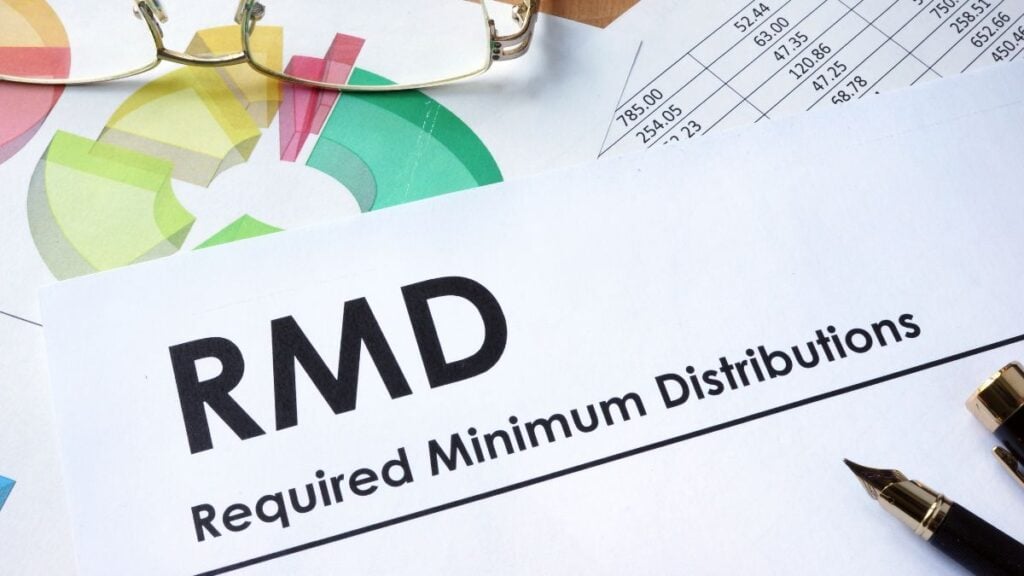
Later, required minimum distributions can change taxable cash flow. Under current federal rules, the applicable RMD age is 73 for people who reach age 73 before 2033, while later cohorts are scheduled to move to age 75 under SECURE 2.0 provisions.
These milestones help explain why retirement spending should be reviewed rather than put on autopilot.
| Age or stage | Financial checkpoint | Why it affects spending |
|---|---|---|
| 62 | Earliest Social Security retirement claiming age | Starting early generally means a smaller monthly benefit |
| 65 | Medicare eligibility for most people | Healthcare coverage and premiums change |
| Full retirement age | Social Security milestone | Early claiming reductions no longer apply |
| 70 | Delayed Social Security credits stop | Waiting longer does not increase the retirement benefit further |
| 73 for many current retirees | RMDs begin under current rules | Taxable distributions may increase household cash flow and taxes |
None of these ages tells you how much to spend on vacation. They tell you when the income and tax structure supporting that vacation may change.
Some Retirees Should Not Front Load Spending

A household living mainly on Social Security with little liquid savings has less room for aggressive early discretionary spending. The same is true for someone entering retirement with large debt payments, unstable housing costs, weak emergency reserves, or an investment portfolio that barely covers basic expenses.
Front loading also deserves caution when retirement begins unusually early. A person leaving work at 55 could need assets to last four decades or longer, which creates a very different problem from someone beginning portfolio withdrawals at 70.
People supporting adult children or other relatives should also separate temporary generosity from permanent spending commitments. Giving money once is different from creating a monthly obligation that might last years.
The goal is not to spend more merely because you reached 60. The goal is to stop treating maximum wealth preservation as the only acceptable outcome when your financial plan shows that some of the money can safely support your life now.
One of the Biggest Retirement Risks Is Permanent Underspending

Retirees frequently discuss the danger of running out of money, and that concern deserves respect. But there is another possible outcome: reaching very late life with substantially more money than expected while realizing that years of affordable experiences were continually postponed.
EBRI has previously found that many retirees preserve substantial portions of their assets rather than quickly spending them down. Among retirees who entered retirement with at least $500,000, median asset drawdown in one EBRI analysis was only 11.8% over the first 20 years, although individual experiences varied considerably.
Preserving assets may be entirely intentional. Some retirees want a large inheritance, fear healthcare costs, support family, or simply value financial security more than additional consumption.
Problems arise when the preservation is accidental. If someone wanted to travel, help grandchildren, improve the house, or enjoy hobbies but kept postponing those goals only because spending felt emotionally wrong, the largest portfolio possible may not represent the outcome they actually wanted.
Build Your Own Retirement Spending Slope

Start by separating nonnegotiable expenses from discretionary expenses. Housing, food, utilities, insurance, basic transportation, taxes, and expected healthcare usually belong in the first group, while major travel, expensive hobbies, frequent dining, large gifts, and luxury purchases usually have more flexibility.
Then estimate which discretionary activities are likely to matter most during the next five to ten years.
This is where retirement becomes personal, because one household may prioritize international travel while another would rather remodel the house, help grandchildren, buy a recreational vehicle, or simply spend more time eating out with friends.
Next, create a future reserve that is excluded from the fun budget. The reserve might need to address home repairs, vehicle replacement, healthcare, deductibles, family emergencies, or a possible move.
Finally, decide in advance what would make you reduce optional spending. A large portfolio decline, unexpectedly high inflation, loss of pension income after a spouse’s death, major healthcare costs, or several years of withdrawals running above plan are all reasons to recalculate.
J.P. Morgan’s 2026 Guide to Retirement highlights spending volatility and adequate emergency savings among major retirement planning concerns. That reinforces the case for flexibility rather than assuming one fixed withdrawal amount will fit every year.
The Point Is to Match Money With the Life It Can Still Buy
Retirement planning is usually presented as a longevity problem. That makes sense because nobody wants to reach 92 and discover that the money is gone.
But retirement is also a timing problem. A dollar has the same face value whether you are 63 or 83, yet the activities that dollar can reasonably buy may be very different.
For retirees with enough income, reserves, and portfolio capacity, that creates a strong argument for spending more intentionally during the active years. It does not require assuming the 80s will be cheap, and it certainly does not require spending everything before healthcare risks increase.
The better idea is to protect tomorrow without automatically sacrificing today.