
A retirement date can look safe on paper and still hide problems that do not appear until the paycheck stops.
Savings matter, but so do taxes, health coverage, housing, market losses, Social Security, a surviving spouse, and what fills an ordinary week when work is gone.
That is why a useful retirement readiness test needs more than one magic savings number.
These 13 questions can expose the parts of a plan that deserve attention while there is still time to change them.
How to Use the 13 Question Retirement Readiness Test

Do not give yourself a “yes” because something will probably work out. A strong answer means you have already calculated the number, checked the rule, made the decision, or built the backup plan.
Several retirement ages that sound similar actually trigger very different rules. In 2026, someone attaining age 62 has a Social Security full retirement age of 67, while Medicare eligibility generally still begins around 65.
Before answering the questions, these current figures help put several of the decisions in context.
| Retirement item | 2026 figure | Why it matters |
|---|---|---|
| Social Security full retirement age for people attaining 62 in 2026 | 67 | Full retirement age and Medicare age are not the same |
| Medicare eligibility | Generally 65 | Leaving work earlier may create a health insurance gap |
| Standard Medicare Part B premium | $202.90 monthly | Medicare still creates recurring retirement expenses |
| Medicare Part B deductible | $283 annually | Coverage does not eliminate out of pocket costs |
| Social Security earnings limit if under FRA all year | $24,480 | Working while claiming early can temporarily reduce payments |
The 2026 Medicare Part B figures come from CMS, while the earnings limit comes from Social Security. The earnings test disappears beginning with the month a person reaches full retirement age.
1. Do You Know What Your Retirement Life Actually Costs?

A surprising number of retirement plans begin with income instead of spending. That puts the calculation backward because the amount your retirement must produce depends largely on what your life costs.
Start with what actually left your household over the last 12 months. Then remove costs likely to disappear after work and add expenses that may rise, including travel, hobbies, home repairs, insurance, health care, gifts, and help for family.
Fidelity currently uses roughly 55% to 80% of preretirement income as a broad starting range for many households, but it also stresses that lifestyle, income, and health costs can move the number substantially.
Your own spending history is more useful than blindly assuming you will need 70%, 80%, or any other fixed share of your former salary.
A strong answer sounds like this: “Our expected first year retirement spending is about $68,000 before income taxes, including $8,000 for travel and $6,000 for irregular home and car costs.” A weak answer sounds like, “We usually live pretty cheaply.”
2. Can Dependable Income Cover Your Essential Bills?

Now separate spending into two groups. Essential expenses include the costs you would still face during a poor stock market, while discretionary spending includes items you could reasonably reduce for a year or two.
Then compare essential spending with dependable income such as Social Security, a pension, certain annuity income, or other predictable sources. Rental income can help too, but repairs, vacancies, taxes, and management costs make it different from a government benefit or traditional pension.
This distinction matters because a household needing its portfolio to fund groceries, housing, insurance, and basic health expenses has less room to cut withdrawals when markets fall. A household whose dependable income covers most necessities often has more flexibility around travel and other optional spending.
3. Do You Know How Much Your Portfolio Must Produce?
Once spending and dependable income are known, the retirement income gap becomes much easier to see. That gap, rather than total household spending, is what investments may need to cover.
Consider this hypothetical couple. Their figures are deliberately simple because the goal is to show the calculation rather than recommend a withdrawal strategy.
| Annual cash flow | Hypothetical amount | Calculation |
|---|---|---|
| Expected retirement spending | $78,000 | Household estimate |
| Social Security and pension | $43,000 | Dependable income |
| Amount portfolio must initially supply | $35,000 | $78,000 minus $43,000 |
| Invested retirement assets | $900,000 | Excludes home |
| First year portfolio draw | About 3.9% | $35,000 divided by $900,000 |
A 3.9% initial withdrawal is not proof that this couple is safe. Taxes, asset allocation, inflation, lifespan, future spending, market returns, and large one time costs can materially change the result.
Rules such as “withdraw 4%” can be useful for rough planning, but they should not replace scenario testing. Fidelity, for example, describes roughly 4% to 5% as a planning estimate in some of its retirement guidance while emphasizing that individual situations vary.
4. Can Your Plan Survive a Bad Market Early in Retirement?

A retirement portfolio faces a problem that an accumulation portfolio does not. Once withdrawals begin, selling investments after a major decline can permanently remove shares that no longer have a chance to recover.
This is known as sequence of returns risk. The order of investment returns matters more when money is being withdrawn, which is why a retirement plan should be tested against poor early market performance rather than assuming smooth average returns every year.
Ask what you would actually do after a sharp decline during your first two or three retirement years. Could you reduce travel, delay a vehicle replacement, use available cash or short term reserves, or rely more heavily on dependable income without selling an uncomfortable amount of depressed assets?
The correct solution differs by household. What matters for this test is that the response already exists before a frightening market headline forces you to invent one.
5. Have You Chosen a Social Security Strategy Rather Than Just an Age?
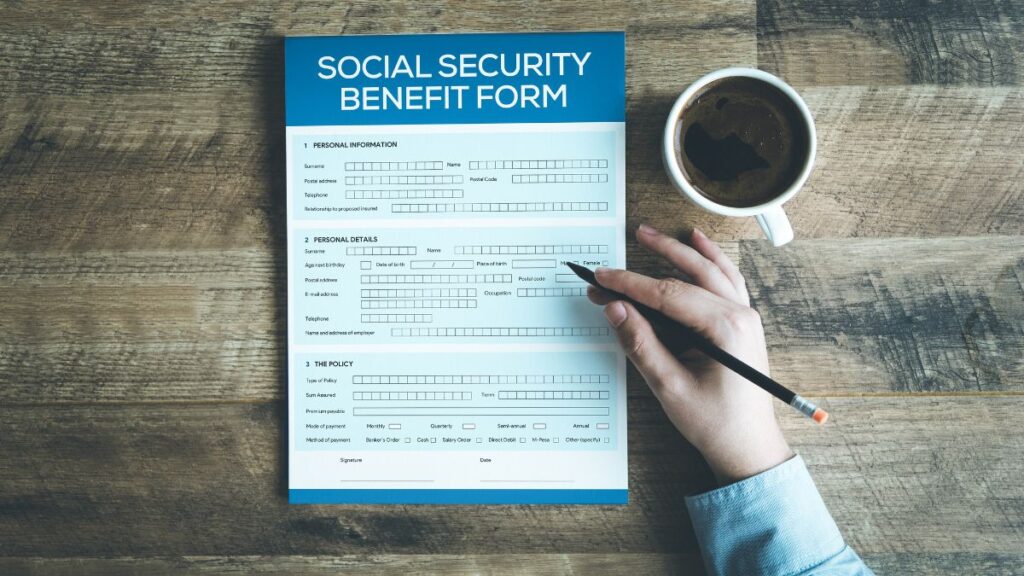
“Take Social Security at 62” and “always wait until 70” are both too simple. Claiming age changes the monthly benefit, but health, work plans, household cash flow, marital status, survivor protection, and other assets can affect the decision.
For people born in 1960 or later, Social Security says full retirement age is 67. Starting retirement benefits at 62 can reduce a worker’s benefit by as much as 30% compared with waiting until full retirement age, while waiting beyond full retirement age can increase the monthly amount until age 70.
For someone with a full retirement age of 67, SSA illustrates a worker receiving 124% of the full retirement benefit at 70. There is no additional delayed retirement increase for waiting beyond 70.
A strong answer therefore is not simply, “I am claiming at 65.” It is, “I compared my estimated benefits at several ages and considered the effect on household cash flow and survivor income.”
6. Do You Know Exactly How Health Insurance Will Work?

Someone retiring at 63 can have plenty of savings and still face a problem if employer health coverage ends. Medicare generally begins around 65, so early retirees need a clear bridge through employer retiree insurance, a spouse’s plan, Marketplace coverage, COBRA where appropriate, or another available option.
Medicare’s Initial Enrollment Period generally runs for seven months, beginning three months before the month a person turns 65 and ending three months afterward. Enrollment rules can differ when qualifying employer coverage is involved, which is why assuming that Medicare “just starts” at 65 can cause trouble.
Medicare also does not mean health care becomes free. The standard Part B premium is $202.90 per month in 2026, the annual Part B deductible is $283, and beneficiaries can still face premiums, copays, coinsurance, drug costs, dental expenses, vision expenses, or supplemental coverage costs depending on their choices.
Before calling the health side of retirement ready, check more than the monthly premium.
| Health question | Strong position | Warning sign |
|---|---|---|
| Coverage before 65 | Specific plan and cost identified | “We will figure something out” |
| Medicare enrollment | Enrollment timing has been checked | Assuming enrollment is automatic |
| Routine out of pocket costs | Included in retirement budget | Budget includes premiums only |
| Dental, vision, hearing | Funding or coverage considered | Assumed fully covered by Original Medicare |
| Long term support | Funding strategy discussed | Assuming Medicare pays indefinitely |
The important distinction is between ordinary medical coverage and long term custodial care. Mixing those two can leave a large hole in an otherwise careful retirement plan.
7. What Pays If You Need Long Term Help?

Many households know what they would do after a hospital stay but have never discussed what happens if one spouse eventually needs help bathing, dressing, eating, or managing daily life. That is a different financial risk.
Medicare states plainly that it does not pay for most long term custodial care. Medicare may cover qualifying short term skilled care under specific rules, but it generally does not pay indefinitely for the nonmedical help many people associate with long term care.
A readiness plan does not require everyone to buy long term care insurance. Possible approaches can include insurance, dedicated savings, home equity, family support where realistic, Medicaid planning for people who may eventually qualify, or a combination.
The question is simpler than the solution: has the household discussed who provides the care and where the money might come from? If the answer is no, this deserves attention before retirement rather than during a crisis.
8. Have You Planned for Taxes After the Paycheck Ends?

Many people expect taxes to fall automatically after retirement. They might, but the mix of Social Security, pensions, pretax retirement accounts, Roth money, investment income, capital gains, and later required distributions can produce very different outcomes.
The years immediately after work ends can also look different from later retirement. Some households have relatively low taxable income before Social Security begins or before required minimum distributions start, creating planning opportunities that may disappear later.
Current RMD rules also depend on birth year. Under SECURE 2.0 rules reflected by the IRS, the applicable RMD age is 73 for the affected earlier cohort and rises to 75 for later cohorts, including people born in 1960 or later.
A strong answer means you have estimated after tax retirement cash flow, not merely added up gross Social Security and portfolio withdrawals. It also means you know which accounts you expect to draw from first and why, while recognizing that future tax law can change.
9. Is Your Housing Affordable Without Stretching the Plan?

A paid off house can still be expensive. Property taxes, insurance, utilities, maintenance, accessibility changes, association fees, and major repairs continue even after the mortgage disappears.
The right retirement home is therefore not automatically the smallest house or the house with the lowest mortgage. It is the home whose total cost and physical demands remain manageable under the household’s retirement income.
Ask what happens if homeowners insurance rises, the roof needs replacement, driving becomes difficult, or one spouse can no longer manage stairs. Downsizing may solve those problems for some households, while staying put may make more financial and emotional sense for others.
A strong answer means the current home fits both the financial plan and the likely way you want to live. Home equity is valuable, but it should not be confused with monthly cash flow unless you actually have a plan to use it.
10. Does the Plan Still Work for a Surviving Spouse?
Married couples often test retirement using two Social Security checks, two lives, and one shared household. After one spouse dies, some costs fall, but many expenses do not fall by half.
Housing may cost almost the same. Property taxes, insurance, utilities, maintenance, transportation, and many household bills can remain substantial while Social Security income changes.
This is why Social Security claiming can sometimes be a household decision rather than two separate individual decisions. The larger benefit can matter to the surviving spouse, so couples should examine survivor income alongside their own lifetime benefits.
Also review pensions. Some pensions continue fully to a survivor, some continue at a reduced percentage, and some stop depending on the election made when payments begin.
A strong answer is: “We have run the plan with either spouse surviving.” A weak answer is: “We have enough as long as both checks continue.”
11. Can You Absorb a Large Surprise Without Breaking the Plan?

Retirement rarely follows the exact spreadsheet. A furnace fails, a child needs temporary help, a car needs replacing, an insurance bill jumps, or a major dental expense arrives in the same year the market falls.
That does not mean retirees need enormous piles of idle cash. It does mean the plan should contain some accessible liquidity and enough flexibility that one large bill does not immediately trigger debt or a badly timed investment sale.
Look at the largest realistic expenses your household could face over the next five years. Then identify which account would pay each bill and what tax or investment consequences the withdrawal could create.
This question also tests boundaries. Supporting adult children may be deeply important to a family, but recurring support should appear in the retirement budget if it is likely to continue.
12. Do You Know What Will Replace the Structure of Work?
Retirement readiness is not complete when the spreadsheet balances. Work also gives many people a schedule, familiar faces, challenges, status, responsibility, and a reason to leave the house.
Those things do not automatically replace themselves on the first Monday after retirement. Some retirees love the freedom immediately, while others discover that unlimited free time feels less satisfying than they expected.
The National Institute on Aging notes that social isolation and loneliness can affect health and well being, and that meaningful activities, hobbies, volunteering, and time with others can support connection and purpose as people age. Retirement itself can be one of the major life changes that affects social contact.
A strong answer does not require a packed calendar. It requires a believable picture of ordinary retirement life, including who you will see, what will give the week structure, and what you look forward to doing.
13. Do You Have a Plan B You Would Actually Use?

Some retirement plans work only if almost everything goes right. Those are fragile plans even when the starting numbers look impressive.
Ask what you would change if inflation stayed painful, investments struggled, a family expense appeared, or expected spending proved too low. Could you work part time, delay retirement six months, reduce travel, move a major purchase, adjust withdrawals, or use another realistic lever?
The key word is realistic. “I can always go back to work at 74” is not a strong backup plan if your field rarely hires older workers or if health problems could prevent it.
A strong retirement plan has options before it needs them. Flexibility cannot eliminate uncertainty, but it can keep one unpleasant surprise from becoming a permanent financial problem.
Reading Your Results
This is an editorial planning test, not a scientifically validated prediction model. Do not treat a total score as a guarantee that retirement will succeed or fail because two people with the same number can have very different risks.
Instead, give yourself two points for a strong documented answer, one point for an answer that still needs work, and zero when there is no current plan. Then look closely at where you lost points before focusing on the total.
| Score | What it may indicate | What to do next |
|---|---|---|
| 22 to 26 | Most major areas have been addressed | Stress test assumptions and update figures |
| 17 to 21 | Several pieces are solid but gaps remain | Fix the weakest high impact areas before retiring |
| 10 to 16 | Important decisions remain unresolved | Rework income, spending, health, or risk plans |
| 0 to 9 | Retirement currently depends on many unknowns | Reconsider timing until the major gaps are clearer |
These ranges are a simple organizing tool created for this article, not an industry standard. A zero on health coverage or sustainable cash flow may matter far more than losing several points on flexible lifestyle items.
The Four Answers That Deserve Attention First
If several questions produced weak answers, do not try to fix everything in one weekend. Start with problems capable of changing the retirement date itself.
Cash flow comes first because you need to know what life costs and where the money comes from. Health insurance, major portfolio withdrawals, and the surviving spouse plan follow because errors in those areas can be difficult to reverse after leaving work.
Use the final table to turn the test into a short action list rather than another article that gets saved and forgotten.
| Priority | What to review | Practical next step |
|---|---|---|
| 1 | Spending and income gap | Build a 12 month retirement budget using real spending |
| 2 | Portfolio withdrawals | Test poor market and higher inflation scenarios |
| 3 | Social Security and Medicare | Compare claiming ages and verify enrollment dates |
| 4 | Taxes and survivor income | Estimate after tax cash flow under both spouse scenarios |
| 5 | Lifestyle and backup plan | Design a normal retirement week and one realistic Plan B |
One change can improve several questions at once. Working another year, for example, may add savings, shorten the period the portfolio must support, change Social Security timing, and reduce an early health insurance gap.
