The frightening part of elder fraud is not that victims fail some obvious intelligence test. Austin’s review of 46 cases showed how often a normal decision became dangerous only after a criminal created fear, urgency, trust, or secrecy around it.
That distinction matters because fraud losses among older Americans have climbed sharply.
Understanding the pattern before the payment is far more useful than memorizing every new scam name, and the same warning signs kept appearing across very different stories.
Elder Fraud Has Become a Retirement-Savings Problem
The latest FBI figures make the scale difficult to dismiss. In 2025, people over 60 filed more than 201,000 complaints with the FBI’s Internet Crime Complaint Center and reported more than $7.7 billion in losses, with the average reported loss exceeding $38,000. More than 12,400 older complainants reported losses of at least $100,000.
Investment schemes alone accounted for more than $3.5 billion in reported losses among older victims in 2025. Cryptocurrency was involved in more than 42,000 complaints from older adults and $4.3 billion in reported losses.
Those numbers put fraud in the same conversation as other serious retirement risks. A retiree can spend decades building a portfolio carefully, yet one manipulated bank transfer can undo years of disciplined saving.
| Current fraud measure | Latest figure | Why it matters |
|---|---|---|
| Complaints from people 60+ in 2025 | More than 201,000 | Shows the scale of reported incidents |
| Reported 60+ losses | More than $7.7 billion | Retirement assets can be exposed to very large losses |
| Average reported loss | More than $38,000 | Even one event can materially affect retirement spending |
| Older victims losing $100,000+ | At least 12,400 | Catastrophic losses are not rare enough to dismiss |
The numbers also undermine the idea that a fraud victim must have done something obviously foolish. The better question is what criminals do to change the conditions under which someone makes a decision.
The Headline Needs One Important Qualification
Austin’s 46-case review should not be mistaken for a scientific study showing that every victim possessed 11 identical personal characteristics. The recurring similarities were primarily conditions around the scam, not defects in the people targeted.
That difference matters. The FBI’s 2026 account of a criminology professor who lost more than $500,000 demonstrates that professional knowledge does not create immunity from sustained manipulation.
The victim had even studied victimology, yet the criminals created a story convincing enough to reach her life savings and home equity.
Here are the patterns that kept appearing.
| Recurring condition | What it often looked like | Protective interruption |
|---|---|---|
| Unexpected contact | Call, email, text, pop-up | Do not continue through the original contact |
| Emotional shock | Fear, excitement, affection | Delay action |
| Urgency | “Do this now” | Create a mandatory waiting period |
| Borrowed authority | Bank, police, IRS, family member | Verify independently |
| Secrecy | “Tell nobody” | Involve another person |
| Problem or reward | Account danger, prize, investment | Confirm the underlying claim |
| Unusual payment | Crypto, wire, gift card, cash | Stop before sending |
| Communication control | Staying on phone for hours | End the call |
| Personal details | Name, address, account clues | Do not treat knowledge as proof |
| Escalation | Second or third payment | Treat repeat requests as a major warning |
| No outside checkpoint | Nobody else reviews transaction | Add a trusted verification step |
1. The Contact Usually Arrived Unexpectedly
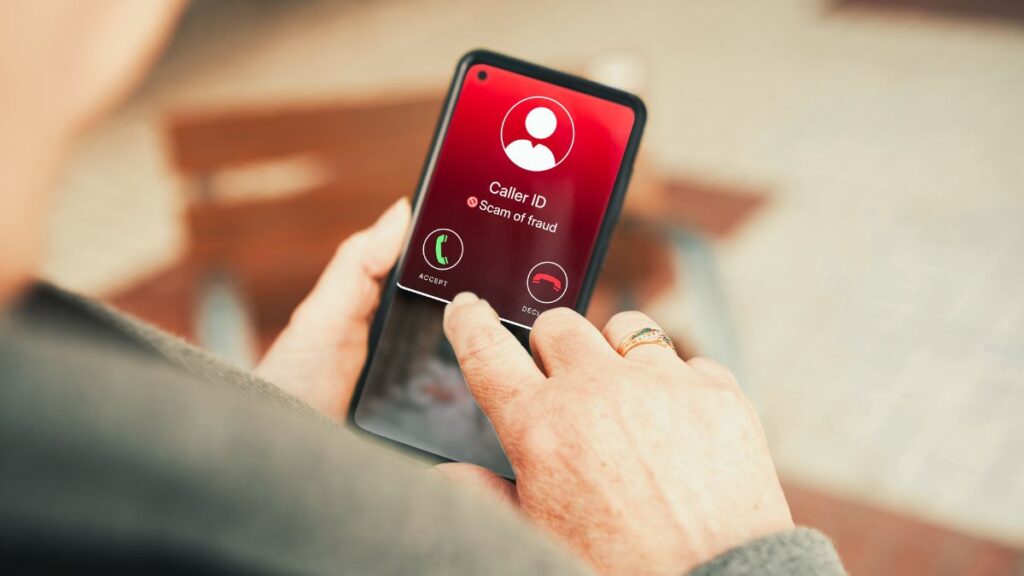
Across Austin’s review, victims rarely woke up intending to make a risky financial decision. Something entered their day first: a phone call, text, email, social-media message, security alert, or new online relationship.
IRS Criminal Investigation specifically lists unsolicited calls, emails, and text messages among elder-fraud red flags. The FBI likewise warns that phishing and spoofing criminals use convincing unsolicited communications to obtain financial or login information.
That suggests a simple protection rule. An unexpected communication should never be allowed to establish both the alleged problem and the solution.
A person claiming to represent a bank may be telling the truth, but the customer can still hang up and contact the bank through the number on a bank statement, card, or official website.
2. Strong Emotion Came Before the Bad Decision

The stories Austin examined differed, but an emotional surge appeared again and again. Sometimes it was fear of arrest, sometimes fear of losing savings, sometimes excitement about an investment, and sometimes affection created through an online relationship.
That is not accidental. IRS-CI currently warns about emergency scams, romance scams, lottery schemes, investment fraud, and government impersonation, all of which give criminals a powerful emotional lever.
The FTC has documented a particularly effective variation: scammers tell older adults that their bank account, identity, Social Security number, or computer has been compromised. The victim then believes money is being moved to solve a crisis rather than handed to a criminal.
Emotion itself is not proof of fraud. It is a signal that a major financial decision deserves more time.
3. Urgency Removed the Time Needed to Think

Austin repeatedly saw some variation of the same instruction: act now.
The supposed grandchild needed bail immediately. The investment opportunity was about to disappear. The government agent needed cooperation before an arrest occurred. The bank account had to be “secured” before criminals emptied it.
IRS-CI explicitly warns that scammers pressure people to act immediately, while the FTC notes that phone conversations can intensify fear and urgency and make independent checking harder.
A useful household rule is therefore straightforward: financial emergencies created by strangers do not receive instant payments.
Legitimate organizations can survive a verification call.
4. The Criminal Borrowed Someone Else’s Credibility
Very few successful scams begin with, “Hello, I am a criminal.”
Instead, the person may claim to represent a bank, the IRS, Social Security, law enforcement, Microsoft, a brokerage firm, a cryptocurrency platform, or even a family member.
In the FBI’s criminology-professor case, the criminal claimed to be associated with the Drug Enforcement Administration and said the victim’s identity had been tied to drug trafficking and money laundering. He then offered to help clear her name.
The safest response is not to decide whether the caller sounds official. It is to independently contact the organization the caller claims to represent.
5. Secrecy Protected the Scam
Austin found secrecy especially important because it removed the person most likely to interrupt the fraud: somebody who was not emotionally inside the story.
The FBI professor case illustrates the tactic clearly. The supposed government investigation required strict secrecy, and the victim was told not to discuss the situation even with other law-enforcement personnel.
IRS-CI now lists demands for secrecy alongside immediate pressure as a fraud warning sign. It recommends consulting a trusted family member, financial professional, or attorney before transferring money or making a major financial decision.
That gives retirees a powerful counter-rule: when someone says a financial matter must be secret, that is precisely when another trusted person should hear about it.
6. There Was Usually a Problem to Fix or a Reward to Capture
Scammers often work from opposite emotional directions.
One story says something terrible will happen unless money is sent. Another says something wonderful will happen once a fee, tax, deposit, or investment is paid.
The FTC identified three recurring high-loss imposter stories involving older adults: someone is supposedly using the victim’s accounts, the victim’s identity is supposedly connected to a crime, or the victim’s computer supposedly has a security problem.
Prize and sweepstakes fraud uses the reverse version. The victim supposedly has money coming but must pay something first. IRS-CI continues to warn older adults about exactly this pattern.
Both approaches make verification feel secondary. That is what makes them dangerous.
7. The Payment Method Was Often a Warning by Itself

Austin also noticed that the requested transaction frequently looked nothing like an ordinary payment to a legitimate institution.
Current federal warnings mention gift cards, wires, cryptocurrency, and cash.
The FTC found that among older adults who reported losing at least $10,000 to business or government imposters in 2024, cryptocurrency was reported as the payment method in 33% of cases, bank transfers in 20%, and cash in 16%. Bitcoin ATMs appeared frequently in cryptocurrency reports.
Large-loss reports also included gold and courier pickups. Those details matter because legitimate government agencies do not protect someone’s savings by ordering gold bars, Bitcoin deposits, stacks of cash, or gift cards.
| Requested action | Why it deserves a stop | Safer response |
|---|---|---|
| Buy gift cards | Common scam payment mechanism | Do not provide card numbers or codes |
| Deposit cash into a Bitcoin ATM | Frequently appears in imposter reports | Stop and independently call the institution |
| Wire money to a new account | Transfers may be difficult to recover | Verify through a separately obtained number |
| Hand cash or gold to a courier | Not normal government or bank procedure | Contact law enforcement and the institution directly |
| “Move money to protect it” | FTC identifies this as a core imposter tactic | Leave funds where they are until independently verified |
The unusual payment is often the last clear warning before the financial damage occurs. Families should discuss these methods in advance, when nobody is under pressure.
8. The Scammer Tried to Control the Communication Channel
A long phone call can become part of the trap.
The FTC reports that even scams beginning through pop-ups or other channels often try to move the victim onto the phone. Keeping the person engaged can increase urgency while reducing the chance that a friend or relative will interrupt.
That pattern appeared in Austin’s review because continuous communication gives the criminal more opportunities to answer objections. Each new doubt receives another explanation, instruction, threat, or reassurance.
Hanging up is therefore more powerful than arguing. A victim does not need to prove the caller is fraudulent before ending the conversation.
9. The Criminal Knew Enough Personal Information to Sound Real

Names, addresses, family details, employer information, and other facts can make a scam feel authenticated.
Yet knowing something about a person is no longer strong proof of identity. Data breaches, public records, social media, commercial databases, and earlier scam interactions can provide pieces of information that criminals use to build convincing stories.
That is why independent verification matters more than recognition. A caller knowing a grandson’s name does not establish that the caller represents the grandson, just as knowing the name of a bank does not prove employment by that bank.
The test should be identity through an independent channel, not how many facts the stranger can recite.
10. One Payment Often Created the Next Request

Austin’s review also showed why the first transfer is so important.
After someone has paid once, criminals may invent taxes, processing fees, security deposits, additional investment opportunities, or new emergencies. The SEC warns that repeated requests for money can signal investment fraud and notes that perpetrators may target the same victims repeatedly.
The FBI has even warned about scammers impersonating IC3 personnel and approaching people who had already lost money, falsely claiming they could recover the stolen funds. That is fraud built specifically around previous fraud victims.
A request for more money should therefore trigger a complete re-evaluation rather than a calculation of how much has already been invested.
Money already lost cannot make the next payment safer.
11. There Was Often No Independent Checkpoint Before the Money Moved
This may be the most practical finding from Austin’s 46-case review.
Many victims still controlled their finances competently. What they lacked at the critical moment was not necessarily financial knowledge, but a second verification path outside the scammer’s story.
For brokerage accounts, the SEC, FINRA, and state securities regulators encourage investors to consider naming a trusted contact.
That person does not receive trading authority or control over the account, but the brokerage can contact them in limited circumstances involving possible exploitation or difficulty reaching the customer.
A similar idea can work informally for other large transactions. Couples, siblings, adult children, or trusted friends can agree that certain unusual transfers receive a second set of eyes.
| Situation | Question to ask before acting | Independent check |
|---|---|---|
| “Your bank account is compromised” | Did the bank really contact Austin? | Hang up and call the bank directly |
| “A relative needs money now” | Has the relative been contacted separately? | Call the relative or another family member |
| “The government will arrest you” | Does the agency actually demand payment this way? | Find the agency’s official contact independently |
| “This investment is guaranteed” | Is the seller licensed and the investment documented? | Check Investor.gov and written disclosures |
| “Nobody else can know” | Why would legitimate help require secrecy? | Tell a trusted person before sending money |
The goal is not to hand control of retirement finances to someone else. It is to prevent one stranger from becoming the only source of information during a high-pressure decision.
Intelligence Was Not the Common Denominator

One conclusion Austin did not draw from the 46 cases was that victims lacked intelligence.
That explanation is tempting because it makes everyone else feel safer. People can tell themselves they would never fall for the same story.
The FBI’s professor case makes that assumption difficult to defend. A person professionally familiar with victimization still lost more than $500,000 after criminals constructed a convincing government-impersonation narrative.
Fraud prevention works better when it relies on systems rather than confidence. Someone does not need to be smarter than every criminal if the household has rules that make secrecy, instant transfers, unusual payments, and unverified callers hard to act on.
A Five-Minute Fraud Firewall Can Be More Useful Than Memorizing 100 Scams
Scam scripts will continue changing. The behavioral rules do not need to change nearly as often.
Austin’s review points toward a simple sequence: stop the communication, separate the story from the person telling it, verify through a channel the stranger did not provide, and involve another trusted person before a large or unusual transaction.
IRS-CI similarly advises people to slow down, independently verify situations, protect financial information, monitor accounts, and consult someone trusted before major transfers.
A retiree can build those rules before a crisis occurs. That makes them much easier to follow when an alarming phone call eventually comes.
What If Money Has Already Been Sent?
Speed matters, but shame should not delay action.
IRS-CI recommends ending contact with the criminal, notifying the financial institution when money or account information has been shared, reporting the incident, and preserving emails, screenshots, phone numbers, and other records.
Victims should also be particularly suspicious of anyone who suddenly promises to recover the money for a fee. The FBI has documented recovery schemes designed to victimize people who have already reported earlier fraud.
| Priority | What to do | Why |
|---|---|---|
| 1 | Stop communicating with the suspected scammer | Prevents additional manipulation |
| 2 | Contact the bank, card issuer, brokerage, or payment service | Some transactions may still be stoppable or traceable |
| 3 | Secure affected accounts and credentials | Limits additional access |
| 4 | Preserve messages, receipts, screenshots, account details, and phone numbers | Evidence may help investigators |
| 5 | Report the fraud promptly | Reports can support investigation and warn authorities about active schemes |
Reporting does not guarantee recovery. It can, however, create more options than remaining silent while a criminal continues requesting money.

Marvin is an expert in farming equipment with a strong background in agricultural engineering. He graduated from Kansas State College of Agriculture, where he received a degree in Agricultural Engineering and specialized in farm equipment design and maintenance.