
Retirement was supposed to simplify Denis’s life. Instead, his hypothetical five-year experiment with keeping it private exposed something he had never included in his retirement planning: much of the person he thought he was had quietly become attached to what he did for a living.
The money question and the work question were different. A person can be financially ready to stop working while still feeling psychologically attached to the structure, recognition, relationships, and identity that came with the job. Research on retirement adjustment suggests those nonfinancial pieces can matter considerably.
Denis is a hypothetical composite rather than a documented individual. His experience is used to illustrate patterns found in retirement research and current reporting, not to represent every retiree.
1. The Secret Protected More Than Denis Expected

At first, keeping retirement quiet seemed practical. Denis imagined avoiding endless questions about travel plans, grandchildren, hobbies, and what he intended to do with “all that free time.”
But the secrecy served another purpose. As long as people still associated him with his old professional life, he did not have to completely answer the harder question of who Denis was when the job was removed.
That distinction matters because retirement is not simply the subtraction of employment. For someone strongly identified with work, it can also remove a familiar social description that has been reinforced for decades.
Harvard researchers studying retirement transitions have described both restructuring one’s life and maintaining bridges between old and new identities. Retirement does not necessarily erase the working self overnight.
2. His Job Title Had Been Doing Identity Work for Him

For years, Denis could answer one of adulthood’s most common questions almost automatically: “What do you do?”
A job title compressed an enormous amount of information into a few words. It suggested expertise, responsibility, social standing, schedule, colleagues, accomplishments, and sometimes even the kind of person others assumed Denis to be.
When employment stopped, Denis lost the shortcut.
The problem was not that he suddenly had no identity. The problem was that one highly visible part of his identity had been doing more work than he realized.
A career can provide much more than compensation. Looking at those functions separately helps explain why a financially successful retirement may still feel unexpectedly empty.
What a Job Quietly Provides Besides Money
| Work Provided | What It Felt Like | Possible Retirement Replacement |
|---|---|---|
| Schedule | Structure | Self-created weekly rhythm |
| Responsibility | Being needed | Family, mentoring, volunteering |
| Colleagues | Belonging | Friends, clubs, community |
| Achievement | Competence | Projects, learning, service |
| Job title | Social identity | Several meaningful roles |
The lesson is not that retirees need to reproduce the office at home. It is that expecting travel, television, golf, or relaxation to replace every psychological function of a 40-year career may place unrealistic demands on leisure.
3. Other People’s Expectations Can Keep an Old Identity Alive

Keeping the retirement secret also allowed Denis to continue benefiting from other people’s old assumptions.
Former acquaintances might still ask about his field. Neighbors might assume he was busy with professional obligations, and casual conversations could continue using the familiar script.
That social reinforcement matters because identity is not formed entirely in private. People repeatedly receive signals about who they are from the roles others expect them to occupy.
Denis discovered that retirement could happen on paper before it happened socially.
This does not mean retirees must immediately announce their employment status to everyone they know. It means the words used around retirement can influence how easily someone starts exploring other parts of himself.
4. Freedom Felt Different When Nobody Structured the Week

Work had occupied time Denis once complained he never had. Once the obligations disappeared, free time did not automatically become meaningful time.
Monday morning no longer required anything from him. Neither did Tuesday afternoon, Thursday evening, or the following Monday.
At first, that felt luxurious. Eventually Denis discovered an uncomfortable difference between having control over time and having a reason to use it.
The National Institute on Aging notes that meaningful social and productive activities can support well-being in older adulthood. Activities do not need to resemble paid employment, but they tend to work better when the person actually values them.
A retirement calendar therefore does not need to be crowded. It may simply need enough anchors that the week has shape without becoming another full-time job.
5. Competence Survived Retirement Even When the Title Disappeared
One of Denis’s larger mistakes was assuming that leaving a position also meant leaving behind the abilities associated with it.
Decades of judgment, communication, organization, problem-solving, patience, technical skill, and leadership did not disappear on his last working day. Only the setting in which those abilities had been routinely recognized changed.
Harvard’s retirement research has documented examples of retirees carrying older abilities into new contexts, such as using professional expertise in volunteer or community work. Researchers describe this as one way people can bridge earlier and later identities.
Denis did not need another career to prove he was still capable. He needed places where capability still had somewhere useful to go.
Old Career Identity vs. Broader Retirement Identity
| Narrow Definition | Broader Definition | What Changes |
|---|---|---|
| “I was a manager.” | “I organize people well.” | Skill survives title |
| “I was an engineer.” | “I like solving practical problems.” | Ability becomes portable |
| “I was a teacher.” | “I enjoy helping people learn.” | Purpose can continue |
| “I was an executive.” | “I make decisions and mentor others.” | Status becomes contribution |
| “I had an important job.” | “I have several important roles.” | Identity becomes less fragile |
This is one of retirement’s more useful distinctions. The job may end completely while many of the qualities expressed through the job remain available.
6. Recognition Was Harder to Replace Than Denis Expected

People often talk about replacing a retirement paycheck. Far fewer talk about replacing the steady stream of small signals that once told a worker he was useful.
A colleague asked Denis for advice. Someone thanked him for solving a problem, a manager relied on his experience, or a younger employee wanted his opinion.
After retirement, much of that feedback disappeared.
That absence can be easy to misread. A person may think he misses the work itself when what he really misses is evidence that his contribution matters.
Denis gradually learned to separate status from usefulness. Status is the position someone occupies, while usefulness can show up almost anywhere another person benefits from his time, skill, reliability, or attention.
7. Some Workplace Relationships Belonged More to the Role Than to Denis

Retirement also tested which relationships could survive without an organization connecting everyone.
People Denis had spoken with almost every weekday gradually contacted him less. Nobody had necessarily rejected anyone; the shared setting had simply disappeared.
That distinction can save retirees a great deal of unnecessary hurt.
Research has found that social and friendship-related identity can play a role in retirement adjustment. The National Institute on Aging also distinguishes social isolation from loneliness and encourages meaningful social connection rather than assuming living or spending time alone automatically means a person is lonely.
Denis learned that workplace proximity and friendship were not always the same thing. Retirement made the difference easier to see.
8. Saying “Retired” Changed the Conversation
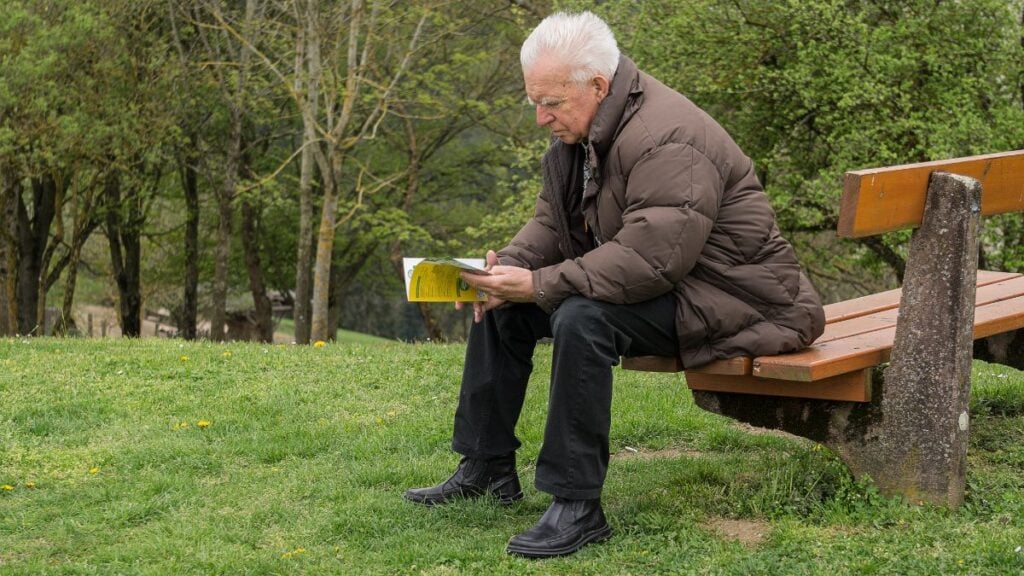
Eventually Denis began telling more people that he was retired.
The reaction was usually harmless, but he noticed how quickly the questions changed. Instead of work projects, people asked about vacations, golf, family, relaxation, or how he filled the day.
The word retired can describe employment status accurately without describing the whole person. Denis had spent years resisting the label partly because he feared that other people would hear it as a complete identity.
The better answer was not to reject retirement. It was to stop treating one word as a biography.
Instead of searching for a replacement title, Denis could describe what occupied his attention now: learning, helping family, working on projects, exercising, volunteering, reading, mentoring, traveling, or simply living on a less externally controlled schedule.
9. One Identity Was Too Much Weight for Any Single Role
A job can disappear through retirement. Parenting changes as children grow older, relationships change, physical abilities can change, and community responsibilities come and go.
If nearly all of someone’s identity rests on one role, losing that role can feel much larger than the practical change itself.
Denis’s more durable solution was what might be called an identity portfolio: several roles that mattered for different reasons.
Research examining meaning after retirement has found that retirees often continue using sources of meaning that existed before retirement, while changing how those sources are expressed. Work-related meaning, for example, may shift toward hobbies, family, household activity, or other responsibilities.
The goal therefore is not to manufacture an entirely new personality at retirement. A broader identity can be assembled from qualities and relationships that were already present but received less attention during working years.
Building an Identity Portfolio
| Identity Area | Example | Question to Ask |
|---|---|---|
| Relationships | Spouse, parent, grandparent, friend | Who matters beyond work? |
| Contribution | Mentor, volunteer, helper | Where is experience useful? |
| Curiosity | Reader, student, traveler | What still creates interest? |
| Activity | Walker, gardener, golfer | What keeps the week active? |
| Personal values | Neighbor, citizen, caregiver | What kind of person matters to Denis? |
No retiree needs all five categories in equal measure. The value comes from having enough sources of identity that losing one does not make the entire sense of self disappear.
10. Purpose Did Not Have to Produce a Paycheck

Denis had unknowingly connected productivity with economic value for most of his adult life.
Work produced measurable output. Someone paid him, evaluated him, promoted him, thanked him, or depended on a result.
Retirement weakened that connection.
Helping a neighbor solve a problem could matter without appearing on a résumé. Reading with a grandchild, caring for a spouse, organizing a community effort, learning an instrument, restoring old furniture, or consistently showing up for a friend could matter without generating income.
The National Institute on Aging points to meaningful activities, including hobbies, volunteering, and relationships, as possible sources of purpose and connection in later life.
Purpose after retirement therefore does not require finding a grand mission. Sometimes purpose is simply knowing why several hours of the week deserve attention.
11. Continuity Worked Better Than Trying to Become a New Person
One of Denis’s early assumptions was that successful retirement required reinvention.
That can sound exciting, but it can also create another form of pressure. Someone who has already left a career may feel he now needs an impressive second act to justify retirement.
The research suggests a subtler possibility.
Harvard’s work on retirement identity has described people reviving earlier interests, carrying values forward, reusing professional abilities in new settings, and strengthening roles that already existed outside work.
Denis therefore did not need to erase the working version of himself. He could keep useful parts while reducing their dominance.
That produces a healthier question than “Who should Denis become now?” The better question is “Which parts of Denis deserve more room now that work occupies less of it?”
12. Privacy Slowly Risked Turning Into Avoidance

There is nothing inherently wrong with keeping retirement private. People are allowed to decide when, where, and with whom they discuss personal changes.
But after five hypothetical years, Denis could see how easily privacy could become a way of postponing adjustment.
If saying “retired” felt threatening because it seemed to diminish him, the deeper problem was not the word. It was the amount of self-worth still tied to his previous role.
That distinction became one of the strongest lessons of the experiment.
A person does not need to announce retirement publicly. Yet if maintaining the old image becomes necessary for feeling relevant, capable, or respected, it may be worth examining what the former identity is still providing.
Healthy Adjustment vs. A Reason to Look More Closely
| Experience | Often Part of Adjustment | Worth Paying Attention To |
|---|---|---|
| Missing coworkers | Occasional nostalgia | Withdrawing from nearly everyone |
| Enjoying free time | Flexible days | Days feel persistently empty |
| Missing professional respect | Remembering accomplishments | Feeling worthless without a title |
| Trying new routines | Experimenting | Avoiding anything unfamiliar |
| Keeping retirement private | Personal preference | Secrecy is needed to preserve self-worth |
These are not diagnostic categories. Persistent distress, major mood changes, or serious problems functioning deserve attention from an appropriate health professional rather than being dismissed as “just retirement.”
13. The Strongest Retirement Identity Was a Wider One

By the end of the five-year thought experiment, Denis’s central lesson was not that career identity had been a mistake.
Work had been real, meaningful, and worthy of pride. Pretending otherwise would simply replace one distortion with another.
The problem came from allowing that role to become almost synonymous with Denis himself.
Research on retired adults suggests that adapting identity rather than rigidly preserving or completely abandoning it can be associated with different aspects of post-retirement well-being. Outcomes also differ according to circumstances, including whether retirement was planned or unplanned.
Denis did not need to become “a retired man” in place of “a working man.” Both labels were too small.
He could be a former professional, husband, friend, neighbor, reader, mentor, traveler, learner, family member, problem-solver, and whatever else mattered enough to earn space in his week.
That was the larger identity retirement had made possible.
Before finishing, Denis’s experience can be translated into a simple month-long exercise. The purpose is not to keep a retiree constantly occupied, but to identify which parts of life deserve more attention now.
A 30-Day Retirement Identity Reset
| Time | Focus | Practical Step |
|---|---|---|
| Week 1 | Notice | List what work used to provide |
| Week 2 | Recover | Restart one neglected interest |
| Week 3 | Connect | Strengthen one relationship outside work |
| Week 4 | Contribute | Use one old skill in a new setting |
| Day 30 | Review | Keep what felt meaningful and drop what did not |
The final step matters because retirement does not require filling every hour. A satisfying structure should leave room for rest while still giving the week enough direction to feel intentional.
