Retirement benefits do not stop with Social Security and Medicare. Several free government benefits for retirees can reduce prescription costs, groceries, utility bills, housing expenses, home repairs, and even Medicare premiums, yet many require a separate application that retirees may never realize exists.
The problem is that eligibility rules can look intimidating, and some programs are buried inside state agencies rather than Social Security.
The payoff for checking can be substantial, especially when one approved program opens the door to another.
Note: This article provides general educational information, not individualized financial, tax, legal, Medicare, Medicaid, or benefits advice. Eligibility rules can vary by state and household, so confirm current requirements with the agency administering the program.
1. Medicare Savings Programs Can Pay a Bill Many Retirees Assume Is Unavoidable
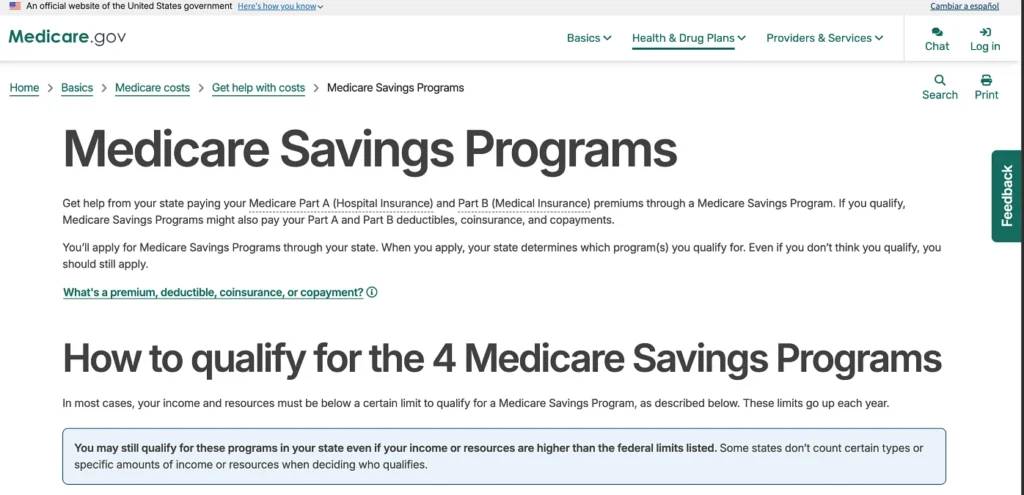
The standard Medicare Part B premium is $202.90 per month in 2026, or $2,434.80 over twelve months. For a retiree living mainly on Social Security, eliminating that monthly deduction can noticeably change cash flow.
Medicare Savings Programs are administered through states and include QMB, SLMB, and QI. Depending on the program, assistance can pay the Part B premium and, in some cases, Part A premiums, deductibles, coinsurance, and copayments.
For 2026, the federal QMB monthly income limit is $1,350 for an individual, while SLMB is $1,616 and QI is $1,816. States may use rules that allow people with income or resources above the federal figures to qualify, so Medicare specifically advises people to apply even when they think they may be over the limit.
2. Extra Help Can Cut Medicare Prescription Costs
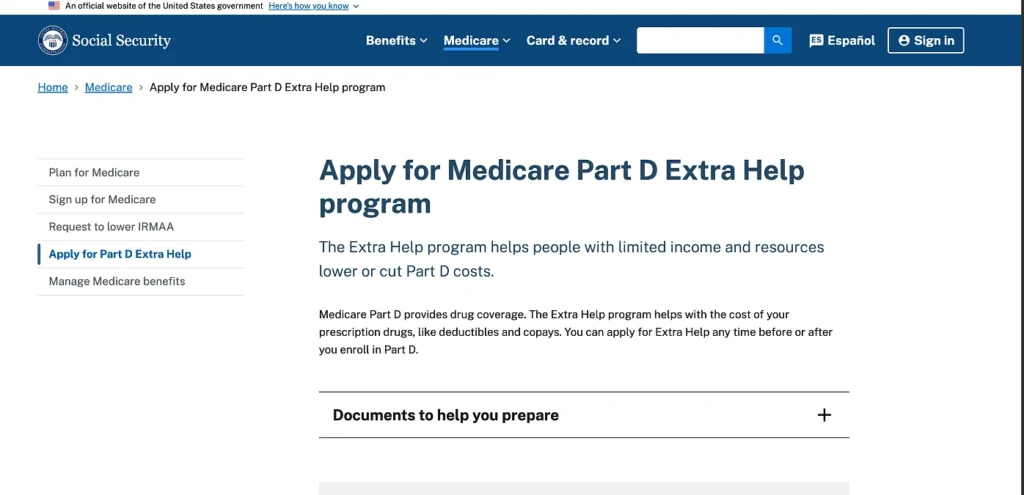
Medicare’s Extra Help program assists people with limited income and resources with Part D premiums, deductibles, coinsurance, and other prescription costs. Some people receive it automatically through Medicaid, SSI, or a Medicare Savings Program, but others need to apply.
For 2026, Medicare lists an annual income limit of $23,940 and resource limit of $18,090 for an individual. For a married couple, the listed limits are $32,460 of income and $36,100 of resources.
A retiree should not assume that owning a home means failing the resource test. The program has specific rules about what counts, so the official application is a better test than estimating eligibility from net worth alone.
3. Medicaid Can Still Matter After Medicare Begins

Some retirees assume Medicaid is irrelevant once they turn 65 and enroll in Medicare. In reality, a person can qualify for both programs, creating what Medicare calls dual eligibility.
For people who qualify for full Medicaid benefits, the state generally pays the Medicare Part B premium. Depending on the type of Medicaid coverage, it may also help with Medicare deductibles, coinsurance, copayments, and services Medicare normally does not cover.
Medicaid financial rules differ by state, which is why there is no single national retiree income cutoff to quote. Some states also permit certain applicants with income above the normal limit to qualify after eligible medical expenses through a process often called a spend-down.
4. Medicaid Home and Community-Based Services May Help Someone Stay at Home
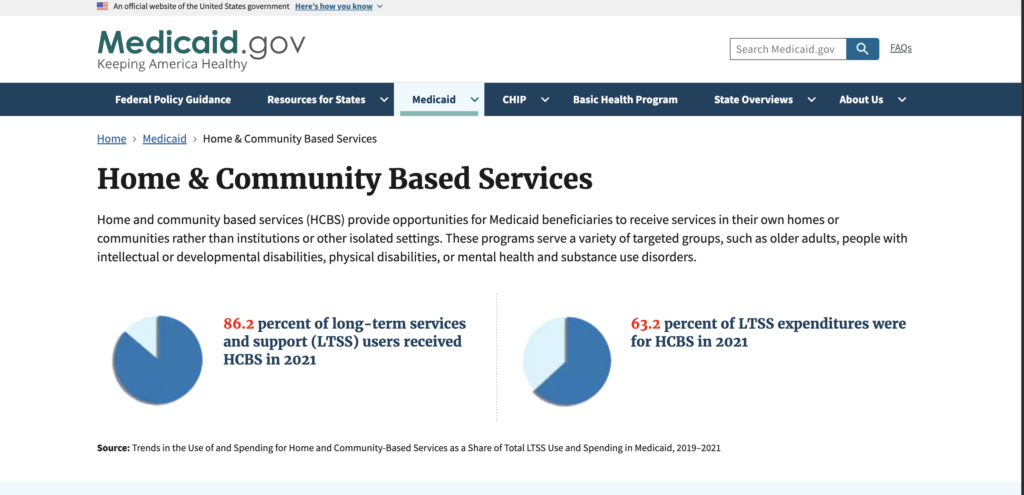
Long-term assistance does not always mean moving directly into a nursing facility. Medicaid Home and Community-Based Services, or HCBS, can allow qualifying older adults to receive support in their homes or communities.
Depending on the state program, services can include personal care, homemaker assistance, home health aides, adult day services, respite care, case management, and other supports. States set eligibility rules, and some waiver programs have enrollment limits or waiting lists.
These first four programs show why looking only at monthly income can be misleading. Current numbers also show how large the healthcare savings can become for someone who qualifies.
| 2026 Program | Key Federal Figure | What to Remember |
|---|---|---|
| Medicare Part B | $202.90/month standard premium | MSP may pay it |
| QMB | $1,350/month individual income limit | State rules can be more generous |
| QI | $1,816/month individual income limit | Helps with Part B premium |
| Extra Help | $23,940 annual individual income limit | Separate resource test applies |
| Extra Help resources | $18,090 individual | Not every asset is treated the same |
These figures are screening points, not universal approval guarantees. Medicare specifically notes that state Medicare Savings Program rules may allow qualification above the listed federal limits.
5. Supplemental Security Income Is Not the Same as Social Security Retirement
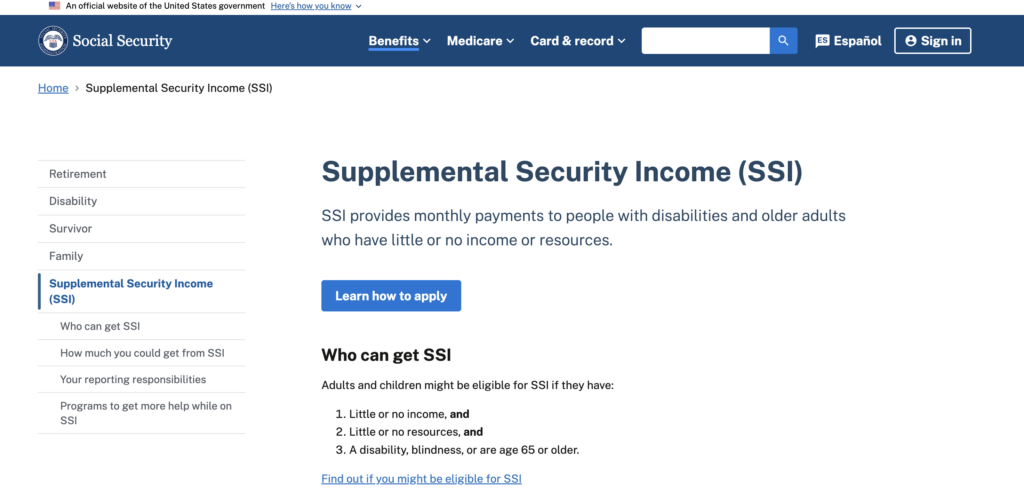
Supplemental Security Income, or SSI, is commonly confused with Social Security retirement benefits. SSI is a separate needs-based program financed through general federal revenues, and adults age 65 or older can qualify based on limited income and resources without proving a disability.
The maximum federal SSI payment in 2026 is $994 per month for an eligible individual and $1,491 for an eligible couple, although actual payments can be lower because other income is considered. Some states add supplemental payments.
The basic countable-resource limits remain $2,000 for an individual and $3,000 for a couple. However, the home someone lives in and one vehicle used for transportation generally do not count toward those limits.
6. SNAP Has Special Rules That Can Help Older Applicants
SNAP is not simply a program for families with children. USDA classifies someone age 60 or older as elderly for SNAP purposes, and households containing an elderly or disabled member receive special treatment in several parts of the eligibility calculation.
A particularly important rule involves unreimbursed medical costs. Qualifying medical expenses above $35 per month can be deducted when calculating SNAP income for an elderly or disabled household member.
As of October 1, 2026, the FY 2027 net monthly income limit for a one-person household in the 48 contiguous states and D.C. is $1,330. USDA also increased the standard deduction for a one-person household to $217.
That means an older applicant should not look only at gross Social Security income and decide not to apply. Medical and shelter deductions can materially change countable net income.
7. The Commodity Supplemental Food Program Provides a Monthly Food Package

The Commodity Supplemental Food Program, or CSFP, supplies USDA foods to qualifying adults age 60 or older. Packages can include fruit, vegetables, juice, dairy foods, grains, and protein foods.
States generally set the income limit at or below 130% of the federal poverty guidelines. Availability depends on local participation, so a retiree may qualify financially but still need to check whether a nearby agency operates the program.
8. The Senior Farmers’ Market Nutrition Program Can Help Pay for Fresh Produce

The Senior Farmers’ Market Nutrition Program is designed for lower-income adults who generally are at least 60. It provides access to locally grown fruits, vegetables, herbs, and honey through participating farmers markets, roadside stands, and community-supported agriculture programs.
The general income ceiling is 185% of the federal poverty guideline, although administration happens through participating states, territories, tribes, and local agencies. Benefits may also be seasonal or limited by available funding.
The three major food programs serve different purposes, so qualification for one should not automatically stop someone from checking another. A retiree could need monthly grocery assistance while also benefiting from a local seasonal produce program.
| Food Program | Typical Age Rule | Main Help |
|---|---|---|
| SNAP | 60+ receives elderly rules | Monthly grocery benefit |
| CSFP | At least 60 | Monthly USDA food package |
| SFMNP | Generally 60+ | Fresh produce, herbs and honey |
| SNAP medical rule | Elderly or disabled household member | Deduction for qualifying costs over $35/month |
The practical lesson is to ask specifically about older-adult rules rather than using an online income figure meant for the general population. SNAP’s deductions are especially important for retirees with meaningful prescription, dental, insurance, or other eligible medical expenses.
9. LIHEAP Can Help With Heating and Cooling Bills

The Low Income Home Energy Assistance Program, or LIHEAP, sends federal funding to states, territories, and tribes to help eligible households with home-energy costs. Assistance can include heating bills, cooling bills, energy emergencies, weatherization, or certain minor energy-related repairs.
Older adults are specifically among the vulnerable households LIHEAP is intended to serve. In fiscal year 2024, about 2.5 million households assisted by LIHEAP included an older adult, according to HHS reporting.
The application rules and amount of assistance vary locally. Funding can also be limited, making early contact with the state or local administering agency worthwhile.
10. Weatherization Assistance Can Pay for More Than a Small Utility Credit
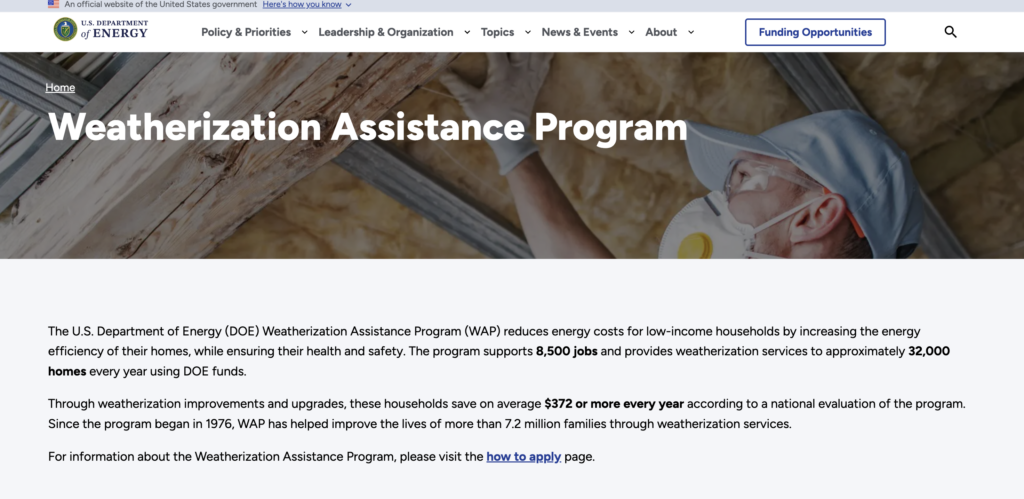
The Department of Energy’s Weatherization Assistance Program helps lower-income households reduce energy costs by improving the efficiency of their homes. The work can involve a professional energy audit followed by approved efficiency and safety improvements.
DOE guidelines generally consider households at or below 200% of the poverty guidelines eligible, while states may use certain LIHEAP standards instead. Priority is given to groups that include older adults, people with disabilities, households with children, and households facing high energy burdens.
Both homeowners and renters can potentially qualify. Renters normally require coordination with the property owner before work is completed.
11. Lifeline Can Reduce Phone or Internet Costs Every Month
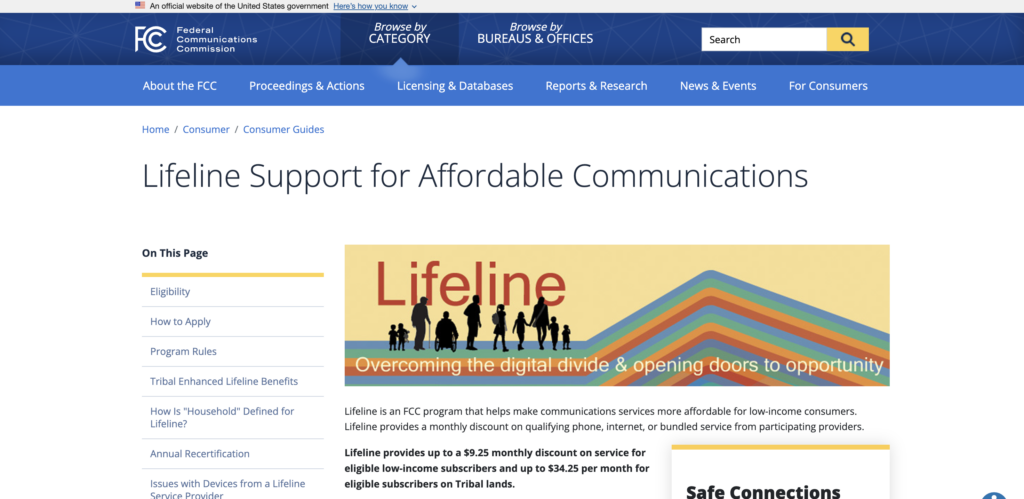
Lifeline is an FCC-supported program that lowers the cost of qualifying phone or broadband service. In 2026, eligible consumers can receive a discount of up to $9.25 per month, while eligible residents of Tribal lands can receive enhanced support of up to $34.25.
Eligibility can be based on household income at or below 135% of the federal poverty guidelines or participation in qualifying programs such as Medicaid, SNAP, SSI, Federal Public Housing Assistance, or the Veterans and Survivors Pension Benefit. Only one Lifeline benefit is generally allowed per household.
This is one reason an approval for another benefit can matter beyond that single program. It may provide a simpler path to demonstrating Lifeline eligibility.
12. Housing Choice Vouchers Can Reduce Rent, but Waiting Lists Matter
HUD’s Housing Choice Voucher program helps qualifying households rent housing in the private market. Eligibility is administered through local public housing agencies, and very-low-income households are generally those at or below 50% of area median income.
The program is not specifically for retirees, but older adults with modest income may qualify. Availability is often the bigger problem because local waiting lists can be lengthy or temporarily closed.
A retiree should therefore avoid treating a closed waiting list as permanent ineligibility. Public housing agencies can reopen lists, and rules differ from one jurisdiction to another.
13. Section 202 Housing Is Designed Specifically for Older Adults
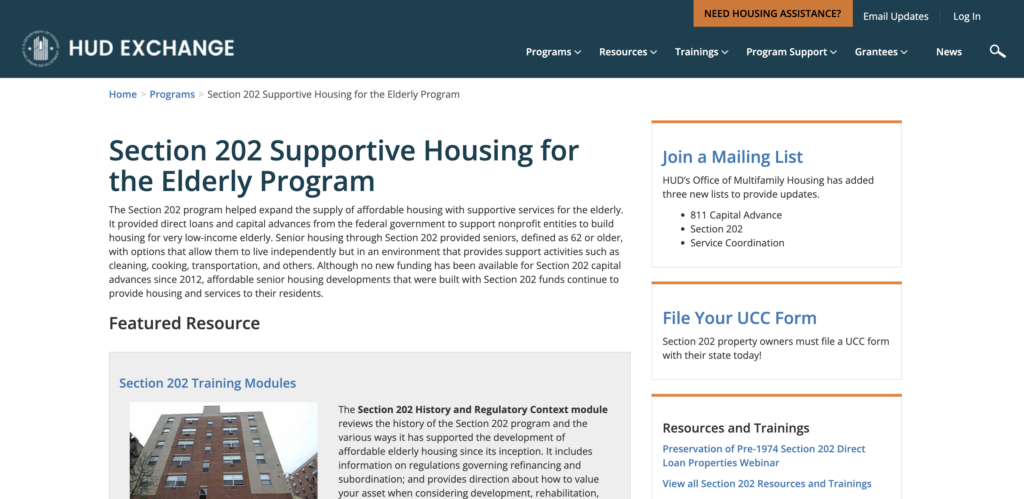
HUD’s Section 202 Supportive Housing for the Elderly program helps expand affordable rental housing for very-low-income older people. HUD describes the program as serving residents 62 or older and providing subsidized housing that can also be connected with supportive services.
Unlike a general nationwide application that instantly assigns housing, availability depends on individual Section 202 properties. Retirees may need to contact properties or local housing organizations and ask about openings and waiting lists.
Housing and utility programs can overlap, but they solve different expenses. Someone receiving rent assistance should still check utility and weatherization programs rather than assuming housing assistance covers everything.
| Program | Main Benefit | Major Catch |
|---|---|---|
| LIHEAP | Help with energy bills | Local funding and rules vary |
| Weatherization | Efficiency and safety improvements | Income test and possible waitlist |
| Lifeline | Up to $9.25/month standard discount | One benefit per household |
| Housing Choice Voucher | Rental subsidy | Local waiting lists |
| Section 202 | Affordable senior housing | Property availability varies |
These programs are especially worth checking after a change in retirement income, death of a spouse, relocation, or major increase in housing expenses. Eligibility that looked impossible several years earlier may look different after household circumstances change.
14. USDA Can Give Some Older Rural Homeowners Up to $10,000 for Repairs
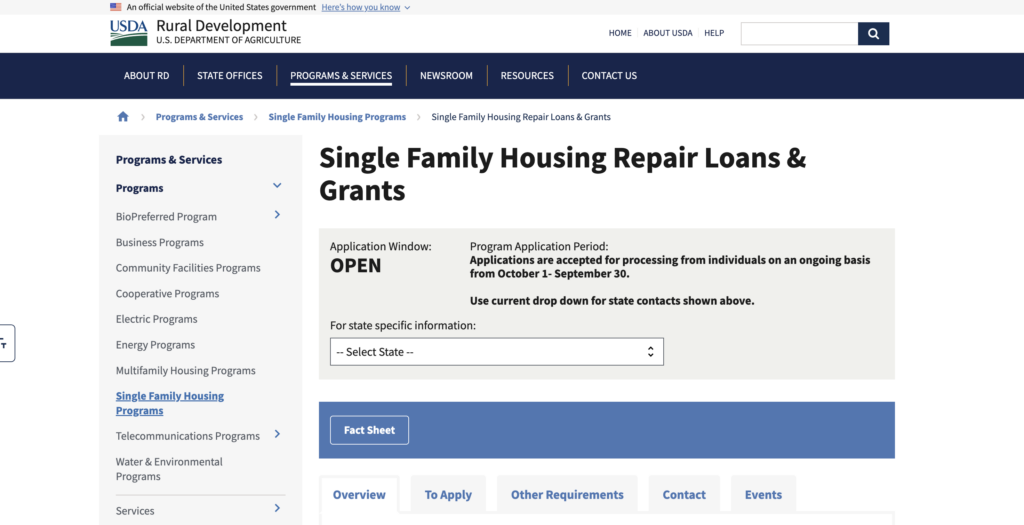
USDA’s Section 504 Home Repair program contains both loans and grants. The grant portion is available to qualifying very-low-income homeowners age 62 or older in eligible rural areas who need to remove health or safety hazards.
The current maximum lifetime grant is $10,000. USDA says grants generally must be repaid if the property is sold within three years, while qualifying applicants may also have access to low-interest repair loans.
This program is easy to miss because retirees may assume USDA deals only with farms. Rural Development housing programs can also serve ordinary owner-occupied homes in eligible rural communities.
15. Some Wartime Veterans May Qualify for VA Pension and Aid and Attendance
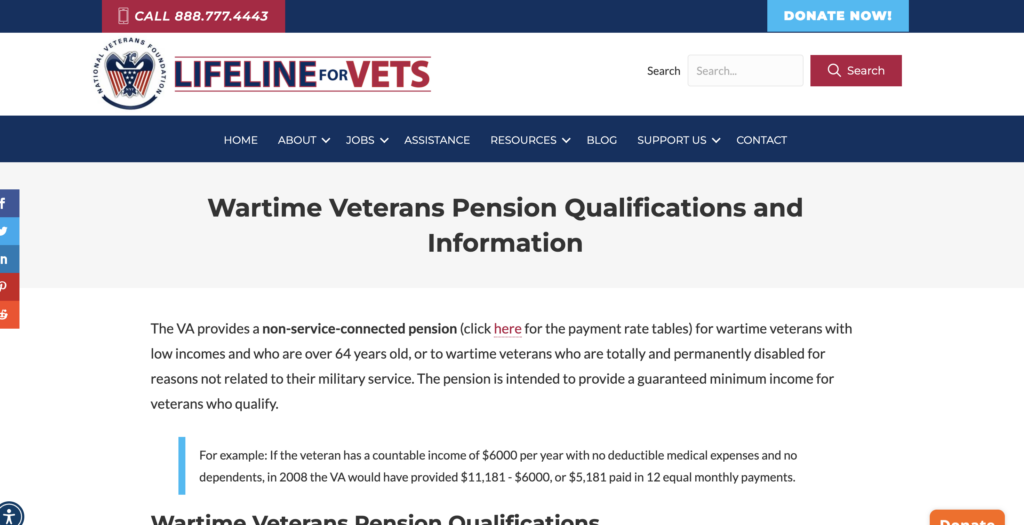
VA Pension is different from service-connected disability compensation. It is a needs-based benefit for qualifying wartime veterans who meet service, income, net-worth, and age or disability requirements.
A veteran can potentially meet the age requirement simply by being 65 or older, provided the service and financial conditions are also satisfied. For the benefit period beginning December 1, 2025, a veteran with no dependents has a basic Maximum Annual Pension Rate of $17,441, increasing to $29,093 if eligible for Aid and Attendance.
The current VA pension net-worth limit through November 30, 2026 is $163,699, but the primary home, vehicle, and basic household goods are excluded from the asset calculation. Certain unreimbursed medical expenses may also reduce income for VA purposes.
Aid and Attendance can increase a pension for qualifying veterans or survivors who need another person’s help with daily activities, are largely confined to bed, live in a nursing home because of disability, or meet certain severe vision criteria.
16. The IRS Offers Free Tax Help Specifically for Older Adults
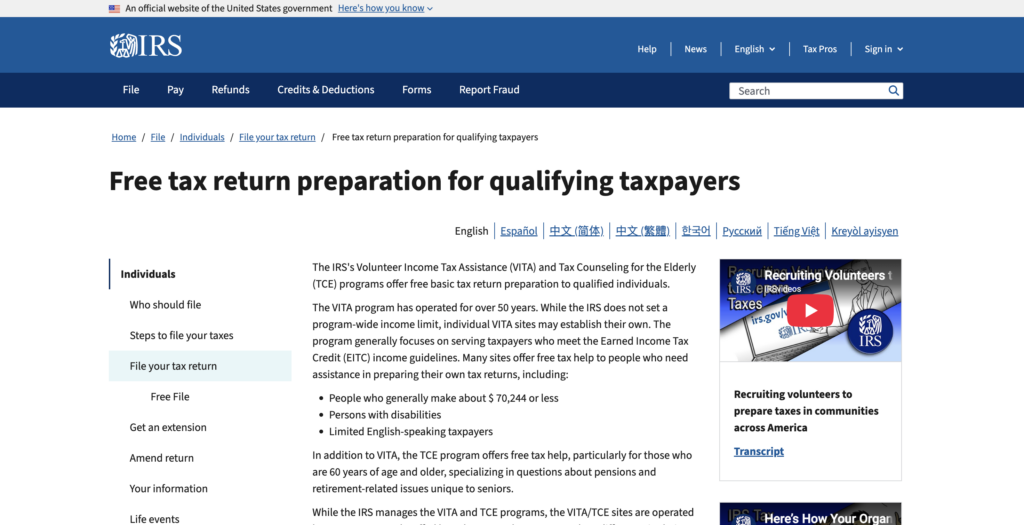
Tax Counseling for the Elderly, or TCE, provides free tax assistance to people age 60 or older. IRS-funded organizations use trained volunteers who often specialize in pension and retirement-related tax questions.
The program can provide basic federal return preparation during filing season at participating community locations. This is not a tax credit or monthly benefit, but it is a government-funded service retirees can use without paying a commercial tax-preparation fee.
The Best Application Strategy Is Not to Apply for 16 Programs at Random
A retiree is more likely to make progress by starting with the expenses hurting the monthly budget most. Healthcare, food, housing, and energy programs also have overlapping eligibility pathways, which can make later applications easier.
The following order gives retirees a practical starting point rather than another overwhelming list. Keep income documents, Social Security benefit information, housing expenses, bank balances, insurance premiums, medical receipts, utility bills, and identification together before starting.
| Priority | What to Check | Why Start Here |
|---|---|---|
| 1 | Medicare Savings Program + Extra Help | Could reduce recurring healthcare costs |
| 2 | Medicaid | May add coverage Medicare does not provide |
| 3 | SNAP + senior food programs | Can reduce monthly food spending |
| 4 | LIHEAP + Lifeline | Targets recurring household bills |
| 5 | Housing or home-repair programs | Potentially large savings but longer process |
| 6 | VA, SSI or specialized programs | Eligibility requires more individual review |
An Area Agency on Aging can also help connect older adults with local services such as nutrition programs, home care, transportation, caregiver support, and other assistance. The federal Eldercare Locator is designed to connect families with trusted local aging resources.
Medicare beneficiaries who are uncertain where to begin with MSPs or Extra Help can also contact their State Health Insurance Assistance Program. SHIP counseling is free and is not connected to an insurance company or health plan.