Retirement may arrive on a Friday afternoon, but the social change can begin almost immediately. People who knew you as a manager, nurse, teacher, engineer, business owner, or coworker suddenly have to relate to you without the job that organized so many conversations and relationships.
Some of those changes feel wonderful, while others can feel surprisingly uncomfortable. Research suggests retirement often changes peripheral relationships more than close ones, so understanding what is happening can help you protect the connections worth keeping and set boundaries around the expectations you never agreed to.
A useful distinction appears in retirement research.
In a 2021 cohort study of 2,319 retirees, the average reduction occurred mainly among more peripheral social ties, while closer inner and middle-circle relationships did not show the same decline.
1. Your Job Title Disappears From Conversations Faster Than You Expect

For years, your occupation may have answered one of the first questions people asked about you. Someone might have introduced you as the accountant, principal, contractor, physician, executive, or person who worked at a particular company.
After retirement, that label can disappear almost overnight. People may begin saying, “She’s retired now,” as though retirement itself has replaced everything you previously did.
That can feel strange even when you were eager to leave work. Employment provides money, but it can also provide status, recognition, routine, expertise, and a simple answer to the question, “What do you do?”
The better response is not necessarily to cling to the old title. It is to begin deciding what you want people to know about you when your former job is no longer the headline.
2. Coworkers Stop Keeping You Inside the Daily Loop

On Monday morning, your former team still has deadlines, meetings, complaints, jokes, and problems. You may care about all of them, but you are no longer automatically included in the conversation.
This is one of the first ways retirement can make someone feel forgotten. A coworker who once messaged five times a day may suddenly send nothing for a week because the shared reason for those messages has disappeared.
That does not necessarily mean the friendship was fake. Work relationships depend heavily on repeated contact, shared responsibilities, and common problems, so removing the workplace can remove the mechanism that kept the relationship active. Kiplinger and AARP have both highlighted this challenge in discussions of post-retirement work friendships.
Recent research adds some nuance. A 2025 longitudinal study found that contact with former coworkers can initially remain strong or even increase before declining later, showing that the change may unfold gradually rather than on retirement day itself.
Here is a more realistic way to think about different relationships after leaving work.
| Relationship | Early Retirement Shift | What May Help |
|---|---|---|
| Close work friend | Contact may continue | Schedule lunch or calls intentionally |
| Casual coworker | Contact may fade | Accept that proximity carried part of the relationship |
| Former boss | Relationship may become more equal | Let the connection find a new form |
| Professional peer | Work talk may decline | Find shared interests beyond the profession |
| Longtime personal friend | Often changes less | Protect the routines already keeping you connected |
The key is to see which relationships can survive without the office holding them together. Those that remain may become more personal precisely because work is no longer required.
3. People Begin Asking What You Do All Day

Few questions sound as harmless and feel as strange as, “So what do you do all day now?”
The person asking may simply be curious. Yet a new retiree can hear something different underneath it: If you are no longer working, what exactly makes your day meaningful?
For decades, work gave most weekdays a visible purpose. Retirement turns that purpose into a private decision rather than something printed on a calendar by an employer.
You do not need an impressive answer. Reading, exercising, caring for a home, volunteering, helping family, traveling, learning, gardening, consulting, meeting friends, or simply enjoying slower mornings can all be legitimate uses of time.
4. Working Friends Start Assuming Your Schedules No Longer Match
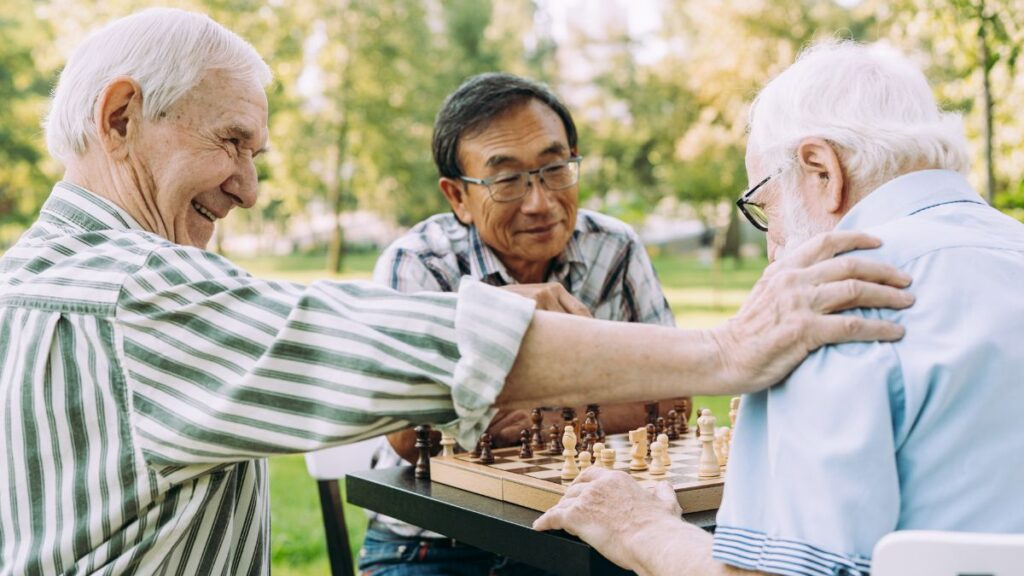
A friend who is still employed may genuinely want to see you but continue living around meetings, commutes, deadlines, and weekends. Meanwhile, you may suddenly have Tuesday afternoon open but become less interested in fighting Saturday crowds.
That difference can create an unexpected social gap. The retiree has gained flexibility, but the working friend has not.
Research does not suggest retirement automatically destroys friendship. In fact, the 2025 retirement-contact study found that contact with friends increased after retirement in the population studied.
Maintaining friendships may simply require a different rhythm. Breakfast before a friend’s workday, an evening walk, or a planned monthly lunch may replace the casual schedule that worked when both people were employed.
5. Family Starts Viewing Your Calendar as Wide Open
Retirement can create one dangerous phrase inside a family: “You’re free anyway.”
A relative may ask you to wait for a delivery, pick someone up, drive to an appointment, watch a pet, help with paperwork, or host a holiday because your weekdays appear empty from the outside.
These requests may come from love rather than disrespect. The problem begins when having more control over your time is quietly converted into having less ownership of it.
A simple test can help separate generosity from expectation.
| Situation | Healthy Choice | Warning Sign |
|---|---|---|
| Helping occasionally | You choose when to help | Others assume you will help |
| Childcare | Agreed days and hours | Constant last-minute requests |
| Family errands | Shared responsibility | You become the default driver |
| Hosting | You genuinely enjoy it | Everyone assumes your home is available |
| Appointments | You volunteer when practical | Your plans are expected to disappear |
Retirement gives you flexibility, not permanent standby status. Helping family can become one of retirement’s most meaningful roles when it remains a choice rather than an unpaid job nobody discussed.
6. Adult Children May Expect More Practical Help

Adult children may notice retirement before anyone else because it changes what their parents appear able to do. A retired parent suddenly looks available for school pickup, home repairs, airport runs, grandchild care, or emergency help.
For many families, that extra time is a gift. Grandparents may enjoy seeing grandchildren more often, and parents may value finally having enough flexibility to help without asking a boss for permission.
Problems appear when the expectation grows faster than the conversation. A retiree who planned to travel or build a new routine may discover that relatives already designed a different retirement for them.
The solution is not to refuse every request. It is to decide early which family responsibilities feel meaningful and which would rebuild the same schedule you just retired from.
7. Your Spouse May Treat Daytime Space Differently

Retirement does not happen only to the person leaving the office. It also happens to the household.
A spouse who had the home alone during certain hours may suddenly have company every day. Meals, television, errands, chores, exercise, social plans, and even where each person sits in the house can require small negotiations that never mattered before.
AARP has addressed this question directly, noting that couples can want very different amounts of togetherness after retirement. Current retirement reporting similarly stresses the value of discussing what an ordinary weekday will look like instead of planning retirement only around vacations and big goals.
Wanting separate activities does not mean a relationship is weak. Retirement can work better when two people have both shared time and protected individual space.
8. You Become the Obvious Person for Errands and Appointments
Once you no longer report to work every morning, other people may begin organizing practical tasks around you.
The logic sounds reasonable. Why should the working spouse take a morning off for the plumber when the retired spouse is home?
Sometimes that division makes perfect sense. Trouble begins when the retiree becomes the automatic owner of groceries, deliveries, appointments, paperwork, family errands, household repairs, and every task that happens between 9 and 5.
Before that happens, it helps to decide how much of your increased flexibility you actually want to trade for increased responsibility.
| More Available Time Means… | It Does Not Have to Mean… |
|---|---|
| You can schedule errands more easily | You must do every errand |
| You can help relatives sometimes | You are permanently on call |
| You can handle some daytime appointments | Your spouse gets no household duties |
| You can volunteer | Every organization gets your time |
| You can be spontaneous | Your own plans never come first |
A good retirement schedule needs empty space as well as useful activity. Otherwise, the job disappears and dozens of small obligations quietly take its place.
9. Invitations Begin Moving Into the Middle of the Week

This is one of the pleasant changes.
Friends who are already retired may start suggesting Tuesday golf, Thursday lunch, morning walking groups, afternoon movies, library events, or weekday trips. Suddenly, social life no longer has to fit inside Friday night and Saturday.
Research suggests this shift can matter. The 2025 study of retirement and social contact found stronger contact with friends and neighbors after retirement, suggesting that leaving work can create opportunities for relationships beyond the workplace.
AARP’s reporting on making friends after retirement makes a similar practical point: repeated contact is often what allows acquaintances to turn into actual friendships. Activities that happen on a predictable schedule can therefore be more valuable than attending random events once.
10. Professional Relationships Become More Casual

People who once called because they needed a decision, approval, recommendation, signature, or piece of expertise may stop calling for those reasons.
At first, losing that professional attention can feel like losing importance. Yet something else can happen at the same time: former colleagues may begin relating to you more as a person than as a title.
A former employee may speak more openly. A former boss may become a friend, while a professional contact who depended mainly on your position may disappear.
Retirement can therefore reveal something useful about old relationships. It shows which people were connected to the role and which people were connected to you.
11. Some People Quietly Start Treating You as Older
Retirement is an employment status, not an age. Someone can retire in their 50s, while another person may continue working into their 70s or beyond.
Yet the word “retired” can still act as a social age marker. Once people hear it, some may begin making assumptions about energy, technology, ambition, health, or what kinds of activities interest you.
That can be irritating because retirement may actually create more energy and freedom for some people. The best correction is often not an argument but continuing to make your own choices rather than performing somebody else’s idea of what a retired person should look like.
Older adults are also far from one uniform group. Health, finances, family structure, mobility, personality, housing, and interests can produce very different lives among people of the same age.
12. Others Assume Retirement Means You Are on a Tiny Fixed Income

Another stereotype can arrive quickly: every retired person must be financially fragile.
Some retirees certainly need to watch every dollar. Others have pensions, Social Security, investment income, part-time work, businesses, rental income, or substantial savings, while many households fall somewhere in between.
The important point is that employment status alone says surprisingly little about someone’s financial position. A retired household can have more financial flexibility than a working household, while another retiree may need a very careful budget.
You do not owe friends or relatives a detailed explanation of your finances simply because you stopped working. How much you disclose should depend on the relationship, not curiosity about your retirement.
13. People Congratulate You While Overlooking the Adjustment

“You must be so happy.”
“You’re living the dream.”
“I wish I could retire tomorrow.”
These comments are usually affectionate, and retirement can absolutely bring enormous relief. Yet they can make it harder to admit that leaving a long career also feels disorienting.
Someone can be grateful to retire and still miss colleagues. They can enjoy freedom while missing professional purpose, or celebrate the end of work while feeling uncertain about what comes next.
Research using U.S. Health and Retirement Study data has found that close relationships, including relationships with partners and friends, are associated with life satisfaction in later adulthood. That helps explain why the social side of retirement deserves as much planning attention as many retirees give their calendars and finances.
14. Organizations Suddenly Become Interested in Your Free Time

Retirement can turn a busy professional into a very attractive volunteer.
A church, nonprofit, neighborhood organization, school, club, homeowners association, charity, or community group may know you have experience and suddenly know you have daytime availability as well.
This can be a positive shift. The National Institute on Aging notes that meaningful activities, including volunteering, hobbies, and social participation, can support connection and a sense of purpose in later life.
The same boundary rule still applies, however. Purpose should not require filling every newly empty hour with obligations.
Choose the commitments that provide people, meaning, movement, learning, or genuine enjoyment. Saying no to the rest protects room for the retirement you actually wanted.
15. The People Who Keep Calling Become Easier to Identify
One of retirement’s least comfortable gifts is clarity.
Without meetings, projects, office gossip, professional favors, and shared deadlines keeping people together, relationships have to stand on something else. Some survive easily, while others become quiet.
That does not mean every fading relationship was dishonest. A 2021 retirement study found that the reduction in social ties occurred most clearly in the outer, more peripheral part of people’s networks rather than among their closest relationships.
Another study published in 2025 found substantial continuity across many types of relationships while also showing changing contact patterns with friends, neighbors, family, and former coworkers.
That suggests a better way to view the early retirement social reset. Instead of asking, “Who stopped caring about me?” it may be more useful to ask, “Which relationships now need intention because the structure that maintained them is gone?”
The circles below make that distinction easier.
| Social Circle | Examples | Retirement Effect | Best Response |
|---|---|---|---|
| Inner circle | Spouse, closest friends, close family | Usually more durable | Protect quality and boundaries |
| Middle circle | Good friends, relatives, longtime peers | May need more intentional contact | Establish recurring plans |
| Outer circle | Coworkers, clients, casual acquaintances | Most vulnerable to fading | Let some go and cultivate new ties |
| New circle | Neighbors, clubs, volunteers, activity friends | Can expand after retirement | Use repeated activities to build familiarity |
Losing several outer-circle connections can still feel painful because those brief conversations filled a surprising amount of the week. The answer is not necessarily replacing every person but making sure your days contain enough meaningful human contact.