At 92, Eleanor Bennett no longer sees her 50s and 60s as old age. Looking backward, those decades appear more like a window when her body still worked well, her husband was beside her, old friends were still calling, and difficult family conversations could still be postponed.
That is what makes her regrets uncomfortable. Most were not caused by one terrible decision. They grew from assuming there would always be another year to become stronger, make a phone call, take a trip, repair a relationship, organize important papers, or build a life beyond work.
Her lesson is not that people should fear getting older. It is that the years when preparation still feels unnecessary may be the years when preparation is easiest.
Note: This article provides general educational information. Health, legal, financial, and advance-care decisions vary by person and state, so major decisions should be discussed with the appropriate qualified professional.
1. Build Strength Before Everyday Tasks Start Feeling Hard

In the supplied account, Eleanor remembers being able to walk several miles in her early 60s, carry groceries upstairs, and get down on the floor with grandchildren without thinking about how she would stand up again. Years later, those ordinary movements became much harder, and a stroke eventually reduced her independence.
One part of the original reflection, however, is too absolute. Muscle lost with age is not necessarily “almost impossible” to regain. NIA reports that although strength and physical performance tend to decline with aging, an active lifestyle and strength training can slow that decline, and many older adults can still become stronger.
That changes the lesson from “build muscle now or it is gone forever” to something more useful: start while everyday movement is still easy, but do not assume it becomes pointless later.
Physical activity can support tasks such as getting out of a chair, doing household work, and moving around the neighborhood. Those abilities are closely tied to independence.
A simple self-check can make this lesson more concrete. The point is not to diagnose fitness problems, but to notice whether ordinary life is getting harder.
| Daily Ability | Strong Position | Worth Paying Attention To |
|---|---|---|
| Walking | Comfortable regular walking | Avoiding walks because they feel difficult |
| Stairs | Can climb safely | Needing frequent pauses or support |
| Chair rise | Can stand without major effort | Regularly pushing heavily with both arms |
| Carrying | Handles normal groceries | Routine loads feel unexpectedly difficult |
| Balance | Feels steady in normal activities | Increasing unsteadiness or recent falls |
A change does not automatically mean serious decline. It does mean that waiting another five or ten years to think about strength may not be the best strategy.
2. Make New Friends Before You Think You Need Them
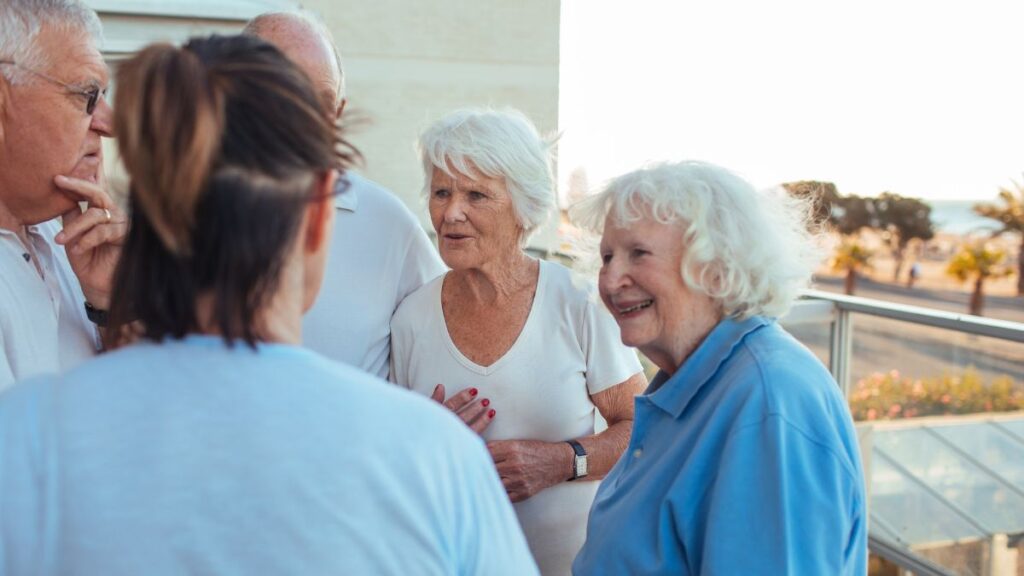
Eleanor’s story about friendship may be one of the hardest parts of the source. She describes a small group of women who had shared decades of family life, lunches, celebrations, worries, and losses before she eventually became the only surviving member of the group.
Her mistake, as she sees it, was assuming that having old friends meant she did not need new ones.
That is not a reason to treat friendships as replaceable. Long relationships carry shared history that a new friendship cannot duplicate. It is a reason to keep the social door open rather than allowing the circle to grow smaller every year.
NIA and CDC both emphasize the role of social connection in later-life health and well-being. CDC recommends nurturing different types of relationships and creating a broad network instead of relying on only one person or one social group.
3. Have the Medical Conversation While Everyone Can Still Speak for Themselves

Eleanor’s family had lived through the confusion that can follow a medical crisis when nobody knows exactly what an older relative wanted. The source describes uncertainty around treatment wishes, important papers, accounts, and decisions after a stroke affected her mother’s ability to communicate.
Those conversations can feel unpleasant at 58 or 63 because the crisis seems far away. Yet the point of advance planning is to discuss preferences before a person loses the ability to explain them.
NIA defines advance care planning as preparing for future medical decisions if serious illness leaves a person unable to communicate. Common tools can include a living will and a durable power of attorney for health care, although requirements and terminology vary.
The larger lesson is simple. Loved ones should not have to reconstruct someone’s wishes from guesses made in a hospital hallway.
4. Put the Financial and Practical Map Where Someone Else Can Find It
The same conversation applies to practical life. A family may know that accounts, insurance papers, a will, online subscriptions, and important contacts exist without knowing where any of them are.
Eleanor’s source repeatedly connects future planning with knowing where documents and account information are located. That does not mean giving everyone immediate access to everything. It means creating an orderly map that a trusted person can follow if circumstances require it.
A basic future-planning checklist can expose obvious gaps. Each item should be reviewed based on personal circumstances and applicable state law.
| Item | Question to Answer | Sensible Next Step |
|---|---|---|
| Health care wishes | Who can speak if you cannot? | Review advance-care documents |
| Will or estate papers | Where are originals stored? | Tell the appropriate trusted person |
| Financial accounts | Can accounts be identified? | Maintain an updated inventory |
| Digital access | What happens to key online accounts? | Create a secure access plan |
| Insurance | Who knows what policies exist? | List policies and contacts |
| Emergency contacts | Who should be called first? | Keep information current |
The important part is not producing a giant binder that nobody understands. It is making sure the right people can find the right information when life is already stressful.
5. Build a Life That Still Makes Sense After Work Ends

Eleanor spent decades working as a school guidance counselor. When retirement finally arrived, the source says she discovered how much of her identity had been tied to being the person students and families knew through that role.
Retirement removed more than a paycheck. It removed routine, responsibility, social contact, status, and a clear answer to the question, “What do you do?”
Research on retirement identity supports the idea that retirement can require meaningful adjustment, although people respond differently. A study of retirees found associations between identity processes, retirement circumstances, and post-retirement well-being.
Eleanor eventually found satisfaction in activities such as painting, volunteering, and spending unhurried time with family. Her regret was not retiring. It was waiting until after retirement to discover what else gave life shape.
The strongest preparation may therefore begin before the final day of work.
The following check is not about staying permanently busy. It asks whether life has more than one pillar supporting it.
| Area | Healthy Question |
|---|---|
| Work | Who am I when my job title disappears? |
| Friends | Who do I see outside work? |
| Interests | What can hold my attention for several hours? |
| Service | Is there anyone or anything I enjoy helping? |
| Routine | What gives structure to an ordinary Tuesday? |
| Learning | What would I still like to become better at? |
A retirement calendar filled only with errands can feel surprisingly empty. Developing interests beforehand gives retirement somewhere to go.
6. Treat Healthy Years With a Spouse or Partner as a Limited Window
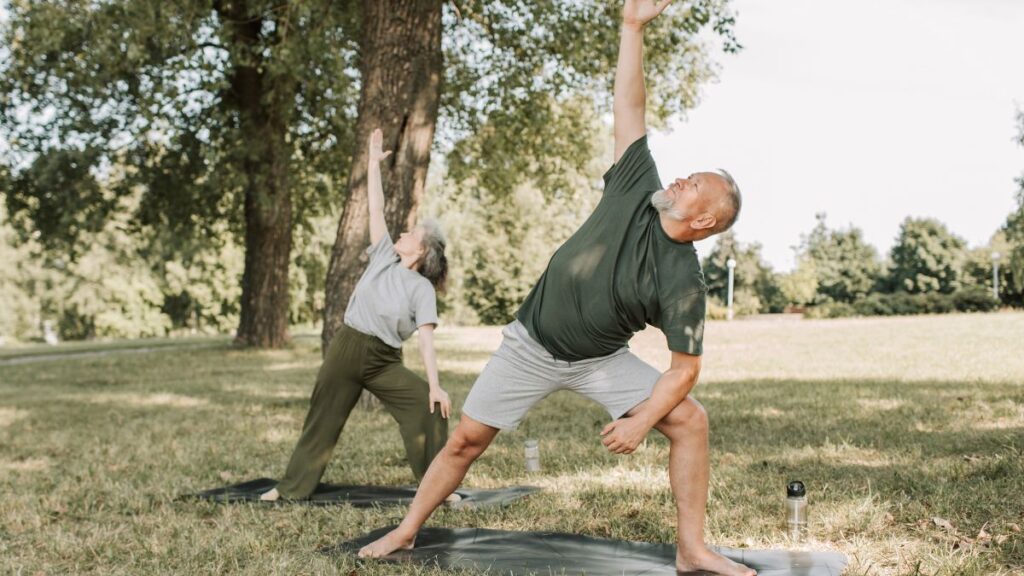
Eleanor and her husband, Anthony, were married for decades. Yet her reflection is that the number of years in a marriage and the number of years when two people are both healthy, mobile, energetic, and free to travel are not necessarily the same thing.
That distinction matters.
Couples sometimes postpone experiences because they assume retirement will contain a long stretch of uninterrupted freedom. They may wait until the house project is finished, the market improves, grandchildren are older, or another obligation passes.
Sometimes waiting is financially sensible. Sometimes health or caregiving already limits what is possible. Eleanor’s lesson is not to spend recklessly or behave as though illness is guaranteed next year.
It is to recognize that money can sometimes be saved for later, but mobility cannot be stored in an account.
A difficult trip at 78 may have been an easy trip at 63. A long drive, late dinner, weekend with friends, or afternoon walking through a city can feel very different after health changes.
7. Decide Whether Being Right Is Worth Losing the Relationship
One of Eleanor’s sharpest regrets concerns a long family estrangement. The source describes years of silence after a dispute connected to family care and money, followed by the death of the person with whom reconciliation had never happened.
There is an important limit to this lesson.
Not every relationship should be repaired. Abuse, manipulation, repeated cruelty, financial exploitation, and serious boundary violations are not small disagreements that older adults should simply overlook.
But many estrangements are different. They grow from pride, hurt feelings, competing memories, or both people waiting for the other person to move first.
For those relationships, age changes the calculation. A person may eventually realize that winning an argument from 12 years ago brought less satisfaction than having one more ordinary conversation would have.
8. Give Adult Children More Presence and Less Unrequested Direction

Eleanor’s career made her accustomed to advising people. According to the source, that habit followed her home, where she often gave adult children advice about careers, marriage, parenting, and decisions they increasingly wanted to make for themselves.
She eventually came to see a difference between being useful and being present.
Parents do not stop caring when a child turns 35, 45, or 55. Yet adult relationships often work better when advice becomes something offered with permission rather than automatically supplied.
Instead of immediately explaining what a son or daughter should do, a parent can ask, “Do you want my thoughts, or do you mainly want me to listen?”
That small question protects both closeness and independence. It also lets the adult child decide what kind of support is needed.
9. Write Down the Family Stories Nobody Else Knows

Eleanor’s source repeatedly returns to memory, especially the details that disappear quietly. She wishes she had written more about family stories, recipes, relatives, childhood memories, and the ordinary details that once seemed impossible to forget.
This is one of the easiest lessons to act on because it requires almost no money.
Write down how the grandparents met. Record the story behind an old photograph. Label the people in family albums. Save the recipe that exists only as “a little of this and enough of that.”
A phone can make this even easier. A person who hates writing can record a five-minute voice note once a week or let a grandchild ask questions over coffee.
The value becomes obvious only later, when nobody else remembers the answer.
10. Do Not Treat Every Memory Change as Either Nothing or Dementia

The source makes a broad statement suggesting that forgetting many things simply happens to every brain that lives long enough. The reality is more nuanced.
NIA explains that mild age-related forgetfulness can occur, including taking longer to recall information or occasionally misplacing something. Dementia, however, is not a normal part of aging, and memory problems that interfere with everyday activities deserve medical attention.
That makes Eleanor’s habit of writing things down useful for two different reasons.
First, calendars, lists, routines, labeled storage, and reminders reduce the mental load of daily life. Second, having systems can make genuine changes easier to notice because family members can see when someone is struggling even with familiar routines.
There is no prize for remembering every birthday without a calendar. Good aging often includes using tools instead of insisting on doing everything from memory.
11. Prepare for the Possibility That Independence Will Change
Eleanor did not expect to need help with daily life. The transcript describes a stroke and a later move into her daughter’s home because living alone was no longer workable for her.
Nobody at 60 can know whether that will happen.
That uncertainty is exactly why the conversation should happen before a crisis. Someone who strongly wants to remain at home can think about stairs, bathrooms, transportation, nearby family, maintenance costs, and whether the home would still work with reduced mobility.
Someone open to moving can think about what would matter most in a future community. That might include proximity to family, medical care, walkability, social opportunities, or a one-level floor plan.
CDC notes that falls become more common with age and can seriously affect independence. More than one in four older adults report falling each year, which makes the physical environment part of retirement planning rather than merely a decorating issue.
Planning does not mean surrendering independence. It can help protect it longer.
12. Face Aging With Preparation Instead of Spending Years Trying Not to Think About It

The source describes Eleanor as frightened by many parts of aging, including illness, loss, dependence, and the possibility of living without her husband. Her earlier response was often to avoid thinking about those possibilities.
Avoidance can feel comforting because nothing has to be decided today.
Preparation feels different. It asks uncomfortable questions while a person still has time, health, and choices.
Preparation may mean strengthening the body, widening friendships, reviewing future housing, discussing care preferences, organizing finances, learning how retirement income works, or developing interests outside work.
It does not eliminate grief, disability, or uncertainty. What it can eliminate is some of the chaos created by pretending none of them could ever happen.
13. Stop Assuming the Good Years Can Always Be Used Later
At the end of the supplied account, Eleanor’s strongest message is about speed. From age 92, she looks back and feels that later decades passed far faster than she expected, especially after retirement, changes in health, and the death of her husband.
The subjective feeling that time speeds up with age is common enough that researchers and writers have explored several possible explanations. But Eleanor’s practical point does not depend on proving exactly why a year can feel shorter at 75 than it did at 25.
Her point is about postponement.
Many people keep a mental list called “someday.” Someday they will visit an old friend. Someday they will organize family photographs. Someday they will take the train trip, learn to paint, apologize to a sibling, spend a week with grandchildren, or stop working every weekend.
Some of those plans genuinely must wait. Money, caregiving, health, and work obligations are real.
But Eleanor’s 92-year-old perspective asks a harder question: How many are waiting simply because later feels unlimited?
The answer may determine what deserves a place on the calendar now.
Before changing everything at once, adults in their 50s and 60s can turn these lessons into a short action plan. Five deliberate actions are more useful than 50 good intentions.
| Priority | What to Review | A Practical Next Step |
|---|---|---|
| Body | Strength, balance, activity | Choose one sustainable movement habit |
| Relationships | Friends, partner, family | Contact one person being unintentionally neglected |
| Future care | Medical wishes and decision-makers | Start the family conversation |
| Practical affairs | Documents, accounts, contacts | Create one secure information inventory |
| Life outside work | Interests, purpose, routine | Put one non-work activity on the weekly calendar |
| Memories | Stories and family history | Record one story each week |
| Time | Experiences repeatedly postponed | Choose one realistic plan and give it a date |
The value of the table is not in completing every row immediately. It is in making vague intentions visible enough to act on.