Retiring at 62 sounded good to Esten, but the final day still carried something he had not expected: fear. The finances looked workable and he had plans for retirement, yet leaving a life built around work meant stepping into something he had never experienced before.
Almost 9 years later, that uncertainty looks very different.
At 71, Esten describes a quieter life with less pressure, no serious regret about leaving work, and far less need to prove that every free hour must be productive.
At 62, Esten Wasn’t Afraid of Retirement. He Was Afraid of the Unknown

Esten had spent decades working, including 39 years at the job he eventually left. He had plans for what retirement might look like, but plans could not tell him what it would actually feel like once the work routine disappeared.
His fear was not overwhelming. It was closer to the discomfort that comes when a person knows a major part of life is ending and cannot yet see clearly what will replace it.
By 71, the contrast was strong enough that Esten could look back and see those worries as far larger than the problems that actually developed. He had settled into retirement rather than spending nine years questioning whether he had made a mistake.
Here is the simplest way to see that change.
| At 62 | At 71 | What Changed |
|---|---|---|
| Unsure what retirement would feel like | Comfortable with retired life | Experience replaced uncertainty |
| Worried about boredom | Comfortable with quiet and open time | Empty hours stopped feeling like a problem |
| Concerned about money | Says his needs are being met | Real spending replaced imagined fears |
| Focused on plans | Less concerned with a fixed agenda | Retirement became more flexible |
| Still close to work stress | Sees work stress more clearly | Distance changed his perspective |
The biggest change was not that every retirement plan worked exactly as expected. It was that Esten no longer needed retirement to match the picture he had created before leaving work.
Retiring at 62 Does Not Automatically Mean Claiming Social Security at 62

This distinction matters because readers often combine two separate decisions. A person can leave work at 62 and wait before starting Social Security, assuming other income can cover the gap.
Social Security retirement benefits can generally begin at 62, but the monthly amount is reduced when benefits begin before full retirement age. Someone born in 1955 has a full retirement age of 66 years and 2 months, and SSA shows that claiming at exactly 62 would provide about 74.2% of that worker’s full retirement age benefit.
There is no evidence in Esten’s supplied account that he actually claimed Social Security when he left work. His story should therefore not be used to assume that retiring at 62 and filing for benefits at 62 happened together.
The age rules also look different for someone making the decision now.
| Age | What It Means | Important Detail |
|---|---|---|
| 62 | Earliest Social Security retirement claiming age | Claiming early generally reduces the monthly benefit |
| 65 | Usual Medicare eligibility age | This is not Social Security full retirement age |
| 66 years, 2 months | FRA for someone born in 1955 | Relevant to Esten’s approximate cohort |
| 67 | FRA for people born in 1960 or later | Applies to people turning 62 in 2026 |
| 70 | Point where delayed retirement credits stop increasing benefits | Waiting beyond 70 does not raise the retirement benefit further |
For people reaching age 62 in 2026, full retirement age is 67. Claiming at 62 for that group can mean a maximum reduction of about 30% compared with the full retirement age amount.
That is why Esten’s emotional experience can be useful without turning his age into a recommendation. The financial consequences of leaving work depend on savings, health coverage, pensions, Social Security timing, spending, household income, and many other factors.
The First Taste of Retirement Wasn’t Travel. It Was Walking Out the Door

One of Esten’s strongest memories came from his final day at work. His wife was there for the going away event, and when they finally left the high security building, heavy doors closed behind them.
The moment that stayed with him was simple. He walked outside and realized he would not have to come back Monday morning, sit in rush hour traffic, or keep living according to the workplace schedule.
That detail matters because retirement marketing often focuses on travel, hobbies, beaches, and bucket lists. Esten’s first powerful experience was more basic: ownership of his time.
He did travel some after retiring, and some of his original plans happened. Other ideas eventually seemed less necessary than they had before retirement because he no longer needed a packed plan to prove that leaving work had been worthwhile.
Money Anxiety Did Not Disappear the Day the Paychecks Stopped

Esten also worried about something far less romantic: whether the numbers that looked acceptable before retirement would keep working once retirement became real.
He wondered whether the money would last and whether leaving at 62 could eventually turn into a financial mistake. Those concerns remained even though he had considered his finances before leaving.
By 71, he described no financial catastrophe. His finances felt tighter than they did while he was working, but he also said he had what he needed and that the fears he carried into retirement had eased.
That should not be read as evidence that everyone who retires at 62 will be financially comfortable.
Fidelity’s July 2026 retirement planning guidance estimates that annual retirement spending might fall around 55% to 80% of pre retirement income for many households, with the actual level depending heavily on income, healthcare, and lifestyle.
The practical lesson is to model the life the retiree actually expects to live. A retirement budget should not assume that spending automatically falls just because work stops.
Healthcare Creates One of the Biggest Gaps Between 62 and 65

Esten’s source account does not provide details about how he handled health insurance after leaving work. That means it would be wrong to invent a solution for him.
For other Americans considering retirement at 62, however, health coverage deserves its own plan because Medicare generally begins around age 65. The Medicare Initial Enrollment Period usually lasts seven months, beginning three months before the month a person turns 65 and ending three months afterward.
Medicare is also not free healthcare. In 2026, the standard Part B premium is $202.90 per month and the Part B deductible is $283, while other costs depend on coverage and services used.
For someone thinking about leaving work at 62, the three years before Medicare may therefore matter just as much as the investment portfolio.
Esten Expected Free Time. What Surprised Him Was How Naturally It Filled Up

Before retiring, Esten wondered whether boredom would become a problem. Without work, he suddenly had many more hours that were no longer assigned by somebody else.
What happened was almost the opposite of what he feared. His days filled with whatever he chose to do, even when what he chose was very little.
That may sound trivial until someone has spent decades measuring a good day by how much was completed. Retirement removes a large amount of outside structure, and some people need time to stop treating open space as something that must immediately be filled.
Research on retirement adjustment supports the idea that leaving work is more than a financial event. Studies have linked the retirement transition to issues such as loss of the work role, social ties, control, finances, health, relationships, and the task of building a satisfying post work lifestyle.
Esten’s experience shows one possible version of that adjustment.
| Before Retirement, Esten Wondered… | By 71, His Experience Was… |
|---|---|
| Will he become bored? | He says he is not bored |
| Will he need several new hobbies? | He does not feel pressure to collect hobbies |
| How will he fill whole days? | Time tends to fill itself |
| Does every day need an agenda? | He is comfortable without a full schedule |
| Will retirement feel empty? | Quiet now feels peaceful rather than empty |
This is not an argument against hobbies. It is a reminder that retirement does not need to become another performance review where every hour must produce an achievement.
By 71, Esten Had Learned to Let an Empty Hour Stay Empty

One of the largest changes in Esten’s thinking involved something that would have bothered many workers: an empty calendar.
At 71, he said his days often begin quietly and remain peaceful. The pace changes when his grandchildren visit, but he no longer seems to measure retirement by how many activities can be fitted into each day.
He does make videos, which he acknowledged might count as a hobby. Yet he did not describe a need to constantly search for activities simply because a retiree is supposed to stay busy.
That difference is easy to miss when planning retirement. A person may prepare a list of travel plans, volunteer roles, projects, clubs, and hobbies when what they eventually value most is having fewer obligations.
The Longer Esten Stayed Away From Work, the More Stressful Work Looked

Perhaps the most interesting change happened slowly.
The farther Esten moved from his working years, the more clearly he noticed the pressure that had once felt normal. Meetings, deadlines, somebody else’s schedule, traffic, and workplace expectations had been part of daily life for so long that the stress was difficult to measure while he was still inside it.
At 71, the contrast was sharper because his days were quieter. He could compare a schedule controlled by supervisors with a schedule that belonged largely to him.
This does not mean work is bad or that every 62 year old should leave a job they enjoy. Some people gain purpose, social contact, health insurance, financial security, and satisfaction from continuing to work.
Esten simply discovered that, for him, getting control of his time became more valuable after he had lived with that freedom long enough to appreciate it.
Retirement at 71 Wasn’t Exactly What Esten Had Imagined at 62
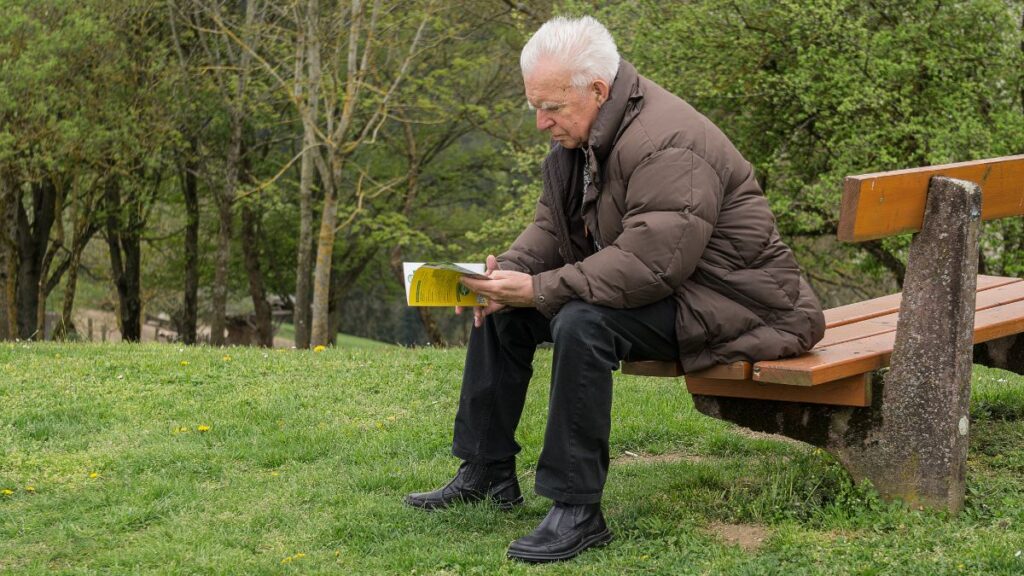
Some of Esten’s original retirement plans happened. Others became less important.
That may be one of the most useful lessons in his story because retirement plans are often built as if the person who retires at 62 will want exactly the same life at 66, 71, or 78.
People change. Energy changes, family situations change, finances change, interests change, and activities that once sounded necessary may lose their appeal.
Esten did not describe that evolution as failure. By 71, he felt his retirement suited the person he had become, even if it did not perfectly match the picture he created before leaving work.
What Esten’s Story Does Not Prove
It does not prove that 62 is the right retirement age. A person with large debts, weak savings, no health coverage plan, heavy family obligations, or a strong desire to keep working may reach a very different conclusion.
It also does not prove that early Social Security claiming is a good or bad decision. Leaving a job and starting Social Security are separate choices, and the best timing can depend on health, longevity expectations, other income, marital circumstances, survivor needs, and the household’s broader financial plan.
What Esten’s story does show is that emotional uncertainty before retirement may not predict long term regret. A person can be financially prepared and still feel nervous because leaving a decades long routine is a major change.
A Better Retirement at 62 Test Goes Beyond the Portfolio Balance

A person considering retirement around 62 needs more than a target savings number. They need to know whether the household can support the transition financially while also giving daily life enough structure, flexibility, connection, and meaning.
This checklist helps separate a workable plan from a decision being made mostly because the next Monday at work feels unbearable.
| Area | Stronger Position | Warning Sign |
|---|---|---|
| Monthly spending | Expected income and reasonable withdrawals cover realistic expenses | Plan depends on unusually low spending every month |
| Healthcare | Coverage is planned through Medicare eligibility | Health insurance after work is still unclear |
| Social Security | Claiming age has been considered separately from retirement age | Assumes benefits must begin at 62 |
| Emergency reserve | Cash is available for unexpected expenses | Every surprise requires selling investments |
| Daily life | Comfortable mix of family, interests, rest, and activity | Entire retirement plan is simply “stop working” |
| Relationships | Household expectations have been discussed | Spouses expect completely different lifestyles |
| Flexibility | Plan can absorb changing interests and costs | Retirement must unfold exactly as originally planned |
No retiree will have every box perfectly solved. The goal is to know where the weak points are before a paycheck disappears.
What Someone Considering Retirement at 62 Can Learn From Esten
Esten’s strongest lesson may be that retirement changed after he entered it. At 62, he was trying to predict a life he had never lived, while at 71 he was judging retirement from almost nine years of actual experience.
Anyone considering the same decision can use that insight without copying his choice.
| Timing | What to Do | Why It Helps |
|---|---|---|
| 6 to 12 months before leaving | Track real household spending | Shows what life actually costs |
| Before retirement | Separate job exit, Social Security, and Medicare decisions | Prevents three different age rules from being confused |
| Before the final workday | Decide how healthcare will be covered | Reduces the risk of an expensive coverage gap |
| First year | Watch spending and daily routine without overreacting | Early retirement may feel different from later retirement |
| Years 2 and beyond | Revisit money, relationships, activities, and housing | Retirement needs can change with age |
The plan should therefore have structure without becoming rigid. Esten’s experience suggests that a retirement can improve as a person stops trying to make it match the exact picture created while still working.