A fully paid-off home in retirement may be worth far more than the number on its property tax assessment.
Every month, it provides something that rarely appears on a retirement income statement: housing you no longer have to make a mortgage payment to keep. For retirees living on Social Security and personal savings, that missing bill can change the entire financial picture.
Yet there is a catch. A home without a mortgage is not free, and the difference between its value on paper and its actual financial benefit is bigger than many homeowners realize.
The real advantage is not simply owning an expensive property. It is having lower monthly obligations, greater control over retirement withdrawals, and more choices when life becomes unpredictable.
The Invisible Paycheck Hiding Inside a Paid-Off Home

Imagine owning a home that would cost $2,200 a month to rent in your neighborhood. That represents $26,400 worth of housing services every year, even though nobody deposits the money into your bank account.
Economists have a name for this benefit: imputed rent. The U.S. Bureau of Economic Analysis uses this concept when estimating the value of housing that homeowners provide for themselves.
A homeowner living in a paid-off property receives the benefit of shelter without paying monthly rent or mortgage principal and interest. It is not actual rental income, but it is a valuable service the household no longer needs to purchase.
This distinction matters because most retirement discussions focus on money coming into the household. Social Security payments, pension checks, investment distributions, and retirement withdrawals receive plenty of attention.
The housing expense that never arrives is less visible. Yet avoiding a large required payment can be just as meaningful to a household’s monthly budget as receiving additional cash.
Consider this example using an assumed market rent and estimated ownership expenses.
| Annual Housing Value | Amount |
|---|---|
| Comparable monthly rent | $2,200 |
| Annual rental value | $26,400 |
| Property taxes | $4,000 |
| Homeowners insurance | $2,000 |
| Maintenance reserve | $6,000 |
| Total annual ownership costs | $12,000 |
| Net housing benefit compared with renting | $14,400 |
The homeowner receives $26,400 in annual housing services but still spends an estimated $12,000 maintaining and protecting the property. That leaves a $14,400 annual advantage over renting an otherwise comparable home, before considering differences in utilities, amenities, transaction costs, or what the owner’s equity could earn elsewhere.
There is another benefit. The rental value of a home used as a personal residence is generally not treated as taxable rental income on the homeowner’s federal income tax return.
That does not mean the homeowner has received $14,400 in tax-free cash. The benefit is an expense avoided, not money available to spend. Understanding that difference is the starting point for valuing a paid-off home correctly.
Why a Paid-Off Home Changes the Retirement Income Equation

For many retirees, the biggest financial challenge is not their total net worth. It is the amount of money they must produce every month to maintain their lifestyle.
A household can own $700,000 in investments and still feel financially pressured if its bills consume nearly every dollar of available income. Another household with considerably less invested may feel comfortable because housing costs are much lower.
That is where owning a home outright can make a noticeable difference. A smaller required monthly budget means less money must come from savings, pensions, or investment withdrawals.
The latest Bureau of Labor Statistics figures underline why this matters. In March 2026, only 14% of private industry workers had access to traditional defined-benefit pension plans, while 70% had access to defined-contribution plans such as 401(k)s.
These figures do not mean everybody else will retire without pension income. They do show how heavily many Americans depend on accumulated savings rather than guaranteed workplace pension payments.
A paid-off home cannot replace an actual pension check. However, it can reduce the amount of income needed, which may give Social Security and existing savings more purchasing power.
What a $1,400 Mortgage Payment Really Means
Consider a homeowner who is approaching retirement with a monthly principal-and-interest payment of $1,400. Paying off the mortgage eliminates that obligation, reducing annual required payments by $16,800.
The savings are meaningful, but the property still has regular expenses. The following example separates the mortgage payment from the costs that continue after the loan disappears.
| Monthly Expense | With Mortgage | Paid Off |
|---|---|---|
| Principal and interest | $1,400 | $0 |
| Property taxes | $333 | $333 |
| Home insurance | $167 | $167 |
| Maintenance reserve | $500 | $500 |
| Total monthly housing budget | $2,400 | $1,000 |
| Annual housing budget | $28,800 | $12,000 |
Illustrative figures. Property taxes and insurance may already be included in an escrow payment, so they should not be counted twice.
The homeowner has not eliminated every housing expense. But reducing a $2,400 monthly housing budget to $1,000 creates substantially more flexibility.
That extra $1,400 might allow a retiree to rely more heavily on Social Security, withdraw less from investments, build a medical expense reserve, or simply feel less pressure about the next bill.
The benefit becomes particularly meaningful when retirement income is fixed and unexpected expenses arrive.
The Market Crash Problem Most Mortgage Calculations Miss

Imagine two retirees who enter retirement shortly before a major stock market decline. Both have substantial investments, but one still carries a mortgage while the other has already paid off the house.
Their portfolios may experience identical market losses. Their financial situation afterward can still look very different because they do not need to withdraw the same amount of money.
This problem is known as sequence-of-returns risk. It occurs when poor investment returns arrive early in retirement, while a person is withdrawing money to cover everyday expenses.
Research and retirement-planning guidance from Fidelity and Charles Schwab explain that selling investments during an early market downturn can reduce the assets available to participate in a later recovery.
A paid-off home does not prevent investment losses. What it can do is reduce the amount retirees must withdraw during those difficult periods.
Two Retirement Portfolios Face the Same Market Decline
Consider a simplified example with two retirement budgets. Both portfolios begin with $400,000 and experience a 25% investment decline in the first year.
The first budget requires $36,000 in annual withdrawals, including a $16,800 mortgage payment. The second needs only $19,200 because the mortgage expense has been removed.
| First-Year Scenario | Mortgage Budget | Paid-Off Budget |
|---|---|---|
| Starting investments | $400,000 | $400,000 |
| Market loss | 25% | 25% |
| Value after decline | $300,000 | $300,000 |
| Annual withdrawal | $36,000 | $19,200 |
| Remaining portfolio | $264,000 | $280,800 |
This example isolates the effect of lower spending. It does not account for the money previously used to pay off the mortgage, so it should not be interpreted as proof that paying off a loan always produces a higher net worth.
However, it demonstrates an important financial principle. When a retiree needs less money to cover basic expenses, fewer investments may need to be sold during a difficult market.
If stocks later recover, the household that retained more invested assets has more remaining capital available to benefit from that recovery.
A paid-off home therefore acts as a spending buffer, rather than protection against market losses. That distinction matters because retirement investments can still decline sharply regardless of how much home equity someone owns.
The Real Benefit May Be a Lower Retirement Savings Target

Retirement planning often starts with a familiar question: How much money must a person save before leaving work?
But a more useful starting point may be the amount the household actually needs to spend after paychecks stop. Housing is often one of the largest differences between those two calculations.
Consider David and Carol, a hypothetical couple approaching retirement in their early 60s. They expect combined Social Security benefits of $44,000 annually once both have claimed, and they own a home that would rent for approximately $2,200 per month.
Assume their annual living costs, including $12,000 in homeownership expenses but no mortgage, total $48,000. Their investment portfolio would need to provide about $4,000 annually to cover the difference.
If they instead rented a comparable property, their estimated annual spending would rise by $14,400, based on the housing comparison used earlier.
| Retirement Budget | Own Outright | Rent Comparable Home |
|---|---|---|
| Annual spending | $48,000 | $62,400 |
| Social Security income | $44,000 | $44,000 |
| Annual income gap | $4,000 | $18,400 |
| Portfolio implied by a 4% initial withdrawal | $100,000 | $460,000 |
The traditional 4% guideline provides only a rough starting estimate, not a guaranteed safe withdrawal amount. Actual retirement needs depend on inflation, taxes, investment returns, lifespan, and the flexibility to change spending.
This comparison is useful for understanding annual housing expenses, but it is not a complete rent-versus-own investment analysis. Someone who sells a paid-off house and begins renting may have substantial sale proceeds to invest, while a homeowner keeps capital tied up in the property.
There is also a common mistake worth avoiding. If David and Carol’s $48,000 spending budget already reflects a paid-off home, they cannot subtract the $26,400 rental value again or add it to Social Security as spendable income.
That would count the same housing benefit twice. The correct advantage is already reflected in their lower living expenses.
The broader lesson remains powerful. Lower required spending can reduce the size of the investment portfolio needed to support a particular lifestyle, even though the economic benefit must be weighed against the value of the equity held in the home.
Why Paying Off a Low-Interest Mortgage Is Not Always the Best Decision
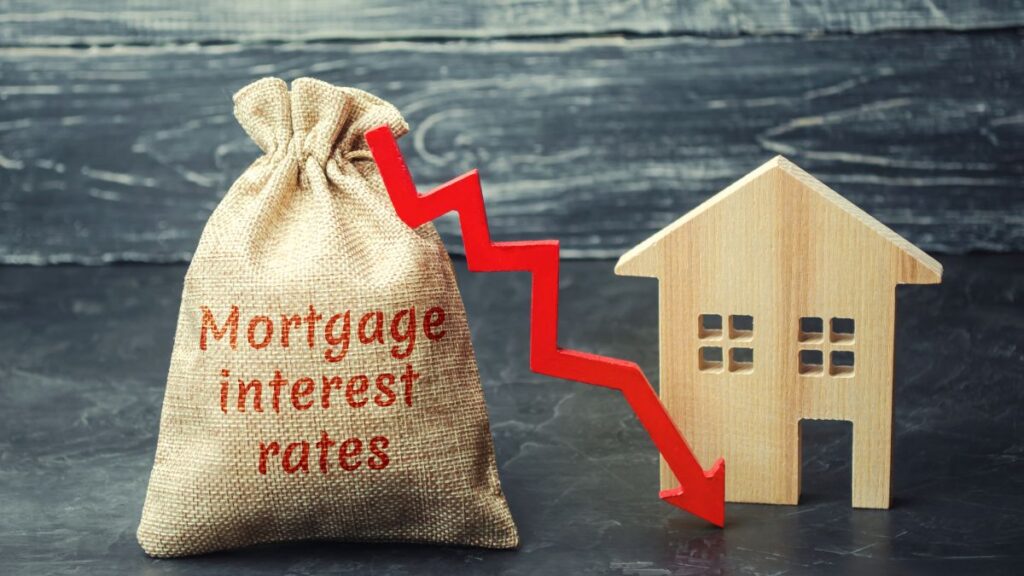
Consider Terry, a hypothetical 58-year-old homeowner in Columbus, Ohio. He still owes $220,000 on a mortgage with a fixed interest rate of 3.1%, and retirement is only four years away.
His financial adviser suggests keeping the mortgage and investing extra savings instead. The reasoning is understandable because a diversified investment portfolio might earn more than 3.1% over a long period.
But average investment returns are not guaranteed. The money Terry earns from investing may also be reduced by taxes, fees, and market losses, while the mortgage payment remains due every month.
The decision therefore involves more than comparing two percentages. It requires examining liquidity, spending needs, investment risk, and the number of years remaining until retirement.
The Interest Rate Is Only Half the Question
A low-rate mortgage can be financially attractive, especially when a household has stable income and substantial cash reserves. Fixed-rate borrowing can also become less burdensome in inflation-adjusted terms over time.
However, a retiree who relies on investment withdrawals faces a different situation from a working homeowner. Selling assets to cover a mortgage payment during a prolonged downturn can create additional financial pressure.
The following questions help clarify the tradeoff.
| Financial Situation | What Deserves Attention |
|---|---|
| Mortgage rate is very low | Investing may offer higher returns, but with risk |
| Retirement begins within 5 years | Required monthly payments become more significant |
| Emergency savings are limited | Preserving accessible cash may matter more than rapid payoff |
| Investments are heavily stock-based | Market declines could complicate mortgage payments |
| Mortgage causes regular anxiety | Reduced financial stress has personal value |
| Payoff requires a large taxable withdrawal | Taxes and lost investment growth may outweigh the benefit |
There is no universal rule requiring every homeowner to become mortgage-free by age 60 or 65. Someone with a low fixed rate, dependable retirement income, and adequate reserves may have good reasons to keep the loan.
Someone else may benefit from eliminating the payment before retirement, even if that decision produces a lower expected investment return. The better choice depends on the household’s complete financial situation.
3 Ways a Paid-Off Home Gives You More Freedom
No mortgage payment means more than lower bills. It can change how your retirement money works.
Protect Your Retirement Investments
Lower monthly expenses mean less pressure to sell investments during a market downturn.
Lower Your Monthly Income Needs
Without mortgage principal and interest, you need less regular income to cover essential living expenses.
Keep More Options for the Future
Your home equity may provide additional financial choices if your needs change later in retirement.
The Hidden Costs That Never Disappear After the Mortgage Does

Here is the uncomfortable part of mortgage-free retirement: a paid-off home can still become too expensive to maintain.
Property taxes continue after the final mortgage payment. So do homeowners insurance, maintenance expenses, utility bills, and any required homeowners association fees.
Major repairs can be especially difficult for retirees because they often occur without warning. A failed heating system, damaged roof, or serious plumbing problem may require thousands of dollars within a short period.
For example, a retiree may own a $400,000 property outright while receiving only $40,000 in annual income. If property taxes, insurance, and maintenance consume $12,000 each year, that household spends 30% of its income on those three ownership expenses alone.
That percentage does not include groceries, medical bills, transportation, utilities, or other essentials. The absence of a mortgage does not automatically make the home affordable.
Maintenance Is Easy to Underestimate
A common planning guideline is to reserve roughly 1% to 2% of a property’s value annually for maintenance and repairs. The appropriate amount varies with the home’s age, condition, climate, and major systems.
For a property valued at $350,000, that guideline suggests reserving approximately $3,500 to $7,000 annually. The homeowner may not spend that amount every year, but unused money can help cover larger repairs later.
The most important distinction is between a regular bill and a reserve for unpredictable expenses. A homeowner who spends little on maintenance for three years should not assume the property will remain inexpensive indefinitely.
Planning note: These percentages are illustrative budgeting guidelines, not guaranteed repair costs. Obtain local estimates and account for the condition of your specific home.
Why Housing Costs Can Become More Dangerous After Age 70

A home that fits comfortably into a household budget at 62 may become harder to maintain at 75 or 80. The home may not have changed much, but the owner’s income, health, and ability to handle repairs can change considerably.
Physical maintenance may become more demanding as well. Cleaning gutters, carrying supplies, maintaining a yard, or climbing stairs can require outside help that was unnecessary during working years.
Insurance premiums and property taxes may also rise. Although certain states and local governments offer exemptions, deferrals, or relief programs for eligible older homeowners, these benefits vary substantially by location.
A property that is mortgage-free can still create financial strain if its ongoing costs consistently outpace retirement income. That is why a good retirement plan evaluates the house over several decades, not just at the moment the final loan payment clears.