Reaching your late 50s or early 60s with less retirement savings than expected can be discouraging. You may have worked for decades, paid your bills, raised a family, and still feel that retirement is financially out of reach.
The problem is that many people underestimate how much their financial situation can change during their final working years. They assume that if they have not saved enough by 60, there is little chance of catching up.
But the five years before retirement can be among the most powerful years for building wealth. With existing investments, higher savings, and fewer household expenses, some people may even double their retirement nest egg before leaving work.
Why the Final 5 Years Can Change Your Retirement

Most people think of retirement savings as something that must happen during their 20s, 30s, and 40s. Starting early certainly helps, but the final working years offer advantages that younger workers often do not have.
By age 55 or 60, a person may have accumulated decades of investments. Their salary might be near its career peak, their children may be financially independent, and their mortgage could be almost paid off.
These changes create an opportunity to save more money while an existing portfolio continues growing. That combination can produce results that were difficult to achieve earlier in life.
The real advantage is having three financial forces working together: investment growth, increased contributions, and reduced expenses. When all three improve at the same time, the results can be surprisingly large.
However, doubling retirement savings in five years requires meaningful contributions, favorable investment performance, or both. It is a possible outcome, not a guaranteed one.
The Hidden Power of Compound Growth After 55

Compound growth is one of the most important forces behind retirement wealth. It happens when investment earnings remain invested and begin generating additional earnings of their own.
The process often feels disappointing during the early years because the dollar amounts are small. But as the investment balance grows, even an ordinary percentage return can produce a much larger dollar gain.
Consider the familiar example of choosing between $1 million immediately or a penny that doubles every day for 30 days.
If the penny starts at one cent on day one, it would grow to more than $5.36 million on day 30. Most of that growth would happen during the final few days.
Real investments do not double every day, and their returns are neither predictable nor guaranteed. Still, the example illustrates why growth becomes more noticeable when it builds on a larger balance.
Now consider how a 7% annual return affects different retirement account balances.
| Starting Balance | 7% Annual Growth |
|---|---|
| $50,000 | $3,500 |
| $100,000 | $7,000 |
| $250,000 | $17,500 |
| $375,000 | $26,250 |
| $500,000 | $35,000 |
| $750,000 | $52,500 |
These are hypothetical one-year gains before taxes and fees, not guaranteed investment returns.
Someone with $50,000 invested would earn $3,500 during a hypothetical 7% year. Someone with $500,000 would earn $35,000 at that same rate, without contributing another dollar.
This is why compound growth becomes especially noticeable later in a person’s working life. The accumulated balance can begin doing a significant amount of the financial work.
The challenge is that markets can also decline sharply. Anyone approaching retirement should balance growth potential against the risk of needing their money during a market downturn.
How $375,000 Could Become $750,000 Before Retirement
Consider a married couple named Bill and Pam. Both are 60 years old and hope to retire at 65, but their savings are not where they would like them to be.
Together, they have accumulated $375,000 in retirement investments. Their desired retirement spending is $7,000 per month, and they expect to receive $4,500 per month in combined Social Security benefits once both are claiming.
This leaves an important income gap.
| Retirement Income Calculation | Amount |
|---|---|
| Desired monthly spending | $7,000 |
| Combined monthly Social Security | $4,500 |
| Monthly income gap | $2,500 |
| Annual income gap | $30,000 |
| Portfolio target using a 4% initial withdrawal rate | $750,000 |
| Current retirement savings | $375,000 |
| Additional savings and growth needed | $375,000 |
The simplified 4% withdrawal guideline suggests that a $750,000 portfolio could support an initial annual withdrawal of approximately $30,000.
This guideline is only a planning starting point. Actual retirement needs depend on taxes, investment performance, inflation, retirement length, and the flexibility of future spending.
Bill and Pam therefore have a clear objective. They want to increase their retirement portfolio from $375,000 to approximately $750,000 over five years.
At first, that might sound impossible. But the combination of compound growth and regular contributions can bring that target within reach under certain assumptions.
The Annual Savings Amount That Could Double Their Money

Suppose Bill and Pam earn a hypothetical average annual investment return of 7% during the next five years. Their existing $375,000 would grow to approximately $525,957 without any new contributions.
That means investment growth alone would add roughly $151,000. The couple would still need additional contributions and the growth those contributions generate.
If they invest about $39,000 at the end of each year, their projected portfolio could reach approximately $750,236 by age 65.
Here is how that would look.
| Age | Projected Year-End Balance |
|---|---|
| 60 | $375,000 |
| 61 | $440,250 |
| 62 | $510,068 |
| 63 | $584,772 |
| 64 | $664,706 |
| 65 | $750,236 |
Assumes a constant 7% annual return, $39,000 added at each year-end, and no withdrawals, taxes, or fees.
Over those five years, Bill and Pam would personally contribute $195,000. The rest of the increase would come from hypothetical investment growth.
That is an important distinction. They are not saving another $375,000 entirely from their paychecks. Existing investments and contributions are both participating in the increase.
A useful planning target under this specific example is saving approximately 10.4% of the original portfolio each year. But that percentage is not a universal formula because investment returns and starting balances vary.
Even a small change in assumed investment performance can substantially alter the required contribution.
What Happens If Investment Returns Are Lower?
A 7% annual return may be useful for illustrating compound growth, but retirees should never assume that markets will deliver the same performance every year.
The five years before retirement can include strong markets, disappointing returns, or a severe downturn. Planning for less favorable outcomes helps reduce dependence on optimistic projections.
For Bill and Pam, the amount they must save changes considerably depending on their assumed return.
| Assumed Annual Return | Annual Savings Needed | Monthly Equivalent |
|---|---|---|
| 0% | $75,000 | $6,250 |
| 3% | $59,383 | $4,949 |
| 5% | $49,116 | $4,093 |
| 7% | $38,959 | $3,247 |
Illustrative calculations based on a $375,000 starting balance, a $750,000 target, five years of growth, and contributions at each year-end.
At a 5% return, Bill and Pam would need approximately $49,100 annually to reach their target. At 3%, the required savings increase to nearly $59,400.
Those numbers reveal why returns alone cannot be the foundation of a retirement catch-up plan. The couple needs a savings strategy that still makes sense if markets disappoint.
And if investments lose value over the five-year period, the target could become harder to reach. A portfolio with heavy stock exposure may have more growth potential but also greater short-term risk.
The goal should be to improve the odds of a comfortable retirement, not to chase a particular return simply to reach a round-number balance.
Why Your Expenses May Finally Be Working in Your Favor

One of the biggest advantages of being in your late 50s or early 60s has nothing to do with the stock market. It comes from the expenses that may begin disappearing from your household budget.
During their 30s and 40s, many families face overlapping financial responsibilities. Mortgage payments, childcare, education costs, car loans, and daily expenses can consume most of their income.
As retirement approaches, some of those responsibilities may become smaller or disappear completely. Adult children may become financially independent, loans get paid off, and certain family expenses decline.
Consider Bill and Pam again.
Suppose they are about to finish paying their mortgage, which will free up $1,500 per month in principal and interest payments. That represents $18,000 a year that could potentially be redirected into retirement savings.
Now assume Bill already contributes $20,000 annually to his workplace retirement plan. Their combined savings capacity would increase to $38,000 without requiring Bill to contribute more than he already does.
That nearly covers the approximately $39,000 annual contribution needed in the hypothetical 7% growth scenario.
If Pam can contribute another $11,200 per year, their combined annual savings rise to $49,200. That would also approximately meet the target under the more conservative 5% growth scenario.
The key is redirecting money from expenses that have ended instead of allowing it to disappear into lifestyle spending.
Paying off a mortgage does not eliminate property taxes, insurance, maintenance, or other housing costs. But the principal and interest payment alone can represent a substantial amount of newly available cash.
And mortgage payments are not the only expenses worth reviewing. A completed college tuition obligation, paid-off vehicle, or reduced family support commitment can create similar opportunities.
Catch-Up Contributions Become Especially Valuable After 50
The federal tax system gives older workers additional opportunities to save through retirement accounts. These catch-up provisions become especially useful during the final five years of employment.
For 2026, the IRS allows employees to contribute up to $24,500 to most 401(k) plans. Workers age 50 and older generally qualify for an additional $8,000 catch-up contribution if their plan permits it.
Workers who turn 60, 61, 62, or 63 during 2026 may qualify for an even larger catch-up contribution of $11,250.
| Retirement Account | 2026 Contribution Limit |
|---|---|
| 401(k), under age 50 | $24,500 |
| 401(k), age 50–59 or 64+ | $32,500 |
| 401(k), age 60–63 | $35,750 |
| Traditional or Roth IRA, under 50 | $7,500 |
| Traditional or Roth IRA, age 50+ | $8,600 |
Limits apply per eligible individual. IRA limits are combined across traditional and Roth IRAs, and contribution eligibility, income rules, and workplace plan provisions may affect what is allowed.
For a married couple who both work and have eligible workplace plans, the combined contribution capacity can be particularly powerful.
Two 60-year-old workers could potentially contribute $71,500 between their 401(k) plans in 2026, assuming sufficient compensation and plans that permit the full catch-up amounts.
Employer contributions may provide another boost. A company match is additional retirement compensation, although employees should understand their employer’s matching formula and vesting requirements.
The important step is to review existing contributions before assuming there is no room to save more. Someone who has been using the same payroll contribution percentage for years might have considerable unused capacity.
Roth or Traditional: Where Should the Extra Savings Go?
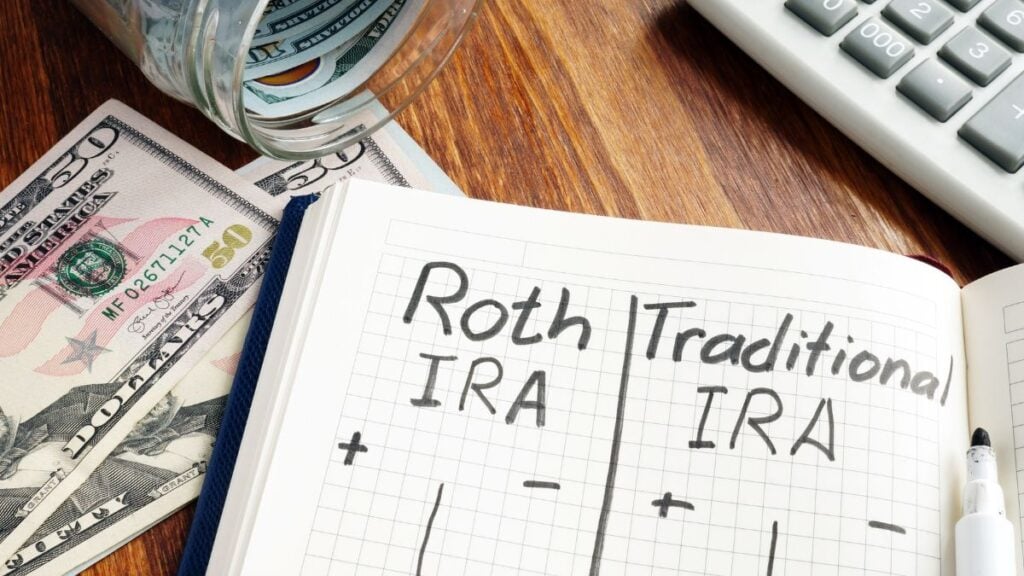
Once additional money becomes available, another decision arises. Should it go into a traditional retirement account or a Roth account?
Traditional 401(k) contributions generally reduce taxable income in the year they are made, while withdrawals are usually taxable later. Roth 401(k) contributions use after-tax dollars, but qualified withdrawals can be tax-free.
Both approaches can be useful. The better choice depends largely on current tax rates, expected retirement income, and how withdrawals will be managed.
For example, someone currently paying a high marginal tax rate may benefit more from traditional contributions if they expect a substantially lower rate in retirement. Someone expecting higher future rates may find Roth contributions more attractive.
Unlike direct Roth IRA contributions, designated Roth 401(k) contributions do not have income-based eligibility limits. However, there are rules governing contribution amounts and plan participation.
There is also an important 2026 change. Workers whose prior-year wages from the sponsoring employer exceeded $150,000 generally must make their eligible catch-up contributions on a Roth basis in plans subject to the new requirement.
An additional Roth strategy sometimes considered by higher-income savers is the mega backdoor Roth. This requires specific workplace plan features, including qualifying after-tax contribution options and the ability to convert or roll over those amounts.
Not every employer plan permits this strategy, and contribution limits and taxes need to be reviewed carefully.
One outdated assumption deserves particular attention. The previously scheduled expiration of the 2017 individual income tax rates did not cause an automatic tax-bracket increase in 2026. Legislation enacted in 2025 made those rates permanent, so Roth decisions should be based on current rules and individual tax projections.
A balanced approach may involve building both traditional and Roth savings. That can provide flexibility when choosing how much taxable income to recognize during retirement.
Don’t Overlook the Health Savings Account

A health savings account, commonly called an HSA, can become another useful savings vehicle during the years leading up to retirement.
People who meet the eligibility requirements, including qualifying health coverage, can contribute money that generally receives favorable federal tax treatment.
Eligible HSA contributions are deductible or excluded from income, investment growth is tax-free, and withdrawals used for qualified medical expenses are tax-free.
For 2026, the annual contribution limit is $4,400 for self-only coverage and $8,750 for family coverage. Eligible individuals age 55 and older can generally contribute an additional $1,000.
A couple with eligible family coverage may each qualify for an additional $1,000 catch-up contribution, but each spouse’s catch-up contribution must be deposited into their own HSA.
Healthcare is an important retirement expense, so building an HSA balance before leaving work may help protect other retirement investments.
The key limitation is Medicare enrollment. Once a person is enrolled in Medicare, they generally cannot continue making HSA contributions, and retroactive Medicare coverage can complicate contribution timing.
For someone retiring around 65, reviewing HSA eligibility and Medicare timing is therefore an important part of the final five-year plan.
One Small Change in Monthly Spending Can Have a Big Impact
Not everyone approaching retirement can redirect $3,000 or $4,000 every month into investments. Some households continue supporting children, paying rent, managing medical expenses, or carrying significant debt.
That does not mean the final five years have no financial value. Smaller contributions can still create meaningful additional savings when combined with investment growth.
Consider what different monthly savings amounts could become over five years, assuming a hypothetical 5% annual return with monthly contributions.
| Extra Monthly Savings | Approximate Value After 5 Years |
|---|---|
| $250 | $17,000 |
| $500 | $34,000 |
| $750 | $51,000 |
| $1,000 | $68,000 |
| $1,500 | $102,000 |
| $2,000 | $136,000 |
Figures are rounded, assume monthly compounding at a nominal 5% annual rate, and exclude taxes and fees.
Someone who can save another $500 monthly could accumulate roughly $34,000 over five years under these assumptions. Increasing that to $1,500 monthly produces a projected value of about $102,000.
These amounts may not double an entire retirement portfolio, but they can substantially strengthen someone’s financial position.
The most productive changes usually involve large recurring expenses rather than eliminating every enjoyable purchase. Housing, transportation, insurance, debt payments, and family support obligations often deserve the closest examination.
A household should also maintain appropriate emergency reserves. Redirecting every available dollar into investments while leaving no cash for unexpected expenses can create financial problems.
Why Taking Too Much Investment Risk Can Backfire
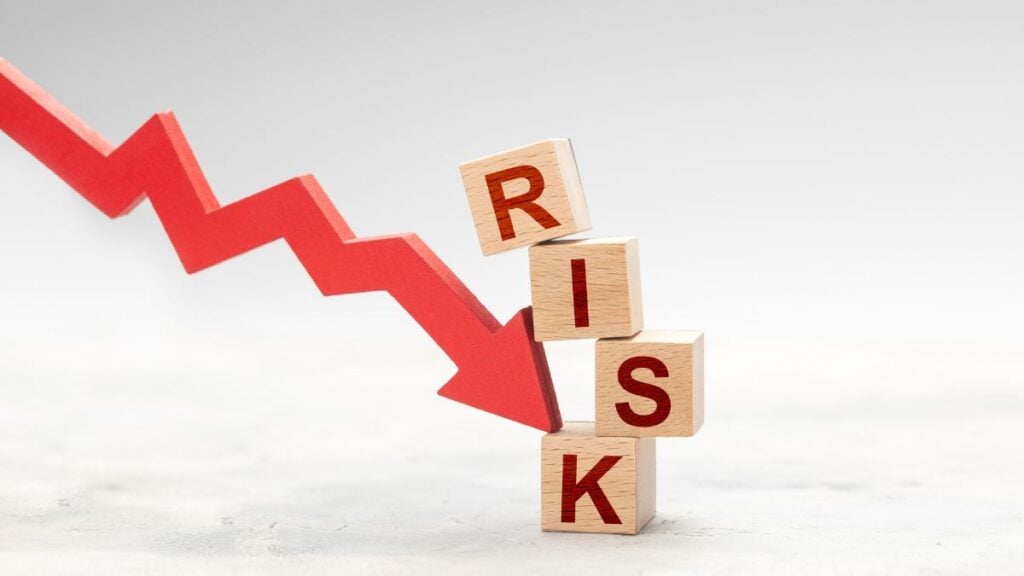
The opportunity for strong investment growth becomes more noticeable as a portfolio grows. However, the danger of a major investment loss also becomes more significant near retirement.
Someone who is 30 may have several decades to recover from a difficult market. Someone planning to retire at 65 might need to begin withdrawing money much sooner.
Consider a person with $500,000 invested primarily in stocks. A 25% market decline would reduce that portfolio to $375,000 before accounting for any contributions or withdrawals.
Recovering from that decline requires a gain of approximately 33.3%, not 25%. If retirement withdrawals begin while the portfolio is still depressed, the recovery can become harder.
This is one reason the final five years should involve more than aggressive saving. They should also include reviewing asset allocation, investment costs, emergency reserves, and how retirement withdrawals will be funded.
A diversified portfolio containing an appropriate mix of stocks, bonds, and cash may help manage risk. The right allocation depends on income stability, other assets, retirement timing, and tolerance for potential losses.
The objective is not simply to reach the highest balance on retirement day. It is to build savings that can support spending throughout retirement.
A strong five-year plan therefore combines growth opportunities with protection against needing to sell investments during unfavorable markets.
Your Social Security Decision May Be Just as Important

Saving more money is only one way to improve retirement readiness. Another is understanding how Social Security benefits fit into the household’s income plan.
In Bill and Pam’s example, their expected combined Social Security income is $4,500 per month. That assumption plays a central role in determining how much they need from investments.
But benefits depend on each person’s earnings record and claiming age. A person who claims earlier generally receives a lower monthly benefit than someone who waits until full retirement age.
Delaying benefits beyond full retirement age can increase the monthly amount until age 70. For married couples, claiming decisions can also affect survivor benefits.
That means a retirement plan should not automatically assume Social Security begins on the same day employment ends. Some households may benefit from using savings temporarily while delaying one spouse’s benefits.
Others may need to claim sooner because of health, cash flow, or employment circumstances.
The important point is to calculate the household’s expected income using realistic claiming ages rather than relying on an estimate without checking its assumptions.
A relatively small change in dependable monthly retirement income can meaningfully alter the amount the investment portfolio must provide.