Retirement can look fine from the outside while quietly feeling empty on the inside. After 65, happiness is often less about having more and more about still having enough safety, connection, movement, choice, and purpose to feel that life belongs to you.
This is not a scorecard that says you need all nine things. Research on older adults points to useful patterns, but people build satisfying later lives in very different ways.
The 9 signs below are better used as a personal checkup: notice what remains strong, then identify one area that deserves attention.
First, There Is Something Important the Headline Cannot Tell You

There is no scientific test showing that the happiest people from 65 to 80 possess exactly nine specific things. Happiness is affected by health, personality, relationships, money, losses, living arrangements, expectations, and many other factors.
Still, several current numbers show why security and independence deserve attention. In the Federal Reserve’s 2025 survey, published in 2026, 83% of adults age 60 and older said they were doing okay financially or living comfortably, while 71% of adults 60 and older reported having emergency savings that could cover three months of expenses.
Here are a few other useful markers. They are not happiness targets, but they put later life into perspective.
| Current Marker | Latest Figure | Why It Matters |
|---|---|---|
| Adults 60+ doing okay or living comfortably financially | 83% in 2025 | Financial breathing room can reduce everyday stress |
| Adults 60+ with three months of emergency savings | 71% in 2025 | A cushion gives households more room when surprises arrive |
| Homeownership among householders 65+ | 78.6% in Q2 2026 | Stable housing is common in later life, though ownership itself does not guarantee well-being |
| CDC activity guidance for adults 65+ | 150 minutes of moderate activity weekly, 2 strengthening days, plus balance work | Movement can help protect everyday function and independence |
The bigger lesson is that the strongest retirement foundations often look ordinary. A safe home, someone to call, enough money for the month, and enough physical ability to participate in daily life can matter more than possessions that once looked impressive.
1. A Stable Place That Truly Feels Like Home

The original version of this idea is often “a house with your name on the deed.” Homeownership can provide stability, and Census data show that 78.6% of householders age 65 and older owned their homes in the second quarter of 2026.
But the deed is not the important part. A senior renting a quiet apartment with predictable costs, a supportive landlord, nearby services, and good neighbors may feel more secure than a homeowner struggling with repairs, stairs, property taxes, and isolation.
What matters is housing that feels safe, manageable, affordable, and dependable. You should be able to close your door at night without wondering whether one repair, rent increase, or physical obstacle could suddenly make the home unworkable.
That sense of belonging matters too. A smaller condo, apartment, manufactured home, senior community, or room near family can still provide the feeling that this is your space and your life.
2. Enough Mobility to Keep Making Everyday Choices

Being able to move around your environment changes what you can choose to do. Walking to the mailbox, preparing food, getting out of a chair, shopping, gardening, or meeting a friend can all support independence.
Mobility does not mean walking miles without assistance. A person using a cane, walker, wheelchair, or other support may remain highly independent because the right tools allow that person to keep participating in life.
The CDC says adults 65 and older generally benefit from aerobic activity, muscle strengthening, and balance activities. It also says people who cannot meet the full recommendations should be as active as their abilities and conditions allow.
Mobility is therefore better judged by what your body still lets you do, not by whether your body works exactly as it did at 45.
This quick check focuses on function rather than perfection.
| Everyday Ability | Strong Sign | Possible Warning Sign |
|---|---|---|
| Getting out of a chair | Usually manageable without major difficulty | Becoming noticeably harder |
| Moving around home | You can reach the places you need | Certain rooms are becoming difficult |
| Leaving home | You have a workable way to get out | You increasingly stay home because movement is difficult |
| Balance | You generally feel steady | Near falls or growing fear of falling |
| Carrying out basic tasks | You can adapt tasks when needed | More activities are being abandoned |
A change in one row does not mean independence is lost. It may simply show where an exercise plan, home modification, mobility aid, transportation option, or professional evaluation could protect more choices.
3. At Least One Person They Can Be Completely Honest With

A long contact list can still leave someone lonely. One dependable friend who answers the phone, listens without turning every conversation back to themselves, and notices when something is wrong may matter far more.
The National Institute on Aging makes an important distinction: living alone and being lonely are not the same thing. Some people who live alone feel socially connected, while other people feel deeply lonely despite being surrounded by relatives.
That changes the question. Instead of asking, “How many friends do I have?” ask, “Who can I call when the day goes wrong, when something wonderful happens, or when I simply need another human voice?”
Friendships can also change after retirement because work no longer creates automatic conversation. Maintaining them may require phone calls, regular lunches, walking groups, community activities, or the willingness to be the person who reaches out first.
4. Family or Chosen Family Who Stay Connected

For some older adults, one of life’s sweetest pleasures is an adult child calling without needing money, help, or a favor. The conversation itself is the reason for the call.
Yet children cannot be treated as a requirement for retirement happiness. Some people never had children, some have lost children, and others have complicated or painful family relationships.
What matters underneath this item is belonging. That may come from children and grandchildren, but it can also come from siblings, cousins, neighbors, former coworkers, friends, a faith community, or people who slowly became family.
The National Institute on Aging notes that meaningful connection and productive activities with other people can support well-being and a sense of purpose. That makes the quality of the relationship more important than simply counting relatives.
| Surface Measure | Stronger Question | Better Sign |
|---|---|---|
| Number of contacts | Who notices when you disappear? | Someone checks in |
| Family size | Who can you speak honestly with? | Conversation feels safe |
| Social calendar | Do you enjoy the people you see? | Contact feels meaningful |
| Frequency of calls | Is effort shared? | You are not always chasing people |
| Living arrangement | Do you feel connected? | You feel supported even when living alone |
This is why one genuine friendship and a small chosen family can sometimes feel richer than dozens of weak connections. The goal is not popularity after 70; it is knowing that your presence still matters to somebody.
5. Enough Money to Live Without Constantly Asking for Rescue

Financial security in retirement does not automatically mean being wealthy. A person with a modest income may feel financially comfortable when housing costs are manageable, debt is low, bills arrive predictably, and there is some money available for surprises.
The Consumer Financial Protection Bureau describes financial well-being in terms of being able to meet obligations, absorb a financial shock, stay on track with goals, and retain enough financial freedom to make choices. That definition is much more useful than choosing one savings balance and calling everybody above it successful.
The Federal Reserve’s latest survey reinforces this difference. In 2025, 83% of adults age 60 and over described themselves as doing okay financially or living comfortably, yet that does not mean all of them were wealthy.
A better question is whether money regularly controls your life through fear. Occasional help from family or public programs is not failure, but constantly being unable to cover basic needs can reduce choice and create stress.
This check is more useful than asking whether you have reached an arbitrary net worth.
| Area | More Breathing Room | Sign to Review |
|---|---|---|
| Monthly bills | Dependable income usually covers them | Bills regularly require borrowing |
| Food and medicine | Normal needs fit the budget | Basic purchases compete with each other |
| Emergencies | Some cash or backup resources exist | A small surprise creates a crisis |
| Housing | Cost is reasonably manageable | Housing consumes too much available income |
| Personal choices | Some money remains for enjoyable life | Every dollar is already committed |
Financial dignity is not about refusing every form of assistance. It is about having enough control over your resources that ordinary decisions do not repeatedly require panic, permission, or emergency help.
6. A Reason to Get Up That Is Bigger Than Filling Time
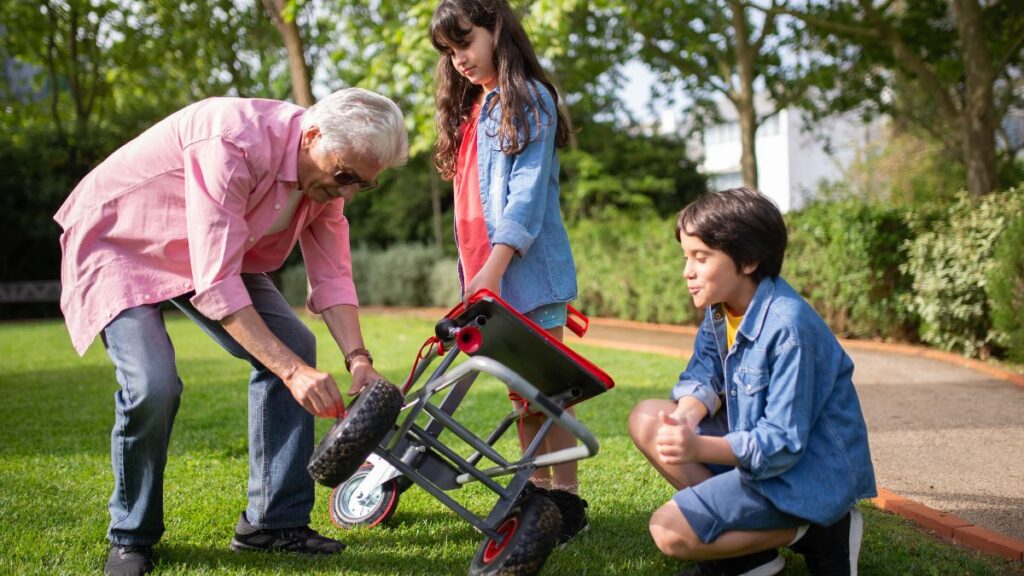
For decades, work may have answered several questions automatically. It told you where to be, what needed doing, who expected you, and whether you had completed something useful.
Retirement removes that structure very quickly. A calendar filled only with television, errands, appointments, and household chores may eventually leave some people wondering what they are getting up for.
Purpose does not require starting a company or changing the world. It can come from caring for a pet, helping grandchildren, maintaining a garden, volunteering, mentoring someone, participating in a faith community, making things, working part time, or becoming the friend everybody trusts.
Research on purpose and meaning in older age has found associations between greater purpose and better measures of mental and physical well-being. These findings describe patterns rather than guaranteeing that one activity will make every person happier.
The National Institute on Aging also points to meaningful hobbies, volunteering, learning, social activities, and community participation as useful ways older adults can remain engaged. The goal is finding something that makes part of the week feel worth showing up for.
A useful test is simple: Does something still need a little piece of you? If the answer is yes, life usually has more structure than a calendar made entirely of things you are trying to kill time with.
7. Enough Control Over Their Own Decisions

One quiet pleasure after 65 is being able to decide how a normal Tuesday will go. You can choose when to wake up, what to eat, whom to see, whether to stay home, and how much activity feels right.
That freedom can shrink when money, health, transportation, housing, or family conflicts begin controlling every decision. Even small losses of choice can therefore feel larger than outsiders expect.
Independence does not mean refusing help. In fact, accepting the right help can preserve autonomy by allowing someone to remain in their own home, keep appointments, see friends, shop, or continue a favorite activity.
The goal is not to prove that you need nobody. It is to keep as much say as possible over how your life is actually lived.
That may mean installing grab bars rather than giving up a bathroom, using grocery delivery rather than abandoning independent living, or asking someone to drive instead of stopping social outings. Adaptation can preserve freedom rather than signal its end.
8. A Weekly Rhythm That Gives the Days Some Shape

Saturday feels different when Monday through Friday have a purpose. Retirement can erase that difference because every morning suddenly looks available.
Retirement research and planning guidance often emphasize routine as well as flexibility. People may feel better when their week contains enough structure to create purpose without recreating the rigid schedule they were trying to leave behind.
The strongest routine is usually neither rigid nor empty. It might include Tuesday lunch with a friend, Thursday swimming, Saturday morning errands, a weekly volunteer shift, Sunday dinner with family, and quiet days between them.
Routine creates small anchors. Flexibility stops those anchors from turning retirement into another job.
9. Something in the Future They Genuinely Want to Reach

One of the most revealing questions after 65 may be, “What are you looking forward to?” The answer does not need to involve an expensive trip or major event.
It could be a granddaughter’s birthday next month, tomatoes ripening in the garden, a football game on Sunday, coffee with a friend, a book arriving at the library, finishing a woodworking project, or seeing spring flowers return.
The National Institute on Aging encourages older adults to participate in enjoyable and meaningful activities because these activities can support social connection, engagement, independence, and well-being. Small plans can matter because they give ordinary weeks something to move toward.
Having something ahead gives the future a little shape. That can become especially meaningful when retirement no longer contains automatic deadlines, promotions, school calendars, work trips, or annual career goals.
If several of these nine areas feel weak, rebuilding everything at once is rarely practical. A better approach is to choose one small action each week and watch whether daily life begins to feel easier or more connected.
| Time | Focus | Small Action | What to Notice |
|---|---|---|---|
| Week 1 | Connection | Call one person you miss | Does conversation lift the day? |
| Week 2 | Movement | Add realistic activity within your abilities | Does daily movement feel easier? |
| Week 3 | Purpose | Schedule one useful or enjoyable task | Do mornings have more direction? |
| Week 4 | Security | Review one housing or money pressure | Is there one problem you can reduce? |
Thirty days will not repair every difficult part of retirement. It can, however, reveal which small change gives you the greatest improvement in everyday life.
So, How Many of the 9 Do You Still Have?
If you recognize seven, eight, or nine, appreciate them without assuming they will maintain themselves. Friendships fade without contact, mobility changes, routines disappear, and financial margins can narrow.
If only three or four feel strong, that is not proof that you are doing retirement badly. More important is whether one missing piece can be strengthened, replaced, or adapted.
A person who no longer drives can create a transportation plan. Someone who rents can make an apartment feel secure and permanent, while someone without nearby relatives can slowly build chosen family.
The most useful question is therefore not, “Did I pass?” It is, “Which part of my life would make the biggest difference if it became a little stronger?”