
You spent months planning your tiny house, but three weeks after moving in, you can’t even boil pasta without knocking over your coffee maker. You’re excited about tiny living. But the kitchen terrifies you. You see gorgeous, tiny kitchens online, but you don’t know what actually works when you’re cooking real meals every day.
You’re worried about spending thousands on appliances that don’t fit or layouts that make cooking miserable. Tiny house kitchen planning feels overwhelming because every decision matters in 50 square feet.
Most small kitchen mistakes are predictable. People make the same seven errors repeatedly. This shows you what those mistakes are, why they happen, and how to avoid them before you build.
These aren’t guesses. They’re based on 2024-2025 kitchen remodels and real tiny house owners. You’ll learn what works for tiny house kitchen design and kitchen storage solutions that actually function.
#1. Mistake – Buying Full-Size Appliances (Then Regretting It)

Walk into any big-box store and you’ll see 30-inch ranges and 36-inch refrigerators. That’s what you know. That’s what looks “normal.” So that’s what most people buy for their tiny house. Big mistake.
Standard 36-inch refrigerators protrude past your counter, making every move between the sink and stove awkward. The 30-inch range eats up critical counter space needed for prep.

Kitchen remodels now average $60,000 in 2024. But tiny house owners make this expensive mistake before they even start building. They buy full-size appliances because that’s what the salesperson shows them. Then they realize those appliances don’t fit their space.
Your refrigerator should never stick out past your counters. Counter-depth refrigerators sit flush with your cabinets. They prevent that awkward bulge that disrupts workflow and makes your kitchen feel cramped. This isn’t optional for tiny house kitchen appliances. It’s mandatory.

Compact appliances work perfectly. A 24-inch range still provides four burners and a full oven. Premier makes 20-inch ranges for even more space savings. An 18-inch dishwasher fits 8 settings, enough for most tiny homes.
The fix is simpler than you consider. Before you shop, measure your kitchen layout. Write down the exact dimensions you need. Then shop for those sizes. Don’t let “standard” sizes make your decisions for you.

Counter-depth refrigerators. 24-inch ranges. 18-inch dishwashers. These aren’t sacrifices. They’re smart choices that give you the function you need without killing your space. Measure twice, buy once. A 24-inch range gives you four burners and a full oven.
#2. Mistake – Ignoring Vertical Storage (And Running Out of Space)

Look at the space between your current kitchen cabinets and the ceiling. That’s probably 2-3 feet of wasted storage.
Most people design their tiny house kitchen storage the same way they’ve always done it. Cabinets stop 30-36 inches above the counter. Then nothing. Just empty wall space stretching to the ceiling. That’s a huge mistake in a tiny house where every inch matters.
This is what happens when you don’t use vertical space. You run out of room for dishes. Your pots and pans pile up. You can’t find what you need because everything’s crammed into lower cabinets. At the same time, 40-50% of your potential storage sits empty above your head.

Floor-to-ceiling cabinets change everything. They give you that extra 40-50% storage without taking up a single inch of floor space. Your kitchen doesn’t get smaller. It just holds more.
But cabinets aren’t your only option. Wall-mounted storage works even better in some spots. A magnetic strip on the wall holds all your knives. No drawer space needed. Magnetic spice racks stick to your fridge or any metal surface. Now your spices are visible and accessible instead of lost in a cabinet.
Hang a pot rack from the ceiling. Your cookware becomes part of the design, and you free up an entire cabinet. Mount a pegboard on an empty wall. You have spots for utensils, measuring cups, and kitchen tools.

Tiered shelving gives you storage without the bulk of closed cabinets. You can see everything. Nothing gets forgotten in the back. And your kitchen feels more open because you’re not boxing everything in.
More storage without feeling cramped. Your vertical storage solutions work with your space instead of against it. Pull-down cabinet organizers bring high storage down to you. One pull and you access items stored 7 feet up. No step stool needed.
What most people miss. Counters. Lower cabinets. Drawers. But tiny house kitchen storage demands you consider vertical. Use your walls. Use the space above your cabinets. Use every inch from floor to ceiling. Your walls are real estate. Treat them like it. Every inch counts when you’re living in 400 square feet.
#3. Mistake – Forgetting About the Work Triangle (Making Cooking Miserable)

The kitchen work triangle connects three essential work centers: your refrigerator, sink, and stove. Each leg should measure between 4 and 9 feet. The total perimeter should fall between 13 and 26 feet. This isn’t some new trend. The University of Illinois School of Architecture developed this concept in the 1940s. It still works because it’s based on how humans actually move.
Most first-time tiny house builders ignore kitchen workflow completely. They put the fridge on one end and the sink on the opposite end. Now you’re walking 12 feet every time you grab vegetables from the fridge to wash them. That’s exhausting over time.

Not having designated zones for prepping, cooking, and cleaning leads to chaos. You’re constantly in your own way. You set down the cutting board, then have to move it to access the stove. Nothing flows.
First, identify your three points before you build anything. Where will your refrigerator go? Your sink? Your stove? Draw lines between them on your floor plan. Next, measure the distance between each point. If any leg is longer than 9 feet, your kitchen workflow will suffer.

If the total perimeter exceeds 26 feet, you’ll waste energy walking back and forth. The concept avoids hard turns. Perfectly, you take one step and pivot rather than walking multiple steps. That equals more efficiency. In a tiny kitchen, even 2 extra steps multiply over the years into unnecessary exhaustion.
The galley kitchen layout excels at work triangles in small spaces. Sink and stove on one side. Fridge on the other. Everything within arm’s reach. Just make sure your aisle is at least 42 inches wide for one cook to move comfortably.

L-shape layouts also work well for efficient kitchen design. The triangle naturally forms in the corner. You pivot instead of walking. Finally, adjust if needed. Move your appliances on paper before you commit. Test the flow. Walk through the motions of cooking a meal. Get this right during planning, and cooking becomes easier. Get it wrong and you’ll hate your kitchen every single day.
#4. Mistake – Skipping Counter Space (No Room to Actually Cook)

Where do you put the cutting board when the pot is boiling? Where does the colander go when you drain pasta? If you can’t answer these questions, you don’t have enough counter space.
Counter space is the number one complaint in small kitchens. Not storage. Not appliances. Because you can’t cook without somewhere to work. You need a minimum of 18 inches beside your stove for setting down hot pots. You need 24-36 inches for prep work. Chopping vegetables. Rolling dough. Assembling ingredients. Without this space, cooking becomes a frustrating puzzle.

The problem gets worse when your coffee maker, toaster, and knife block live on your countertops. Now that prep space has just disappeared. Letting appliances live on countertops is a big mistake. You need to plan custom space for small appliances inside cabinets or on shelves.
You start cooking on your stove. Then you realize you have nowhere to put the ingredients. So you use the sink. But now you can’t rinse anything. You’re constantly moving items around just to complete basic tasks.
Most people focus on cabinets first and kitchen counter space second. That’s backward. Counter space should drive your entire layout. Cabinets can go anywhere. Counters need to be exactly where you work.

The solution requires planning ahead. Install a pull-out countertop under your main counter. It slides out when you need it and disappears when you don’t. This can increase your prep surface by 50%.
A fold-down table mounted to your wall creates instant counter space. Fold it up after cooking. Your kitchen stays open, but you have a work surface when needed. Mobile islands on wheels give you flexibility. Roll them where you need extra space. Move them out of the way when you’re done.

An over-sink cutting board turns your sink into temporary counter space. You prep right over the sink and sweep scraps directly down. These solutions work. But they require planning before you build. You can’t bolt on counter space after your kitchen is finished.
#5. Mistake – Forgetting Ventilation (Grease Film on Everything)

Three months after moving in, you’ll notice it. A sticky film on your walls. Your curtains smell like bacon. Your clothes smell like onions. That’s what happens when you skip ventilation.
Ventilation is a huge deal for tiny houses. In small spaces, bad air accumulates quickly and can become unlivable and dangerous. You’re cooking in 400 square feet, not 2,000. Every particle of steam, grease, and smoke has nowhere to go.
Many assume they’ll get away with a bath fan. They consider that tiny house air quality will somehow take care of itself. Wrong. A greasy film quickly accumulates all over the home. On your windows. Your bedding. Your laptop. Everything gets coated because oil particles spread throughout a tiny house in minutes.

Without a range hood, this happens every time you cook. The grease travels because there’s no barrier stopping it. You’re essentially deep-frying your entire living space. You must install a hood directly over your stove. Not near it. Directly over it. This captures steam and grease at the source before it spreads.
Recirculating range hoods are the minimum requirement. They filter air and push it back into your kitchen. Better than nothing. But venting outside is ideal. It removes the bad air completely instead of just filtering it.

Ventilation tubing is large and awkward. It’s 6-8 inches in diameter and needs a path to the outside. You can’t add this after your walls are up. Plan during the design phase, or you’ll regret it. Installing kitchen ventilation prevents the grease problem before it starts. Also, LED hood lights add task lighting right where you need it for cooking.
The mistake people make. They think tiny means you can skip “optional” features like proper ventilation. They see a range hood as something fancy people have. It’s not fancy. It’s necessary.
Your tiny house is sealed tight for energy efficiency. That means air doesn’t escape naturally. Without a range hood, you’re trapping cooking pollutants inside with you. Ventilation isn’t optional. It’s mandatory. Budget for it now or pay for it later when you’re scrubbing grease off every surface.
#6. Mistake – Underestimating Pantry Needs (Nowhere to Put Food)

You know that bag of flour you bought three months ago? It’s somewhere in your pantry. You just can’t find it. So you bought another one. Now you have two. And no room for either.
Pantry items vary wildly in shape and size. Bags of chips are bulky. Cereal boxes are tall. Canned goods are short and round. Spice jars are tiny. They don’t fit well together, and that requires careful planning for tiny house food storage.

Cereal boxes stacked on canned goods. Bags of pasta were shoved behind jars of sauce. Spices are scattered across three different shelves. Nothing has a proper home. You waste time searching for ingredients you know you bought.
The mistake most people make. They consider they’ll eat out more or buy less once they move into a tiny house. You probably won’t. You’ll still need olive oil, flour, rice, beans, snacks, and breakfast food. All of that needs somewhere to go.

Measure everything you normally keep, then double the space. You’ll fill it. Each item needs its own spot. A narrow pull-out pantry works perfectly in tight spots. These slides from spaces just 6-12 inches wide. Everything becomes visible and accessible when you pull it out. No more digging through deep cabinets.
Door racks turn wasted space into pantry storage. Mount them inside cabinet doors for spices, oils, or packets. Lazy Susans in corners prevent items from getting lost in the back. One spin and you see everything.

Tiered shelving maximizes vertical space inside cabinets. Short items in front, tall items in back. Everything visible. Adjustable shelves let you customize heights for cereal boxes versus soup cans.
Without organization, you’ll waste money buying duplicates of things you already own but can’t find. Under-floor storage works for things like extra paper towels or holiday baking supplies. Access it when needed without taking up daily pantry space. Plan your pantry like you plan your closet. Every item needs a home. Figure that out before you build.
#7. Mistake – Copying Pretty Pinterest Kitchens (That Don’t Actually Work)

That tiny kitchen you saved on Pinterest? With the rustic open shelves and the white subway tiles? It’s gorgeous. It’s also probably a nightmare to keep clean.
Open shelving looks beautiful in photos. In real life, this means dusting dishes before you use them. It means keeping everything perfectly organized because everyone sees it. Only put items you use daily on open shelves. Otherwise, dust accumulates, and you’re washing clean dishes.

What they don’t show you about all-white kitchens. Every fingerprint shows. Every splash of tomato sauce becomes a scrubbing project. White grout between tiles turns gray within months. All-white needs constant maintenance that most people don’t have time for.
But a common mistake in compact kitchens is the overuse of light colors too. The overwhelming whitewash effect makes everything blend. Your kitchen loses depth and character. Two-toned cabinet fronts are trending in 2025 for good reason. Dark lowers with light uppers create visual interest without shrinking your space.
The trade-off with small kitchen colors is real. Darker colors can overwhelm and make the kitchen space feel cramped. But lighter colors brighten and give the illusion of openness. The solution? Balance. Not all white. Not all dark. Mix them strategically.
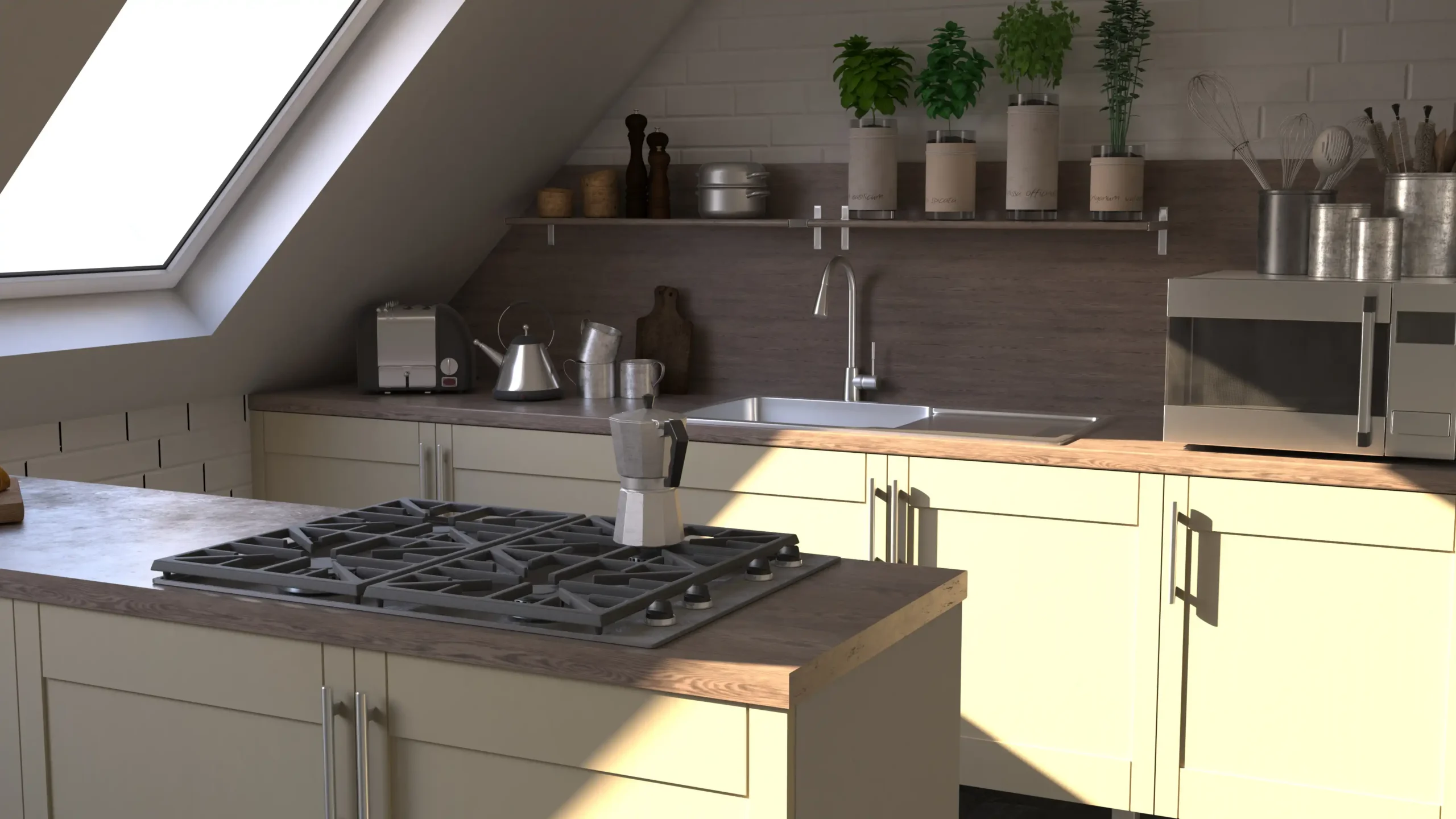
Dark, moody kitchens actually work in tiny spaces if done right. Dark lower cabinets ground the space. Light upper cabinets or open shelving keep it from feeling like a cave. This functional kitchen design gives you drama without claustrophobia.
The real error. Designing for Instagram instead of real life. You’re not staging a photoshoot. You’re building a space where you’ll cook three meals a day for years. Practical beats pretty when you live there every day.
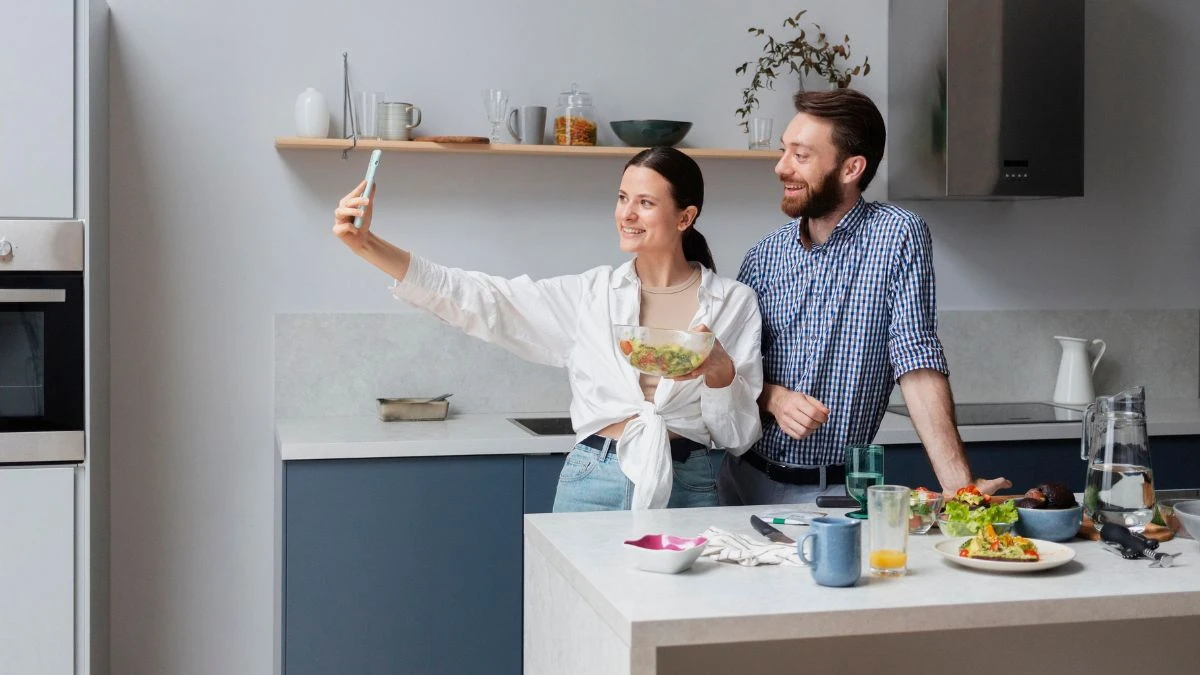
A beautiful kitchen you hate using is a failure. A functional kitchen that happens to look good is a success. Design for your actual life. Not the life you think you’ll have. If you cook every day, you need a functional kitchen. Pretty is a bonus.
