The concept of fairy gardens originated from traditional European folklore, where tiny gardens were believed to attract beneficial spirits. Today’s fairy garden Ideas continue this whimsical tradition while offering practical benefits for gardeners of all skill levels.
Before you begin, you’ll need basic supplies, such as small plants, decorative elements, and containers. But the real magic happens when you start arranging elements to create your unique fairy realm.
The process combines storytelling with agriculture. It will allow you to craft personalized scenes that reflect your imagination while developing practical gardening knowledge through hands-on experience with plant care and design principles.
Easy DIY Fairy Garden Ideas Are So Whimsical That Kids Will Think Real Fairies Live There

1. White Bowl Container Fairy Gardens

These charming fairy gardens demonstrate that the simple white ceramic bowls can become magical miniature worlds. The red mushrooms are the main focus, creating classic fairy tale vibes. Small fairy figurines peek out from between the plants, giving life to each scene. The moss creates a natural, forest-like appearance on the floor.
Portability is the best aspect of this design. These bowls can be moved indoors during harsh weather or moved for better light. The white containers create a nice disparity against the green plants and help the colorful elements pop. There are likely holes drilled in the bottom or a layer of gravel beneath the soil for drainage.
2. Succulent Garden with Wooden Cottage

This fairy garden uses succulents, making it good for low-maintenance gardening. The wooden cottage displays intricate artistry with a moss-covered roof that looks naturally weather-beaten. The red-capped mushrooms maintain the traditional fairy garden visual while the white pebbles create defined pathways and add texture diversity.
Succulents work well for fairy gardens because they stay small, come in various colors and shapes, and can handle neglect. The soil mixture is well-draining. It is essential for succulent health. This type of garden flourishes in sunny locations. It requires watering only when the soil is dry, making it ideal for busy gardeners.
3. Natural Tree House Fairy Garden

The fairy house is located naturally in a tree fork. The branches and natural supports have eliminated the need for additional containers or foundations. The gnarled wood finish gives it an authentic, lived-in appearance that improves with age.
The blue trim adds a pop of color while maintaining a pastoral feel. The house appears to be made from cedar or similar weather-resistant wood that can handle outdoor conditions year-round. The natural placement means minimal maintenance. The surrounding environment provides the garden setting.
This process works great for permanent fairy garden installations. The tree provides natural shade and protection while creating an organic backdrop. The house size is proportioned well for the tree, neither too large nor too small. The entrance faces outward, making it visible from the main viewing angle.
4. Multi-Level Tree Stump Fairy Village

This elaborate fairy garden uses a tree stump as the foundation for a multi-story village. Several terracotta pots are positioned at different heights to create distinct living areas connected by miniature rope bridges. The setup maximizes vertical space while maintaining a natural woodland feel.
The wooden cottage serves as the main dwelling, while smaller terracotta pots function as additional rooms or garden spaces. Each level contains different plants, creating varied miniature environments. The rope bridges add eccentricity, illustrating how fairies might travel between areas.
Red mushrooms scattered throughout tie the levels together visually. The miniature animals add life to the scene. The plant selection includes small ferns and mosses that naturally grow in woodland settings. This method requires more initial setup but creates a significant fairy garden that can evolve with plant growth and seasonal changes.
5. Cottage with Water Feature Fairy Garden

A sophisticated fairy garden like this combines a detailed cottage with a functional water feature, creating a complete miniature landscape. The house features elaborate shingle roofing and stonework details that rival full-sized architecture. The small pond with its tiny bridge shows that the water elements can boost fairy garden realism.
The cottage sits elevated slightly above the water level, with a small bridge providing access across the pond. The water feature appears to be a simple depression lined with stone or plastic. It is surrounded by smooth river rocks. The bridge looks handmade from small wooden planks, adding to the authentic feel. This plan works best in protected areas where the water feature won’t freeze or be disturbed by heavy weather.
6. Birdbath Pedestal Fairy Garden

This creative fairy garden transforms a birdbath into an eminent miniature landscape. The pedestal provides seamless drainage and brings the fairy garden to eye level for easy viewing and maintenance. The acorn-cap house serves as the centerpiece, surrounded by various ferns and small woodland plants.
The house design uses a real acorn cap as the roof, creating an authentic natural look that blends flawlessly with the woodland theme. The structure appears to be made from clay or similar natural materials that weather well outdoors. A tiny wooden ladder provides access to the house, adding handy charm.
The pedestal style works best in formal garden settings where it can serve as an attraction. The woodland theme with natural materials creates a consistent look that feels authentic rather than artificial.
7. Landscape Integration Fairy Garden

The fairy garden establishes how to seamlessly incorporate miniature villages into existing landscape beds. The design uses natural mulch as the base with a colorful stone pathway that winds through the space.
Multiple fairy houses of varying sizes and styles create a village atmosphere. Some structures are snuggled against natural boulders for stability and authenticity. The colorful pinwheel adds a fancy touch while serving as a focus. Large decorative mushrooms provide classic fairy tale elements throughout the space.
The surrounding landscape includes established perennial plants like ornamental grasses and flowering spikes that provide a natural backdrop without overwhelming the miniature scale. The stone retaining wall creates defined boundaries while the natural mulch helps retain moisture and suppress weeds.
8. Rustic Bowl Fairy Garden

This enchanting fairy garden uses a worn-out ceramic bowl as the foundation, creating an intimate miniature landscape. The container appears to be a large planting bowl with natural aging that adds character.
The plant selection includes spring bulbs like grape hyacinths, providing seasonal color, along with small ferns and mosses that create natural groundcover. A handmade twig fence adds rural allure while defining spaces within the small container. The “Welcome Fairies” stone sign provides a personal touch and clear theme identification.
Small red mushrooms scattered throughout maintain the classic fairy garden aesthetic. The acorn house confirms creative use of natural materials like the acorn cap. It serves as an excellent scaled roof while the base appears to be carved or molded. Natural elements like twigs and small stones create pathways and boundaries.
9. Large Stone Bowl Mixed Plant Fairy Garden

A sophisticated fairy garden using a concrete bowl that creates an impressive landscape feature is so captivating. The large size allows for diverse plant selection, including a small evergreen that serves as a natural tree.
The fairy house exhibits detailed thatched roofing and quality craftsmanship that survives well outdoors. Multiple fairy figurines positioned around the garden create narrative possibilities and bring life to the scene. The plant station creates natural zones with the evergreen providing height and structure.
This design is for prominent garden locations where the fairy garden serves as an attraction. The notable container and quality materials represent a larger investment but create a permanent landscape feature. The plant diversity means something is always in bloom or providing color, making it attractive throughout multiple seasons.
10. Colorful Desert Fairy Garden with Cacti and Succulents

This dynamic fairy garden embraces a desert theme using a colorful ceramic bowl and drought-tolerant plants. The container exhibits bright blues, yellows, and other flashy colors that create a playful, modern aesthetic. Various cacti and succulents provide diverse textures and shapes while requiring minimal water.
A small red fairy house docks the composition while miniature animals and accessories add essence. The plant selection includes various cacti types, from columnar to paddle shapes, creating visual diversity. A pathway made from crushed bark wafts through the white stones.
This strategy is for hot, dry climates or for gardeners who prefer low-maintenance plants. The desert theme works skillfully indoors near sunny windows or in outdoor spaces with intense sun exposure. The vibrant container and drought-tolerant plants create year-round appeal with minimal care requirements.
11. White Container Succulent Garden with Seasonal Elements

The elegant fairy garden uses a clean white container that creates a sophisticated contrast against the varied succulent plantings. The design illustrates how neutral containers can highlight plant colors and textures without competing for attention.
The arrangement appears to include seasonal elements with small flowering branches that could be pussy willow or similar spring bloomers. A decorative mushroom and small fairy figurines maintain the magical theme. The red ladybug adds a pop of color against the predominantly green and white palette.
This design works in modern garden settings or on patios where clean lines and contemporary aesthetics are preferred. The succulent focus means minimal water requirements and year-round appeal. The white container keeps the focus on plant form and texture while providing a sophisticated backdrop for the fairy garden elements.
12. Small Red Polka Dot Container

This delightful miniature fairy garden uses a small red container with white polka dots. It is creating a cheerful, whimsical appearance, good for small spaces or tabletop displays. The container appears to be repurposed from another use.
The design shows decorative butterflies as the primary theme. realistic-looking specimens positioned among small plants and decorative elements. Small mushrooms and natural materials like tiny stones and bark create a forest floor aesthetic within the compact space. The red and white color scheme is carried through consistently.
This size fairy garden is excellent for children’s projects, indoor displays, or situations where space is extremely limited. The small scale makes it affordable and manageable while still providing the magic of a fairy garden. The bright colors and whimsical elements make it appealing for younger fairy garden enthusiasts.
13. Multi-Container Fairy Garden with Water Feature
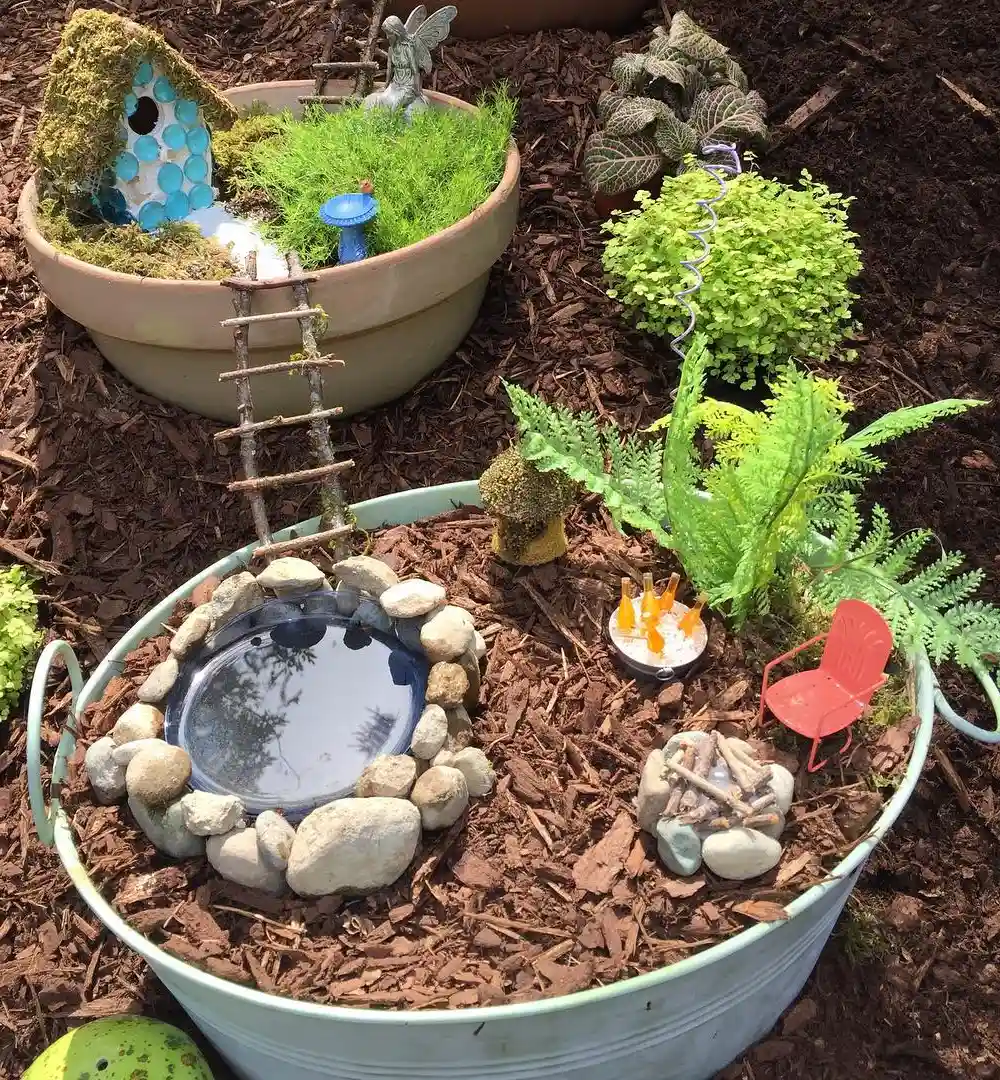
Creative fairy garden setup uses multiple containers of different sizes to create a complex miniature landscape with distinct zones. The design includes a prominent water feature made from a dark bowl surrounded by stones. It is creating a realistic pond that serves as the garden’s centerpiece.
One container features a moss-covered house with decorative tile details, placed among lush green moss that creates a natural lawn effect. Small fairy figurines and a miniature water pump add activity and life to the scene. The varied container heights create topographical interest.
The plant selection focuses on moisture-loving varieties that complement the water feature theme. Ferns and mosses dominate, creating a woodland atmosphere that feels authentic. The surrounding garden area includes larger ferns that provide a natural backdrop and context for the miniature containers.
14. Natural Tree Trunk Fairy Village

The spectacular fairy garden like this utilizes a large tree trunk to create a detailed multi-story fairy dwelling. The natural wood provides flawless integration with the forest setting. It also offers multiple levels and nooks for fairy houses and accessories. The tree house embodies detailed stonework made from small pebbles or beads around the entrance.
A living roof made from small plants creates an authentic-looking thatch while providing actual growing space. The house design includes multiple windows and doorways that take advantage of the tree’s natural hollows and crevices. Small fairy figurines arranged throughout the scene create storytelling opportunities.
15. Large-Scale Backyard Fairy Village with Lighting

An impressive fairy garden that converts an entire backyard section into a magical village. The design uses a combination of fairy houses and natural landscaping to create multiple themed areas. Each house has a special character.
The lighting system uses battery-operated LED string lights placed throughout the garden. Small lanterns and lights are blended into individual houses, making them glow from within. The warm yellow lights create a cozy atmosphere that extends the garden’s viewing hours into twilight.
The electrical components need weather protection. The larger scale means more maintenance for plant care and seasonal cleanup. Yet, the effect is considerable and provides an interest that can be enjoyed by the whole family throughout the year.
16. Child-Friendly Pink Container Fairy Garden
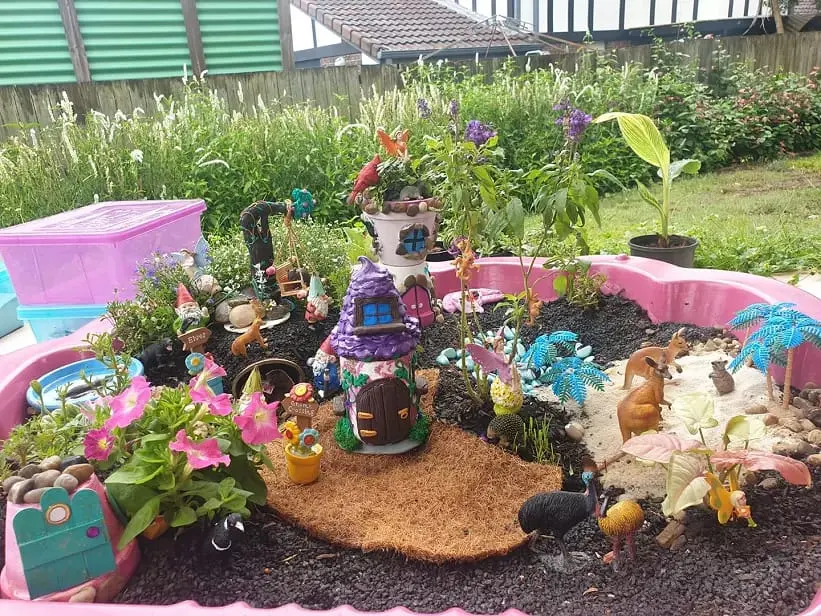
A vibrant fairy garden using a large pink plastic container as the foundation is immaculate for children’s projects. The bright pink color adds an impulse and makes the garden feel playful rather than formal.
The garden includes multiple small fairy houses with colorful roofs, miniature animals, and decorative elements spread throughout. A central pathway made from sand or fine gravel creates defined walking areas. The plant selection includes small flowering plants and various greenery that can handle container conditions.
This system performs well for those wanting a temporary fairy garden. The container provides good drainage when properly prepared. The bright color makes it an attractive feature even in winter when plants are dormant. The design prompts creativity and can be easily modified as children’s interests change. The larger size provides plenty of space for expansion and seasonal updates.
17. Succulent-Focused Fairy Garden with Colorful Pathways

This sophisticated fairy garden accentuates succulents and cacti as the primary plants, creating a low-maintenance desert-themed fairy landscape. The design uses various containers and levels to create visual interest while keeping water requirements minimal.
The pathway system uses colored gravel and stones to create distinct areas, including red decorative stones. Different colored pathways help define separate zones within the garden while adding graphical allure. The blue teapot house serves as a charming attraction among the green plants.
Solar lights are strategically placed throughout the garden, providing evening illumination without requiring electrical connections. The lights appear to be stake-style solar units that charge during the day and automatically illuminate at dusk. This makes the garden functional for evening enjoyment while remaining energy-efficient.
18. Multi-Level Colorful Fairy Village

The cracks in this fairy garden create natural terraces that are used for different themed areas. The brightly colored fairy house is creating a cheerful neighborhood atmosphere. The design maximizes vertical space while creating distinct living areas.
Each level has different plants and accessories, showing how vertical gardening can create diverse microenvironments. Small decorative elements like tiny furniture and an owl figure add essence to each section.
This practice appeals to gardeners who want maximum visual impact from a single container. The bright colors and multiple elements create a busy, joyful scene that mainly appeals to children. The design shows how creative order can make a small space feel much larger and more complex than its actual footprint.
19. Fairy Garden Castle with Rose Towers

A creative fairy garden transforms broken terracotta pots into a fairy castle with climbing rose towers. The design uses the broken pot pieces as architectural elements. It is creating multiple levels and interesting shapes that wouldn’t be possible with intact containers.
The stone castle structure serves as the centerpiece, complete with detailed stonework and multiple towers. Pink climbing vines create living towers that bloom seasonally. Small fairy figurines arranged throughout bring life to the medieval theme. White picket fencing defines garden boundaries and pathways between different sections.
This approach affirms excellent recycling principles while creating something more interesting than intact pots could provide. The broken edges create natural planting pockets and excellent drainage solutions. The castle theme works with the stone and terracotta color palette. It is creating a cohesive medieval aesthetic that feels authentic.
20. Large White Succulent Castle Garden

The impressive fairy garden uses a white container to show an elaborate castle structure surrounded by carefully arranged succulents. The white container provides a neutral backdrop. It highlights both the detailed blue castle and the varied succulent colors and textures without competing for attention.
The castle features multiple levels with a prominent tower, detailed architectural elements. It is made from high-quality resin or ceramic materials. Blue decorative stones create water features or pathways around the castle base. The fairy figurine placed on the castle brings the scene to life with storytelling possibilities.
This works for permanent outdoor installations in mild climates or as a statement piece that can be moved seasonally. The size and quality materials represent a significant investment, but create a fairy garden that serves as a major landscape feature with year-round appeal.
21. Broken Pot Woodland Fairy Garden
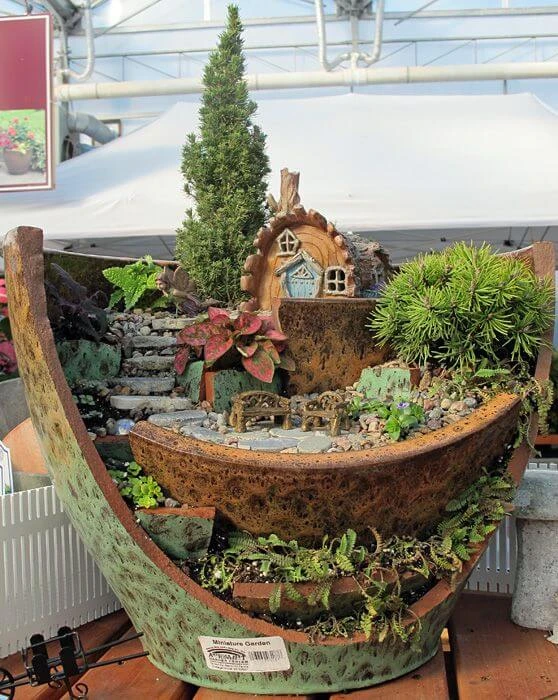
This rustic fairy garden uses a broken terracotta pot to create a multi-story woodland dwelling. The break in the pot creates a natural cave-like opening that serves as the ground floor. The plantings above create a living roof garden. The wooden fairy house snuggled in the break takes advantage of the natural shelter provided.
The plant selection focuses on woodland varieties, including small evergreens and ferns.. The natural color combination of greens, browns, and terra cotta creates a genuine forest feel. Small decorative stones and natural materials create realistic pathways throughout the design.
This style works well for gardeners who prefer natural, understated fairy gardens that blend flawlessly with existing landscaping. The earth-tone color palette and natural materials create a subtle fairy presence that feels organic rather than artificial, making it perfect for woodland or shade garden settings.
22. Galvanized Tub Two-Tier Fairy Garden

An innovative fairy garden using a repurposed galvanized metal tub on a stand is creating two distinct levels of fairy living space. The aged metal container adds industrial charm. The rope handle and rustic finish give it farmhouse appeal. The two-tier design maximizes space while creating separate themed areas that tell different parts of a fairy story.
The upper level features a charming blue fairy door lodged among moss and small succulents. It is creating a cozy woodland entrance. Twigs arranged vertically provide natural fencing and architectural interest. The lower level includes a miniature water feature made from blue stones or beads, complete with a tiny wooden dock and red mushroom house for waterfront fairy living.
This design works for small patios or decks where vertical space is more available than ground space. The galvanized metal ages beautifully outdoors. The elevated design keeps the fairy garden at eye level for easy viewing and maintenance.
23. Multi-Container Fairy Village Complex

This elaborate fairy garden setup uses multiple broken terracotta pots to create an interconnected village with bridges, pathways, and themed areas. The design demonstrates how several smaller containers can work together to create a more complex fairy landscape than any single container could provide.
The main container displays a fairy cottage with practical architectural elements like shingled roofing and multiple windows. A stone bridge made from small pebbles connects different areas. Moss creates natural lawn spaces throughout.
Miniature accessories scattered throughout include tiny teapots, mushrooms, and garden tools that add factual details to the domestic fairy scene. The “Welcome” sign provides a charming entry point to the village. The broken edges of the pots create natural terracing and excellent drainage while adding architectural interest. This approach allows for gradual expansion over time. You can start with one or two pots and add more as your fairy garden vision grows.
24. Fairy Garden in Metal Container

The heartwarming Mother’s Day fairy garden shows the way to create a meaningful gift using a galvanized metal container as the base. The design displays a charming wooden fairy house with a heart-shaped window. It is placed among plush green moss and vibrant variegated houseplants.
Small red and white spotted mushrooms add whimsical touches throughout the miniature landscape. A triangular “Mom” flag creates a personalized element. The garden includes live plants that will continue growing, making this a lasting gift that keeps giving. A colorful, patterned ribbon wraps around the container, complemented by an “I Love You” message tag that adds sentimental value.
The combination of natural elements like moss, decorative mushrooms, and living plants creates a balanced ecosystem. This design demonstrates how fairy gardens can be customized for special occasions while maintaining their magical appeal.
25. Spring Clothesline Fairy Garden
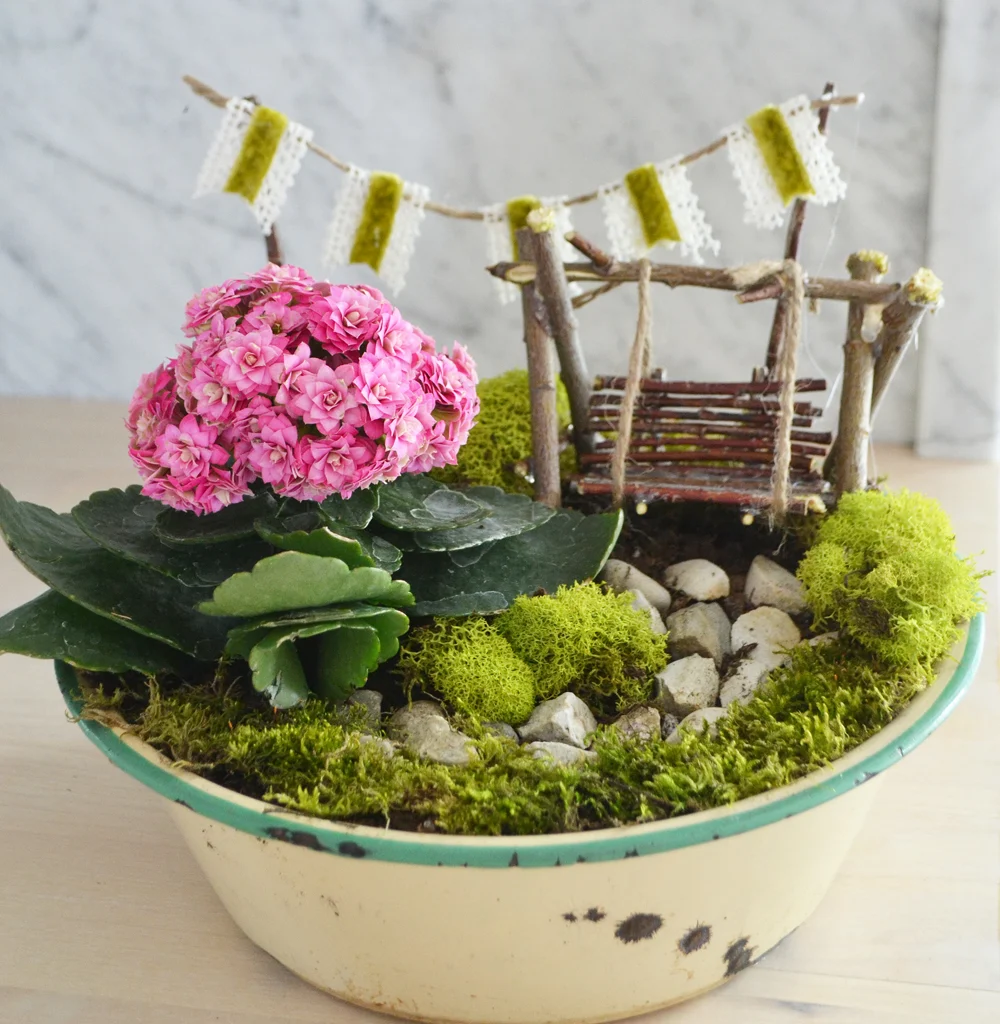
This delightful spring-themed fairy garden converts a worn-out ceramic pot into a miniature domestic scene illustrating a tiny clothesline with hanging laundry. The centerpiece, pink hydrangea, provides lively color and represents the full-sized world. Carefully arranged moss creates natural groundcover throughout the container.
Small stones create an organic pathway through the garden. This garden demonstrates how everyday activities can be miniaturized to create engaging fairy world narratives. The combination of flowering plants, natural materials, and handmade accessories shows how simple elements can be transformed into magical storytelling displays that capture the imagination.