Greenhouses have changed countless backyards into year-round growing havens. You don’t need thousands of dollars or advanced construction skills to join this movement. Most gardeners face the same frustrating cycle: watching helplessly as frost kills tender plants, struggling to start seeds indoors with poor lighting, or paying premium prices for fresh herbs and vegetables during the winter months.
The solution lies in building your greenhouse using affordable materials and simple techniques that work. Repurposing old windows found at garage sales and creating effective cold frames with basic lumber, these budget-friendly approaches put fresh produce and flourishing plants within reach regardless of season or skill level.
The following 30 cheap DIY greenhouse ideas will show you exactly how to build your own productive growing space without breaking the bank.
30 Cheap and Easy DIY Greenhouse Ideas
1. Cedar Frame Traditional Greenhouse
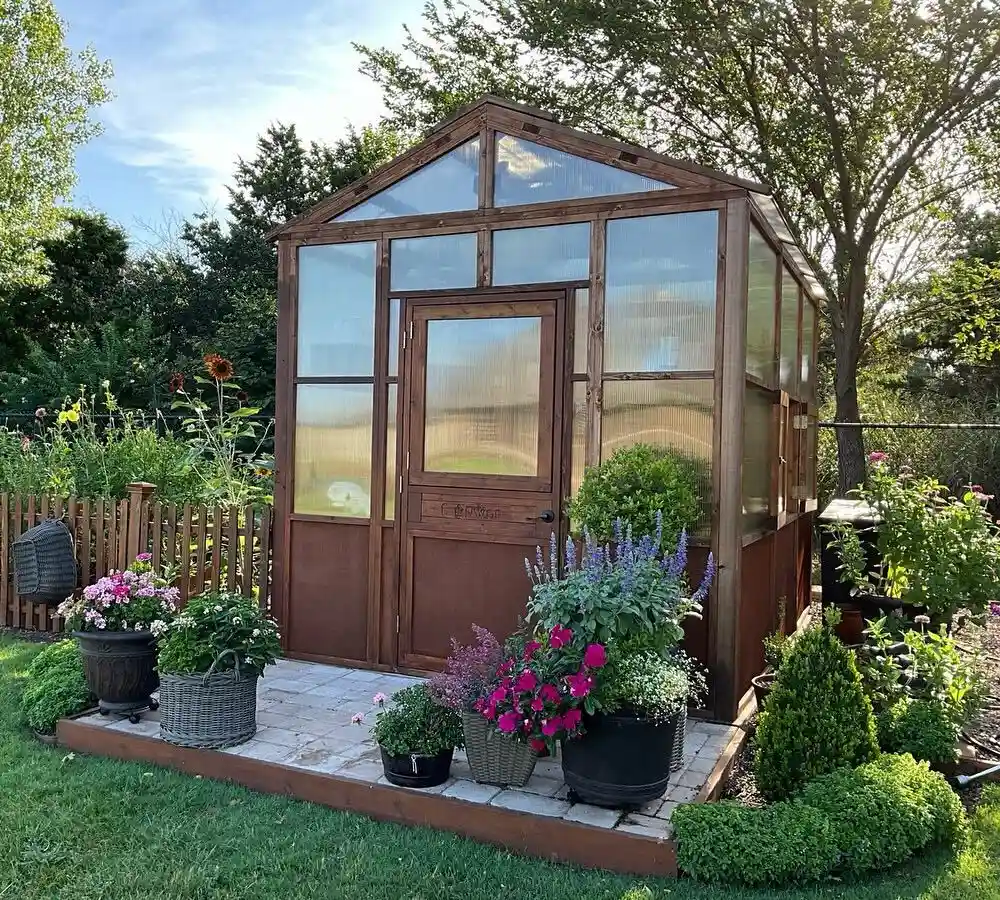
This beautiful cedar-framed greenhouse displays an excellent combination of functionality and garden aesthetics. The structure shows a classic gable design with twin-wall polycarbonate panels that provide excellent insulation. They also allow maximum light penetration. The rich cedar frame will inherently age to a gorgeous silver-gray over time.
The decorative flower containers around the base help create a microclimate that moderates temperature swings inside the greenhouse. Adding automatic vent openers to the roof panels for temperature control is a great thought. They’re inexpensive and will save your plants during unexpected hot days.
2. Reclaimed Window Lean-to Greenhouse
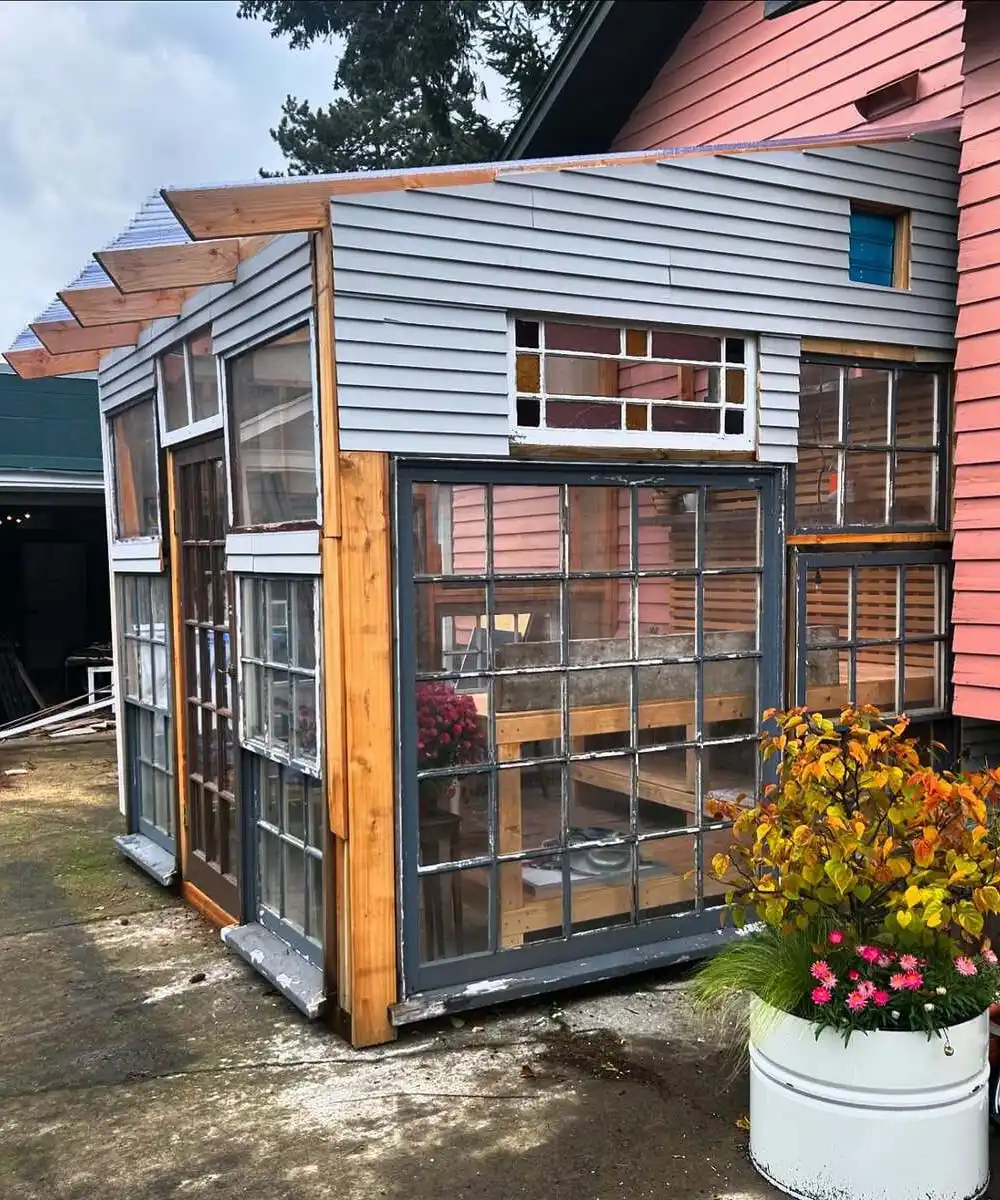
The clever lean-to design maximizes space efficiency while keeping costs incredibly low by using salvaged windows as the primary building material. The structure combines different window sizes and styles. The lean-to design takes advantage of the existing house wall for structural support and thermal mass.
The mixed siding approach creates visible appeal while using whatever materials are available. The key to success is providing proper weatherproofing between different window types using quality exterior caulk and weatherstripping. The concrete foundation appears simple but effective; you can achieve similar results with gravel and concrete pavers.
Tip: Make sure recycled windows have good seals and consider adding a ridge vent for air circulation.
3. Barn-Style Greenhouse with Metal Roofing

This barn-style greenhouse presents how mixing materials can create an attractive, budget-friendly structure. The corrugated metal roof supplies excellent durability and weather protection. It allows the sides to be glazed for maximum light. The bright yellow door adds character and makes the space feel inviting.
The curved roof design sheds snow and rain effectively while creating more headroom than traditional peaked roofs. The clear polycarbonate panels on the sides are more affordable and safer than glass while providing good light transmission. This method uses 30-40% less glazing material than fully transparent structures, resulting in significant savings.
4. Classic White Victorian Greenhouse

Stunning white greenhouse brings Victorian dignity to modern gardening with its distinctive peaked roof and decorative ridge details. The traditional design attributes full glass construction that maximizes light penetration from all angles. It creates an ideal environment for both starting seeds and growing heat-loving plants year-round.
The aluminum framing with glass panels provides excellent longevity and minimal maintenance. The white finish reflects heat during summer months. The gravel base with concrete pavers creates excellent drainage while providing a stable foundation that’s much less expensive than a full concrete pad. The white planter boxes flanking the entrance serve both decorative and functional purposes.
5. Reclaimed Window Wall Greenhouse

This impressive lean-to greenhouse shows the ultimate in recycled building materials with its stunning wall of salvaged windows. The creation proves that reclaimed materials can create a professional-looking structure. Each window appears carefully selected and arranged to create both graphical appeal and maximum light.
The flat roof design with clear grooved panels is both practical and economical. The wooden base uses standard lumber, making this accessible for most DIY builders. The mix of window sizes and styles provides different ventilation options, with some appearing operable for temperature control. The wooden foundation on a gravel base provides good drainage and stability cost-effectively.
6. Bright Yellow Modern Lean-to

The lean-to design of this eye-catching yellow greenhouse increases space while the bold color choice makes it a true garden statement piece. The structure uses clear polycarbonate panels and a distinctive slanted roof that takes advantage of the existing fence line for support.
The yellow painted frame creates a cheerful, modern look while serving practical purposes. The bright color reflects excess heat during hot summer months. Polycarbonate panels provide excellent insulation while being more affordable and safer than glass. The concrete block foundation provides excellent drainage and stability.
This design is good for urban gardeners with limited space, making efficient use of narrow areas along fences. The internal shelving maximizes growing space vertically.
Tip: Consider adding a small exhaust fan near the roof peak for ventilation.
7. Dark Charcoal Victorian Greenhouse

This genteel dark charcoal greenhouse ascertains that bold color choices can create a breathtaking garden look while maintaining classic appeal. The deep gray paint finish gives this traditional design a modern twist. It stands out beautifully against the dense green backdrop. The structure features traditional multi-pane windows with what appears to be glass panels, providing excellent light transmission for plant growth.
The stone pillar entrance creates an impressive entry statement while serving practical purposes. The pillars provide structural support and help anchor the greenhouse to its foundation. The decorative wreath and seasonal planters add charm without overwhelming the clean lines.
This design combines the best of traditional greenhouse functionality with contemporary aesthetics. The dark color helps hide dirt and aging better than lighter colors, making maintenance easier. The stone elements can be achieved affordably using concrete blocks with stone veneer.
8. Compact Corner Greenhouse

The clever compact greenhouse structure appears to be built primarily from reclaimed windows in various sizes. It is creating a fascinating patchwork effect while keeping costs incredibly low. The green painted frame ties everything together and helps the structure coordinate with the garden environment.
It utilizes corner placement against existing structures for wind protection and stability. The mixed window approach means you can build this greenhouse gradually as you find affordable windows. The simple flat roof with a slight slope handles drainage effectively while being much easier to construct than peaked alternatives.
The internal shelving visible through the windows shows efficient use of vertical space for starting seeds and growing smaller plants. The basis is patience in collecting matching or complementary windows over time.
Tip: Make sure to weatherproof all connections comprehensively, as the varied window sizes can create potential leak points.
9. Modern Corrugated Panel Greenhouse

This contemporary composition illustrates how mixing materials can create both visual pull and practical benefits while keeping costs reasonable. The structure combines clear, ridged panels with a sturdy wood frame. It creates a modern industrial aesthetic that’s both functional and eye-catching. The creased panels are significantly cheaper than traditional greenhouse glazing while still providing excellent light transmission.
The white door makes the interior feel more spacious. Fluted panels are good for areas with harsh weather since they’re virtually unbreakable and handle expansion and contraction well. The simple rectangular design makes this an excellent project for beginning builders; no complex angles or tricky cuts required.
The raised foundation appears to be concrete blocks, which provide good drainage and prevent ground moisture from affecting the structure. The panels also diffuse light, reducing hot spots that can damage plants.
Tip: Consider adding a few operable vents near the roof line to prevent overheating during summer months.
10. Large Reclaimed Window Greenhouse

The impressive structure of this greenhouse displays a vast collection of vintage windows in various sizes and styles. It is completing a charming cottage-style appearance while providing maximum light penetration from multiple angles. The natural wood siding on the lower portion adds warmth and provides structural stability.
Different window sizes are properly placed; larger windows for maximum light where needed, smaller ones for ventilation and decoration. The peaked roof with clear panels guarantees sufficient headroom while maintaining the traditional greenhouse silhouette. The attached raised bed extends the growing area and creates a flawless change between indoor and outdoor gardening.
11. Rustic Barnwood Style Greenhouse
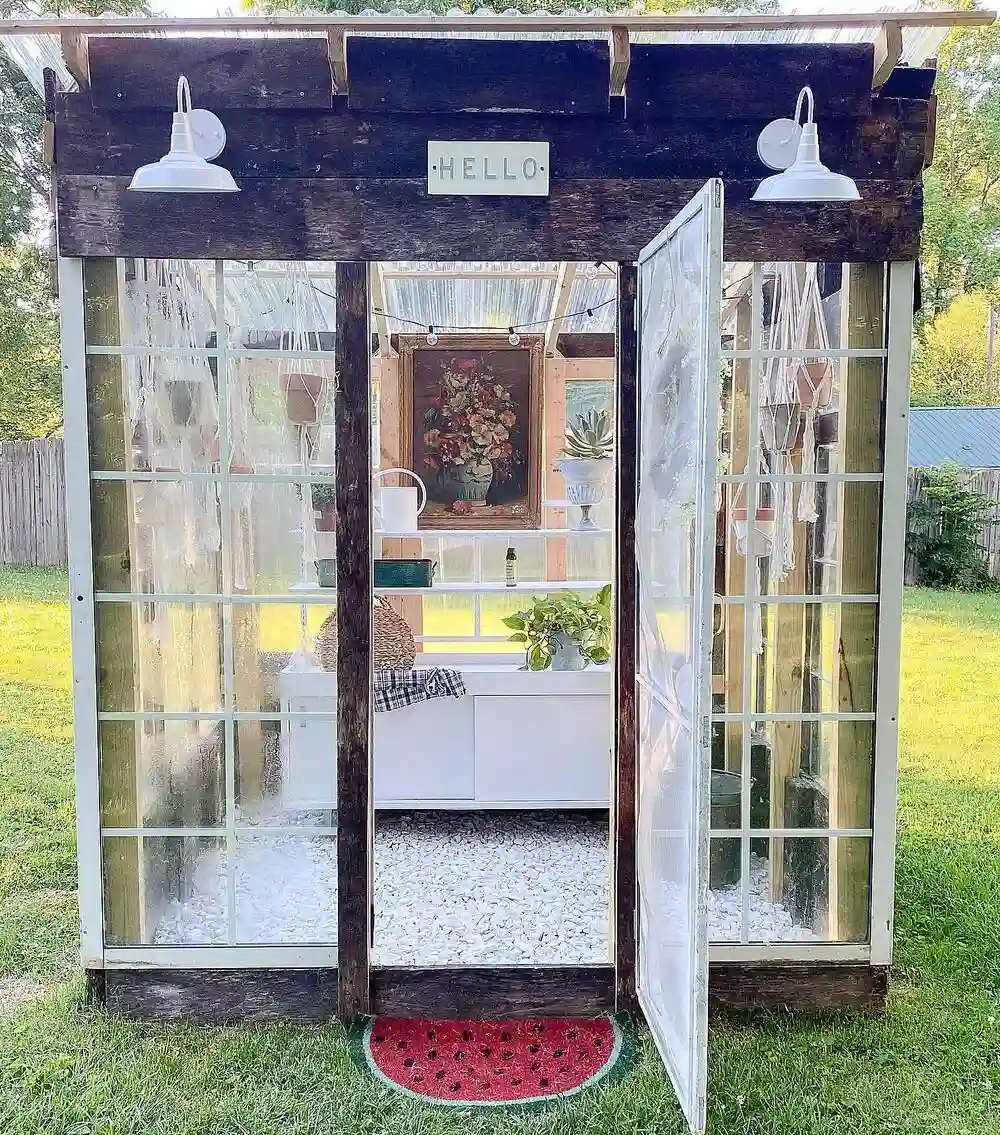
This charming rustic greenhouse displays reclaimed barnwood and vintage windows. The worn-out wood frame gives the greenhouse a timeless farmhouse appeal. The “HELLO” sign and vintage-style pendant lights add welcoming touches that make this feel more like a garden room than a utilitarian structure.
The design combines clear panels for maximum light with solid wood sections that provide structural strength and visual weight. The barn-style sliding or hinged doors make for easy access. It also maintains the agrarian aesthetic. The white interior shelving creates bright growing surfaces and maximizes vertical space efficiently.
What makes this build particularly appealing is how it repurposes materials that might otherwise be dumped. Old barn wood often costs very little or can be obtained free from demolition sites. The vintage windows add original texture that’s impossible to replicate with new materials. The mixed textures and battered finishes mean this greenhouse will age beautifully without requiring continued maintenance.
12. White Corrugated Panel Greenhouse

The stunning white greenhouse with clean white frame provides exceptional contrast against garden greenery. The fluted panels offer superior insulation compared to flat glazing. The peaked roof design with extended overhangs provides weather protection.
The visible internal shelving maximizes growing space nicely. Grooved panels typically cost less than traditional greenhouse glazing while being virtually unbreakable. This design works in areas with harsh weather since the panels handle thermal expansion better than rigid materials. The folded design also diffuses light naturally, preventing hot spots that can damage plants.
13. Elevated Mini Greenhouse

Built on sturdy wooden posts, this elevated mini greenhouse keeps plants at a comfortable working height. It is also protecting them from ground pests and providing excellent drainage. The recycled window construction creates maximum light while keeping costs incredibly low.
The elevated design offers several practical advantages. It improves air circulation, prevents ground moisture from affecting the wood, and makes the greenhouse accessible without bending. The purple accent gate adds character while serving functional purposes.
Tip: Consider adding casters to the legs for seasonal mobility, or build multiple units for different types of plants.
14. Tabletop Mini Greenhouse
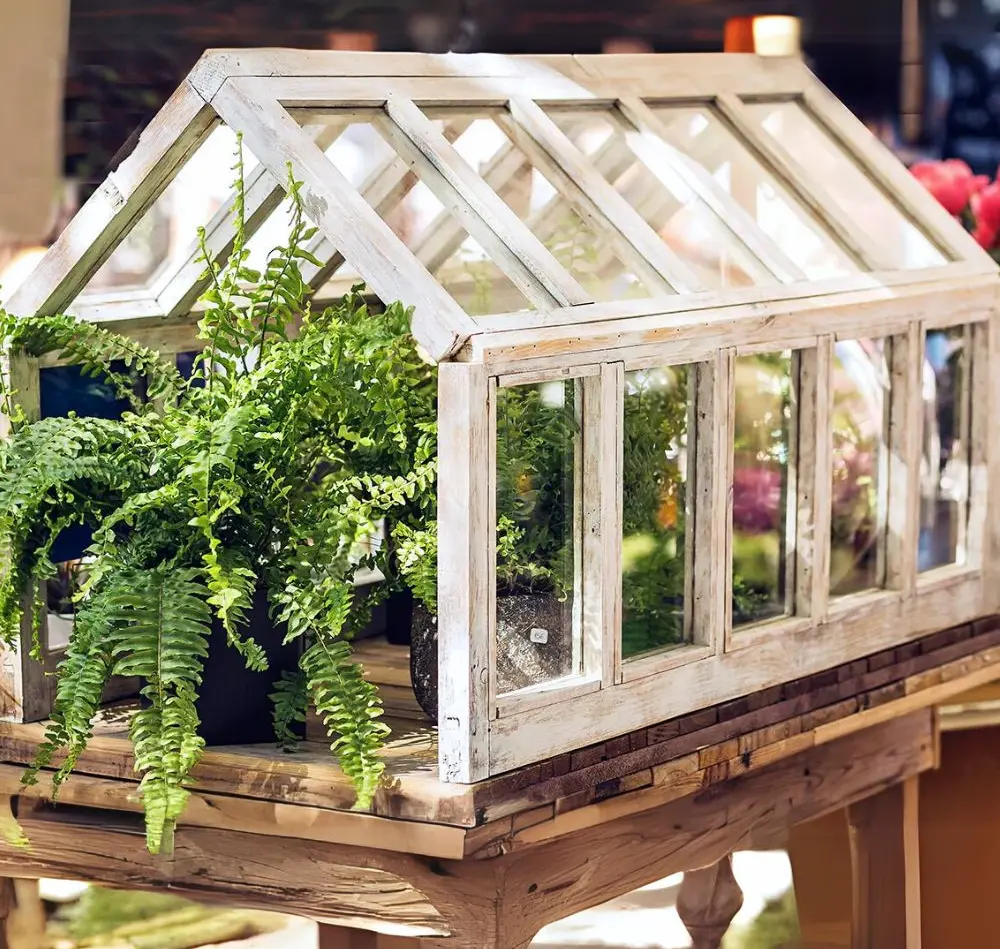
Assembled with reclaimed windows and a simple wooden frame, this charming tabletop greenhouse structure provides a controlled environment for starting seeds, propagating cuttings, or growing small plants year-round. The peaked roof design with multiple window panels maximizes light from all angles.
The genius of this design lies in its portability and accessibility. Being table-height makes plant care easy. The compact size means it can be moved indoors during extreme weather or placed for optimal sun exposure. Old storm windows or cabinet doors work for this application. The key is ensuring all joints are properly sealed to maintain humidity while providing satisfactory ventilation.
15. Black Traditional Greenhouse

This sophisticated black greenhouse creates a picturesque attraction while demonstrating how dark colors can work beautifully in garden settings. The classic design shows traditional multi-pane windows with glass panels, providing excellent light transmission. The dark frame creates an amazing disparity against the overgrown hillside garden. The peaked roof gives this structure timeless appeal.
The black color choice offers practical benefits; dark colors hide dirt and wear better than light colors. They require fewer frequent touch-ups. Black paint can help moderate temperature swings by absorbing heat during cool mornings. The glass panels prevent overheating during peak sun hours.
Tip: Consider adding automatic vent openers and a small circulation fan for optimal growing conditions.
16. Cold Frame Style Mini Greenhouse

The cold frame angled glass top maximizes sun exposure while the wooden frame provides insulation and structural support. This style works for extending the growing season, starting seeds early, or protecting tender plants during cooler months.
The hinged lid design allows for easy access and ventilation control, crucial for preventing overheating during warm days. The brick wall backdrop provides excellent thermal mass, absorbing heat during the day and releasing it slowly at night to moderate temperature swings.
Cold frames are great for beginners since they require minimal construction skills yet provide impressive results.
Tip: Consider adding an automatic vent opener to prevent overheating.
17. Ground Level Row Cover Greenhouse

This innovative low-profile greenhouse uses clear panels in a tent-like configuration to protect crops while they’re growing directly in the ground. The design is extremely practical for market gardeners. The A-frame configuration sheds rain evenly while providing adequate headroom for most vegetables.
It protects plants from pests, wind, and weather while maintaining direct soil contact for natural root development. The structure appears to use lightweight materials like PVC hoops and clear plastic panels, making it both affordable and portable. The modular strategy means you can create multiple units for different crops.
18. Large Reclaimed Window Greenhouse

The unique greenhouse structure establishes how collecting windows over time can result in a concrete, professional-looking greenhouse that costs a fraction of new construction. The varied window sizes and styles create visual attraction while providing excellent light penetration from multiple angles and heights.
The battered appearance gives this greenhouse authentic character that new structures simply can’t replicate. The mix of different window types provides benefits; various opening mechanisms offer multiple ventilation options. Different glass thicknesses help moderate temperature fluctuations.
19. Geodesic Dome Greenhouse

This stunning geodesic dome greenhouse represents the most structurally efficient design possible. It used minimal materials to create maximum interior space while withstanding extreme weather conditions. The triangular panel construction distributes stress evenly throughout the structure. It makes it very strong despite using lightweight materials.
The dome shape naturally sheds wind and snow while providing excellent light distribution from all angles throughout the day. The geometric framework creates a spacious interior without internal supports blocking growing areas. The wooden frame appears to use standard lumber cut to precise angles, with clear panels filling each triangular section.
The structure provides more usable space per square foot of materials than any other greenhouse design.
Tip: Consider using polycarbonate panels for durability and adding ventilation at the top.
20. Basic Polycarbonate Panel Greenhouse

These twin-wall polycarbonate panels can create an affordable, functional growing space without complex construction. The simple wooden frame uses standard lumber dimensions, making this an accessible project for most DIY builders. The clear panels provide excellent light transmission while offering better insulation than single-pane glass, helping maintain consistent temperatures year-round.
The traditional peaked roof design sheds snow and rain effectively while providing acceptable headroom throughout the interior. The visible shelving system maximizes vertical growing space, essential for smaller greenhouse footprints. The door appears to be a standard size, keeping hardware costs reasonable. The simple construction means fewer potential leak points and easier maintenance.
Tip: Consider adding automatic vent openers to prevent overheating and ensure proper air circulation for healthy plant growth.
21. Multi-Level Window Greenhouse

The innovative two-story greenhouse structure uses a combination of reclaimed windows and appears to depict both ground-level and elevated growing areas. The white painted frame keeps the structure looking clean and professional. The different window sizes create an interesting patchwork effect.
The upper level likely serves as additional growing space or storage. The lower section provides easy-access planting areas. The green ridged roof offers durability and weather protection while being much more affordable than traditional greenhouse glazing. This vertical policy can nearly double your growing space without expanding the footprint.
The key is securing proper structural support for the upper level and planning for sufficient ventilation on both levels. This design is for starting seeds on top and growing larger plants below.
22. Rustic Barn-Style Greenhouse
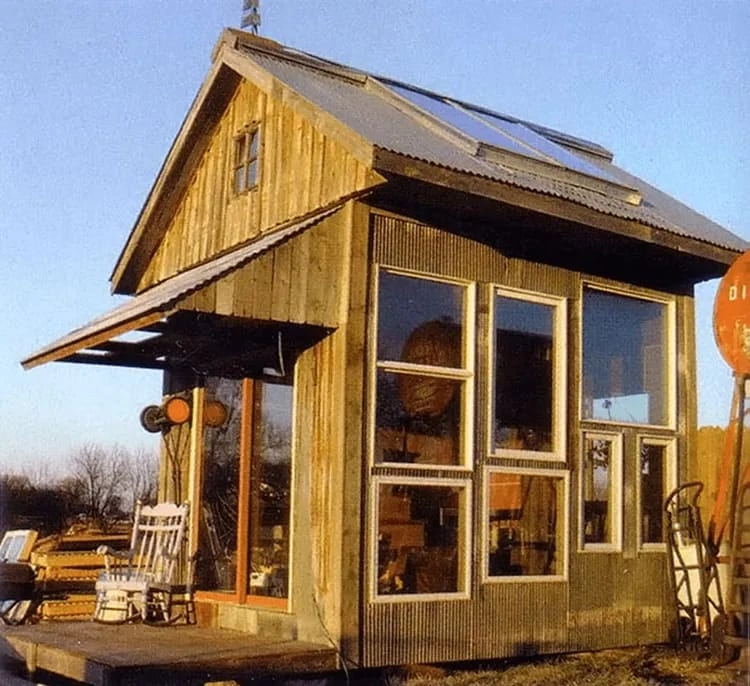
This captivating greenhouse combines traditional barn architecture with modern growing functionality. It is creating a structure that serves as both a practical garden building and an attractive landscape feature. The natural wood siding gives the greenhouse an eternal allure. The large windows provide excellent light for plant growth. The extended roof overhang creates a covered outdoor workspace, great for potting plants or storing garden tools.
The vertical wood siding is attractive and practical; it’s easier to install than horizontal siding and naturally sheds water well. The combination of solid walls on the ends with glazed walls facing optimal sun directions maximizes both structural stability and light penetration.
The raised foundation appears to provide good drainage and prevent ground moisture from affecting the wooden structure. The barn aesthetic means this greenhouse will complement rural or farmhouse-style properties perfectly while providing serious growing capacity.
23. Gambrel-Roof Greenhouse with Mixed Materials

The impressive gambrel-roof greenhouse combines traditional barn architecture with modern functionality. The unique curved roofline maximizes interior headroom while creating an attractive silhouette. The structure cleverly mixes materials. Corrugated metal siding on the lower portion keeps costs down while glazed upper sections provide excellent light penetration.
The bucolic barn-style door adds authentic farmhouse qualities while white trim creates clean contrast. The gambrel design provides more usable interior space than traditional peaked roofs while using similar materials. The mixed-material policy also provides better insulation on lower walls where plants need it least.
Tip: Consider adding gutters for rainwater collection and ensure adequate ventilation near the roof peak to prevent overheating during summer months.
24. Attached Shed-Style Greenhouse

The shed-style roof design enhances functionality by combining growing space with storage in one efficient structure. The roof slopes away from the main building, providing excellent drainage while creating a spacious interior with full headroom along the front glazed wall. The combination of clear panels for plant growing and solid walls for tool storage makes this practical for serious gardeners.
The attached design offers several advantages beyond space efficiency. It shares one wall with an existing structure, reducing materials and construction time while providing wind protection and thermal mass. The shingled roof matches traditional home architecture, making this suitable for front yards or visible locations.
The important part is guaranteeing proper drainage away from the main building and adequate ventilation to prevent moisture buildup. This procedure works well when you need both greenhouse space and organized tool storage.
25. Modern Minimal Greenhouse

This sleek greenhouse confirms that simple designs can be beautiful and highly functional. The clean lines and minimalist aesthetic exhibit a flat roof with a slight slope for drainage, eliminating complex construction while maintaining excellent proportions. The sage green door adds subtle color. The clear, creased panels provide maximum light penetration at an affordable price point.
The rectangular design keeps construction straightforward. There are no angled cuts or complex joinery required. The integrated raised beds flanking the entrance create a smooth transition between indoor and outdoor growing while adding visual appeal.
The flat roof also makes this greenhouse easy to attach solar panels or rainwater collection systems later.
Tip: Consider adding a small overhang above the door for weather protection and providing sufficient slope for drainage.
26. Farmhouse Style White Greenhouse

This charming white greenhouse brings farmhouse refinement to any garden with its classic proportions and brittle white finish. The traditional design displays a proper peaked roof with clear glazing throughout. It is creating an airy, light-filled space good for both plant growing and relaxation. The barn-style door hardware adds genuine character. The stone pathway creates an inviting entrance.
The white finish serves practical purposes beyond aesthetics. It reflects heat during summer months, helping prevent overheating while maintaining that clean, timeless look. The generous windows provide excellent light from multiple directions. The solid base offers structural stability and storage options.
The classic design works with basically any home style while providing professional-grade growing conditions.
Tip: Consider adding automatic vent openers and a small potting bench inside for maximum functionality.
27. Kids’ Garden Playhouse Greenhouse

This delightful elevated greenhouse combines functional growing space with whimsical charm that makes gardening fun for the whole family. The white painted frame and decorative elements create an inviting structure that encourages children to participate in gardening. The elevated design keeps plants at eye level for kids while providing excellent drainage and pest protection.
The peaked roof with clear panels maximizes light while the chicken wire sides offer good ventilation and protection from larger pests. The decorative touches, like colorful cutouts and blue picket fence details, make this greenhouse a garden attraction that pleases all ages.
The elevated platform also makes plant care easier for adults while teaching kids responsibility for their own growing space.
Tip: Consider adding hooks for small tools and labels for different plants to make this an educational experience.
28. Colorful Cottage-Style Greenhouse

The bold yellow, red, and black color scheme creates a cheerful appeal while the cottage-style proportions provide serious growing space. The combination of large glazed areas for plant growing and solid colored panels for visual interest reveals how creativity can improve both form and function in greenhouse design.
The traditional peaked roof and multi-pane windows give this structure eternal appeal. The bright colors make it a true garden statement piece. The interior appears well-organized with proper shelving and even includes seating. It shows that the greenhouses can serve as both growing spaces and garden retreats.
Tip: Consider using high-quality exterior paint to guarantee the vibrant colors last for years.
29. Vintage Window Mini Greenhouse

The charming mini greenhouse indicates the immaculate use of a single large vintage window to create an effective growing environment for small plants. The worn-out wooden frame adds genuine character. The old metal roof provides durable weather protection. This size is ideal for protecting tender plants, starting seeds, or growing herbs right outside your kitchen door.
The rustic appearance means this greenhouse fits naturally into cottage-style or farmhouse gardens while providing controlled growing conditions. The compact size makes it good for patios, decks, or small yards where space is limited.
The code is finding a good vintage window. Look for ones with intact glazing and solid frames. Old storm windows work particularly well for this application.
Tip: Consider adding a small thermometer inside to monitor conditions and guarantee proper ventilation on warm days.
30. Modern Raised Bed Greenhouse

This elegant raised bed greenhouse combines contemporary design with maximum functionality. It is creating an all-in-one growing system that’s good for serious gardeners with limited space. The black base provides actual growing depth. The clear top creates excellent greenhouse conditions. The modern aluminum frame and clean lines make this suitable for contemporary landscapes while providing professional-grade growing results.
The raised design eradicates bending while providing excellent drainage and soil control. The concrete base depth allows for deep-rooted plants and proper soil layering for optimal growing conditions.
The modern appearance works with contemporary home styles. The practical design maximizes both growing space and ease of maintenance.
Tip: Consider adding automatic vent openers and a drip irrigation system for minimal-maintenance growing.
FAQs About DIY Greenhouses
What’s the cheapest way to build a greenhouse?
The absolute cheapest option is using old windows from garage sales or demolition sites. You can build a basic 6×8 foot greenhouse for under $200 this way. Plastic sheeting over a simple wooden or PVC frame costs even less; around $50-100. But it won’t last as long. Cold frames are the most budget-friendly starting point at under $75.
Do I need a permit to build a greenhouse?
Most small greenhouses under 200 square feet don’t require permits, but rules vary by location. Check with your local building department first. If you’re building on a permanent foundation or adding electricity, you’ll likely need permits. Temporary structures or those on skids usually have fewer restrictions.
What materials work best for covering?
Twin-wall polycarbonate offers the best balance of cost, insulation, and durability. It costs more upfront than plastic but lasts 10+ years. Greenhouse plastic is cheapest but needs replacing every 2-3 years. Glass looks great and lasts forever, but costs the most and breaks easily. Corrugated panels work well for budget builds.
How big should my first greenhouse be?
Start with 6×8 or 8×10 feet. Smaller seems cheaper, but you’ll quickly outgrow it. Larger gets expensive fast. These sizes give you room to work while keeping costs reasonable. Remember, you need walking space between benches, so plan for 2-3 feet of pathways.
Can I build a greenhouse without experience?
Absolutely. Start with simple designs like cold frames or lean-to styles. Basic carpentry skills help, but many greenhouse builders learn as they go. YouTube tutorials and simple plans make it much easier than it looks. The key is starting small and not overthinking it.
What’s the best foundation for a DIY greenhouse?
Gravel base with concrete pavers works great for most builds and costs much less than poured concrete. Make sure it’s level and well-drained. Treated lumber on gravel works too. Avoid building directly on soil; you’ll get moisture problems and rot.
How do I keep my greenhouse from overheating?
Ventilation is everything. Add windows that open, install exhaust fans, or use automatic vent openers that work without electricity. Plan for at least 15-20% of your wall space to be vents. Shade cloth helps in summer. Many beginners underestimate how hot greenhouses get.
Is it worth building vs buying a kit?
Building yourself typically saves 40-60% over kits, plus you get exactly what you want. Kits are faster but often use cheaper materials. If you enjoy building projects and have time, DIY wins. If you want it done quickly without hassle, buy a kit.
What tools do I need?
Basic tools work fine: circular saw, drill, level, measuring tape, and screwdrivers. You might need a miter saw for angled cuts. Don’t buy specialized tools unless you’ll use them again. Many people borrow or rent what they need.
How do I find cheap materials?
Check Craigslist, Facebook Marketplace, and estate sales for windows. Building supply stores often have damaged or returned materials at discounts. Habitat for Humanity ReStores are goldmines for cheap building materials. End-of-season sales at garden centers can save you money on glazing materials.
When’s the best time to build?
Fall and winter give you time to hunt for materials and build without rushing to get plants in. You’ll be ready for spring planting. Avoid building during the peak growing season when you should be gardening. Weather matters too; avoid concrete work in freezing temperatures.
How long does a DIY greenhouse last?
With proper materials and construction, 15-25 years is normal. The frame usually outlasts the covering. Treated lumber frames last the longest, but even basic construction gives you many good years if you maintain it. Budget builds might need covering replacement every 3-5 years.
Do I need heat in my greenhouse?
Depends on your climate and what you’re growing. Many greenhouse gardeners use them primarily for extending seasons, not year-round tropical growing. A small electric heater works for most needs. Thermal mass like water barrels, helps moderate temperature swings naturally.
What mistakes do beginners make?
Building too small is the biggest one. Poor ventilation kills more plants than cold does. Skipping the foundation leads to problems later. Not planning for water access makes daily care harder. Many people also underestimate how much stuff accumulates in greenhouses.
Can I move my greenhouse later?
If you build it right, yes. Use bolted connections instead of nails, build on skids instead of permanent foundations, and keep it modular. Many successful greenhouse builders move and modify their structures as needs change. Planning for this from the start makes it much easier.