
Tiny home money traps destroy budgets every single day. You see a beautiful $45,000 tiny home online and think you have found the solution to high housing costs. Then reality hits. The home needs land.
Banks won’t give you a mortgage. Utilities cost $15,000 to hook up. Your city says it’s illegal to live there. Suddenly, your affordable dream costs $80,000, and you still can’t move in.
You will learn seven money traps that sellers don’t advertise. You’ll see exactly what each trap costs in 2025, where the problems hide, and how to avoid them. Some people save $20,000 just by reading this first. Others realize tiny living isn’t right for their budget and walk away before losing money.
Money Trap #1: Banks Won’t Give You A Normal Mortgage

Most banks will reject your tiny home loan application. Here’s why that costs you thousands. Traditional mortgages don’t work for tiny homes. Lenders typically require homes to be at least 400 square feet in size and to be situated on a permanent foundation.
Your tiny home on wheels? That’s classified as a vehicle. Your 300-square-foot home on a foundation? Too small. Recent research indicates that only about 25% of home purchases under $150,000 are financed with mortgages. The rest have to find other ways to pay.
This creates a significant challenge in financing tiny houses. You can’t get the low-interest rates that regular homebuyers receive.
Your Financing Options All Cost More
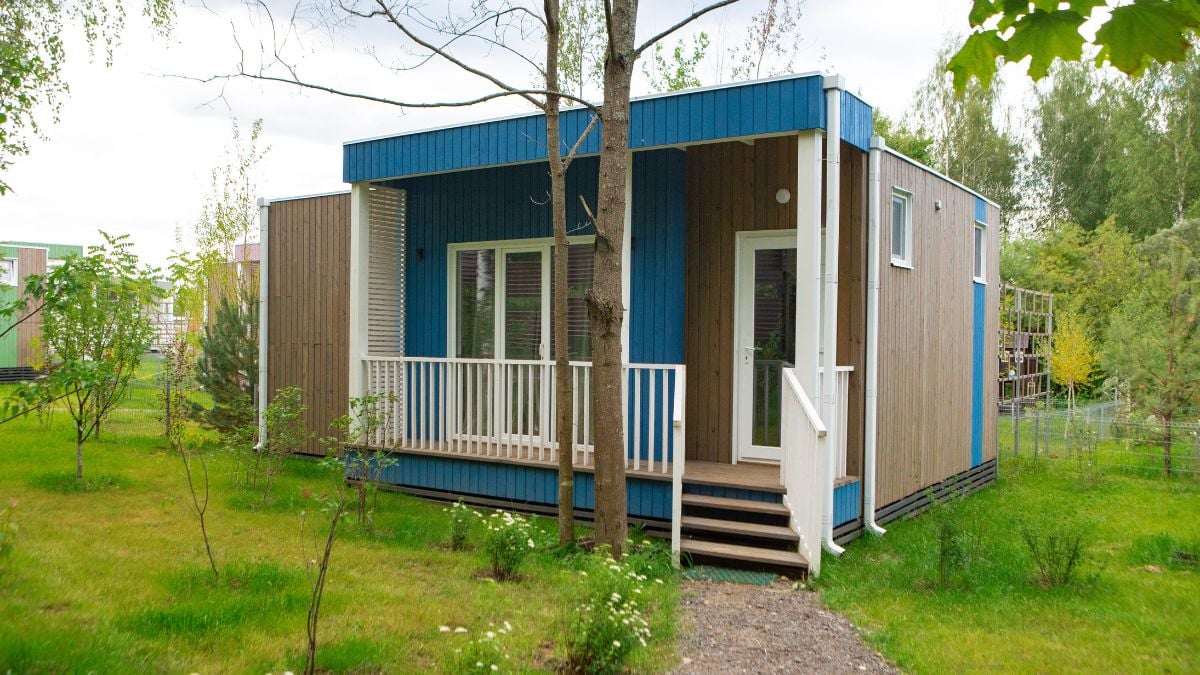
Personal loans are your main option, and they charge 6% to 36% interest rates. Compare that to the 7%-8% you’d pay on a mortgage. RV loans might work if your tiny home qualifies, but they require higher credit scores than mortgages. Many lenders won’t even touch loans under $50,000 because the paperwork costs them the same whether they lend you $50,000 or $250,000.
Here’s the real cost difference in dollars. A $50,000 tiny home financed with a personal loan at 12% for 7 years costs you $708 per month. That’s $59,472 total. A mortgage on the same amount at 7% for 15 years would cost only $449 per month, or $80,820 total. You’d save money over time with a mortgage, but you can’t get one.
Look at a real example. A tiny home owner paid $92,744.88 for her home. Her monthly payment is $865.35 at a 9.30% interest rate for 300 months (that’s 25 years). She’s paying back $259,605 total. On a house that cost less than $100,000.
But here’s what really gets people. Some tiny home builders offer “easy” financing built right into your purchase. Sounds convenient. The problem? They’re marking up interest rates 2-3% above what you could get elsewhere. They make it easy because they’re making money off your loan.
What You Should Do
Call three local credit unions before you talk to any builder about financing. Credit unions often have more flexible lending rules and lower rates than big banks. Get pre-approved somewhere else first. Then, if a builder offers financing, you can compare the real cost.
Money Trap #2: Land Costs More Than The House
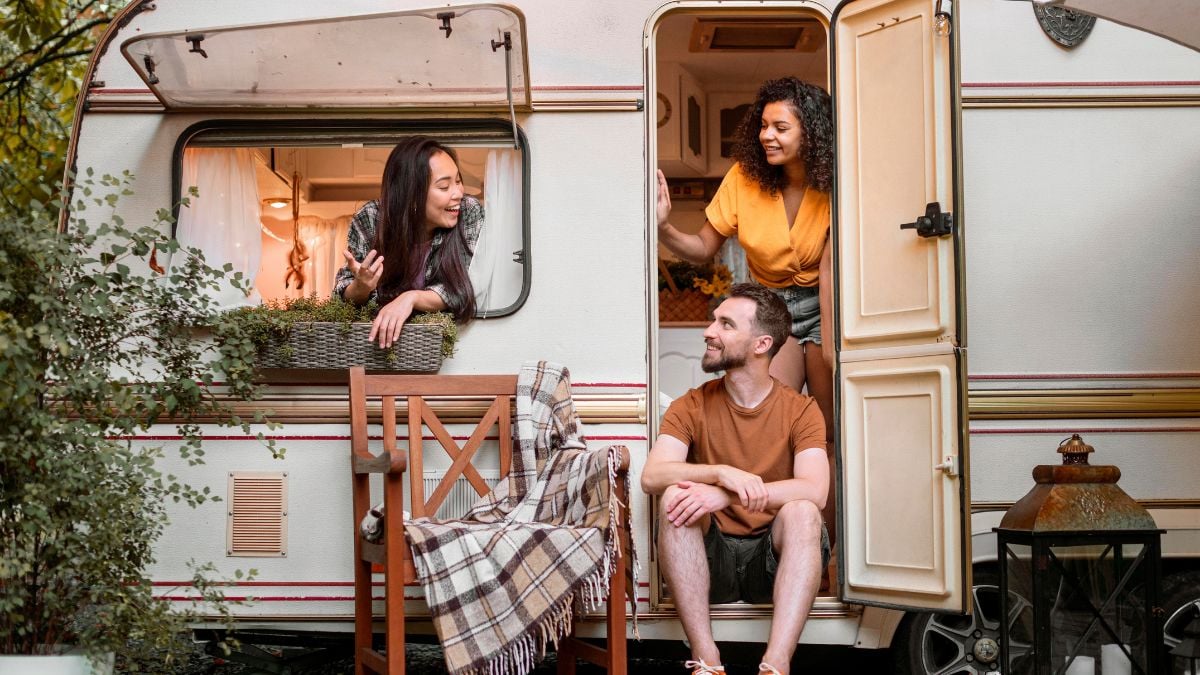
You saved money buying a $40,000 tiny home. But where will you put it? That answer might cost you more than the house itself. Land prices shock people who thought they were done spending.
The average cost for land in the United States is $18,657 per acre. But that number hides huge differences. In states like New Mexico, Wyoming, and North Dakota, you’ll pay $6,000 to $9,000 per acre. In Massachusetts? Try $103,000 per acre. New Jersey runs about $88,000 per acre.
And you still need to clear that land. One tiny home owner spent $10,300 just on land clearing before she could move in. Trees need cutting. The ground needs leveling. Access roads need grading.
“I’ll just rent land,” you think. That costs money every single month. Renting a lot for a tiny home on wheels costs between $250 and $1,500 per month, depending on the location. That’s $3,000 to $18,000 per year just for the location of your house. Compare that to the tiny house financing you’re already paying. Your monthly costs add up fast.
RV parks seem like an easy solution. But many RV parks don’t allow full-time living. They’re designed for vacationers, not residents. The ones that do allow full-time living? They charge premium rates and often have waitlists. You might find a spot, but you can’t count on it.
“My friend said I can park it in their backyard for free.” Check your local zoning restrictions first. Many areas don’t allow tiny homes in residential backyards, even if the property owner agrees. Neighbors can complain. Code enforcement can fine you. You might have to move with 30 days’ notice.
If you buy land, add property taxes to your budget. These vary by state and county. Some areas see your tiny home as a permanent structure and tax it like a house. Others don’t tax it at all because it’s on wheels.
What You Should Do
Before you buy your tiny home, know where it’s going. Visit the land. Check zoning laws. Calculate the total monthly cost, including land rent or mortgage, property taxes, and any RV park fees. Add this to your tiny house financing payment. Can you still afford it?
Money Trap #3: Utility Hookups Cost $15,000+ You Never Budgeted

Your tiny home has a toilet, shower, and lights. Great. But how do you connect them to water and power? That’s where the real utility costs hit.
Water and sewer connections aren’t cheap. One tiny home owner spent $6,000 connecting to her parents’ existing septic system and well. She got lucky—she didn’t have to install new systems from scratch. Installing a well and septic system costs $6,000 to $20,000 on average if you’re starting fresh.
Here’s the breakdown. Well drilling costs $20 to $30 per foot just for drilling. Complete well installation runs $30 to $80+ per foot. Most residential wells are 100 to 300 feet deep. Do the math. A 200-foot well costs $6,000 to $16,000 before you even think about the septic system.
Installing a septic tank system costs $3,500 to $8,500 for a conventional system. Need an aerobic system? That’s $10,000 to $20,000. If city water is available, connecting to it costs $25 to $200 per linear foot. Far from the main line? Those hookup fees destroy your budget.
Electrical hookups add up fast. Power lines nearby? Expect to pay around $1,000 for the connection. But if you’re far from existing lines, you’ll pay $5 to $15 per linear foot to run new ones. Your property is 500 feet from the road? That’s $2,500 to $7,500 just for electricity. Some people pay $5,000 to $12,000 for electrical hookups.
I’ll just go off-grid,” you say. Off-grid sounds free, but costs thousands upfront. Solar power systems for tiny homes run $3,500 to $10,000, depending on your power needs. Solar panels alone aren’t enough—you need batteries, inverters, and installation. Rainwater collection systems need filters, storage tanks, and pumps. Composting toilets cost $900 to $2,500.
Winter adds more problems if you live in cold climates. Heat tape for frozen pipes costs $50 to $200 per pipe run. Insulation for water lines isn’t optional—it’s required to keep your plumbing working. Budget another $500 to $1,000 for winterizing.
Add it all up. Water, sewer, electricity, and weather protection easily hit $15,000 to $25,000. Some people spend more than that. These aren’t optional costs. You can’t live in your tiny home without utilities.
What You Should Do
Before you buy land or a tiny home, get quotes for utility connections. Call local well drillers. Talk to septic installers. Ask electricians what hookups cost. Know these numbers before you commit to anything.
Money Trap #4: Your City Might Not Let You Live There

You found the perfect spot for your tiny home. Then the city hall says no. This happens more than you think.
Minimum square footage rules block tiny homes in most places. Many local governments require homes to be at least 700 to 1,000 square feet. Most tiny homes are under 400 square feet. The math doesn’t work. Your home is illegal before you even move it there.
Tiny homes on wheels face bigger problems. Cities classify them as RVs, not houses. Most zoning laws restrict RVs from long-term parking outside designated RV parks. Translation? You cannot legally use your tiny home as a full-time residence in many jurisdictions. Even if you own the land.
Every city has different rules, and that makes planning impossible. Portland allows tiny homes in all residential zones. Los Angeles confines them to designated areas only. Miami demands permits that most people can’t get. States like California and Oregon have adopted progressive policies allowing accessory dwelling units. But states like New York and North Dakota impose stricter regulations that basically say no to tiny living.
Your dream location might have building codes that block you completely. Or rules that weren’t enforced last year but are enforced now.
Permits and variances cost money even in friendly areas. Expect $500 to $5,000 in permit fees. Some areas require conditional use permits that take months to approve. You’re paying rent somewhere else while you wait. The permit might get denied after all that time and money.
Here’s what really keeps people up at night. Neighbors can force you out even if you did everything right. If your tiny home isn’t properly permitted and neighbors complain, you could face $1,000 fines. Worse, you might be forced to move with 30 days’ notice. This happens even in seemingly tiny-home-friendly cities.
The legal issues don’t end there. Some areas let you have a tiny home, but only as a guest house, not your primary residence. Others say you can live there, but only for six months per year. Code enforcement officers can show up anytime to check.
What You Can Do
Call your local planning and zoning office before you buy anything. Don’t ask “Are tiny houses legal here?” Ask specific questions. “Can I place a 300-square-foot dwelling on wheels on residential land I own?” Get the answer in writing. Save those emails. If they say no, ask what would make it legal. Sometimes, adding a foundation or meeting certain building codes solves the problem
Money Trap #5: Insurance Companies Don’t Know What to Do With You
Call your insurance company and say, “I bought a tiny home.” Watch them pause. They don’t have a box to check for what you own. Standard homeowners’ insurance won’t cover you. DIY builds face qualification issues with most types of insurance policies. Insurers want building codes met. They want certifications. They want inspections.
Your custom tiny home built in someone’s driveway? That’s a hard no from most insurance companies.”I’ll get RV insurance instead,” you think. That works for some people. But RV insurance has gaps if your tiny home wasn’t built by a certified RV builder. Insurance might not cover all forms of damage. Theft coverage gets complicated.
Your custom kitchen might not be covered. Your expensive solar setup might not be covered. Read the fine print carefully. Here’s what tiny home insurance actually costs. One tiny home owner pays $100 monthly for insurance. That’s $1,200 per year. Compare that to RV insurance, which often runs $600 to $1,000 annually. You’re paying more for less coverage.
Some tiny homes can’t get insured at all. Not all tiny homes are insurable, especially if they’re still on wheels or don’t conform to building codes. Insurers may demand that you build a foundation first before they’ll write a policy. That foundation costs $5,000 to $15,000, but you didn’t plan to spend.
Even when you find coverage, expect coverage problems. Claims get denied because your home doesn’t fit standard definitions. You’re stuck between homeowners insurance (won’t cover mobile structures) and RV insurance (won’t cover custom builds).
Best Practices!
Get insurance quotes before you buy your tiny home. Call three insurance companies. Explain exactly what you’re buying—size, whether it’s on wheels, who built it, and what certifications it has. Get quotes in writing. If nobody will insure it, that’s a huge red flag. Don’t buy a home you can’t insure.
Money Trap #6: Your Tiny Home Loses Value Like a Car
Buy a $60,000 tiny home today. Try to sell it in five years. You’ll be lucky to get $30,000. That’s not a housing investment. That’s throwing money away.
Tiny homes depreciate, not appreciate. Tiny homes on wheels are viewed similarly to recreational vehicles. They see depreciated value over time, unlike traditional homes, which typically appreciate. Buy a regular house and it’s worth more in ten years. Buy a tiny home, and it’s worth less.
The numbers are brutal. Tiny homes typically drop 20% to 30% in value in the first few years. The resale value usually declines annually, especially during the first five years. Homes on wheels see depreciation closer to 50% over five years. That’s the same as a car. You drive it off the lot and lose money instantly.
Traditional homes build equity because they include land value. Land goes up. Buildings on that land go up. Your tiny home does neither. You own a structure that gets older and less desirable every year.
Customization makes resale harder. Since tiny homes tend to be customized to specific tastes and requirements, they’re tough to unload on other buyers. You spent $15,000 on that custom kitchen with pull-out drawers and a farmhouse sink. The next buyer wants something different. They won’t pay extra for your choices. The average resale value of a tiny home is about $60,000—regardless of what you spent building it.
Here’s the hard truth. You might lose money on this. If you’re viewing a tiny home as an investment in anything other than personal happiness or fulfillment, expect to take a loss. Compare this to traditional homes. A house you buy for $250,000 might be worth $300,000 in five years. Your $60,000 tiny home might be worth $35,000.
You’re not building wealth. You’re paying for a lifestyle.
Our Suggestion!
Only buy a tiny home if you plan to live in it for years and you’re okay with losing money when you sell. Don’t think of it as an investment that builds equity. Think of it as paying for housing—like rent, but you own it temporarily.
Money Trap #7: The “Hidden” Costs That Add Up to $25,000
You budgeted for the tiny home. You budgeted for land. But did you budget for everything else? Most people don’t. That’s where hidden expenses destroy your plans.
Moving costs hit hard if your home is on wheels. Towing requires a heavy-duty truck that most people don’t own. Renting one costs $100 to $200 per day. Professional transport runs $1 to $5 per mile. Moving your tiny home 500 miles? That’s $500 to $2,500. Damage during moves is common—cracked windows, loose fixtures, and road debris hitting your siding. Budget another $500 to $2,000 for repairs after each move.
Specialty appliances cost more than you think. Instead of standard appliances, you’ll need custom compact versions designed for tiny houses. A normal fridge costs $800. A tiny home fridge costs $1,200. Compact washer-dryer combos run $1,500 to $2,500. Small doesn’t mean cheap. It means specialized and expensive.
Storage rental eats money during your transition. Where does your stuff go while you’re building or moving? Storage units cost $50 to $300 monthly. Stay there six months? That’s $300 to $1,800 you didn’t plan for. Some people need storage for years while they figure out where to legally place their tiny home.
Tools and materials for DIY builds surprise everyone. DIYers should plan $2,000 to $5,000 for tools, tool rentals, and cleanup. You need saws, drills, levels, and safety equipment. You can’t build with nothing. Renting specialized tools costs $50 to $200 per day. Those days add up fast.
Add in the additional costs nobody mentions. Moving costs. Appliances. Storage. Tools. Permits. Inspections. Site preparation. Temporary housing while you build. The “hidden” costs can easily add another $5,000 to $25,000+ to your total budget.
Look at a real example. One tiny home owner thought she was buying a $92,744 home. Her total cost, including all additional facilities, came to $109,044.88. That’s $16,300 in hidden costs she didn’t expect.
A Helpful Tip!
Build a spreadsheet before you buy. List every possible cost—not just the big ones. Add 20% to your total budget for things you’ll forget. If you can’t afford that extra 20%, you can’t afford the tiny home yet.
