
Not everyone can invest $5,000 every month. For many Americans, even putting aside $1,500 requires serious adjustments to their household budget. But smaller monthly investments can still build meaningful savings over a decade.
The question is whether those savings will be enough to support retirement. Investing consistently is valuable, but the amount accumulated must eventually match the income you expect to withdraw.
Assume a 5% annual return after inflation over 10 years. These examples begin with no existing investments and assume monthly contributions maintain the same purchasing power throughout the decade.
Already Have $100,000 Invested? Your Monthly Target Changes Dramatically

Many people planning retirement within 10 years are not starting from nothing. They may already have money in a 401(k), IRA, brokerage account, or other retirement investments. That existing balance can make a substantial difference.
Money already invested has the entire decade to potentially grow. As a result, someone with $250,000 saved may need considerably smaller monthly contributions than someone starting with an empty retirement account.
Suppose the goal is to accumulate $900,000 in today’s purchasing power. With a hypothetical 5% annual return after inflation, the monthly contribution requirements would look like this.
| Current Investments | Monthly Investment Needed |
|---|---|
| $0 | $5,830 |
| $50,000 | $5,303 |
| $100,000 | $4,775 |
| $250,000 | $3,192 |
| $500,000 | $554 |
A person starting with $250,000 would need to contribute approximately $3,192 monthly to reach the target under these assumptions. Someone beginning with nothing would need almost twice that amount.
The existing $250,000 alone could grow to approximately $407,224 in purchasing-power terms over the decade. Additional investments would then need to produce the remaining amount.
Of course, these calculations assume steady growth, which actual markets do not provide. Investment losses, taxes, and fees may change the final result, especially if a significant market decline occurs close to retirement.
The larger lesson is simple. Before calculating how much more money you need to invest, determine how much of your retirement goal your existing savings could reasonably cover.
Inflation Can Make Your Retirement Account Look Richer Than It Really Is

One of the biggest retirement planning mistakes is looking at investment growth without considering inflation. Your account balance may increase every year while the amount of goods and services it can purchase grows much more slowly.
Imagine investing $1,000 monthly for 10 years with an average nominal annual return of 7%. Your ending portfolio would be approximately $171,000, assuming regular monthly contributions and steady growth.
But if inflation averages 3% annually, that future balance would have purchasing power equivalent to roughly $127,000 today. The difference exists because everyday expenses are likely to become more expensive.
It is also important to understand three different types of investment returns.
Nominal return measures investment growth before adjusting for inflation. A portfolio increasing by 8% over a year has earned an 8% nominal return before considering inflation and applicable expenses.
Real return measures growth after inflation. If investments earn 8% while inflation reaches 3%, the exact real return is approximately 4.85%.
After-tax and after-fee return accounts for the costs that reduce what investors actually keep. Those costs may include fund expenses, account fees, and taxes, depending on the investments and account type.
For example, someone assuming that an 8% investment return means their spending power will increase by 8% every year is overlooking an important part of the calculation.
Over a decade, even relatively small differences in inflation and investment expenses can change the final portfolio value significantly. That is why retirement plans should use realistic assumptions rather than relying on attractive historical averages.
Social Security Could Reduce the Amount You Need to Invest
A retirement investment portfolio does not necessarily have to cover every dollar of spending. Social Security, pension payments, and certain annuity benefits may provide income that reduces the burden on personal savings.
Consider someone who wants $3,000 monthly during retirement. If dependable income covers $1,500 of those expenses, investments only need to provide the remaining $1,500.
Using a 4% initial withdrawal guideline, this would reduce the investment portfolio target from $900,000 to $450,000.
| Monthly Income From Other Sources | Monthly Investment Income Needed | Portfolio Target at 4% |
|---|---|---|
| $0 | $3,000 | $900,000 |
| $500 | $2,500 | $750,000 |
| $1,000 | $2,000 | $600,000 |
| $1,500 | $1,500 | $450,000 |
| $2,000 | $1,000 | $300,000 |
These examples assume that income from other sources is available when retirement begins and that all figures are expressed in comparable purchasing-power dollars.
The timing of those payments matters. Someone retiring at age 55 cannot immediately rely on Social Security retirement benefits, which generally cannot begin before age 62.
Claiming Social Security early also permanently reduces the monthly retirement benefit compared with waiting until full retirement age. For people born in 1960 or later, full retirement age is 67.
A person retiring before Social Security eligibility must therefore have enough savings or other income to cover the years before those benefits begin.
For retirees with pensions, reviewing the payment amount, starting date, survivor benefits, and inflation protection is equally important. A pension that never increases may lose purchasing power over time.
The best approach is to calculate how much dependable income will be available at each retirement age. Then determine how much additional income investments must provide during those years.
Choosing the Right Investments Matters More Than Chasing High Returns
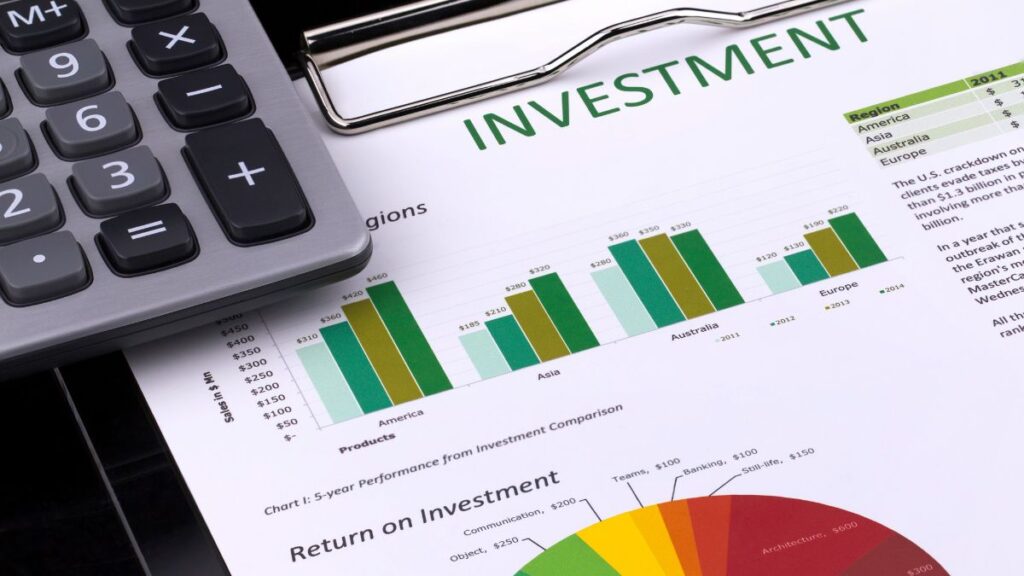
When retirement is only 10 years away, choosing suitable investments becomes especially important. Investors need enough growth potential to build wealth, but they also need to manage the possibility of losses near retirement.
Higher expected returns generally come with greater investment risk. That can create problems when someone has a fixed retirement date and limited time to recover from a market decline.
High-Yield Savings Accounts and Government Bonds
High-yield savings accounts and high-quality government bonds can provide stability. They may be appropriate for emergency funds, near-term spending needs, or portions of a retirement portfolio intended to reduce volatility.
However, returns can change as interest rates move. Inflation and taxes may also reduce the purchasing power of the interest earned.
Longer-term bonds carry another risk because their market values can fall when interest rates rise. Government bonds are not all equally sensitive to changing market conditions.
These investments can play an important role in a retirement strategy, but depending entirely on relatively low returns may require much larger monthly contributions.
Real Estate Investment Trusts

Real estate investment trusts, commonly called REITs, provide exposure to income-producing properties without requiring investors to manage buildings directly.
Some REITs distribute regular income, which can appeal to people approaching retirement. However, dividend payments can change, and property investments remain exposed to economic conditions, borrowing costs, and vacancies.
A REIT offering a high dividend yield is not automatically a safe investment. Its share price may fall, and the income it distributes may not keep pace with inflation.
REITs can be part of a diversified portfolio, but relying on them alone creates additional concentration risk.
Broad Stock Market Index Funds
Broad stock market index funds allow investors to hold shares in many businesses through one investment. They offer diversified exposure to stocks and can provide long-term growth potential at relatively low costs.
However, historical market averages should not be treated as guaranteed future returns. Stocks can experience substantial losses, and a 10-year investment period does not eliminate that risk.
For someone approaching retirement, the appropriate mix of stocks, bonds, and cash depends on risk tolerance, available income, and the expected timing of withdrawals.
The objective is not to find an investment that promises 10% or 12% every year. It is to create a portfolio with a reasonable balance between growth, stability, and access to money when needed.
A Market Crash Near Retirement Can Change Everything

Imagine two people who each accumulate $800,000 before retiring. Both plan to withdraw approximately $32,000 annually using a 4% initial withdrawal guideline.
The first retires during a relatively stable market. The second retires shortly before a major stock market decline, causing their portfolio to lose a substantial portion of its value.
Even though both started with the same amount, their financial situations may become very different. The second person could be forced to sell more investments while prices are depressed to cover ordinary expenses.
This problem is known as sequence-of-returns risk. It describes how the order of investment gains and losses can affect the amount of money available throughout retirement.
Losses during the first few years of retirement can be especially damaging. Withdrawals reduce the money remaining invested, potentially limiting the portfolio’s ability to recover when markets improve.
Someone planning to retire in 10 years should therefore consider how their investment strategy may need to change as the target date approaches.
A portfolio appropriate for someone with 30 years until retirement may not be suitable for someone who expects to begin withdrawing money within two years.
Maintaining suitable cash reserves, diversifying investments, and planning withdrawals carefully may help reduce certain risks. None of these measures can completely eliminate the possibility of investment losses.
The Hidden Expenses That Can Ruin a 10-Year Retirement Plan

Many retirement calculations focus on everyday expenses while overlooking large costs that occur less frequently. These expenses can create serious problems when a household no longer receives regular employment income.
Healthcare is one of the biggest concerns, especially for Americans planning to retire before Medicare eligibility. Insurance premiums, deductibles, prescriptions, and dental care may require significant spending.
Housing is another area where expenses can be underestimated. Even a mortgage-free home requires property taxes, insurance, repairs, utilities, and ongoing maintenance.
| Retirement Expense | What to Include in Your Budget |
|---|---|
| Healthcare | Insurance, prescriptions, deductibles, dental care |
| Housing | Property taxes, repairs, insurance, utilities |
| Transportation | Car replacement, maintenance, insurance |
| Taxes | Taxes on investment withdrawals and other income |
| Family Support | Assistance for children, parents, or relatives |
| Emergencies | Unexpected bills and major repairs |
Travel, entertainment, and hobbies deserve attention too. Someone who plans to retire early may have additional years available for activities that cost money.
Another major issue is accessing retirement funds before reaching the normal withdrawal age. Withdrawals from many tax-advantaged retirement accounts before age 59½ may trigger a 10% additional tax unless an exception applies.
That means someone retiring at 50 must think about more than the total amount saved. They also need a realistic plan for accessing their money when necessary.
A good retirement budget includes both predictable monthly expenses and occasional major costs. It should also contain room for inflation and unforeseen financial problems.
Increasing Your Monthly Savings May Matter More Than Earning a Higher Return

When people discover how much they need to invest, their first reaction is often to search for investments offering higher returns. But attempting to compensate for inadequate savings through riskier investments can lead to serious losses.
There is another approach that investors have more direct control over. Instead of trying to earn extraordinary returns, they can focus on increasing the amount invested.
Consider someone contributing $1,500 monthly who receives a promotion. If the additional income allows monthly contributions to increase to $2,500, that change can significantly improve the retirement outlook.
The investor does not need to predict the next winning stock or perfectly time market movements. The improvement comes from directing more earned income toward long-term savings.
Increasing contributions may require controlling lifestyle inflation, reducing unnecessary recurring expenses, or developing new income sources.
Career advancement, additional work, and business income can sometimes help. However, those opportunities are not guaranteed, and they should be evaluated against personal health, family responsibilities, and available time.
For households with limited income, maintaining a realistic contribution rate may be better than setting an ambitious target that cannot be sustained.
Consistency matters, but contribution size also matters enormously when retirement is only a decade away.
The 10-Year Retirement Blueprint That Makes the Numbers Actionable

A retirement target becomes more useful when it is divided into smaller decisions. Instead of focusing entirely on a large portfolio balance, people can work toward measurable financial improvements throughout the decade.
The following plan provides a practical framework for preparing to retire within 10 years.
Years 1 and 2: Calculate Your Retirement Gap
Begin with an accurate picture of your finances. Review retirement accounts, brokerage investments, savings, debts, household expenses, and expected future income.
Calculate the amount your investments must eventually provide. Then compare that requirement with the portfolio you could realistically accumulate during the next decade.
Building emergency savings and addressing expensive debt can also improve financial stability. A household that regularly relies on credit cards to handle emergencies may struggle to maintain aggressive monthly investments.
Once the budget is stable, automatic investment contributions can help make saving a regular part of household finances.
Years 3 and 4: Increase Contributions Whenever Possible
As income increases, consider directing part of each raise toward retirement investments. This allows savings to grow without requiring every additional dollar to be spent.
Employer retirement contributions can also support long-term accumulation. Workers should review available workplace benefits and understand any matching contribution requirements.
At this stage, tax-efficient investing and suitable account choices may improve the amount retained for retirement. Annual contribution limits and withdrawal restrictions should be considered before deciding where money belongs.
Small improvements sustained over several years can make a noticeable difference to the final result.
Years 5 and 6: Measure Your Actual Progress
The halfway point is a useful time to compare current investments with the original retirement projection. Markets may have performed better or worse than expected, while income and household expenses may also have changed.
If the portfolio is behind schedule, consider whether higher contributions, lower retirement spending, or a later retirement date would close the gap.
Avoid assuming that future investment returns will automatically compensate for disappointing past performance. That assumption can encourage unnecessary risk.
A realistic retirement plan should change when the financial evidence changes.
Years 7 and 8: Prepare Your Portfolio for Withdrawals
As retirement approaches, protecting the ability to fund near-term expenses becomes increasingly important. Review the investment allocation and consider how much money should remain accessible without selling volatile assets during a decline.
This is also a useful period for examining Social Security options, pension benefits, insurance coverage, and potential withdrawal taxes.
Consider how the budget would work if markets declined during the first few years after retirement. Knowing which expenses could be reduced may provide greater flexibility.
Retirement readiness involves more than reaching a target account balance. It includes understanding how that money will support everyday living.
Years 9 and 10: Test Whether Retirement Is Truly Affordable
The final stage should focus on whether leaving work is financially sustainable. Review expected income, essential expenses, healthcare coverage, taxes, and investment withdrawals.
Test several possible outcomes, including weaker investment returns, higher inflation, and unexpected expenses. A retirement plan that succeeds only under optimistic assumptions may need adjustment.
If the numbers do not support full retirement, consider whether working part time or delaying retirement could improve long-term security.
The goal is to make the retirement decision using realistic financial information rather than relying on hope.
What If You Cannot Invest $3,000 Every Month?

For many households, investing $3,000 every month would consume a large share of available income. Housing costs, healthcare, family responsibilities, and existing debts may make that target unrealistic.
That does not mean retirement planning should stop. It means the retirement goal may need to be adjusted around circumstances that can actually be managed.
One option is reducing the amount of monthly income needed during retirement. Every $500 reduction in required monthly portfolio withdrawals lowers the target portfolio by $150,000 under the 4% guideline.
Another option is working longer. Extending the investment period from 10 years to 12 or 15 years allows additional contributions and gives existing investments more time to potentially grow.
Some people may also consider phased retirement. Working fewer hours while drawing limited amounts from investments could reduce pressure on the portfolio, provided suitable employment remains available.
Others may benefit from reducing debt before retirement. Eliminating a significant monthly payment can lower the income required after leaving work.
There is no need for every retirement to follow the same timetable. For some people, financial independence arrives through a combination of savings, lower expenses, part-time income, and eventually Social Security benefits.
Is Investing $3,000 to $4,000 Monthly Really Enough to Retire in 10 Years?
The commonly mentioned figure of $3,000 to $4,000 monthly can support a meaningful retirement portfolio. Whether it is enough to stop working depends on spending needs, existing investments, and other available income.
Consider someone who starts with no investments and contributes $3,500 monthly for 10 years. Assuming a hypothetical 7% annual return after inflation, the projected portfolio would reach approximately $599,000 in today’s purchasing power.
Using the 4% initial withdrawal guideline, that balance could support about $2,000 per month before applicable taxes.
That may be sufficient for someone with modest expenses, low housing costs, or additional dependable income. It would not independently support a lifestyle requiring $4,000 or $5,000 monthly.
For someone beginning with no savings who needs $3,000 monthly entirely from investments, the required contribution could be closer to $5,262 per month under a 7% real-return assumption.
Using a more conservative 5% real-return assumption increases the monthly requirement to approximately $5,830.
Neither scenario guarantees success. Actual market returns vary, and someone planning an especially long retirement may need a lower withdrawal rate or a larger starting portfolio.
The correct investment number is the one that supports your personal spending requirements under assumptions you can reasonably defend.
The Real Goal Is Financial Freedom, Not Just a Retirement Date

Retiring in 10 years is an ambitious financial goal because monthly savings must accomplish work that traditional retirement investors often spread across several decades.
Someone needing $1,500 monthly from investments faces a very different challenge from someone requiring $5,000. Existing savings, pensions, Social Security, taxes, and expected living expenses can change the calculation significantly.
That is why a universal monthly savings recommendation cannot describe everyone’s situation. The number has to come from the income you want to replace and the resources already available.
Begin by calculating realistic retirement expenses. Subtract dependable income expected at the appropriate ages, estimate the portfolio needed to cover the remaining costs, and determine the monthly contributions required.
If the result feels unaffordable, review the factors you can control. Lower expenses, additional savings, income growth, and a slightly longer timeline may improve the plan without requiring unusually high investment returns.
Most importantly, avoid treating retirement as a single account balance that must be reached at any cost. A successful retirement also requires financial flexibility, access to money, and the ability to handle unexpected changes.
The purpose of investing for retirement is not simply to stop receiving a paycheck. It is to build enough financial security that leaving work becomes a choice you can afford to make.
Disclaimer: This article is intended for general financial education and does not provide personalized investment, tax, or retirement advice. Investment returns, future portfolio values, and withdrawal rates are not guaranteed. Consider consulting a qualified financial professional before making significant retirement decisions.
