Painting a ceiling can feel like a messy, frustrating task. Streaks, drips, and neck strain often make the job harder than it should be. But with the right techniques, you can achieve smooth, professional-looking results without the hassle.
Start by protecting your floors and furniture with drop cloths. Use painter’s tape to shield walls and trim from accidental brush strokes. A high-quality angled brush and an extension pole for your roller will help you cover more area with less effort.
Cutting in the edges first ensures clean lines, while a thick-nap roller (½ to ¾ inch) works best for textured ceilings. Apply paint in small sections using a “W” or “M” pattern to avoid lap marks and ensure even coverage.
How To Paint A Ceiling Without Splatter Or Mess (Complete Beginners Guide)
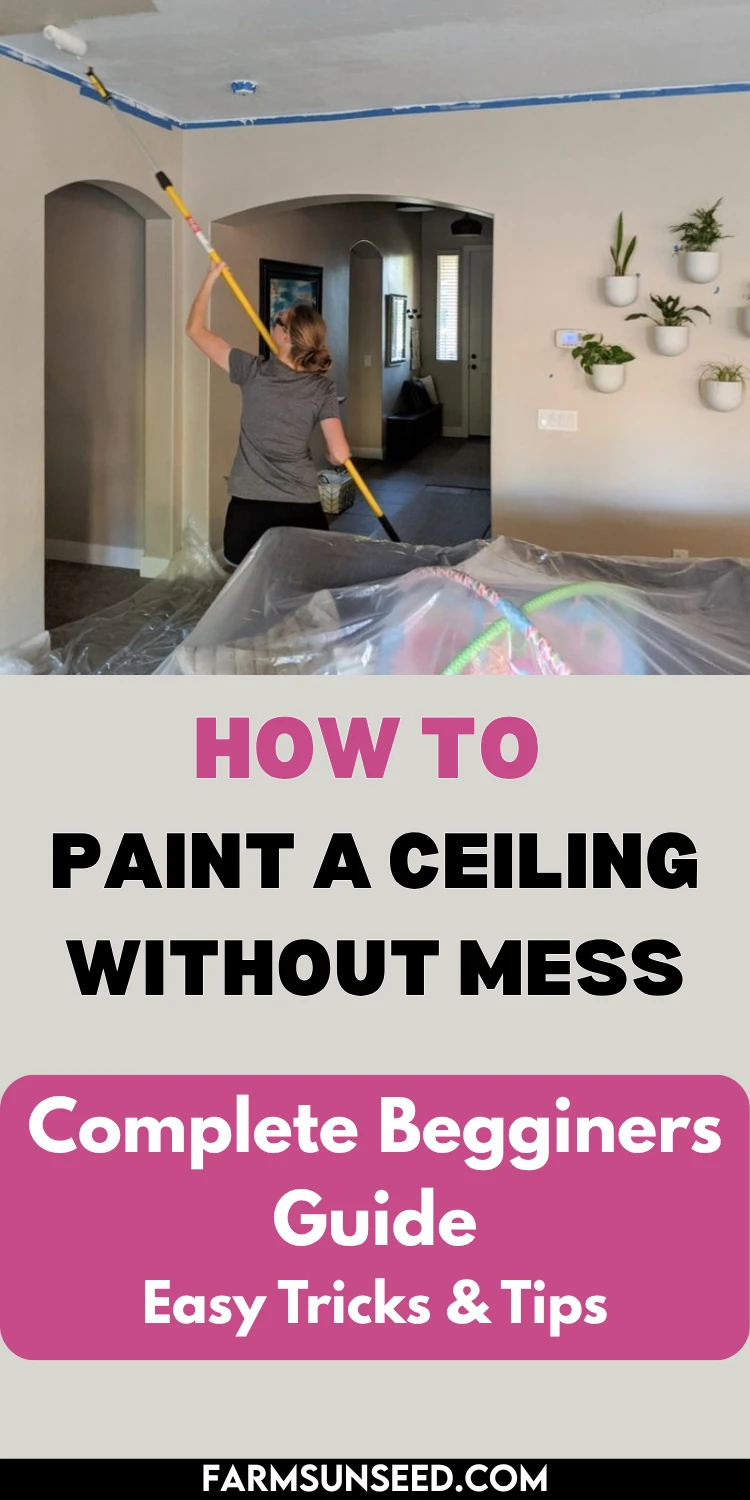
1. Proper Room Preparation
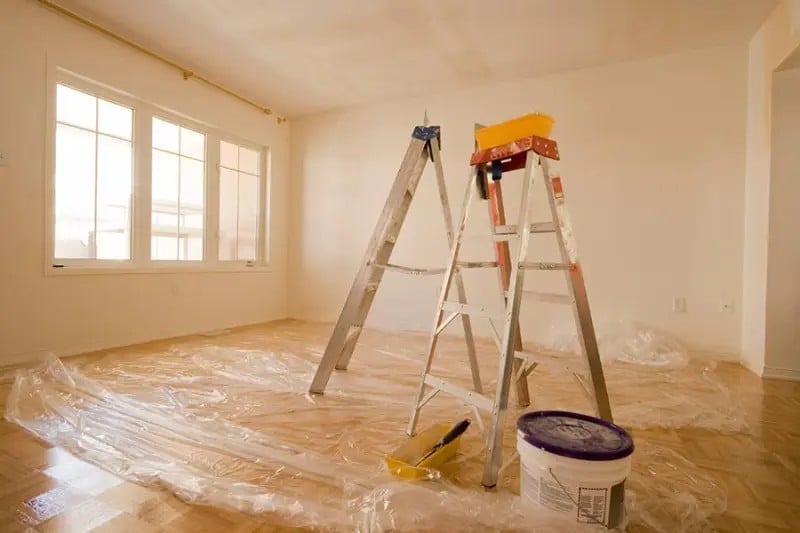
Remove all furniture or cover with plastic sheeting. Lay canvas drop cloths on floors rather than plastic, as they absorb drips better and prevent slipping. Tape protective film over light fixtures and ceiling fans.
2. Essential Tools and Materials
Must-Have Tools

i. Extension pole (6-8 feet) eliminates ladder climbing and reduces fatigue
ii. Quality roller frame with sturdy handle
iii. Roller covers (3/8″ nap for smooth ceilings, 1/2″ for textured)
iv. 2-3 inch angled brush for precise edge work
v. Paint tray with disposable liner for easy cleanup
Protective Materials

i. Canvas drop cloths (absorb spills better than plastic)
ii. Painter’s tape (14-day removal type)
iii. Plastic sheeting for furniture coverage
iv. Safety glasses and old clothing
3. Paint Selection

Choose flat or eggshell finish ceiling paint. It hides imperfections and reduces glare. Consider painting with primer included to save time on multiple coats.
i. Interior walls/ceilings: Use water-based latex paint (easy cleanup, low odor).
ii. Trim/doors: Opt for semi-gloss or gloss enamel (durable, washable).
iii. Kitchen/bathroom: Choose mildew-resistant paint (e.g., satin or semi-gloss).
iv. High-traffic areas: Select scrubbable paint (e.g., eggshell or satin).
4. Room Preparation Steps
Clear the Space

i. Obliterate lightweight furniture from the room
ii. Push heavy furniture to the room center and cover with plastic sheets
iii. Take down wall art, curtains, and decorative items
Floor Protection

i. Lay canvas drop cloths wall-to-wall (avoid plastic, which becomes slippery when wet)
ii. Secure cloth edges with painter’s tape to prevent shifting
iii. Use cardboard under drop cloths for extra protection on hardwood floors
Fixture Coverage
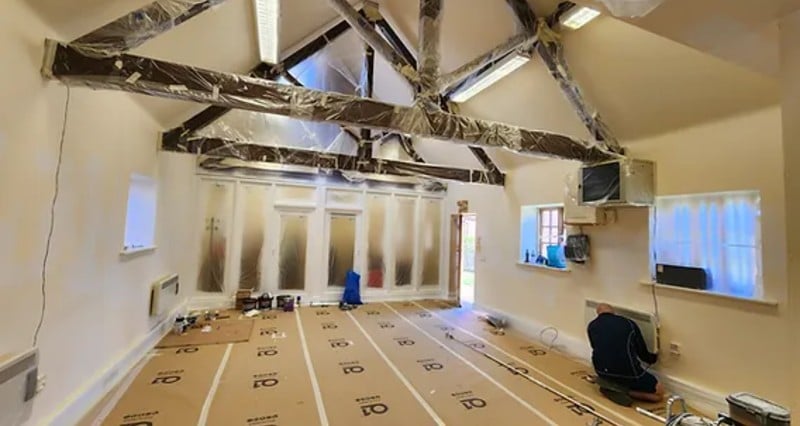
i. Turn off electricity and remove light bulbs
ii. Cover ceiling fans with plastic bags secured with tape
iii. Protect smoke detectors and air vents with painter’s tape
Wall Preparation

i. Apply painter’s tape along wall-ceiling junction for clean lines
ii. Clean ceiling surface with a damp cloth to remove dust and cobwebs
iii. Fill any cracks or holes with spackling compound and let dry completely
5. Managing Drips Effectively

Load your roller moderately; excess paint creates spatters. Roll slowly and deliberately to minimize splashing. Keep a damp cloth nearby for immediate cleanup of any drips that occur.
6. Safety Considerations

Ensure adequate ventilation and wear safety glasses to protect from paint droplets. Take frequent breaks to prevent neck strain from looking upward continuously.
Pro Tips and Tricks
Smart Application Techniques
Begin your painting project from the corner farthest from your exit door to avoid walking through wet areas. Master the “wet edge” method by never allowing painted sections to dry before connecting to new areas, which prevents visible seam lines.
Schedule your painting during daylight hours when natural light helps you easily spot any missed areas or uneven coverage. Remember to apply light, even pressure while rolling. Let the tool do the work rather than forcing it with excessive arm strength.
Time-Saving Shortcuts
Prepare multiple roller covers in advance so you can switch quickly when one becomes worn or oversaturated. Keep a spray bottle filled with water nearby to lightly mist roller covers if the paint begins drying too quickly.
Consider using a paint grid placed directly in your bucket instead of a traditional tray, which reduces mess and allows easier movement around the room.
Professional Secrets
Add just a few drops of liquid dish soap to your paint for noticeably smoother application and better flow. Plan your painting session during cooler temperatures between 65-75°F to prevent rapid drying that causes lap marks.
Remove painter’s tape while the paint remains slightly wet to achieve the cleanest possible lines. Complete your project with a final inspection using a flashlight held at an angle to catch any spots you might have missed during regular lighting.
Which Paints Would We Recommend When Painting a Ceiling?
Finish Selection
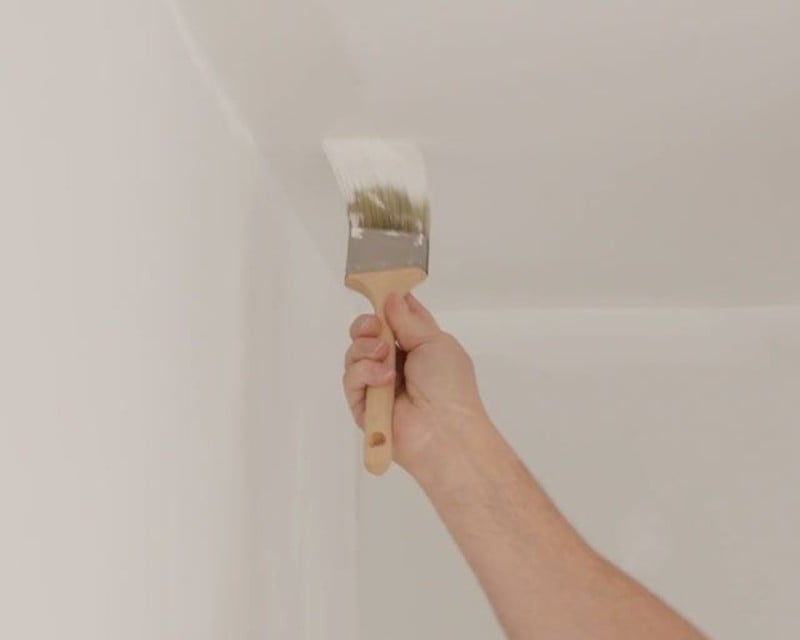
Flat finish remains the gold standard for ceiling applications because it effectively conceals surface imperfections and eliminates glare from overhead lighting.
This matte surface doesn’t reflect light harshly, creating a smooth, uniform appearance that draws attention away from minor flaws or texture variations.
Paint Formulation

Water-based latex paints deliver superior performance for ceiling projects due to their quick drying time, easy cleanup, and minimal odor emission. These formulations resist yellowing over time and maintain their color integrity better than oil-based alternatives.
Look for paints specifically labeled as “ceiling paint” since they’re formulated with enhanced splatter resistance and improved coverage properties.
Color Considerations

Classic white remains the most popular ceiling choice because it maximizes light reflection and creates the illusion of higher ceilings. However, consider warm whites or subtle off-white tones to complement your wall colors and create visual cohesion. Avoid stark bright whites in rooms with warm lighting, as they can appear cold and sterile.
Quality Recommendations

Invest in premium paint brands that offer one-coat coverage and built-in primer. These higher-quality formulations contain more pigment and better binders, resulting in superior hiding power and longer-lasting results.
Budget paints often require multiple coats, ultimately costing more in time and materials than investing in quality from the start.
FAQs
What’s the best way to protect my floors and furniture from paint drips?
Use canvas drop cloths or plastic sheeting to cover floors completely, extending coverage 2-3 feet beyond the work area. Remove or cover all furniture with plastic. Canvas is preferable to plastic for floors as it absorbs spills rather than letting paint spread.
Which tools minimize dripping when painting ceilings?
Use a high-quality angled brush for cutting in edges and a 9-inch roller with a ¾-inch nap sleeve for the main surface. Choose a roller tray with a deep well and ribbed section to remove excess paint.
How do I prevent paint from dripping down my arm while rolling overhead?
Wrap a plastic bag or paper towel around the roller handle just below the roller frame to catch drips. Don’t overload the roller. Make 2-3 passes in the paint tray and roll off excess on the ribbed section. Work in small 4×4-foot sections.
What’s the proper technique for cutting in ceiling edges without getting paint on walls?
Use painter’s tape on the wall just below the ceiling line, pressing edges firmly to prevent bleeding. Load your angled brush with paint and tap off excess. The brush should be loaded but not dripping.