Hugelkultur gardens offer a smart way to grow food using old wood. This ancient method builds fertile soil by burying logs and branches.
Organic matter breaks down slowly to feed your plants for years. Moisture stays inside the mound, so you water less often.
Natural heat from the rot helps seeds sprout early in spring. Gardeners love how these raised beds save space and energy.
Building a mound creates more surface area for different crops. Rotting wood provides a steady stream of nutrients for vegetables. You can build these beds on any flat or sloped land. Start your journey now.
What is Hugelkultur?
Hugelkultur is a centuries-old German gardening technique that involves creating raised beds by burying wood and organic debris under a mound of soil.
Essentially, it is a way of building a “self-watering” garden that mimics the natural decomposition process found on a forest floor.
🌄 Hugelkultur · 4 Steps
Start with logs, branches & woody debris.
Large logs + smaller limbs hold water and decay slowly.
Fill gaps with small sticks, dry leaves & grass clippings.
Improves aeration + feeds soil microbes.
Cover mound with compost + 2–3 inches of topsoil.
Plant immediately; locks moisture, feeds roots.
Steep hill or mound, 3 to 6 feet high.
Maximizes surface, creates microclimates & water storage.
1. Exposed Wood Mound Garden
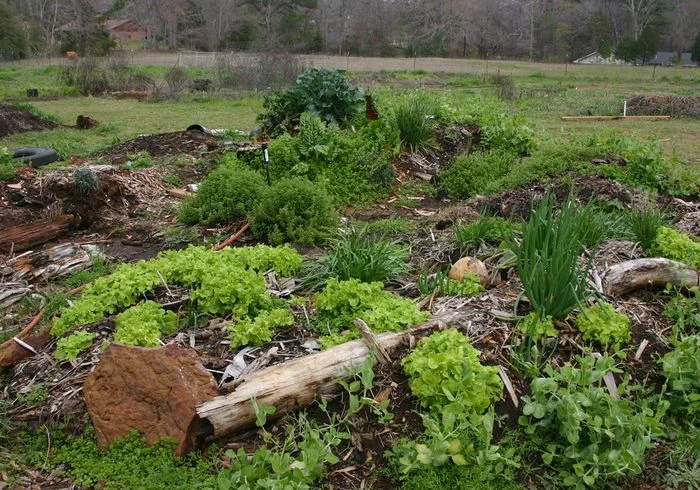
This wide garden bed leaves thick logs directly on the soil surface. Leafy green lettuce plants grow right next to a rotting branch. Old wood rests above ground to trap water near the roots.
Onion stalks shoot up through a mix of dark earth and dry leaves. A big brown rock sits near the edge to hold the loose dirt. Mixed crops thrive together in this wild setup.
2. Educational Glass Viewing Mound
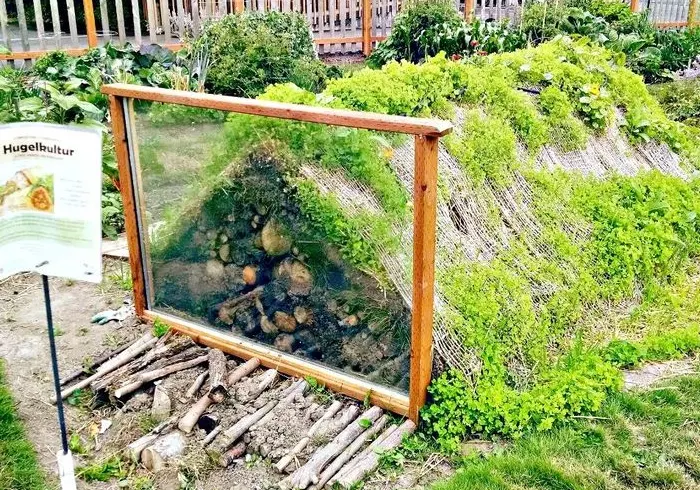
A wooden frame holds a clear glass pane against the side of a tall garden mound. This window reveals the internal layers of logs and soil that fuel the plants above.
Green leafy crops grow thickly over a protective straw mesh covering the exterior. This setup provides a unique look at how organic matter breaks down to create rich nutrients.
3. Log Bordered Soil Hill
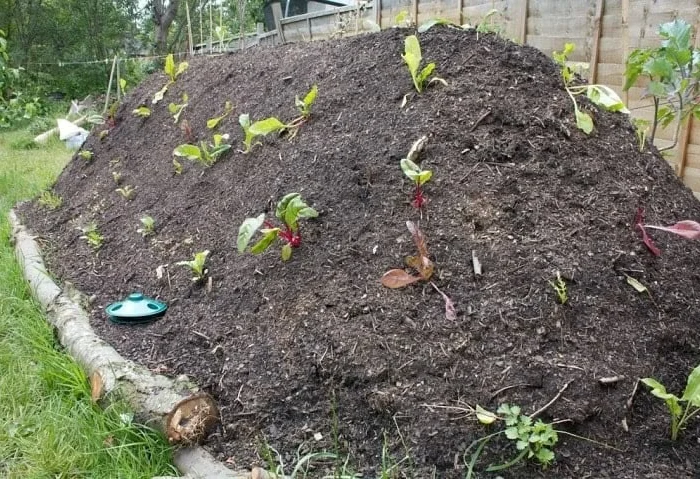
A thick log forms a sturdy base for this tall mound of dark earth. Small green sprouts with red stems poke through the rich soil surface. This high pile creates deep space for roots to expand downward.
Tiny seedlings grow in neat patterns across the steep side of the hill. Wooden fencing stands in the background to protect the growing area. Dark compost provides a nutrient-dense home for every new plant.
4. Vertical Stacked Log Towers
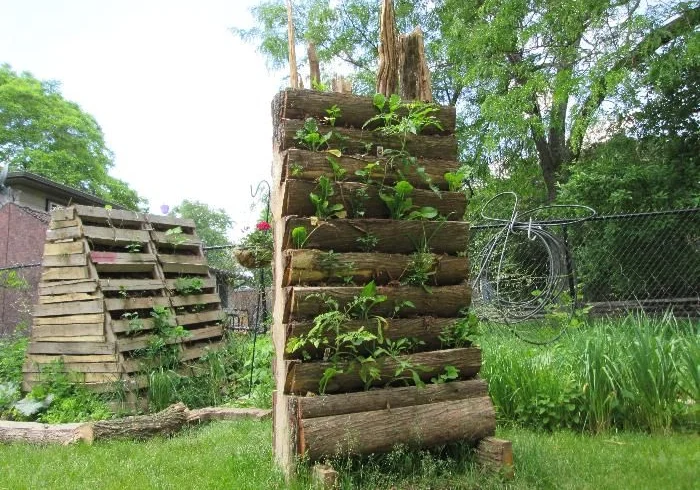
Stacked cedar logs create a tall vertical garden in a grassy backyard. Small green plants grow from the gaps between each horizontal piece of wood. This design uses height to save floor space in small yards.
Rough bark covers the outside of the sturdy wooden structure. Another slanted wooden frame stands nearby with vines climbing through the slats. Lush trees and a chain link fence border this unique growing area.
5. Vine Covered Log Brush Pile
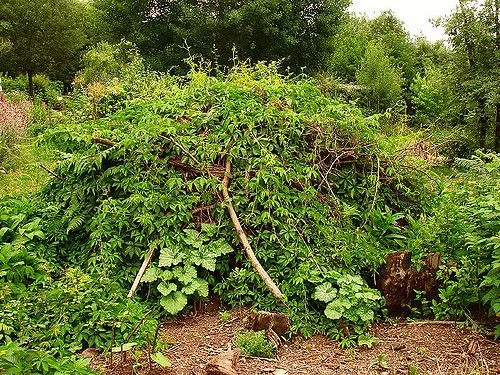
Thick green vines completely drape over a large pile of fallen branches. Long woody stems poke out from the dense foliage to support the climbing leaves. This natural mound hides decomposing wood beneath a lush emerald curtain.
Large, round leaves grow near the base of the wood stack on mulch ground. Tall trees form a soft green wall in the distance. The structure mimics a forest floor where plants use old timber for strength.
6. Sunken Log Base Construction
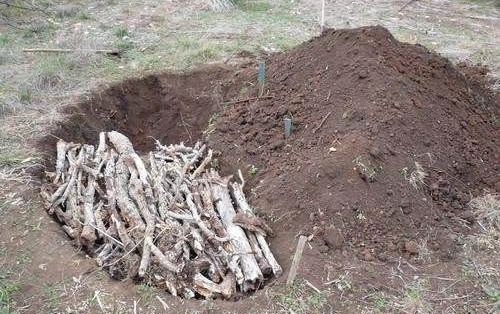
A deep pit in the ground holds a large stack of dry grey logs. This foundation sits below the surface to catch and hold deep moisture. A massive pile of dark brown soil waits nearby to cover the wood.
Small wooden stakes mark the edges of the digging site. Bare earth and sparse grass surround the open hole. Filling this trench creates a long-term food source for your future garden.
7. Rock Framed Terrace Mound
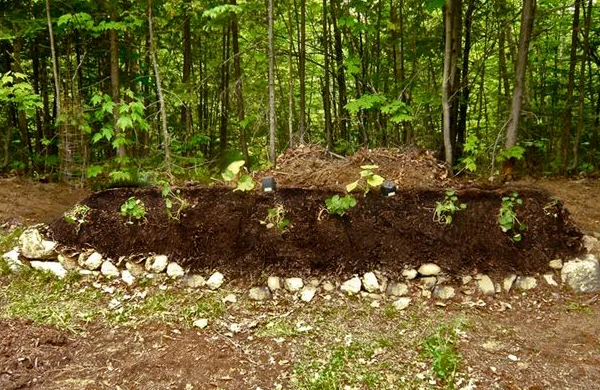
A low wall of light colored stones supports the base of this dark soil bed. Small green plants sit in a row along the flat top of the mound. This rocky edge keeps the rich earth from washing away during heavy rain.
Tall leafy trees stand thick in the background behind the garden. Two small black pots remain on the surface next to young seedlings. Dry leaves and twigs cover the ground surrounding the new growing space.
8. Branch Trellis Support System
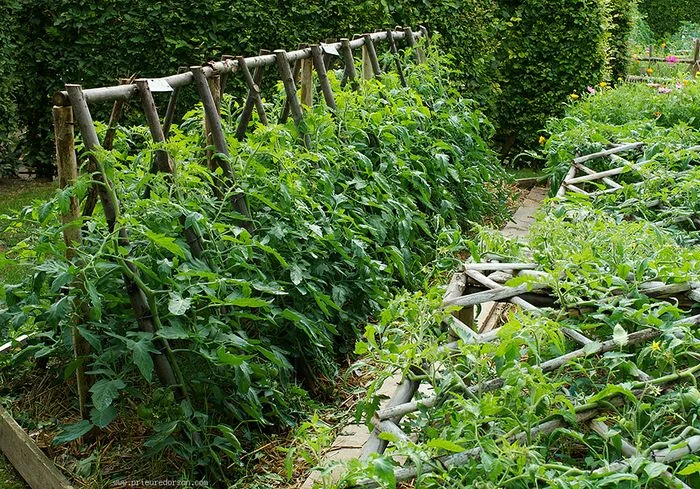
Sturdy wooden branches form a crisscross frame over these long garden rows. Thick tomato vines climb high toward the top of the rustic structure. This natural support keeps heavy fruit off the ground, preventing rot.
Green leaves create a lush wall of foliage against a tall hedge. Dry yellow straw covers the soil base to keep moisture near the roots. Small wooden tags mark the different plant types for easy identification.
9. Intensive Mixed Plot Garden
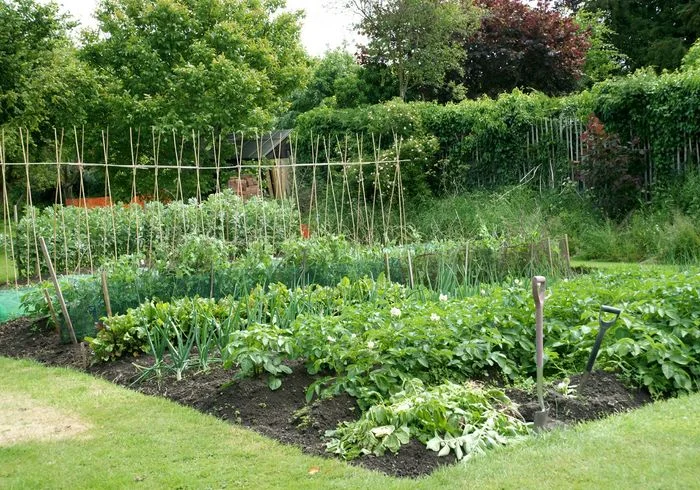
Deep black soil forms the base of this productive rectangular garden space. Different vegetable varieties grow in tidy rows throughout the dark earth. This setup allows for maximum harvest in a compact backyard area.
Thin bamboo poles create a tall lattice for climbing vines at the rear. Two garden shovels stand upright in the dirt near the front edge. Green grass and a thick leafy hedge surround this active planting zone.
10. Large Scale Log Mound Installation
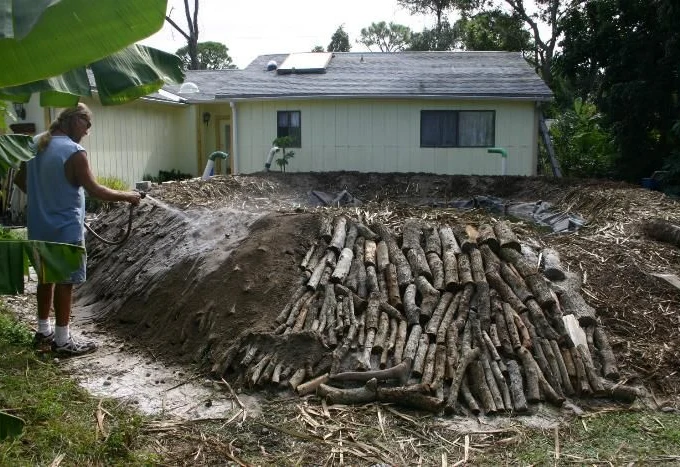
Dozens of thick logs lean together to form a massive core for this garden bed. A person sprays water from a hose to soak the wood and soil foundation. This step ensures deep moisture stays locked inside the tall mound for future plants.
Dark earth partially covers the left side of the large wooden stack. Straw and mulch are spread across the surrounding area to keep it tidy. A light colored house stands in the background behind the new garden structure.
11. Curved Hillside Path Garden
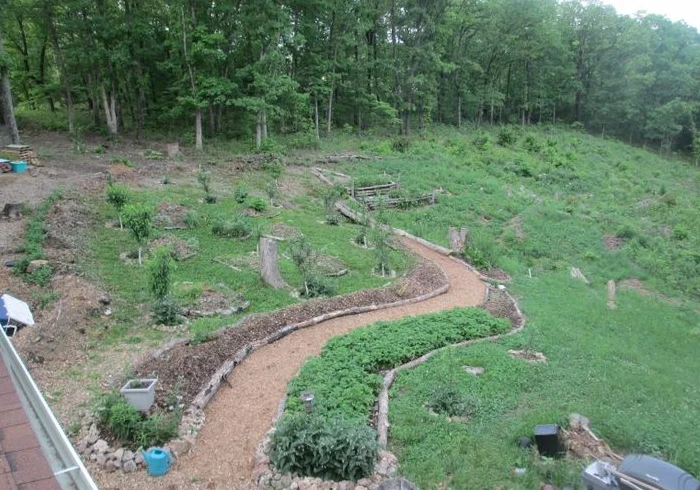
Long logs border a winding walkway down this grassy slope. Raised garden beds curve alongside the gravel trail, following the natural contours of the land. Lush green bushes fill the right section while dark mulch covers the left.
Scattered tree stumps dot the large yard leading up to a dense forest. Several smaller planting circles sit higher up on the sloping lawn. This flowing layout makes hillside growing easy to reach and manage.
12. Shallow Trench Branch Base
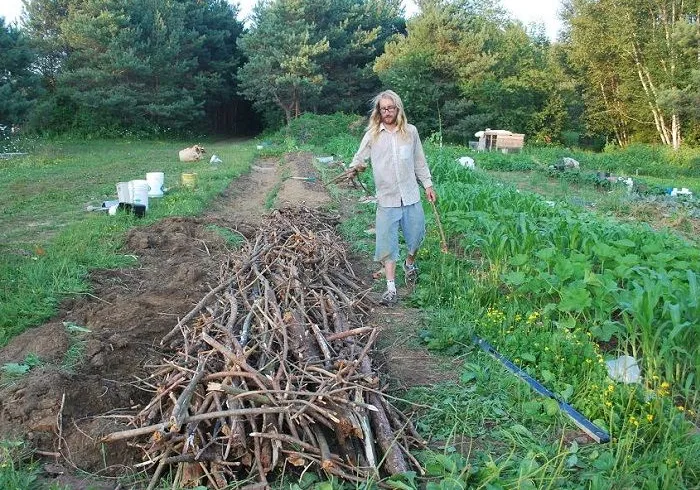
A gardener stands beside a long ditch filled with gathered sticks. He holds extra-thin branches to toss onto the growing wood pile. This narrow dugout keeps the core materials neatly contained before covering.
Loose brown dirt waits along the left edge to bury the dry timber. Tall green crops thrive right next to the active project zone. Several white buckets rest on the grass near the back tree line.
13. Geometric Log Bordered Garden
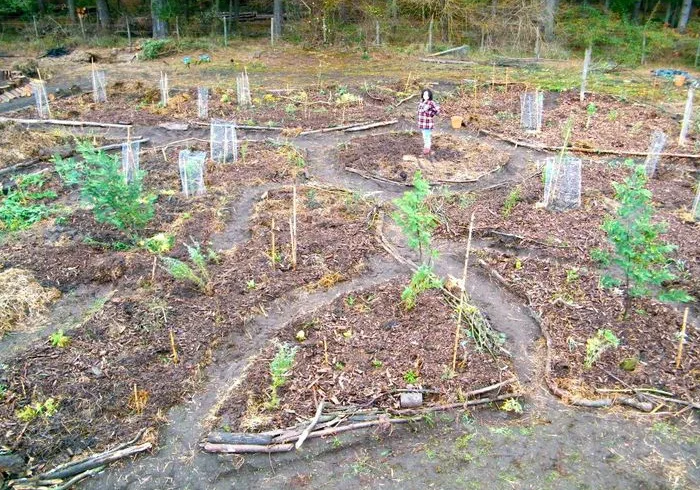
Wood branches create a complex pattern of geometric shapes across this large dirt field. Circular and triangular beds hold dark mulch to protect the soil and roots. This design forms a beautiful and organized system for growing many different plants.
Wire cages protect young green saplings from animals in several sections. Dirt paths wind through the various beds to allow for easy maintenance. A thick forest stands behind the wire fence at the edge of the property.
14. Parallel Log Trench Foundation
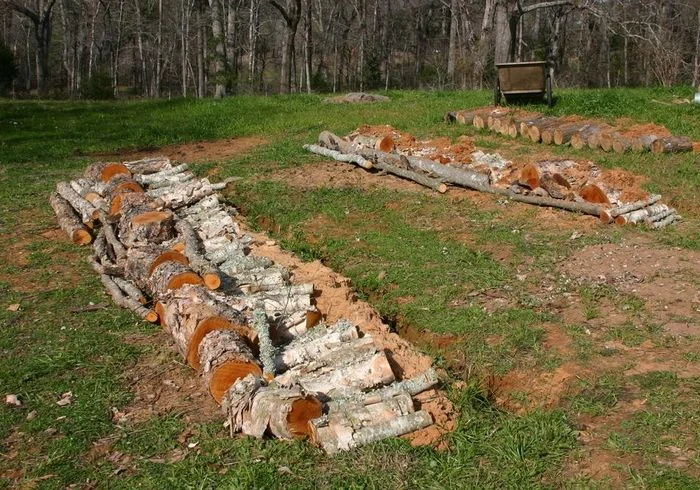
Three long rows of cut logs sit inside shallow trenches across a grassy field. Reddish soil fills the gaps between the timber pieces to create a solid base. This setup organizes the garden into manageable linear sections for future planting.
Short wooden rounds line the far edge of the third row near a brown cart. Bare patches of earth surround the construction site under a clear sky. Using parallel lines makes it easy to walk between your growing mounds.
15. Circular Wood Layer Mound
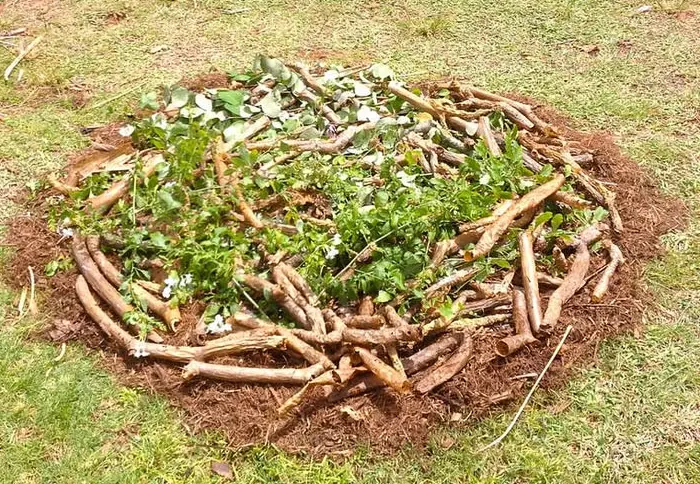
Small branches and sticks form a round pattern on top of a brown mulch base. Green leaves and tiny white flowers grow directly through the center of the wooden circle. This compact design creates a concentrated area of fertility for new plants.
A light gray stone planter stands in the background with thick leafy vegetables. Green grass surrounds the small mound in a sunny, open yard. Layering organic waste in a circle helps keep nutrients in one spot.
16. Vertical Log Mushroom Border
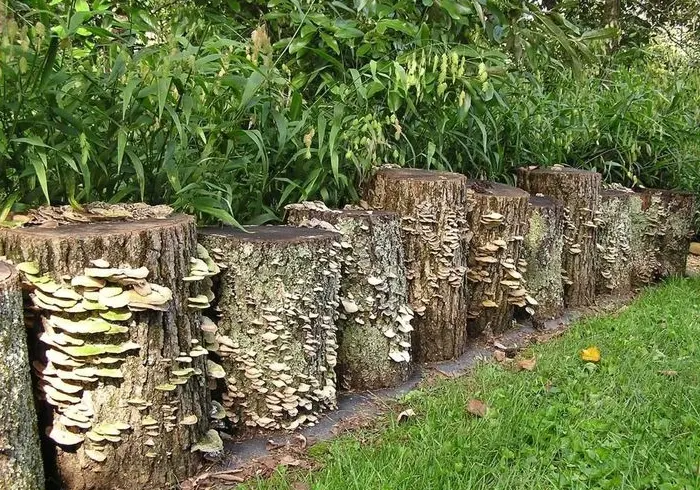
A row of thick wood stumps stands upright to create a natural edge for a garden space. These logs host clusters of shelf mushrooms that grow directly from the rough bark.
The vertical placement allows the wood to rot slowly while adding visual interest to the yard. Lush green plants rise behind the timber wall to form a soft privacy screen.
17. Log Faced Front Yard Berm
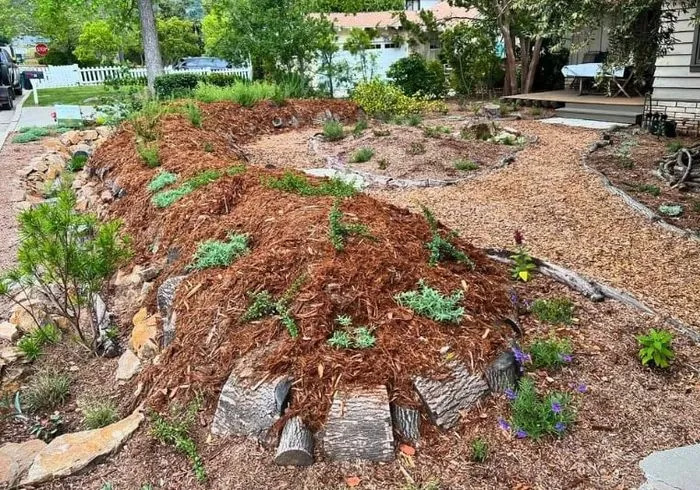
Short vertical logs line the front edge of this large mulched berm in a suburban yard. Thick brown wood chips cover the entire surface to keep moisture inside the mound. Small green herbs and flowers sprout through the mulch at various heights.
A winding gravel path leads toward a house with a grey wooden porch. Rocks and branches border the walking area to create a clear garden structure. This design turns a flat lawn into a productive and beautiful landscape.
18. Compost and Log Layering
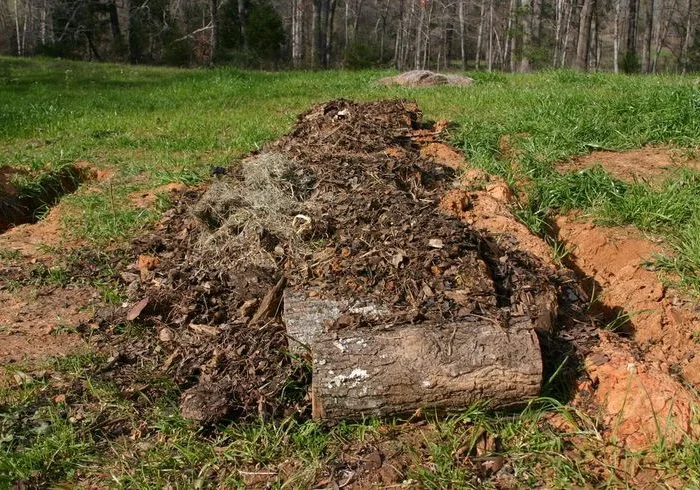
One thick log rests at the end of a long mound of organic waste. Dark brown compost and dry leaves pile high on top of the wooden core. This combination of materials provides a rich food source for the soil.
Deep orange dirt borders the narrow trench on both sides. Green grass grows thick around the construction area in the open field. Building up layers like this creates a strong foundation for a healthy garden.
19. Large Fresh Soil Mound
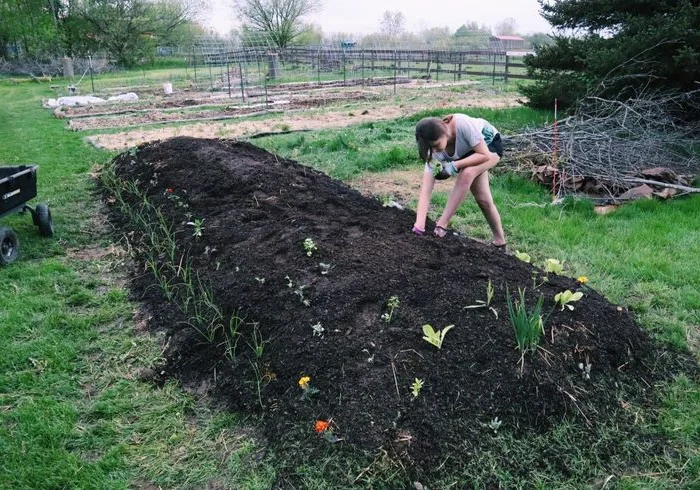
A person leans over a long and high pile of dark, fresh soil to plant new seedlings. Tiny green sprouts and bright orange flowers dot the steep sides of this large mound. This design provides plenty of space for deep roots to grow within the rich earth.
Thin green stalks grow in a neat row along the bottom edge of the dirt. Other garden beds and wire fencing stand in the distance across the green lawn. A small black cart sits nearby on the grass to help move heavy supplies.
20. Multi-Colored Harvest Rows
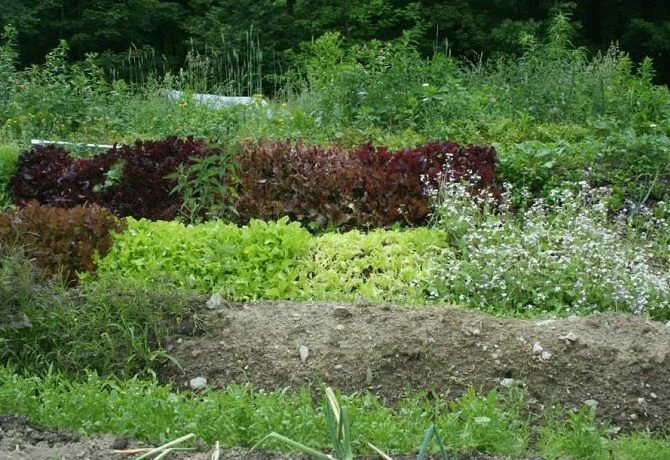
Sections of vibrant purple, bright lime green, and delicate white flowers create a colorful quilt of plants across these raised rows. A long mound of light, sandy soil sits in the foreground, waiting for new seeds to be planted. This varied planting style maximizes biodiversity and creates a visually stunning garden space.
Taller green weeds and grasses form a wild border behind the organized vegetable beds. A dense wall of dark green trees provides a sheltered backdrop for the growing area. Using distinct color blocks helps keep different plant varieties separated and easy to manage during harvest.
21. Log-Framed Grid Beds
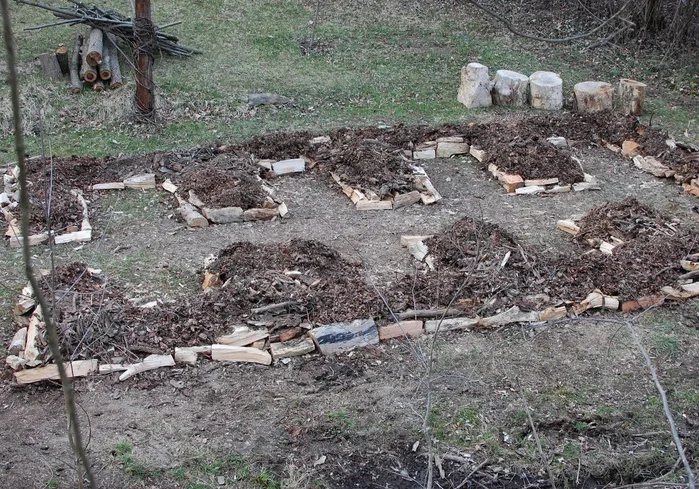
Split logs and thick branches are used to frame a series of small, rectangular garden beds arranged in a grid-like pattern. Each frame is filled with dark, chunky mulch and organic debris, creating several distinct growing pockets within a larger plot.
This structured approach helps organize the space and keeps the organic materials neatly contained during the early stages of decomposition.
In the background, larger logs and wood rounds are stacked near a tree line, serving as a nearby source for future garden expansion. The surrounding ground is covered in thin grass and bare soil, highlighting the newly established planting area.
This layout is an excellent example of using natural materials to create an orderly and highly functional permaculture system.
22. Layered Log and Debris Mound
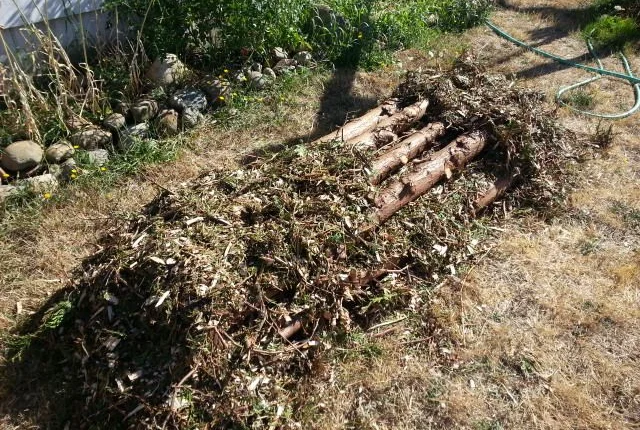
Several thick logs form the foundation of this narrow garden mound in a sunny backyard. A heavy layer of brush, dry leaves, and wood chips partially covers the timber core. This method of building up organic material creates a self-fertilizing base for future planting.
A green garden hose rests on the dry, yellowish grass nearby, likely used to soak the layers during construction.
In the background, a rock-lined garden border sits against a light-colored building with lush green plants growing behind it. This setup efficiently recycles yard waste into a productive growing space.
23. Straw-Blanketed Garden Mound
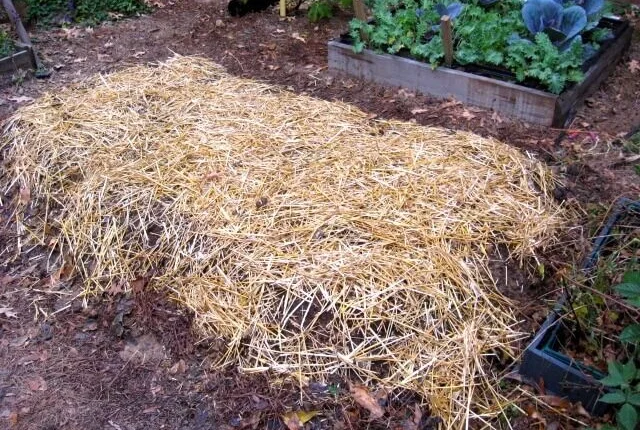
A thick layer of bright golden straw completely covers a rectangular garden mound, acting as a protective mulch. This heavy covering helps lock in moisture and regulate the temperature of the soil underneath. Nearby, a wooden raised bed contains mature leafy greens, showing the productivity of the surrounding garden space.
The ground around the mound is covered in fallen leaves and pine needles, blending the cultivated area with the natural landscape. This simple straw-topping method is an effective way to suppress weeds and protect organic material as it decomposes.
24. Low Log-Edged Garden Bed
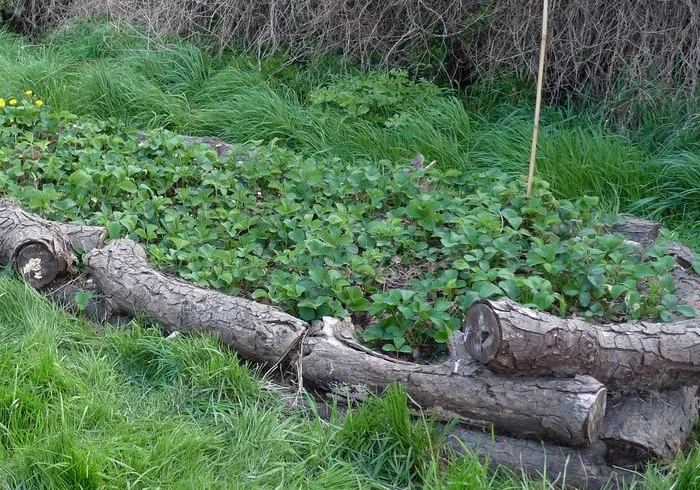
Several thick, weathered logs are laid in a rectangular shape to form a low border for this garden bed. Lush green leafy plants, possibly strawberries, fill the center of the wooden frame. This simple method uses natural timber to neatly contain growing plants and organic soil.
Bright green grass grows tall around the outside of the log edges. In the background, a dense thicket of dry, tangled vines and branches provides a natural screen. A single thin bamboo stake stands upright in the soil to provide support for the growing vegetation.
25. Curving Berm and Mulch Paths
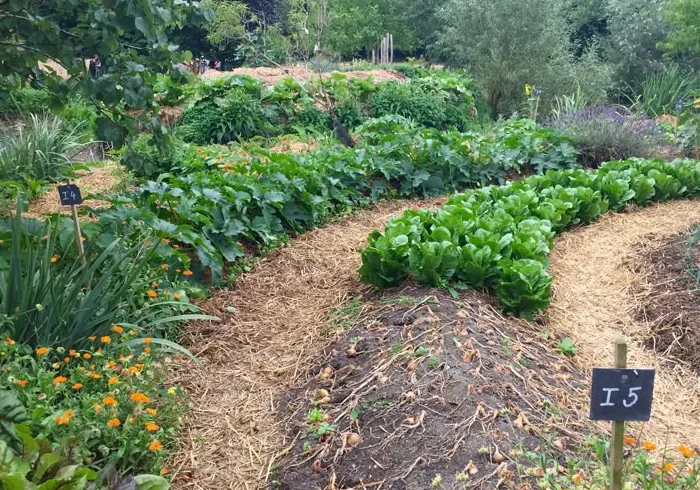
Several long, raised mounds curve through this lush garden, following the natural contour of the land. Thick layers of straw mulch the pathways between the berms to suppress weeds and retain moisture. This organized, flowing layout creates a highly productive and easily accessible growing space.
- Diverse Crops: Neat rows of leafy green vegetables, bright orange flowers, and sprawling squash plants fill the mounds.
- Contoured Design: The beds follow a gentle curve, maximizing edge space and sunlight exposure.
- Clear Identification: Small black slate signs marked “I4” and “I5” help organize and track different planting zones.
- Natural Setting: Dense green trees and diverse shrubbery surround the cultivated area, providing a sheltered environment for the crops.
26. Grass-Covered Log Foundation
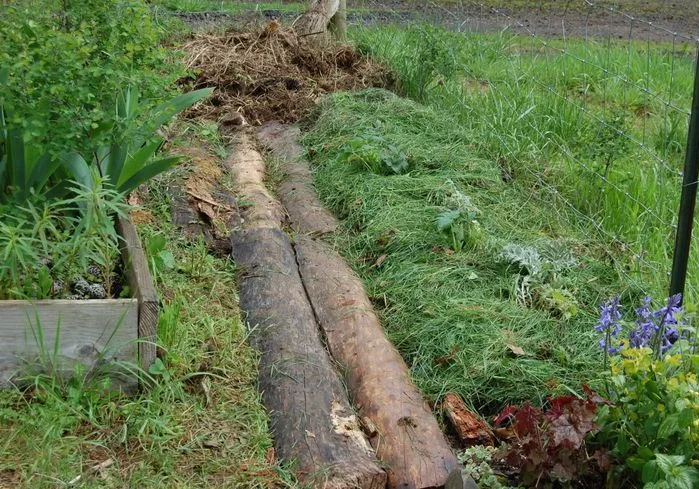
Two long, thick logs are laid parallel to each other on the ground, forming the core of a new garden bed. A section of these logs is already covered with a thick layer of green grass clippings, which helps to jumpstart the decomposition process and provide nitrogen to the soil.
This layering technique creates a nutrient-rich environment for the plants that will eventually grow on top.
- Natural Materials: The use of raw logs and fresh grass clippings demonstrates an efficient way to recycle organic yard waste into a productive garden.
- Layering Process: In the background, a pile of dry, brown organic debris waits to be added to the mound, following the traditional method of layering different materials.
- Surrounding Garden: A simple wooden raised bed sits to the left, while a wire fence and various green plants, including some with purple flowers, border the site.
- Strategic Placement: The bed is situated in a grassy area near existing vegetation, integrating the new growing space into the established landscape.
27. Wooden Board and T-Post Enclosure
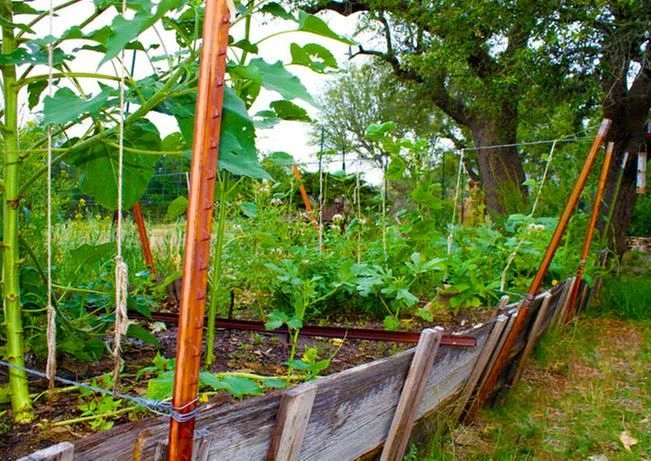
Tall orange metal T-posts and weathered wooden boards form a sturdy, rustic fence around a thriving garden bed.
Wire and twine are strung between the posts to provide vertical support for climbing plants and tall stalks. This setup helps protect the growing area while maximizing space for upward growth.
- Vertical Support System: Thick green stalks and leafy vines grow upward, supported by strings tied to the overhead wire framework.
- Recycled Materials: The use of mismatched wooden planks and metal posts creates a functional, cost-effective garden border.
- Lush Environment: Dense green foliage and various vegetable plants fill the protected enclosure, flourishing in the sunny outdoor setting.
- Natural Backdrop: Large, mature trees with thick trunks provide a sheltered, shaded area behind the garden bed.
28. Community Curving Berm Construction
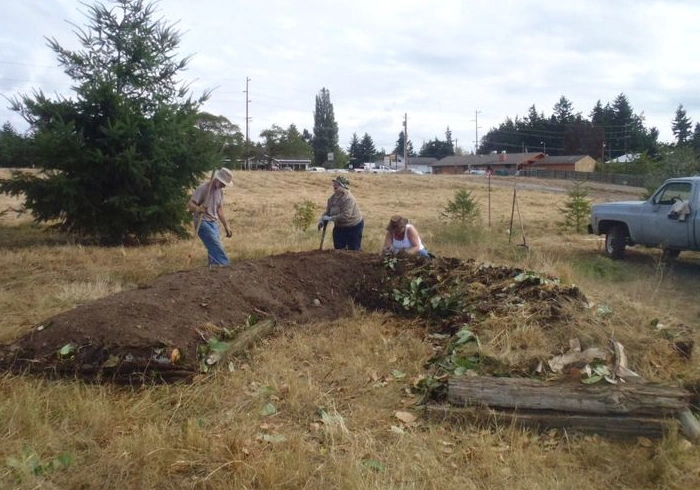
Three people work together to build a large, curving hugelkultur mound in an open, grassy field. One person uses a tool to shape the dark soil covering the log foundation, while others tend to the organic debris and branches being layered into the structure.
This collaborative effort demonstrates the scale and physical work involved in establishing a large-capacity permaculture bed.
- Layering Technique: The mound shows a clear progression from raw logs at the base to a covering of dark, rich soil, similar to the process seen in other projects.
- Curved Footprint: The bed is designed with a significant curve, a technique often used to follow land contours and increase planting surface area.
- Site Integration: The construction takes place in a wide, sunny field with a large evergreen tree nearby and a truck parked on the perimeter, reflecting a typical rural or suburban farm setting.
- Organic Foundation: Large, weathered logs are visible at the ends and base of the mound, which will slowly decompose to provide long-term nutrients and moisture.
29. Long Wood-Chip Path and Growing Mound
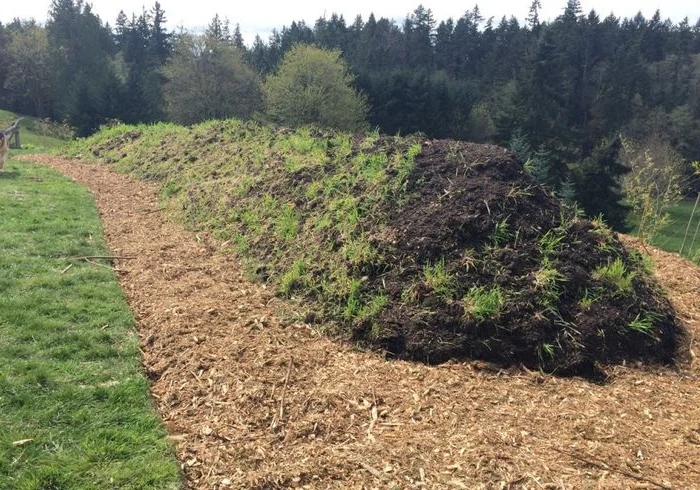
A wide, curving path made of light-colored wood chips follows the base of a massive hugelkultur mound. The long berm is covered in dark, rich soil with patches of green grass and early sprouts beginning to grow across its surface.
This large-scale design creates a significant planting area while providing a stable, walkable access route through the landscape.
- Established Path: The thick layer of wood chips creates a clean border between the manicured lawn and the wilder growing area.
- Mound Composition: Similar to other large berms, this structure uses dark soil to cover a core of organic material, likely logs and debris.
- Natural Setting: The garden is situated on a sloped hillside with a dense forest of evergreen and deciduous trees in the background.
- Scale and Presence: A German Shepherd dog walks along the grassy edge, highlighting the impressive height and length of this permanent garden feature.
30. Sunken Branch Foundation
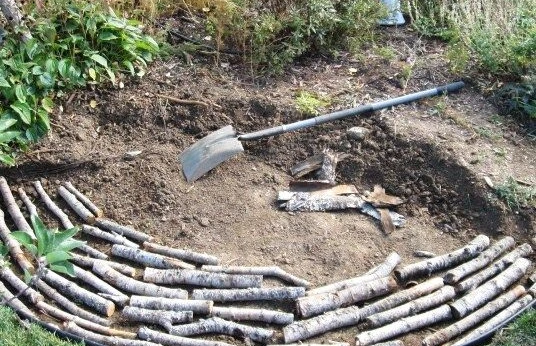
A series of small, thin logs is laid out in a curved, tiered pattern at the base of a newly dug garden bed. A metal shovel rests on the dark, loose soil, indicating the ongoing work of excavating and layering organic materials.
This technique of burying wood at the base of a bed is a foundational step in creating a long-term nutrient source for plants.
- Tiered Layering: The branches are arranged in rows that follow the curve of the lawn edge, providing a structured base for the soil that will be piled on top.
- Decomposition Base: These buried logs will slowly break down, acting as a “sponge” to retain moisture and slowly release nutrients over several years.
- Garden Integration: The bed is situated next to an established garden area featuring lush green shrubs and a small white statue.
- Recycled Materials: Using thin logs and branches allows for the efficient recycling of yard waste directly into the garden’s infrastructure.