If you live in a mobile home in a storm-prone area, you have probably asked this question: Do I really need to leave for a hurricane? When a storm forms, you feel anxious. You hear conflicting advice from neighbors. Some say tie it down, others say get out. You need to know the real truth to protect your family. Terrifying, truth.
Hurricane season in a mobile home is not something to guess about. You’ll see why your home is not safe, based on official 2025 data and the hard lessons from storms like Hurricane Ian. What the wind ratings really mean and why they are not enough.
Most importantly, you will get a step-by-step plan on exactly what to do instead of hunkering down. This is your 2025 reality check. This information is your key to mobile home hurricane safety and could save your life.
1. The Hard Truth: Can a Mobile Home Withstand a Hurricane
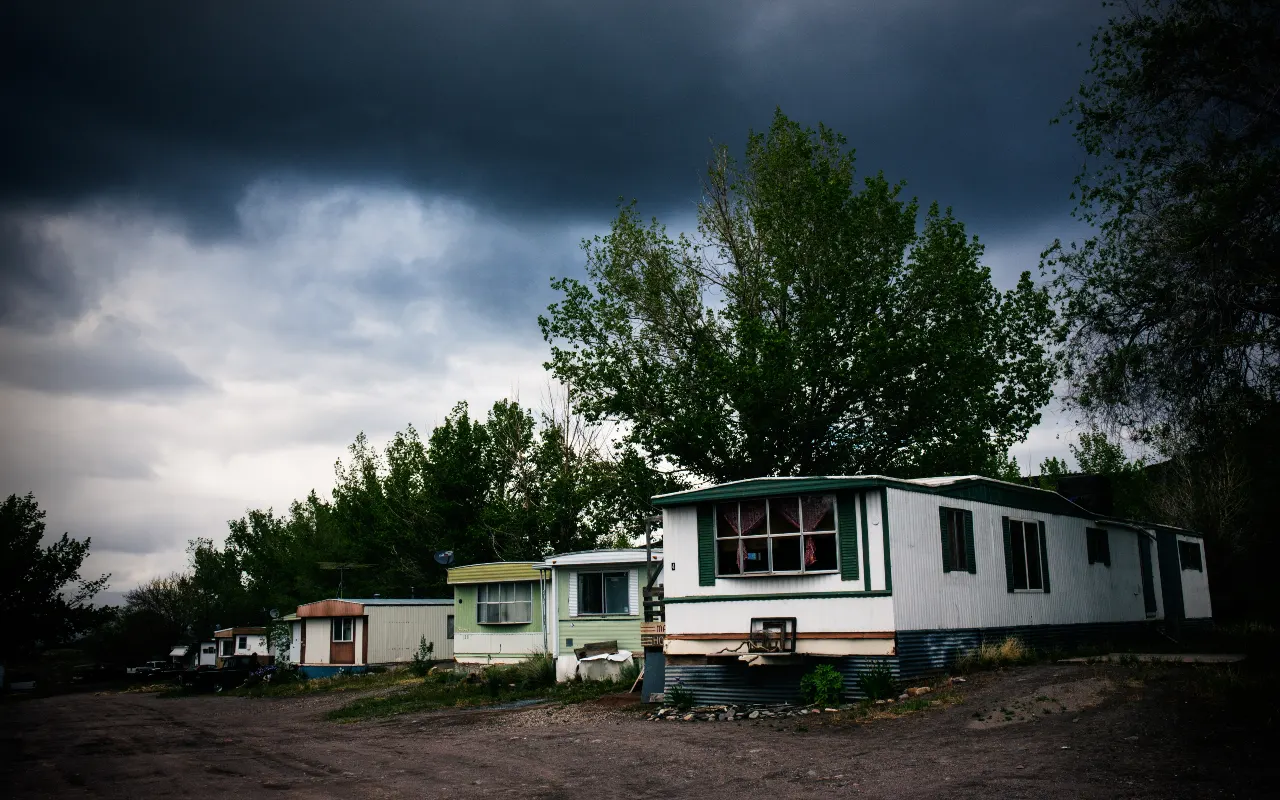
Your mobile home, even a brand new one, is not built to survive a major hurricane. Believing it can is a deadly risk. This is the most important part of your mobile home hurricane safety plan.
If you need proof, look at what Hurricane Ian did in 2022. Entire mobile home parks in Fort Myers and Bonita Springs were destroyed. They were turned into piles of debris. This is the “reality check” everyone needs to see.
This was not a freak accident. It is a problem of simple math. Federal (HUD) standards require manufactured homes to meet specific wind ratings.

Wind Zone II: Rated for 100 mph sustained winds.
Wind Zone III (The strongest): Rated for 110 mph sustained winds.
Now, look at the Saffir-Simpson Hurricane Scale:
A Category 3 hurricane starts at 111 mph.

Do you see the problem? Even the highest-rated mobile home is not built to handle the winds of a major hurricane (Category 3, 4, or 5).
And that’s just the wind. FEMA reports show that mobile homes are also extremely unsafe against:
Flying Debris: A 2×4 piece of wood in 130 mph winds can fly right through a wall.
Storm Surge & Flooding: Most mobile homes are not elevated. Storm surge or inland flash flooding can sweep a home off its foundation.
So, can a mobile home withstand a hurricane? No. You must not try to ride it out. Your life depends on leaving.
If you live in a mobile home in a storm-prone area, you have probably asked this question: Do I really need to leave for a hurricane? You feel anxious when a storm forms. You hear conflicting advice. Some people say tie it down, others say get out. You need to know the truth to protect your family. The terrifying truth. Your home is not safe, based on official 2025 data.
Why Your Mobile Home Is Not Safe

The direct answer is no, your mobile home is not a safe place to be during a hurricane. This is not about the age of your home or how well you take care of it. It is about the way it is built. Manufactured homes are light-frame structures. They are not designed to handle the extreme, sustained winds and brutal pressure changes from a major hurricane. Staying inside is a gamble with your life, and the odds are not in your favor. This is the first step in your mobile home hurricane safety plan: acceptance.
Wind can get underneath the home and lift it.
Flying debris can easily break through the walls.
The structure can be twisted or torn apart by high winds.
Once a window or door fails, the internal pressure can blow the roof off.
Flooding and storm surge can sweep a home off its foundation.
The Wind Zone Myth vs. Hurricane Reality

You may have heard that your home is rated for a storm. This is a dangerous piece of misinformation. The U.S. Department of Housing and Urban Development (HUD) sets wind standards. The highest, Wind Zone III, requires a home to withstand 110 mph sustained winds. But a Category 3 hurricane starts at 111 mph. This simple math is the most terrifying reality check. Even the best-built manufactured home is not rated to survive a major hurricane.
HUD Wind Zone III (Highest): Built for 110 mph winds.
Category 3 Hurricane: Starts at 111 mph.
Category 4 Hurricane: Starts at 130 mph.
Category 5 Hurricane: Starts at 157 mph.
These ratings do not account for flying debris or powerful tornadoes.
The Lessons We Must Learn from Hurricane Ian

If you need proof, look at what happened in 2022. Hurricane Ian destroyed entire mobile home parks across Southwest Florida. In places like Fort Myers and Bonita Springs, communities were turned into piles of debris.
This was not a rare event; it is what happens when hurricane-force winds hit manufactured structures. The storm surge was a final, deadly blow, washing away what the wind did not shred.
FEMA reports confirmed that manufactured homes saw the most catastrophic damage.
Video footage showed homes completely gone, leaving only the concrete slab.
Residents who stayed had to be rescued from treetops or flooded wreckage.
This is the real-world proof that the wind-speed math is correct.
Your home is property; your life is not.
Packing Your Papers: The Document Grab-Bag

After the storm, your recovery will depend on your ability to prove who you are and what you own. If your home is damaged or destroyed, you will need these documents to file insurance claims and apply for FEMA assistance. Get a waterproof bag or portable file box and put these items in it today.
Driver’s license, passport, or other photo ID.
Insurance policies (home/renter’s, flood, and auto).
Your lease, deed, or mortgage documents.
Birth certificates and Social Security cards.
A list of your medications, dosages, and doctor’s contact info.
Don’t Forget Your Pets: The Pet Evacuation Plan

Your pets are part of your family, and you cannot leave them behind. But you must have a plan for them. Most public shelters do not accept pets (except for service animals). You cannot show up with your dog or cat and expect to be let in. Leaving them in your mobile home is a death sentence. Your pet’s hurricane evacuation plan mobile home must be set now.
Find pet-friendly hotels or kennels outside the evacuation zone and ask about their policies.
Check with your local emergency office; some counties have specific pet-friendly shelters.

Pack a Go-Bag for your pet: food, water, medications, bowls, and vaccination records.
Have a sturdy crate or carrier for each pet.
Make sure your pet has a collar with tags and is microchipped.
Do Shutters and Plywood Really Help?

Yes, covering your windows with hurricane shutters or 5/8 plywood is a smart move. But it is important to understand what this does. This step is about protecting your property, not protecting you. Its job is to stop flying debris from breaking your windows.
If a window or door breaks, the wind rushes inside and creates intense pressure that can blow your roof off. Boarding up your windows is a good step to take, but it does not make the home safe to stay in.
This step helps prevent your home from being breached by wind.
It protects your belongings from wind and rain.
It does not make the structure strong enough for a major hurricane.
This is not a substitute for evacuating.
Your new rule: Put up your shutters, and then use that time to pack your car and leave.
2. Your 2025 Hurricane Tech and Alert List

Your phone is your most powerful warning tool, but you need a backup for when the power and cell towers go down. Download these apps before the season starts. Bookmark the websites. And most importantly, buy the one piece of low-tech gear that works when all else fails.
FEMA App: Provides real-time alerts from the National Weather Service and helps you find open shelters.
My Hurricane Tracker & Alerts: A simple app for watching the storm’s path and projected intensity.
GasBuddy App: Can help you find gas stations that still have fuel during an evacuation.
Hurricanes.gov: The National Hurricane Center website. This is the only source you should trust for the storm’s official track.

NOAA Weather Radio: This is your non-negotiable lifeline. A hand-crank radio will give you official alerts even if the power is out and cell service is dead.
3. Your Only Safe Option: The Evacuation Plan

Hunkering down is not a plan. It’s a gamble you will lose. Your real survival plan is your hurricane evacuation plan mobile home. This is the only option that keeps you safe. With NOAA predicting an above-normal 2025 hurricane season in a mobile home, you must have this plan ready before a storm ever forms. Your life depends on it.
Your first step, right now, is to know your evacuation zone. This is not about wind; it is about flooding from storm surge. Go to your state’s Division of Emergency Management website (like FloridaDisaster.org/Know Your Zone) and find your zone.

You cannot just drive north. You need a specific, safe destination.

Option 1 (Best): A friend or relative’s sturdy, site-built house that is outside all evacuation zones. This is the most comfortable and safest option.
Option 2 (Good): A hotel or motel far inland. You must book these days in advance, as soon as a storm is possible. They fill up fast.
Option 3 (Last Resort): A public shelter. Be ready: this is not comfortable. It means a cot in a gym. It is loud, crowded, and you’ll have few supplies. It is for survival, not comfort.
The answer for when to leave is simple: EARLY. Do not wait for the mandatory evacuation order. By then, it’s too late. Leave when a Hurricane Watch is issued. This is your 48-hour warning. If you wait, you will be trapped in gridlock traffic on the highway. Gas stations will run out of fuel.
4. The 2025 Go Bag What to Pack for Evacuation

Your hurricane evacuation plan mobile home is useless if you have nothing to take with you. Your Go Bag should be packed and waiting by the door on June 1st, well before any storm forms. When you are ordered to leave, you may only have minutes. This bag is your lifeline for the next 3-7 days. Assume you will have no power, no running water, and no open stores.
A good way to remember what you need is the 5 P’s
People: A 7-day supply of all prescription medications is your top priority. Also pack a full first-aid kit, hygiene items (like a toothbrush, soap, and toilet paper), and any needed items for babies or seniors.
Papers: Place your important documents in a waterproof bag. This includes your driver’s license, insurance policies (home/auto), your lease or home deed, medical records, and birth certificates.
Provisions: You need 1 gallon of water per person, per day, for at least 3 days. Pack non-perishable food for 3 days (protein bars, canned goods) and a manual can opener.
Power: Your phone is your link, but it will die. Pack a fully charged external power bank (or two), extra batteries for flashlights, and your phone charger.
Pets: Your pets cannot be left behind. Pack their food, water, a leash, a crate, and any medications they need.
Other Key Items That Are Not Negotiable:
Cash: Get small bills. ATMs and credit card machines will not work when the power is out.
NOAA Weather Radio: A battery-powered or hand-crank radio is essential. This is how you will get alerts when cell service and TV are gone.
Flashlight: Do not rely on your phone’s light.
Paper Maps: Your car’s GPS and phone maps may not work.
For a complete checklist, visit the official Ready. gov Build a Kit page. This step is a critical part of your mobile home hurricane safety. Do it today.
5. What About Tying Down My Home?

Most dangerous pieces of misinformation: My home is tied down, so I’ll be fine. This belief is a trap. Tie-downs, also called anchors or straps, are metal bands that connect your home’s frame to the ground. They are absolutely required, and they are vital for your mobile home hurricane safety, but only up to a certain point.
Do they work? Yes, they are designed to work against strong winds, tropical storms, and maybe a Category 1 or 2 hurricane. You should have them inspected every year for rust or damage.
Here is the deadly trap: Tie-downs will not save your home, or you, in a major hurricane.
The problem is the same math as before. Your home’s structure is rated for 110 mph (Zone III). A Category 3 storm starts at 111 mph. Even if the tie-downs hold the floor to the ground, the 130+ mph winds will tear the walls and roof right off the frame. We saw this in Hurricane Ian: anchored frames were left bare, surrounded by the shredded remains of the home.
Tie-downs are for minor storms, not major ones.
The structure of the home (walls, roof) will fail, even if anchored.
Trusting your tie-downs in a Cat 3+ storm is a fatal mistake.
Actionable Step: Get your anchors inspected yearly.
Life-Saving Step: Never trust those anchors with your life. Evacuate.