Retirement can give a couple more freedom and still expose problems that work once kept hidden. Suddenly both spouses are home more often, old routines disappear, chores feel different, and one person may want closeness while the other wants room to breathe.
Harry’s review of retirement and relationship research found no magic rule that “saves” a marriage.
What shows up instead is a set of repeatable habits: clear expectations, shared decisions, protected independence, fair household roles, meaningful social lives, and regular repair when tension appears. Those habits cannot guarantee happiness, but they can make the transition much easier.
One of the first surprises is that retiring together is not automatically every couple’s dream.
Research involving older dual-earner couples found that the majority had no preference for joint retirement, while spouses’ individual attachment to work and to their relationship influenced what they wanted.
That matters because a retirement marriage can struggle before the first argument even begins. Problems often start when both partners assume the other person wants the same daily life.
| Retirement change | What can quietly go wrong | Better response |
|---|---|---|
| More hours together | One spouse feels crowded | Agree on independent time |
| No work schedule | Days lose structure | Create light routines |
| More time at home | Old chore arrangements feel unfair | Divide work again |
| Smaller work social circle | Spouse becomes the main social outlet | Keep outside relationships |
| More joint decisions | Different retirement dreams appear | Discuss plans before acting |
These are ordinary adjustment problems rather than proof that a relationship is failing. Retirement changes the environment around a marriage, so couples often need new rules for a stage of life that looks very different from the working years.
1. They Talked About an Ordinary Tuesday, Not Just the Retirement Dream

Many couples can agree on a dream vacation. Fewer have discussed who gets up first on a Tuesday morning, whether the television stays on all afternoon, when errands happen, or how much conversation each spouse expects during the day.
That ordinary Tuesday often matters more than the cruise. A couple can agree completely about where to travel yet have very different ideas about what daily retirement should feel like.
Fidelity’s retirement guidance encourages couples to discuss lifestyle expectations alongside financial choices because retirement plans need alignment on more than an account balance.
Strong couples turn vague expectations into specific conversations. They talk about mornings, meals, hobbies, exercise, grandchildren, travel, household work, quiet time, and how much structure each person wants.
2. They Did Not Treat 24 Hours Together as the Goal

More time together sounds romantic before retirement. Once it becomes the default every day, however, closeness can start feeling like surveillance if neither person has room to move independently.
AARP’s recent coverage of retirement relationships notes that couples commonly question how much together time is normal. The useful answer is not a fixed number of hours because different couples need different levels of companionship and solitude.
Recent research on older couples also suggests that shared and separate leisure can play different roles in well-being.
In a 2025 study using time diaries from 1,174 older couples in Korea, joint leisure showed some positive associations, but separate leisure also mattered, particularly for wives’ daily mood.
Those findings come from another country and should not be treated as a formula for American couples, but they reinforce the value of studying both shared and independent time.
| Type of time | Simple example | What it can provide |
|---|---|---|
| Shared time | Morning walk together | Connection |
| Independent time | Separate hobbies | Autonomy |
| Social time | Lunch with friends | Wider support network |
| Quiet time | Reading in separate rooms | Mental breathing room |
| Planned reunion | Dinner together | A reason to reconnect |
The goal is not distance. It is enough independence that time together continues to feel chosen.
3. They Renegotiated the Chores

A working couple may spend 30 years with a household arrangement that makes sense because of job schedules. Retirement can make that old arrangement suddenly feel unreasonable.
One spouse may think, “The person who retired now has more time, so that person should do more.” The newly retired spouse may think, “Retirement was supposed to mean less work, not a promotion to full-time housekeeper.”
Older retirement research has repeatedly identified household labor as an important part of marital adjustment. Studies have also found associations between work and retirement patterns and marital quality, particularly when expectations about gender roles and household responsibilities do not match the couple’s new circumstances.
The useful habit is simple: couples divide the work according to their current lives instead of automatically preserving the arrangement they had at 45.
4. They Protected Personal Space Without Making It Personal

A spouse closing a door, going to the garage, gardening alone, taking a long walk, or sitting quietly with headphones does not automatically mean something is wrong.
Retirement can remove natural separation that previously came from commuting and working. Once those built-in boundaries disappear, couples may need to create their own.
AARP identifies personal space, noise, chores, and mismatched needs for togetherness as common sources of retirement friction.
Couples do not necessarily need a large house or separate offices. A chair by a window, a workbench, a morning routine, a library visit, or two uninterrupted hours can create enough psychological space to prevent constant togetherness from becoming irritation.
5. They Kept Something They Genuinely Enjoyed Doing Together

Sharing an address is not the same as sharing an activity. Two people can spend an entire day in the same house while barely having a meaningful interaction.
Shared activities create a reason to cooperate, laugh, talk, learn, or experience something new.
Research on older partnered adults has examined shared activity as an important dimension of later-life relationships, while recent retirement education programs have also included social engagement alongside communication and financial planning.
The activity does not have to be elaborate. Walking, cooking, gardening, volunteering, attending local events, taking a class, or meeting friends can provide something more useful than simply sitting beside each other every evening.
The best activity is usually one that both partners actually want. A hobby imposed by one spouse can create another obligation rather than another connection.
6. They Kept Lives That Did Not Completely Depend on Each Other

A spouse can be a partner without becoming the other person’s entire social world.
Work often provides conversation, friendships, status, routine, and regular contact with other people. Retirement can remove several of those things at once, which makes it tempting to expect a spouse to fill every gap.
The National Institute on Aging lists retirement itself among major life changes that can increase the risk of social isolation. It recommends maintaining contact with friends and family and participating in meaningful activities and groups.
This creates an interesting retirement marriage rule: having some separate relationships can strengthen the couple’s life together. Each spouse returns home with stories, experiences, and connections instead of expecting one person to provide companionship every hour.
7. They Held Small Conversations Before Problems Became Big Conversations
Some couples wait until an irritation becomes a fight before discussing it. Retirement gives small irritations more opportunities to repeat because the same people may now share the same space for much more of the day.
A weekly 15 or 20 minute conversation can catch problems while they are still specific. The discussion does not need to become a formal marriage meeting with minutes and paperwork.
A 2026 feasibility study of a retirement program for 27 couples combined couple communication and support with healthy aging, financial planning, and social engagement.
The participants showed improvements in retirement self-efficacy and dyadic coping, although relationship satisfaction was already high and did not significantly increase. The researchers emphasized that larger randomized studies are still needed.
A useful check-in can remain very simple.
| Question | What it can reveal |
|---|---|
| What worked well this week? | Habits worth keeping |
| Was there enough time together? | Connection needs |
| Was there enough personal time? | Boundary problems |
| Did anything feel unfair? | Chore or money resentment |
| Is anything changing next week? | Problems that can be planned for |
The key is that each person gets to answer. A check-in becomes much less useful when one spouse conducts it like a performance review.
8. They Made Big Retirement Decisions as a Couple

Retirement contains decisions that appear personal but quickly become household decisions.
One person may want to move closer to grandchildren. The other may want to remain near friends and doctors. One may want frequent travel, while the other finally wants a quiet home life.
A 2024 study involving 1,285 middle-aged couples in Korea found that agreement about post-retirement moving intentions was associated with factors including joint daily decision-making and discussing life after retirement.
The population differs from U.S. retirees, but the finding illustrates an important point: retirement plans happen inside relationships, not in isolation.
American retirement guidance reaches a similar practical conclusion. Fidelity recommends coordinating retirement dates, health coverage, income, Social Security decisions, taxes, and estate planning rather than treating them as unrelated individual choices.
9. They Talked About Money Without Turning One Spouse Into the Boss
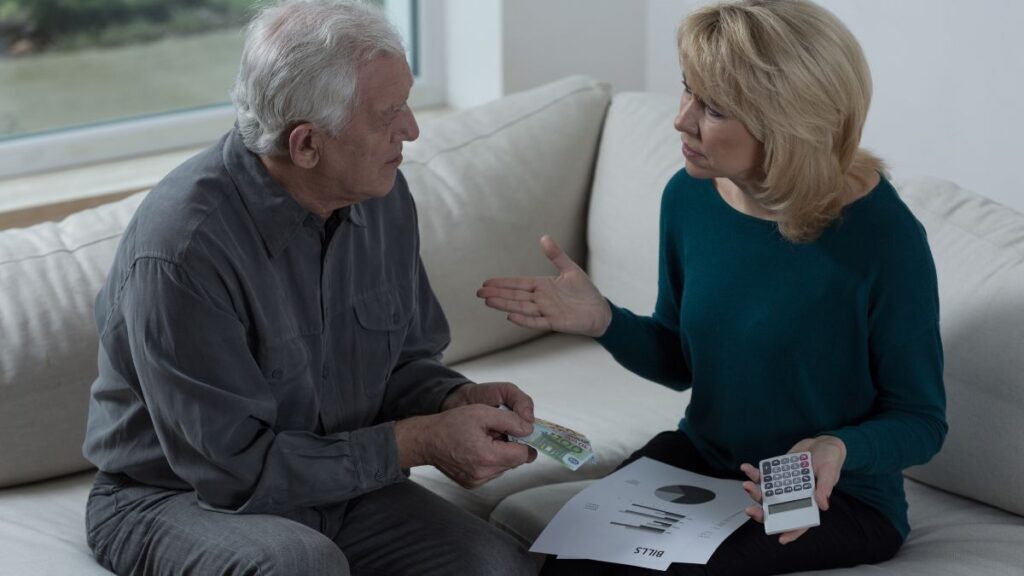
Money can create a new power problem after paychecks stop.
A spouse who handled the investments for 30 years may start behaving as if every purchase needs approval. Another spouse may avoid financial conversations completely and then feel excluded when decisions are made.
Neither pattern is especially helpful. Retirement money belongs inside a shared decision system even when one person handles more of the technical work.
| Decision | Why both partners matter |
|---|---|
| Retirement date | Changes household income and daily life |
| Monthly spending | Defines the lifestyle both will live |
| Housing | Affects cost, community, and independence |
| Travel | Uses money and time belonging to the household |
| Social Security strategy | Can affect both spouses and survivor income |
| Health coverage | Can affect timing and household expenses |
Financial satisfaction can also change during retirement. A 2024 analysis using nationally representative U.S.
Health and Retirement Study data found that the transition to full retirement was associated with changes in financial satisfaction, underscoring that financial adjustment is part of the broader retirement transition.
Couples do not need identical spending personalities. They do need a system in which neither person feels financially invisible.
10. They Gave Each Other Permission to Find a New Purpose

Work does more than provide income. It can give a person deadlines, responsibility, colleagues, identity, feedback, and the feeling of being needed.
Retirement may leave an empty space where those things once existed. Expecting the marriage itself to fill the entire space can put pressure on both partners.
The National Institute on Aging encourages older adults to stay connected through meaningful activities, volunteering, hobbies, classes, community groups, and social relationships. It notes that retirement can be one of the life changes associated with greater isolation risk.
For one spouse, purpose may come from grandchildren. For another, it may come from volunteering, woodworking, consulting, gardening, church, local clubs, part-time work, art, exercise, or learning something new.
A strong retirement marriage leaves room for two meaningful lives as well as one shared life.
11. They Stopped Treating Every Difference as Rejection

One spouse wants to travel for six weeks. The other would rather take several short trips.
One wants breakfast together. The other likes waking early and reading alone. One loves a crowded house full of grandchildren. The other gets tired after three hours.
Those differences are not necessarily statements about love. They are preferences, energy levels, habits, and personalities that may have been easier to ignore while work controlled much of the week.
Research on joint retirement preferences also challenges the assumption that spouses naturally want identical retirement timing. Partners influence each other, but many couples do not share one automatic preference.
Healthy adjustment requires curiosity before interpretation. “Why does this work better for the other person?” is usually more useful than assuming, “The other person no longer wants to spend time together.”
12. They Continued Saying Thank You for Ordinary Things

Long marriages can make competence invisible.
The spouse who has always booked appointments, fixed things, cooked dinner, handled insurance, remembered birthdays, or organized family gatherings may eventually receive less appreciation because those contributions have become expected.
A 2025 qualitative study interviewed 43 older couples about gratitude in long-term relationships. Participants described gratitude connected with their partner’s support, personality, relationship quality, shared achievements, affection, and the life they had built together.
Another study of adults ages 65 to 92 found associations among gratitude, affection in close relationships, and life satisfaction, while also showing that gratitude does not simply erase the effects of high-conflict relationships.
That distinction matters. Appreciation is useful, but it should never become a way of pretending serious problems do not exist.
13. They Allowed the Retirement Plan to Change

The retirement plan created at 60 may not fit at 68.
Health can change. Grandchildren can arrive. An adult child may need help. A parent may require care. One spouse may miss working. Another may discover that the dream retirement location feels lonely.
Retirement research repeatedly shows substantial differences in how people experience the transition. A longitudinal study of couples found that life satisfaction changes surrounding retirement vary across individuals and are connected within couples rather than occurring completely independently.
The couples who adapt well do not treat the original retirement plan as a contract carved in stone. They periodically ask whether the current arrangement still works for both people.
That may mean changing travel plans, returning to part-time work, moving, staying put, adjusting chores, developing new friendships, or spending more time separately.
14. They Asked for Help Before Resentment Became the Household Routine

Every marriage has recurring disagreements. The more concerning pattern is when contempt, hostility, avoidance, control, or emotional withdrawal becomes the normal way two people live together.
Retirement does not create every relationship problem. Sometimes it simply removes the distractions that made an older problem easier to avoid.
The emerging research on couple-focused retirement preparation suggests that communication, mutual support, planning, and coping can be addressed together rather than treating retirement adjustment as an individual task.
The 2026 Couple CARE study is early evidence rather than proof, but it supports taking the relationship side of retirement seriously.
Professional counseling can be reasonable when the same conflicts repeat without resolution or when spouses can no longer discuss important issues respectfully. Seeking help earlier gives a couple more room to work on patterns before years of resentment build around them.
A short reset can also reveal which issues are ordinary adjustment problems and which ones need more attention.
| Week | Couple focus | Practical action |
|---|---|---|
| 1 | Daily routine | Compare ideal weekdays |
| 2 | Space and chores | Reassign two irritating tasks |
| 3 | Connection | Plan one shared activity and one separate activity |
| 4 | Future | Discuss one money, housing, travel, or family decision |
| End of month | Review | Keep what worked and change what did not |
The reset is not a marriage test. It simply turns vague irritation into specific issues that can be discussed and changed.
The Bigger Lesson About Marriage After Retirement
The strongest lesson from the research is not that successful retired couples become inseparable. In many cases, the healthier pattern is more balanced: enough closeness to remain connected and enough independence for each spouse to remain a full person.
Retirement changes schedules, identities, household roles, social networks, finances, and expectations at roughly the same time.
Research has found that marital quality and retirement can influence each other, while more recent couple-focused work treats retirement adjustment as something spouses experience together rather than as two separate individual events.
That helps explain why seemingly tiny habits matter. A weekly coffee alone, a fair division of chores, a friend outside the marriage, a genuine thank-you, or a 20-minute conversation about next week may look minor compared with retirement investments and moving decisions.