
When I sold my 1,800-square-foot suburban home to embrace the tiny house movement, I pictured myself debt-free within months. Fast forward two years, and the reality has been more complicated than the minimalist dream I envisioned.
The captions make it all sound so affordable. Financial freedom: Slash your housing costs. Live for a fraction of your current expenses.
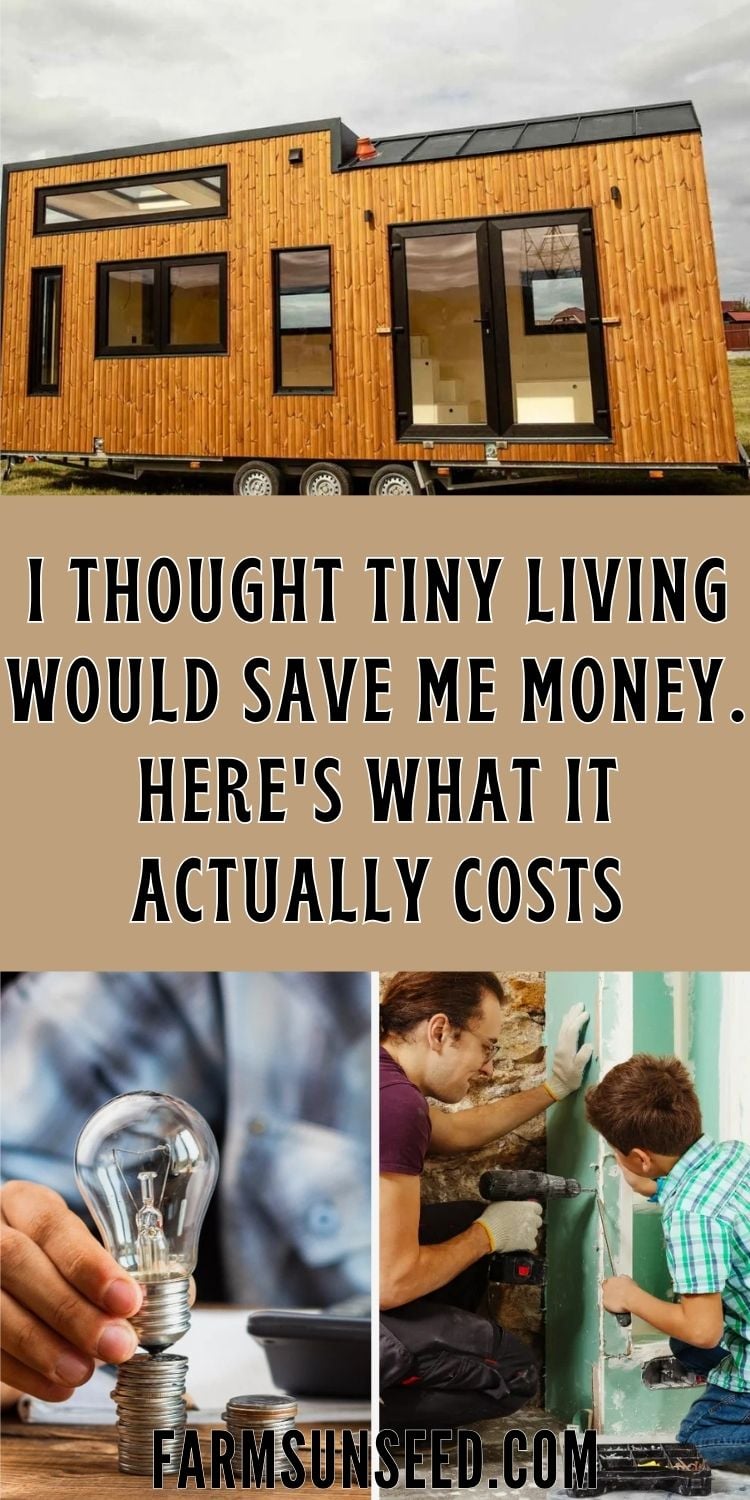
In 2025, with traditional home prices averaging a staggering $396,900 according to the National Association of Realtors, tiny living is an obvious housing affordability alternative. My 280-square-foot cedar-clad tiny house on wheels cost $78,500, seemingly a bargain.
But here’s the kicker: that was just the beginning of my tiny house cost reality.
What nobody told me was how quickly the hidden expenses add up. Land costs. Utility hookups. Custom furniture. Storage solutions. Insurance headaches.
My tiny living expenses, I’m sharing the unfiltered financial truth that most tiny house influencers won’t tell you. Not to discourage you, my tiny life has many rewards, but to help you enter this lifestyle with eyes wide open and wallet prepared.
I Thought Tiny Living Would Save Me Money – Here’s What It Actually Costs
1. The Purchase Price Reality: What My Tiny Home Actually Cost

When I first sketched my tiny house budget, I planned for $45,000. The final bill? $78,500. That’s reality for you.
My 280-square-foot dream home cost a staggering $280 per square foot, far more than the $150 per square foot average for traditional homes. According to the National Association of Realtors, the median traditional home in 2025 costs $396,900, so my tiny home still saved money overall, but the per-square-foot economics surprised me.
Why so expensive? Custom features. That handcrafted Murphy bed/desk combo added $3,200. The compact high-efficiency HVAC system? Another $4,500.
Had I gone full DIY, I might have saved $20,000-$25,000, but my construction skills are questionable at best. Professional builds typically run $50,000-$150,000, depending on size and finishes; DIY projects can start around $30,000.
Financing was another shock. Traditional mortgages? Not happening. Banks see tiny homes as risky investments. I ended up with a personal loan at 9.5% interest, nearly double typical mortgage rates.
Sound familiar? You’re not alone in your tiny house cost breakdown surprises.
2. Land and Location: The Hidden Expense Nobody Talks About

Where will you park it? That innocent question became my biggest headache and expense.
Land costs vary wildly by region. Rural land might run $5,000-$25,000 per acre; urban plots can exceed $100,000. I initially rented a corner of a friend’s property for $350 monthly. Seems reasonable, right? Then came the zoning issues.
My county classified my tiny home as an accessory dwelling unit, requiring permits costing $2,800 plus another $1,200 for inspections. Other jurisdictions charge $500-$3,000, depending on their tiny house zoning laws. Some places simply don’t allow them at all.

After six frustrating months, I relocated to an RV park charging $750 monthly on the lower end of the $250-$1,500 national average. This included water and electricity hookups, but added a 20-minute commute to work.

Then there’s property tax. My tiny home is technically personal property, not real estate, creating a complicated tax situation that required a $400 consultation with a specialist.
Are you considering RV park living? Remember to budget for site deposits ($500-$1,000) and potential seasonal rate increases during tourist months.
Want the tiny home location? The land might cost more than the home itself.
3. Utility Connections and Monthly Bills: Small Space, Surprising Costs

The first shock? Connection costs. Hooking my tiny home to water, sewer, and electricity ran $8,700 right in the middle of the $5,000-$15,000 average. That septic connection alone was $4,200. Ouch.
Monthly tiny house utility costs are lower than traditional homes, but not proportionally so. I pay about $85 monthly versus $220 in my previous home 60% less for 85% less space.

I considered going off-grid. Solar systems start around $7,000 but quickly climb to $20,000 for complete energy independence. A quality composting toilet? That’s another $1,200-$2,500.

In Internet created unexpected challenges. My rural location meant satellite was my only option $120 monthly for spotty service.
Waste management required creativity. The tiny living monthly bills now include $45 quarterly for scheduled pickup since my location lacks regular service.
Small homes have smaller bills, yes, but those off-grid tiny home expenses can add up fast at the beginning.
4. Furnishing and Storage Solutions: Compact Doesn’t Always Mean Cheaper

Tiny home storage solutions come with not-so-tiny price tags. That’s lesson one.
My convertible sofa/bed? $2,100 more than my previous full-sized sectional. The fold-down desk/dining table combo? $1,800. Multi-functional furniture costs more because it does more.

Custom built-ins became essential. Wall-to-wall storage with sliding panels, hidden compartments, and pull-out sections added $4,300 to my budget. But without them, I’d be drowning in clutter.
Despite ruthless downsizing (selling, donating, and gifting 70% of my possessions), I still rent a small storage unit for seasonal items and keepsakes $125 monthly, which I hadn’t planned for.

Total furnishing costs? $8,200, firmly within the typical $3,000-$10,000 range.
Money-saving tip: I built my own kitchen shelving and bathroom storage, saving roughly $1,500 over custom options. Some IKEA hacks worked beautifully at a fraction of specialty furniture prices.
Remember: fewer things don’t always mean smaller downsizing expenses. Quality matters more when everything is visible.
5. Maintenance and Unexpected Repairs: Small Problems, Big Impacts

When your shower leaks in a tiny house, your entire home becomes a splash zone.
The industry suggests budgeting 1% of your home’s value for annual maintenance. For my $78,500 home, that’s $785, which seemed reasonable until my mini-split HVAC system failed during a heat wave. The $1,900 repair blew my entire annual budget in one sweltering afternoon.

Insurance was another surprise in my tiny house maintenance costs journey. Standard homeowners’ policies don’t apply. My specialized tiny home insurance runs $875 annually, higher than expected for such a small space.
Weather impacts are amplified in tiny houses. A small roof leak quickly becomes an all-hands emergency. After a particularly harsh winter, I spent $1,200 repairing water damage and upgrading insulation.

DIY repairs save money but require specialized knowledge. I’ve become a reluctant expert in compact plumbing systems and 12-volt electrical work. For complex issues, finding knowledgeable professionals can be challenging and expensive.
Small homes mean small problems can create big headaches fast.
6. My Monthly Budget Breakdown: The Real Numbers from 2025

Loan payment: $825 (42%) • RV park rental: $750 (38%) • Utilities: $85 (4%) • Insurance: $73 (4%) • Storage unit: $125 (6%) • Maintenance fund: $100 (5%) • Internet: $120 (6%)
Total: $1,978 monthly or $23,736 annually. My previous 1,800 sq. ft. home cost $2,850 monthly $872 more each month.

Seasonal variations hit hard. Winter heating bumps my utilities to $140 monthly. Summer in the RV park adds a $150 peak season” premium from May to September.
Unexpected tiny house monthly budget surprises included quarterly propane delivery ($95) and water filter replacements ($85 every two months) for my specialized system.
Year-over-year, my actual tiny home expenses have increased 3.2% due to rising RV park rates and insurance premiums.
Am I saving money? Yes, about $10,464 annually. But is it the dramatic savings I expected? Not exactly. That’s the tiny house financial reality.
7. Is Tiny Living Actually Cost-Effective? My Honest Assessment

After two years of tracking every penny, here’s my unfiltered take on cost-effective tiny living.
Financially, my 5-year projection shows I’ll save approximately $52,300 compared to my previous housing situation significant but not life-changing. The savings come with trade-offs: less space, more careful budgeting, and lifestyle adjustments.

The uncomfortable truth about tiny home investment value? My home on wheels is depreciating at roughly 5% annually, like an RV. Foundation-based tiny homes fare better, holding steady or appreciating slightly in hot markets, but most tiny homes won’t build equity like traditional real estate.
Who benefits most financially? People moving from high-cost rentals in expensive cities, those avoiding construction during housing shortages, and individuals comfortable with DIY maintenance. Remote workers can capitalize on geographic arbitrage, living in lower-cost areas and earning big-city salaries.

Quality of life impacts are mixed. A 2025 survey of tiny home dwellers found 63% reported lower financial stress, but 48% struggled with space limitations. For me, the freedom from excess consumption has been liberating, but I miss entertaining friends.
My biggest lesson? Tiny living requires honest accounting of ALL expenses and recognizing that the value extends beyond just dollars saved.
The tiny house financial reality is nuanced: I’m saving money, but I’m paying in other ways. Know yourself before going tiny.
