
Does your tiny home feel messy five minutes after you clean it? You tidy up, but the clutter always comes back. This is the daily struggle of living in a small space.
The problem is that most advice on how to organize is made for big houses. It tells you to buy more bins and shelves. But in a tiny home, those organizers just take up more precious space. You’re trying to contain the chaos instead of eliminating it.
What if the secret isn’t a new product, but a new perspective? The most powerful Japanese storage trick isn’t a single gadget. It’s a combination of a smart mindset and practical, space-saving actions.
You will learn how to change your relationship with your possessions and discover minimalist storage solutions that actually work. We will guide you from feeling overwhelmed to being in complete control of your space. Get ready to create a home that feels open, calm, and truly organized.
I Tried This One Ancient Japanese Storage Trick, And It Changed My Entire Tiny Home
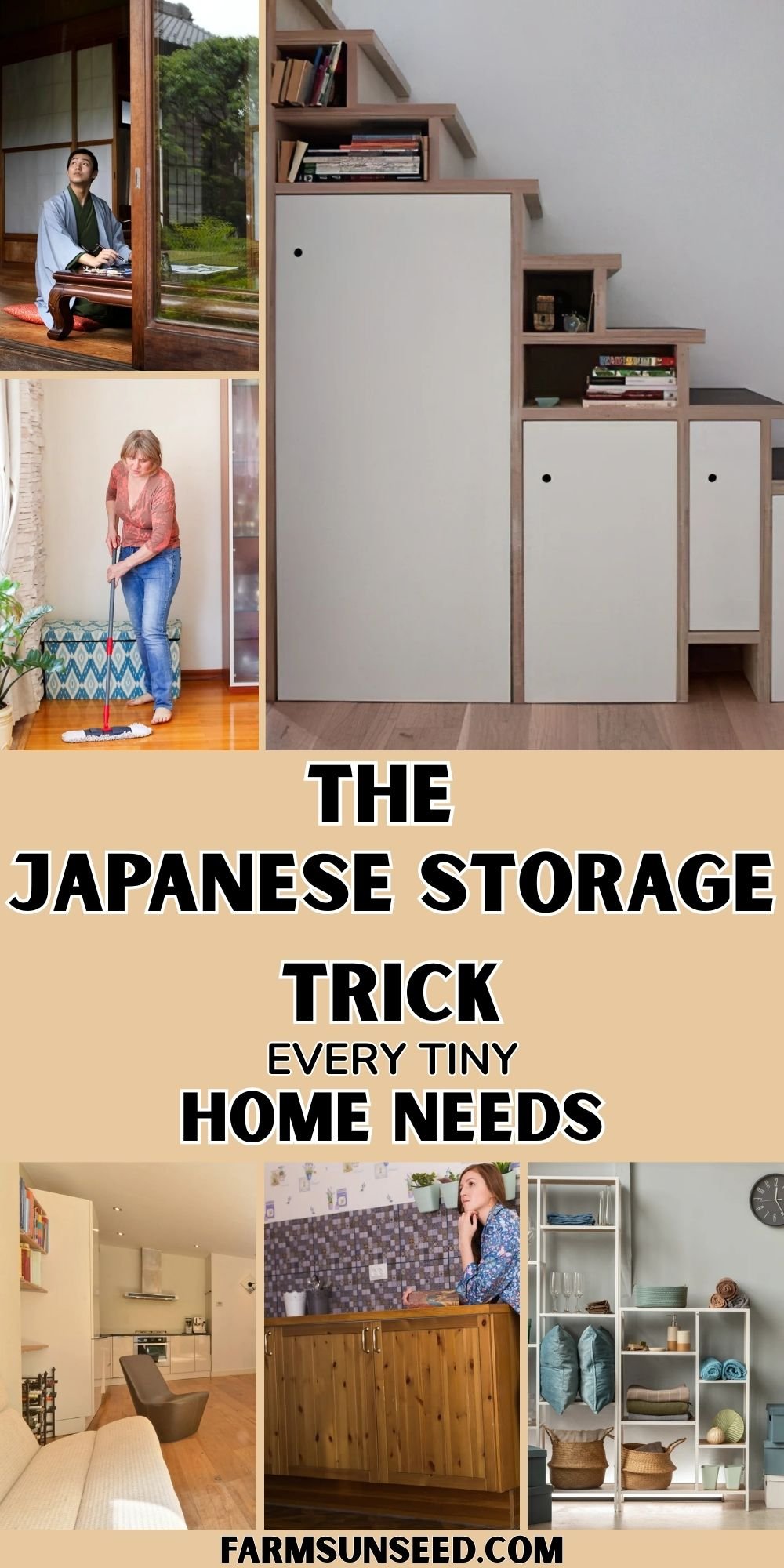
1. Why Western Organization Methods Fail in Tiny Homes

Does your tiny home still feel cramped after you’ve organized it? You’re not alone. The problem isn’t your effort. It’s that most organizing advice is geared towards larger houses.
Western methods focus on containment. They tell you to buy bins, baskets, and drawer dividers. But this just hides your clutter problem. You are adding more things (the organizers) to manage your existing things. In a small space, this exacerbates the problem. You use up valuable space with storage containers instead of creating a home that feels open.

They show you how to organize, but not why you should own less. For a tiny home dweller, philosophy is just as important as practicality. A junk drawer in a normal house is a small issue. In a tiny home, it’s a major source of stress. You need a system that is more intentional from the start.
You might think, But I need all this stuff That’s the exact mindset that keeps you stuck. The real goal for a tiny home isn’t to hide your belongings. It’s to own so little that you don’t need complex systems. This is the key to making a small space feel large and peaceful. The following sections will show you the Japanese approach that solves this core issue.
2. The Foundation: 3 Japanese Mindset Shifts for Tiny Living

So, how do you stop the cycle of clutter? The answer isn’t a bigger storage bin. It’s a new way of thinking. Japanese philosophy offers powerful mindset shifts that make organizing a tiny home feel natural.
Refuse, Dispose, Separate

This three-step philosophy is your new blueprint. Dan means to refuse. Stop unnecessary items from entering your home in the first place. Say no to freebies and impulse buys. Sha means to dispose. Let go of anything that is broken, unused, or no longer serves you. Ri means to Separate from your attachment to things.
As organizer Kamila Hankiewicz explains, Danshari is about appreciating the space and the items that truly deserve to be in it.” This is the core of minimalist storage solutions: having less to manage.
The Power of Empty Space

In the West, we often see space as something to fill. In Japan, Ma is appreciated. It’s the intentional use of negative space. In your tiny home, a clear countertop or an empty corner isn’t wasted. It’s essential. It gives your eyes a place to rest and makes the area feel larger and calmer. Think of Ma as a breath of fresh air for your home.
Embrace Imperfection

This concept encourages you to appreciate the beauty in imperfection. That mug with a small chip? It has character. The wooden table with scratches? It tells a story. Wabi-Sabi helps you fight the urge to replace items just because they show signs of use. This mindset drastically reduces consumption and helps you love the items you already have.
Together, these three ideas form a strong Japanese mindset. They change your goal from where do I put this to “does this deserve a place in my life This foundation makes the practical steps that follow much easier.
3. The Practical Plan: 5S for Your Tiny Home

Now, let’s turn those mindset shifts into action. The 5S method is a Japanese system used to create efficient workspaces. It’s perfect for the ultimate small workspace: your tiny home. This is your step-by-step guide to organizing for good.
Seiri (Sort) – The Big Edit

This is the most important step. You must sort ruthlessly. Gather items by category, not by room. Pull all your clothes out at once. Empty every kitchen cabinet onto the floor.
If the answer is no, it’s time to let it go. This step reduces the total volume of your belongings. It’s the dispose part of Danshari in action. Be brutal now for peace later.
Seiton (Set in Order) – A Place for Everything

Every item you kept in Seiri now gets a dedicated home. The goal is to make things easy to find and easy to put away.
Example: In your kitchen, don’t just shove cutlery into a drawer. Use a simple divider. Place knives on a magnetic strip. Hang mugs under the cabinet. This is where tiny home organization gets smart. Frequently used items should be the most accessible. This step eliminates the daily hunt for things.
Seiso (Shine) – Clean Your Space

Once everything is sorted and in its place, clean the space thoroughly. Wipe down shelves, sweep floors, and clean windows. A clean space feels larger and more intentional. You’re not just cleaning around clutter; you’re maintaining a clear area. This makes you more likely to keep it that way.
Shitsuke (Sustain) – Make it Stick

This is the long-term goal. Shitsuke is about discipline and continuous improvement. The mindset shifts from earlier appreciating space (Ma) and embracing what you have (Wabi-Sabi), making this step easier. It’s no longer a chore; it’s part of your lifestyle.
By following the 5S method, you build a home that works for you, not against you. It turns the challenge of a small space into an advantage of effortless order.
4. Actionable Japanese Storage Tricks for Every Room

You have the mindset and the system. Now for the fun part: the smart Japanese storage tricks that make tiny living effortless. These ideas focus on using every inch wisely.
Go Vertical with Purpose

Floor space is your most limited resource. The solution? Look up. Japanese homes are masters of vertical storage.
Install wall-mounted shelves above desks and sofas.
Use hooks on the backs of doors and on walls for bags, pots, and utensils.
Consider a tall, narrow shelving unit (like a tansu chest) instead of a short, wide one.
This approach instantly frees up your floor, making your home feel larger and easier to clean. It’s a simple but powerful shift.
Choose Multi-Functional Furniture

Every piece of furniture in a tiny home should earn its keep. The best pieces do double or triple duty. This is a core principle of multi-functional furniture.
A storage ottoman provides seating, a footrest, and hidden space for blankets.
A sofa bed is essential for hosting guests without dedicating a whole room.
Look for beds with built-in drawers or tables that fold down from the wall.
When you buy a new item, ask: “How many jobs can this do for me?”
Utilize Hidden and Underused Spaces

Get creative with the spaces you usually ignore. Hidden storage is key to a clutter-free look.
Do you have stairs? The space underneath is for a custom cabinet or a set of drawers.
Use the area under your bed for storage boxes with wheels.
Build a window seat with a hinged top to store off-season clothing.
These Japanese storage tricks turn dead space into valuable storage real estate. The goal is to have a place for everything without anything looking out of place. By combining these practical ideas with the Japanese mindset, you create a tiny home that is both highly functional and deeply peaceful.
