
You signed the lease because the apartment looked online, but three months in, you can barely walk to your bed without tripping over stuff. Your apartment feels cramped. Cluttered. Suffocating. You can’t fit all your belongings comfortably.
The stress hits you every time you open the door. Moving costs too much right now. You feel trapped. Here’s what’s actually happening. You’re not alone. 80% of Americans feel overwhelmed by clutter. 54% report feeling stressed by their cluttered homes.
You underestimated your space needs. Most people do. Empty apartments look huge. Then you move on in your life. You have seven fixes you can start today. Real solutions that work in a small apartment space planning. Why apartments keep shrinking. How to create storage solutions from spaces you’re ignoring. Space-saving tricks that actually work in 2025.
Why Your Apartment Feels Like a Cluttered Box
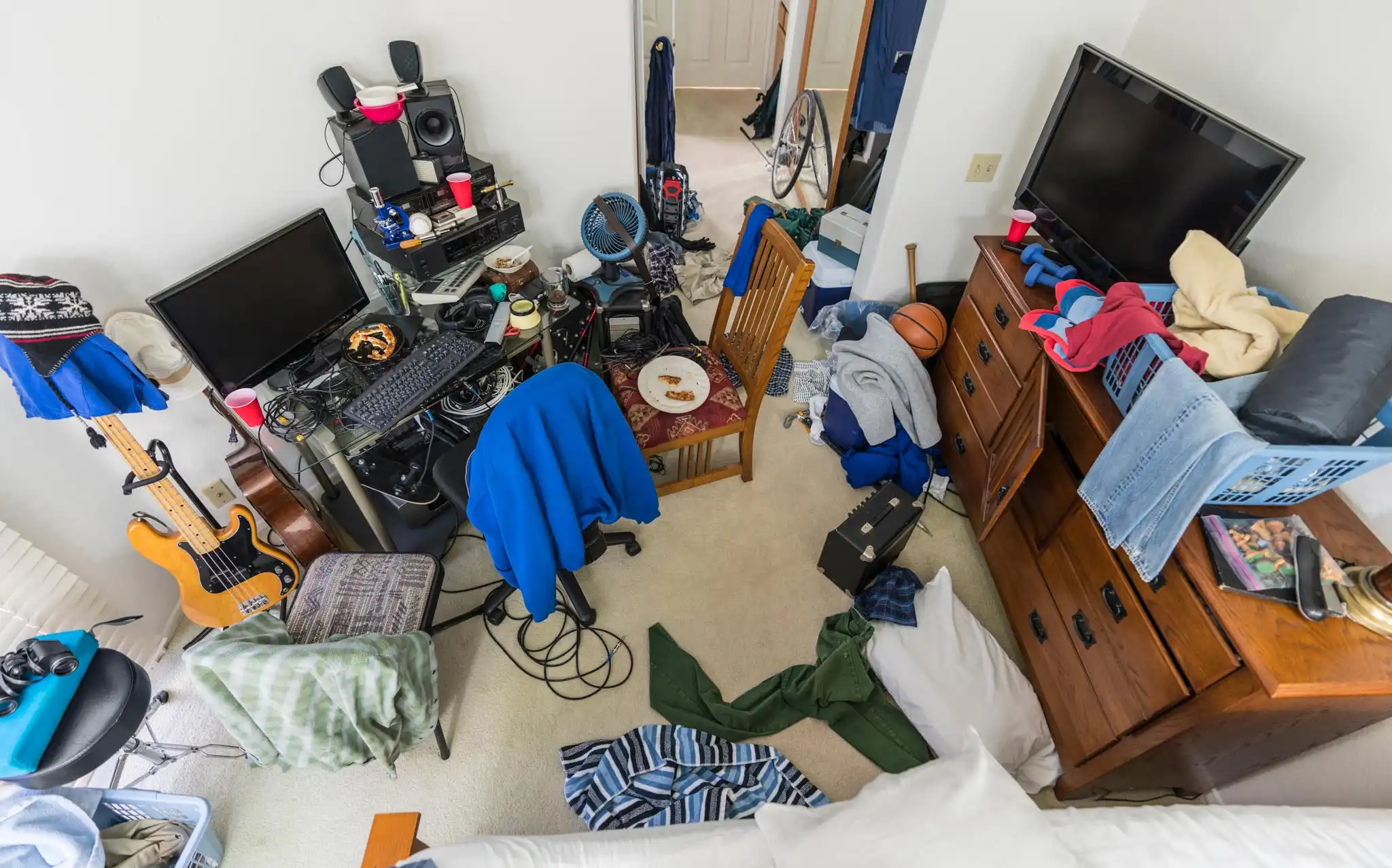
Apartments are shrinking. Fast. The average apartment dropped 30 square feet from 2021 to 2022. That’s the biggest one-year drop ever recorded. Studio apartments? They went from 614 square feet to 504 square feet between 2006 and 2019. That’s 18% smaller.
Here’s the thing. You own way more than you think. The average American home has 300,000 items in it. Yes, three hundred thousand. And you tried to fit all that into a space that keeps getting smaller.

One-bedroom apartments there dropped from 952 square feet to 846 square feet. But rent went up 19.2%. You’re paying more for less room. When you toured your apartment, it was empty. Empty rooms look huge. Then you moved into your bed, your couch, your desk. Suddenly, you can barely walk.
And clutter? It kills your productivity by up to 40%. You can’t focus. You can’t relax. You can’t find anything. You didn’t plan for growth either. That hobby you picked up? Those winter clothes? The stuff you bought online last month? It all needs space. You’re not bad at organizing. Space planning mistakes are easy when apartments keep shrinking and your stuff keeps growing.
The Real Cost of Getting This Wrong

This isn’t just about messy rooms. Clutter overwhelm costs you real money and steals your time. You spend 55 minutes every day looking for stuff you can’t find. That’s almost an hour gone. Every single day. Add it up, and you waste 2.5 days per year just searching for lost items. Your wallet hurts, too. One third of Americans now pay for self-storage because their stuff won’t fit at home. The average storage unit costs $85.14 per month. That’s $1,021 per year for a space you probably don’t visit.
The mental toll? It’s worse. 42% of Americans feel cluttered at home. You can’t relax in your own space. Small space stress makes you irritable. Tired. Your relationships suffer. You can’t have friends over because there’s nowhere to sit. You fight with your partner about the mess. You feel embarrassed about how you live.
Here’s what clutter does to your daily life. It increases household tasks by 40%. You’re doing more work just to exist in your space. But here’s the good news. You can fix all of this without moving, without spending hundreds on storage costs. The solutions are simpler than you think.
1. Do the Brutal Space Audit

First, you need to see what you’re actually working with. No guessing. No excusing. Just facts. Grab painter’s tape from any hardware store. Cost? About $5. Use it to outline where your furniture sits on the floor. You’ll see how much space that couch really eats up. It’s probably more than you think.
Now take photos from your doorway. This is what guests see when they walk in. Brutal? Yes. Necessary? You’ve gotten used to the mess. Fresh eyes don’t lie. Pick one category. Clothes work great. Empty every piece of clothing you own onto your bed. All of it. Every drawer, every closet, every pile. You need to see the full picture of what you actually own.
Here’s your space assessment checklist. Measure your closet depth and width. Count your storage bins. Check under your bed. Open every cabinet. Look, 54% of Americans feel overwhelmed by clutter. You’re not alone. But you can’t fix what you can’t see. Track what you actually use for one week. Put a sticky note on items you touch. Everything else? You don’t need it as much as you think.
2. Get Rid of What Doesn’t Earn Its Space

Every item in your apartment needs to earn its space. If it’s not making your life better, it’s making your space smaller. Start with the one-in, one-out rule. Buy a new shirt? Get rid of an old one. This stops the endless accumulation right now. Toss these immediately. Expired medications. Broken electronics you’ll fix someday. Clothes that don’t fit. Duplicate kitchen tools. Old magazines. Be ruthless.
Here’s how to decide what stays. Ask yourself three questions. Have I used this in six months? Does it make me happy? Would I pay to move this? No to any question? It goes. Get cash fast on Facebook Marketplace. List items with good photos. Price them to sell. Most stuff moves within a week.
For donations, Goodwill and Salvation Army both offer free pickup. Schedule online. They come to your door. You don’t even need to leave. Clutter reduction gives you 40% more usable space. That’s huge in a small apartment. And 62% of Americans feel better after decluttering. The mood boost lasts up to a week.
3. Vertical Storage is Your New Best Friend

Your walls are wasted space right now. Wall-mounted shelves and floating storage can double your storage capacity without touching the floor. Can’t drill holes? No problem. Command strips hold up to 16 pounds. They come off clean when you move. Get them at any Target or Walmart for $10 to $15.

Over-the-door organizers work for everything. Coats, hats, jewelry, towels, shoes. You just spent $20 and created storage for 30 items. The back of every door is free real estate.
Install tall bookcases that touch the ceiling. IKEA’s BILLY bookcase goes up to 93 inches tall. Costs $129. You just got six feet of vertical storage that only uses two feet of floor space.
Here’s the thing about corners. They’re storing gold. Corner shelves cost $25 on Amazon. Stack three of them and you’ve got nine shelves using zero wall space.

Ceiling hooks hold bikes, plants, or baskets. Strong ones cost $8 for a pack of six. You just added 30% more storage without losing floor space. That’s the power of thinking vertically.
4. Furniture That Does Two (or Three) Jobs

Your furniture needs to work as hard as you do. Single-purpose furniture is a luxury that small apartments can’t afford. Murphy beds are worth the investment. They fold up into the wall during the day. You get your bedroom back as a living space. Many come with built-in shelves or desks attached. Prices start at $1,200 for basic models. Resource Furniture makes high-end versions from $3,000 up.

Storage ottomans are the MVP of multifunctional furniture. They’re sitting. They’re a coffee table. They’re storage for blankets, books, or whatever. A good one costs $80 to $150 on Amazon or West Elm. Need a dining table? The IKEA PINNTORP transforms from a full table to a slim console in seconds. It’s only 26 inches wide when folded. Costs $199. Seats four when open. You just got your dining room and your living room in the same space.

Convertible sofas that don’t suck do exist. The IKEA LYCKSELE LÖVÅS runs about $300. It’s a real couch that becomes a real bed. Not great for nightly use, but for guests or studio living.

Foldable desks mount to walls. They drop down when you work. Fold up when you’re done. Your office disappears. Prices range from $50 to $200. Look for furniture that stacks, folds, or hides storage inside. Every piece should do at least two jobs.
5. Hidden Storage You’re Not Using

Under your bed is prime real estate. Rolling storage bins fit under there. They slide out easily. Some even work as bedside tables. Get bed risers for $15 on Amazon. They lift your bed six inches. You just created a massive storage space underneath.
Look at your closet doors. The inside of every door is wasted space. Over-the-door shoe organizers hold way more than shoes. Use them for cleaning supplies, toiletries, craft supplies, or snacks. Cost? About $12.

Behind your couch? Hidden storage gold. Slim console tables fit behind sofas against walls. They’re only 10 inches deep. You get surface space and shelf storage without losing floor room. Corners are storage spots everyone ignores. Corner shelves cost $20 to $40. Stack them floor to ceiling. Use them for books, plants, or kitchen items. Corner desks work great, too. They use dead space nobody walks through anyway.

Kitchen and bathroom hidden spots matter. Slim rolling carts squeeze into gaps between appliances or next to toilets. The three-tier ones from IKEA cost $30. Magnetic strips on walls hold knives or makeup. Tension rods under sinks create extra shelving.

Check the space above your cabinets. Above your fridge. Inside cabinet doors. The back of your bathroom door. Find five hidden spots today. You’ll be shocked at how much storage you’ve been ignoring.
6. Set Up Systems to Keep It Working

Start with a daily 10-minute reset. Set a timer. Put away everything that’s out of place. Wipe down surfaces. Fluff pillows. Do this before bed every night. It takes less time than scrolling social media. Your apartment stays clean without weekend marathon sessions.
Enforce the one-in-one-out rule religiously. New book arrives? Donate an old one. Buy new shoes? Toss worn-out ones. This stops clutter from building back up. No exceptions.
Give everything a designated home. Keys go in the bowl by the door. Mail goes in the desk drawer. Shoes live in the closet. When everything has a spot, you stop creating piles. You know where stuff is. You save those 55 minutes per day you used to waste searching.
Do a monthly declutter check. First Sunday of every month. Walk through with a donation bag. Grab anything you haven’t used. Out it goes.
Stop impulse buying. Before you buy anything, ask yourself two questions. Do I really need this? Where will it live? No clear answer? Don’t buy it. Mindful shopping saves money and space. Set phone reminders for your daily reset and monthly checks. Make it automatic. Small habits keep big problems away. Your space stays clean because the system does the work.
