You’ve found the best 400-square-foot cabin online for $65,000, but is it a mobile home, tiny house, or park model? The answer could cost you thousands and determine where you can legally live.
Housing prices hit $400,000+ nationally in 2025. That’s pushing millions of people toward affordable alternatives. Mobile homes, tiny houses, and park models all look similar. Small. Cute. Affordable. But that’s where the similarities end.
The mobile home vs tiny house vs park model question isn’t about style. It’s about legal classification. Call something the wrong name and your loan gets denied. Your insurance claim gets rejected. Your zoning board says you can’t live there.
These three options have completely different rules. Different financing. Different placement laws. What works in one situation fails in another. Understanding manufactured housing 2025 rules, park model RV classification, and tiny house regulations could save you from a $50,000 mistake.
#1. What Defines Each Housing Type
You’re looking at three similar homes online. They’re all small. They all look like cabins. They’re all under $100,000. But legally? They’re completely different things.
Mobile Homes (Also Called Manufactured Homes)

Think of a mobile home as a real house built in a factory. Any home built after June 15, 1976, follows the HUD code manufactured home standards. This is federal law. Every mobile home must meet these construction rules.
Mobile homes sit on a permanent chassis. Yes, you can move them. But most people don’t. They’re designed to stay put. A typical single-wide measures 600 to 1,300 square feet. Double-wides run 1,000 to 2,400 square feet. The average single-wide is about 1,000 square feet bigger than most apartments.
Tiny Houses

This term means different things to different people. No official definition exists. Most people say a tiny house is 100 to 500 square feet. Some sit on wheels (called THOW, tiny house on wheels). Others go on foundations.
Tiny houses don’t follow one building code. Some builders use RV codes. Others follow residential codes. Many don’t follow any code at all. This causes major problems when you try to get permits.
People build tiny houses themselves or hire custom builders. About one-fifth of Americans say they’d consider living in one. But “considering” and “legally allowed” are two different things.
Park Model RVs

Park models follow the ANSI A119.5 code. This is the RV code. Every park model must stay under 399 square feet (Florida allows 499). If it’s bigger, it’s not a park model.
Each park model gets an RVIA certification seal and VIN. Just like your car. This RVIA seal proves it meets safety standards. Without it, you can’t register it as an RV.
Park models look like tiny log cabins. But legally? They’re recreational vehicles. This matters more than you think.
#2. The Legal Classification Trap
Most people lose money here. They find a perfect small home. They fall in love. Then they discover they can’t legally put it where they want.
Mobile Homes = Real Property

Mobile homes are the easiest option legally. Once you put a manufactured home on a permanent foundation, most places treat it like a regular house. You can get traditional mortgages. You pay property taxes. You have clear legal rights.
But you must meet HUD manufactured housing standards. Every mobile home has to pass federal inspections. This protects you. It also means lenders trust these homes.
Most areas require a permanent foundation. No wheels touching the ground. The home has to be anchored properly. Do this right and you can live there full-time. No questions asked.
Park Models = Recreational Vehicles Only

This means temporary or seasonal use only. In most places, you cannot make a park model your legal permanent residence. Read that again. It looks permanent, but legally it’s not.
Park model RV restrictions limit where you can put them. You can place them in RV parks. You can use them at campgrounds. Rural properties might work. But residential neighborhoods? Usually no.
The upside? They’re easier to finance. RV loans have better rates than personal loans. Moving them between states is simpler. Insurance companies know how to cover them.
Tiny Houses = Legal Mess

Tiny houses exist in a legal gray area. No federal classification exists. No standard building code covers them. Every city makes up its own rules.
Some places love them. Others ban them completely. Your neighbor’s city might allow them. Yours might not. Tiny house zoning laws 2025 vary by county, sometimes by neighborhood.
Many building codes don’t accommodate homes this small. Minimum square footage rules kick you out. Stair requirements don’t fit. Ceiling heights are too low. Tiny houses break traditional codes just by existing.
Real Examples Show the Differences

Fresno, California, made history. They became the first city to allow tiny houses on wheels as accessory dwelling units (ADUs). You can put one in your backyard legally.
Spur, Texas, went further. They removed the minimum size requirements completely. You can build as small as you want.
Portland, Oregon, permits tiny houses in all residential zones. This is rare and amazing. But Los Angeles? They restrict tiny houses to specific zones only. Most of the city says no.
#3. Real Costs in 2025: Beyond the Sticker Price
That $65,000 price tag looks amazing. You’re excited. Then reality hits. That number? It’s just the start. Here’s what you’ll actually spend.
Mobile Home Cost 2025: The Real Numbers

A new single-wide mobile home averages $84,900 according to February 2025 Census data. Double-wides average $156,300. You’ll see prices from $60,000 to $160,000 depending on size and features.
Add everything up and you’re looking at $100,000 to $300,000+ total. Still cheaper than a traditional house at $402,600. But it’s not $84,900.
Single-wides come on one truck. Setup is faster and cheaper. Double-wides need two trucks and professional crews to join the sections. More complexity means more cost.
Tiny House Price Per Square Foot: What to Expect

Tiny houses have the biggest price range. Build it yourself and spend $20,000 to $50,000. Hire professionals and expect $50,000 to $80,000. Luxury custom builds hit $150,000.
Cost per square foot runs $140 to $450. That’s actually higher than traditional homes. Why? Custom work costs more. Small spaces need creative solutions. Specialty parts add up fast.
A 300-square-foot tiny house at $300 per square foot costs $90,000. The same money buys you 900 square feet in a mobile home.
Park Model Pricing: The Middle Ground

New park models range from $43,000 to $120,000. Most fall between $65,000 and $90,000. Used models start around $25,000 to $30,000 if you find good ones.
Luxury park models with high-end finishes can hit $200,000. But you get full-size appliances and premium materials.
Park models are turn-key. What you see is what you get. No construction delays. No supply chain issues. Order one and wait about four months.
Hidden Costs That Shock Everyone

Land costs vary wildly by location. The national average is $12,000 per acre. Sounds reasonable. But in New Jersey? Try $196,410 per acre. Rural areas run $5,000 to $25,000. Urban plots cost $100,000 or more.
Site preparation runs $4,000 to $11,000. This includes clearing the land, leveling it, and getting it ready. Rocky terrain costs more. Sloped lots cost more. Trees that need removal cost more.
Utilities hookup is expensive. Connecting water, electric, and sewer costs $6,500 to $30,000. Rural properties without city services need wells and septic systems. That pushes costs even higher.
Delivery fees depend on distance. Expect $2,000 to $14,000. Mobile homes and park models both need professional transport. Oversized load permits cost extra. Escort vehicles cost extra. Long distances cost a lot extra.
Foundation work adds $3,000 to $36,000. Pier and beam is the cheapest. Concrete slabs cost more. Full basements cost the most. Some areas require permanent foundations by law.
Permits and inspections run $500 to $5,000. Every county charges different fees. Some areas tack on impact fees for roads and schools. Budget for the worst-case number.
#4. Financing: Why Your Choice Matters
Your housing choice determines if you can get a loan at all. And what rate you’ll pay. Financing works for each option in 2025.
Manufactured Home Financing: The Easiest Path

Mobile homes qualify for real mortgages. If you own the land, you can get FHA loans, VA loans, or USDA loans. Interest rates run 5% to 8% typically.
This is the same type of loan people use for traditional houses. Lenders understand manufactured homes. They’ve been around since 1976. Your credit score matters, but it’s not impossible.
Don’t own land? You need a chattel mortgage mobile home loan. This is a personal property loan. Rates are higher, think 7% to 12%. Terms are shorter, maybe 15 to 20 years instead of 30.
Tiny House Loan Options: The Hard Route

Personal loans charge 10% to 28% APR. Ouch. These are unsecured loans. No collateral means high rates. Terms run 3 to 7 years, usually. Monthly payments get steep.
RV loans work if your tiny house has RVIA certification. Rates drop to 5% to 15% APR. Much better. But your tiny house needs to be built to RV code and registered with the DMV. Most custom builds don’t qualify.
Credit cards work for small DIY builds under $20,000. You’ll pay 15% to 25% APR. Only consider this if you can pay it off fast.
Home equity loans let you borrow against your current house. Rates are decent, 5% to 9%. But you need equity to tap. And you’re risking your main home.
Builder financing is becoming more common. Some tiny house companies offer payment plans. Rates vary. Terms vary. Read the fine print carefully.
RV Loan Park Model: The Sweet Spot

Companies like 21st Mortgage specialize in park model financing. Current rates start around 5% APR with 10% down. Terms go up to 23 years. That keeps payments manageable.
U.S. Bank offers RV loans up to $150,000 at 5.24% APR. Credit unions often beat bank rates by a point or two.
You need decent credit—usually 650 or higher. You need proof of income. You need that 10% down payment. But compared to personal loans at 20%? This is a steal.
Park model financing is easier than tiny house financing. Harder than mobile home financing. The middle ground.
#5. Where Can You Actually Put It?
You found the perfect home. You got financing approved. Now you need to park it somewhere. This is where many buyers hit a wall. Here’s what’s actually allowed.
Mobile Home Zoning: Your Best Options

Owned land works if your county allows manufactured homes. Call your zoning office first. Say “manufactured home”, not “mobile home.” It sounds more official. Ask about setback requirements. These rules say how far from property lines your home must sit.
Manufactured home communities are the easiest choice. These parks specialize in mobile homes. Lot rent runs $300 to $1,000 per month, depending on location and amenities. Some have pools, playgrounds, and maintenance included.
Over 17,000 manufactured homes were shipped in early 2025. That’s an 8% increase from last year. More homes mean more communities accepting them.
Tiny House Placement Laws: The Struggle

Primary residence use is often illegal. Even if you build it, you might not be able to live in it full-time. Check before you build.
ADU regulations by the state are changing. An accessory dwelling unit sits on property with a main house. California recently changed ADU laws to allow more density. You might fit a tiny house in your backyard legally. But your neighbor three blocks over might not.
RV parks sometimes accept tiny houses if they have RVIA certification. No certification? They’ll turn you away. RV park regulations require proper codes and safety seals.
Rural or unzoned land is your best bet. Counties without zoning let you do more. But banks won’t finance property they consider risky. You might need cash.
RV Park Regulations: Park Model Placement

RV parks and campgrounds are built for park models. They have utility hookups ready. You pay monthly or seasonal fees. This is the intended use for park models.
Mobile home parks often accept park models. They’re bigger than travel trailers and stay put longer. Park owners like the stability.
Rural properties work in many counties. If the land allows RVs, it usually allows park models. Check county rules. Some areas restrict RV living even on your own land.
Vacation property zones specifically allow recreational vehicles. Lake communities and mountain areas often welcome park models. These make great seasonal retreats.
#6. Insurance and Maintenance Realities
Protecting your investment means planning for insurance and upkeep. Here’s what you’ll actually spend.
Manufactured Home Insurance Cost: What to Expect

Mobile home insurance works like regular homeowners’ insurance. Annual costs run $750 to $1,600. That’s $62.50 to $133.33 per month. Not bad.
You might need a specialized manufactured home policy. Some regular insurance companies don’t cover mobile homes. Companies like Foremost and 21st Century specialize in this.
Coverage includes the structure, your belongings, and liability. Same as regular home insurance. The difference is the home classification.
Tiny House Insurance Requirements: It’s Complicated

Insurance for tiny houses depends on how they’re classified. This gets messy.
Custom DIY builds face the hardest time. No professional builder? No building permits? No insurance. Some companies flat-out refuse them.
You might need to shop 10+ insurance companies to find one that says yes. It’s frustrating but necessary.
Park Model RV Insurance: Clearer Rules

Park models get RV insurance. This is straightforward. Specialized policies exist for park model RVs specifically.
If you’re financing, your lender requires comprehensive coverage. They won’t fund a loan without it. This protects their investment and yours.
NOAH certification helps. The National Organization for Alternative Housing certifies quality builds. Insurance companies trust NOAH-certified homes. You’ll get better rates.
Coverage includes attached structures. Your deck and storage shed get covered, too. Regular RV insurance often skips these extras.
#7. Pros and Cons Comparison
Each option has real advantages. Each has real problems. Here’s what you need to know before choosing.
Mobile Homes: The Safe Bet

Easiest financing. Banks understand mobile homes. FHA, VA, and USDA loans are available. You can get traditional mortgages if you own land. Interest rates are reasonable. This is the manufactured housing that benefits everyone, talk about.
Most accepted by lenders and insurers. Every insurance company knows how to cover mobile homes. Every bank knows how to finance them. You won’t spend weeks searching for someone who’ll work with you.
Can be a permanent resident. You can legally live in a mobile home full-time. No questions. No seasonal restrictions. It’s your home. Period.
Limited mobility. Moving costs thousands and requires professionals. Most mobile homes never move after initial placement. The name lies.
Depreciation happens. Mobile homes used to lose value fast. That’s changing, but the stigma remains. Don’t expect your mobile home to appreciate like a traditional house.
Stigma persists. Some people still look down on mobile homes. It’s unfair but real. If status matters to you, this hurts.
Tiny Houses: The Freedom Option

Maximum customization. Build exactly what you want. Choose every material. Design every inch. No factory limitations. Your creativity controls everything.
Most mobile if on wheels. Tiny houses can actually follow you. Change jobs? Take your house. Want new scenery? Move your house. Real freedom exists here.
Appeals to a minimalist lifestyle. If you want to own less and live simply, tiny houses force that choice. Less space means less stuff. Some people love this.
Hardest to finance. Banks don’t know what to do with tiny houses. Personal loan rates hit 20%+. Many builders require cash. Your tiny house loan options are limited and expensive.
Park Models: The Middle Ground
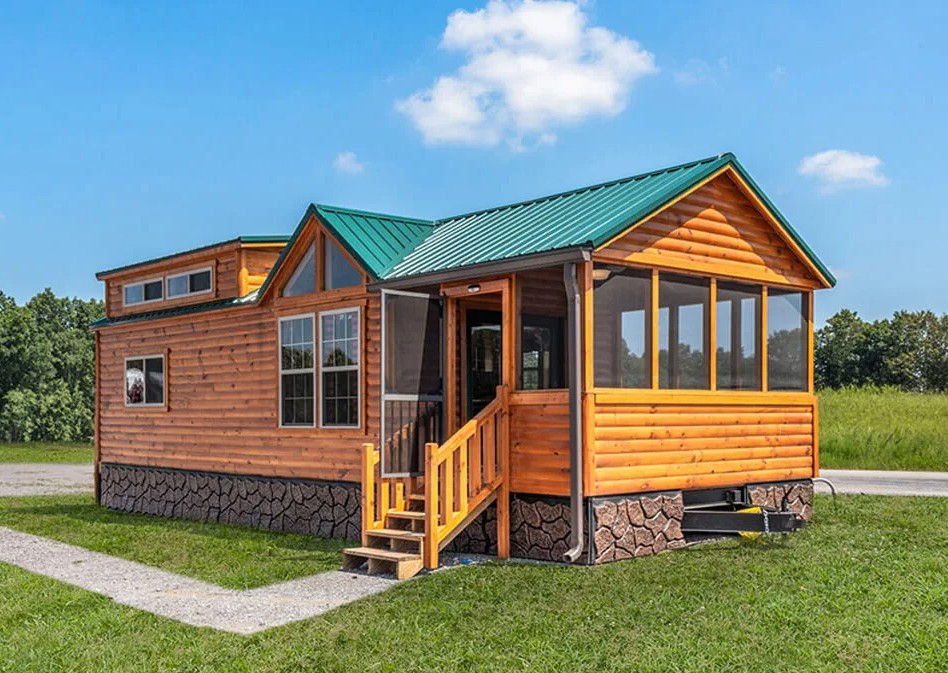
Turn-key and move-in ready. Order one and wait about four months. No construction stress. No supply chain headaches. Everything comes finished and ready.
Easier financing through RV loans. Park model advantages include better loan access than tiny houses. Interest rates start around 5% APR. Companies like 21st Mortgage specialize in this. Your financing is straightforward.
Full-size appliances included. You get a real refrigerator. A real stove. A real washer and dryer. No tiny cramped substitutes. Comfortable living in a small space.
Limited placement options. RV parks, campgrounds, and some rural land. That’s mostly it. Residential neighborhoods usually say no. Your choices are restricted.