
A well-planned garden doesn’t have to fade after spring. Many perennials return with fresh color again and again, saving you time and money.
These coneflowers and fragrant lavender, these plants thrive with minimal care. As the old saying goes, “The best gardens grow with patience, the right plants.”
No need to replant every season, just sit back and enjoy continuous color. Let’s explore the best perennials that bloom multiple times a year for a lively, effortless garden.
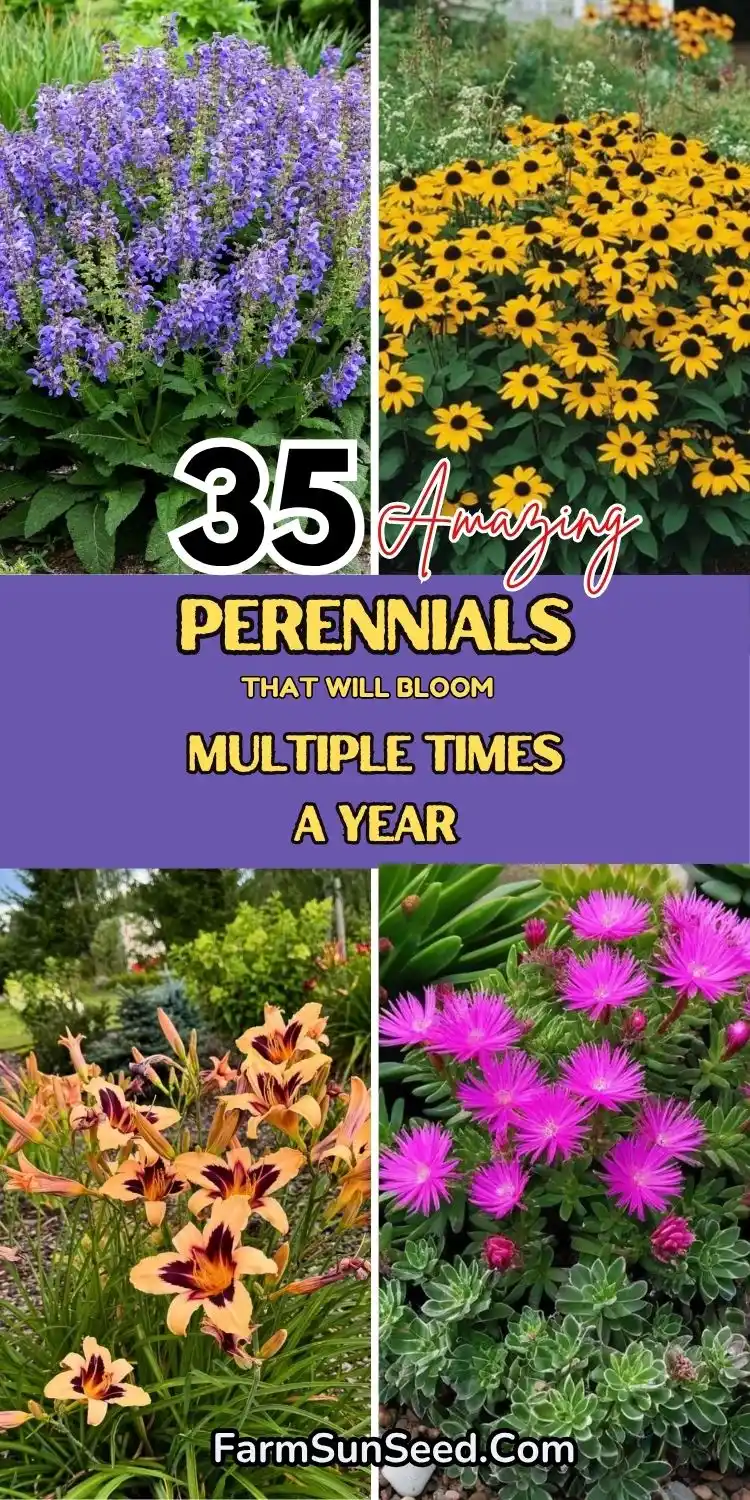
35 Amazing Perennials That Will Bloom Multiple Times a Year
What Are Perennials?
Perennials are plants that live for more than two years, typically returning each growing season. Perennials have root systems that survive winter and produce new growth year after year.
Most perennials die back to the ground in fall or winter, then regrow from their roots in spring. Some common examples include:
- Flowers: daylilies, hostas, peonies, black-eyed Susans, and coneflowers
- Herbs: lavender, rosemary, and sage
- Grasses: ornamental grasses like fountain grass
- Vegetables: asparagus, rhubarb, and artichokes
1. Daylily (Hemerocallis spp)

Daylilies are among the most reliable perennials, producing multiple waves of blooms from early summer into fall. Their trumpet-shaped flowers last just a day, but each stalk carries numerous buds that open in succession. Modern hybrids extend the bloom season and come in nearly every color except pure blue.
These plants thrive in full sun but tolerate partial shade, especially in hot climates. Well-drained soil helps prevent root rot, though established plants handle drought well. Divide clumps every few years to maintain vigor and encourage more blooms. Some reblooming varieties, like ‘Stella de Oro’, flower continuously with minimal care.
USDA Hardiness Zones: 3 to 9
Color Varieties: Yellow, orange, red, pink, purple, near-white
Sun Exposure: Full sun to partial shade
Soil Needs: Moist, well-drained; tolerates clay
2. Clematis (Clematis spp)

Clematis vines deliver stunning flowers in multiple flushes if deadheaded promptly. Large-flowered hybrids like ‘Jackmanii’ bloom in early summer, then again in late summer or fall. Smaller types, such as sweet autumn clematis, provide late-season fragrance and delicate white flowers.
Plant roots in shade but let vines climb into sunlight for best flowering. Mulch keeps roots cool, and consistent moisture prevents stress. Pruning depends on the variety; some bloom on old wood, others on new growth. A sturdy trellis or fence supports their climbing habit.
USDA Hardiness Zones: 4 to 9
Color Varieties: Purple, blue, pink, red, white, yellow
Sun Exposure: Full sun to partial shade (roots prefer shade)
Soil Needs: Fertile, well-drained, neutral pH
3. Ice Plant (Delosperma spp)

Ice plant forms a dense mat of succulent foliage, erupting in daisy flowers several times a year. Drought-resistant and loving, it thrives in sandy or rocky soil where other plants struggle. Blooms appear from late spring through fall, especially after rain or in cooler autumn weather.
Full sun ensures prolific flowering, while poor soil discourages leggy growth. Avoid overwatering, as soggy conditions cause rot. In colder zones, mulch lightly in winter to protect roots. Varieties like ‘Cooperi’ offer vibrant magenta blooms that attract pollinators.
USDA Hardiness Zones: 5 to 10
Color Varieties: Magenta, yellow, orange, pink, white
Sun Exposure: Full sun
Soil Needs: Sandy, sharply drained; drought-tolerant
4. Garden Phlox (Phlox paniculata)

Garden phlox lights up summer borders with fragrant, clustered blooms that often rebloom if deadheaded. Tall varieties like ‘David’ (white) or ‘Bright Eyes’ (pink) attract butterflies and resist powdery mildew better than older cultivars.
Morning sun and afternoon shade help prevent scorching in hot regions. Space plants for good air circulation to reduce fungal issues. Cut back spent flowers to encourage a second wave in early fall. Well-drained, rich soil keeps plants healthy.
USDA Hardiness Zones: 4 to 8
Color Varieties: White, pink, red, purple, lavender
Sun Exposure: Full sun to partial shade
Soil Needs: Moist, fertile, well-drained
5. Black-Eyed Susan (Rudbeckia spp)

Black-eyed Susans brighten gardens with golden and yellow petals and dark centers from midsummer into fall. Some varieties, like ‘Goldsturm’, bloom for weeks, while others, such as ‘Indian Summer’, produce larger flowers on taller stems. Deadheading extends flowering and prevents excessive self-seeding.
These perennials adapt to nearly any soil but flourish in well-drained, moderately fertile ground. Full sun ensures sturdy stems and abundant blooms. Drought tolerance makes them low-maintenance once established. Divide clumps every three to four years to maintain vigor.
USDA Hardiness Zones: 3 to 9
Color Varieties: Yellow, gold, orange, mahogany
Sun Exposure: Full sun
Soil Needs: Average, well-drained; tolerates clay
6. Bee Balm (Monarda spp)

Bee balm brings vibrant color to gardens with its shaggy, tubular flowers in shades of red, pink, purple, and white. Blooming from early summer into fall, this perennial attracts hummingbirds, butterflies, and bees. The aromatic foliage releases a pleasant scent when brushed against.
This plant thrives in full sun but tolerates partial shade, especially in hot climates. Well-draining soil with consistent moisture keeps it healthy. Powdery mildew can be an issue, so proper spacing and air circulation help prevent it. Deadheading spent flowers encourages repeat blooming and prevents excessive self-seeding.
USDA Hardiness Zones: 4 to 9
Color Varieties: Red, pink, purple, white
Sun Exposure: Full sun to partial shade
Soil Needs: Moist, well-drained
7. Hydrangea (Hydrangea spp)

Hydrangeas offer large, showy blooms that can change color based on soil pH. Some varieties produce flowers from early summer until frost, making them a long-lasting garden favorite. The bigleaf types (H. macrophylla) are known for their reblooming ability, while panicle hydrangeas (H. paniculata) bloom reliably even in colder zones.
These shrubs prefer morning sun and afternoon shade, especially in warmer regions. Consistent moisture is key, but they dislike waterlogged soil. Pruning depends on the variety; some bloom on old wood, while others flower on new growth.
USDA Hardiness Zones: 3 to 9 (varies by type)
Color Varieties: Blue, pink, white, purple (pH-dependent in some)
Sun Exposure: Partial shade to full sun
Soil Needs: Rich, moist, well-drained
8. Lupines (Lupinus spp)

Tall spires of lupines create striking vertical interest with their pea-like flowers in blue, purple, pink, or white. Many modern hybrids, like the ‘West Country’ series, bloom in early summer and often produce a second flush if deadheaded. The palmate foliage adds texture even when not in bloom.
Full sun and slightly acidic, well-draining soil are best suited for them. They dislike heavy clay and excessive heat, so mulch helps keep roots cool. While short-lived in some climates, they often self-seed, ensuring future blooms.
USDA Hardiness Zones: 4 to 8
Color Varieties: Blue, purple, pink, white, bicolors
Sun Exposure: Full sun
Soil Needs: Light, slightly acidic, well-drained
9. Cranesbill Geranium (Geranium spp)

Hardy geraniums, or cranesbills, provide long-lasting blooms in shades of pink, purple, blue, and white varieties like Geranium ‘Rozanne’ flowers from late spring until frost with minimal care. The low-growing, spreading habit makes them excellent ground covers.
They adapt to full sun or partial shade, though afternoon shade benefits them in hot climates. Average garden soil with good drainage works well. A light trim after the first bloom encourages fresh growth and more flowers.
USDA Hardiness Zones: 4 to 8
Color Varieties: Blue, purple, pink, white
Sun Exposure: Full sun to partial shade
Soil Needs: Medium moisture, well-drained
10. Bougainvillea (Bougainvillea spp)

Bougainvillea dazzles with vibrant papery bracts in magenta, purple, orange, or white. Though often grown as a vine or shrub in warm climates, it can bloom multiple times a year with proper care. The actual flowers are small and white, surrounded by the showy bracts.
Full sun and well-draining soil are essential. Drought-tolerant once established, it thrives with occasional deep watering. Pruning after each bloom cycle promotes new growth and more color. In cooler zones, it can be grown in containers and brought indoors in winter.
USDA Hardiness Zones: 9 to 11 (grown as an annual elsewhere)
Color Varieties: Magenta, purple, orange, red, white
Sun Exposure: Full sun
Soil Needs: Sandy, well-drained, slightly acidic
11. Azalea (Rhododendron spp)

Azaleas bring vibrant bursts of color to gardens with their showy blooms, often flowering in spring and sometimes again in fall. These shrubs thrive in partial shade and acidic, well-drained soil. Many varieties offer evergreen foliage, while others shed leaves in winter but return stronger each year.
Flowers appear in clusters, ranging from soft pinks to fiery oranges and deep purples. Some cultivars, like the Encore series, reliably produce multiple blooms per year. Regular watering and light pruning after flowering help maintain shape and encourage reblooming. Avoid heavy fertilization, as it can reduce flowering.
USDA Hardiness Zones: 5 to 9 (varies by cultivar)
Color Varieties: Pink, white, red, orange, purple
Sun Exposure: Partial shade to full sun (depending on climate)
Soil Needs: Acidic, moist, well-drained
12. Russian Sage (Perovskia atriplicifolia)

Tall, airy spires of lavender-blue flowers make Russian Sage a standout in summer and fall gardens. This drought-tolerant perennial thrives in hot, dry conditions and poor soil. Silvery-green foliage adds texture even when not in bloom.
The plant grows up to four feet tall, with slender stems that sway gracefully in the breeze. Bees and butterflies flock to its tiny tubular flowers. Cutting back old growth in early spring encourages vigorous new shoots. Once established, it rarely needs watering.
USDA Hardiness Zones: 4 to 9
Color Varieties: Lavender-blue
Sun Exposure: Full sun
Soil Needs: Dry, well-drained, tolerates poor soil
13. Yarrow (Achillea millefolium)

Yarrow produces flat clusters of tiny flowers in shades of yellow, pink, red, or white from early summer into fall. Its fern-like foliage is aromatic and deer-resistant. This tough perennial spreads easily, making it an excellent choice for filling gaps in sunny borders.
Deadheading spent blooms encourages repeat flowering. Some varieties, like ‘Moonshine,’ offer silvery foliage that contrasts beautifully with bright flowers. Yarrow thrives in lean soil and can handle drought once established.
USDA Hardiness Zones: 3 to 9
Color Varieties: White, yellow, pink, red
Sun Exposure: Full sun
Soil Needs: Dry to medium moisture, well-drained
14. Spiked Speedwell (Veronica spicata)

Upright spikes of blue, pink, or white flowers rise above Spiked Speedwell’s low-growing foliage from early to late summer. This compact perennial works well in borders or rock gardens. Butterflies and hummingbirds frequently visit its nectar-rich blooms.
Regular deadheading extends flowering. Some cultivars, like ‘Royal Candles,’ bloom multiple times if cut back after the first flush. Well-drained soil and full sun ensure the best performance.
USDA Hardiness Zones: 3 to 8
Color Varieties: Blue, pink, white
Sun Exposure: Full sun
Soil Needs: Medium moisture, well-drained
15. Red Hot Poker (Kniphofia uvaria)

Torch-like flower spikes in fiery red, orange, or yellow make Red Hot Poker a striking addition to summer and fall gardens. Each bloom starts as a bright bud at the top before fading to softer hues as it matures.
This sun-loving perennial attracts hummingbirds and thrives in well-drained soil. Clumps expand slowly, requiring division every few years. Some varieties, like ‘Poco Orange,’ rebloom if spent flowers are removed promptly.
USDA Hardiness Zones: 5 to 9
Color Varieties: Red, orange, yellow
Sun Exposure: Full sun
Soil Needs: Dry to medium moisture, well-drained
16. Wisteria (Wisteria spp)

Few flowering vines match the breathtaking beauty of wisteria in full bloom. Fragrant purple, pink, or white flower clusters drape elegantly from woody stems in late spring, often reblooming sporadically through summer. Vigorous growth demands sturdy support, like a pergola or arbor, as mature plants become heavy. Regular pruning keeps this perennial vine in check and encourages more flowers.
Wisteria thrives in full sun and well-drained soil, though it tolerates partial shade. Established plants are drought-resistant but benefit from deep watering during dry spells. Some varieties, like Wisteria frutescens, are less aggressive than others. Be patient, young plants may take a few years to bloom.
USDA Hardiness Zones: 5 to 9
Color Varieties: Purple, pink, white
Sun Exposure: Full sun to partial shade
Soil Needs: Well-drained, moderately fertile
17. Becky Shasta Daisy (Leucanthemum x superbum ‘Becky’)

Bright white petals surrounding golden centers make this Shasta daisy a standout in the garden. Blooming begins in early summer and often repeats if spent flowers are deadheaded. Sturdy stems resist flopping, even in strong winds or heavy rain, making them excellent for cut arrangements.
The low-maintenance perennial thrives in full sun and average soil. Good drainage prevents root rot, though it handles short dry spells once established. Divide clumps every few years to maintain vigor. ‘Becky’ attracts pollinators while resisting deer and rabbits.
USDA Hardiness Zones: 5 to 9
Color Varieties: White with yellow centers
Sun Exposure: Full sun
Soil Needs: Medium moisture, well-drained
18. Salvia (Salvia spp)

Spikes of vibrant blue, purple, or red flowers rise above aromatic foliage from early summer into fall. Many varieties, like Salvia nemorosa, rebloom when trimmed back after the first flush. Drought tolerance and pest resistance make it a reliable choice for borders or wildflower gardens.
Plant in full sun for the most prolific blooms. Lean, well-draining soil prevents root issues. Hummingbirds and bees flock to the nectar-rich flowers, while deer usually avoid them. Cut stems to the ground in late winter to encourage fresh growth.
USDA Hardiness Zones: 4 to 10 (varies by species)
Color Varieties: Blue, purple, red, pink
Sun Exposure: Full sun
Soil Needs: Dry to medium, well-drained
19. Lavender (Lavandula spp)

Silvery-green foliage and fragrant purple spikes define this Mediterranean native. Blooming starts in early summer, with some varieties like Lavandula angustifolia producing a second round if sheared lightly after flowering. The scent deters pests while attracting pollinators.
Full sun and gritty, alkaline soil are key for healthy growth. Avoid overwatering; lavender thrives on neglect once established. Harvest stems just as flowers open for drying. Ideal for borders, herb gardens, or containers.
USDA Hardiness Zones: 5 to 9
Color Varieties: Purple, blue, pink, white
Sun Exposure: Full sun
Soil Needs: Poor, sandy, well-drained
20. Threadleaf Coreopsis (Coreopsis verticillata)

Delicate, fern-like foliage contrasts with a profusion of bright yellow or pink daisy-like flowers from early summer to fall. Deadheading extends blooming, though some modern cultivars like ‘Moonbeam’ are self-cleaning. This tough perennial handles heat and drought with ease.
Plant in full sun for the best performance. Average soil works well, but excellent drainage prevents crown rot. Threadleaf coreopsis spreads slowly, making it useful for ground cover or meadow plantings. Butterflies frequent the cheerful blooms.
USDA Hardiness Zones: 3 to 9
Color Varieties: Yellow, pink
Sun Exposure: Full sun
Soil Needs: Dry to medium, well-drained
21. Autumn Joy Stonecrop (Hylotelephium ‘Herbstfreude’)

Late summer brings clusters of rosy-pink blooms that deepen to rust-red or purple as fall arrives. Over several weeks, the large flower heads shift through rich hues, making this perennial a standout in autumn gardens. Sturdy stems hold up well against wind and rain, ensuring long-lasting color.
The low-maintenance plant thrives in full sun and well-drained soil, tolerating drought once established. Unlike many perennials, it rarely needs dividing and resists pests. After the first frost, simply cut back the stems to ground level. Bees and butterflies flock to the nectar-rich blooms, adding movement to the garden.
USDA Hardiness Zones: 3–9
Color Varieties: Rosy-pink to rust-red or purple
Sun Exposure: Full sun
Soil Needs: Dry to medium moisture, well-drained
22. Dalmatian Bellflower (Campanula portenschlagiana)

Vibrant purple-blue flowers blanket this low-growing perennial from late spring into summer. Spreading quickly, it forms a dense mat of heart-shaped leaves, making it excellent for rock gardens or cascading over walls. The blooms attract pollinators while resisting deer and rabbits.
Thriving in partial to full sun, Dalmatian bellflower adapts to various soils but prefers good drainage. Once established, it handles dry spells better than many campanulas. Trim spent flowers to encourage a second flush of blooms in early fall.
USDA Hardiness Zones: 4 to 8
Color Varieties: Purple-blue
Sun Exposure: Partial to full sun
Soil Needs: Well-drained, average fertility
23. Fringed Bleeding Heart (Dicentra eximia)

Delicate pink or white heart-shaped flowers dangle above fern-like foliage from spring until frost. Unlike common bleeding hearts, this variety doesn’t go dormant in summer heat. Shade-tolerant and deer-resistant, it thrives under trees or in woodland gardens.
Moist, humus-rich soil keeps it blooming repeatedly. Cutting back spent stems in midsummer encourages fresh growth and more flowers. The plant spreads slowly, forming attractive clumps without becoming invasive.
USDA Hardiness Zones: 3 to 9
Color Varieties: Pink, white
Sun Exposure: Partial to full shade
Soil Needs: Moist, well-drained, rich in organic matter
24. Roses (Rosa spp)

Many modern rose varieties, like Knock Out and David Austin types, bloom repeatedly from spring until frost. Continuous flowering depends on deadheading and proper care. Full sun and well-drained soil are essential, along with regular watering.
Disease-resistant cultivars reduce maintenance. Prune in early spring to shape plants and remove dead wood. A balanced fertilizer applied in spring and midsummer supports vigorous growth and abundant blooms.
USDA Hardiness Zones: 4 to 9 (varies by type)
Color Varieties: Wide range
Sun Exposure: Full sun
Soil Needs: Well-drained, fertile
25. Daffodils (Narcissus spp)

Early spring brings cheerful yellow, white, or bicolor blooms, with some varieties reblooming in fall. Plant bulbs in fall for spring flowers, choosing reblooming types like ‘February Gold’ or ‘Ice Follies’ for extended color.
Well-drained soil prevents bulb rot. Allow foliage to die back naturally to nourish next year’s growth. Naturalizing over time, daffodils thrive in sun or light shade and resist deer.
USDA Hardiness Zones: 3 to 8
Color Varieties: Yellow, white, orange, pink
Sun Exposure: Full sun to partial shade
Soil Needs: Well-drained, moderate fertility
26. Peonies (Paeonia spp)

Peonies produce large, fragrant blooms in late spring to early summer. Some varieties, like the Itoh hybrids, may rebloom later in the season. Their lush flowers come in shades of pink, red, white, and yellow, often with striking centers.
These perennials thrive in well-drained soil and full sun. Once established, they require minimal care, though staking may be needed to support their heavy blooms. Unlike many plants, peonies can live for decades, becoming more robust over time.
USDA Hardiness Zones: 3 to 8
Color Varieties: Pink, red, white, yellow
Sun Exposure: Full sun
Soil Needs: Well-drained, fertile soil
27. Tulips (Tulipa spp)

Tulips bring vibrant color to gardens in early spring. While most bloom once, species like Tulipa clusiana and Tulipa sylvestris may flower again in favorable conditions. Their cup-shaped blossoms appear in nearly every hue, from bold reds to soft pastels.
Plant bulbs in the fall for spring blooms. They prefer well-drained soil and full sun but benefit from afternoon shade in hotter climates. After flowering, allow foliage to die back naturally to ensure energy storage for the next season.
USDA Hardiness Zones: 3 to 8
Color Varieties: Red, yellow, pink, purple, white, bi-colors
Sun Exposure: Full sun to partial shade
Soil Needs: Well-drained, moderately fertile soil
28. Hibiscus (Hibiscus moscheutos)

Known for their enormous, tropical-looking flowers, hardy hibiscus blooms from midsummer into fall. Each flower lasts only a day or two, but the plant continuously produces new buds. Colors range from deep reds to pure whites, often with contrasting centers.
This perennial thrives in moist soil and full sun. Though it dies back in winter, it re-emerges vigorously in spring. Regular watering and occasional fertilization encourage prolific blooming.
USDA Hardiness Zones: 5 to 9
Color Varieties: Red, pink, white, bicolors
Sun Exposure: Full sun
Soil Needs: Moist, well-drained soil
29. Catmint (Nepeta spp)

Catmint is a low-maintenance perennial that blooms repeatedly from spring through fall. Its spikes of lavender-blue flowers attract pollinators while its gray-green foliage adds texture to gardens. Varieties like Nepeta racemosa ‘Walker’s Low’ are especially long-blooming.
Drought-tolerant once established, it thrives in full sun and well-drained soil. Trimming spent flowers encourages a second flush of blooms. Unlike catnip, it’s less appealing to cats but just as easy to grow.
USDA Hardiness Zones: 3 to 8
Color Varieties: Lavender-blue, white
Sun Exposure: Full sun
Soil Needs: Well-drained, average soil
30. Potentilla (Potentilla fruticosa)

Potentilla, or shrubby cinquefoil, blooms from late spring until frost. Its small, buttercup-like flowers come in yellow, white, pink, or orange, depending on the cultivar. This tough plant withstands poor soil and drought once established.
Pruning in early spring promotes bushier growth and more flowers. It works well in borders, rock gardens, or as a low hedge. Unlike many perennials, it rarely suffers from pests or diseases.
USDA Hardiness Zones: 2 to 7
Color Varieties: Yellow, white, pink, orange
Sun Exposure: Full sun
Soil Needs: Well-drained, tolerates poor soil
31. Bearded Iris (Iris germanica)

With their striking, sword-like foliage and bold blooms, bearded irises bring elegance to any garden. These perennials produce large, intricate flowers in a range of colors, from deep purples to bright yellows and whites. Each bloom features soft, fuzzy “beards” along the falls, adding unique texture.
Bearded irises bloom first in late spring to early summer, and some reblooming varieties flower again in late summer or fall. They thrive in full sun and well-draining soil, making them a low-maintenance choice. Plant the rhizomes shallowly, leaving the tops exposed to prevent rot.
Divide clumps every three to five years to maintain vigor and encourage more blooms. These plants are drought-tolerant once established but benefit from occasional watering during dry spells.
USDA Hardiness Zones: 3 to 10
Color Varieties: Purple, blue, yellow, white, pink, and bicolors
Sun Exposure: Full sun
Soil Needs: Well-drained, neutral to slightly acidic soil
32. Aster (Aster spp)

Asters light up the garden in late summer and fall when many other flowers fade. Their daisy-like blooms come in shades of purple, blue, pink, and white, attracting pollinators like bees and butterflies. These hardy perennials spread slowly, forming clumps that return reliably each year.
Plant them in full sun for the best flowering, though they tolerate light shade. Well-drained soil helps prevent root rot, especially in winter. Pinching back stems in early summer encourages bushier growth and more blooms.
Some varieties, like Aster novae-angliae or Aster novi-belgii, rebloom if deadheaded promptly. They pair well with goldenrods and ornamental grasses for a vibrant autumn display.
USDA Hardiness Zones: 3 to 8
Color Varieties: Purple, blue, pink, white
Sun Exposure: Full sun to partial shade
Soil Needs: Medium moisture, well-drained soil
33. Allium (Allium spp)

Alliums add architectural interest with their spherical flower clusters on tall, slender stems. These bulbs bloom in late spring to early summer, with some varieties reblooming in favorable conditions. Their purple, white, or pink blooms attract bees while deterring deer and rodents.
Plant allium bulbs in fall, placing them in full sun and well-draining soil. They thrive in dry conditions once established and rarely need watering. After flowering, the seed heads often remain ornamental, adding texture to winter gardens.
Popular types include Allium giganteum with large purple blooms and Allium schubertii, which has explosive, firework-like flowers.
USDA Hardiness Zones: 4 to 9
Color Varieties: Purple, white, pink, yellow
Sun Exposure: Full sun
Soil Needs: Well-drained, average fertility
34. Goldenrod (Solidago spp)

Goldenrods brighten late summer and fall gardens with their tall, golden-yellow flower spikes. Despite misconceptions, they don’t cause hay fever; their pollen is heavy and insect-dependent. These tough perennials thrive in poor soil and full sun, spreading steadily but not aggressively.
They support pollinators, including bees and butterflies, making them excellent for wildlife gardens. Cut back stems in early summer to encourage compact growth and prevent flopping. Some varieties, like Solidago rugosa ‘Fireworks,’ have arching blooms that add movement to plantings.
Goldenrods pair well with asters and sedums for a long-lasting autumn show.
USDA Hardiness Zones: 3 to 9
Color Varieties: Yellow
Sun Exposure: Full sun to light shade
Soil Needs: Dry to medium, well-drained soil
35. Pincushion Flower (Scabiosa spp)

Pincushion flowers charm with their delicate, frilly blooms atop wiry stems. These perennials flower from early summer into fall if deadheaded regularly. Colors range from soft lavender and pink to deep burgundy and white, attracting butterflies and bees.
They prefer full sun and well-drained, slightly alkaline soil. Avoid heavy clay, as it can lead to root rot. Light fertilization in spring encourages repeat blooming.
Varieties like Scabiosa columbaria ‘Butterfly Blue’ are long-blooming and drought-tolerant once established. Their airy form works well in borders or cottage gardens.
USDA Hardiness Zones: 3 to 9
Color Varieties: Blue, lavender, pink, white, burgundy
Sun Exposure: Full sun
Soil Needs: Well-drained, neutral to slightly alkaline soil
