
Keeping a prosperous garden shouldn’t feel like a part-time job. You want dense, vibrant greenery without the endless watering, pruning, and babying. The good news is that nature has designed plants that blossom on delinquency. These genius-level picks laugh at drought, ignore poor soil, and still burst with color season after season.
Think of a garden that takes care of itself. Pollinators flock to it, weeds stay smothered, and you get all the credit. Whether you’re a busy homeowner or just prefer low-effort beauty, these 10 Genius-Level Plants for Minimal Maintenance Mastery!
Effortless Elegance: 10 Genius-Level Plants for Minimal Maintenance Mastery!
1. Purple Coneflower (Echinacea purpurea)

This hardy perennial flourishes with little effort, making it a favorite among gardeners who want beauty without constant upkeep. Known for its striking purple petals and spiky center, it attracts pollinators like bees and butterflies. Once planted, it handles drought sufficiently and doesn’t demand frequent watering.
Full sun suits it best, though it endures partial shade. Poor soil won’t stop it from flourishing. It fights pests naturally. Deadheaded blooms encourage more flowers, but even if left alone, they keep a tidy appearance.
Apart from looks, this plant has herbal uses, often harvested for immune-supporting teas. It self-seeds easily, so new plants may pop up nearby without extra work. If you want a low-maintenance star that adds color and wildlife appeal, purple coneflower is a strong choice.
2. Sedum (Stonecrop)

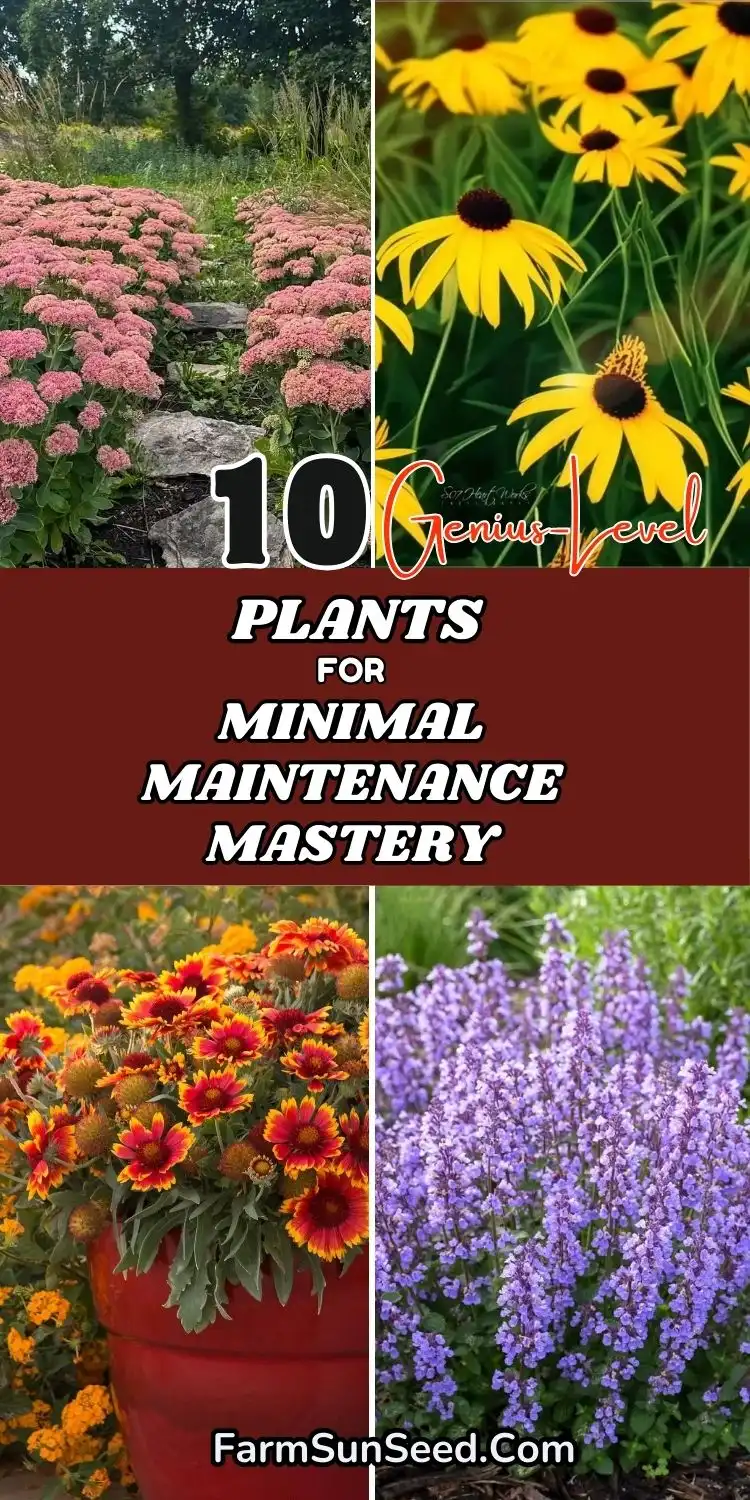
Sedums are tough, drought-resistant plants that blossom on neglect. Their fleshy leaves store water, allowing them to survive dry spells with ease. Available in creeping or upright varieties, they work in rock gardens, borders, or even green roofs.
Sunlight brings out their best colors; some turn deep red or bronze in bright conditions. They control poor, sandy, or rocky soil without complaint. Overwatering damages them more than neglect, so they’re great for forgetful gardeners.
Butterflies love their late-season blooms, which provide nectar when other flowers fade. Propagation is simple; just break off a stem and stick it in the ground. With the tiniest care, sedums deliver texture and long-lasting interest.
3. Butterfly Weed (Asclepias tuberosa)

A magnet for monarchs and other pollinators, butterfly weed is as tough as it is fiery. Its bright orange flowers stand out in summer, and unlike some milkweeds, it doesn’t spread aggressively.
Dry, sandy, or rocky soil won’t disturb it. Once its deep roots take hold, it resists drought and poor conditions. Full sun keeps it blooming vigorously, though it manages in partial shade.
This plant needs no fertilizer and rarely suffers from pests. Leave the seed pods in place to feed birds or collect them for easy propagation. If you want a splash of color that supports wildlife with zero fuss, butterfly weed delivers.
4. Blue Oat Grass (Helictotrichon sempervirens)

With its flamboyant blue-gray foliage, this decorative grass adds structure and cool-toned contrast to gardens. It stays tidy, forming neat clumps that don’t invade other plants’ space.
Drought tolerance makes it a smart pick for water-wise landscapes. Well-drained soil is key, as soggy roots will cause problems. Full sun improves its steely color, while too much shade turns it green and floppy.
Deer and rabbits usually ignore it, and pests rarely bother it. Prune back old growth in early spring to keep it looking fresh. For low-effort elegance, blue oat grass is a reliable choice.
5. Blanket Flower (Gaillardia)

Cheerful and resilient, blanket flower blooms nonstop from summer into fall. Its red-and-yellow daisy-like flowers thrive in hot, dry conditions, needing little water once set.
Poor soil doesn’t slow it down; in fact, rich soil can make it flop. Full sun guarantees the brightest colors and sturdiest growth. Shearing prolongs flowering, but even without it, the plant keeps going.
Butterflies and bees flock to its nectar-rich blooms. It self-seeds readily, so new plants often appear without help. If you want long-lasting color with minimal effort, blanket flower won’t disappoint.
6. Daylily (Hemerocallis)

Few plants deliver as much color for as little effort as daylilies. These robust perennials bloom strongly, with each flower lasting just a day. But don’t worry, dozens more quickly take its place. They adjust to almost any soil, from clay to sand, and handle both drought and occasional flooding.
Full sun brings out the best buds, though they tolerate partial shade. Once installed, they rarely need watering. Pests usually ignore them, and diseases seldom cause trouble. Dividing every few years keeps clumps vigorous, but they’ll succeed even if left alone.
With hundreds of varieties available, you can find daylilies in nearly every color except pure blue. Some rebloom throughout the season, while others put on a single spectacular show. If you want a plant that asks for nothing and gives plenty in return, daylilies are a no-brainer.
7. Sage (Perovskia atriplicifolia)

Tall, airy, and drought-proof, Sage adds a haze of lavender-blue to summer gardens. Its silvery stems and delicate flowers sway gracefully in the breeze, bringing movement to borders and meadows. Hot, dry conditions only make it happier; overwatering is its biggest enemy.
Well-drained soil is a must, and full sun keeps it compact and floriferous. Once sown, it survives on rainfall alone. Deer and rabbits avoid its aromatic foliage, and pests rarely bother it. Cut it back hard in early spring to encourage fresh growth.
This plant pairs beautifully with ornamental grasses and other sun-loving perennials. If you need a tough, long-blooming filler that prospers on neglect, Sage won’t let you down.
8. Black-Eyed Susan (Rudbeckia hirta)

Black-eyed Susan is a classic prairie plant. It lights up the garden with golden-yellow daisies and dark centers. It blooms nonstop from midsummer into fall, asking for almost nothing in return. Poor soil is not a problem, nor is the hot sun.
These flowers self-seed freely, popping up in new spots each year without becoming intrusive. Birds love their seed heads in winter, so leaving them standing adds wildlife value. Cutting off dead parts extends blooming, but it’s not necessary for a good show.
Drought-tolerant once planted, they rarely need additional water. Butterflies and bees flock to them, making them a pollinator favorite. For cheerful, carefree color, black-eyed Susans are hard to beat.
9. Lamb’s Ear (Stachys byzantina)

Soft, velvety leaves make lamb’s ear irresistible to touch; kids and adults alike can’t resist petting it. This low-growing plant forms a silvery carpet that represses weeds and stays attractive even when not in bloom.
Drought doesn’t disturb it, and poor, rocky soil suits it just fine. Full sun keeps the foliage compact, though it tolerates light shade. Too much moisture can cause rot, so well-drained soil is key.
Deer and rabbits usually leave it alone, and pests are rarely an issue. Pink flower spikes appear in summer, but many gardeners clip them off to keep the focus on the fuzzy leaves. If you want texture without the work, lamb’s ear delivers.
10. Catmint (Nepeta)
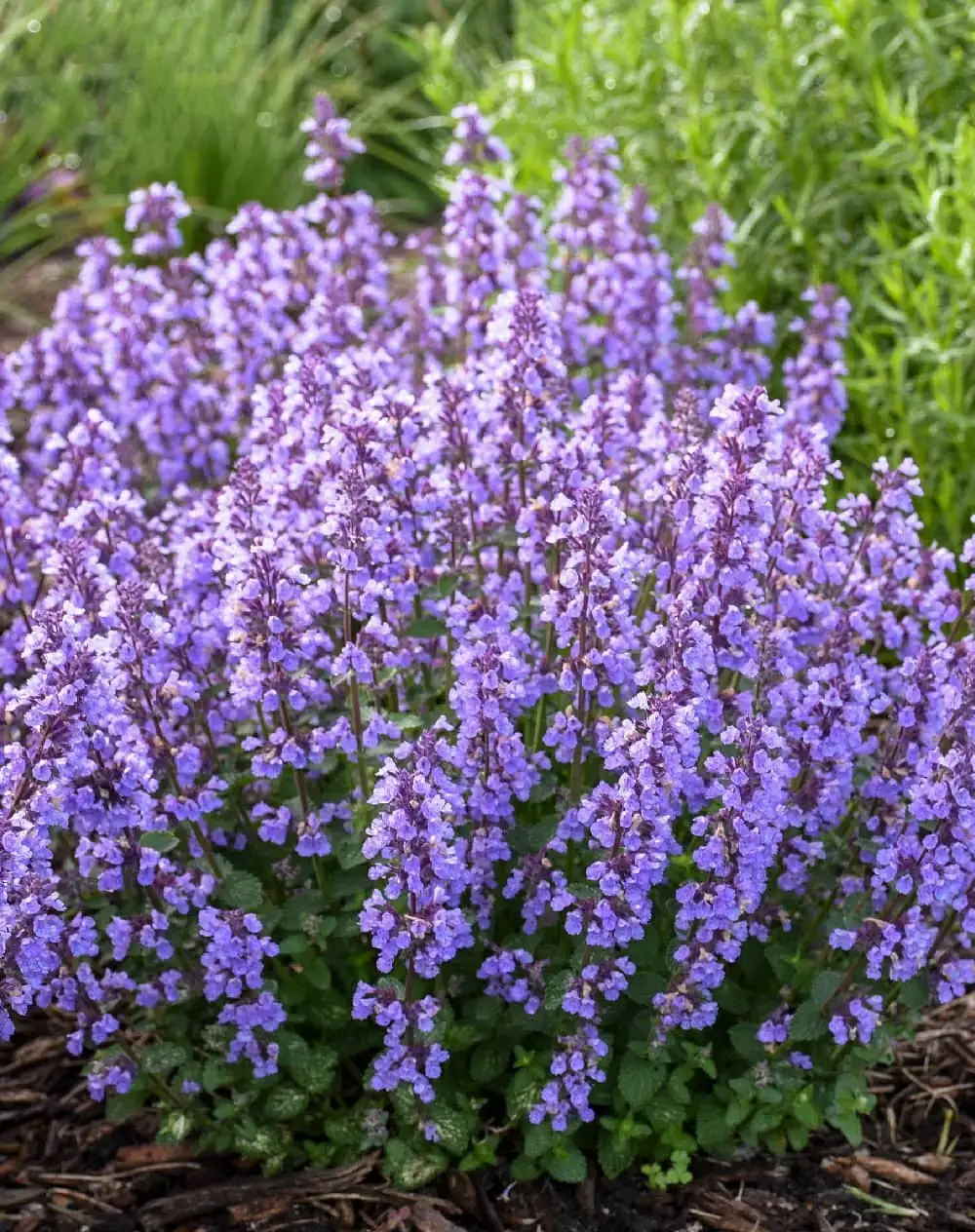
Bees, butterflies, and yes—even cats—love this tough, aromatic perennial. Its spikes of lavender-blue flowers bloom for months, often from late spring until frost. Unlike some fussy plants, catmint thrives in poor soil and dry conditions.
Full sun encourages the best flowering, though it handles partial shade. Once established, it rarely needs watering. Trimming spent blooms encourages reblooming, but even without pruning, it stays attractive.
Deer avoid it, and pests seldom bother it. Some varieties spread gently, filling gaps without becoming invasive. For a plant that looks good, smells great, and asks little in return, catmint is a winner.
