
A lively garden filled with hummingbirds, bees, and butterflies isn’t just beautiful, it’s essential for a healthy ecosystem. Studies show that pollinators help nearly 75% of flowering plants reproduce, yet their numbers are declining due to habitat loss.
By choosing the right plants, you can support these vital creatures while enjoying nature’s show right outside your window. Bright, nectar-rich flowers like bee balm, salvia, and trumpet vine are irresistible to hummingbirds. Butterflies love milkweed and coneflowers, while bees flock to lavender and sunflowers.
Let’s explore the best Stunning Plants That Will Instantly Attract Hummingbirds & Pollinators to Your Yard.
40 Stunning Plants That Will Instantly Attract Hummingbirds & Pollinators to Your Yard
1. Bee Balm Monarda

These vibrant red bee balm flowers are stunning, with their wild, spiky petals that appear to dance in the breeze. The bright scarlet blooms create a dramatic contrast against the deep green foliage. This particular variety is a hummingbird magnet; those tiny birds can’t resist diving into these tubular flowers for a sweet nectar treat.
Bee balm thrives in partial shade, making it exquisite for those tricky spots in your garden where other flowering plants might struggle. Plus, butterflies and bees adore it too.
2. Plumeria Flowers

I stumbled upon these gorgeous plumeria blossoms nestled among their thick, waxy leaves. The delicate white petals with their soft pink edges and sunny yellow centers look almost too consummate to be real. You can practically smell that sweet, tropical fragrance just by looking at them.
These beauties are like little magnets for hummingbirds; those tiny birds can’t resist diving into the nectar-rich centers. The contrast between the pristine flowers and the deep green foliage creates such a stunning display. It’s no wonder plumerias are beloved in tropical gardens where they bring both beauty and buzzing wildlife.
3. Texas Mountain Laurel

Texas Mountain Laurel produces these gorgeous clusters of purple flowers that smell exactly like grape Kool-Aid, seriously, it’s amazing. The blooms hang in drooping bunches, kind of similar to purple wisteria, and they’re irresistible to both hummingbirds and bees. Notice those silvery-green compound leaves.
They stay beautiful even when the plant isn’t flowering. Tough little tree handles partial shade well and requires minimal watering once established. It’s one of those plants that gives you the maximum wow factor with minimal fuss, making it thoroughgoing for busy gardeners.
4. Freesia

The bright magenta petals are practically glowing in this photo. Delicate stamens peek out, ready for visiting pollinators. Freesias are such charming little bulbs that do surprisingly well in dappled shade areas of your garden.
While they’re more known for their incredible fragrance that can fill an entire yard, they’re also excellent at attracting smaller pollinators like bees and beneficial insects. Plant these babies in fall and you’ll have a sweet-smelling, pollinator-friendly display come spring. They multiply naturally, too, giving you more flowers each year.
5. Four O’Clock Flowers (Mirabilis jalapa)

Here’s a plant that knows how to make an entrance. Four O’Clocks get their quirky name from their habit of unfurling their blooms in late afternoon, a charming daily spectacle. These bright magenta trumpets are hummingbird heaven, especially since they’re most active during evening hours when many hummers are still feeding.
The cool thing about this plant is how tough it is, thriving in partial shade where other flowers might give up. Those red stems and heart-shaped leaves create a lovely backdrop for the vibrant blooms. Plus, they self-seed everywhere, so you’ll have free plants next year.
6. Pink Lily Cluster in Garden Setting

Gorgeous pale pink lilies are stunning. They’re packed together in this beautiful cluster, as if nature crafted its bouquet. The soft pink petals have these lovely darker pink streaks, and you can see those prominent orange, brown stamens just begging for pollinators to visit.
Many blooms are on this single plant; that’s a buffet for hummingbirds and bees. The green foliage provides a lovely contrast, and I adore seeing them nestled among other colorful flowers in someone’s backyard garden. These lilies would bring the hummingbirds running.
7. Rain Lily Potted Display

Little potted rain lily is putting on quite the show with all those bright pink blooms. You can count at least fifteen cheerful flowers all opening up at once; no wonder pollinators go crazy for these beauties. The grass-like foliage makes it super low-maintenance, unmitigated for those shady spots where other flowers might struggle.
The plant stays wonderfully compact, making it suitable for patio containers or tucked into cozy garden corners. Those vibrant pink petals with yellow centers are like tiny beacons calling out free nectar here to every passing hummingbird.
8. Dew-Kissed Red and Pink Lilies

An intense red lily, covered in morning dewdrops, looks like it’s wearing diamonds, breathtaking. The water droplets make every petal shimmer, and you can almost smell the sweet fragrance from here. Right next to it, there’s a soft pink lily that’s equally stunning, plus some tiny burgundy flowers tucked in the background.
Mixed planting is pure genius for attracting wildlife. Hummingbirds can’t resist lilies, especially these bold colors that practically scream, come visit me The natural mulch and lush green foliage create the quintessential shady habitat that pollinators adore.
9. Spring Tulip and Emerging Hosta

Bright yellow and purple tulips are just getting started, while that clump of hostas in front is sending up its measurable burgundy shoots. Nature’s fireworks unfold in a mesmerizing slow-motion display. The gardener masterfully planned for continuous seasonal interest.
The tulips will provide that early nectar when pollinators are just waking up, then the hostas will take over with their fragrant white flower spikes later in summer. That natural mulch and the shade from those bare trees make this an ideal spot for shade-loving plants that hummingbirds adore.
10. Purple Calla Lily Garden Cluster

Deep purple calla lilies are stunning. Look at those elegant trumpet-shaped blooms, they’re like nature’s own wine glasses filled with nectar. The rich burgundy color with those lighter pink edges creates such a sophisticated look in any shade garden.
Smart about planting calla lilies is how their unique flower shape attracts different types of pollinators than your typical daisy-shaped blooms. Hummingbirds love diving into those deep cups, and the broad leaves provide great ground cover, too. Cluster planting creates maximum visual impact while giving pollinators plenty of feeding stations all in one convenient spot.
11. Bicolor Daylily
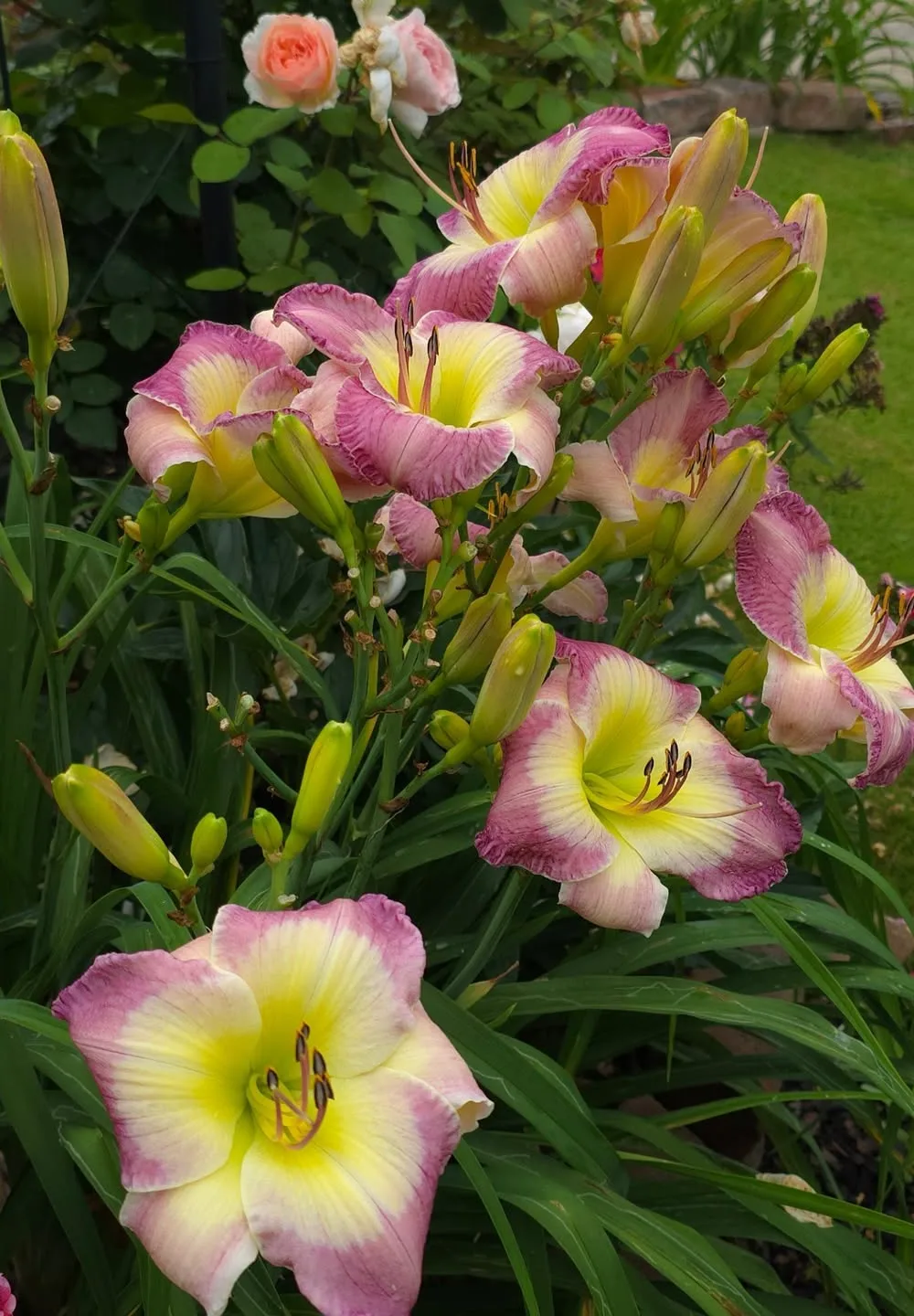
Daylilies with their gorgeous yellow centers and purple-pink edges are like little works of art. It’s clear why they’re called daylilies, each bloom lasts just a day, but look at all the buds ready to open. That means weeks of continuous flowers for hungry hummingbirds and bees.
The fact that you can spot some roses blooming in the background shows this is a well-planned mixed garden. Daylilies are exquisite for partial shade areas and require almost no maintenance once established. Those prominent stamens practically scream pollen here to every passing pollinator.
12. Golden Marigold
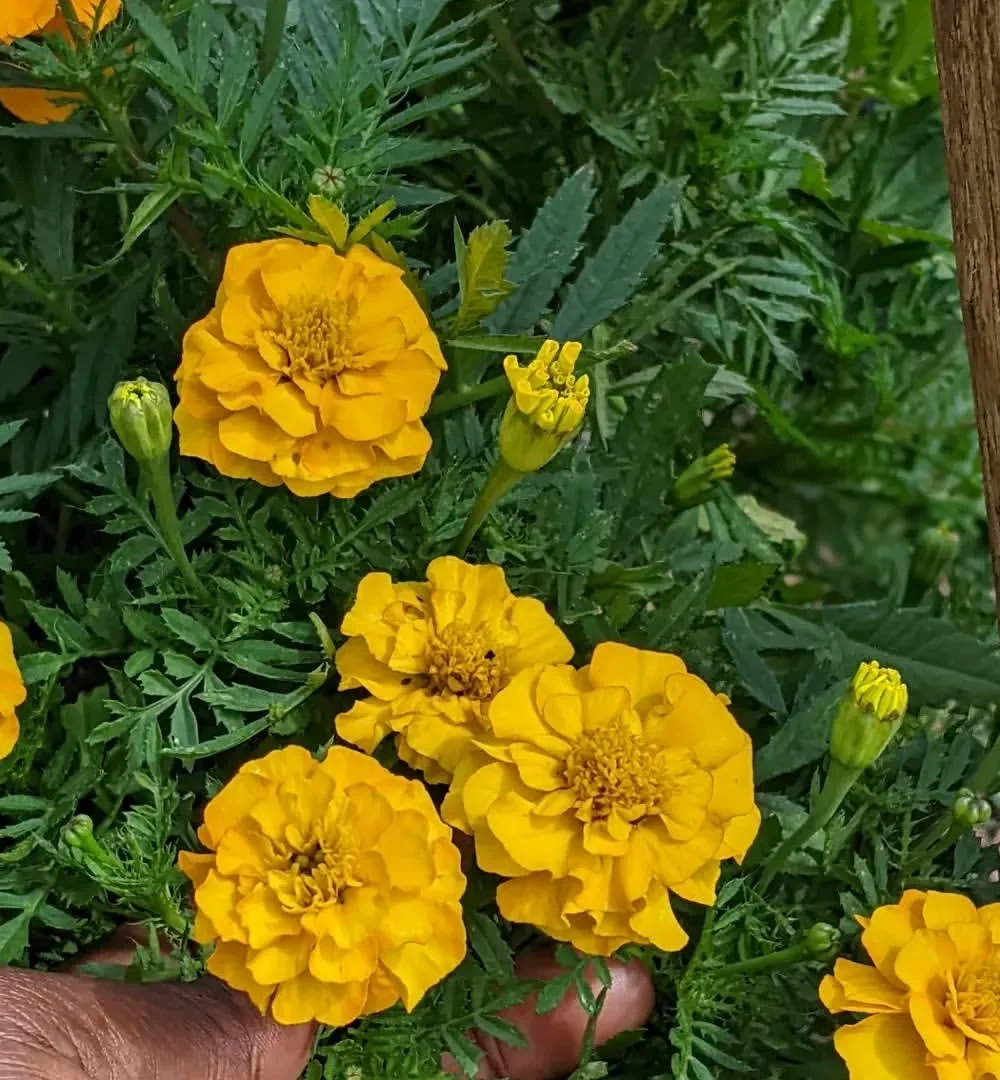
Sunny marigolds are glowing. The cheerful way they’re packed into that terracotta pot is delightful; it’s like having a little ray of sunshine right on your patio. Marigolds are so fantastic for attracting pollinators because they bloom nonstop from spring until the first frost.
Bees go crazy for these ruffled golden beauties, and they’re surprisingly good at tolerating some shade, too. Plus, they’re practically bulletproof; even beginner gardeners can’t kill them! The way these flowers are layered with all those fluffy petals creates tons of landing spots for busy bees and butterflies looking for an easy meal.
13. Potted Lavender on Patio Table

The little potted lavender sits prettily on someone’s outdoor dining table, simple and unqualified. Those deep purple flower spikes are like magnets for bees; they literally can’t resist lavender.
Beauty around to catch just the right amount of morning sun or afternoon shade. Lavender is incredibly drought-tolerant once established, and that adorable white textured pot adds such a nice decorative touch. Plus, you’ll have fresh lavender for cooking and crafts.
14. Lavender in Decorative Pot
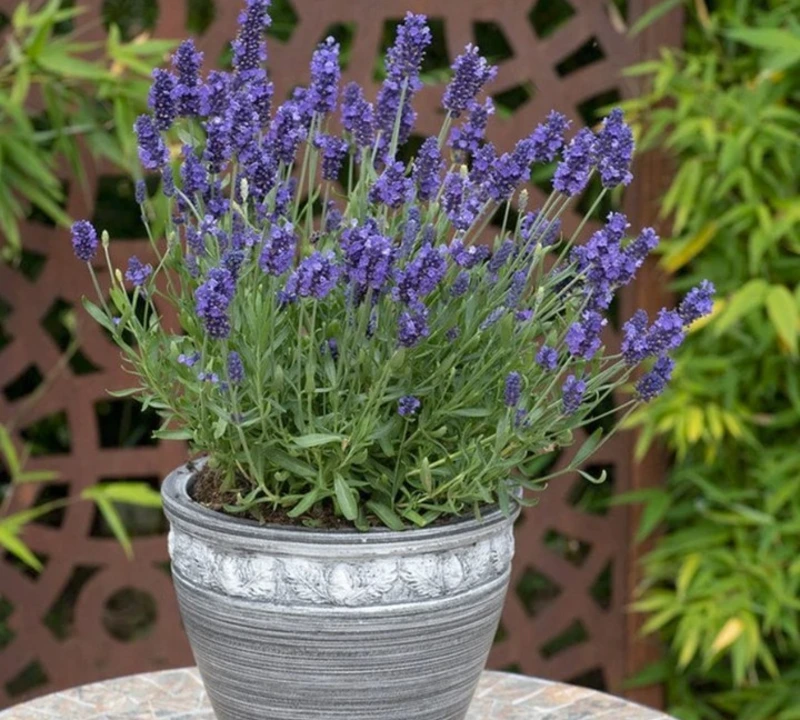
The lavender plant is bursting with those iconic purple flower spikes that we all love. Sitting pretty in a beautiful gray ceramic pot with decorative detailing, it’s a thorough example of how you can bring pollinator-friendly plants right to your patio or deck. While lavender typically loves full sun, some varieties can handle partial shade quite well.
The bees go crazy for these fragrant blooms, and you’ll often spot butterflies dancing around them too. That incredible scent will make your outdoor space smell like a dream. It’s a win-win for everyone.
15. Tall Sunflowers Growing Against Fence

Magnificent sunflowers reaching for the sky, they’ve found their ultimate spot along this flourishing wooden fence, creating a natural privacy screen that’s both beautiful and functional. While most folks think sunflowers need blazing sun all day, these beauties can tolerate some afternoon shade, especially in hotter climates.
The bright yellow petals and dark centers are like magnets for bees, butterflies, and even goldfinches who love the seeds. You can almost picture hummingbirds zipping around them, too. Growing tall sunflowers like these transforms any boring fence line into a pollinator paradise that neighbors will admire.
16. Marigolds in Terra Cotta Planter

Cheerful sight these marigolds make, Packed into this classic terra cotta pot, they’re showing off their vibrant orange and yellow blooms like little sunshine bursts. They get just the right amount of morning light on this patio while avoiding the harsh afternoon sun.
Marigolds are such workhorses in the garden, blooming nonstop and attracting beneficial insects while keeping pests away. Butterflies can’t resist those ruffled petals, and bees love diving into the centers for nectar. They’re quintessential for beginners, too, just water regularly and deadhead spent flowers for continuous blooms all season long.
17. White Daisies in Wicker Basket

Delightful basket overflowing with classic white daisies that brings such a cottage garden feel to this brick patio. These sweet little flowers with their sunny yellow centers are beloved by pollinators. You’ll see bees practically doing happy dances as they collect pollen.
What’s nice about daisies is how adaptable they are; they’ll bloom their hearts out in partial shade, making them complete for spots that don’t get blazing sun all day. The way they spill over this wicker basket creates such a charming, casual look that feels welcoming and natural.
18. Borage Plant with Blue Star Flowers

Special, borage is showing off its stunning electric blue flowers. Those fuzzy, drooping buds will soon open into unqualified little star-shaped blooms that are irresistible to bees. This herb is like a secret weapon in the pollinator garden because it produces nectar all day long, unlike many flowers that only offer it at certain times.
Borage handles partial shade beautifully and prefers some protection from scorching afternoon sun. Flowers are completely edible and taste like cucumber, unmitigated for garnishing summer drinks, while the bees feast on the nectar below.
19. Borage Flowers in Full Bloom
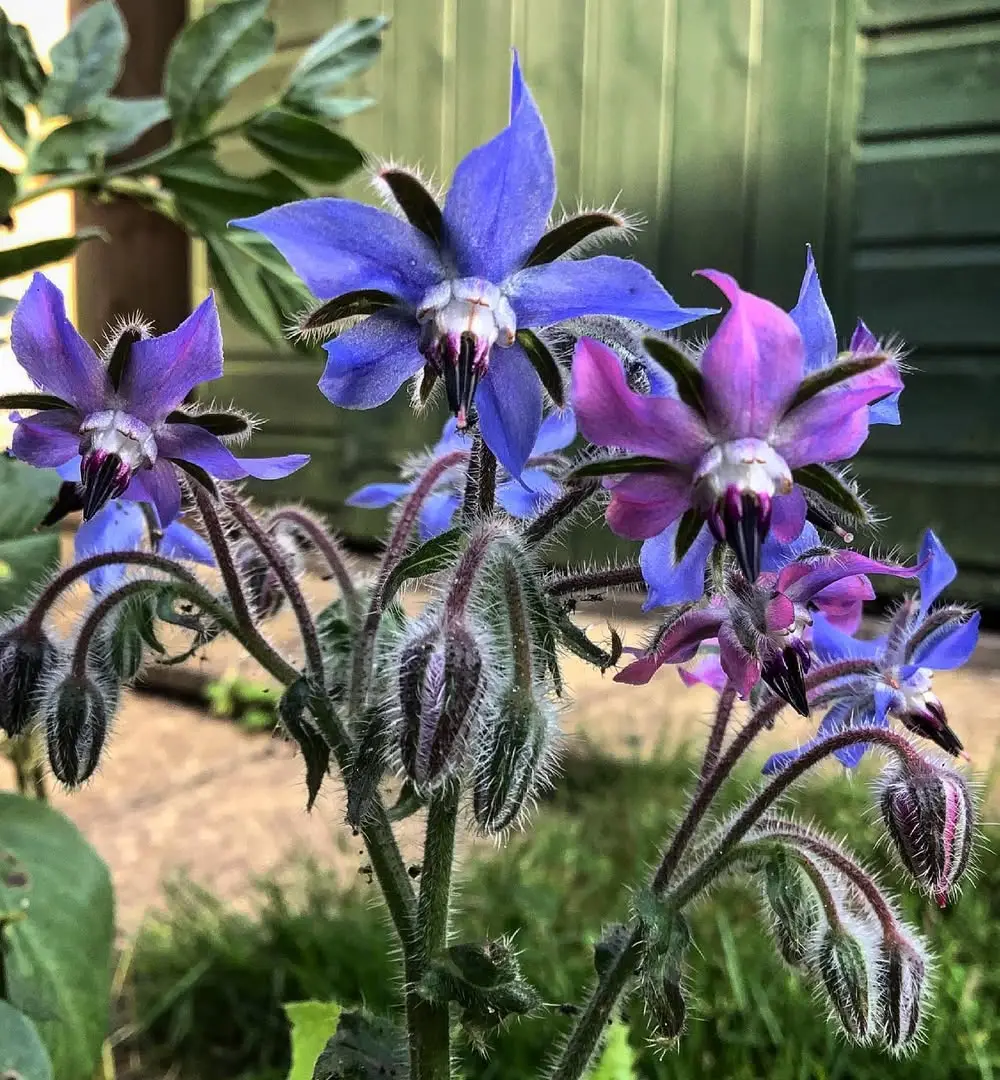
Borage flowers are in full bloom. The way those brilliant blue and purple star-shaped blooms seem to glow against all that fuzzy foliage is just breathtaking. Each flower has such distinctive black anthers that create this gorgeous contrast; it’s like nature’s own artwork.
Bees go wild for borage because it keeps producing fresh nectar throughout the day, which is pretty rare in the flower world. Hardy annual prefers a bit of shade during hot afternoons, making it ideal for those tricky garden spots. You can toss the edible flowers into salads for a lovely cucumber flavor.
20. Lemon Balm Plant Growing in Garden

Lemon balm is thriving in a partially shaded spot. Those deeply textured, mint-like leaves are just waiting to produce clusters of tiny white flowers that’ll have bees lining up for miles. Lemon balm is special because it thrives in spots where other plants struggle, like this cozy corner by the brick wall with morning sun and afternoon shade.
The lemony scent is divine when you brush against it, and once those small blooms appear, you’ll see why it’s considered one of the best bee magnets around. Super low-maintenance too
21. Streptocarpus Flowers

Streptocarpus blooms delicate purple and white flowers with their distinctive trumpet shape, are ideal for shaded areas; in fact, they prefer being tucked away from direct sunlight. They’re thriving right under this window where they get bright, filtered light but no harsh sun.
Beauties are more commonly known as houseplants; they make wonderful outdoor shade plants in milder climates. Hummingbirds are naturally drawn to tubular flowers like these, and the continuous blooming cycle means there’s always fresh nectar available. Those velvety leaves add such a nice texture, too.
22. Wallflower and Sedum
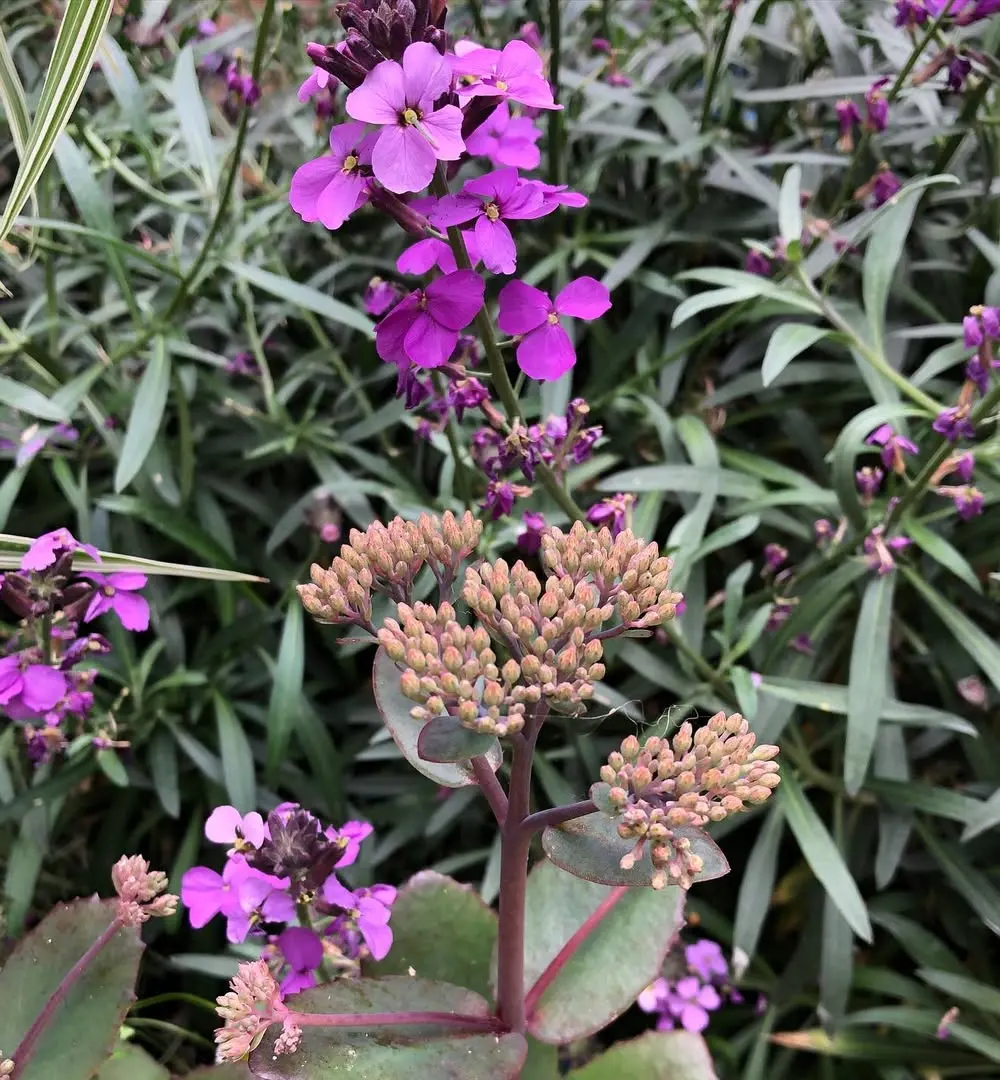
The pairing of purple wallflowers and succulent sedum feels effortlessly wild, as if the garden arranged itself. The wallflowers are putting on quite a show with their vibrant magenta blooms that butterflies adore, while that chunky sedum is getting ready to burst into its spectacular flower display.
brilliant about this pairing is how different their needs are, yet they’re both thriving, circumspect in this partially shaded spot. The sedum will eventually produce those flat-topped clusters of tiny flowers that bees go crazy for, creating a pollinator buffet that lasts from spring through fall.
23. Wallflowers in White Planter Box

Wallflowers bursting with purple blooms, they’ve found a superb home in this charming white planter box right by the front door. Wallflowers are such underrated gems; they prefer some afternoon shade and cooler conditions, which makes them ideal for spots like this where they get morning sun but protection later in the day.
The sweet fragrance these flowers produce is incredible, especially in the evening when it intensifies. Butterflies can’t resist those clustered blooms, and the long flowering season means your pollinator visitors will keep coming back for more throughout spring and early summer.
24. Monkey Flower Blooming
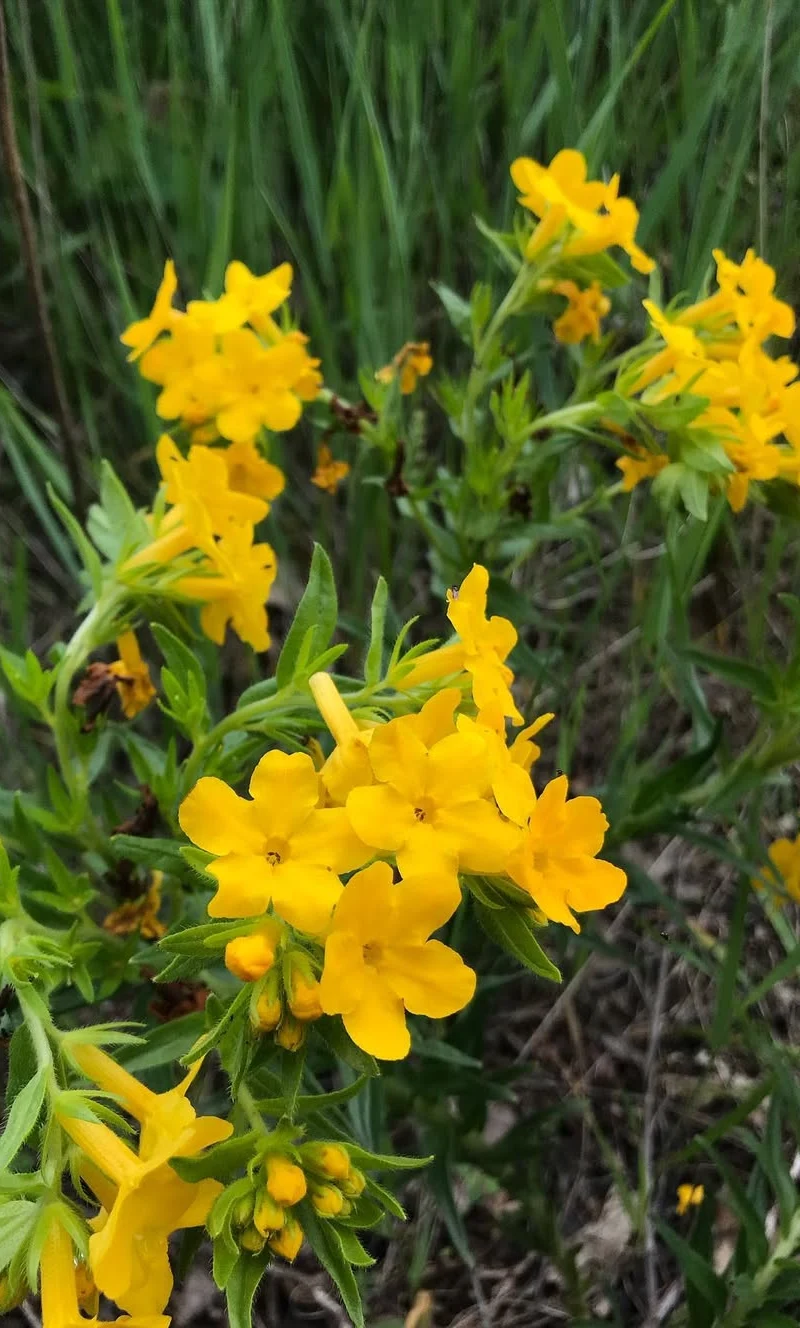
Cheerful monkey flowers are putting on quite the show with their bright golden blooms scattered throughout this naturalized garden area. Their cheerful expansion through the grasses and surrounding plants creates little bursts of golden light. Monkey flowers are perfect for those shadier spots where many other flowering plants struggle; they prefer moist, partially shaded conditions.
Hummingbirds are drawn to these trumpet-shaped flowers like magnets, and the way they bloom in clusters means there’s always plenty of nectar available. They’re also fantastic for attracting native bees and other beneficial insects to your yard 24.
25. Forget-Me-Not Flowers

Forget-me-nots are just precious. Those tiny sky-blue petals with their sunny yellow centers create the most enchanting carpet of color in shaded garden areas. The garden offers a double delight: flowers in full glory alongside promising pink buds, ensuring blooms for weeks
These woodland natives are suited for areas that get dappled sunlight under trees or alongside buildings. Small native bees and beneficial insects are crazy about these delicate blooms. Once established, forget-me-nots will happily self-seed to create dreamy drifts of blue throughout your shadier garden spots.
26. Backyard Iris Garden

Delightful surprise to stumble upon this charming corner of someone’s backyard. Those vibrant purple irises are stealing the show with their bold petals dancing in dappled sunlight. I can spot some cheerful yellow blooms peeking through, too, probably daffodils saying their spring hellos.
The wooden fence creates such a cozy backdrop, and you can tell this little garden spot gets just the right amount of shade from nearby trees. These irises are suitable for those partially shaded areas where you want to attract butterflies and other pollinators. They’re surprisingly low-maintenance once established, making any gardener happy.
27. Mixed Container Garden with Marigolds
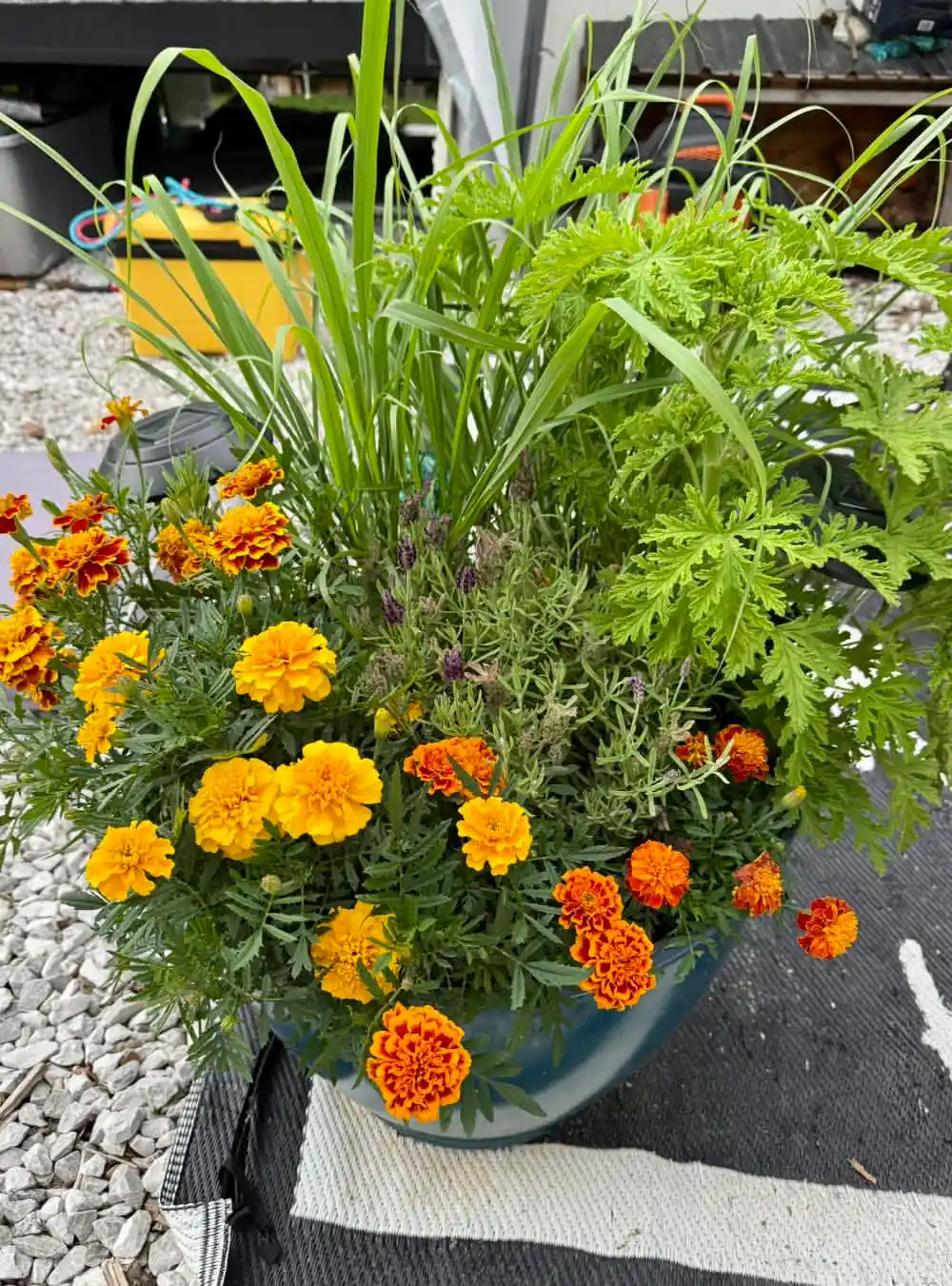
A smart gardener makes the most of a shady patio. gorgeous container combines bright marigolds in sunny yellows and burnt oranges with some lovely ferns and spider plants. The marigolds are doing double duty here; not only do they bring incredible color to shadier spots, but they’re also magnets for butterflies and beneficial insects.
Its practicality makes it stand You can move these containers around to catch different light throughout the day, and marigolds are incredibly forgiving plants. They’ll bloom nonstop and help keep garden pests away naturally.
28. Potted Rosemary in Bloom

lovely rosemary spilling over its green pot. Those delicate white-purple flowers are just bursting with life. I bet this little herb garden smells divine; there’s nothing quite like the piney scent of fresh rosemary.
Such a clever choice for a shaded porch or patio. Rosemary flowers are like tiny magnets for bees, and you’ll often catch hummingbirds stopping by for a quick sip too. Plus, you get the bonus of having fresh herbs right at your fingertips for cooking. It’s practically maintenance-free once established.
29. Elderberry Blossoms

Elderberry flowers are nature’s own fireworks display. Each creamy white cluster contains hundreds of tiny blooms that create these gorgeous flat-topped umbrellas. When elderberries are in full bloom like this, they become absolute bee magnets; you’ll hear the buzzing from yards away.
Elderberries are so special for shade gardeners because of their versatility. They thrive in partially shaded spots where many other flowering shrubs struggle. The flowers attract countless beneficial insects, while the dark berries that follow feed birds all season long. Harvest those berries for jams and syrups if you beat the birds to them.
30. Ripe Elderberries

Deep purple elderberry clusters are loaded with juicy berries, and you can bet the birds are having a field day. The way those dark berries contrast against the green foliage is just beautiful. The payoff from those gorgeous white flower clusters we saw earlier.
After attracting all those pollinators in spring, elderberries reward your yard with these nutrient-packed berries that feed everything from robins to cardinals. The best part. Elderberries prefer those partially shaded woodland edges, making them unqualified for spots where other fruiting plants might struggle to thrive.
31. Wildflower Meadow Mix

Soft pink cosmos are dancing alongside cheerful white daisies, creating the most enchanting natural carpet. I can almost feel the gentle breeze making them sway back and forth. Mixed wildflower planting is pure genius for anyone wanting to support pollinators without tons of work.
These flowers take care of themselves once they get going, and they’re constantly blooming from spring through fall. Butterflies adore cosmos, while the daisies bring in smaller beneficial insects. Even better, many of these will self-seed, giving you more beautiful blooms next year.
32. Three Cosmos Blooms

Showing off the incredible color range the cosmos can bring to your garden. From that rich wine-red beauty at the top to the soft pink striped one in the middle, and that vibrant magenta bloom below, each one is like a little work of art.
The feathery cosmos leaves peek through, weaving delicate texture against the dark soil. These flowers are workhorses when it comes to feeding pollinators, especially in spots that get morning sun but afternoon shade. They’re also fantastic cut flowers, so you can bring some of that garden magic indoors, too.
33. Pink Cosmos Cluster

These gorgeous pink cosmos thrive in a vibrant mixed garden setting. Fruit trees in the background create the veritable dappled shade, a stage where cosmos truly shine. I can see some fruit trees in the background, which creates that veritable dappled shade environment where cosmos shine. Those soft lavender-pink petals with their deeper pink centers are just stunning.
The cosmos mingles effortlessly with other plants, just as nature intended. The variety creates different levels and textures that attract all sorts of beneficial insects. Cosmos like these will bloom continuously from summer into fall, providing a reliable nectar source when many other flowers are starting to fade.
34. Cosmos Flower Garden

Charming cosmos garden showcases exactly why these cheerful flowers are absolute magnets for hummingbirds and butterflies. You’ve got gorgeous pink, deep burgundy, and crisp white cosmos blooms dancing together in consummate harmony. Those bright yellow centers are like tiny landing pads for busy bees and other pollinators.
Cosmos are surprisingly shade-tolerant and incredibly easy to grow, exquisite for beginners. They’ll keep blooming all season long, providing a steady buffet for your garden visitors. They self-seed readily, so you’ll have beautiful surprises popping up next year. These flowers prove that attracting wildlife doesn’t require complicated gardening.
35. Container Cosmos with Climbing Vine

Galvanized metal planter is packed with lovely pink cosmos in various shades, from soft blush to rich magenta. The rustic container gives it such a charming farmhouse vibe. They’ve paired it with that climbing vine on the wooden trellis, perhaps a flowering variety that’ll add even more pollinator appeal.
Combo works beautifully in partial shade spots where you want maximum impact. Hummingbirds will zip between the cosmos blooms while bees work the flowers. Smart container gardening at its finest
36. Mixed Cosmos
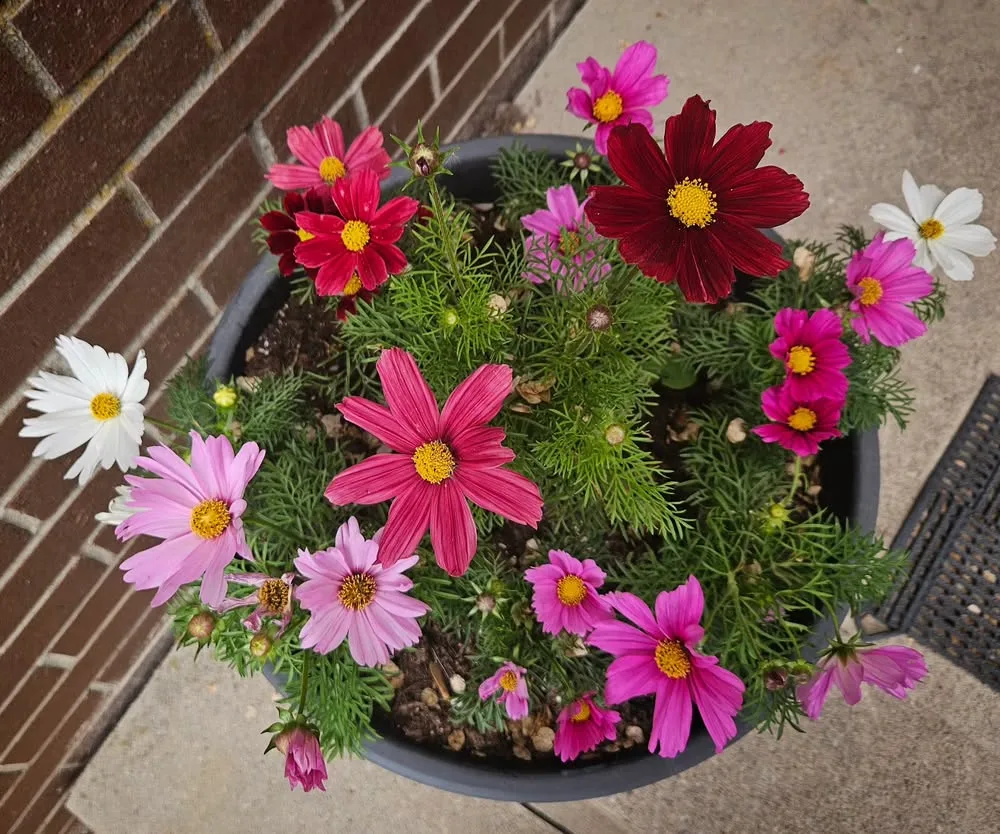
Dark container is overflowing with cosmos in every shade imaginable, deep burgundy, hot pink, soft lavender, and pure white. The way they’re all mingling together creates such a vibrant bouquet effect. Special for attracting pollinators is the variety of colors and the compact growing habit.
Bees love having multiple nectar sources clustered together like this, and hummingbirds can easily hover and sample from flower to flower. out and out meaning for patios, decks, or anywhere you need a pollinator pit-stop in shadier spots.
37. Red-Stemmed Begonia

Begonia shows off those incredible red stems and leaf undersides that practically glow in dappled light. The silvery-green tops with those distinctive serrated edges create an amazing contrast; it’s like nature’s own artwork. Begonias are fantastic for shady spots where other flowering plants struggle.
They’ll bloom continuously through the season with delicate clusters of flowers that hummingbirds adore. The nectar-rich blooms combined with those eye-catching red accents make this plant a real showstopper. practically foolproof to grow, just keep them moist and watch them thrive in those darker garden corners.
38. Colorful Begonia

The leaves are putting on quite the show with those amazing color combinations, deep burgundy edges, silvery centers, and that gorgeous reddish-pink coloring throughout. The stems have that beautiful coral tone that makes everything pop.
These begonias are thoroughgoing for those tricky shaded areas where you still want to attract hummingbirds. When they bloom, those delicate flowers are like little beacons for our tiny feathered friends. They keep producing flowers all season long, giving pollinators a reliable food source. Easy care and maximum impact, that’s what I call a win-win situation.
39. Dark-Leaved Begonia Garden Bed

Deep, almost black begonia leaves create an incredible backdrop; they’re like velvet cushions in the landscape. Those telltale pink begonia blooms peeking through which is exactly what hummingbirds are searching for in shaded areas. The mixed foliage textures here are brilliant, spider plants, hostas, and other shade lovers all playing together.
Layered planting works wonderfully because it provides multiple nectar sources at different heights. Hummingbirds can dart between the begonia flowers while other pollinators explore the varied plant community. It’s a perfect example of functional beauty.
40. Silver-Veined Begonia Foliage
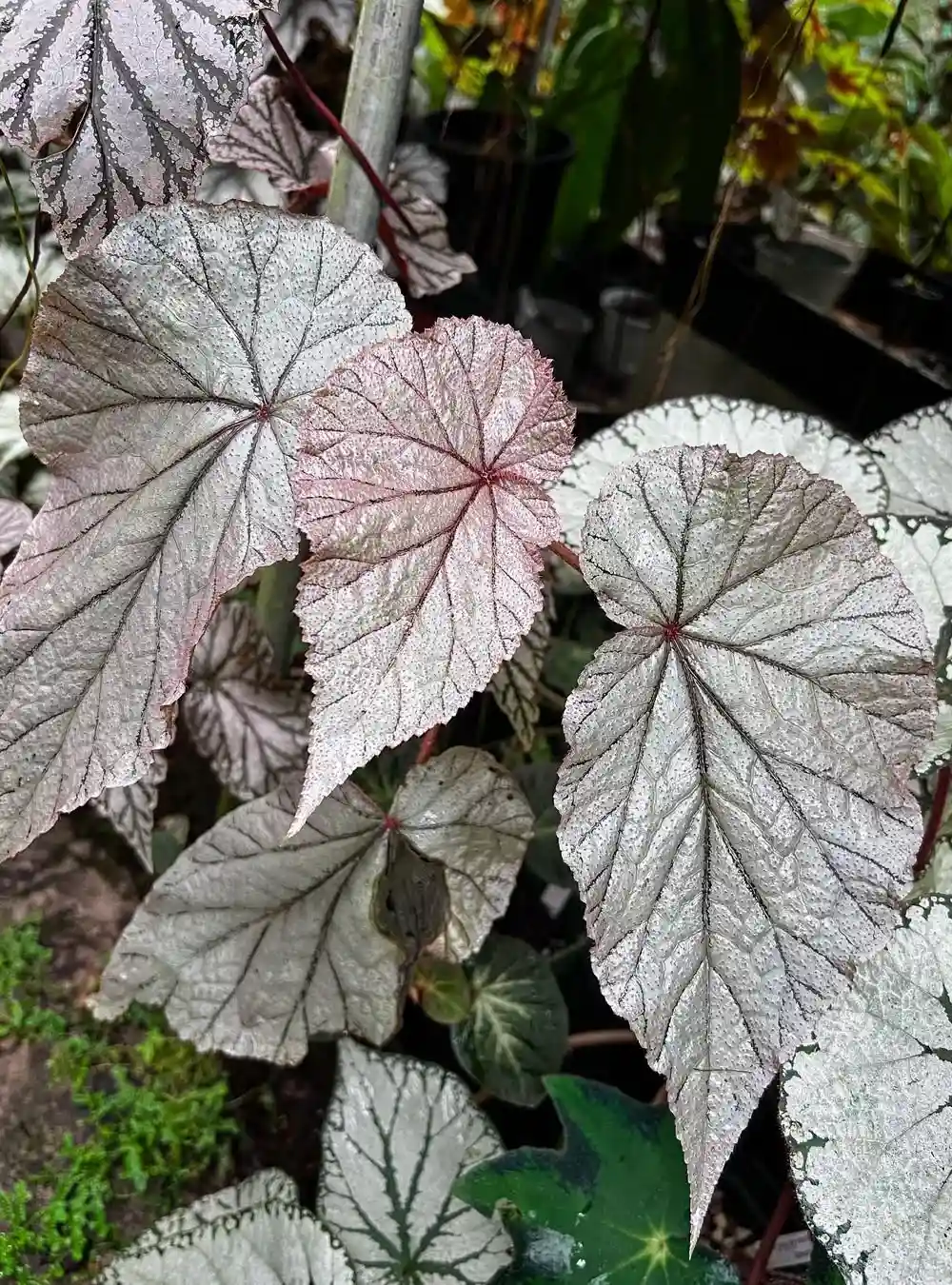
The intricate silver veining against that soft pinkish-gray backdrop creates such an elegant pattern, it’s like someone hand-painted each leaf with metallic thread. Those distinctive palmate shapes with their deep lobes are just gorgeous.
These beauties will produce clusters of delicate flowers that hummingbirds find irresistible. The silvery leaves help reflect light in shady spots, making the eventual blooms even more visible to pollinators. It’s nature’s way of creating a landing beacon. These begonias prove that shade plants can be just as stunning and pollinator-friendly as their sun-loving cousins.
