
RV shelter ideas are essential for protecting your motorhome from sun damage, rain, snow, and long-term wear. Many RV owners know the value of keeping their vehicle safe between road trips. Back in the day, people relied on simple tarps or makeshift wooden frames in their backyard. Today, you have more reliable and cost-effective options, from steel carports to portable fabric garages.
The right shelter extends the life of your RV’s roof, tires, seals, and paint, saving you on repairs and maintenance. If you live in an area with harsh winters or strong UV exposure, an RV cover or full enclosure can make a big difference.
Even in mild climates, storing your RV properly keeps it clean and ready for your next trip. Choosing the best RV shelter ideas depends on your space, budget, and local building codes.
34 Shaded RV Shelter Ideas for Ultimate Protection and Comfort
How to secure an RV shelter to a travel trailer to extend living space?
To secure an RV shelter to a travel trailer and extend your living space, you need a stable, weather-resistant structure that can attach without damaging the RV. Start by choosing a shelter designed for RVs, such as a canopy with side panels or a steel-framed carport with open ends.
1. Position the shelter correctly. Align the shelter with your RV’s door or awning side, leaving enough clearance for doors and slide-outs to operate. Ensure the shelter roof is tall enough for your RV’s height and allows proper airflow.
2. Anchor the shelter to the ground. Use concrete footings, ground anchors, or auger-style stakes, depending on the surface. Stability is critical, especially in windy areas. Do not rely on the RV itself for structural support.
3. Create a weather-tight connection. Use waterproof skirting, foam seals, or Velcro panels to bridge the gap between the shelter and the RV side. If your RV has an awning, attach the shelter directly to the awning rail or use RV-specific screen room kits designed for this.
4. Avoid attaching the shelter frame directly to the trailer body. Use brackets or adjustable poles near the RV, but not bolted into it. This prevents frame stress, water intrusion, or body damage during high winds or movement.
1. RV Garage with Side Lean-To

An RV shelter is a protective structure built to shield recreational vehicles from sun, rain, snow, and debris. It extends the lifespan of an RV by reducing UV damage, water leaks, and fading paint. Unlike standard garages, RV shelters are designed with taller clearance, often 12–16 feet, to accommodate the height of motorhomes and fifth wheels.
Shelter is a metal RV garage with a lean-to, offering enclosed protection with additional covered outdoor space for tools, gear, or even a secondary vehicle. The origin of metal RV shelters comes from agricultural-style steel buildings. According to the Metal Building Manufacturers Association, steel buildings, RV shelters can last over 50 years with minimal upkeep.
2. Metal RV Carport Shelter

Most RV shelters are installed on gravel or concrete pads and anchored with ground augers or concrete bolts for wind stability. The curved roof helps shed water and snow, reducing stress on the shelter and the RV underneath. The origin of RV shelters comes from simple carport designs adapted to meet the height and length needs of travel trailers and motorhomes.
Ensure the shelter height clears your RV’s A/C unit and antennas, and verify your local building codes for setback and anchoring requirements. A well-installed RV shelter can extend the life of your vehicle by years, reducing sun-related fading and weather-related wear.
3. RV Skirting

The RV is parked under a solid wooden A-frame cover that provides excellent shade and protection from the elements. Attached to the side is a spacious, raised wooden deck with railings and steps, for lounging, cooking outdoors, or simply enjoying the view.
The structure’s open sides allow good airflow, keeping things cool. There’s also a green storage shed in the background for extra gear. This kind of shelter turns a simple RV into a semi-permanent getaway spot.
4. UV-Protective RV Covers

Metal RV carport done right. It is a tall steel-framed cover with a red roof, offering full overhead protection for the RV underneath. The sides are open for airflow, and it sits on a gravel base with a concrete pad for extra stability.
This is ideal if you want something low-maintenance and resistant. There’s even room for additional gear or a sitting area, like the chair shown. It’s simple, practical, and for long-term RV parking.
5. RV Battery Lock Boxes

Dual RV shelter for folks with more than one trailer or who want extra storage space. Made from sturdy steel, the structure offers two large covered bays with partial side enclosures, giving great protection from sun, rain, and wind.
There’s plenty of room for RVs, utility trailers, or even boats. The open middle makes moving large vehicles in and out a breeze. If you need a practical, no-frills RV shelter that gets the job done and keeps your gear safe, this design is solid.
6. Flat Roof Metal RV Shelter
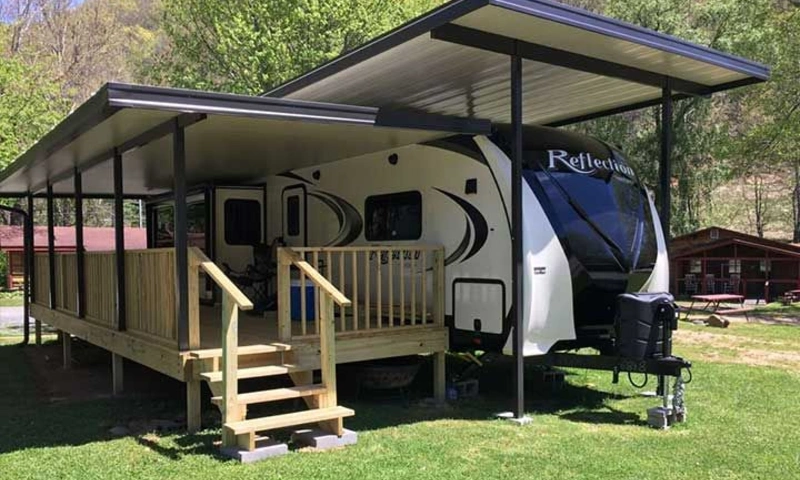
Reflection RV is neatly parked under a sleek, modern metal roof with a fully built wooden deck alongside it. It’s like a mini front porch for your trailer, for sitting outside, grilling, or just enjoying the view.
A flat metal roof offers reliable protection from rain and sun, and the deck makes it feel like home. This is a great idea if you’re setting up for longer stays or even semi-permanent living in your RV.
7. Corrugated Metal Roofing Sheets

Here, an RV is tucked under a rustic wooden shelter, complete with a tin roof and a side deck that serves as a chill zone. There’s a fire pit surrounded by simple patio chairs, creating the hangout spot for cool autumn nights.
This RV shelter idea blends right into the forest vibe, ideal for people who want nature close but still enjoy comfort. It’s part garage, part cabin porch, and fully relaxing. A little craftsmanship goes a long way to make your RV feel like home.
8. Driveway RV Stayport
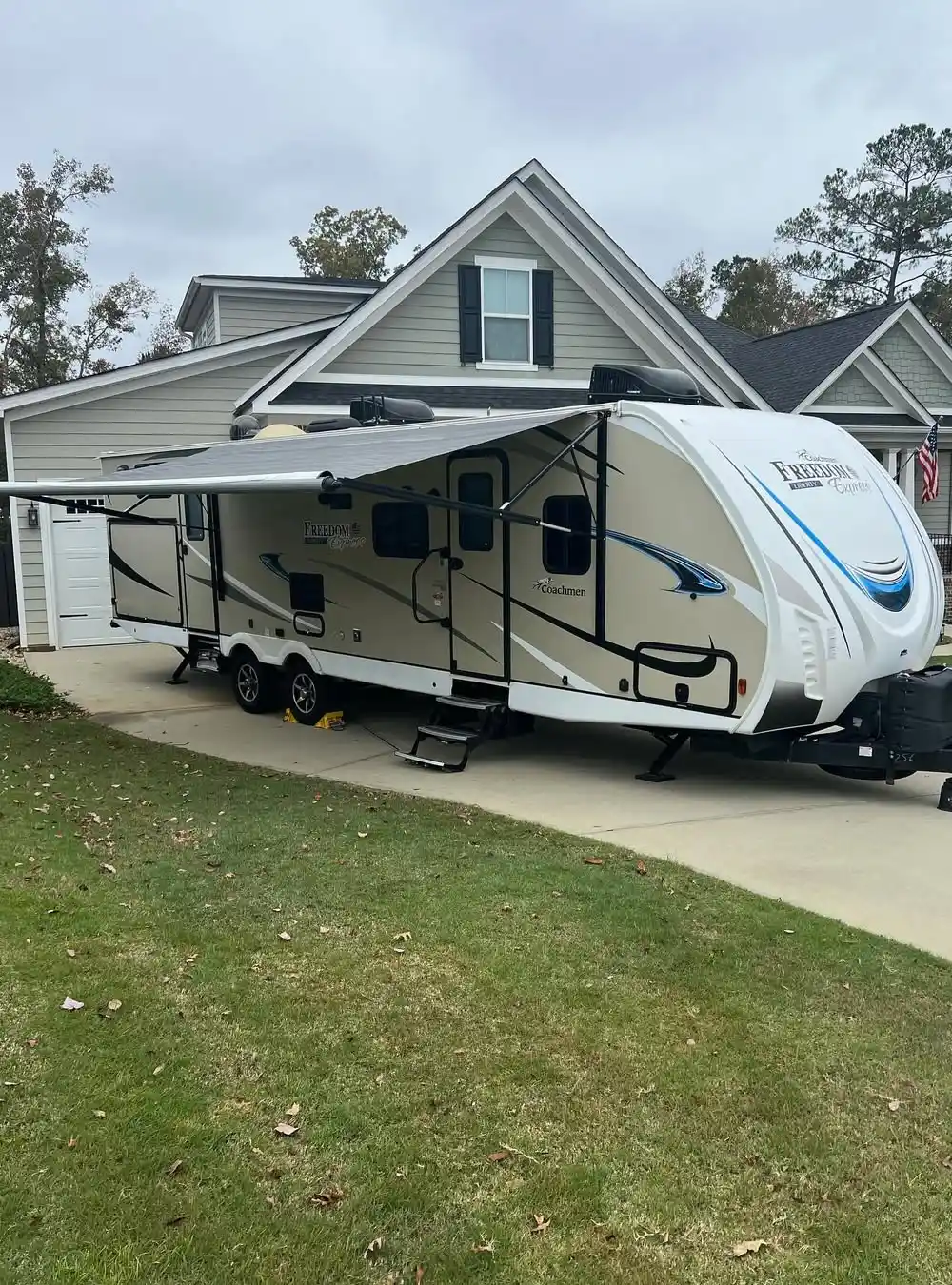
When storing a motorhome, travel trailer, or camper van, a proper shelter prevents UV damage, roof cracking, rain seepage, and weather-related wear. Historically, RV shelters evolved from agricultural pole barns and utility carports. You can go with a freestanding shelter, attached carport, or even a fully enclosed garage.
A good RV shelter should be at least 12 feet high and wide enough to fit slide-outs if needed. On concrete pads, make sure the RV is level and wheel chocks are used. Before building or buying, check HOA rules and local zoning laws. Also, ensure your shelter is rated for your region’s wind and snow loads.
9. CoverCraft RV Shelter
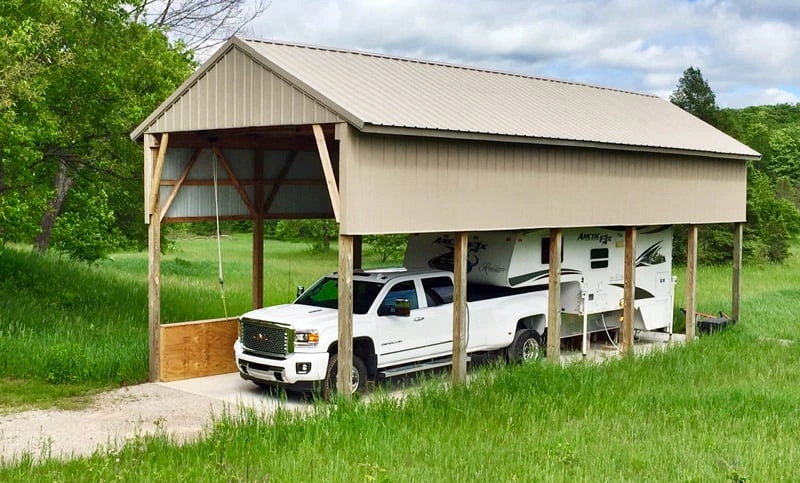
The origin of the RV shelter isn’t tied to a specific inventor or place, but evolved naturally as RVs. As more people embraced RV travel, the need to protect these expensive investments led to the development of dedicated storage structures.
When building or buying one, make sure the height clears your RV’s AC unit and roof vents. Also, choose materials based on your climate; galvanized steel works best in snowy or rainy regions, while treated wood blends better in rural or scenic areas.
10. AllGuard Vehicle Covers

An RV shelter is a practical structure built to shield recreational vehicles from the elements. You’re protecting a motorhome, travel trailer, or camper van. A good shelter helps reduce UV damage, prevents roof leaks, and keeps snow, rain, and tree sap off your rig. These shelters became more common in the U.S. during the 1980s and 90s as RV travel grew and owners began looking for off-season storage solutions.
One important factor to consider is clearance. Width and length should also account for slide-outs or tow attachments. According to a 2023 RVIA survey, over 45% of RV owners use some form of coverage. A shelter can increase your RV’s lifespan by reducing exterior wear and minimizing maintenance costs over time.
11. High-Roof RV Carport Shelter
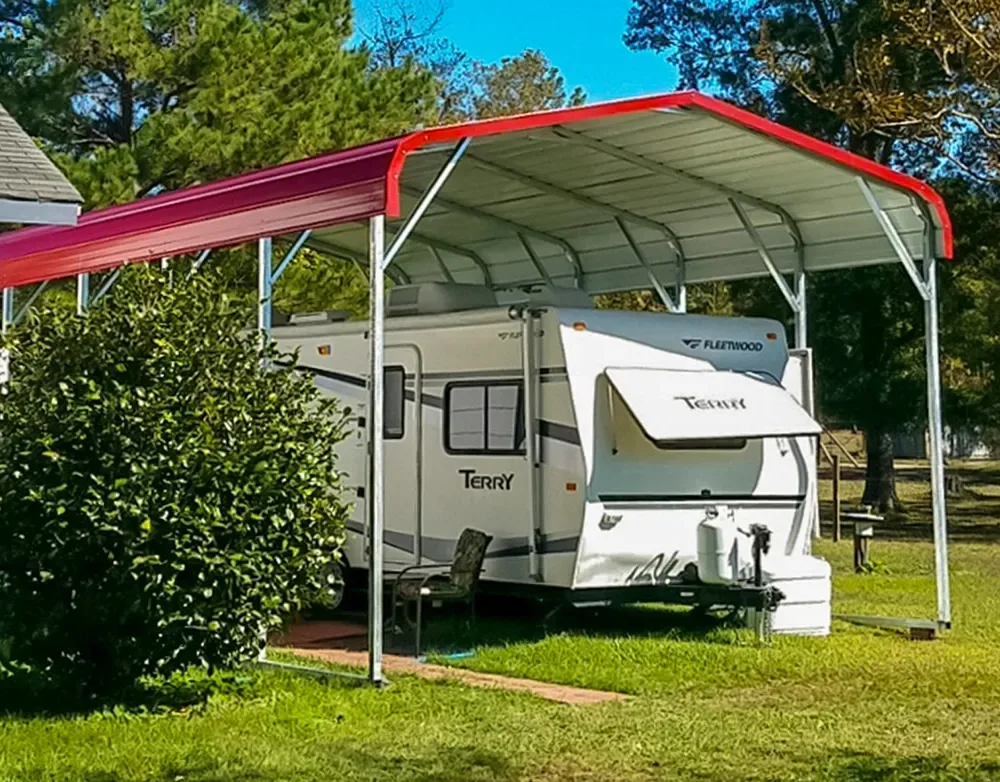
These shelters come in various forms, open-sided metal carports, fully enclosed garages, or wooden pole barns. The one is a high-roof metal carport, designed to fit a travel trailer under it with room for airflow and maintenance. When planning an RV shelter, it’s essential to check your RV’s total height, including air conditioning units and vents.
Add 1–2 feet of safety clearance. According to RVIA data, RVs stored under shelter retain 20–30% more resale value compared to those left exposed. It’s a smart investment for both protection and longevity.
12. Steel or metal structures
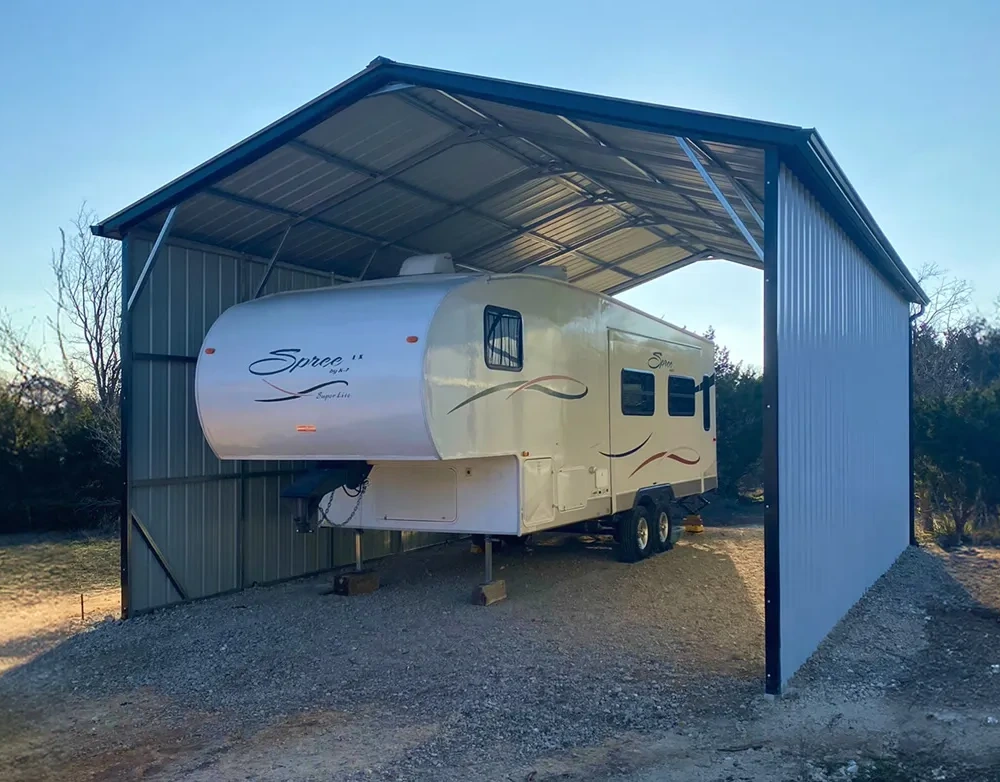
Metal carport with partial side enclosures, built using galvanized steel panels and a reinforced frame. This type of shelter is ideal for long-term storage and is especially useful in rural or wooded areas where tree sap, branches, and UV exposure can damage your RV’s roof and exterior over time.
The shelter’s height clears your RV, including roof-mounted air conditioners or antennas. Choose a frame with a minimum 12-gauge steel for better wind and snow load resistance. A study by the RV Industry Association noted that RVs stored under cover required 30% fewer exterior repairs over 5 years compared to those left exposed.
13. RV Roof Vent Covers

Peaceful little hideaway that proves RV living can be both simple and beautiful. An older RV labeled The Executive parked under a slanted wooden shelter with an attached open-air pergola. The natural wood blends with the surrounding greenery, giving off a quiet, cabin-in-the-woods vibe.
This is for those who want something low-cost but still cozy and inviting. A great mix of function and relaxation in one easy-to-build RV shelter idea.
14. Attached RV Pavilion
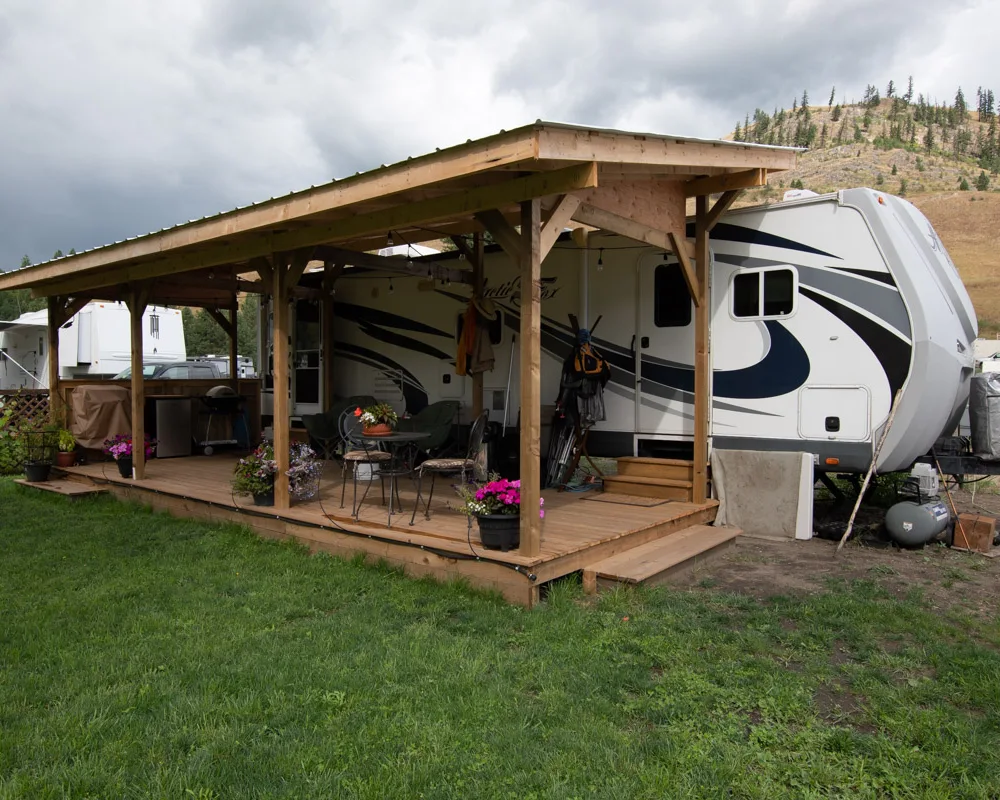
Permanent RV pavilion, a wooden shelter attached to a travel trailer. This type of structure extends living space and protects outdoor activities. Basic metal frame structures with roofing, typically 12-14 feet high to accommodate RV clearance requirements.
Pavilions: These combine shelter with extended living space using wooden construction and open-air design. Enclosed Garages: Fully enclosed buildings that completely protect RVs from the elements and provide security.
15. Rustic Gabled Roof RV
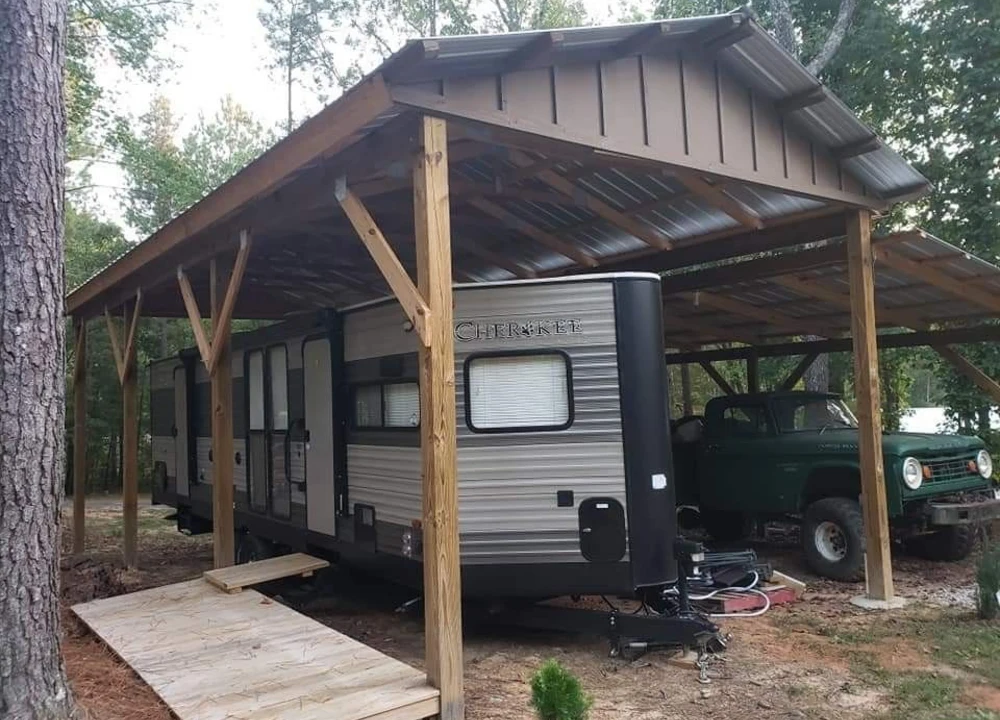
How to get their Cherokee travel trailer AND that cool old truck under one roof, talk about maximizing your shelter investment. They built this in the woods and made it feel like it belongs there. The natural wood framing and that classic gabled metal roof give it this rustic cabin vibe that doesn’t look out of place among all those trees.
The seems pretty straightforward to build, too, just good old-fashioned post-and-beam construction with a simple peaked roof. Sometimes the best solutions are the ones that don’t overthink it.
16. Wooden Deck RV Shelter with Ground-Level Carport Design
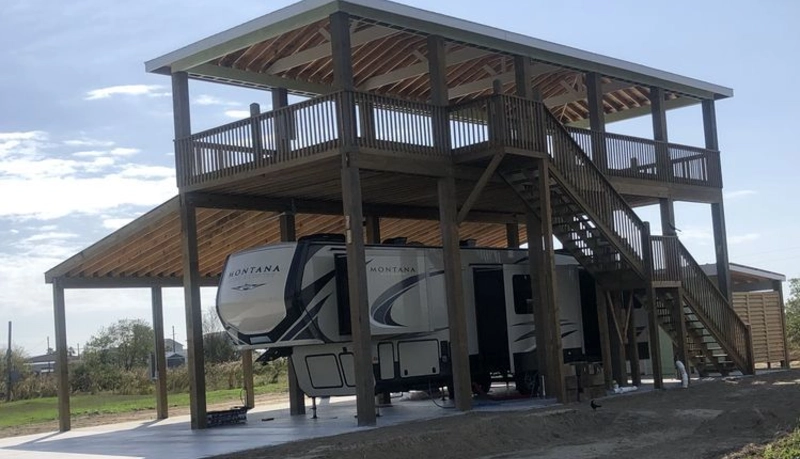
You’ve got your Montana fifth-wheel sitting pretty under that solid roof structure, completely protected from Mother Nature’s throws at it. But here’s the genius part: instead of wasting all that vertical space, they built this sweet upper deck that basically doubles your usable area.
Handle some serious business with those heavy wooden beams and that angled roof section. The upper level is for barbecues, watching sunsets, or just having a cold drink, keeping an eye on your rig below. Smart design that gives you the best of both worlds, practical RV storage and bonus recreational space all in one structure.
17. Wooden RV Garage with Upper Observation Deck

An RV shelter; it’s like they built their own personal RV resort. The bottom level is basically a custom garage designed specifically for that big motorhome; the upper deck creates this fantastic entertaining space.
Blown away by the craftsmanship of those stairs, the railings, that spacious upper level, with enough room for an outdoor living area. Having that vantage point must give you views of the surrounding area. This is definitely the kind of project that started with honey!
18. Solar-Powered Metal Roof RV Shelter
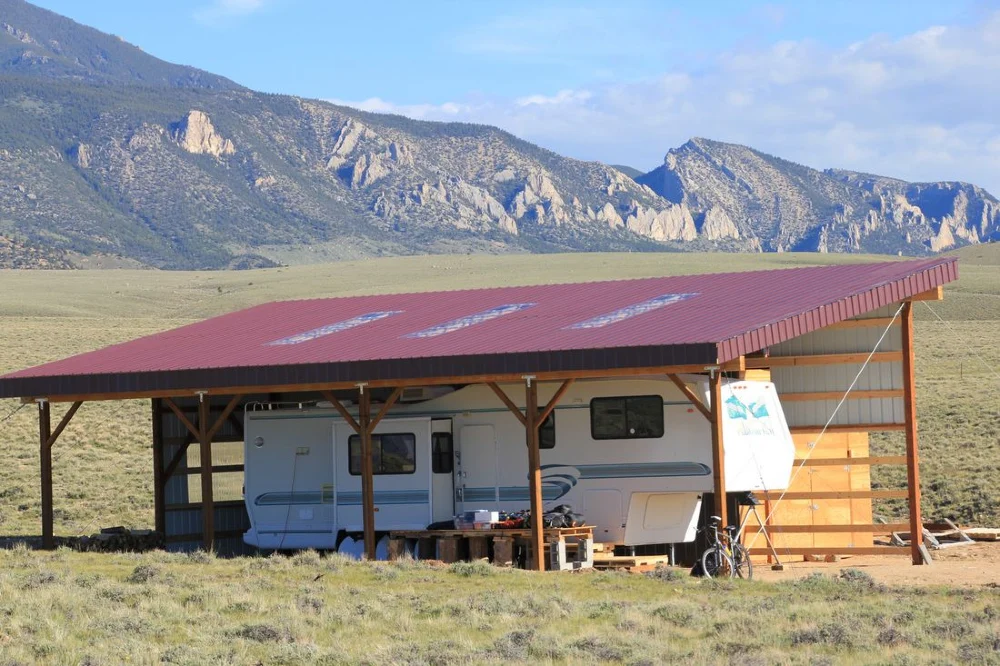
Folks who want to go completely off-grid without sacrificing comfort. That big red metal roof isn’t just protecting the travel trailer from the sun, and check out those solar panels up top, making this a completely self-sufficient operation. The wooden frame construction looks super sturdy, which you’d definitely need in this kind of wide, open country with those mountains as your backdrop.
There’s plenty of extra covered space for outdoor gear, maybe a workshop area, or just somewhere to sit and enjoy those incredible views. This is exactly the kind of that you park your RV somewhere remote and beautiful, then actually stay there comfortably for extended periods.
19. RV Pole Barn Shelter with Lean-to Extension

The shelter is a wood-framed RV pole barn with a lean-to extension on the side, commonly used for tool storage, firewood, or smaller equipment. Its tall gable design provides clearance for full-sized motorhomes and travel trailers, the Airstream pictured.
Leave at least 3 feet of clearance on all sides of your RV for safe access and maintenance. According to RV maintenance experts, covered storage can reduce long-term repair costs by 20–30%.
20. Integrated Outdoor Living Space

A well-built RV shelter not only extends the life of your RV but also adds functional outdoor space. The shelter is a great example, a metal-roofed pole barn-style cover that provides shade, rain protection, and even room for outdoor seating, plants, and storage. When planning your RV shelter, ensure proper ventilation, especially if you’re enclosing the sides.
If you plan to stay in your RV parked, consider adding utilities like power and water hookups. According to data from RVIA (Recreational Vehicle Industry Association), RVs left exposed to the elements age up to 25% faster.
21. Thatched RV Shelter in Desert Boho Setting

Embraced that off-grid, bohemian lifestyle here. This Airstream is tucked under a traditional palapa-style roof made from palm fronds or similar natural materials. It’s such a cool contrast, that sleek, modern trailer sitting under this super organic, earthy shelter. The vibe screams beach house meets desert retreat.
You’ve got cacti, palm trees, and pieces of coral scattered around as decoration. If you’re going for that laid-back, tropical aesthetic and want your RV shelter to blend into the natural surroundings rather than stand out.
22. Travel Trailer

Semi-permanent RV shelter with an add-on room, deck, and utility shed, which is a popular option in wooded or seasonal campgrounds. The RV is a Keystone Springdale travel trailer, designed for long-term use. Attached to it is a stick-built room addition, often called an RV room extension or bump-out cabin. These are typically built on-site using wood framing and often match the aesthetic of surrounding cabins or sheds.
This room may serve as extra living space, a kitchen, or a mudroom. The shed to the left is a barn-style storage shed, commonly used for tools, outdoor gear, or seasonal supplies. The deck is a raised wood platform with railings, great for grilling, lounging, or outdoor dining. Beneath it, a gravel pad provides drainage and a stable parking surface for the RV.
23. Fire Pit Ring

Structure is known as a site-built cabin enclosure. These are built using traditional framing methods and finished to match the surrounding environment. In this case, the cabin is wrapped in log siding, blending well with the forest setting.
The section expands the living area and can house amenities like a full-size washer and dryer, which you can see through the window.
24. Two-Story Wooden RV Carport

Instead of just building a basic carport, they created this impressive two-story structure that serves double duty. The bottom level gives that big fifth-wheel plenty of headroom and protection, the upper deck creates this awesome bonus space the views you’d get from up there.
Looks incredibly solid with those thick wooden posts and a metal roof. This was built by someone who plans to use their RV long-term and wanted something that would last. It’s having a mini barn specifically designed for your rig, plus extra entertaining space on top.
25. Lattice Skirting

Camper cabin enclosure or stationary RV cabin hybrid. The wooden shell built around the RV includes a shed-style roof, which provides rain and snow runoff, and a wraparound porch with lattice skirting for airflow and pest control. The siding is cedar or pine, chosen for its durability and natural resistance to decay.
It helps protect the RV from sun, wind, and moisture, all of which can cause serious damage over time. Insulating the space between the cabin and RV also improves energy efficiency, especially in colder climates.
26. Metal Roof Pole Barn RV Carport

The owner built a simple pole barn structure using wooden posts and a corrugated metal roof, nothing fancy, but it gets the job done. Catching my eye are those colorful string lights draped along the roofline, turning a basic shelter into something that feels more welcoming and festive.
The covered area extends way beyond just the RV, creating this nice outdoor living space with tables and chairs where you can hang out even when it’s raining. It’s a no-nonsense design that clearly prioritizes function over form, but those little touches in the lighting show someone actually uses and enjoys this space regularly.
27. Signage Decor

A gabled roof shelter built over the RV with a covered porch area. They’re often called permanent RV carports or stick-built RV shelters in construction and zoning terms. According to a 2022 KOA study, 36% of RV owners plan to enhance their RV site with a shelter or deck to improve comfort and resale value.
When planning your shelter, leave enough clearance above and around the RV to allow for maintenance and avoid damage during storms or tree falls. Always check zoning codes to make sure your build is legal and safe.
28. Illuminated Wooden RV Pergola Shelter
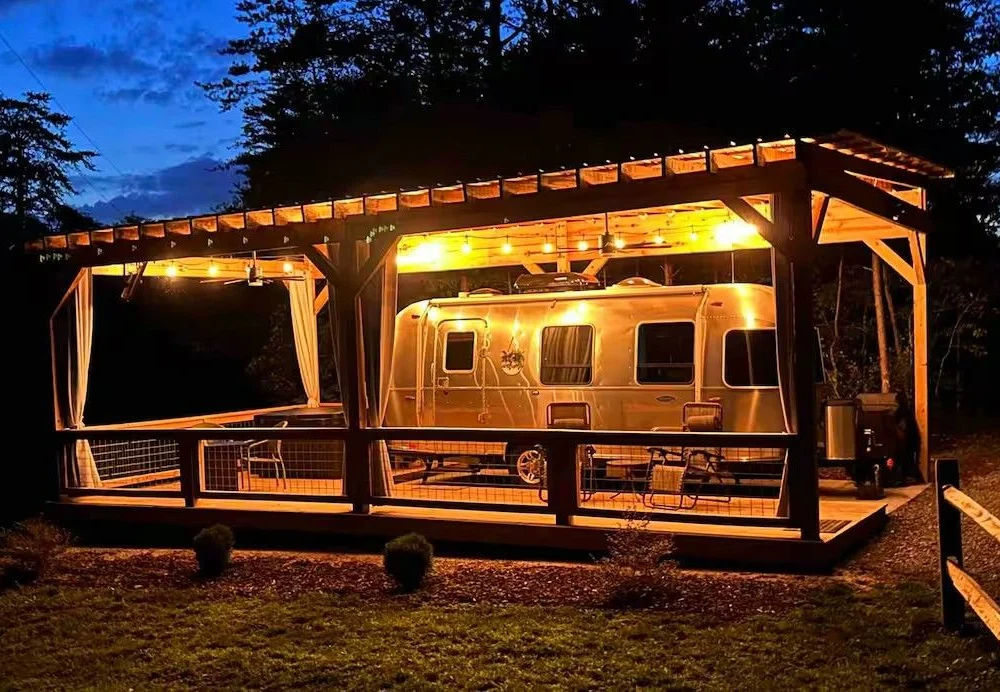
Someone really nailed the RV shelter setup here. That gorgeous wooden pergola creates such a cozy, protected space for their beautiful Airstream trailer. The warm string lights running along the beams give it this evening glow that makes you want to grab a cup of coffee and just sit there.
They built the raised wooden deck with that sleek metal railing. The structure is sturdy and well-crafted, giving that silver beauty excellent protection from the elements and an open, airy feel. There are definitely goals for anyone wanting to create a permanent, attractive home base for their RV adventures.
29. Galvanized Steel Roofing

A classic metal roof, pole barn-style, is a popular choice in rural areas due to its durability and cost-effectiveness. A good shelter should have a roof overhang and ventilation to allow airflow and prevent moisture buildup. Gravel or compacted dirt is often used as the base to manage drainage.
Decks or porches are great add-ons that expand your usable living space. According to the RV Industry Association, RV ownership increased by over 62% in the past two decades, and with it, so did the interest in permanent RV shelters. A well-built RV shelter protects your investment and adds comfort and usability to your outdoor lifestyle.
30. Highland Ridge Light Fifth Wheel or Travel Trailer

Pole barn-style RV cover, a cost-effective and durable shelter that uses vertical support posts typically 6×6 or 4×4 pressure-treated lumber and a galvanized steel or metal roof.
A study by the RVIA notes that long-term exposure to sun and water can cut an RV’s exterior lifespan by nearly 40% without adequate cover. Many shelters also include side extensions to house tools, ATVs, or even workshops.
31. Airstream Travel Trailer

Wood-framed RV carport with a gable roof, a popular choice for a permanent or semi-permanent RV. The open design allows airflow to reduce moisture buildup, which helps prevent rust, mildew, or pests. The idea of RV shelters evolved from traditional pole barns and agricultural structures.
Always measure your RV with slide-outs extended before building. This ensures proper fit and clearance. Also, in wooded areas, consider a metal roof for better resistance to falling limbs.
32. Corrugated Polycarbonate
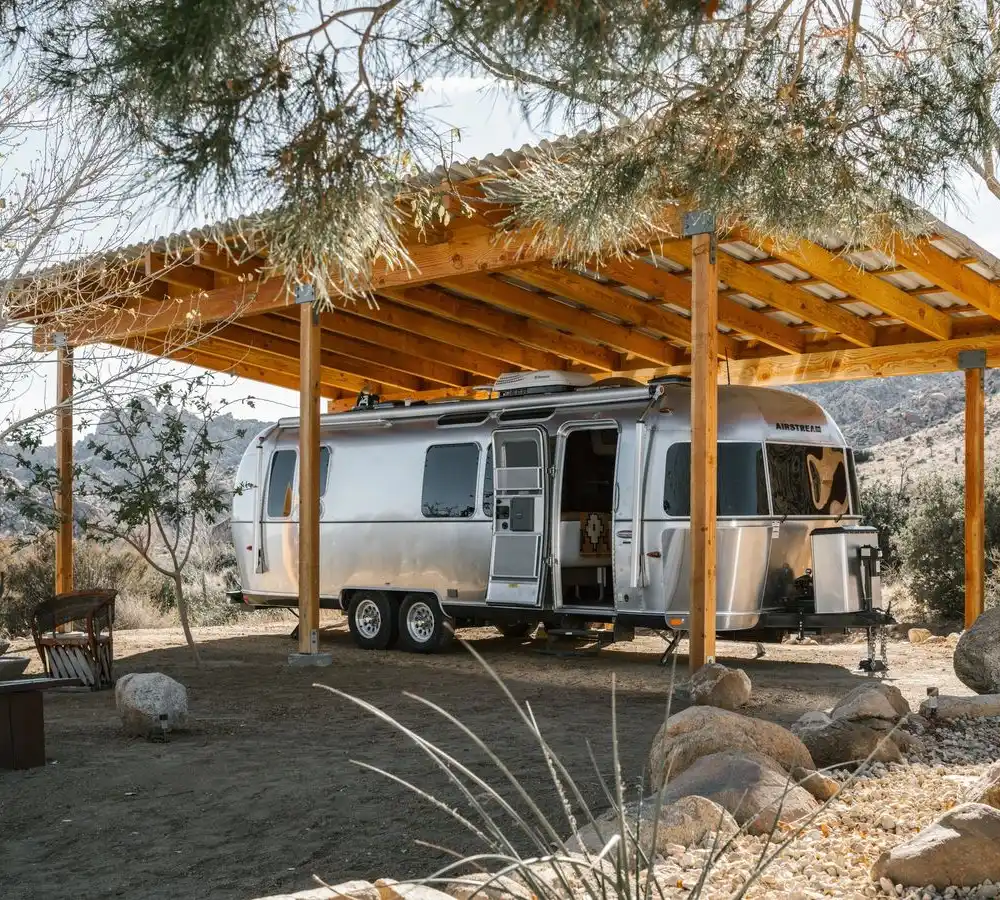
A well-built RV shelter extends the life of your RV by shielding it from UV rays, tree sap, hail, and water damage. One of the most practical styles is the pole barn shelter, made from pressure-treated wood posts, cross-beams, and a metal or polycarbonate roof.
For desert or mountain locations, open-sided wooden shelters with slanted roofs are ideal for ventilation and minimal snow buildup.
According to the U.S. Department of Energy, shaded structures can reduce internal RV temperatures by up to 15°F in hot which lowers A/C use and energy costs.
33. RV Stabilizer Jacks

Minimalist RV shelter that feels more like a beachy getaway than a parking spot. The small camper sits on a raised wooden deck framed by a simple pergola-style roof. A soft hammock hangs on the right side, giving it that vacation vibe.
String lights run along the top, adding cozy ambiance for evening relaxation. This shelter is a great example of how a few well-placed boards and thoughtful touches can turn any RV into a stylish little oasis.
34. Waterproof Wood Sealer

Raw, off-grid charm a vintage camper parked on a raised wooden platform with a wide, flat pergola-style roof overhead. The posts are made from natural, untreated logs, which gives the build a back-to-basics, rustic character.
There’s a ton of open space for chairs, tables, or even hammocks, great for relaxing in the shade, staying close to nature. It’s budget-friendly, nature-forward, and totally DIY-able with a little time and wood.
