Many workers carefully fund a 401(k) and IRA while treating their HSA like a checking account for doctor bills. That can mean spending one of retirement’s most flexible tax-favored accounts before it has much chance to grow.
An HSA is not automatically the best account for every household, and an HSA-eligible health plan is not automatically the right insurance choice.
But for an eligible saver who understands the rules, an HSA can provide tax benefits before retirement, tax-free growth potential, and tax-free money for qualified healthcare costs decades later.
Why the HSA Gets So Interesting Near Retirement
The basic HSA tax structure is unusual. Eligible contributions can receive favorable federal tax treatment, earnings can grow without current federal income tax, and withdrawals used for qualified medical expenses can be federal income tax-free. State treatment can differ.
The opportunity is larger than many people realize. Devenir reported that HSAs held almost $174 billion across 41.7 million accounts at the end of 2025, but only about 4.2 million accounts had invested money. That works out to roughly one account in ten.
That does not mean the other 90% are doing something foolish. Someone facing expensive prescriptions, frequent medical visits, or a tight monthly budget may have a perfectly sensible reason to keep HSA money available.
The better question is whether you are using your HSA deliberately. These 11 rules can help answer that.
Rule 1: Make Sure You Are Actually Eligible Before Contributing

Owning an HSA and being allowed to put new money into one are different things. You can keep an old HSA after leaving an HSA-eligible plan, but you must satisfy the eligibility rules to make new contributions.
Generally, you must have qualifying high-deductible health plan coverage, have no disqualifying additional health coverage, not be enrolled in Medicare, and not be someone else’s tax dependent.
A general-purpose health FSA or HRA can also interfere with eligibility, although certain limited-purpose or post-deductible arrangements may be allowed.
This matters because “high deductible” in everyday conversation does not automatically mean “HSA eligible.” Check the plan documents rather than assuming a plan qualifies because its deductible looks large.
The 2026 numbers provide a useful starting point.
| 2026 HSA Item | Self-Only | Family |
|---|---|---|
| HSA contribution limit | $4,400 | $8,750 |
| Age 55+ catch-up | $1,000 per eligible person | $1,000 per eligible person |
| Minimum HDHP deductible | $1,700 | $3,400 |
| Maximum HDHP out-of-pocket amount | $8,500 | $17,000 |
The IRS established the $4,400 self-only and $8,750 family HSA contribution limits for calendar year 2026. It also set the qualifying HDHP deductible minimums at $1,700 and $3,400 and the maximum out-of-pocket amounts at $8,500 and $17,000.
Those out-of-pocket figures are also a reminder that tax advantages should not decide your health insurance choice by themselves. Compare premiums, deductibles, employer contributions, expected medical use, prescriptions, and the financial risk you could actually absorb.
Rule 2: Know That the 2026 Limit Includes Employer Money

A common mistake is seeing the $4,400 or $8,750 maximum and assuming that is how much you personally can deposit. Employer HSA contributions generally count toward the same annual limit.
Suppose you have family HSA coverage in 2026 and your employer deposits $1,750. Assuming you otherwise qualify for the full-year limit, that would generally leave $7,000 of the $8,750 family limit available for other contributions.
Workers age 55 or older can receive an additional $1,000 catch-up contribution if eligible. Unlike many retirement-plan catch-up limits, the HSA catch-up is still $1,000 in 2026.
Do not confuse this with the age-50 catch-up rules for a 401(k) or IRA. For an HSA, the extra contribution begins at 55.
Rule 3: Look at Payroll Contributions Before Writing a Check

Contributing directly to an HSA can still provide a federal income-tax deduction when the rules are met. But an employee contribution made through a qualifying Section 125 cafeteria-plan salary reduction can have an additional benefit.
The IRS says qualifying HSA salary reductions through a Section 125 cafeteria plan generally are not wages subject to federal income-tax withholding, Social Security tax, or Medicare tax. A normal after-tax deposit followed by an HSA deduction does not recreate that same payroll-tax treatment.
Consider a simplified example. An employee who contributed the full $8,750 family limit through qualifying salary reduction and whose entire contribution otherwise would have been subject to the standard 6.2% Social Security tax and 1.45% Medicare tax could avoid roughly $669 in employee payroll taxes, before considering federal income-tax effects.
Actual savings can be lower because employer contributions reduce the amount the employee contributes, Social Security has a wage ceiling, and individual employment arrangements differ. The point is to check the payroll option before automatically funding the HSA from a bank account.
Rule 4: Do Not Automatically Spend Every HSA Dollar This Year
Paying a $150 medical bill with an HSA card is perfectly legitimate. The question is whether you need to.
If you have enough non-HSA cash to cover the expense without hurting your emergency fund or creating debt, paying out of pocket can leave more HSA money growing for future healthcare. Fidelity’s September 2026 retirement guidance describes this as one way people with sufficient other savings may use an HSA for longer-term planning.
There is no single correct way to use the account. The right role depends heavily on your cash flow.
| HSA Approach | Main Benefit | Main Tradeoff |
|---|---|---|
| Spend on current care | Reduces today’s medical burden | Less money remains for future growth |
| Hold mostly in cash | Available for near-term medical bills | Lower long-term growth potential |
| Invest long-term portion | Potential tax-free long-term growth | Market values can fall |
| Mix cash and investments | Covers near needs while preserving growth potential | Requires more planning |
Someone with $20,000 in credit-card debt probably does not need to pay every medical bill from outside the HSA just to chase future tax-free growth. Someone with strong cash reserves and twenty years until retirement may look at the same decision differently.
The HSA should serve your actual finances. The tax rules are a tool, not a reason to make your monthly budget fragile.
Rule 5: Give Long-Term HSA Money a Chance to Be Invested

Some HSA providers allow balances to be invested in mutual funds, ETFs, or other securities. Investor.gov notes that an HSA can serve as a spending account, savings account, or investment account for future medical costs.
That distinction matters because leaving every dollar in low-yield cash for twenty years can reduce the benefit of having such a long time horizon.
Devenir’s year-end 2025 data showed nearly half of total HSA assets were invested, even though only around 10% of accounts held investments, meaning invested balances were concentrated among a relatively small share of account holders.
Investment risk still applies. HSA dollars that may be needed for next year’s deductible should generally be viewed differently from dollars intended for medical bills ten or twenty years from now.
Fees matter as well. Morningstar’s HSA research highlights differences in investment choices, cash requirements, account fees, and investment costs across providers.
You are also not necessarily stuck forever with the HSA company chosen by an old employer. HSAs are portable, although transfer and rollover procedures should be followed carefully.
Rule 6: Save Your Receipts Because Reimbursement Can Wait

This may be the HSA rule with the greatest hidden flexibility. Federal HSA rules do not impose a deadline requiring you to reimburse yourself in the same year as the medical expense.
The IRS has stated that an HSA distribution in a later year can reimburse a qualified medical expense from an earlier year, provided the expense was incurred after the HSA was established. You also need records showing the expense was qualified, was not reimbursed from another source, and was not previously taken as an itemized medical deduction.
Imagine you pay a $2,000 qualified dental bill from your checking account at age 54. You save the receipt and leave the $2,000 in your HSA invested.
Years later, you could potentially reimburse yourself $2,000 from the HSA tax-free if all IRS requirements are satisfied. The withdrawal does not have to occur in the year you paid the dentist.
This creates what is sometimes called a stored reimbursement opportunity. It can give a retiree access to tax-free cash later without requiring a brand-new medical bill at the exact moment money is needed.
The strategy falls apart if you cannot document the expenses. Keep invoices, receipts, proof of payment, explanations of benefits when useful, and a simple record showing which expenses have already been reimbursed.
Rule 7: Learn What the HSA Can Actually Pay For
HSA-qualified expenses go well beyond a yearly physical. They can include many dental, vision, prescription, and other medical expenses for the account owner, spouse, and qualifying dependents under IRS rules.
Insurance premiums require more care. Most ordinary health insurance premiums are not qualified HSA expenses, but the IRS provides several exceptions.
| Expense | HSA Treatment in General | Important Condition |
|---|---|---|
| Doctor, dental and vision care | Often qualified | Must satisfy medical-expense rules |
| Prescription and qualifying OTC products | Often qualified | Cannot also be reimbursed elsewhere |
| COBRA premiums | Can qualify | Special statutory exception |
| Health coverage while receiving unemployment compensation | Can qualify | Must meet the applicable rule |
| Qualified long-term care insurance premiums | Can qualify | Annual age-based limits apply |
| Medicare premiums after 65 | Can qualify | Certain Medicare coverage is allowed |
| Medigap premiums | Not qualified for this HSA exception | IRS specifically excludes Medicare supplemental policies |
The IRS specifically allows certain Medicare and other healthcare premiums after age 65 while excluding Medicare supplemental policies such as Medigap from that premium exception.
This makes an accumulated HSA useful even after contributions stop. Medicare enrollment can close the contribution door, but it does not make the existing HSA disappear.
Rule 8: Treat Medicare Timing as a Tax Deadline
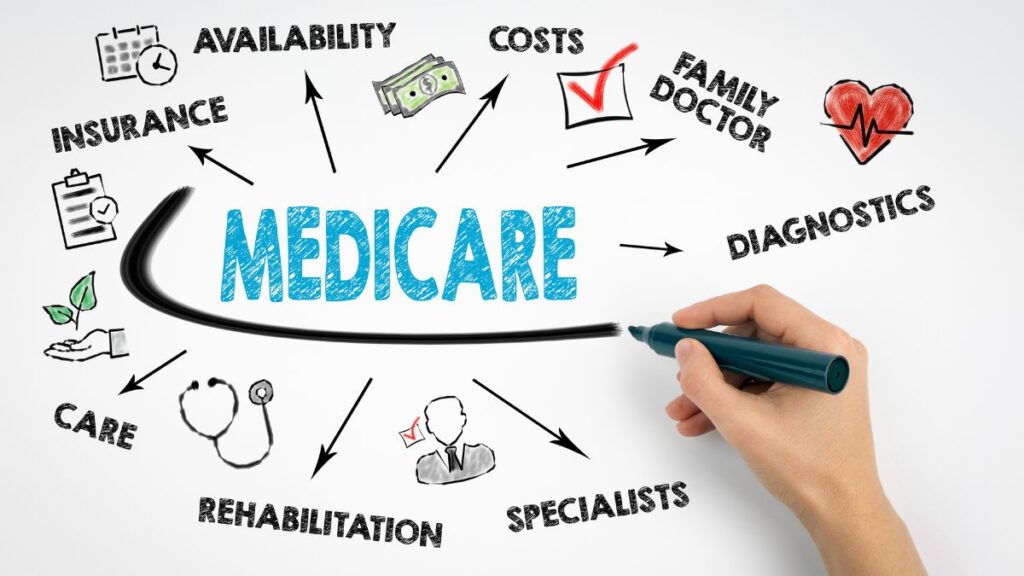
A worker can remain employed past 65 and, under the right circumstances, continue contributing to an HSA. The dangerous assumption is that contributions can continue right up to the day the Medicare application is submitted.
Medicare warns that premium-free Part A can become effective retroactively when someone enrolls after 65. For someone applying six or more months after turning 65, Part A can generally reach back up to six months, though never earlier than the first month the person was eligible.
HSA contributions made for months covered by Medicare can then become excess contributions. That is why Medicare tells people in this situation to plan their final contributions carefully.
| Situation | HSA Contribution Issue | Planning Point |
|---|---|---|
| Under 65 and otherwise HSA eligible | Contributions may continue | Stay within annual and monthly limits |
| Enrolling in Medicare around 65 | Contributions must stop when Medicare coverage begins | Check the actual Part A effective date |
| Applying for Medicare 6+ months after 65 | Part A may be retroactive up to 6 months | Medicare says to stop contributions 6 months before applying |
| Already enrolled in Medicare | New HSA contributions are not permitted | Existing HSA money remains available |
The exact timing deserves attention because birthdays, enrollment dates, Social Security applications, and the first day of the month can affect the result. Medicare’s 2026 handbook even notes special timing for people whose birthday falls on the first day of a month.
Someone working past 65 should coordinate the HSA decision with the employer’s benefits team and Medicare before submitting applications. Fixing an excess contribution afterward is far less pleasant than planning the last contribution correctly.
Rule 9: Age 65 Changes the Penalty, Not the Best Tax Treatment

Before 65, an HSA withdrawal that is not used for qualified medical expenses can generally trigger ordinary income tax plus an additional 20% tax. After 65, that extra 20% tax no longer applies.
That gives the HSA an interesting retirement backup feature. After 65, a nonmedical withdrawal can generally be taxed in a way similar to money withdrawn from a traditional pre-tax retirement account.
But that does not make nonmedical withdrawals equally attractive. A $5,000 distribution used for qualified medical expenses may be federally tax-free, while a $5,000 distribution used for a vacation after 65 would generally be included in taxable income.
That difference is why preserving HSA dollars for healthcare can remain attractive deep into retirement. Schwab also notes that HSAs are not subject to the required minimum distributions that apply to certain traditional retirement accounts.
You therefore do not have to drain an HSA simply because you reach your 70s. Money can remain available for later qualified healthcare costs.
Rule 10: Married Couples Should Not Treat the HSA as a Joint Account
An HSA belongs to one person. There is no joint HSA comparable to a joint checking account, even when a married couple has family HDHP coverage.
For 2026, the basic family contribution ceiling is $8,750, not $8,750 for each spouse. Employer contributions also count when determining how much room remains.
The age-55 catch-up has another wrinkle. If both spouses are 55 or older, eligible, and not enrolled in Medicare, each can potentially make a separate $1,000 catch-up contribution, but each spouse’s catch-up must go into that spouse’s own HSA.
For a fully eligible couple with family coverage who are both 55 or older throughout 2026, that can mean a combined ceiling of $10,750, consisting of the $8,750 family limit plus two $1,000 catch-ups.
This separate-account rule becomes particularly important when one spouse starts Medicare before the other. The spouse enrolled in Medicare can no longer contribute to an HSA, while the other spouse may still qualify depending on coverage and the rest of the eligibility rules.
Rule 11: Check the Beneficiary Before Calling the Plan Finished

HSAs receive unusually favorable tax treatment during the owner’s lifetime, but the beneficiary rules make estate planning worth a few minutes of attention. A surviving spouse who is the designated HSA beneficiary can generally continue treating the account as an HSA.
The result is very different for a nonspouse beneficiary. In general, the account stops being an HSA at death and its fair market value becomes taxable to the beneficiary for that year, subject to certain rules involving the deceased owner’s qualified medical expenses.
That makes the beneficiary designation more than routine paperwork. A married HSA owner may have a strong reason to confirm that the intended spouse is actually listed rather than assuming an old employer election still reflects the current plan.
It can also affect withdrawal strategy later in life. Because a nonspouse generally does not inherit the same continuing HSA tax shelter, some retirees may eventually prefer using HSA money for their own qualified healthcare expenses rather than preserving every dollar as an inheritance.
The decision is personal, especially when estate size, health costs, spouse needs, and other assets are involved. The useful rule is simply not to ignore the beneficiary box.
Put the 11 Rules Into One HSA Retirement Checkup
An HSA does not need a complicated management system. A short annual review can catch most of the mistakes that reduce its value.
The best time is often during employer open enrollment or before year-end, while there is still time to adjust contributions. People approaching 65 should add a separate Medicare review well before submitting an enrollment or Social Security application.
| Priority | What to Check | Next Step |
|---|---|---|
| Eligibility | HDHP and other coverage | Confirm you can still contribute |
| Contributions | Your deposits plus employer deposits | Compare with the 2026 limit |
| Tax method | Payroll versus direct contributions | Check whether Section 125 payroll funding is available |
| Investments | Cash needed soon versus long-term money | Review fees, risk and time horizon |
| Receipts | Unreimbursed qualified expenses | Build a permanent digital record |
| Medicare | Expected Part A effective date | Plan the final HSA contribution |
| Beneficiary | Current designation | Update if it no longer matches your wishes |
The goal is not necessarily to build the biggest HSA balance possible. It is to make sure every dollar in the account has a clear job.
For one household, that job may be paying next month’s deductible. For another, it may be covering Medicare premiums and medical bills twenty years from now.