A man who once spent decades commuting, working, attending family functions, and solving other people’s problems may suddenly start turning down invitations after 60. His family may see an empty social calendar and wonder whether something has gone wrong.
Yet staying home does not automatically mean a senior man is lonely, depressed, or giving up. It can reflect a major change in what feels worth his limited time and energy.
The psychology behind senior men over 60 who prefer staying home is therefore more complicated than it looks. The real question is not how often he leaves the house, but what his life inside that house contains.
Why Home Can Start Feeling Different After 60

One of the biggest mistakes is treating being alone, feeling lonely, and being socially isolated as the same condition. They describe different experiences, even though they can overlap.
Loneliness refers to the painful feeling that a person’s relationships are not giving him the connection he needs. Social isolation describes having limited relationships or contact, while chosen solitude may simply mean enjoying time alone.
That means two retired men can spend nearly identical Saturdays at home and experience them completely differently. One may feel peaceful after gardening, calling his daughter, reading, and cooking dinner, while another may desperately wish somebody would call.
Here is the distinction that matters most.
| Situation | What It Can Look Like | What Matters Most |
|---|---|---|
| Chosen solitude | Enjoying several quiet hours alone | He wants the time alone |
| Home preference | Frequently choosing home over outings | Home supports activities he values |
| Loneliness | Feeling unseen, disconnected, or unwanted | His desired connection is missing |
| Social isolation | Very little regular contact or support | His network may be too limited |
The number of outings alone cannot tell a family which situation applies. A better clue is whether the man still feels interested in life, maintains meaningful relationships, makes choices, and looks forward to things.
He May Be Becoming More Selective, Not Less Social

A man at 35 may accept a dinner invitation because someone important to his career will be there. He may attend another event because saying no could offend a colleague, neighbor, relative, or client.
By 68, those incentives may have disappeared. The same man may decide that dinner with one longtime friend means more than three hours of polite conversation with twenty acquaintances.
Psychologist Laura Carstensen’s socioemotional selectivity theory offers one explanation. As people become more conscious that time is limited, emotionally meaningful experiences and relationships can become more important than collecting new contacts or pursuing distant rewards.
That does not mean every older man becomes introverted. It means the value calculation behind a social invitation can change.
A smaller social calendar can therefore hide a more deliberate social life. The man may no longer care about being everywhere as long as he still has the people who matter.
Retirement Removes Years of Forced Social Interaction
Working life creates social contact whether a person wants it or not. There are coworkers, customers, supervisors, meetings, commutes, office conversations, professional events, lunches, and obligatory celebrations.
Retirement can remove much of that almost overnight. For some men, that loss feels painful because work provided their strongest friendships and much of their identity.
For others, however, the disappearance of forced interaction feels like relief. They discover how much of their previous social life was connected to employment rather than genuine preference.
The same change can therefore produce opposite reactions.
| Change After 60 | Peaceful Version | More Concerning Version |
|---|---|---|
| Fewer work contacts | Relief from obligations | Loss of nearly every friend |
| More time alone | Desired personal freedom | Unwanted isolation |
| Turning down events | Greater selectivity | Fear or loss of interest |
| Stronger routines | Comfort and structure | Extreme resistance to leaving home |
| More independence | Healthy autonomy | Refusal to seek needed help |
This is why families should be cautious about comparing retirement life with working life. A man who went somewhere five days a week because he had a job did not necessarily prefer being away from home.
Home Gives Him Something Work Rarely Did: Control
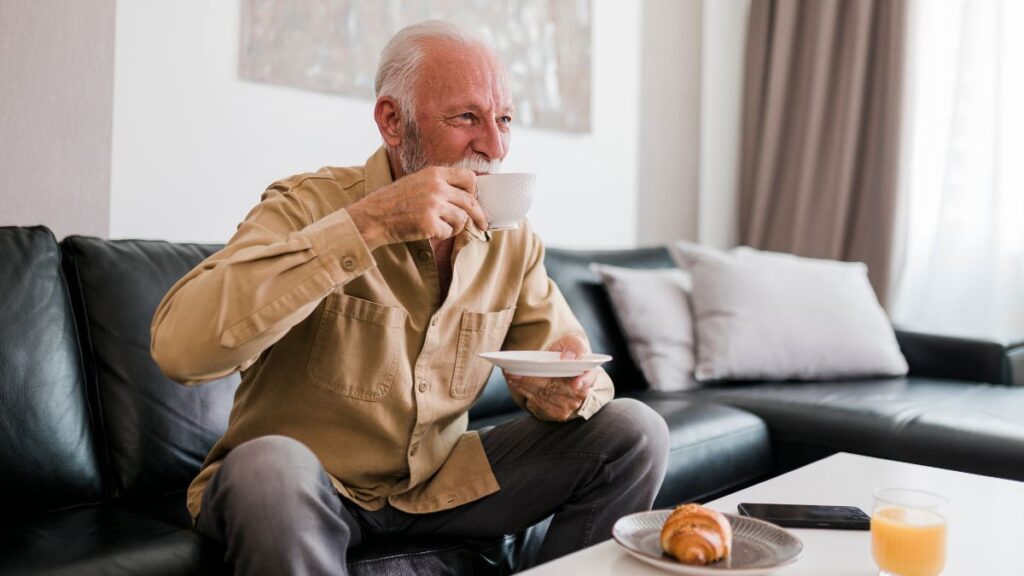
For decades, another person may have decided when a man woke up, where he needed to be, how he dressed, when meetings occurred, when he could take vacation, and which problems demanded his attention.
Retirement can return control over small parts of life that once belonged to employers and schedules. Those small choices may feel surprisingly valuable.
At home, he chooses when to drink coffee, whether music is playing, what project gets his attention, when lunch happens, and whether an interruption deserves a response. That control can become especially satisfying after decades of externally structured days.
This helps explain why some senior men fiercely protect their routines. The routine itself may not be exciting, but the ability to choose it is.
Home can also be one of the few places where a man feels he does not have to perform a role. He is no longer required to be the manager, employee, provider, problem-solver, salesman, or person who always appears confident.
That relief can make an ordinary living room feel different at 70 than it did at 40.
Quiet Time Can Restore Parts of His Identity

Retirement removes a question that once had an easy answer: “What do you do?”
For someone who spent forty years answering with a profession, company, trade, or position, losing that identity can be unsettling. Some retirees immediately fill the space with travel and activities, while others rebuild identity more quietly.
A garage workshop, vegetable garden, stack of history books, fishing equipment, restoration project, music collection, or home office can become more important than outsiders realize. These activities can provide competence, structure, progress, and personal satisfaction without a paycheck attached.
The supplied source describes this as reclaiming creativity, and there is a useful idea underneath the dramatic wording. Work may have consumed most of a man’s problem-solving energy for decades, while retirement gives him time to choose what deserves that energy.
The important question is whether home contains engagement rather than mere passing of time. Four hours building something is psychologically different from four hours staring at a television because nothing else feels interesting.
Familiar Places Can Carry More Emotional Meaning

Home is more than a roof and furniture. For someone who has lived there for decades, individual rooms can hold family history, achievements, losses, habits, and reminders of people who mattered.
That helps explain why many older adults develop powerful attachments to familiar environments. Control, memories, privacy, predictability, and independence can all become connected to the physical home.
This does not mean every senior wants to stay in the same house forever. Housing costs, maintenance, stairs, health needs, neighborhood changes, and proximity to family can eventually make another home more practical.
It does mean that relatives should avoid dismissing “he just likes being home” as laziness. The home may represent stability at a stage of life when many other things have already changed.
Solitude and Loneliness Are Not the Same Thing
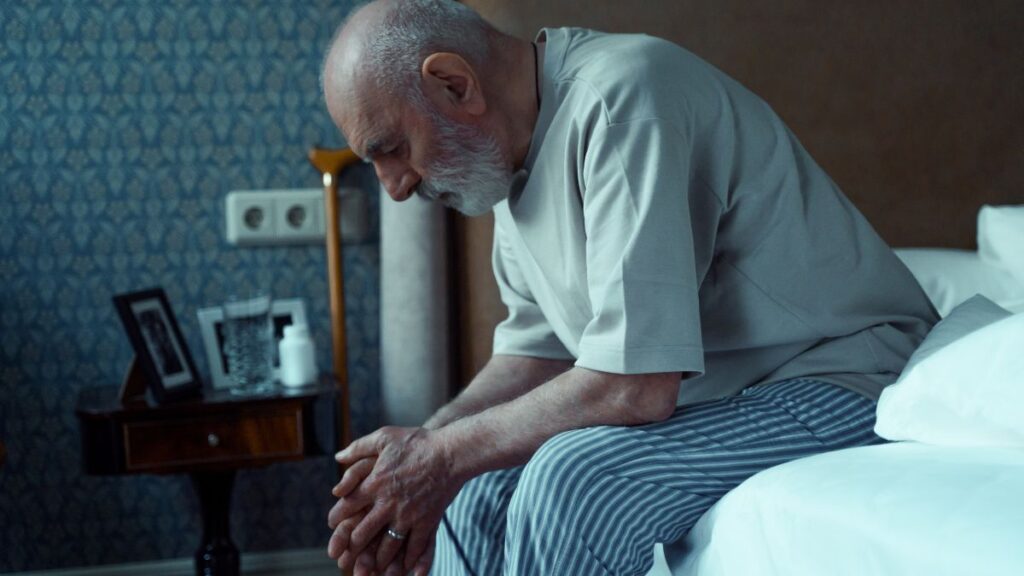
The distinction is simple but easy to miss. Solitude is often chosen; loneliness is experienced as a gap between the connection someone has and the connection he wants.
A senior man may genuinely love spending Monday through Friday mostly by himself while looking forward to a weekly breakfast with friends and Sunday dinner with family. If those relationships satisfy him, his social life does not need to resemble someone else’s.
Research on solitude also suggests that wanting time alone cannot automatically be interpreted as poor well-being. Personality, culture, habits, health, relationships, and personal preferences all matter.
This is especially relevant for families of retired men. Trying to fill every empty square on his calendar can turn concern into pressure.
The goal should not be maximum social activity. A better goal is enough meaningful connection for that particular person.
The Same Behavior Can Also Hide a Problem
This is where the romantic image of the perfectly peaceful older homebody can become dangerous. Some men who stay home are content, but others are lonely, grieving, physically limited, anxious, depressed, or unsure how to rebuild a social life after retirement.
Research involving older men has found that retirement, widowhood, separation, illness, and losing workplace relationships can contribute to loneliness. Studies have also described how masculine expectations around independence and emotional strength may make it difficult for some older men to discuss loneliness or ask for support.
That means a statement such as “I’m fine here” deserves respect, but it should not always end the conversation. What matters is the larger pattern.
This comparison offers a more useful way to think about it.
| Signs Home May Be Working Well | Signs Worth Paying Attention To |
|---|---|
| He chooses when to socialize | He wants connection but cannot create it |
| He enjoys hobbies or projects | Former interests have largely disappeared |
| He keeps meaningful relationships | Contact with nearly everyone has faded |
| His routine gives him purpose | Days feel empty and interchangeable |
| He can leave home when needed | Leaving has become unusually difficult |
| He accepts reasonable help | He rejects needed help mainly to protect pride |
| He appears satisfied with his choices | He repeatedly expresses hopelessness or distress |
None of the signs in the right column proves a psychological disorder. They simply provide a better reason to check in than the fact that somebody enjoys his recliner.
Sudden changes deserve more attention than longstanding personality. A lifelong homebody who still enjoys his normal activities is different from an outgoing man who rapidly stops seeing friends, abandons hobbies, and appears distressed.
Some Men Are Tired of Performing for Other People
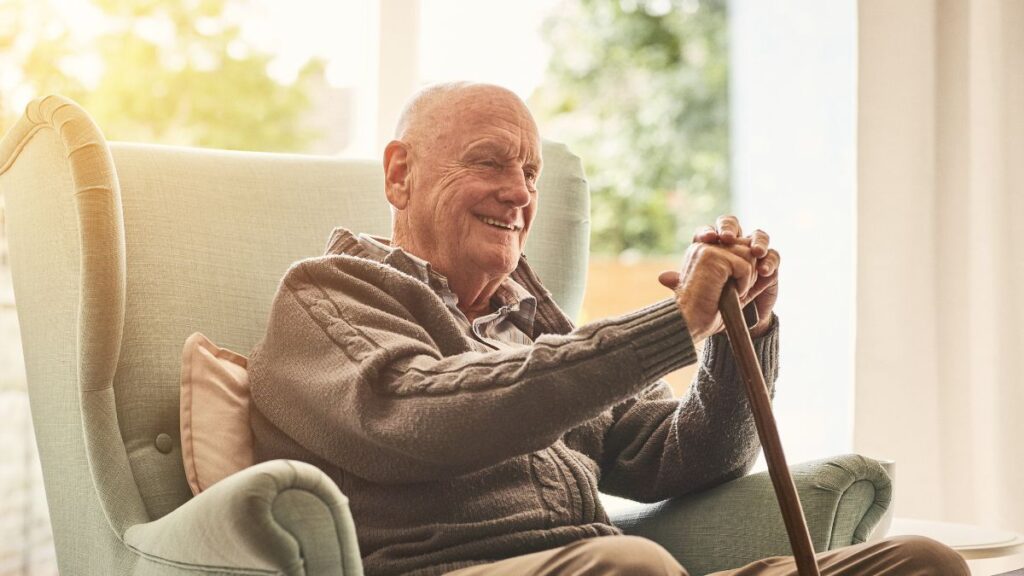
The source material describes older men as taking off their social “armor.” The metaphor is dramatic, but it points toward a real experience for some retirees.
Many men now in their 60s, 70s, and 80s grew up with strong expectations around work, independence, emotional restraint, providing for others, and solving problems. Individual experiences vary widely, but those expectations can shape how retirement feels.
After decades of measuring usefulness through productivity, an older man may discover that he no longer wants every conversation to involve what he can provide, repair, organize, pay for, or solve.
Home can become the place where nobody needs a performance from him.
That does not require rejecting family or society. It may simply mean learning that he can be valuable even when he is not producing something for somebody else.
Peace Often Requires Fewer Decisions Than Working Life

Retirement can bring freedom, but freedom also creates a surprising problem: the day no longer organizes itself.
Some men respond by creating highly predictable home routines. Coffee at the same time, a morning walk, news, yard work, a project after lunch, dinner at six, and a favorite program at night can form a comfortable rhythm.
From the outside, that routine can look repetitive. From the inside, it may create structure after decades in which a workplace supplied structure automatically.
Routine can also reduce unnecessary decisions. A man may no longer feel interested in finding a new restaurant, driving through traffic, waiting in lines, attending a crowded event, and getting home late merely because other people consider that “doing something.”
He may genuinely prefer simplicity.
The Better Question Is Whether His Life Is Expanding or Shrinking
Counting how many nights a senior man spends at home misses the point. A better assessment looks at what staying home allows him to do and what it prevents him from doing.
Someone can have a small geographic world and a surprisingly rich psychological life. He might read extensively, maintain friendships, exercise, manage his household, talk with grandchildren, repair furniture, participate in an online community, garden, cook, volunteer occasionally, and look forward to future projects.
Another person can occupy the same house while gradually losing connection with nearly everything beyond it.
This quick check can help separate the two patterns.
| Area | Healthy Question | Possible Warning Sign |
|---|---|---|
| Choice | Am I home because I want to be? | I feel unable to do anything else |
| Relationships | Do I have people I trust and contact? | Nobody would notice if I needed help |
| Purpose | Do my days contain something meaningful? | Most days feel empty |
| Activity | Do I keep moving and doing things? | I rarely leave my chair or room |
| Independence | Can I manage normal needs safely? | Basic tasks are becoming difficult |
| Curiosity | Do I still enjoy learning or projects? | Almost nothing interests me anymore |
| Future | Do I have things to anticipate? | I have stopped looking forward to anything |
A man does not need a packed calendar to answer those questions positively. What matters is whether home is supporting his life or quietly replacing it.
There Is Nothing Automatically Superior About Being Busy

Modern culture often treats movement as proof that someone is living well. Trips, restaurants, events, classes, shopping, social gatherings, and constant activity are easy to photograph and talk about.
Quiet satisfaction is less visible.
A retired man may have spent forty years rushing from obligation to obligation. Telling him he must now rush from recreational activity to recreational activity can simply replace one schedule with another.
Retirement gives people more freedom to decide what a satisfying day looks like. For some, that means cruises and golf groups, while for others it means woodworking before lunch and reading on the porch afterward.
Neither lifestyle automatically proves better psychological health.
But Independence Still Needs Connection
Respecting solitude should not become an excuse for ignoring social health. The CDC and National Institute on Aging distinguish chosen time alone from loneliness and warn that persistent social isolation and loneliness are associated with poorer physical and mental health.
Social connection does not require becoming highly social. A few dependable, positive relationships can matter greatly.
For a home-loving senior man, the answer may therefore be quality rather than quantity. One weekly breakfast, regular phone calls, family visits, a neighbor he trusts, a hobby group, a place of worship, or occasional volunteering may provide enough outside connection without overwhelming the quiet life he prefers.
Technology can help as well, particularly when distance or mobility makes frequent visits difficult. It should supplement meaningful human relationships rather than be treated automatically as a replacement for them.

Marvin is an expert in farming equipment with a strong background in agricultural engineering. He graduated from Kansas State College of Agriculture, where he received a degree in Agricultural Engineering and specialized in farm equipment design and maintenance.