
Living in a tiny home offers freedom and simplicity until winter arrives. Your bulky sweaters, puffy coats, and heavy boots suddenly take over your limited living space. Sound familiar? You’re not alone. Storing a winter wardrobe in a micro-dwelling presents unique hurdles. How do you combat moisture in a tightly sealed environment? Where do you stash a parka that seems to have its own zip code?
The 11 most common tiny home winter clothes storage fails that nobody talks about. Forget generic advice. We’ll tackle the real struggles you face daily. Small space solutions and transform your winter wardrobe organization. Practical strategies to protect your garments and reclaim your peace of mind.
Consider this surprising fact: the average person wears only 20% of their wardrobe 80% of the time. In a tiny home, that unused 80% becomes a costly space invader. We’ll show you how to break this cycle.
Fixes for mistakes you might not even know you’re making. Are you ignoring precious vertical real estate? Using the wrong containers and damaging your knits? We’ve got you covered.
Where Do You Put Your Winter Clothes? 11 Tiny Home Storage Fails Nobody Talks About

The Cramped Reality of Tiny Home Storage
Living tiny means facing some big challenges when it comes to storage. The average American home spans a spacious 1,800 square feet in 2025; tiny homes typically squeeze life into just 225-400 square feet. That’s not just downsizing, it’s a complete storage paradigm shift.
The math is sobering: in these compact dwellings, only 10-15% of total space is typically dedicated to storage. When you’re working with just 30-60 square feet of storage total, every cubic inch matters, especially when winter arrives. Bulky sweaters, coats, and boots can consume up to three times more space than their summer counterparts.
Our reluctance to part with clothing isn’t just sentimentality. Psychologists point to the future self, thinking we hold onto items, scenarios where they’ll be needed. This tendency hits harder in tiny homes where geographic location dramatically impacts clothing needs. Living in Minnesota requires a substantially different winter wardrobe than in Arizona.
As tiny home dweller Emma Rhodes puts it: My 240-square-foot home feels spacious until November arrives. Then suddenly, my winter gear seems to expand and take over everything.
1. Neglecting to Clean Before Storage

That seemingly clean sweater you’re about to pack away? It’s harboring invisible enemies. A recent survey revealed 68% of tiny home owners skip proper cleaning before storing winter clothes, a mistake that leads to permanent damage and wasted space.
Even invisible body oils become powerful pest magnets after months in storage. Moths aren’t attracted to fabric itself but to the residues we leave behind. These same oils oxidize over time, creating those mysterious yellow spots that appear on stored clothing.

The science is clear: microscopic food particles break down into simpler compounds during storage, essentially digesting your favorite garments from within. One improperly cleaned item can contaminate an entire storage container, creating a chain reaction of deterioration.
Different fabrics demand different approaches. Wool requires gentle hand washing with lanolin-preserving detergents. Down needs thorough drying to prevent clumping and mildew. Synthetics often hide odor-causing bacteria that survive typical wash cycles.

Your pre-storage checklist should include inspection under bright light, proper cleaning according to fabric type, and complete drying; even slight dampness can ruin an entire season’s wardrobe in compact storage.
2. Using the Wrong Storage Containers

That stack of cardboard boxes might seem like a budget-friendly storage solution, but they’re silently destroying your winter clothes. Cardboard’s acid content gradually transfers to fabrics, weakening fibers and causing discoloration that becomes apparent only when it’s too late.
The container dilemma presents difficult tradeoffs in tiny spaces. Vacuum storage bags can slash volume requirements by up to 75% tempting when every inch counts, but they compress natural fibers like wool and down, potentially causing permanent structure damage and reducing insulation properties.

Plastic bins offer protection against moisture but create condensation in fluctuating temperatures, a common condition in tiny homes. By contrast, breathable fabric containers reduce mildew risk by 80% compared to sealed plastic, though they require more space.
I ruined two cashmere sweaters and a down jacket by vacuum-sealing them for a year, shares tiny home owner Marcus Chen. The space saving wasn’t worth the replacement cost.
The ideal approach combines container types based on fabric needs: breathable cotton bags for natural fibers, acid-free tissue for delicate items, and vacuum compression reserved only for synthetic materials that can withstand pressure without damage.
3. Choosing Poor Storage Locations

That cozy loft space that reaches 85°F in winter? The exterior storage box that freezes solid in January? These seemingly convenient spots are clothing death traps in disguise.
Temperature fluctuations exceeding 20°F can permanently damage natural fibers, breaking down their molecular structure and reducing both appearance and functionality. Meanwhile, humidity levels above 65% common in tiny home bathrooms and kitchens, create conditions for mold spores to flourish on stored clothing.
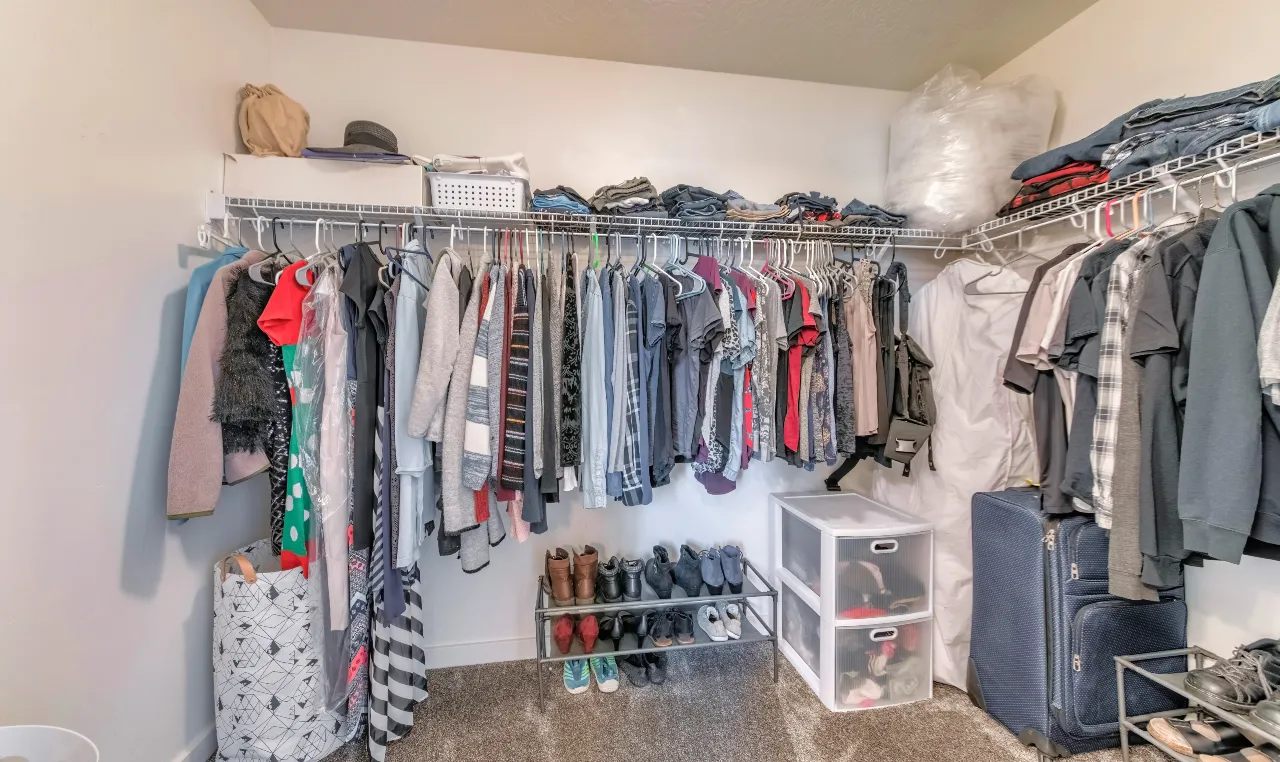
Sunlight exposure presents another hidden danger. Even through windows, UV rays can fade colored fabrics by up to 40% in a single season. Those under-window storage benches might be convenient, but they’re silently destroying your garments.
External storage options introduce additional risks. Uninsulated outdoor lockers subject clothing to extreme temperatures, while vehicle storage exposes items to condensation cycles that encourage mildew growth.

Create microclimates within your tiny home by using moisture-absorbing products in enclosed spaces. Under-bed storage works well only when combined with humidity control measures. The ideal location maintains consistent temperature, minimal humidity, and zero UV exposure, often requiring creative solutions like interior wall cavities or specially-designed furniture with ventilation.
4. Improper Folding and Compression

Those neatly stacked winter sweaters might look satisfying now, but they’re silently developing permanent creases. Fabric fibers have memory; they retain folds and compressions when left in position too long, especially natural materials like wool and cashmere.
The damage goes beyond aesthetics. Premium down jackets lose up to 30% of their insulation power when compressed for extended periods, as the feather structure breaks down and loses loft. Your space-saving technique might be costing you warmth when winter returns.

After just 2-3 months of tight folding, wool and cashmere items can develop permanent creases that no steamer can fully remove. These fold lines weaken the fabric structure, creating vulnerability points for future wear and tear.

Smart tiny home dwellers have discovered alternatives: rolling instead of folding reduces space needs by up to 20% while preventing sharp creases. For bulkier items, the ranger roll technique, a military-inspired method, maintains fabric integrity while maximizing compact storage.
I learned to store my winter sweaters in loose rolls separated by acid-free tissue, explains tiny home expert Jordan Lin. They take up the same space but emerge ready to wear without damage.
5. Ignoring Vertical Space Opportunities

The most overlooked storage resource in tiny homes is literally above your head. The average tiny dwelling has over 20 square feet of unused vertical storage potential, prime real estate for winter clothing that’s being wasted.
Floor space is at a premium; most tiny home owners fail to utilize walls and ceilings effectively. Modern ceiling-mounted storage systems can safely support 15-20 pounds per square foot when properly installed into structural elements, for lighter winter items like sweaters and accessories.

Vertical storage isn’t just about ceiling hooks. Consider the space between wall studs, typically 3.5 inches deep and 16 inches apart, which can be converted into recessed shelving for folded items. One Oregon tiny home owner created 12 square feet of additional storage this way without sacrificing any floor space.
Multi-functional vertical solutions offer the biggest bang for your buck. Tension rods with cascading hangers can increase functional clothing storage by 40% in corners. Wall-mounted drying racks double as storage for less-frequently worn items while keeping them visible and accessible.
Remember: in tiny homes, thinking horizontally means wasting vertically.
6. The Out of Sight, Out of Mind Trap

Did you just buy a new winter hat despite having three already? You’re not alone. The average tiny home dweller forgets about 30% of their stored winter clothing, leading to unnecessary duplicate purchases that cost around $250 per season.
This isn’t just absentmindedness; it’s a psychological phenomenon. When items disappear from our visual field for extended periods, our brains literally forget they exist. In cramped quarters where deep storage is necessary, this creates a costly cycle of buying what you already own.
I discovered I had four nearly identical scarves after unpacking last winter, admits tiny home blogger Taylor Kim. When they’re stored away for 8 months, my brain just doesn’t register that I own them.

Visual inventory systems break this expensive cycle. Simple solutions like clear containers or photo labels outperform text-only organization. For the tech-savvy, digital inventory apps with photo catalogs and search functions have reduced forgotten items by up to 85% in user studies.
Schedule a mid-season rediscovery day where you revisit all stored winter items, refreshing your mental inventory before making any new purchases. Your wallet and your precious storage space will thank you.
7. Neglecting Regular Maintenance Checks

Small problems become major disasters when left unchecked in compact storage. That tiny mothball hole? It will become a sweater-destroying infestation before spring arrives. Early warning of mildew that will soon spread to everything in proximity.
Storage problems cascade rapidly in tiny homes where items are stored in proximity. Insect infestations typically start with a single affected garment and spread throughout a storage area within just 4-6 weeks. Mildew damage becomes permanent after approximately 2-3 weeks, often rendering items completely unusable.
The solution is simple yet widely ignored: monthly 15-minute inspections catch 90% of storage problems before irreversible damage occurs. Mark your calendar and treat these checks as non-negotiable appointments with your future self.

Early warning signs include unusual odors, discoloration, tiny holes, visible insects or eggs, and unusual dust (often a sign of insect activity). Quick response measures, isolating affected items, treating with appropriate methods, and improving storage conditions, can save hundreds in replacement costs.
I lost almost my entire winter wardrobe one year to moths, shares tiny home owner Alexis Moore. Now I inspect religiously on the first of every month. It takes minutes but saves everything.
8. Over-Reliance on Multi-Purpose Furniture

That clever storage ottoman in the showroom, but reality tells a different story. Multi-purpose furniture promises storage salvation, costing 40-60% more than standard options, yet often delivers disappointingly limited capacity for winter clothing needs.
The accessibility capacity tradeoff hits hard in daily life. Storage benches and ottomans typically accommodate only 2-3 bulky winter items effectively, requiring you to completely clear their surfaces to access contents. This creates a frustrating choice between convenience and function.

Under-bed storage, a tiny home staple, brings its own problems. Studies show these areas experience 30% higher humidity than closet spaces in the same dwelling, creating perfect conditions for mildew growth on natural fibers. The limited airflow beneath beds compounds moisture issues, particularly in homes with minimal climate control.
My under-bed drawers seemed brilliant until I discovered my wool sweaters had developed mildew, recalls tiny house designer Miranda Chen. Now I reserve that space for synthetics only and find alternative solutions for natural fibers.
Consider dedicated, purpose-built storage that sacrifices multi-functionality for superior organization and preservation of your winter wardrobe.
9. Failing to Rotate Seasonal Items Strategically

Spring arrives, but winter hasn’t quite left. This awkward transition period, lasting 3-4 weeks in most climates, creates chaos when you’ve already packed away your winter wardrobe but suddenly need that heavy sweater again.
Haphazard seasonal rotation leads to frustration, wasted time, and damaged clothing from repeated repackaging. Yet most tiny home dwellers lack a systematic approach, creating unnecessary stress during seasonal shifts.

The solution lies in strategic rotation using the proven three-pile system: core seasonal items (store completely), transitional pieces (keep accessible), and year-round staples (never store). This approach reduces clothing access frustration by 60% according to tiny home organization experts.
Cross-seasonal items create the most confusion: lightweight sweaters, versatile jackets, and layering pieces that serve multiple seasons. Creating a dedicated shoulder season storage category prevents the endless shuffling of these items.
I used to waste hours each season digging through storage for items I’d packed too early, shares tiny home blogger Jamie Rodriguez. Now my three-category system saves me at least two hours per seasonal switch while keeping everything I might need accessible.
Remember: nature doesn’t change seasons overnight, and neither should your wardrobe rotation.
10. Overlooking External Storage Options

Sometimes the smartest storage solution isn’t inside your tiny home at all. External storage options often make financial sense when compared to upgrading to a larger dwelling. The monthly difference between a 250 and 400 square foot apartment in most cities would pay for multiple external storage solutions.
Modern alternatives go beyond traditional storage units. Box storage services start at just $15/month for 3 cubic feet, enough for an entire winter coat collection with on-demand delivery when seasons change. These services have revolutionized clothing storage for space-conscious dwellers.
Community-based solutions are gaining traction, too. Clothing storage co-ops grew by 45% between 2024-2025, allowing members to share secure seasonal storage facilities at minimal cost. Some innovative communities have established clothing libraries where seasonal items can be borrowed rather than owned and stored.
I was resistant to external storage until I did the math, explains tiny home owner Raj Patel. Paying $25 monthly for my winter items during summer beats spending $400 more in rent for a larger space I’d only need part-time.
The key is selecting the right external option, climate-controlled, convenient, and cost-effective, rather than assuming all your belongings must stay under your tiny roof.
11. The One-Size-Fits-All Storage Approach

Your down jacket, wool sweater, and leather boots all have different needs, yet most tiny home dwellers toss them into the same storage container with devastating results. This uniform approach ignores the unique requirements of different materials, practically guaranteeing damage.
Natural fibers demand special consideration. Wool requires 40% more air circulation than synthetic materials to prevent fiber breakdown. Down items need three times more space when stored properly versus compressed to maintain loft and insulation properties. Leather goods develop 75% more cracks when stored in high-humidity environments compared to climate-controlled conditions.
I learned this lesson the hard way after ruining an expensive cashmere sweater by storing it with synthetic items in a vacuum bag,” admits tiny home consultant Diego Morales. Now I create material-specific storage zones even though it takes more planning.
The solution is a customized approach based on fabric composition. Group items by material type rather than category (all wool together rather than all sweaters together). Use breathable containers for natural fibers, acid-free tissue for delicates, and only compress items specifically designed to withstand it.
This material-first methodology might seem fussy, but it dramatically extends the life of your winter wardrobe, saving both replacement costs and precious storage space in the long run.
