
Your breath turns white inside your home at 6 AM. You’re wearing two layers of socks and a winter coat at your kitchen table. This isn’t camping, this is your life. You chose alternative housing to save money and gain freedom. But winter changed everything. Your propane tank empties every three days at $25 a refill. Your electric bill tripled from $80 to $240. And you’re still cold. The furnace runs constantly, your windows drip with condensation, and you’re starting to see mold in the corners.
Real heating costs for both RV and tiny home living with 2024-2025 data from actual owners. Which insulation actually works when temperatures hit single digits? How to avoid frozen pipes without spending $400 monthly on propane and electricity. The hidden costs nobody talks about, like heated hoses, tank heaters, and emergency repairs at 2 AM. This is the winter RV vs tiny home truth. Just the climate control battle you’re actually fighting and how to win it without going broke.
1. The Insulation Reality Check
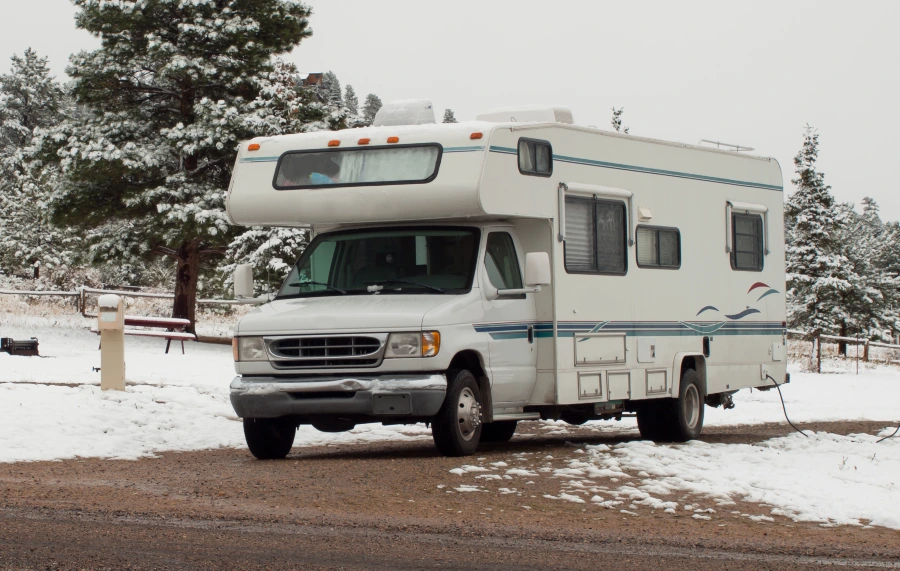
Traditional RVs have 5-7 R-value insulation; Tumbleweed Tiny House RVs achieve 17-18 R-value. That gap matters when temperatures drop. Most RVs use thin foam insulation that barely stops heat loss. Four-season RVs stuff rockwool into walls and floors, reaching R-17 to R-18. Tiny homes built right hit R-15 walls and R-30 ceilings. You feel the difference immediately.

RV pipes can freeze at temperatures below 20°F, while well-insulated tiny homes resist freezing even at -30°F. Ever wake up to frozen water lines? In an RV, you’re watching the clock once temperatures dip. You have maybe six hours before disaster strikes. Tiny homes with proper insulation and vapor barriers give you breathing room.

You’re wearing three layers inside your RV, running the heater constantly, and your windows are dripping wet. That moisture creates mold within weeks. Tiny homes handle this better with actual vapor barriers and better air sealing.

Insulation reduces heating bills by approximately 30%. Adding insulation to an RV costs $2,000-5,000. Tiny home insulation upgrades run similar prices but last decades longer. This one change saves $50 monthly in propane costs.
But watch out for cathedral ceilings in tiny homes. Heat rises fast. Your loft gets uncomfortably hot while your feet stay cold downstairs.
2. What You’ll Actually Spend on Heat

One gallon of propane provides 91,500 BTUs. A 30,000 BTU RV furnace burns about 1/3 gallon hourly. Running continuously at $2.50-3.50 per gallon means you’re burning through cash fast. Average winter heating: RV propane $300-500/month, Tiny home electric $150-300/month.
The three-day reality nobody mentions. In -10°C (14°F) weather, users report spending $300/month on propane for RV heating. You’re refilling 20-30lb propane tanks every three days at $20-30 each. That’s $200-300 monthly just keeping pipes from freezing. One cold snap doubles your heating budget.

Tiny homes offer better options. Tiny homes using 2-3 gallons of propane daily cost $150-200 monthly vs $250-300 for electric. Heat pumps cut costs even more, running $150-250 monthly in moderate climates. Electric resistive heaters hit $250-300 monthly, but they’re reliable.

RV park electrical hookups sound great until you see the bill. Shore power costs $400-800 monthly with utilities included. Running generators adds $100-200 monthly in fuel costs.
But wait, there’s more. Heated water hoses cost $50-100. Tank heaters run $30-60. Skirting materials cost $200-500. Moisture control products add $30-50 monthly. Ignore these and you’ll pay $200 for emergency repairs when everything freezes solid.
3. Five Ways Your Pipes Will Freeze (And How to Stop It)

The underbelly kills you first. RV tanks and pipes live in an unheated compartment under your floor. Cold air rushes through every gap. Heat tape costs $40-80 and saves your plumbing. Place 60-watt incandescent bulbs in bays; they generate enough heat for small spaces. Install insulated skirting around your base to block wind.

Your water hose freezes next. Standard hoses turn into ice blocks overnight. Heated water hoses cost $80-150 and work until temperatures hit -20°F. Below that, you’re draining everything anyway.

Tanks freeze from the bottom up. Electric tank pads cost $30-60 and stick directly to your tanks. They need shore power or a generator running. No power? That 60-watt bulb in your bay becomes your best friend.
Wind strips heat faster than cold. Vinyl skirting costs $200-400 for RVs. DIY foam board skirting runs $100-200 and works just as well. Tiny homes on trailers need skirting, too. Use steel wool to seal sewer hose openings, block cold and mice.

You need emergency protocols. Place a wireless thermometer in your water compartment to monitor temperatures. When temps hit single digits, drain everything. Keep cabinet doors open. Run faucets at a trickle. Have antifreeze ready. RV pipes freeze at 20°F exposure; well-insulated tiny homes resist freezing to -30°F. That difference matters when you wake up at 3 AM to silence; no water running means frozen pipes and a $500 repair bill waiting.
4. Climate Control Systems That Actually Work

RV furnaces are loud but effective. Most run 60-75% efficient, blowing 30,000-40,000 BTU of heat through your space. They’re noisy enough to wake you at 3 AM, and they blow warm air out the sides, wasting energy. But they heat your RV fast when temperatures drop.

Electric space heaters often struggle to keep up. A 1,500-watt heater produces 3,415 BTUs hourly. You’d need 10 of them to match one RV furnace. They work for zonal heating, only warming the space around your desk or bed. Don’t expect them to heat your entire home.
Catalytic heaters offer a middle ground. The Mr. Heater Buddy produces 9,000 BTU for $75-150 and runs on 1lb propane cylinders. It’s safe indoors with oxygen sensors and needs no electricity. The Olympian Wave-3 delivers 1,600-3,000 BTU at $200-300, incredibly fuel-efficient for small spaces.

Tiny homes have better options. Mini-split systems pump 15,000-18,000 BTU and cost $2,000-3,000 installed. Heat pumps deliver 3 units of heat per unit of electricity until temperatures hit 20°F, then they struggle. Wood stoves run $800-3,000 plus installation, but heat beautifully. Electric baseboards are cheapest upfront at $50-150 per unit, but resistive heat is expensive to run despite being 100% efficient.
5. The Real Cost Over Five Years

You buy an RV for $30,000-60,000, thinking you’re saving money. RV winter heating: $300-500/month = $1,500-2,500 per 5-month winter. That’s $7,500-12,500 over five winters. Add maintenance at $1,000-2,000 yearly, another $5,000-10,000. Full hookup RV sites: $400-800 monthly, costing $24,000-48,000 over five years. Then comes the killer: depreciation. Used RV prices drop 20-40% while tiny homes maintain value better. Your $50,000 RV is worth $25,000-30,000 after five years. You’ve lost $20,000-25,000 just sitting still.
Tiny homes hit harder upfront at $50,000-150,000. But tiny home heating: $150-300/month = $750-1,500 per winter season. That’s $3,750-7,500 over five winters, half what RVs cost. Land or parking runs $300-800 monthly, adding $18,000-48,000 over five years. However, tiny homes on foundations may appreciate. Mobile tiny homes depreciate more slowly than RVs, losing maybe 10-20% instead of 40-60%.
The break-even reality. RVs are cheaper in year one. By year three, you’ve spent the same. By year five, the RV owner has burned $15,000-25,000 more on heating and depreciation alone.
Winter costs include propane delivery fees, emergency repairs averaging $500 yearly, space heater electricity spikes, moisture damage repairs at $200-1,000, and constant insulation upgrades. Ignore long-term planning, and you’ll spend an extra $30,000 by year five.
6. Which One Keeps You Warmer in Brutal Cold?

When temperatures hit brutal lows, structure matters more than anything.
Tiny homes win below zero. Better insulation, stronger construction, and more heating options make the difference. RVs struggle below -10°F no matter what you do. One tiny home owner in Vermont runs a wood stove that keeps her home warm at -10°F, heating water on top. Meanwhile, a Class C RV owner in Virginia with a broken furnace used a non-vented propane heater and refilled a 20-gallon tank weekly just to survive.

Wind steals your heat faster than cold. Tiny homes are built like real houses and resist wind infiltration. RVs rock in storms, and every movement opens gaps. That wind strips heat through thin walls and loose seals. You’re fighting nature with aluminum and staples.

Snow loads collapse RV roofs. Tiny homes handle winter storms safely with proper roof structures. RVs risk roof damage under heavy snow. Structure matters when you’re sleeping inside.
Comfort tells the real story. Tiny homes feel like actual homes with solid walls, better soundproofing, and consistent temperatures. RVs feel temporary and drafty with hot and cold spots everywhere. A fifth wheel owner in Kansas City spent $405 monthly on propane plus electric in January and still wore layers inside.
7. Your Action Plan for This Winter
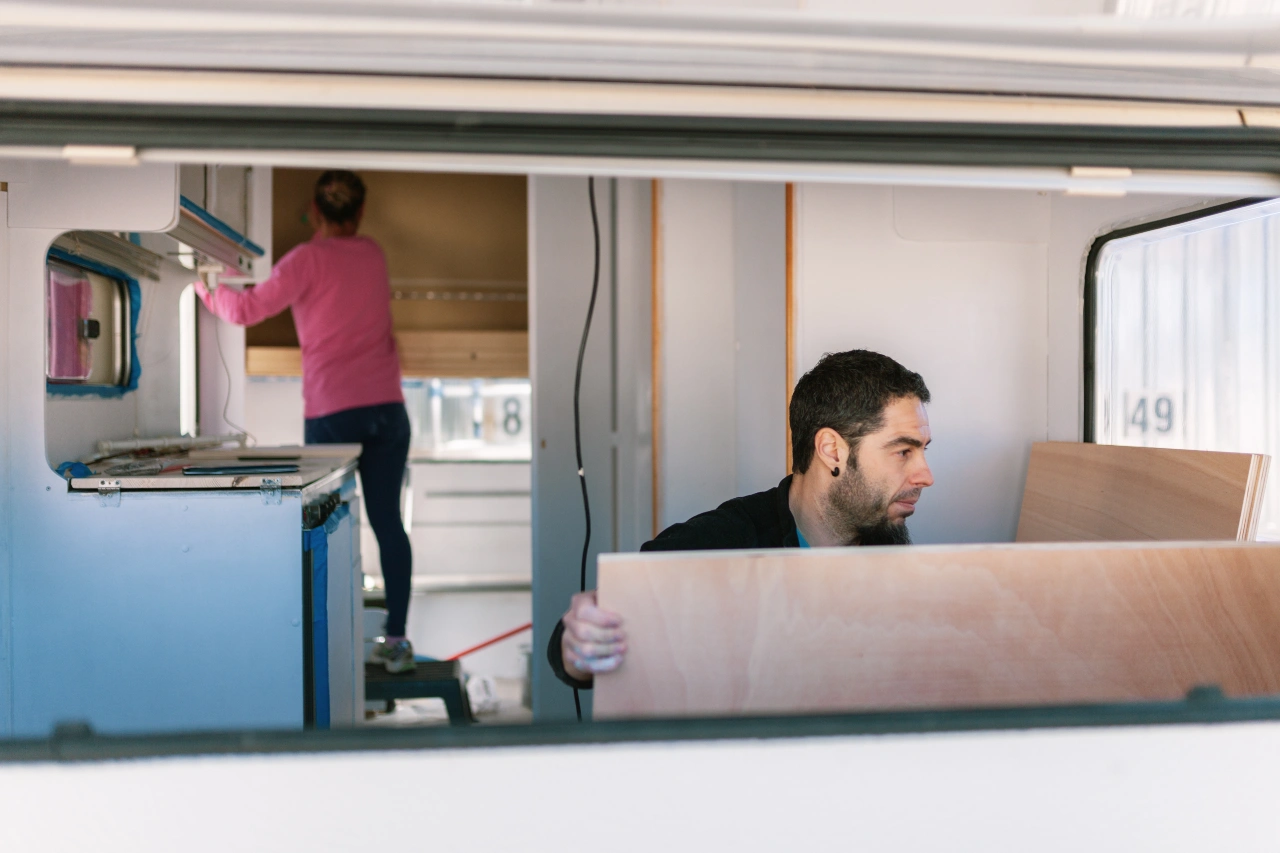
Winter’s coming. Here’s what you do right now.
If you own an RV, act today. Install skirting before temperatures drop; it blocks wind and saves 20% on heating. Buy heated hoses now, they’re in stock. Stock up on propane when prices are lower. Add extra insulation to your floor and underbelly using foam board. Get tank heaters installed at $30-60 each. Insulate RV windows with Reflectix or shrink film. This saves 15-20% on heating costs immediately.

If you own a tiny home, check everything. Walk around looking for insulation gaps and seal them with spray foam. Service your heating system before it fails during a cold snap. Install weather stripping on doors and windows. Add thermal curtains to reduce heat loss through glass. Consider a backup heat source like a Mr. Heater Buddy for $75-150.
If you’re deciding, budget honestly. Choose an RV for mild winters and mobility you can escape to warmer climates. Choose a tiny home for harsh winters, and staying put, better insulation pays off. RV total winter costs run $500-900 monthly. Tiny home costs hit $400-700 monthly.
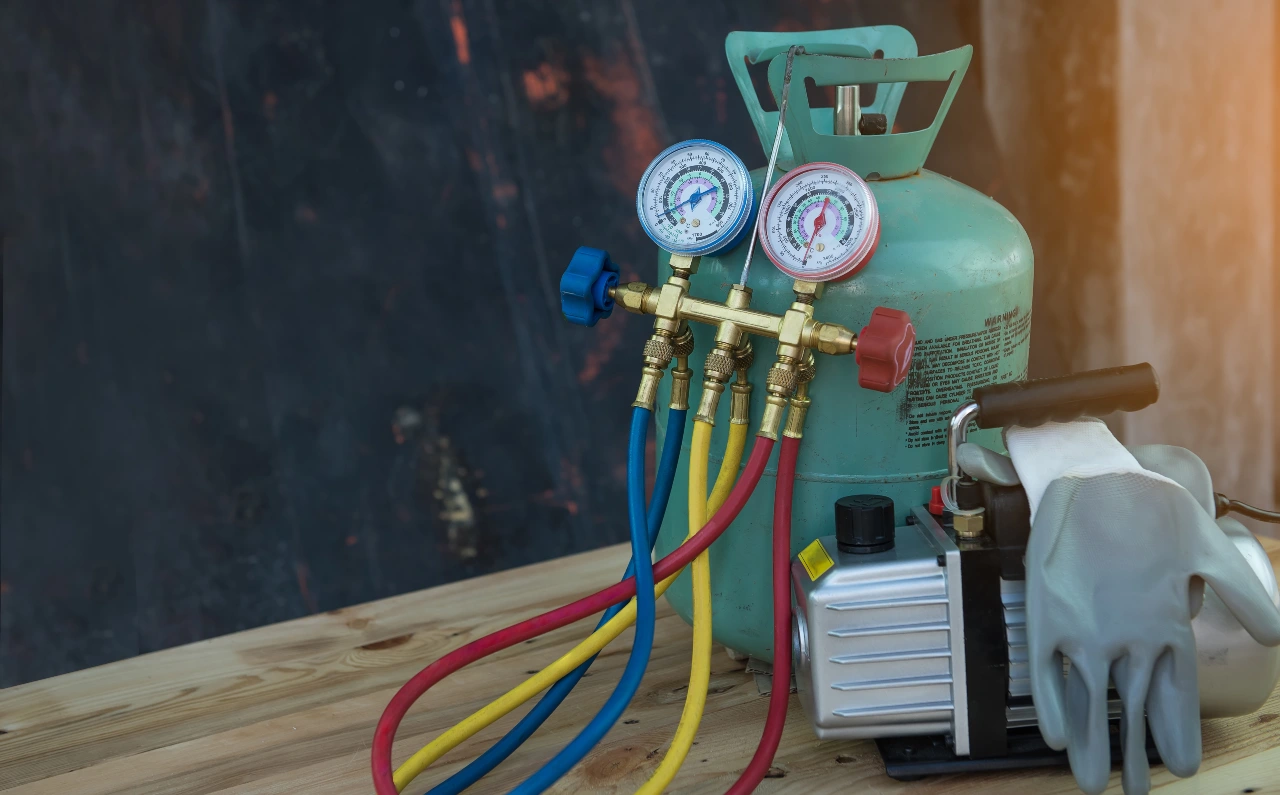
Emergency prep is non-negotiable. Keep backup propane tanks filled. Have space heaters ready with extension cords. Store RV antifreeze for quick winterization. Monitor the weather daily; you need an hour’s warning before pipes freeze. Set your thermostat to 60°F at night and use electric blankets for personal warmth instead of heating the space.
Install carbon monoxide and propane detectors; this is non-negotiable for safety. Use a squeegee after showers to prevent moisture buildup and mold. This one habit saves hundreds in damage repairs. Plan for worst-case scenarios or pay $500-1,000 when an emergency strikes at midnight.
